A Honda Civic electric parking brake problem occurs when the vehicle cannot correctly apply, release, or monitor the electronic parking brake system. The most common causes include low battery voltage, a faulty parking brake switch, damaged wiring, a failed EPB actuator, a seized rear brake caliper, an ABS related fault, or a brake control module malfunction.
The warning may appear by itself or together with messages for the Brake Hold, ABS, VSA, or brake system. In some cases, the issue starts after a weak battery, a battery replacement, or an unstable electrical connection. In other cases, the problem comes from a mechanical fault that prevents the rear parking brake from moving normally.
A temporary reset may remove the warning for a short time, but it will not repair a failed part. The message will usually return when the control system detects the same fault again. This is why the correct repair starts with battery testing, fault code scanning, wiring inspection, and a physical check of the rear calipers and actuators.
This guide explains the warning, the main symptoms, the most common causes, the correct diagnostic process, the available repair options, the expected repair cost, and the conditions that make the vehicle unsafe to drive.
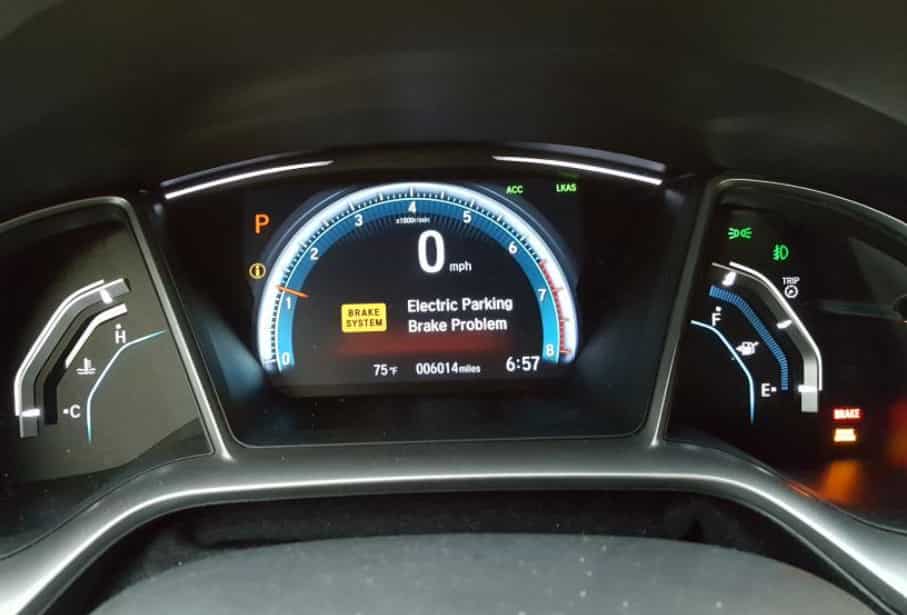
What Does the Honda Civic Electric Parking Brake Problem Warning Mean?
A Honda Civic electric parking brake problem warning means the Electronic Parking Brake (EPB) system has detected a fault. The fault prevents the system from operating as expected. It may involve an electrical circuit, a mechanical component, or communication between control modules. However, the warning does not identify the failed part.
The Electronic Parking Brake replaces the traditional handbrake with an electronic control system. When you press the parking brake switch, the brake control module sends a command to the rear brake actuators. The actuators apply or release the rear brake calipers. At the same time, the control module monitors motor movement, battery voltage, actuator position, and system communication. If one value falls outside the expected range, the module stores a diagnostic trouble code and displays a warning.
The warning does not always mean the parking brake has stopped working. In many cases, the system still operates for a short period. Some faults develop gradually and only affect performance under certain conditions. For example, a weak battery may reduce actuator power before the parking brake fails completely. An intermittent wiring fault can also trigger the warning without causing an immediate loss of function.
Many drivers notice additional messages such as Brake Hold System Problem, Brake System, ABS, or Vehicle Stability Assist (VSA). These systems share information through the same brake control network. A single electrical problem can interrupt communication between multiple modules. As a result, several warning lights may appear at the same time even though only one component has failed.
The warning should always be treated as the starting point of the diagnostic process. Replacing parts without testing the system often wastes time and money. Begin by checking the battery and charging system. Next, scan the brake control module for diagnostic trouble codes. Finally, inspect the switch, wiring, rear calipers, and EPB actuators before replacing any components.
What Are the Symptoms of a Honda Civic Electric Parking Brake Problem?
A Honda Civic electric parking brake problem can produce several warning signs before the system fails completely. Some symptoms appear on the dashboard, while others affect how the parking brake operates. Recognizing these signs early can help prevent more expensive repairs and reduce the risk of damaging the rear braking components.
The most common symptom is the Electric Parking Brake Problem message on the instrument cluster. Many drivers also see the Brake Hold System Problem, Brake System, ABS, or Vehicle Stability Assist (VSA) warning at the same time. These systems share electronic information, so a single fault can trigger multiple alerts. Although several warnings may appear together, they do not always indicate multiple failed components.
Another common symptom is a parking brake that does not engage or release correctly. In some cases, pressing the parking brake switch produces no response. In others, the brake releases after several attempts or works only intermittently. This behavior often points to low battery voltage, a faulty switch, damaged wiring, or an actuator that cannot complete its movement.
A flashing parking brake indicator is another sign that should not be ignored. The flashing light usually means the control module cannot confirm that the parking brake reached the requested position. The actuator may stop before completing its travel because of low voltage, excessive mechanical resistance, or an internal electrical fault. Reading the stored diagnostic trouble codes is the quickest way to identify the underlying cause.
Mechanical symptoms may also develop as the problem becomes more serious. A clicking noise from a rear wheel often indicates that the actuator is repeatedly trying to apply or release the brake. A grinding sound may suggest worn internal gears, a seized caliper, or excessive wear inside the rear brake assembly. If the parking brake remains partially applied, the rear wheel may become unusually hot after driving. You may also notice reduced fuel economy or a slight pulling sensation because the brake creates constant resistance.
These symptoms should never be ignored, even if the vehicle still appears to drive normally. An early electrical fault can develop into a complete parking brake failure if left unresolved. The safest approach is to inspect the battery, scan the brake control system, and diagnose the root cause before replacing any components.
What Are the Common Causes of a Honda Civic Electric Parking Brake Problem?
A Honda Civic electric parking brake problem usually results from an electrical fault, a mechanical failure, or a communication issue within the brake control system. Although the dashboard displays a single warning, the underlying cause can vary. Identifying the root cause is essential because different faults require different repairs.
One of the most common causes is a weak or discharged 12-volt battery. The Electric Parking Brake relies on stable voltage to operate the rear brake actuators and communicate with other control modules. When battery voltage drops below the required level, the actuators may not complete their movement. The control module detects the abnormal operation and stores a fault code. Battery-related warnings often appear after the vehicle has been parked for a long period or when the battery is approaching the end of its service life.
A faulty parking brake switch can also trigger the warning. Every time the driver presses the switch, it sends a signal to the brake control module. If the switch becomes worn, contaminated, or electrically damaged, the module may receive an incorrect command. As a result, the parking brake may fail to engage, fail to release, or respond inconsistently. The problem often becomes more noticeable as the switch continues to deteriorate.
Electrical wiring is another frequent source of EPB faults. Damaged connectors, loose terminals, blown fuses, or corroded wiring can interrupt power or communication between the control module and the rear brake actuators. Even a small increase in electrical resistance can affect actuator performance. Moisture and road salt can accelerate corrosion, especially on vehicles that operate in harsh weather conditions.
Mechanical failures inside the rear brake assembly can also cause the warning message. The EPB actuator applies force through the rear brake caliper. If the caliper becomes seized or the actuator gears wear out, the motor may no longer complete its movement. The control module detects the excessive load and records a fault. Drivers may also hear repeated clicking or grinding noises while the system attempts to operate.
The warning may also originate outside the parking brake itself. The Electric Parking Brake shares information with the ABS and Vehicle Stability Assist systems. A faulty wheel speed sensor, damaged ABS wiring, or communication error can interrupt this data exchange. When this happens, the Brake Hold function may stop working and multiple warning lights can appear at the same time. Although the symptoms suggest an EPB failure, the actual fault may be located in another part of the braking system.
Brake control module or software problems are less common, but they should not be ignored. An outdated software calibration, an internal module failure, or corrupted communication data can prevent the system from operating correctly. However, these faults should only be considered after the battery, wiring, switches, actuators, and mechanical components have been inspected. Replacing the control module without proper testing can significantly increase repair costs without solving the original problem.
Can a Weak Battery Cause a Honda Civic Electric Parking Brake Problem?
Yes. A weak 12-volt battery is one of the most common causes of a Honda Civic electric parking brake problem. The Electric Parking Brake depends on a stable power supply to operate the rear brake actuators and communicate with the brake control module. When battery voltage becomes unstable, the system may no longer function correctly. As a result, the instrument cluster displays the parking brake warning.
The EPB actuator requires enough voltage and current to apply and release the rear brake calipers. If the battery cannot provide sufficient power, the actuator may stop before completing its movement. The control module recognizes the incomplete operation and stores a diagnostic trouble code. In many cases, drivers first notice the warning during cold weather or after the vehicle has been parked for several days. These conditions place additional stress on an aging battery and make voltage problems more noticeable.
Battery-related faults can also appear after a recent battery replacement. A new battery does not always eliminate the warning. The replacement battery may have a low state of charge, or the battery terminals may not be tightened correctly. Loose connections can interrupt voltage for a fraction of a second, which is enough to trigger communication errors between the EPB, ABS, and Brake Hold systems. A failing alternator can produce similar symptoms because it cannot maintain the charging voltage required by the electrical system.
Although battery problems are common, they should never be assumed without testing. A battery that appears healthy may still fail a load test. Likewise, normal battery voltage does not guarantee that the charging system is working correctly. Checking both the battery and alternator helps eliminate the most common electrical causes before moving on to more complex diagnostics.
Replacing the battery should only be the first step when testing confirms that it has failed. If the warning remains after installing a healthy battery, the fault is likely located elsewhere. The next inspection should focus on the parking brake switch, electrical wiring, rear brake actuators, brake calipers, and the brake control module. Following this sequence reduces unnecessary repairs and helps identify the true source of the problem more efficiently.
Why Did the EPB Warning Appear After a Battery Replacement?
The Electric Parking Brake (EPB) warning may appear after you replace the battery because the brake control system temporarily loses power or detects unstable voltage during the installation. In many cases, the new battery does not cause the warning. Instead, interrupted communication between electronic control modules or an existing charging problem triggers the fault.
When you disconnect the battery, several control modules lose their stored operating data. After you reconnect the battery, the modules must communicate with each other again. If one module fails to respond correctly, the EPB control system records a fault code and displays a warning message. This situation becomes more common when technicians replace the battery without backup power. Existing low-voltage faults can also trigger the warning during the restart process.
A replacement battery can create the same symptom if it does not hold a full charge. Low voltage during engine startup can interrupt normal communication between the brake control module and other electronic systems. Loose battery terminals create similar problems because they interrupt electrical power for a brief moment. Even a short voltage drop can trigger warning messages for the EPB, ABS, Brake Hold, and Vehicle Stability Assist systems.
A failing alternator can also trigger the warning after a battery replacement. The alternator must keep the battery fully charged while the engine runs. If it cannot maintain the correct charging voltage, the battery gradually loses power. The warning may disappear for a short time after the replacement. However, it often returns after several trips because the charging problem remains.
Some temporary faults disappear after a few normal drive cycles. However, drivers should never ignore a warning that stays on or returns repeatedly. Test the battery first and verify the alternator output next. Then scan the brake control module for diagnostic trouble codes. This diagnostic sequence quickly determines whether voltage, communication, or a mechanical fault caused the warning.
How Do You Diagnose a Honda Civic Electric Parking Brake Problem?
The most effective way to diagnose a Honda Civic electric parking brake problem is to follow a logical testing sequence. Starting with simple inspections helps eliminate common faults before moving to more complex components. This approach reduces unnecessary repairs and prevents replacing parts that still work correctly.
Begin by checking every warning message on the instrument cluster. The Electric Parking Brake warning often appears with Brake Hold, ABS, or Vehicle Stability Assist alerts. These additional messages provide valuable clues because they indicate whether the fault affects only the EPB system or several brake control systems. Recording every warning before clearing fault codes also helps identify intermittent problems later.
Next, inspect the battery and charging system. Measure battery voltage with the engine off and verify alternator output while the engine is running. A weak battery or failing alternator can interrupt communication between control modules and trigger multiple warning messages. Many technicians perform this step first because voltage problems frequently imitate more serious electronic faults.
After confirming that the electrical supply is stable, inspect the related fuses, battery terminals, wiring harnesses, and electrical connectors. Look for corrosion, loose connections, damaged insulation, or broken wires. Even a minor wiring defect can prevent the EPB actuator from receiving the correct voltage or control signal. Correcting a simple electrical problem often restores normal system operation without replacing expensive components.
The next step involves scanning the brake control system with a diagnostic tool that supports Honda ABS and EPB functions. A basic OBD-II scanner usually reads engine codes but cannot access the brake control module. A professional scan tool displays diagnostic trouble codes, live sensor data, actuator status, and communication faults. This information allows technicians to narrow the diagnosis before inspecting mechanical parts.
Finally, inspect the rear brake calipers and EPB actuators. Listen for actuator movement while operating the parking brake. Compare both rear wheels because one side may respond differently. Check for seized calipers, excessive resistance, damaged actuator housings, or worn mechanical parts. If every previous test passes, perform the required calibration or initialization procedure before replacing the brake control module. Following this sequence improves diagnostic accuracy and helps avoid unnecessary repair costs.
How Do You Reset a Honda Civic Electric Parking Brake Problem?
You should reset a Honda Civic electric parking brake problem only after identifying and repairing the underlying fault. Resetting the warning without fixing the cause provides only a temporary result. The control module will display the warning again when it detects the same problem during the next system check.
Start by turning the ignition off and restarting the vehicle. This simple step may clear a temporary communication error that occurred during engine startup. However, the warning should disappear only when the system no longer detects the fault. If the message returns immediately, the problem requires further diagnosis instead of another restart.
Next, check the battery and charging system. Low voltage is one of the most common reasons for an EPB warning. Charging a weak battery or replacing a failed one may restore normal operation when voltage is the only issue. However, this solution will not repair a damaged actuator, a faulty parking brake switch, or a seized rear brake caliper. Always confirm battery condition with a voltage test and a load test before moving to other components.
If the warning remains active, connect a diagnostic scan tool that supports the Honda brake control system. Read the stored diagnostic trouble codes before clearing them. These codes identify the affected circuit and help determine whether the fault involves the EPB actuator, brake switch, wiring, ABS module, or another electronic component. Clearing the codes too early removes valuable diagnostic information and may make the problem more difficult to trace.
Some repairs require additional procedures before the system returns to normal. Replacing the rear brake caliper, EPB actuator, or brake control module often requires calibration or initialization. Rear brake service may also require maintenance mode before technicians retract the caliper pistons. Skipping these procedures can trigger new warning messages even after installing the correct replacement parts.
Avoid disconnecting the battery simply to erase the warning. This method may reset temporary module memory, but it rarely solves the actual problem. In some cases, it can create additional warning lights while the vehicle relearns system settings. A complete diagnosis followed by the correct repair remains the most reliable way to clear the EPB warning permanently.
How Do You Fix a Honda Civic Electric Parking Brake Problem?
The correct way to fix a Honda Civic electric parking brake problem depends on the fault identified during diagnosis. The dashboard warning does not point to a specific component, so replacing parts without testing often wastes time and money. A proper repair starts with confirming the root cause and matching the repair to the failed component.
If the battery fails a voltage or load test, replace it with a battery that meets Honda’s specifications. After installation, verify that the alternator produces the correct charging voltage. A healthy charging system prevents recurring low-voltage faults that can interrupt communication between the EPB, ABS, and Brake Hold systems. If the charging system performs normally and the warning disappears, no additional repair may be necessary.
Electrical faults require a careful inspection of the wiring harness, connectors, battery terminals, and related fuses. Clean any corrosion, tighten loose connections, and repair damaged wires before replacing electronic components. Restoring a stable power supply often resolves intermittent warning messages and improves actuator performance. This step also prevents unnecessary replacement of expensive parts.
Replace the parking brake switch if diagnostic testing shows that it no longer sends a consistent signal to the brake control module. A worn switch may respond intermittently or fail completely after repeated use. Installing a new switch restores proper communication between the driver and the EPB system, but only when the remaining electrical circuits operate correctly.
Mechanical faults inside the rear brake assembly require a different repair approach. Replace the rear brake caliper if it becomes seized or cannot move freely. Replace the EPB actuator if the motor fails even though it receives the correct power and control signals. Some Honda Civic models allow technicians to replace the actuator separately, while others require a complete rear caliper assembly. Always verify the correct repair procedure for the specific model year before ordering replacement parts.
Brake control module failures occur less frequently than battery, wiring, or actuator problems. However, they can prevent the system from operating correctly. Before replacing the module, confirm that every power supply, ground connection, communication circuit, and mechanical component passes inspection. Some vehicles only need a software update or system calibration to restore normal operation. Performing these checks first reduces repair costs and avoids replacing a module that still functions correctly.
Can You Drive With a Honda Civic Electric Parking Brake Problem?
Yes, you can sometimes drive a Honda Civic with an electric parking brake problem, but it depends on the type of fault. If the parking brake releases completely and the service brakes work normally, you may be able to drive the vehicle for a short distance. However, you should diagnose the problem as soon as possible because the warning indicates that the braking system is not operating as intended.
The vehicle becomes unsafe to drive when the parking brake remains partially applied or refuses to release. A dragging rear brake creates excessive heat and increases friction between the brake pads and rotor. As the temperature rises, braking performance can decrease and the affected components may wear much faster. Continued driving under these conditions can also damage the wheel bearing, brake caliper, and EPB actuator.
You should also stop driving if the red brake warning light remains illuminated or if the brake pedal feels soft. These symptoms may indicate a more serious problem than a simple EPB fault. In addition, avoid driving if the vehicle pulls to one side, produces grinding noises, or gives off a burning smell from the rear wheels. These signs often indicate that the parking brake has not released completely or that a mechanical component has failed.
A flashing Electric Parking Brake warning does not always require immediate towing. However, it should never be ignored. The system may still function temporarily, but the fault can become more severe without warning. For example, a weak battery may only trigger an intermittent warning at first. As battery voltage continues to drop, the parking brake may eventually stop applying or releasing correctly.
If the parking brake cannot hold the vehicle, avoid parking on steep hills whenever possible. Shift the transmission into the Park position and turn the front wheels toward the curb when parking on an incline. Wheel chocks provide additional protection if you must leave the vehicle on a slope. These precautions reduce the risk of unintended vehicle movement until you complete the necessary repairs.
The safest approach is to diagnose the warning before it develops into a larger problem. Early testing often identifies simple issues such as low battery voltage, loose electrical connections, or minor wiring faults. Fixing these problems early can prevent expensive repairs and reduce the chance of a complete EPB system failure.
How Much Does It Cost to Fix a Honda Civic Electric Parking Brake Problem?
The cost to fix a Honda Civic electric parking brake problem depends on the failed component, the vehicle’s model year, local labor rates, and the amount of diagnostic work required. A simple electrical repair may cost very little, while replacing major brake components can become significantly more expensive. For that reason, an accurate diagnosis often saves more money than replacing parts based on the warning message alone.
Battery and charging system repairs are usually the least expensive solutions. Replacing a weak battery or cleaning loose battery terminals often restores normal operation when low voltage triggers the warning. If the alternator fails to charge the battery correctly, repairing the charging system becomes the next priority. Solving these electrical issues early can prevent additional faults from affecting the EPB, ABS, and Brake Hold systems.
Repairs involving wiring, connectors, or fuses also tend to remain affordable. Technicians usually inspect these components before replacing larger parts because damaged wiring can create the same symptoms as a failed actuator. Repairing a corroded connector or replacing a blown fuse often resolves intermittent warning messages without increasing repair costs.
Costs increase when the fault involves the rear brake assembly. A seized brake caliper, worn EPB actuator, or damaged parking brake mechanism requires more labor and replacement parts. Some Honda Civic models allow technicians to replace the actuator separately. Others require a complete rear brake caliper assembly. The correct repair depends on the vehicle’s design and the source of the failure.
Brake control module repairs usually represent one of the most expensive scenarios. Fortunately, these failures occur less often than battery, wiring, or actuator problems. In some cases, technicians only need to update the module software or perform a system calibration instead of replacing the module itself. Completing these procedures first can reduce repair costs and restore normal system operation.
Instead of focusing on a single repair estimate, compare the diagnosis with the recommended repair. A properly tested vehicle receives only the parts it actually needs. This approach lowers overall repair costs, prevents unnecessary component replacement, and improves long-term reliability.
How Is the Electric Parking Brake Related to the Brake Hold System?
The Electric Parking Brake (EPB) and Brake Hold systems perform different functions, but they work together through the same brake control network. The EPB secures the vehicle after you park, while Brake Hold keeps the vehicle stationary during short stops without requiring constant pressure on the brake pedal. Although each system has a different purpose, both depend on shared sensors, control modules, and electrical communication.
Brake Hold operates only when the engine is running and the driver keeps the vehicle in Drive or Neutral. Once the vehicle comes to a complete stop, the system maintains hydraulic brake pressure until the driver presses the accelerator. The Electric Parking Brake works differently because it mechanically applies the rear brakes when the driver activates the parking brake switch or when certain automatic parking conditions occur.
Both systems rely on information from the ABS module, wheel speed sensors, brake pedal switch, and brake control module. They also require stable battery voltage to communicate correctly. If one of these components fails, the control module may disable both functions to prevent unexpected brake operation. As a result, drivers often see the Electric Parking Brake Problem and Brake Hold System Problem messages at the same time.
Many owners assume that both systems have failed whenever both warnings appear. However, that is not always the case. A weak battery, a faulty wheel speed sensor, or a communication error inside the ABS system can trigger both warnings even though the EPB actuator continues to operate normally. Likewise, a failed parking brake actuator does not always affect Brake Hold. Reading the stored diagnostic trouble codes remains the most reliable way to determine which system caused the warning.
Understanding the relationship between these systems helps avoid unnecessary repairs. Instead of replacing multiple components, technicians should identify the original fault and verify how it affects the shared brake control network. This method improves diagnostic accuracy and reduces repair costs.
How Can You Prevent the Honda Civic EPB Problem From Returning?
Preventing a Honda Civic electric parking brake problem starts with regular maintenance and early diagnosis. Most EPB faults do not occur without warning. Small electrical issues often develop gradually before they trigger dashboard alerts or affect braking performance. Addressing these problems early helps protect the entire brake control system and reduces the risk of expensive repairs.
The first priority is keeping the battery and charging system in good condition. Test the battery periodically, especially if it is more than three years old or shows signs of weak performance. A healthy alternator is equally important because it supplies the electrical power needed by the EPB, ABS, and Brake Hold systems. Stable voltage helps the control modules communicate correctly and prevents unnecessary warning messages.
Regularly inspect the battery terminals, wiring harnesses, and electrical connectors for corrosion or loose connections. Moisture, road salt, and vibration can damage these components over time. Even a small amount of corrosion can increase electrical resistance and interrupt communication between the brake control module and the rear brake actuators. Cleaning and securing these connections often prevents intermittent faults from becoming permanent failures.
Proper brake service also plays an important role in EPB reliability. Always place the system in maintenance mode before replacing the rear brake pads or servicing the rear calipers. This procedure retracts the EPB actuators safely and protects the internal gears from damage. Forcing the caliper piston back without maintenance mode can damage the actuator and create new warning messages after the repair.
Do not ignore ABS, Brake Hold, or Vehicle Stability Assist warnings when they appear. These systems share information with the Electric Parking Brake, so a fault in one system can quickly affect another. Reading diagnostic trouble codes as soon as a warning appears helps identify the root cause before additional components become involved.
Finally, avoid replacing parts without proper testing. Many EPB warnings result from low voltage or minor electrical faults rather than failed actuators or control modules. Following a structured diagnostic process helps identify the actual problem, reduces repair costs, and keeps the Electric Parking Brake system operating reliably for years.
Conclusion: What Should You Do When the Honda Civic Electric Parking Brake Warning Appears?
A Honda Civic electric parking brake problem does not always indicate a major mechanical failure, but it should never be ignored. The warning tells you that the Electronic Parking Brake system has detected a fault that requires attention. Acting early can prevent additional damage, reduce repair costs, and help maintain safe braking performance.
Start by confirming that the parking brake releases completely and that the vehicle drives normally. Next, check the battery and charging system because low voltage remains one of the most common causes of EPB warnings. If the warning stays on, scan the brake control module for diagnostic trouble codes before replacing any parts. This step helps identify whether the problem involves the battery, wiring, parking brake switch, EPB actuator, rear brake caliper, ABS system, or brake control module.
Avoid clearing the warning without diagnosing the underlying fault. A temporary reset may remove the message, but the system will display it again if the original problem remains. Replacing components without testing can also increase repair costs and delay the correct repair.
Following a logical diagnostic process delivers the best results. Begin with the battery, continue with the electrical system, inspect the mechanical components, and verify every repair before replacing expensive parts. This systematic approach improves diagnostic accuracy, extends the life of the braking system, and helps keep your Honda Civic safe and reliable on the road.