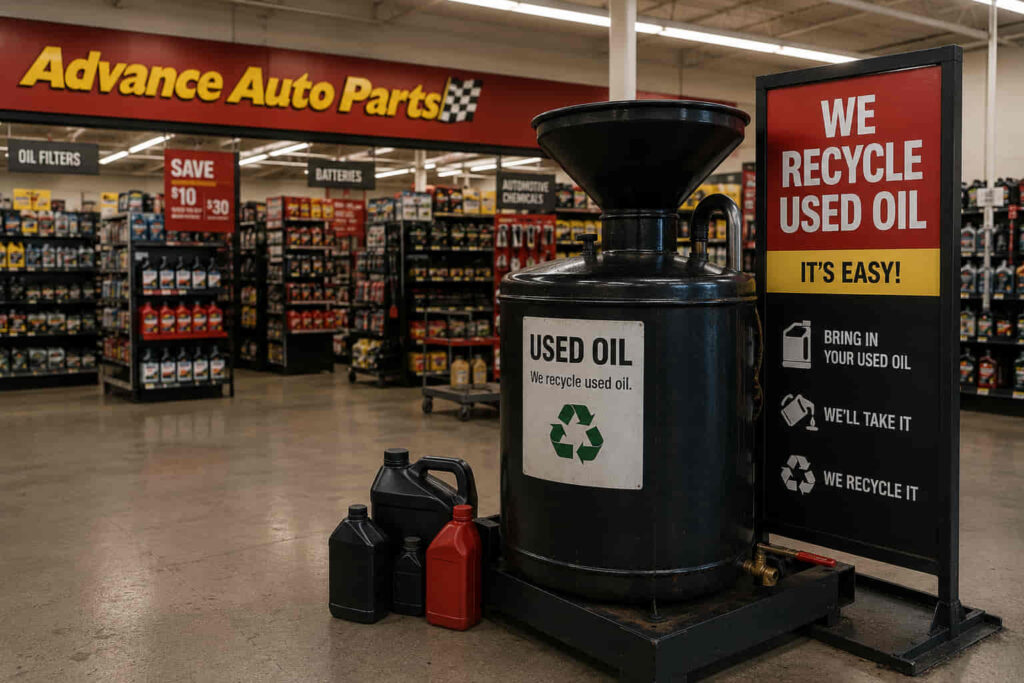
Changing your own engine oil is one of the easiest ways to reduce vehicle maintenance costs, but it also creates a common question: what should you do with the used oil afterward? Many drivers search for whether Advance Auto Parts accepts used motor oil because auto parts stores are often more convenient than municipal recycling centers. However, recycling policies are not always identical across every location, making it important to understand what services are actually available before making a trip.
In general, many Advance Auto Parts stores participate in used motor oil recycling programs that allow customers to dispose of used engine oil at no charge. Participation, storage capacity, and accepted materials may vary by location because individual stores must comply with local environmental regulations and operational policies. Calling your nearest store before visiting helps confirm availability and prevents unnecessary travel.
This guide explains everything you need to know before bringing used oil to Advance Auto Parts, including the types of oil that are commonly accepted, quantity limits, preparation requirements, recycling procedures, and alternative disposal options if your local store cannot accept your oil. By understanding these details, you can recycle used motor oil safely while helping prevent environmental contamination and supporting responsible automotive maintenance.
Does Advance Auto Parts Take Used Oil?
Yes, many Advance Auto Parts stores accept used motor oil for recycling, but participation depends on the individual store and local regulations. The company supports responsible disposal of automotive fluids through recycling programs available at participating locations, allowing DIY vehicle owners to recycle used engine oil instead of throwing it away or disposing of it improperly. Because used motor oil is classified as a recyclable petroleum product, many stores collect it and transfer it to licensed recycling partners that process the oil for reuse or energy recovery.
Although the overall recycling program is widely available, customers should not assume that every Advance Auto Parts location offers identical services. Store participation can be affected by state environmental regulations, local hazardous waste requirements, storage capacity, or temporary suspension when collection tanks reach their maximum capacity. A location that accepts used oil one week may temporarily stop accepting additional oil until its storage container has been emptied by a recycling contractor. For this reason, confirming availability with the local store before transporting used oil is the most reliable approach.
The program is primarily intended for household quantities of used motor oil generated from personal vehicle maintenance rather than commercial automotive businesses. This distinction helps stores comply with environmental regulations governing the collection and transportation of petroleum waste. Commercial repair shops typically use licensed waste management companies that handle much larger volumes under different regulatory requirements.
Recycling used motor oil provides environmental benefits that extend beyond simple waste disposal. Unlike many automotive fluids, used engine oil can be cleaned, refined, and processed into usable lubricating oil or industrial fuel instead of becoming landfill waste. Proper recycling also prevents oil from contaminating soil, groundwater, rivers, and drainage systems. Even relatively small amounts of improperly discarded motor oil can pollute significant quantities of water, making responsible recycling an essential part of vehicle ownership rather than simply a matter of convenience.
What Types of Used Oil Does Advance Auto Parts Accept?
Advance Auto Parts generally accepts used motor oil generated from passenger vehicles and light-duty trucks at participating recycling locations. This typically includes conventional engine oil, synthetic motor oil, synthetic blend oil, and diesel engine oil that has been drained during routine oil changes. Although these lubricants have different formulations and performance characteristics when used inside an engine, they usually enter the same recycling stream because the re-refining process removes contaminants before the base oil is processed into reusable products.
The most important requirement is that the used oil remains uncontaminated. Recycling facilities are designed to process petroleum-based lubricants, not mixed automotive fluids. If used motor oil has been combined with gasoline, brake fluid, coolant, solvents, paint, cleaning chemicals, or other hazardous liquids, the entire container may be rejected because contamination significantly complicates the recycling process and increases disposal costs. Even a relatively small amount of another fluid can prevent an entire batch of collected oil from being recycled efficiently.
Because individual stores operate under local environmental regulations and third-party recycling contracts, accepted materials may differ from one location to another. Some stores may accept only used engine oil, while others may also participate in programs for oil filters or additional automotive fluids through separate collection systems. The safest approach is to contact the specific Advance Auto Parts store before visiting, particularly if you are bringing materials other than used engine oil.
Keeping used oil clean from the moment it is drained also improves recycling efficiency. Storing the oil in a sealed plastic container that previously held motor oil reduces the likelihood of contamination and makes it easier for store employees to inspect and transfer the material into their collection tank. Proper storage not only protects the recycling stream but also helps ensure your used oil can be accepted without delay.
How Much Used Oil Can You Bring?
Most participating Advance Auto Parts locations accept household quantities of used motor oil rather than commercial volumes, although the exact limit varies depending on state regulations, local environmental requirements, and each store’s storage capacity. The purpose of these limits is to ensure the recycling program serves individual vehicle owners while maintaining safe handling procedures for petroleum waste.
Quantity limits also help stores manage temporary storage before collected oil is transported to licensed recycling facilities. Used motor oil is typically stored in dedicated collection tanks with a fixed capacity. Once those tanks reach their limit, a store may temporarily suspend acceptance until a recycling contractor empties the system. As a result, customers may occasionally find that a participating location cannot accept additional oil despite normally offering the service.
Drivers who perform routine maintenance on one or two personal vehicles rarely encounter problems with these limits because a standard passenger vehicle oil change generally produces only a few quarts of used oil. In contrast, individuals maintaining multiple vehicles, commercial fleets, agricultural equipment, or repair shop operations should arrange disposal through licensed waste management providers rather than relying on retail recycling programs designed for residential customers.
Calling the store before transporting used oil remains the simplest way to avoid inconvenience. A quick confirmation allows customers to verify whether the location is currently accepting used oil, whether any quantity restrictions apply, and whether temporary storage is available. This small step saves time while ensuring the recycling process proceeds smoothly for both customers and store employees.
What Types of Used Oil Does Advance Auto Parts Accept?
Advance Auto Parts generally accepts used motor oil generated from passenger vehicles and light-duty trucks at participating recycling locations. This typically includes conventional engine oil, synthetic motor oil, synthetic blend oil, and diesel engine oil that has been drained during routine oil changes. Although these lubricants have different formulations and performance characteristics when used inside an engine, they usually enter the same recycling stream because the re-refining process removes contaminants before the base oil is processed into reusable products.
The most important requirement is that the used oil remains uncontaminated. Recycling facilities are designed to process petroleum-based lubricants, not mixed automotive fluids. If used motor oil has been combined with gasoline, brake fluid, coolant, solvents, paint, cleaning chemicals, or other hazardous liquids, the entire container may be rejected because contamination significantly complicates the recycling process and increases disposal costs. Even a relatively small amount of another fluid can prevent an entire batch of collected oil from being recycled efficiently.
Because individual stores operate under local environmental regulations and third-party recycling contracts, accepted materials may differ from one location to another. Some stores may accept only used engine oil, while others may also participate in programs for oil filters or additional automotive fluids through separate collection systems. The safest approach is to contact the specific Advance Auto Parts store before visiting, particularly if you are bringing materials other than used engine oil.
Keeping used oil clean from the moment it is drained also improves recycling efficiency. Storing the oil in a sealed plastic container that previously held motor oil reduces the likelihood of contamination and makes it easier for store employees to inspect and transfer the material into their collection tank. Proper storage not only protects the recycling stream but also helps ensure your used oil can be accepted without delay.
How Much Used Oil Can You Bring?
Most participating Advance Auto Parts locations accept household quantities of used motor oil rather than commercial volumes, although the exact limit varies depending on state regulations, local environmental requirements, and each store’s storage capacity. The purpose of these limits is to ensure the recycling program serves individual vehicle owners while maintaining safe handling procedures for petroleum waste.
Quantity limits also help stores manage temporary storage before collected oil is transported to licensed recycling facilities. Used motor oil is typically stored in dedicated collection tanks with a fixed capacity. Once those tanks reach their limit, a store may temporarily suspend acceptance until a recycling contractor empties the system. As a result, customers may occasionally find that a participating location cannot accept additional oil despite normally offering the service.
Drivers who perform routine maintenance on one or two personal vehicles rarely encounter problems with these limits because a standard passenger vehicle oil change generally produces only a few quarts of used oil. In contrast, individuals maintaining multiple vehicles, commercial fleets, agricultural equipment, or repair shop operations should arrange disposal through licensed waste management providers rather than relying on retail recycling programs designed for residential customers.
Calling the store before transporting used oil remains the simplest way to avoid inconvenience. A quick confirmation allows customers to verify whether the location is currently accepting used oil, whether any quantity restrictions apply, and whether temporary storage is available. This small step saves time while ensuring the recycling process proceeds smoothly for both customers and store employees.
Read more: Does AutoZone Recharge AC
How Should You Prepare Used Oil Before Taking It to Advance Auto Parts?
Preparing used motor oil properly before visiting Advance Auto Parts increases the likelihood that the store can accept it for recycling while also reducing the risk of spills, contamination, and environmental damage. The most important step is to transfer the used oil into a clean, leak-proof container with a secure lid immediately after completing an oil change. Many vehicle owners simply reuse the original motor oil bottle because it is specifically designed to hold petroleum-based products and can be tightly sealed for safe transportation.
The quality of the recycled oil depends heavily on whether it remains uncontaminated. Used engine oil should never be mixed with coolant, transmission fluid, brake fluid, power steering fluid, gasoline, paint, solvents, or household chemicals. Although these automotive fluids may appear similar, each requires a different treatment process. Mixing them together can cause an entire container of oil to be rejected because recycling facilities cannot efficiently separate incompatible contaminants once they enter the collection system.
Proper transportation is equally important. The container should remain upright inside the vehicle and be placed in a location where it cannot tip over during sudden braking or cornering. Many drivers place the container inside a plastic storage bin or tray to contain accidental leaks. This simple precaution protects the vehicle interior while making it easier to transport the oil safely from home to the recycling location.
Checking the container before arriving at the store also helps streamline the recycling process. Employees may visually inspect the used oil to ensure it appears free from obvious contamination before directing customers to the designated collection area. Spending a few minutes preparing the oil correctly not only improves recycling efficiency but also helps participating stores continue offering free collection services to local communities.
Does Advance Auto Parts Recycle Used Oil Filters?
Used oil filters are recyclable because they contain both reusable steel and residual motor oil. However, whether Advance Auto Parts accepts used oil filters depends on the individual store rather than being a universal company-wide service. Some participating locations collect both used motor oil and oil filters, while others only accept motor oil due to differences in local recycling contracts, storage capacity, or environmental regulations. Customers planning to recycle oil filters should contact their local store before making a trip to confirm whether the service is available.
An oil filter should also be prepared correctly before recycling. After removal from the engine, the filter should be allowed to drain for an appropriate period so that as much residual oil as possible flows back into the used oil collection container. Draining the filter reduces the amount of recoverable oil that would otherwise be wasted and minimizes leakage during transportation. Some recycling facilities require filters to be completely drained before acceptance because excessive free-flowing oil complicates handling and storage.
Oil filters play an important role in the overall recycling process because they contain valuable materials that can be recovered and reused. The steel housing is typically recycled into new metal products, while the collected motor oil can enter the same re-refining process as other used lubricants. Recycling both components reduces waste, conserves raw materials, and supports a more sustainable automotive maintenance cycle.
If your local Advance Auto Parts does not recycle oil filters, alternative collection options are often available through municipal recycling centers, household hazardous waste programs, independent automotive repair facilities, or other auto parts retailers that participate in filter recycling initiatives. Confirming available services before disposal ensures both the used oil and the filter are managed according to local environmental requirements rather than entering the regular waste stream.
Is There a Fee for Recycling Used Oil?
Most participating Advance Auto Parts stores accept used motor oil for recycling at no charge. The recycling program is designed to encourage responsible disposal of household-generated used engine oil rather than allowing petroleum products to enter landfills, storm drains, or the environment. Free collection also makes recycling more accessible for drivers who perform routine oil changes at home, eliminating one of the most common barriers to proper disposal.
Although the service is generally free, customers should understand that availability depends on the individual store. Participating locations may temporarily suspend oil collection when their storage tanks reach capacity or when scheduled pickups by licensed recycling contractors have been delayed. In these situations, the store is not charging a recycling fee but simply cannot accept additional oil until storage space becomes available. Contacting the store before transporting used oil helps avoid unnecessary travel and confirms that the recycling service is currently operating.
The free recycling program is also intended for personal vehicle maintenance rather than commercial operations. Automotive repair shops, fleet operators, and businesses that generate large quantities of used motor oil are typically required to work with licensed waste management companies that specialize in collecting and transporting petroleum waste under commercial regulations. Retail collection programs are designed to support individual vehicle owners and therefore may decline unusually large volumes of used oil.
Choosing a free recycling service benefits both vehicle owners and the environment. Re-refining used motor oil requires significantly fewer natural resources than producing new lubricating oil from crude petroleum, while proper collection prevents oil from contaminating soil and water systems. By participating in these programs, drivers contribute to a circular recycling process in which valuable petroleum resources can be recovered and used again instead of becoming hazardous waste.
What Happens to Used Oil After Recycling?
Used motor oil does not become waste simply because it has reached the end of its service life inside an engine. Instead, it remains a valuable petroleum resource that can be collected, cleaned, and processed into new products through specialized recycling and re-refining systems. Once customers leave their used oil at a participating Advance Auto Parts location, the oil is stored in dedicated collection tanks until it is transported by licensed recycling contractors to approved processing facilities.
The first stage of recycling focuses on removing contaminants that accumulated while the oil circulated through an engine. During normal vehicle operation, motor oil collects dirt, carbon deposits, microscopic metal particles, combustion by-products, moisture, and degraded additives. Recycling facilities use filtration, dehydration, vacuum distillation, and other refining technologies to separate these contaminants from the reusable base oil. The resulting product can then be blended with new additives to manufacture high-quality lubricating oil that meets modern performance specifications.
Not every gallon of collected oil follows the same recycling pathway. Depending on its quality and contamination level, some used motor oil is re-refined into new lubricants, while other batches are processed into industrial fuel for applications such as asphalt plants, cement kilns, manufacturing facilities, or power generation. Both approaches recover value from the petroleum resource, although re-refining generally provides the greatest environmental benefit because it keeps the oil within the lubricant supply chain for repeated use.
Proper recycling also delivers significant environmental advantages. Used motor oil contains substances that can contaminate soil, rivers, lakes, and groundwater if disposed of improperly. Recycling prevents these pollutants from entering the environment while reducing demand for newly extracted crude oil. Every successful collection program supports resource conservation, lowers waste generation, and encourages more sustainable vehicle maintenance practices for millions of drivers who perform routine oil changes each year.
What Should You Avoid When Recycling Used Oil?
Recycling used motor oil is a straightforward process, but several common mistakes can prevent the oil from being accepted or reduce its recycling value. The most important mistake to avoid is contaminating the used oil with other automotive fluids or household chemicals. Motor oil should remain separate from coolant, brake fluid, transmission fluid, gasoline, solvents, paint, or cleaning products because each substance requires a different disposal method. Once different fluids are mixed together, recycling facilities may classify the entire container as hazardous waste instead of recyclable oil, increasing disposal complexity and environmental risk.
Another frequent mistake is storing used oil in unsuitable containers. Thin plastic bottles designed for beverages or household products may degrade, crack, or leak when exposed to petroleum products. Using the original motor oil container or another heavy-duty, leak-resistant container with a tightly sealed lid provides a much safer solution. Proper storage also reduces the chance of accidental spills during transportation, protecting both the vehicle and the surrounding environment.
Drivers should also avoid leaving used oil exposed to rain, dust, or direct sunlight for extended periods. Although motor oil does not spoil in the traditional sense, prolonged exposure increases the likelihood of contamination from dirt, moisture, and debris. A sealed container stored in a cool, dry location preserves the oil’s quality until it can be delivered to a participating recycling center.
Another oversight is arriving at a recycling location without confirming that the store is currently accepting used oil. Collection tanks occasionally reach capacity, and temporary service interruptions may occur while licensed recycling contractors remove stored oil. Spending a few minutes calling the store beforehand can prevent unnecessary travel and ensure that the recycling process proceeds smoothly.
Improper disposal remains the most harmful mistake of all. Pouring used motor oil onto the ground, into storm drains, household plumbing, or regular trash containers allows petroleum contaminants to enter soil and water systems where they become difficult and expensive to remove. Recycling programs exist to recover valuable lubricating oil while protecting natural resources, making proper disposal both an environmental responsibility and an essential part of responsible vehicle ownership.
Where Else Can You Recycle Used Motor Oil?
Although Advance Auto Parts is a convenient option for many vehicle owners, it is not the only place where used motor oil can be recycled. Numerous automotive retailers, municipal recycling facilities, and household hazardous waste programs provide collection services, giving drivers multiple disposal options if their nearest Advance Auto Parts location does not participate in the recycling program or is temporarily unable to accept additional oil.
Large automotive retail chains such as AutoZone, O’Reilly Auto Parts, and selected NAPA Auto Parts locations commonly operate used oil recycling programs similar to those offered by participating Advance Auto Parts stores. These retailers primarily serve DIY vehicle owners who perform routine maintenance at home and typically accept household quantities of uncontaminated engine oil. However, because participation varies by location, customers should always verify local policies before transporting used oil.
Municipal recycling centers often provide one of the most comprehensive disposal solutions. Many cities and counties operate permanent collection facilities or organize household hazardous waste events where residents can recycle used motor oil, oil filters, antifreeze, batteries, paint, and other regulated materials at a single location. These government-operated programs are especially valuable for disposing of automotive fluids that may not be accepted by retail stores.
Independent automotive repair shops may also accept used motor oil from customers, particularly if they already maintain commercial recycling contracts with licensed waste management companies. While not every repair facility offers this service to the public, some choose to support local recycling efforts by collecting limited quantities of household-generated oil. Calling ahead remains the best way to determine whether a particular shop accepts outside materials.
Having multiple recycling options encourages responsible disposal regardless of where vehicle maintenance is performed. Whether used motor oil is taken to an auto parts retailer, a municipal recycling center, or another approved collection facility, the objective remains the same: recovering valuable petroleum resources while preventing environmental contamination. Choosing an authorized recycling location ensures the oil enters an approved processing system where it can be safely re-refined or converted into other useful petroleum products instead of becoming hazardous waste.
Frequently Asked Questions
Can You Recycle Synthetic Oil at Advance Auto Parts?
Yes, participating Advance Auto Parts stores generally accept used synthetic motor oil for recycling just as they do conventional engine oil. Although synthetic oil is manufactured differently and contains advanced additive packages, the recycling industry processes both conventional and synthetic lubricants through similar re-refining systems. During recycling, contaminants such as metal particles, combustion by-products, moisture, and degraded additives are removed, allowing the recovered base oil to be reused in the production of new lubricants.
The key requirement is that the synthetic oil has not been contaminated with other automotive fluids or hazardous chemicals. If the oil remains clean and is stored in a sealed container, it can typically enter the normal used oil recycling stream without additional handling requirements.
Can You Recycle Transmission Fluid at Advance Auto Parts?
Not necessarily. Used transmission fluid should not be assumed to be accepted simply because a store collects used motor oil. Automatic transmission fluid and other automotive lubricants have different chemical compositions and may require separate collection systems depending on local recycling contracts and environmental regulations. Some Advance Auto Parts locations may accept additional automotive fluids, while others only collect used engine oil. Customers should always contact their local store before bringing transmission fluid for recycling to avoid transporting materials that cannot be accepted.
Keeping transmission fluid separate from used engine oil is equally important. Mixing different automotive fluids may contaminate the recycling stream and cause both products to be rejected by the recycling facility.
Can You Recycle Oil Mixed with Gasoline?
No. Used motor oil that has been mixed with gasoline should not be taken to standard used oil recycling programs. Gasoline changes the chemical properties of the oil, increases flammability, and creates safety concerns during transportation, storage, and processing. Recycling facilities that are designed to handle uncontaminated lubricating oil may refuse contaminated containers because the mixture requires specialized hazardous waste treatment rather than conventional oil recycling.
If gasoline or other hazardous substances have been mixed with used oil, contact your local hazardous waste collection program or municipal recycling authority for guidance on proper disposal. Attempting to dilute contaminated oil with additional motor oil will not restore its recyclability.
Do You Need the Original Oil Container?
No, but the container should be clean, leak-proof, and suitable for storing petroleum products. Many drivers reuse the original motor oil bottle because it is durable, easy to seal, and clearly designed for transporting lubricants. Other heavy-duty plastic containers intended for automotive fluids are also appropriate provided they can be tightly closed and show no signs of damage.
Containers that previously held food, beverages, household chemicals, or cleaning products are generally not recommended because residue may contaminate the used oil or weaken the plastic. Choosing the proper container protects the recycling process while reducing the risk of spills during transportation.
How Can You Find a Participating Advance Auto Parts Store?
The easiest way to determine whether a specific Advance Auto Parts location accepts used motor oil is to contact the store directly before making a trip. Because recycling availability depends on local regulations, storage capacity, and participation in regional recycling programs, policies can vary from one location to another. A brief phone call allows customers to confirm whether the store is currently accepting used oil, whether any quantity limits apply, and whether additional materials such as oil filters can also be recycled.
Verifying store participation in advance saves time, prevents unnecessary transportation of used oil, and ensures the recycling process can be completed safely and efficiently.