Toyota engine air filter replacement involves opening the engine air filter housing, removing the old filter, installing a compatible replacement, and securing the housing. The process typically takes 5–15 minutes on Toyota models with easily accessible air filter housings, including many Corolla, Camry, and RAV4 configurations. Most replacements require no specialized tools, although some models use screws or bolts to secure the housing.
The engine air filter prevents dust, dirt, and airborne debris from entering the engine’s air intake system. Over time, trapped contaminants accumulate in the filter media and restrict airflow. A severely clogged filter can affect engine performance, making regular inspection and timely replacement important for maintaining proper engine operation.
Toyota engine air filter replacement intervals vary by model, model year, engine configuration, and driving conditions. Vehicles frequently driven on dusty roads may require more frequent inspections than those operated primarily on paved highways. Choosing the correct replacement filter is equally important because filter dimensions, housing designs, and part numbers differ across Toyota vehicles.
This guide explains how to locate, remove, and replace a Toyota engine air filter, determine when replacement is necessary, select the correct filter, and avoid common installation mistakes.
How Do You Replace a Toyota Engine Air Filter?
To replace a Toyota engine air filter, locate the air filter housing, release its retaining clips or screws, remove the old filter, and install a compatible replacement. Secure the housing after checking that the new filter sits correctly against its sealing surfaces. The procedure is similar across many Toyota vehicles, including the Corolla, Camry, RAV4, and Highlander, although housing designs and fasteners vary by model year and engine.
Replacing the engine air filter does not require disconnecting fuel lines, removing engine components, or modifying the air intake system. Most Toyota vehicles use a rectangular or panel-style filter housed inside a plastic airbox. The replacement process involves accessing this housing without allowing dirt or loose debris to enter the clean side of the intake system.
What Tools Do You Need to Replace a Toyota Engine Air Filter?
Most Toyota engine air filter replacements require three basic items: a compatible replacement filter, a clean microfiber cloth, and a screwdriver or socket wrench if the airbox uses threaded fasteners. Many Toyota Corolla, Camry, and RAV4 configurations have spring-loaded metal clips that can be released by hand, eliminating the need for tools.
The replacement filter must match the vehicle’s model year, engine configuration, and original filter specifications. Toyota vehicles with different engines may use different filter dimensions even when they share the same model name. Confirm compatibility using the vehicle identification number (VIN), Toyota parts catalog, or the replacement filter manufacturer’s fitment guide.
Park the vehicle on a level surface, turn off the engine, and allow hot engine components to cool before opening the air filter housing. Keep the replacement filter in its packaging until installation to prevent contamination of the filter media.
Where Is the Engine Air Filter Located in a Toyota?
The Toyota engine air filter is located inside a plastic housing in the engine compartment, usually connected to the engine’s air intake duct. On many Toyota Corolla, Camry, and RAV4 models, the housing is positioned toward one side of the engine bay and connects to a large intake tube leading toward the engine.
The air filter housing typically consists of a lower compartment, a removable or hinged upper cover, and retaining clips or screws. A large plastic intake duct connects the housing to the engine’s intake system. Some configurations also have a mass airflow (MAF) sensor mounted near the housing outlet, making careful handling of nearby electrical connections important.
To identify the correct housing, follow the large air intake duct from the engine toward the airbox. Avoid confusing the engine air filter with the cabin air filter, which is generally accessed through the passenger compartment and filters air entering the vehicle’s ventilation system.
How Do You Remove and Install a Toyota Engine Air Filter?
Toyota engine air filter replacement consists of six main steps. Follow the vehicle-specific owner’s manual or service instructions when the airbox design differs from the general procedure below.
Step 1: Open the engine air filter housing.
Locate the retaining clips, screws, or bolts securing the airbox cover. Release the clips by hand or remove the threaded fasteners using the appropriate tool. Carefully lift or tilt the cover enough to access the filter without pulling on attached wiring, sensor connectors, or intake hoses.
Step 2: Remove the old engine air filter.
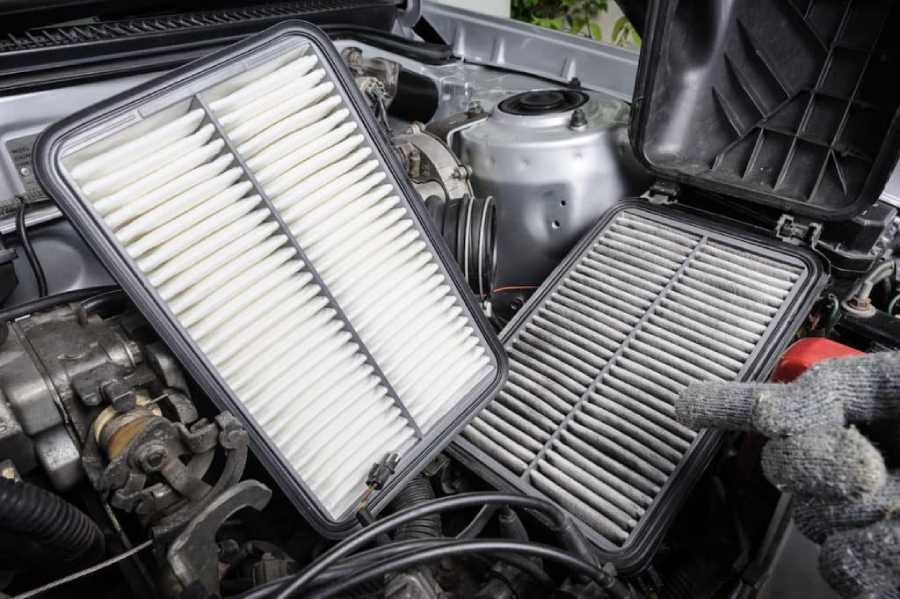
Lift the existing filter straight out of the housing, noting its orientation and how its sealing edge fits into the airbox. Inspect the filter for accumulated dust, leaves, insects, moisture, or damaged filter media. Avoid shaking loose debris into the clean-air outlet connected to the engine.
Step 3: Inspect and clean the air filter housing.
Check the lower housing for leaves, sand, and loose dirt. Remove accessible debris using a clean cloth or suitable vacuum attachment while preventing contamination of the intake outlet. Inspect the housing edges and sealing surfaces for damage that could prevent the replacement filter from fitting securely.
Step 4: Install the replacement engine air filter.
Place the new filter into the housing in the correct orientation, matching the original filter’s position and the housing’s shape. Ensure the filter’s rubber or molded sealing edge sits evenly in its designated channel. The filter should fit without bending, excessive force, or visible gaps around its perimeter.
Step 5: Close and secure the air filter housing.
Reposition the airbox cover, engaging any alignment tabs before fastening the clips or screws. Make sure the filter’s sealing edge is not pinched between the housing surfaces. Tighten threaded fasteners according to the vehicle’s service instructions and avoid overtightening plastic components.
Step 6: Check the completed installation.
Inspect the housing to confirm that all retaining clips are locked, fasteners are secure, and intake ducts remain properly connected. Check that no tools, packaging materials, or loose debris remain in the engine compartment. Start the engine and listen for unusual intake noises that could indicate an improperly seated housing or disconnected intake duct.
A correctly installed Toyota engine air filter should sit securely inside the housing without gaps around its sealing edge. The airbox cover should close completely, allowing incoming air to pass through the filter media before entering the engine’s intake system.
How Often Should You Replace a Toyota Engine Air Filter?
Toyota engine air filter replacement intervals depend on the vehicle’s model, model year, engine, and driving conditions. Many Toyota maintenance schedules specify engine air filter replacement at approximately 30,000 miles (48,000 km) under normal driving conditions, while certain models require different intervals. The vehicle’s official maintenance guide provides the correct schedule, including inspection requirements and additional maintenance for dusty environments.
Engine air filters collect airborne particles such as road dust, pollen, sand, and debris before they enter the combustion system. As contaminants accumulate within the filter media, airflow resistance increases. Excessive restriction can reduce the amount of air available to the engine under demanding operating conditions, particularly during acceleration or high engine loads.
Toyota maintenance schedules distinguish between inspecting an engine air filter and replacing it. An inspection checks the filter for excessive contamination, physical damage, moisture, and improper sealing. Replacement is necessary when the filter reaches its scheduled service interval or shows conditions that compromise filtration or airflow. A filter that appears slightly discolored does not automatically require replacement because discoloration alone does not establish the degree of airflow restriction.
Driving conditions directly affect how quickly an engine air filter becomes contaminated. Toyota vehicles frequently operated on unpaved roads, construction sites, agricultural routes, or dusty environments encounter higher concentrations of airborne particles than vehicles driven primarily on paved highways. These conditions can justify more frequent filter inspections and earlier replacement according to the applicable maintenance schedule.
For example, a Toyota RAV4 regularly driven on dusty gravel roads may accumulate debris in its engine air filter faster than a comparable RAV4 used primarily for highway commuting. The difference results from the concentration of airborne contaminants entering the intake system rather than mileage alone.
Toyota owners should check the maintenance schedule for their specific vehicle and inspect the filter when operating conditions warrant additional attention. Maintaining the correct replacement interval helps prevent excessive intake restriction while avoiding unnecessary replacement of filters that remain serviceable.
How Do You Choose the Correct Engine Air Filter for a Toyota?
Choose a Toyota engine air filter by matching the replacement part to the vehicle’s model, model year, engine configuration, and original equipment specifications. The correct filter must fit securely inside the airbox, provide the required filtration characteristics, and form a proper seal around the housing. A filter with incorrect dimensions can leave gaps that allow unfiltered air to bypass the filter media.
Toyota vehicles do not use one universal engine air filter. Different generations and engine configurations of the Corolla, Camry, RAV4, Tacoma, and Highlander may require different filter designs. Even vehicles with the same model name can have different air intake systems depending on their engine and production year.
Three characteristics determine whether a replacement filter is suitable: physical compatibility, filtration performance, and sealing quality. Physical compatibility ensures that the filter fits the housing without deformation. Filtration performance determines how effectively the media captures airborne contaminants while allowing sufficient airflow. Sealing quality prevents air from bypassing the filter through gaps between the filter frame and airbox.
How Do You Find the Correct Toyota Engine Air Filter Part Number?
The correct Toyota engine air filter part number can be identified through an official Toyota parts catalog, an authorized Toyota dealership, or a reliable replacement parts database. The vehicle identification number (VIN) provides the most precise starting point because it helps identify the vehicle’s production specifications and compatible components.
Start by locating the VIN on the vehicle’s dashboard, driver-side door jamb, or registration documents. Enter the VIN into a Toyota parts lookup system or provide it to a dealership parts department. Confirm the engine air filter listed for the vehicle before ordering a replacement.
The existing filter may also display a manufacturer name or part number on its frame. This marking can help identify a replacement, but it should be verified against the vehicle’s specifications because a previously installed filter may not be the correct part.
Toyota engine air filter part numbers can differ across model years, engines, and regional vehicle specifications. For example, a Toyota Camry equipped with a four-cylinder engine may use a different filter from another Camry generation or engine configuration. Matching only the model name without checking the year and engine increases the risk of ordering an incompatible filter.
When selecting an aftermarket replacement, use the manufacturer’s fitment catalog to cross-reference the verified Toyota OEM part number. Check the filter’s dimensions, frame design, and sealing profile before installation.
Can You Use an Aftermarket Engine Air Filter in a Toyota?
Yes, a compatible aftermarket engine air filter can replace a Toyota OEM engine air filter when it meets the vehicle’s fitment and filtration requirements. Aftermarket filters are manufactured by independent parts companies and are available in different materials, designs, and price ranges.
Toyota OEM engine air filters are specified for the vehicle’s original air intake system and provide a straightforward fitment reference. Aftermarket alternatives from established filtration manufacturers, such as DENSO, WIX, and FRAM, offer replacement filters for various Toyota models. Compatibility must still be verified for the specific model year and engine rather than assumed from the brand name.
The main differences between OEM and aftermarket engine air filters involve fitment specifications, filter media, construction, and price. A properly designed replacement should provide adequate particle filtration without creating excessive airflow restriction. The sealing frame must also maintain consistent contact with the airbox to prevent unfiltered air from entering the intake system.
Standard disposable paper filters are suitable for routine maintenance when they meet the vehicle’s requirements. Reusable performance filters use different filtration media and may require specialized cleaning or treatment. Their suitability depends on the filter’s design, maintenance requirements, and compatibility with the vehicle’s intake system.
For most Toyota owners performing routine maintenance, a genuine Toyota filter or a verified OEM-equivalent aftermarket filter is a practical choice. Confirm the part number, inspect the sealing edge, and follow the manufacturer’s installation instructions to ensure the replacement fits correctly.
What Are the Signs of a Dirty Toyota Engine Air Filter?
The main signs of a dirty Toyota engine air filter include excessive debris accumulation, reduced airflow, sluggish acceleration under heavy engine load, and visible damage to the filter media. These conditions indicate that the filter may require inspection or replacement. However, engine performance symptoms alone cannot confirm a clogged air filter because ignition, fuel delivery, and sensor problems can produce similar effects.
A dirty engine air filter restricts airflow when accumulated contaminants obstruct the passages between its filtration fibers. The engine’s intake system must overcome this additional resistance to draw air through the filter. Severe restriction can limit the air available for combustion, particularly when the engine requires higher airflow during acceleration or sustained high-speed driving.
Reduced engine performance is one possible symptom of a severely restricted air filter. A Toyota Corolla, Camry, or RAV4 with substantial intake restriction may respond less effectively during hard acceleration because the engine cannot draw air as freely as intended. Modern Toyota engines use electronic engine management systems that adjust fuel delivery according to operating conditions, so a dirty filter does not automatically cause noticeable power loss.
Reduced fuel efficiency may occur under certain operating conditions when significant intake restriction affects engine efficiency. However, modern fuel-injected gasoline engines compensate for changes in incoming airflow, making fuel economy an unreliable indicator of filter condition. Tire pressure, driving habits, traffic conditions, and engine maintenance also influence fuel consumption.
Visible contamination provides a more direct reason to inspect the filter. Remove the engine air filter and examine its pleated surfaces for accumulated dirt, leaves, insects, and other debris. A heavily loaded filter, torn filtration media, damaged sealing edge, or evidence of moisture contamination can justify replacement. Ordinary surface discoloration does not necessarily mean the filter has reached the end of its service life.
Unusual intake noises may also warrant inspection, particularly when they appear after air filter maintenance. Whistling or abnormal suction sounds can indicate an improperly closed airbox, loose intake duct, or damaged sealing surface rather than a dirty filter itself. Inspect the housing and intake connections before attributing the noise to filter restriction.
A Toyota engine air filter should be evaluated using its physical condition, the manufacturer’s maintenance schedule, and the vehicle’s operating environment. If performance problems continue after replacing a heavily contaminated filter, further diagnosis of the intake system, sensors, ignition components, and fuel delivery system may be necessary.
How Much Does Toyota Engine Air Filter Replacement Cost?
Toyota engine air filter replacement commonly costs approximately $15–$45 for a standard replacement filter and $40–$100 for professional replacement service in the United States. These are general budgeting estimates rather than verified current quotes. Actual costs depend on the Toyota model, engine configuration, filter manufacturer, local labor rates, and service provider.
Replacing the filter yourself generally eliminates labor charges because the procedure involves accessing the engine airbox rather than disassembling major engine components. Many Toyota models use easily accessible housings secured by clips, allowing owners to complete the replacement with minimal equipment.
| Replacement option | Estimated cost (USD) |
|---|---|
| Standard aftermarket engine air filter | $15–$30 |
| Genuine Toyota OEM engine air filter | $20–$45 |
| DIY replacement, including filter | $15–$45 |
| Professional replacement, including parts and labor | $40–$100 |
These ranges are illustrative and may not apply to every Toyota model or service location.
The replacement filter itself accounts for most DIY expenses. A compatible aftermarket filter may cost less than a genuine Toyota component, although pricing varies by manufacturer and vehicle application. OEM filters provide a direct match to Toyota’s specified replacement part, while aftermarket alternatives should be checked for dimensions, filtration characteristics, and sealing compatibility.
Professional replacement costs include the filter price and the labor charged to access the housing, remove the existing filter, and install the replacement. A repair shop may charge a minimum labor amount even when the physical replacement takes only a few minutes. Dealership pricing can also differ from independent repair shops because of parts pricing and labor-rate structures.
For example, if a Toyota Corolla owner purchases a compatible engine air filter for $25 and installs it without additional tools, the total replacement expense is $25. If a repair facility charges $70 for the same service, completing the replacement at home saves $45. This example illustrates the cost difference rather than representing a specific service quote.
The most reliable way to estimate Toyota engine air filter replacement cost is to identify the correct part number and compare the total installed price from local service providers. Owners performing routine maintenance can reduce expenses by replacing an accessible engine air filter themselves, provided they follow the vehicle-specific installation instructions and ensure the airbox is properly sealed.
Can You Clean a Toyota Engine Air Filter Instead of Replacing It?
Most Toyota engine air filters are disposable paper filters that should be replaced rather than washed or cleaned for reuse. These filters use pleated filtration media to capture dust, sand, pollen, and other airborne contaminants before they enter the engine. Although loose surface debris can sometimes be removed, cleaning does not reliably restore the filter’s original filtration efficiency or airflow characteristics.
Disposable engine air filters trap contaminants both on the surface and within the filter media. Blowing compressed air through the filter can damage its fibers, enlarge microscopic passages, or push embedded particles deeper into the material. Washing a conventional paper filter with water can weaken its structure, deform the pleats, and compromise the sealing surfaces. These changes increase the risk of unfiltered air entering the engine.
Reusable engine air filters are different because they are specifically designed for repeated cleaning. Certain aftermarket filters use washable synthetic or cotton-based media and require cleaning procedures specified by their manufacturers. Some reusable filters also require a controlled application of filter oil after drying. Excessive oil application can contaminate nearby intake components, including the mass airflow sensor on vehicles equipped with one.
For example, a Toyota Camry equipped with a standard disposable paper engine air filter should receive a compatible replacement when the filter reaches its scheduled service interval or becomes excessively contaminated. A Toyota fitted with an approved reusable aftermarket filter can follow the filter manufacturer’s cleaning and maintenance instructions instead.
Replacing a contaminated disposable filter is the recommended approach because it restores the intended filter condition without introducing damage associated with improper cleaning. Inspect the airbox for accumulated debris during replacement and ensure the new filter seals correctly before closing the housing.
Read more: Ram 1500 Lug Nut Torque: Specs by Model Year
What Mistakes Should You Avoid When Replacing a Toyota Engine Air Filter?
The five main Toyota engine air filter replacement mistakes are installing an incompatible filter, positioning the filter incorrectly, allowing debris into the intake system, failing to secure the airbox, and damaging nearby intake components. Each mistake can compromise filtration, interfere with airflow, or create additional maintenance problems.
1. Installing the wrong engine air filter
An incompatible engine air filter may not fit the housing correctly, leaving gaps around its sealing edges. Toyota models with different engine configurations or production years can require different filter dimensions and frame designs. For example, a replacement listed for one Toyota RAV4 engine configuration should not be assumed compatible with every RAV4 model year. Verify the replacement part using the vehicle’s VIN, engine specifications, and an accurate parts catalog.
2. Positioning the replacement filter incorrectly
Incorrect filter orientation can prevent the sealing frame from sitting evenly inside the housing. A folded gasket, misaligned filter frame, or filter trapped between the housing edges can create an air bypass path. Unfiltered air entering through this opening may carry abrasive particles into the intake system. Match the original filter’s orientation, follow any directional markings, and confirm that the replacement sits flat against the designated sealing surfaces.
3. Allowing dirt or debris into the intake system
Dust, leaves, and loose particles can enter the clean side of the intake system when the old filter is removed carelessly. The air filter housing separates incoming unfiltered air from the filtered airflow traveling toward the engine. Debris introduced downstream of the filter bypasses this protection. Remove accessible contamination carefully with a clean cloth or suitable vacuum attachment, keeping loose particles away from the intake outlet.
4. Failing to close the air filter housing securely
An improperly secured airbox cover can allow unfiltered air to enter around the filter or housing joints. Toyota airboxes use retaining clips, screws, bolts, or alignment tabs depending on the vehicle design. Missing fasteners, disengaged tabs, and pinched filter seals can prevent the housing from closing completely. Inspect the housing perimeter and verify that every retaining component is secured before starting the engine.
5. Damaging intake hoses or sensor connections
Rough handling of the airbox cover can loosen intake ducts, damage plastic fittings, or strain electrical connections near the mass airflow sensor. These components help maintain the intended airflow path and provide information used by the engine management system. A disconnected intake hose or damaged sensor connection can cause abnormal engine operation, diagnostic trouble codes, or a check engine light. Lift the housing cover only as far as necessary and avoid pulling on attached wiring or hoses.
After replacing the Toyota engine air filter, inspect the complete airbox assembly and nearby intake connections. The filter should remain seated within its housing, the cover should close without gaps, and all fasteners should be secured. These checks help ensure that the replacement filter protects the engine’s air intake system as intended.
What Is the Difference Between a Toyota Engine Air Filter and a Cabin Air Filter?
The main difference between a Toyota engine air filter and a cabin air filter is their filtration purpose. The engine air filter removes airborne contaminants from the air entering the engine, while the cabin air filter captures particles from the air passing through the vehicle’s heating, ventilation, and air conditioning (HVAC) system. Both filters require periodic maintenance, but they protect different systems and are installed in separate locations.
A Toyota engine air filter sits inside the airbox in the engine compartment. It captures dust, sand, insects, and road debris before incoming air reaches the engine’s intake system. A severely contaminated engine air filter can restrict airflow and affect engine performance under demanding operating conditions. Replacing the filter helps maintain the intended airflow and protects downstream engine components from airborne contaminants.
A Toyota cabin air filter is generally located behind the glove compartment, although its exact position depends on the vehicle model and year. It filters outside air entering the passenger compartment through the HVAC system. Depending on its filtration media, a cabin air filter can capture dust, pollen, and other airborne particles. A clogged cabin filter can reduce airflow through the dashboard vents and affect heating or air conditioning performance.
| Feature | Engine Air Filter | Cabin Air Filter |
|---|---|---|
| Primary function | Filters engine intake air | Filters passenger compartment air |
| Typical location | Engine compartment airbox | Behind the glove compartment |
| System protected | Engine air intake system | HVAC system |
| Common contaminants | Dust, sand, insects, road debris | Dust, pollen, airborne particles |
| Main replacement concern | Intake airflow and engine protection | Cabin airflow and air filtration |
Toyota engine air filter replacement and cabin air filter replacement are separate maintenance procedures. Replacing one filter does not restore the filtration performance of the other. Toyota owners should inspect and replace each filter according to the applicable maintenance schedule and operating conditions.
For instructions on maintaining the vehicle’s passenger compartment filtration system, see the Toyota cabin air filter replacement guide.