Honda engine filter replacement involves removing a used engine air filter and installing a compatible new one to maintain proper airflow and protect the engine from airborne contaminants. The engine air filter traps dust, dirt, and debris before they enter the intake system. Replacing a dirty or damaged filter helps maintain filtration efficiency and prevents excessive airflow restriction.
Honda engine air filter replacement intervals vary by vehicle model, model year, and driving conditions. Many Honda vehicles use the Maintenance Minder system to indicate when scheduled maintenance is due, while specific maintenance requirements are documented in the owner’s manual. Driving frequently on dusty roads or in areas with heavy airborne particles can require more frequent filter inspections and earlier replacement.
Replacing a Honda engine air filter is a straightforward maintenance task on many models, including the Civic, Accord, and CR-V. The process generally involves locating the air filter housing, removing the old filter, installing a correctly sized replacement, and securing the housing. However, filter dimensions, housing designs, and fastening mechanisms differ between models and engine configurations.
This guide explains when to replace a Honda engine air filter, how to identify a filter that needs replacement, the steps involved in installation, and the expected costs of DIY and professional replacement.
What Is a Honda Engine Air Filter and What Does It Do?
A Honda engine air filter is a filtration component that removes dust, dirt, pollen, and other airborne particles from the air entering the engine. It sits inside the air filter housing, which connects to the engine’s air intake system. Its primary function is to prevent contaminants from entering the combustion chambers while allowing sufficient airflow for efficient engine operation.
Most Honda passenger vehicles use pleated engine air filters made from paper-based or synthetic filtration media. The pleated design increases the surface area available to capture particles without requiring a larger filter housing. As air passes through the filter, contaminants accumulate on the filtration media while cleaned air continues through the intake system toward the engine. The filter’s sealing edges also prevent unfiltered air from bypassing the filtration material.
The engine air filter protects internal components, including cylinder walls, piston rings, and intake valves, from abrasive particles. Dust entering the engine can contribute to mechanical wear because hard particles may contact moving surfaces. A properly installed filter reduces this exposure while maintaining the airflow required for combustion.
Engine air filter condition also affects intake airflow resistance. As trapped particles accumulate, the filter becomes more restrictive, potentially reducing the amount of air the engine can draw under demanding operating conditions. Severe restriction can affect acceleration and engine performance, although the effects depend on engine design and operating conditions.
How Often Should You Replace a Honda Engine Air Filter?
Honda engine air filter replacement intervals depend on the vehicle’s model, model year, maintenance schedule, and driving environment. Many Honda vehicles equipped with the Maintenance Minder system display maintenance sub-item 2 when engine air filter replacement is due. Honda owners should follow the maintenance instructions specified for their vehicles rather than applying a single mileage interval to every model.
For example, the Maintenance Minder system used in many Honda Civic, Accord, and CR-V models monitors operating conditions to determine when maintenance is required. When sub-item 2 appears, the scheduled service includes replacing the engine air cleaner element and inspecting the drive belt, according to the applicable Honda maintenance instructions. Owners should consult their vehicle’s manual to confirm the meaning of each maintenance code and the required service.
Honda also specifies additional maintenance requirements for vehicles operated in dusty environments. Frequent driving on unpaved roads, construction routes, or roads with substantial airborne dust increases the amount of particulate matter captured by the filter. As contamination accumulates, airflow resistance increases, making earlier inspection and replacement necessary under severe operating conditions.
The replacement decision should account for both scheduled maintenance and the filter’s physical condition. A filter with damaged pleats, a deteriorated seal, or substantial embedded debris may require replacement before the next scheduled service. Conversely, a filter that appears slightly discolored does not automatically require immediate replacement because filtration media naturally accumulates particles during normal operation.
Checking the Honda Maintenance Minder display, reviewing the owner’s manual, and inspecting the filter under demanding driving conditions provides a more reliable maintenance approach than relying on a universal replacement interval.
How Can You Tell If a Honda Engine Air Filter Needs Replacement?
A Honda engine air filter needs replacement when its filtration media is damaged, its sealing edges are deteriorated, or accumulated contaminants cause excessive airflow restriction. The most reliable way to assess filter condition is to inspect the filter directly and compare its condition with the vehicle’s recommended maintenance schedule. Visible dirt alone does not always indicate that replacement is necessary because engine air filters are designed to capture and retain airborne particles.
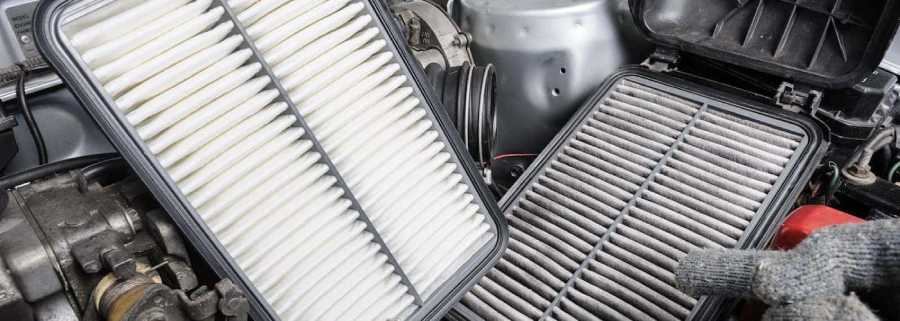
A dirty Honda engine air filter typically contains dust, sand, leaves, insects, and other debris trapped between its pleats. Light discoloration is normal after regular use, but heavy debris accumulation, blocked pleats, torn filtration media, or a damaged rubber seal indicates that the filter requires attention. A filter with holes or damaged sealing surfaces should be replaced because contaminants can bypass the filtration material and enter the engine’s intake system.
A severely restricted engine air filter can contribute to reduced acceleration, hesitation under heavy engine loads, and decreased engine performance. These symptoms occur when airflow restriction limits the air available for combustion, particularly during high-demand operating conditions. However, similar symptoms can result from ignition problems, fuel delivery issues, or other intake system faults. Engine performance symptoms alone cannot confirm that the air filter needs replacement.
A Honda engine air filter can also require replacement even when the vehicle operates normally. Modern engine management systems adjust fuel delivery based on operating conditions, which can make moderate airflow restriction less noticeable during everyday driving. Inspecting the filter during scheduled maintenance helps identify physical damage and excessive contamination before they contribute to more significant problems.
What Tools and Parts Do You Need to Replace a Honda Engine Air Filter?
Replacing a Honda engine air filter requires a compatible replacement filter and, depending on the vehicle’s air filter housing design, a screwdriver or socket wrench. Many Honda models use retaining clips that allow the housing to be opened without specialized tools, while other configurations use screws or bolts. The exact tools depend on the vehicle’s model, model year, and engine configuration.
The replacement engine air filter must match the dimensions and specifications of the original filter. Honda genuine replacement filters are designed for specific vehicle applications, while compatible aftermarket filters provide alternative options. Owners should verify compatibility using the vehicle’s model year, engine type, and applicable part number rather than relying on the Honda brand name alone. For example, engine air filters designed for different Honda Civic generations are not necessarily interchangeable.
A Phillips-head screwdriver or appropriately sized socket may be necessary to remove the air filter housing fasteners. Some housings use metal retaining clips that can be released by hand. A clean microfiber cloth can help remove loose debris from accessible housing surfaces before installing the new filter. Dirt should not be pushed into the exposed intake opening during cleaning.
The replacement should be performed with the engine switched off and sufficiently cool to avoid contact with hot components. Park the vehicle on a level surface, secure the parking brake, and identify the air filter housing before removing any fasteners. Keep the replacement filter clean and dry, and avoid touching or contaminating its sealing surfaces.
Before installation, compare the new filter with the existing element to confirm that the shape, dimensions, and sealing edges match. An incorrectly sized filter may prevent the housing from closing properly or allow unfiltered air to bypass the filter media. Using the correct replacement part and securing the housing properly are essential for maintaining effective engine air filtration.
How Do You Replace a Honda Engine Air Filter Step by Step?
To replace a Honda engine air filter, locate the air filter housing, remove the used filter, install a compatible replacement, and secure the housing before starting the engine. The procedure is relatively straightforward on many Honda Civic, Accord, and CR-V models and generally requires basic tools or no tools at all. However, the housing location, fastening system, and filter orientation vary by model year and engine configuration.
How Do You Locate the Engine Air Filter Housing in a Honda?
To locate the Honda engine air filter housing, open the hood and identify the enclosed airbox connected to the engine’s air intake duct. The housing is generally a black plastic enclosure positioned within the engine compartment, with a large intake tube extending toward the engine. Its exact position depends on the Honda model and engine layout.
On many Honda Civic, Accord, and CR-V configurations, the air filter housing is positioned toward one side of the engine compartment. The housing consists of an upper cover and a lower compartment that holds the filter element. Metal retaining clips, plastic tabs, or screws secure the two sections together. Following the intake duct from the engine toward the airbox can help distinguish the engine air filter housing from the battery enclosure, fuse box, and other components.
Before opening the housing, switch off the engine, allow hot components to cool, and inspect the surrounding area for loose debris. Consult the vehicle’s owner’s manual when the housing location or fastening mechanism is unclear. Avoid disconnecting electrical connectors or intake sensors unless the model-specific replacement procedure requires it.
How Do You Remove the Old Honda Engine Air Filter?
To remove the old Honda engine air filter, release the housing fasteners, carefully lift the airbox cover, and take the filter element out of its mounting position. The removal process should preserve the surrounding intake components and prevent accumulated debris from entering the engine’s air intake duct.
First, identify the retaining mechanism securing the housing cover. Release metal clips by hand or remove the necessary screws using the appropriate screwdriver or socket. Keep any removed fasteners in a secure location. Lift the cover only as far as the attached intake duct and surrounding components allow. Forcing the cover upward can damage plastic mounting tabs, intake connections, or nearby wiring.
Next, observe how the existing filter sits inside the housing before removing it. Note the position of its sealing edges and any orientation markings. Lift the filter out carefully to avoid dislodging accumulated dirt into the lower housing or intake opening. Inspect the removed element for embedded debris, damaged pleats, and deteriorated seals.
Finally, inspect the empty housing for leaves, dust, and other loose contaminants. Remove accessible debris with a clean cloth while keeping the intake opening protected from contamination. Do not blow compressed air into the intake duct or allow cleaning materials to enter the engine’s air intake system.
How Do You Install a New Honda Engine Air Filter Correctly?
To install a new Honda engine air filter correctly, position the compatible replacement element inside the housing with its sealing edges seated evenly against the designated mounting surfaces. Proper installation prevents unfiltered air from bypassing the filter and maintains the intended airflow path through the filtration media.
Begin by comparing the new filter with the removed element. Check the overall dimensions, shape, sealing surfaces, and any directional markings. The replacement filter should fit the housing without bending, trimming, or excessive force. A filter that does not match the housing dimensions should not be installed, even if it is advertised as compatible with another Honda model.
Place the replacement element into the lower housing in the required orientation. Ensure that the filter sits flat and that its gasket or sealing edge follows the housing’s perimeter without folding or twisting. Some filters have an asymmetric shape that helps establish the correct installation position. Follow the manufacturer’s orientation markings and vehicle-specific instructions rather than assuming that every Honda filter uses the same arrangement.
Lower the housing cover carefully over the installed filter. Check that the cover aligns with its mounting tabs and closes without resistance caused by a displaced filter. Reattach the retaining clips or reinstall the screws according to the original fastening arrangement. Tighten fasteners securely without overtightening them, which can damage plastic housing components.
How Do You Check That the New Honda Engine Air Filter Is Installed Properly?
To verify a Honda engine air filter replacement, confirm that the filter is seated correctly, the housing cover is fully closed, and all retaining fasteners and intake connections are secure. These checks help prevent unfiltered air from entering the intake system and reduce the risk of air leaks caused by improper reassembly.
Inspect the entire perimeter of the air filter housing for visible gaps. The upper and lower housing sections should meet evenly, with no portion of the filter gasket protruding between them. Check that every retaining clip is engaged and that all removed screws have been reinstalled. If an intake duct or connector was moved during replacement, confirm that it has been returned to its original position.
After completing the visual inspection, start the engine and allow it to idle. Listen for unusual intake noises and observe whether the engine operates normally. A disconnected intake duct or improperly secured housing may produce an unexpected air intake sound. If the engine runs abnormally, switch it off and inspect the installation before driving.
Engine air filter replacement does not generally require resetting the engine control unit. If the vehicle’s Maintenance Minder indicates that the engine air filter service is due, reset the applicable maintenance item only after completing all services associated with that reminder. The correct reset procedure depends on the Honda model and model year.
A correctly installed engine air filter should fit securely inside the housing, maintain an uninterrupted seal around its edges, and allow the intake system to operate without loose connections. Record the replacement date and vehicle mileage to support future maintenance inspections.
Does Honda Engine Air Filter Replacement Differ by Model?
Honda engine air filter replacement procedures differ by vehicle model, model year, and engine configuration because each vehicle uses a specific air intake layout, filter housing design, and compatible filter element. Although the basic replacement process remains similar across Honda vehicles, the location of the airbox, type of fasteners, and access to the filter can vary significantly.
The Honda Civic typically uses an engine air filter housing located within the engine compartment and connected to the intake duct. Depending on the generation and engine configuration, the housing may use metal retaining clips, screws, or a combination of fastening mechanisms. For example, Civic models equipped with naturally aspirated engines and turbocharged engines can have different intake system layouts and filter specifications. Owners should identify the correct replacement element using the vehicle’s model year, engine type, and compatible part number.
Honda Accord engine air filter replacement follows the same general process of opening the airbox, removing the existing element, and installing a properly fitted replacement. However, Accord generations use different engine configurations, including naturally aspirated gasoline engines, turbocharged engines, and hybrid powertrains. These variations affect filter dimensions, housing placement, and access to the airbox. A replacement filter designed for one Accord generation should not be assumed compatible with another.
Honda CR-V engine air filter replacement also varies between model years and powertrain configurations. Conventional gasoline and hybrid CR-V models may use different intake components and air filter specifications. Some configurations provide direct access to the housing through retaining clips, while others require removing fasteners or repositioning nearby components. The correct procedure should follow the vehicle-specific maintenance documentation.
The most important differences between Honda models involve filter compatibility, housing accessibility, and fastening mechanisms. Before purchasing a replacement filter, owners should confirm the vehicle’s year, model, engine configuration, and applicable part number. Checking these details prevents incorrect filter selection and reduces the risk of improper installation.
How Much Does Honda Engine Air Filter Replacement Cost?
Honda engine air filter replacement costs depend on the vehicle model, replacement filter brand, service provider, and local labor rates. The total expense consists of the replacement filter price and any labor charges associated with removing the old element and installing the new one. DIY replacement generally costs less because the vehicle owner pays only for the filter and any tools that are not already available.
For many common Honda passenger vehicles in the United States, aftermarket disposable engine air filters have an illustrative retail price range of approximately $15–$35, while genuine Honda replacement filters may cost around $20–$50. These figures are general budgeting estimates rather than verified current quotations. Actual prices depend on the specific part number, retailer, model year, and engine configuration. Filters for less common applications or specialized designs may fall outside these ranges.
Professional engine air filter replacement includes the cost of the filter and the service provider’s labor charge. A straightforward replacement may involve approximately $15–$40 in labor, depending on the shop’s pricing structure and the accessibility of the filter housing. Using the illustrative parts and labor ranges, a basic professional replacement could cost approximately $30–$90. Dealership pricing, regional labor rates, taxes, and additional service charges can increase the final amount. A written estimate provides a more reliable cost than a general nationwide range.
Replacing the engine air filter yourself eliminates the labor charge on vehicles with easily accessible airboxes. For example, a Honda owner purchasing a compatible $25 replacement filter and using existing tools would spend $25 on the replacement, excluding taxes and other incidental expenses. A professional service using the same filter and charging $25 for labor would cost $50 before taxes. In this example, DIY replacement reduces the expense by 50%.
The time required for replacement also affects service value. On many Honda models with accessible filter housings, the physical replacement can be completed in approximately 5–15 minutes once the correct filter and tools are available. Vehicles with more complicated housing arrangements may require additional time. Professional replacement is preferable when access is restricted, fasteners are damaged, or the owner cannot confidently identify and install the correct filter.
Choosing between DIY and professional replacement should account for parts compatibility, installation difficulty, and total cost rather than filter price alone. A correctly fitted replacement filter installed with an intact housing seal provides the intended filtration function regardless of whether the work is performed by the vehicle owner or a qualified technician.
What Happens If You Do Not Replace a Dirty Honda Engine Air Filter?
Failing to replace a severely dirty Honda engine air filter can restrict intake airflow, reduce engine performance, and increase the workload required to draw air through the filtration system. The severity of these effects depends on the amount of accumulated contamination, engine design, and driving conditions. A moderately dirty filter does not necessarily cause noticeable problems, but excessive restriction can interfere with normal engine operation.
As a Honda engine air filter captures dust, pollen, sand, and road debris, particles accumulate within its pleated filtration media. This buildup increases resistance to airflow, creating a greater pressure difference across the filter when the engine draws in air. Under high engine loads, a severely restricted filter can limit the available intake air and reduce the engine’s ability to produce its expected power. Drivers may notice weaker acceleration, particularly when climbing hills, merging onto highways, or accelerating at higher engine speeds.
A neglected engine air filter can also affect combustion and engine responsiveness, although the consequences differ between modern fuel-injected engines and older engine designs. Modern Honda vehicles use electronic engine management systems to regulate fuel delivery according to measured or calculated operating conditions. These systems compensate for changes in intake airflow within their operating limits, reducing the likelihood that moderate filter contamination will directly cause an excessively rich air-fuel mixture. Severe airflow restriction can still limit engine output and contribute to drivability problems.
Filter deterioration presents a separate concern from airflow restriction. A torn filter element, damaged sealing gasket, or improperly secured airbox can allow unfiltered air to bypass the filtration media. Abrasive particles entering the intake system may contribute to wear on internal engine components, including cylinder walls and piston rings. Unlike ordinary dirt accumulation, damaged filtration media compromises the filter’s primary protective function and requires prompt replacement.
Ignoring a scheduled Honda engine air filter replacement also increases the likelihood of operating with an excessively contaminated element. Owners should follow the applicable Honda maintenance schedule and inspect the filter more frequently when driving in dusty environments. Replacing a damaged or excessively restricted filter restores the intended filtration path and helps maintain normal intake airflow.
Can Replacing a Honda Engine Air Filter Improve Fuel Economy?
Replacing a Honda engine air filter does not automatically improve fuel economy, particularly in modern fuel-injected vehicles. Fuel consumption depends on engine efficiency, driving conditions, vehicle load, and the engine management system’s ability to regulate fuel delivery. A new filter restores normal airflow when the existing element is excessively restricted, but replacing a moderately dirty filter may produce little or no measurable change in fuel consumption.
Modern Honda gasoline engines use electronic fuel injection and engine control systems to manage the relationship between incoming air and injected fuel. When intake airflow decreases because of filter restriction, the engine management system adjusts fuel delivery according to its control strategy and sensor inputs. This compensation helps maintain appropriate combustion conditions during normal operation. Consequently, a dirty air filter does not necessarily increase fuel consumption in the same way it might affect an older carbureted engine.
Research conducted for the U.S. Department of Energy examined the effects of clogged air filters on vehicle performance and fuel economy. The findings showed that clogged air filters did not significantly affect fuel economy in the modern fuel-injected vehicles tested, although acceleration performance was reduced. The results also indicated that older carbureted engines could experience different fuel-economy effects. These findings demonstrate why fuel-saving claims should distinguish between engine technologies rather than assume that every vehicle benefits equally from a new filter.
Replacing a severely restricted Honda engine air filter can improve acceleration and restore performance when insufficient intake airflow is the underlying problem. However, an improvement in acceleration does not necessarily translate into a proportional reduction in fuel consumption. For example, a Honda Civic with a heavily contaminated filter may respond better under high engine loads after replacement without showing a meaningful change in fuel economy during ordinary commuting.
Honda owners seeking better fuel economy should maintain the engine air filter according to the vehicle’s service requirements while also addressing tire pressure, driving habits, and other relevant maintenance conditions. Engine air filter replacement is primarily a filtration and airflow maintenance procedure, not a guaranteed fuel-saving modification. Its most reliable benefits are maintaining the intended intake airflow and preventing contaminants from entering the engine.
Should You Choose an OEM or Aftermarket Honda Engine Air Filter?
Choosing between an OEM and aftermarket Honda engine air filter depends on vehicle compatibility, filtration performance, construction quality, and replacement cost. Genuine Honda OEM filters are manufactured to meet the specifications of their intended vehicle applications, while aftermarket filters are produced by independent manufacturers. Both options can provide effective engine protection when the filter meets the vehicle’s requirements and fits the air filter housing correctly.
Honda OEM engine air filters are designed for specific models, model years, and engine configurations. Their dimensions, filtration media, and sealing surfaces correspond to the intended air intake housing. This application-specific design reduces uncertainty about fitment when the correct genuine Honda part number is selected. However, Honda vehicles with different engines or production years may require different OEM filter part numbers, even when they belong to the same model family.
Aftermarket Honda engine air filters offer additional choices in price, filtration media, and construction. Manufacturers such as FRAM, WIX, and Bosch produce replacement filters for various Honda applications. A suitable aftermarket filter must provide adequate particle filtration, maintain acceptable airflow resistance, and form a reliable seal inside the housing. Brand reputation alone does not establish compatibility or filtration performance, so buyers should verify the manufacturer’s application listing and product specifications.
Filter media also influences replacement requirements. Most conventional Honda engine air filters use disposable pleated filtration elements designed for replacement after their service life. Some aftermarket products use reusable media that require cleaning and maintenance according to the manufacturer’s instructions. Reusable filters may have different maintenance requirements, but they are not automatically more effective than disposable filters at capturing engine-damaging particles.
The best Honda engine air filter is one that meets the vehicle’s filtration requirements, fits securely, and follows an appropriate maintenance schedule. OEM filters provide a straightforward option for owners who prefer genuine replacement parts, while compatible aftermarket filters can offer comparable functionality at different price points. Regardless of the manufacturer, correct fitment and installation are essential for effective engine air filtration.
Read more: Toyota Engine Air Filter Replacement: Step-by-Step Guide
Can You Clean a Honda Engine Air Filter Instead of Replacing It?
Most standard disposable Honda engine air filters should be replaced rather than washed or cleaned for reuse. These filters use pleated filtration media designed to capture airborne particles throughout their service life. Washing, aggressive brushing, or applying high-pressure compressed air can damage the media, weaken its structure, or compromise its ability to retain contaminants.
A disposable engine air filter collects dust and debris both on its surface and within its filtration material. Removing visible particles does not necessarily restore the original airflow characteristics or filtration performance. Compressed air can force contaminants deeper into the media or damage the fibers that capture fine particles. Water and cleaning chemicals may also affect the filter’s structure or sealing components, particularly when the element is not designed for wet cleaning.
Reusable aftermarket engine air filters are different because their manufacturers specifically design them for repeated cleaning and maintenance. Some use washable synthetic or cotton-based filtration media, while others require specialized cleaning solutions or filter oil. The cleaning process, drying requirements, and maintenance intervals depend on the filter design. Applying oil to a filter that does not require it can contaminate intake components and interfere with proper operation.
For a Honda equipped with a conventional disposable engine air filter, replacement is the appropriate maintenance procedure when the element is damaged, excessively contaminated, or due for scheduled service. Owners using a reusable aftermarket filter should follow the manufacturer’s cleaning instructions and inspect the element for deterioration before reinstalling it.
What Is the Difference Between a Honda Engine Air Filter and a Cabin Air Filter?
The Honda engine air filter protects the engine’s air intake system, while the cabin air filter removes airborne contaminants from the air entering the passenger compartment through the heating, ventilation, and air conditioning system. Although both components filter air, they serve different systems, occupy different locations, and have separate maintenance requirements.
The engine air filter is installed inside the engine compartment, typically within a plastic airbox connected to the intake duct. It captures dust, sand, and other airborne particles before intake air reaches the engine. Its condition affects filtration efficiency and airflow resistance within the intake system. A damaged or improperly installed engine air filter can allow abrasive contaminants to enter the engine and contribute to internal component wear.
The Honda cabin air filter is generally located behind the glove compartment or within the HVAC system, depending on the vehicle model. It captures particles such as dust, pollen, and road debris from incoming ventilation air. A clogged cabin air filter can reduce airflow through the dashboard vents and affect heating or air conditioning performance. Unlike the engine air filter, it does not directly filter the air used for engine combustion.
Engine and cabin air filters also have different replacement procedures. Engine air filter replacement usually involves opening the airbox under the hood, while cabin air filter replacement commonly requires accessing a filter compartment behind the glove box. Honda maintenance schedules may group both replacements under the same service reminder on certain models, but the filters remain separate components with different part numbers and functions.
The Honda engine oil filter is another distinct maintenance component. It removes contaminants from circulating engine oil rather than filtering incoming air. Oil filter replacement is generally performed during an engine oil change and should not be confused with either engine air filter or cabin air filter replacement.
Honda owners should identify the correct filter before purchasing replacement parts or scheduling maintenance. Engine air filter replacement maintains the engine’s intake filtration system, while cabin air filter replacement maintains filtration within the passenger ventilation system. Both contribute to proper vehicle maintenance, but replacing one does not eliminate the need to service the other.