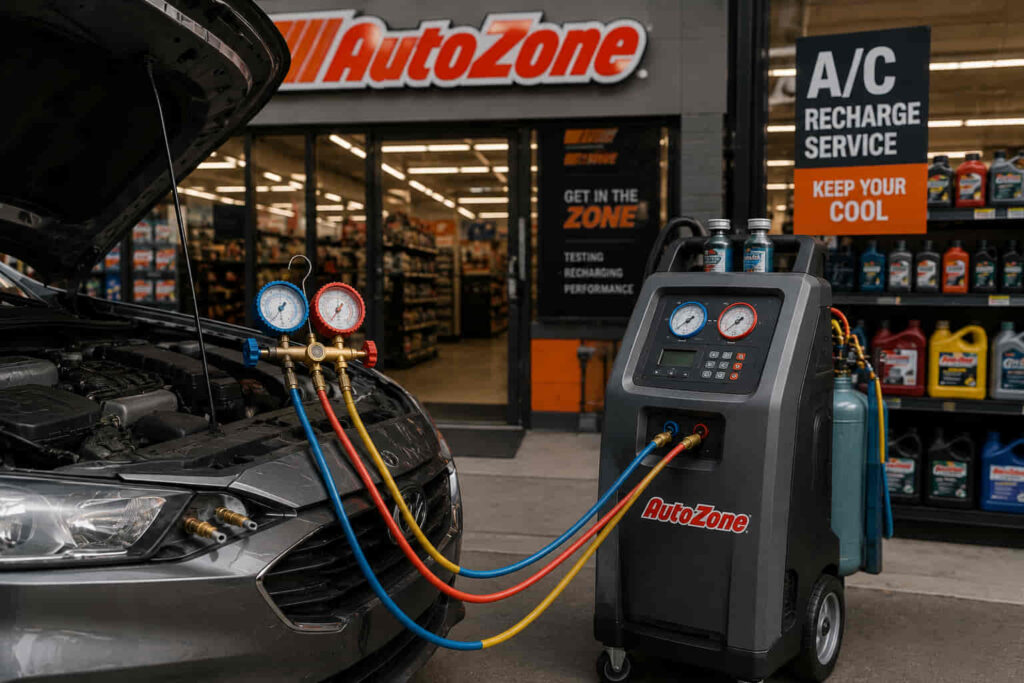
When a car’s air conditioning starts blowing warm air instead of cold air, many drivers look for a quick and affordable solution. One of the most common questions is “Does AutoZone recharge AC?” because AutoZone is one of the largest automotive parts retailers in the United States and offers a wide range of maintenance products. However, there is often confusion about whether the company actually performs A/C recharge services or simply sells the products needed to complete the job.
The direct answer is no. AutoZone does not recharge your vehicle’s air conditioning system as an in-store service. Instead, the company sells A/C recharge kits, refrigerants, leak detection products, and other tools that allow vehicle owners to perform a recharge themselves if their vehicle and A/C system are suitable for DIY maintenance. For problems involving refrigerant leaks, compressor failure, or other mechanical issues, a professional repair shop is usually the better solution.
This guide explains everything you need to know about AutoZone’s A/C recharge offerings, including the products available, the types of refrigerant the company sells, when a DIY recharge makes sense, and when professional service is the safer and more cost-effective option. By the end of this article, you’ll understand whether buying an A/C recharge kit from AutoZone is the right choice for your vehicle and how to avoid common mistakes that can lead to poor cooling performance or expensive repairs.
Does AutoZone Recharge AC?
The short answer is no. AutoZone does not provide in-store air conditioning recharge services for customer vehicles. Although many people visit AutoZone for batteries, engine diagnostics, and replacement parts, the company operates as an automotive parts retailer rather than an automotive repair shop. Its business model focuses on supplying products, tools, and maintenance supplies that help customers perform repairs themselves or purchase the necessary parts before visiting a professional mechanic.
This distinction is important because an A/C recharge involves handling refrigerant, verifying system pressure, and ensuring the air conditioning system is functioning correctly. While adding refrigerant may appear simple, a proper diagnosis often requires checking for leaks, inspecting the compressor, evaluating pressure readings, and confirming that the system contains the correct type of refrigerant. Since these procedures require specialized equipment and technical expertise, AutoZone does not perform them as part of its retail services.
Many customers assume AutoZone offers A/C recharge because the company sells a wide selection of refrigerants and recharge kits. In reality, these products are intended for vehicle owners who choose to perform a DIY recharge on compatible air conditioning systems. AutoZone employees may help customers identify the appropriate refrigerant or locate compatible products, but they do not connect recharge equipment, add refrigerant to customer vehicles, or perform air conditioning repairs.
Understanding this difference helps set realistic expectations before visiting the store. If your goal is to purchase the products required for a DIY recharge, AutoZone is one of the most accessible retailers in the automotive aftermarket. However, if your vehicle needs refrigerant added by a trained technician or requires diagnosis for cooling problems, you will need to visit a professional repair facility that offers automotive A/C services.
What Does AutoZone Offer for AC Recharge?
Although AutoZone does not recharge vehicle air conditioning systems, it offers a comprehensive selection of products designed to support A/C maintenance and DIY refrigerant replacement. These products allow vehicle owners to service compatible air conditioning systems when the problem is simply a low refrigerant level rather than a mechanical failure. Choosing the correct product depends on the vehicle’s refrigerant type, model year, and the condition of the A/C system.
One of the most popular product categories is A/C recharge kits. These kits typically combine refrigerant with an easy-to-use charging hose and pressure gauge, allowing users to monitor low-side system pressure while adding refrigerant. Many kits are designed specifically for passenger vehicles using either R-134a or R-1234yf refrigerant and include clear instructions to help users avoid overcharging the system.
AutoZone also sells refrigerant cans, leak detection products, replacement charging hoses, sealing components, and other air conditioning maintenance supplies. Leak detection solutions containing UV dye can help identify small refrigerant leaks, while replacement service tools assist with routine maintenance on compatible systems. These products are intended to complement proper diagnosis rather than replace professional inspection when an A/C system has persistent cooling problems.
In addition to maintenance products, AutoZone carries A/C replacement components such as compressors, condensers, evaporators, accumulator or receiver-drier assemblies, expansion valves, pressure switches, and O-ring seal kits. If a recharge does not restore cooling performance because a component has failed or refrigerant is escaping through a leak, these replacement parts allow vehicle owners or repair shops to restore the system correctly before refrigerant is added again.
By offering both recharge products and replacement components, AutoZone serves customers across different stages of A/C maintenance. Drivers experiencing a minor refrigerant loss may find an appropriate recharge kit, while those facing more significant air conditioning problems can purchase the parts required for a complete repair before having the system serviced by a qualified technician.
Read more: Does O’Reilly Price Match
Which Refrigerant Types Are Available at AutoZone?
AutoZone carries refrigerants for the two most common automotive air conditioning systems used in modern passenger vehicles: R-134a and R-1234yf. Choosing the correct refrigerant is one of the most important steps before purchasing an A/C recharge product because these refrigerants are engineered for different vehicle generations and are not interchangeable. Using the wrong refrigerant can reduce cooling performance, damage A/C components, and create expensive repair costs.
R-134a remains the most widely used refrigerant in vehicles manufactured for many years before the automotive industry transitioned to lower-emission alternatives. Millions of cars, SUVs, and light trucks on the road today still rely on R-134a systems, which is why AutoZone stocks a broad selection of recharge kits, refrigerant cans, gauges, and compatible service accessories designed specifically for these vehicles. For many DIY users, R-134a products are the most affordable and readily available option.
Newer vehicles increasingly use R-1234yf, a refrigerant developed to reduce environmental impact by having a significantly lower global warming potential than R-134a. Although both refrigerants perform the same basic function of absorbing and releasing heat inside the air conditioning system, they operate under different service requirements and use different charging equipment. Because of these design differences, manufacturers prohibit mixing the two refrigerants or converting a vehicle without following approved engineering procedures.
Before purchasing a recharge kit, drivers should confirm which refrigerant their vehicle requires. The easiest way to verify this information is by checking the label located under the hood, consulting the owner’s manual, or using AutoZone’s vehicle lookup system to identify compatible products. Selecting the correct refrigerant from the beginning helps ensure proper system performance while reducing the risk of equipment damage caused by incompatible products.
AutoZone organizes its refrigerant inventory according to vehicle compatibility, making it easier for customers to locate products designed specifically for their make, model, and model year. This approach minimizes purchasing errors and supports safer DIY maintenance for vehicle owners who plan to recharge an eligible air conditioning system themselves.
Can You Recharge Your Car AC Yourself?
Yes, many vehicle owners can recharge their car’s air conditioning system themselves, but only when the system is compatible with DIY servicing and the loss of cooling is caused by low refrigerant rather than a mechanical failure. An A/C recharge restores refrigerant levels; it does not repair damaged components, eliminate leaks, or resolve compressor problems. Understanding this limitation is essential because adding refrigerant to a faulty system often provides only temporary improvement or no improvement at all.
A DIY recharge is generally most appropriate when the air conditioning system has gradually lost cooling performance over time while continuing to operate normally. In these situations, refrigerant levels may have decreased enough to reduce cooling efficiency without indicating a major component failure. Using a compatible recharge kit and following the manufacturer’s instructions may restore normal cabin temperatures if the rest of the system remains in good working condition.
However, a recharge should never be viewed as a universal solution for every air conditioning problem. If the compressor does not engage, the system repeatedly loses refrigerant, unusual noises are present, or oily residue appears around A/C components, these symptoms often indicate leaks or mechanical defects that require professional diagnosis. Simply adding more refrigerant without addressing the underlying cause may increase system pressure unnecessarily and could lead to additional damage.
Vehicle owners should also recognize that modern automotive air conditioning systems operate within precise pressure ranges. Overcharging the system can reduce cooling performance just as easily as undercharging it, while introducing the wrong refrigerant can damage seals, service equipment, and other components. For this reason, verifying refrigerant type, confirming system compatibility, and understanding the condition of the A/C system are more important than simply purchasing a recharge kit.
For drivers with basic mechanical knowledge and a vehicle experiencing minor refrigerant loss, a DIY recharge can be a practical and cost-effective maintenance option. However, when the source of the problem is uncertain or the system shows signs of leakage or component failure, professional service remains the safest and most reliable approach for restoring long-term cooling performance.
How Do You Use an AutoZone AC Recharge Kit?
An AutoZone A/C recharge kit is designed to help vehicle owners restore refrigerant levels in compatible air conditioning systems, but it should only be used after confirming that the system requires a recharge rather than a mechanical repair. The purpose of the kit is to replenish refrigerant that has gradually decreased over time, not to repair leaks, replace damaged components, or correct compressor failures. Understanding this distinction helps prevent unnecessary expenses and reduces the risk of masking a more serious problem.
Most recharge kits sold at AutoZone include refrigerant, a charging hose, and a pressure gauge that allows users to monitor low-side system pressure during the recharge process. The gauge provides a visual reference to help determine whether refrigerant levels fall within the recommended operating range for the specific refrigerant type. Because automotive air conditioning systems are engineered to operate within a narrow pressure window, monitoring system pressure is an essential part of performing a safe recharge.
Before adding refrigerant, drivers should verify that the vehicle uses the correct refrigerant type and inspect the air conditioning system for obvious signs of damage. If hoses are cracked, fittings are coated with oily residue, or cooling performance has suddenly disappeared after previously operating normally, these symptoms may indicate a refrigerant leak or component failure rather than normal refrigerant loss. In these situations, adding more refrigerant addresses the symptom instead of resolving the underlying cause.
A successful recharge depends on following the product instructions carefully and avoiding unnecessary additions of refrigerant. More refrigerant does not automatically produce colder air. In fact, an overcharged air conditioning system may experience reduced cooling efficiency, increased operating pressure, and additional stress on major components such as the compressor and condenser. The objective is to restore the system to its proper operating condition rather than exceed the manufacturer’s specifications.
For many vehicle owners with a properly functioning A/C system that has simply lost a small amount of refrigerant over time, an AutoZone recharge kit provides a practical maintenance solution. However, the kit should always be viewed as a maintenance product rather than a substitute for professional diagnosis when the air conditioning system shows signs of mechanical failure.
When Should You Avoid DIY AC Recharge?
A DIY A/C recharge is not appropriate for every cooling problem. If the air conditioning system has an underlying mechanical defect, adding refrigerant is unlikely to restore long-term performance and may even complicate future repairs. Recognizing when professional service is necessary is just as important as knowing when a recharge kit can be used safely.
One of the clearest signs that a recharge alone will not solve the problem is a refrigerant leak. Automotive air conditioning systems are sealed systems, meaning refrigerant should not disappear rapidly under normal operating conditions. If cooling performance declines repeatedly within a short period after adding refrigerant, the system is likely losing refrigerant through a damaged hose, failed seal, condenser leak, evaporator leak, or another defective component. Continuing to recharge the system without repairing the leak only provides temporary relief while allowing the original problem to worsen.
Mechanical failures also require professional diagnosis. A compressor that fails to engage, abnormal grinding or clicking noises, damaged cooling fans, electrical faults, or malfunctioning pressure switches cannot be corrected by adding refrigerant. These components work together to circulate refrigerant throughout the air conditioning system, and failure in any one of them can prevent the system from producing cold air even when refrigerant levels are correct.
Another situation where DIY servicing should be avoided is when the refrigerant type cannot be confirmed. Modern vehicles may use different refrigerants depending on their model year and manufacturer specifications. Using an incompatible refrigerant or connecting the wrong service equipment can damage the system and significantly increase repair costs. Verifying compatibility before purchasing any recharge product is therefore an essential part of responsible A/C maintenance.
Drivers should also avoid attempting a recharge if they are uncertain about the source of the problem or lack confidence in performing basic vehicle maintenance. A professional technician can inspect system pressures, identify refrigerant leaks with specialized diagnostic equipment, and determine whether cooling issues originate from the refrigerant charge or from a failed mechanical component. While professional service typically costs more than purchasing a recharge kit, it often prevents unnecessary parts replacement and ensures that the air conditioning system is repaired correctly the first time.
Where Can You Get Professional AC Recharge Services?
If your vehicle requires more than a simple refrigerant recharge, a professional automotive repair shop is the best place to restore your air conditioning system. Unlike AutoZone, which sells A/C maintenance products but does not perform repairs, professional service centers have the equipment needed to diagnose refrigerant leaks, recover old refrigerant, measure system pressure, replace damaged components, and recharge the system according to the manufacturer’s specifications.
Many national automotive service chains provide complete A/C inspection and recharge services. Businesses such as Jiffy Lube, Firestone Complete Auto Care, Pep Boys, and Valvoline Instant Oil Change commonly offer air conditioning maintenance that includes system performance testing, refrigerant recovery, leak detection, and recharging with the correct refrigerant. Independent repair shops and dealership service departments also perform these procedures, particularly for vehicles equipped with newer refrigerants or more complex climate control systems.
Professional servicing offers a significant advantage because technicians diagnose the root cause of poor cooling performance instead of simply adding refrigerant. For example, if a leaking condenser, worn compressor, damaged expansion valve, or failed pressure switch is preventing the air conditioning system from operating correctly, these problems must be repaired before the system is recharged. Restoring refrigerant without correcting the underlying defect often results in the same cooling problem returning within a short period.
Modern automotive air conditioning systems are also subject to environmental regulations governing refrigerant handling. Professional repair facilities use recovery and recycling equipment that prevents refrigerant from being released into the atmosphere while ensuring the correct amount is returned to the system after repairs are completed. This process improves cooling performance, protects expensive A/C components, and complies with industry standards for refrigerant handling.
Drivers should consider professional A/C service whenever the air conditioner repeatedly loses cooling performance, produces unusual noises, cycles abnormally, or shows evidence of refrigerant leakage. Although professional repair generally costs more than purchasing a DIY recharge kit, it provides a complete diagnosis and a long-term solution rather than a temporary fix.
Is Buying an AC Recharge Kit from AutoZone Worth It?
Yes, buying an A/C recharge kit from AutoZone can be worthwhile, but only when the vehicle’s air conditioning system is otherwise functioning normally and simply requires additional refrigerant. AutoZone offers a wide selection of recharge products from well-known manufacturers, making it a convenient destination for drivers who prefer to perform routine maintenance themselves. For compatible vehicles experiencing minor refrigerant loss, a quality recharge kit may restore cooling performance while costing significantly less than a professional service visit.
The value of an AutoZone recharge kit depends largely on the condition of the air conditioning system. If the compressor operates normally, there are no refrigerant leaks, and the system has gradually become less effective over time, a recharge kit can provide a practical solution that saves both time and money. Many kits include refrigerant, a charging hose, and a pressure gauge, allowing users to monitor system pressure while following the manufacturer’s instructions.
However, a recharge kit should not be viewed as a replacement for professional diagnosis when the system has mechanical defects. Refrigerant leaks, damaged compressors, electrical failures, blocked condensers, and other component problems cannot be corrected by adding refrigerant alone. In these situations, purchasing a recharge kit may only delay the necessary repair and increase long-term maintenance costs if the underlying issue remains unresolved.
Another factor worth considering is vehicle compatibility. Drivers must purchase the correct refrigerant for their specific vehicle and confirm that the recharge product matches the manufacturer’s requirements. Using an incompatible refrigerant or overcharging the system can reduce cooling efficiency and potentially damage expensive A/C components. Spending a few minutes verifying compatibility before making a purchase helps prevent avoidable repair costs later.
Ultimately, the answer to “Does AutoZone Recharge AC?” is clear. AutoZone does not perform air conditioning recharge services, but it supplies the refrigerants, recharge kits, and replacement components needed for eligible DIY maintenance. For drivers whose A/C systems only require additional refrigerant, these products offer an affordable and convenient solution. When the problem involves leaks, compressor failure, or other mechanical issues, professional diagnosis and repair remain the most reliable way to restore long-term cooling performance and protect the vehicle’s air conditioning system.