Finding the right FL22 coolant equivalent can be challenging for many Mazda owners. Genuine FL22 coolant often costs more than aftermarket options. Some local stores also do not keep it in stock. As a result, many drivers start looking for a safe replacement that offers the same level of protection.
However, choosing a coolant is not as simple as matching the color on the bottle. Many products look similar but use different additive technologies. Some formulas work well with Mazda cooling systems, while others may reduce corrosion protection or shorten coolant life. A poor choice can increase maintenance costs and even affect engine performance over time.
This guide explains everything you need to know before buying an FL22 coolant equivalent. You will learn what FL22 coolant is, why Mazda recommends it, and how to compare compatible alternatives. We also review the ten best products for 2026 based on compatibility, cooling performance, corrosion protection, service life, and overall value.
By the end of this guide, you will know how to choose the right coolant for your Mazda with confidence. You will also understand which products deserve your attention and which common mistakes you should avoid during coolant replacement.
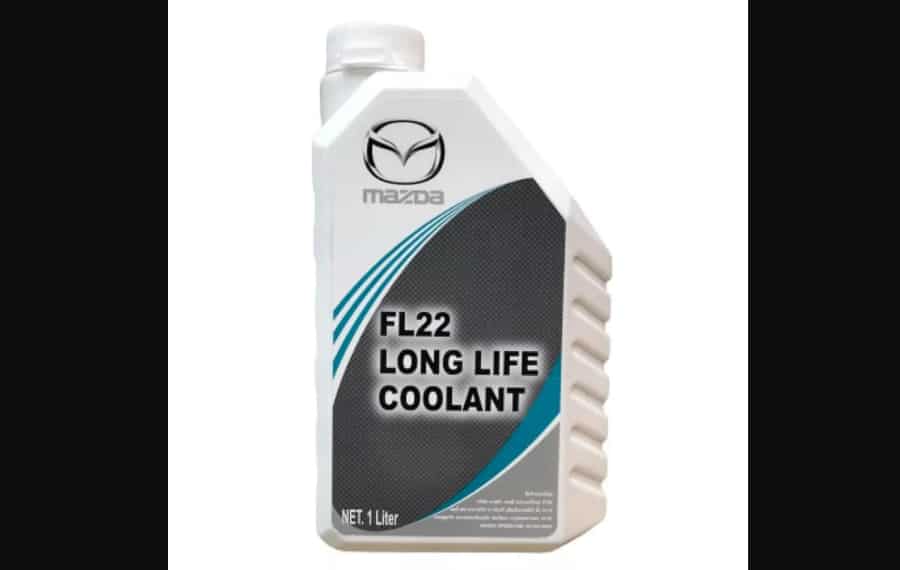
What Is Mazda FL22 Coolant?
Mazda FL22 coolant is a long-life coolant designed for Mazda vehicles that require this specific coolant type. It helps control engine temperature while protecting important cooling-system parts, including the radiator, water pump, heater core, engine passages, and aluminum components.
FL22 coolant performs several essential tasks. It prevents freezing in cold weather and helps the cooling system handle high temperatures by increasing the boiling point. It also protects metal surfaces from corrosion and helps lubricate the water pump. These benefits are especially important for modern Mazda engines that use lightweight aluminum components.
The FL22 name does not describe a coolant color. It identifies a coolant type recommended by Mazda for certain vehicles and cooling systems. Many FL22 coolants appear green or blue, but color does not prove compatibility. Different formulas can use different additive technologies. Mixing incompatible coolants may reduce corrosion protection, create deposits, or shorten coolant life.
Mazda uses FL22 coolant in many models, including the Mazda3, Mazda6, CX-3, CX-5, CX-30, CX-50, CX-70, CX-90, MX-5 Miata, and MX-30. However, the correct coolant requirement can change by model year, engine type, market, and powertrain.
Before replacing FL22 coolant, check the owner’s manual and the coolant-cap label. Choose a replacement coolant only when the manufacturer confirms compatibility with your Mazda cooling system. Do not rely only on coolant color or labels such as “Asian vehicle coolant.” Choosing the correct FL22 coolant equivalent helps protect the radiator, water pump, heater core, and engine.
FL22 Coolant Purpose and Characteristics
Mazda FL22 coolant helps maintain a stable engine temperature in different driving conditions. It transfers heat away from the engine and releases that heat through the radiator. This process helps prevent overheating during heavy loads, hot weather, or extended driving.
FL22 coolant also protects the cooling system from corrosion. Modern Mazda engines often use aluminum components, which need reliable protection against chemical reactions inside the cooling system. The coolant’s inhibitor package helps reduce rust, corrosion, and material damage in parts such as the radiator, water pump, heater core, and engine passages.
Another important function of FL22 coolant is freeze and boil protection. A properly mixed coolant solution lowers the freezing point during cold temperatures and raises the boiling point during high operating temperatures. This protection helps the cooling system work safely throughout the year.
Mazda FL22 coolant also supports water pump performance by providing lubrication and reducing wear. A suitable coolant formula helps maintain long-term reliability and supports the cooling system’s service life.
The chemical stability of long-life coolant matters because Mazda cooling systems require consistent protection over extended service intervals. Over time, low-quality or incompatible coolant may lose its protective ability, form deposits, or affect cooling performance.
For this reason, Mazda owners should select an FL22 coolant equivalent based on documented compatibility, not only on color or general claims. A suitable replacement should provide the correct protection for aluminum components and match the requirements of the specific Mazda model.
Is FL22 a Brand, Formula, or Specification?
FL22 is not a coolant brand. It is a coolant type designation used by Mazda to identify the cooling-system fluid recommended for certain vehicles. Mazda uses this designation to help owners and technicians select a coolant that meets the vehicle’s requirements.
Many drivers assume that FL22 refers to one specific product made by Mazda. However, the term describes the required coolant category rather than a single bottle or manufacturer. Several aftermarket coolant companies produce products that claim compatibility with Mazda FL22 applications, but owners should check official manufacturer documentation before choosing a replacement.
FL22 coolant formulas focus on providing long-term protection for Mazda cooling systems. These formulas typically include corrosion inhibitors that help protect aluminum engine components, radiators, heater cores, and other metal parts. The exact chemical package can vary between products, so two coolants with similar colors may not provide the same level of protection.
Coolant color does not define FL22 compatibility. Some FL22-type coolants may appear green or blue, but many other coolants share these colors without meeting Mazda requirements. Choosing a coolant based only on appearance can increase the risk of using an unsuitable formula.
When searching for an FL22 coolant equivalent, vehicle owners should look for clear compatibility information from the coolant manufacturer. The best replacement should match the Mazda model, engine type, and cooling-system requirements rather than relying on general labels such as “universal” or “Asian vehicle coolant.”
Which Mazda Vehicles Use FL22 Coolant?
Mazda FL22 coolant appears in many Mazda vehicles that require long-life coolant protection. However, the exact coolant requirement depends on the model year, engine type, market, and powertrain configuration. Mazda owners should always confirm the correct coolant by checking the owner’s manual and the label near the coolant reservoir or cap.
Common Mazda models that use FL22 coolant include:
- Mazda3 – Many model years use FL22 coolant, but requirements can vary by engine and market.
- Mazda6 – Several generations recommend FL22 coolant for their cooling systems.
- Mazda CX-3 – Many versions use FL22-type coolant according to Mazda specifications.
- Mazda CX-30 – FL22 coolant is commonly referenced for many models.
- Mazda CX-5 – Many CX-5 vehicles require FL22 coolant, including various gasoline engine versions.
- Mazda CX-50 – Owners should confirm the correct coolant based on the specific powertrain.
- Mazda CX-70 and CX-90 – Hybrid and turbocharged systems may include different cooling circuits, so owners should follow Mazda-specific instructions.
- Mazda MX-5 Miata – Many model years use FL22 coolant, but the requirement depends on the generation.
- Mazda MX-30 – Coolant requirements can vary depending on the cooling system configuration.
Mazda introduced FL22 coolant to provide long-term protection for modern cooling systems. However, not every Mazda vehicle uses the same coolant specification. Some models may have different requirements for battery cooling, hybrid systems, or other specialized circuits.
Before purchasing an FL22 coolant equivalent, confirm three key details: your Mazda model, model year, and engine or powertrain type. This information helps prevent compatibility problems and ensures the replacement coolant provides the correct protection for your vehicle.
Quick Comparison of the Best FL22 Coolant Equivalent Options
Choosing the right FL22 coolant equivalent requires more than simply matching coolant colors or selecting a product labeled for Asian vehicles. Instead, Mazda owners should focus on manufacturer documentation, coolant technology, and compatibility with their specific vehicle.
To make the comparison easier, the table below highlights important factors that buyers should consider when selecting a replacement coolant. These factors include coolant type, product format, compatibility claims, advantages, and possible limitations.
| Product | Coolant Type | Premixed or Concentrate | Mazda Compatibility Claim | Best For | Main Limitation |
|---|---|---|---|---|---|
| Genuine Mazda FL22 | OEM long-life coolant | Premixed | Mazda factory recommendation for applicable vehicles | Owners who want the lowest compatibility uncertainty | Higher purchase cost |
| Documented FL22-Compatible Aftermarket Coolant | Vehicle-specific long-life coolant | Premixed or concentrate | Manufacturer confirms Mazda FL22 applications | Drivers seeking a balance of price and compatibility | Requires application verification |
| Asian Vehicle Long-Life Coolant | Asian vehicle coolant formula | Usually premixed | Compatibility depends on manufacturer documentation | Owners looking for easy availability | Not every Asian coolant meets FL22 requirements |
| Premium Extended-Life Coolant | Long-life coolant technology | Premixed or concentrate | Requires confirmed Mazda application coverage | Drivers seeking longer service intervals | Higher cost than basic options |
| Concentrated FL22-Compatible Coolant | Concentrated coolant formula | Concentrate | Requires manufacturer-confirmed Mazda compatibility | DIY owners performing complete coolant service | Incorrect mixing may reduce protection |
| Budget FL22-Compatible Coolant | Long-life coolant formula | Usually premixed | Depends on product documentation | Cost-conscious maintenance | Technical information may be limited |
| OEM-Equivalent Asian Coolant | Asian vehicle coolant technology | Premixed | Varies between manufacturers | Owners maintaining multiple Asian vehicles | Broad claims need careful review |
| Aluminum Protection Coolant | Corrosion-focused coolant formula | Premixed or concentrate | Must match Mazda cooling-system requirements | Vehicles needing strong corrosion protection | May not fit every Mazda application |
| Universal Long-Life Coolant | Multi-vehicle coolant formula | Premixed or concentrate | General compatibility claims | Temporary solutions when approved | Universal labels require additional checking |
| Mazda-Compatible Alternative Formula | Aftermarket FL22-type coolant | Premixed or concentrate | Requires official manufacturer confirmation | Owners seeking OEM alternatives | Availability varies by region |
In addition, buyers should remember that coolant color does not prove compatibility. For example, two green or blue coolants may use completely different additive technologies. Therefore, choosing a product only because it looks similar to Mazda FL22 can create unnecessary risks.
Before purchasing, check three sources: the Mazda owner’s manual, the coolant-cap marking, and the coolant manufacturer’s application guide. By doing so, drivers can reduce compatibility problems and select an FL22 coolant equivalent that provides suitable protection for the radiator, water pump, heater core, and engine.
10 Best FL22 Coolant Equivalent Options for Mazda Vehicles
Finding the best FL22 coolant equivalent requires careful evaluation. A suitable replacement should not only match Mazda cooling-system requirements but also have clear compatibility information from the manufacturer. Therefore, this ranking focuses on coolant options with documented applications, proper corrosion protection, and practical benefits for Mazda owners.
However, drivers should remember that not every “Asian vehicle coolant” or universal formula works as an FL22 replacement. Always confirm compatibility with the specific Mazda model, engine, and coolant system before making a purchase.
A Widely Available Asian Vehicle Coolant
A widely available Asian vehicle coolant can be a convenient choice for Mazda owners who need easier access to replacement coolant. In many cases, these products target Japanese and Korean vehicles and use formulas designed for aluminum cooling systems.
However, availability alone does not make a coolant an FL22 equivalent. Buyers should check the manufacturer’s application guide to confirm Mazda compatibility. A product that only mentions “Asian vehicles” may not meet Mazda’s specific requirements.
This type of coolant works best for owners who prioritize convenience and can verify that the formula matches their Mazda application. As a result, it ranks lower because compatibility evidence varies between products.
A Budget-Friendly Mazda Coolant Alternative
Budget-friendly coolant options can reduce maintenance costs while still providing reliable cooling protection. For example, some aftermarket manufacturers offer long-life coolants at a lower price than OEM Mazda FL22.
Nevertheless, lower cost should not become the only deciding factor. Mazda owners should review technical data, coolant chemistry, and vehicle application lists before choosing a cheaper alternative.
These products may suit drivers performing a complete coolant replacement when the manufacturer confirms Mazda compatibility. However, they may not be the best option for topping off an existing FL22-filled system unless the formulas are confirmed compatible.
A Convenient Premixed Coolant for DIY Owners
Premixed coolant provides a simple solution for drivers who want to avoid incorrect dilution ratios. Because it already contains the correct water-to-coolant mixture, it reduces preparation time and lowers the risk of using poor-quality water.
In addition, premixed formulas work well for small coolant top-offs or routine maintenance when the product matches the vehicle requirements. They also help DIY owners avoid common mixing mistakes.
On the other hand, premixed coolant usually costs more per usable gallon compared with concentrate. Furthermore, drivers in extreme climates may need to confirm that the freeze protection level matches their conditions.
For convenience and ease of use, premixed FL22-compatible coolant remains a practical choice for many Mazda owners.
A Concentrated Coolant for Flexible Mixing Ratios
Concentrated coolant provides more flexibility for Mazda owners who prefer to prepare their own coolant mixture. Unlike premixed products, concentrate allows drivers to adjust the coolant-to-water ratio based on climate conditions and maintenance needs.
In addition, concentrated formulas can reduce storage space and may offer better value during complete cooling-system services. A single container of concentrate can produce more usable coolant after proper dilution with suitable water.
However, concentrate requires careful preparation. Owners should use distilled or deionized water and follow the manufacturer’s recommended mixing ratio. Using too much water or too much coolant can reduce freeze protection, boiling resistance, and corrosion control.
A concentrated FL22 coolant equivalent works best for experienced DIY owners or technicians performing a full coolant replacement. Therefore, it ranks below premixed options because it requires more preparation and creates more opportunities for incorrect mixing.
A Long-Life Coolant for High-Mileage Mazda Vehicles
High-mileage Mazda vehicles benefit from coolant formulas that provide consistent protection over extended service periods. For this reason, long-life coolants can be a practical choice when the manufacturer confirms compatibility with the vehicle’s cooling system.
These formulas focus on protecting aluminum components, reducing corrosion, and maintaining stable performance during long-term use. Furthermore, some long-life coolants use advanced inhibitor packages that help protect radiators, water pumps, heater cores, and engine passages.
However, a long service-life claim does not automatically make a coolant suitable for Mazda FL22 applications. Drivers should review the manufacturer’s specifications before replacing existing coolant.
A high-quality long-life coolant can work well for older Mazda vehicles that receive regular maintenance. Nevertheless, owners should consider a complete cooling-system inspection if the vehicle has unknown coolant history, contamination, or repeated coolant loss.
A Coolant Designed for Asian Vehicle Applications
Coolants designed for Asian vehicle applications are popular among Mazda owners because many Japanese vehicles share similar cooling-system requirements. As a result, these products are widely available and often appear as alternatives to Mazda FL22.
These formulas typically focus on protecting aluminum engines and preventing corrosion in modern cooling systems. In addition, many include inhibitor technologies developed for Asian vehicle manufacturers.
However, the phrase “Asian vehicle coolant” does not guarantee FL22 compatibility. Different manufacturers may use different additive packages, and some products may not meet Mazda requirements.
Therefore, buyers should check official application guides and technical documents before selecting an Asian vehicle coolant as an FL22 replacement. This option ranks in the middle because availability is strong, but compatibility depends heavily on the specific product.
A Strong Option for Mazda SUVs and Crossovers
Mazda SUVs and crossovers often require reliable coolant protection because they combine modern engines, advanced cooling systems, and, in some cases, additional thermal management components. Models such as the Mazda CX-5, CX-30, CX-50, CX-70, and CX-90 may have different coolant requirements depending on the engine and powertrain.
For this reason, Mazda owners should select an FL22 coolant equivalent that includes clear compatibility information for their specific vehicle. A suitable coolant should protect aluminum components, maintain corrosion resistance, and support stable engine temperatures during daily driving or heavy use.
Gasoline engines, turbocharged engines, hybrid systems, and plug-in hybrid systems may use different cooling circuits. Therefore, owners should not assume that one coolant formula fits every Mazda SUV. Hybrid and plug-in hybrid models may include additional cooling requirements for electrical components or separate thermal systems.
In addition, a quality replacement coolant should help protect important components such as the radiator, water pump, heater core, and engine passages. However, compatibility documentation remains the most important factor when selecting an alternative to Mazda FL22.
This option ranks fourth because Mazda SUV owners need a balance between availability, protection, and verified application coverage. Ultimately, the best coolant choice depends on the exact Mazda model, model year, engine type, and manufacturer approval.
Best Value FL22 Coolant Equivalent
The best value FL22 coolant equivalent should provide reliable protection while offering a reasonable balance between cost, availability, and documented compatibility. Unlike cheaper alternatives, a strong value option should include clear technical information and support Mazda cooling-system requirements.
In addition, a good value coolant should provide long-life protection for aluminum components and maintain stable performance across different driving conditions. It should also be available in practical formats, such as premixed containers for simple maintenance or concentrates for full coolant services.
However, value does not mean choosing the lowest-priced product. A coolant with limited compatibility information may create higher costs later if it causes corrosion, deposits, or reduced cooling performance.
This option earns third place because it combines affordability with dependable protection. For many Mazda owners, a properly documented aftermarket FL22 coolant equivalent can provide a practical alternative to OEM coolant without sacrificing essential cooling-system protection.
Before purchasing, drivers should still confirm that the product manufacturer specifically lists compatibility with their Mazda application.
Best Aftermarket FL22 Coolant Alternative
The best aftermarket FL22 coolant alternative should provide strong compatibility evidence, reliable cooling protection, and easier availability compared with OEM coolant. For Mazda owners, the ideal aftermarket option is not simply a coolant with a similar color or a general “Asian vehicle” label. Instead, it should include manufacturer documentation that confirms suitability for Mazda applications.
A high-quality aftermarket coolant should protect aluminum cooling-system components, including the radiator, water pump, heater core, and engine passages. In addition, it should maintain stable performance under different operating conditions, from daily commuting to high-temperature driving.
Furthermore, a strong aftermarket option should offer practical advantages such as wider retail availability, competitive pricing, and convenient packaging choices. Premixed versions can help DIY owners avoid incorrect dilution, while concentrate versions may provide better flexibility for complete coolant services.
However, aftermarket does not automatically mean equivalent. Mazda owners should review technical specifications, application guides, and compatibility statements before replacing FL22 coolant. A product must match the vehicle’s cooling-system requirements rather than rely on marketing claims.
This option ranks second because a well-documented aftermarket coolant can provide a strong balance between cost and performance. For drivers who cannot easily find genuine Mazda FL22, an approved aftermarket alternative may offer a practical solution while maintaining proper cooling-system protection.
Genuine Mazda FL22 Coolant
Genuine Mazda FL22 coolant ranks first because it provides the lowest compatibility uncertainty for Mazda vehicles that require FL22. As the factory-recommended coolant, it matches Mazda’s original cooling-system requirements and remains the safest choice for owners who want maximum confidence.
Using genuine Mazda FL22 is especially convenient when topping off an existing FL22-filled cooling system. Because it follows Mazda’s specifications, owners do not need to compare multiple aftermarket formulas or evaluate whether a replacement coolant matches the original chemistry.
In addition, OEM coolant helps protect important cooling-system components, including aluminum engine parts, radiators, heater cores, and water pumps. It also provides a straightforward option for owners who prefer manufacturer-approved maintenance products.
However, genuine Mazda FL22 has some disadvantages. It may cost more than aftermarket alternatives, and availability can vary depending on location. Some owners may also prefer aftermarket products because they offer easier purchasing options or lower cost per volume.
Despite these limitations, genuine Mazda FL22 remains the top choice for drivers who prioritize compatibility certainty. Therefore, it ranks first for Mazda owners who want the simplest and most conservative replacement option.
How We Selected These FL22 Coolant Alternatives
Choosing the best FL22 coolant equivalent requires more than comparing prices or selecting a coolant with a similar color. Instead, we evaluated each option based on compatibility, coolant technology, protection performance, availability, and overall value for Mazda owners. This approach helps identify alternatives that can provide reliable protection for Mazda cooling systems.
The first and most important factor was documented Mazda compatibility. Therefore, we prioritized coolant products that include clear manufacturer information, such as application guides, technical specifications, and compatibility statements. A suitable FL22 coolant replacement should match the requirements of the specific Mazda model, engine type, and powertrain. For example, a coolant approved for a standard gasoline engine may not automatically meet the requirements of hybrid or plug-in hybrid systems.
We also considered coolant chemistry because it affects long-term cooling-system protection. In particular, we reviewed corrosion inhibitor technology and the ability to protect aluminum components. Factors such as phosphate, silicate, borate, nitrite content, and OAT or HOAT technology can influence coolant performance. However, color alone does not determine compatibility, and two coolants with the same appearance may use completely different formulas.
In addition, we evaluated premixed and concentrated coolant options. Premixed formulas offer convenience and reduce dilution mistakes, while concentrates provide flexibility for complete coolant services. Finally, we considered availability, cost, service life, and total ownership value.
The best FL22 coolant equivalent should combine verified compatibility, effective corrosion protection, and practical benefits. By focusing on manufacturer documentation rather than marketing claims, Mazda owners can choose a safer coolant replacement for their vehicle.
FL22 Coolant Compatibility by Mazda Model
Mazda uses FL22 coolant in many vehicles that require long-life coolant protection. However, the exact coolant requirement can vary depending on the model year, engine type, market, and powertrain configuration. Therefore, Mazda owners should always confirm the correct coolant specification by checking the owner’s manual and the label near the coolant reservoir or cooling-system cap.
Many popular Mazda models use FL22 coolant, including the Mazda3, Mazda6, CX-3, CX-30, CX-5, CX-50, CX-70, CX-90, MX-5 Miata, and MX-30. For example, many Mazda CX-5 and Mazda CX-30 models use FL22-type coolant, but owners should still verify the requirement for their specific engine and production year.
Mazda SUVs and newer electrified vehicles require additional attention. In particular, models such as the CX-70, CX-90, and MX-30 may include different cooling circuits for engine, hybrid, or electrical components. As a result, owners should follow Mazda’s recommended procedure instead of assuming that one coolant formula works for every system.
When searching for an FL22 coolant equivalent, vehicle owners should consider three key details: the Mazda model, model year, and powertrain. Furthermore, they should review the coolant manufacturer’s application guide before purchasing an aftermarket replacement.
The table below provides a general reference for Mazda models associated with FL22 coolant. Nevertheless, the owner’s manual remains the final source for confirming the correct coolant requirement.
| Mazda Model | FL22 Coolant Verification |
|---|---|
| Mazda3 | Check model year, engine type, and owner’s manual |
| Mazda6 | Confirm regional specification and coolant label |
| Mazda CX-3 | Verify original coolant requirement |
| Mazda CX-30 | Confirm engine and production year |
| Mazda CX-5 | Check engine type and maintenance guide |
| Mazda CX-50 | Verify powertrain requirements |
| Mazda CX-70/CX-90 | Follow engine and hybrid-system instructions |
| Mazda MX-5 Miata | Confirm generation and coolant specification |
| Mazda MX-30 | Check cooling-system configuration |
Ultimately, the best FL22 coolant equivalent is the one that matches the exact Mazda application rather than a product chosen only by color or general vehicle category.
Can You Mix FL22 With Another Coolant?
Mixing Mazda FL22 coolant with another coolant formula can create compatibility risks. Although some coolants may have similar colors or advertise broad vehicle coverage, their chemical formulas can be different. Each coolant uses its own additive package to protect engine components, control corrosion, and maintain cooling performance.
Different coolant technologies may not work well together. For example, one coolant may use phosphate-based inhibitors, while another may use a different organic or hybrid inhibitor system. When incompatible formulas combine, they may reduce corrosion protection, shorten coolant life, or contribute to deposits inside the cooling system.
In addition, mixing coolants can make the final fluid’s performance harder to predict. The mixture may provide less reliable freeze protection, boiling resistance, or protection for aluminum components. Over time, this may affect important parts such as the radiator, water pump, heater core, and engine passages.
Adding coolant to an existing FL22 system requires extra care. Before topping off, owners should confirm that the new coolant matches the current formula. This is especially important when the vehicle’s coolant history is unknown or when a previous owner used a different product.
A complete coolant flush may become necessary if the system contains contaminated coolant, an incorrect coolant type, or an unknown mixture. However, a flush is not automatically required for every coolant replacement. The correct procedure depends on the Mazda model, cooling-system design, and service recommendations.
Ultimately, Mazda owners should avoid mixing different coolant formulas unless the manufacturer confirms compatibility. Choosing a documented FL22 coolant equivalent helps maintain proper protection for the radiator, water pump, heater core, and engine.
Does Coolant Color Determine FL22 Compatibility?
Coolant color does not determine whether a product is a true FL22 coolant equivalent. Although many Mazda FL22 coolants appear green or blue, color only acts as a dye and does not describe the complete coolant formula. Manufacturers use different colors for identification, but different products with the same color can contain completely different additive technologies.
Some drivers assume that a green or blue coolant will automatically work as a Mazda FL22 replacement. However, this approach can lead to compatibility problems because coolant performance depends on chemistry, not appearance. The inhibitor package, corrosion protection, and material compatibility matter much more than the color of the fluid.
For example, two coolants may both look blue but use different corrosion-control systems. One formula may protect aluminum components in a way that matches Mazda requirements, while another may not provide the same level of protection. Mixing or replacing coolant based only on color can reduce cooling-system reliability.
When choosing an FL22 coolant equivalent, Mazda owners should review manufacturer documentation, technical specifications, and vehicle application guides. In addition, they should confirm that the product matches their specific Mazda model, engine type, and cooling-system requirements.
Therefore, coolant color should only be considered a visual feature, not a compatibility test. The safest replacement choice comes from verified manufacturer information rather than appearance. Selecting the correct FL22-compatible coolant helps protect the radiator, water pump, heater core, and aluminum engine components throughout the vehicle’s service life.
Premixed or Concentrated Coolant: Which Is Better for Mazda?
Choosing between premixed and concentrated coolant depends on your maintenance needs, experience level, climate, and service requirements. Both options can provide reliable cooling protection when they match Mazda’s FL22 coolant requirements. However, each type offers different advantages and limitations.
Premixed coolant comes ready to use with the correct coolant-to-water ratio already prepared by the manufacturer. As a result, it provides convenience and reduces the risk of incorrect dilution. This makes premixed FL22-compatible coolant a practical choice for topping off an existing system or performing simple maintenance. In addition, it helps avoid problems caused by poor-quality tap water because the mixture already contains suitable water.
However, premixed coolant usually costs more per usable gallon compared with concentrate. It also offers less flexibility because drivers cannot easily adjust the mixture for specific climate conditions.
Concentrated coolant provides more flexibility because owners can mix the coolant according to the manufacturer’s instructions. Furthermore, concentrate can be more economical for complete cooling-system services because one container can produce a larger amount of usable coolant after proper dilution.
On the other hand, concentrated coolant requires more preparation and attention. Owners must use the correct water type, follow the recommended mixing ratio, and avoid over-dilution or under-dilution. Incorrect preparation can reduce freeze protection, boiling resistance, and corrosion control.
Ultimately, premixed coolant is usually the better choice for convenience and routine maintenance, while concentrated coolant may suit experienced owners performing full coolant replacements. Regardless of the format, Mazda owners should always choose a product with documented FL22 compatibility for their specific vehicle.
How to Replace Mazda FL22 Coolant Safely
Replacing Mazda FL22 coolant requires careful preparation and the correct procedure. Because the cooling system plays an important role in engine temperature control, using the wrong coolant or performing the service incorrectly can affect vehicle reliability. Before starting, always confirm the required coolant specification for your Mazda model.
First, check the owner’s manual and the coolant-cap marking to confirm that your vehicle requires FL22 coolant. In addition, verify the model year, engine type, and powertrain because some Mazda vehicles may have different cooling-system requirements. If you choose an aftermarket FL22 coolant equivalent, review the manufacturer’s application guide before purchase.
Allow the engine to cool completely before opening any part of the cooling system. This step is essential because hot coolant remains under pressure and may cause serious burns if released suddenly. Never remove the radiator cap or coolant reservoir cap while the engine is hot.
When draining old coolant, collect the fluid in a suitable container and dispose of it according to local regulations. Furthermore, inspect the cooling system for leaks, damaged hoses, or other problems before adding new coolant.
Refill the system with the correct coolant mixture. If you use premixed coolant, add it directly according to the manufacturer’s instructions. If you use concentrate, mix it with the recommended type and amount of water before filling the system.
After refilling, remove trapped air by following the Mazda-specific bleeding procedure. Air pockets can reduce heater performance, cause unstable temperature readings, or contribute to overheating problems.
Finally, recheck the coolant level after the vehicle completes its normal operating cycle. If the level continues to drop or coolant loss occurs repeatedly, inspect the system for leaks or mechanical issues. Proper coolant selection and careful servicing help protect the radiator, water pump, heater core, and engine components.
Common Mistakes to Avoid When Using Mazda FL22 Coolant
Choosing and maintaining the correct coolant plays an important role in protecting your Mazda cooling system. However, many owners make mistakes when selecting, mixing, or replacing coolant. These mistakes can reduce protection, shorten coolant life, and create unnecessary repair costs.
One common mistake is buying coolant based only on color. Although FL22 coolant may appear green or blue, color does not confirm compatibility. Different manufacturers can use different chemical formulas, even when their products look similar. Therefore, always check the coolant specifications and compatibility information instead of relying on appearance.
Another mistake is assuming that every Asian vehicle coolant works as an FL22 replacement. While many products target Japanese vehicles, they may not meet Mazda’s specific requirements. Always review the manufacturer’s application guide before choosing an alternative coolant.
Mixing unknown coolant formulas is another frequent problem. For example, adding a different coolant to an existing FL22 system without confirming compatibility may reduce corrosion protection or create deposits. When the existing coolant type is unknown, inspect the system and follow the recommended service procedure.
Owners should also avoid using tap water with concentrated coolant. Because tap water contains minerals and impurities, it may contribute to deposits or corrosion inside the cooling system. Use the correct water type and follow the coolant manufacturer’s mixing instructions.
Other mistakes include opening the cooling system while the engine is hot, overfilling the reservoir, ignoring trapped air after service, or continuing to drive with repeated coolant loss. In addition, hybrid Mazda models may have separate cooling circuits that require specific procedures.
By avoiding these common mistakes and selecting a documented FL22 coolant equivalent, Mazda owners can maintain better cooling performance and protect important components such as the radiator, water pump, heater core, and engine.
FL22 Coolant Equivalent FAQs
What coolant is equivalent to Mazda FL22?
The best FL22 coolant equivalent depends on the specific Mazda model, engine type, and cooling-system requirements. Instead of choosing a coolant based only on color or general labels, owners should select a product with manufacturer-documented compatibility. A suitable replacement should provide similar protection for aluminum components and meet the requirements of the vehicle’s cooling system.
Is Mazda FL22 coolant green or blue?
Mazda FL22 coolant can appear green or blue depending on the product and market. However, color does not determine whether a coolant meets FL22 requirements. Coolant chemistry and manufacturer specifications provide more reliable compatibility information than appearance.
Can I use universal coolant instead of FL22?
A universal coolant is not automatically a suitable replacement for FL22. Although some universal coolants claim broad compatibility, Mazda owners should verify that the manufacturer specifically approves the product for their vehicle. General marketing claims should not replace technical documentation.
Can I mix FL22 with green coolant?
Mixing FL22 with green coolant is not recommended unless the manufacturer confirms compatibility. Because different coolants may use different additive technologies, mixing formulas can affect corrosion protection and coolant performance.
Can I mix FL22 with blue Asian coolant?
A blue Asian coolant may or may not work as an FL22 replacement. Therefore, owners should check the coolant manufacturer’s compatibility information before mixing or replacing the existing fluid.
Is FL22 coolant premixed?
Many Mazda FL22 coolant products come premixed, but not every product uses the same format. Before adding coolant, check the product label carefully to confirm whether it is ready-to-use or requires dilution.
Can I add water to FL22 coolant?
It depends on the product type. Premixed coolant usually does not require additional water, while concentrated coolant requires proper dilution. Furthermore, owners should follow the manufacturer’s instructions and use suitable water for mixing.
How often should Mazda FL22 coolant be changed?
The correct replacement interval depends on the Mazda model, model year, market, and maintenance schedule. Although some Mazda vehicles have long coolant service intervals, owners should always follow the schedule listed for their specific vehicle.
Is OEM Mazda FL22 better than aftermarket coolant?
Genuine Mazda FL22 provides the lowest compatibility uncertainty because it follows Mazda’s factory recommendation. However, a properly documented aftermarket FL22 coolant equivalent may offer better availability or lower cost while still providing suitable protection.
What happens if the wrong coolant is used?
Using an unsuitable coolant may reduce corrosion protection, create deposits, shorten coolant life, or affect cooling performance. Over time, the wrong formula may contribute to damage involving components such as the radiator, water pump, heater core, and engine passages.
Ultimately, Mazda owners should verify coolant compatibility before purchasing or mixing products. Choosing the correct FL22 coolant equivalent helps protect the cooling system and supports long-term vehicle reliability.
Conclusion: Choosing the Right FL22 Coolant Equivalent for Mazda
Finding the right FL22 coolant equivalent requires more than choosing a product with a similar color or a general “Asian vehicle coolant” label. Instead, Mazda owners should focus on documented compatibility, coolant technology, and the specific requirements of their vehicle.
Genuine Mazda FL22 remains the safest choice for drivers who want the lowest compatibility uncertainty. Because it follows Mazda’s original recommendations, it provides a straightforward solution for vehicles that require FL22 coolant. However, aftermarket alternatives can also be practical options when the manufacturer clearly confirms compatibility with the applicable Mazda model.
Before purchasing any replacement coolant, always check the owner’s manual, coolant-cap marking, and manufacturer application guide. In addition, confirm the vehicle’s model year, engine type, and powertrain, especially for newer Mazda hybrid and plug-in hybrid systems that may use different cooling circuits.
Avoid choosing coolant based only on color, price, or broad marketing claims. Furthermore, do not mix different coolant formulas unless compatibility has been confirmed. Using the correct coolant helps maintain protection against corrosion, overheating, deposits, and premature wear.
Choosing the right FL22 coolant equivalent can protect the radiator, water pump, heater core, engine, and related cooling-system components. By selecting a properly documented coolant and following Mazda’s maintenance recommendations, owners can support reliable performance and long-term vehicle protection.
Which Mazda model do you own, and what coolant are you currently using? Share your experience and let other Mazda owners know which FL22 coolant option works best for your vehicle. Before ordering a replacement, always verify the product specifications and vehicle application chart to ensure the correct match.