The Dodge Ram Gas Cap light usually indicates an EVAP (Evaporative Emission Control) system leak, not necessarily a faulty gas cap. While a loose or damaged gas cap is the most common cause, the warning can also result from leaks in EVAP hoses, a failing purge valve, a defective vent valve, a damaged fuel filler neck, or other components that prevent the fuel system from maintaining the correct vapor pressure. Identifying the actual cause early helps prevent unnecessary parts replacement and reduces diagnostic time.
Many Dodge Ram owners assume the warning means they simply need to tighten or replace the gas cap. In reality, the Powertrain Control Module (PCM) monitors the EVAP system as a sealed unit. If the system cannot maintain pressure during its self-test, the PCM detects a leak and illuminates the Gas Cap warning or stores an EVAP-related diagnostic trouble code. Because multiple components can produce the same symptom, a systematic inspection is more effective than replacing parts based on guesswork.
This guide explains why the Dodge Ram Gas Cap light comes on, what each warning means, how to diagnose the problem step by step, the most common OBD-II codes associated with EVAP leaks, practical repair methods, estimated repair costs, and preventive maintenance tips. By the end of the article, you’ll know whether the issue is a simple loose gas cap or a more significant EVAP system fault that requires professional diagnosis.
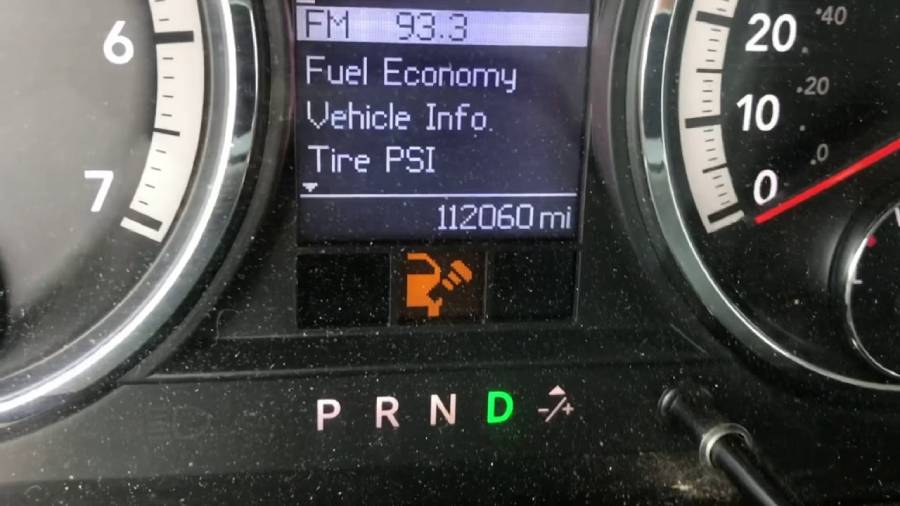
Why Is My Dodge Ram Gas Cap Light On?
The Dodge Ram Gas Cap light turns on when the Powertrain Control Module (PCM) detects that the EVAP (Evaporative Emission Control) system cannot maintain the required pressure during its self-diagnostic test. Although the warning is labeled “Gas Cap,” it does not always mean the gas cap is defective. The EVAP system functions as a sealed network that captures fuel vapors and prevents them from escaping into the atmosphere. If the PCM detects a pressure loss or vapor leak anywhere in this sealed system, it activates the Gas Cap warning or stores an EVAP-related diagnostic trouble code.
Modern Dodge Ram trucks continuously monitor the EVAP system under specific driving conditions. During an EVAP self-test, the PCM seals the system by controlling the purge and vent valves while monitoring pressure changes through the fuel tank pressure sensor. If the measured pressure falls outside the expected range, the PCM interprets the condition as a leak or component failure. Depending on the model year, the vehicle may illuminate the Gas Cap light first, followed by the Check Engine Light if the fault persists through multiple drive cycles.
Because several components share the same sealed vapor system, the warning should be viewed as an indication of an EVAP system problem rather than proof that the gas cap itself has failed. A complete diagnosis is necessary before replacing parts.
What does the Gas Cap light actually indicate?
The Gas Cap light indicates that the fuel system has detected a vapor leak or is unable to maintain proper sealing pressure. Its primary purpose is to alert the driver that fuel vapors may be escaping through the EVAP system, which can increase vehicle emissions and eventually trigger the Check Engine Light.
In many cases, the warning appears immediately after refueling if the gas cap was not tightened until it clicked several times. However, the same warning can also appear when vapor leaks develop in EVAP hoses, valves, the charcoal canister, or the fuel filler neck. Since these failures produce similar pressure losses, the warning alone cannot identify the exact faulty component.
Ignoring the warning generally does not create an immediate drivability problem because the EVAP system is designed to control emissions rather than fuel delivery. However, an unresolved leak can prevent the vehicle from completing emissions readiness tests, reduce fuel vapor containment efficiency, and make future diagnostics more complicated.
Why does the warning usually point to an EVAP system problem instead of only a loose gas cap?
The warning points to the entire EVAP system because the PCM monitors system pressure rather than the condition of the gas cap itself. The control module has no direct sensor that determines whether the gas cap is loose, cracked, or missing. Instead, it evaluates whether the complete vapor system can remain sealed during pressure testing.
For example, a cracked vapor hose, a worn gas cap seal, a leaking purge valve, or a damaged charcoal canister can all produce nearly identical pressure losses. Since the PCM only recognizes that pressure cannot be maintained, each of these failures may illuminate the same warning.
This diagnostic strategy explains why replacing the gas cap does not always solve the problem. If the warning remains after installing a new OEM-quality gas cap, technicians typically retrieve EVAP-related diagnostic trouble codes with an OBD-II scanner before performing a visual inspection or smoke test to locate the actual leak.
What Causes the Dodge Ram Gas Cap Light to Come On?
Several EVAP system faults can illuminate the Dodge Ram Gas Cap light, but a loose or damaged gas cap remains the most common cause. Other failures include leaking EVAP hoses, faulty purge or vent valves, a damaged fuel filler neck, a defective fuel tank pressure sensor, and a failing charcoal canister. Each component contributes to maintaining a sealed fuel vapor system, so failure in any one of them can trigger the warning.
Can a loose or damaged gas cap trigger the warning?
Yes. A loose, missing, or damaged gas cap is the most common reason the Gas Cap light turns on. The gas cap seals the fuel tank and prevents fuel vapors from escaping. If it is not tightened completely or its rubber gasket has become cracked, flattened, or brittle, the EVAP system cannot maintain pressure during its self-test.
This issue frequently occurs immediately after refueling. Drivers may stop tightening the cap before hearing the required clicking sound or accidentally cross-thread the cap during installation. Even a small sealing gap can produce an EVAP leak large enough to trigger the warning after one or two drive cycles.
Inspect the sealing gasket for visible damage, clean any dirt around the filler neck, and tighten the cap until several clicks are heard. If the seal shows signs of wear, replacing it with an OEM Mopar gas cap is generally recommended to ensure proper sealing performance.
Can a leaking EVAP hose cause the light?
Yes. Cracked, disconnected, or deteriorated EVAP hoses are one of the most common causes of persistent Gas Cap warnings after the gas cap has been replaced. These hoses transport fuel vapors between the fuel tank, charcoal canister, purge valve, and intake manifold. Because they operate under vacuum and pressure changes, rubber components gradually harden and develop small cracks as the vehicle ages.
Small hose leaks are often difficult to detect through visual inspection alone because they may only open under engine movement or temperature changes. In many repair shops, technicians perform a smoke test that fills the EVAP system with low-pressure smoke. Escaping smoke clearly identifies the leak location, making it far easier to diagnose than replacing parts through trial and error.
A leaking EVAP hose commonly triggers diagnostic codes such as P0442 or P0456, both of which indicate small EVAP system leaks that may not be immediately visible without specialized testing.
What Causes the Dodge Ram Gas Cap Light to Come On?
Can a faulty purge valve trigger the Gas Cap light?
Yes. A faulty purge valve can prevent the EVAP system from maintaining the correct pressure, causing the Dodge Ram Gas Cap light to illuminate. The purge valve regulates when fuel vapors stored inside the charcoal canister are drawn into the engine intake manifold for combustion. During an EVAP self-test, the PCM expects the purge valve to open and close precisely. If the valve becomes stuck open or stuck closed, the system cannot build or maintain the required vacuum, resulting in an EVAP leak code.
A purge valve that is stuck open often causes more than just the Gas Cap warning. Drivers may notice rough idle, hard starting immediately after refueling, poor fuel economy, or an illuminated Check Engine Light. Common diagnostic trouble codes include P0441, which indicates incorrect purge flow, although other EVAP-related codes may also appear depending on the severity of the failure.
Because purge valve failures produce symptoms similar to hose leaks, technicians typically verify valve operation using a scan tool or vacuum test before replacing the component. Replacing the valve without confirming the diagnosis may not resolve the warning if another EVAP component is leaking.
Can a bad vent valve cause the warning?
Yes. A malfunctioning EVAP vent valve can trigger the Gas Cap light by preventing the EVAP system from sealing correctly during diagnostic testing. The vent valve allows fresh air to enter the charcoal canister during normal operation while sealing the system whenever the PCM performs a leak detection test.
Road dust, mud, moisture, and corrosion can cause the valve to stick partially open or closed. When this happens, the PCM cannot create the vacuum required for leak detection, leading to EVAP-related diagnostic codes and repeated Gas Cap warnings.
Vent valve failures are especially common on trucks that frequently travel on gravel roads, construction sites, or muddy terrain because contaminants can accumulate around the valve housing. During diagnosis, technicians often inspect the vent filter for blockage before replacing the valve itself.
Can a damaged fuel filler neck create an EVAP leak?
Yes. A damaged or corroded fuel filler neck can prevent the gas cap from sealing properly and create an EVAP leak. Although the gas cap receives most of the attention, the filler neck forms the sealing surface against the cap’s rubber gasket. Rust, dents, scratches, or corrosion around this opening can allow fuel vapors to escape even when the cap is fully tightened.
Vehicles driven in regions where road salt is heavily used during winter are more susceptible to filler neck corrosion. Dirt buildup around the sealing surface can produce similar symptoms by preventing the gasket from making complete contact.
A careful visual inspection should include both the filler neck opening and the surrounding metal surface. If severe corrosion or physical damage is present, replacing only the gas cap is unlikely to eliminate the warning.
Can a faulty fuel tank pressure sensor trigger the warning?
Yes. A defective fuel tank pressure sensor can cause the Gas Cap light by sending inaccurate pressure readings to the PCM. This sensor continuously monitors pressure changes inside the EVAP system and allows the control module to determine whether a leak is present.
If the sensor reports incorrect pressure values, the PCM may interpret the readings as an EVAP leak even when the entire system is properly sealed. In these situations, replacing the gas cap or repairing hoses will not resolve the warning because the underlying problem is inaccurate sensor data.
Diagnosing a pressure sensor typically requires an advanced scan tool capable of displaying live pressure readings during EVAP testing. Comparing sensor values against expected operating conditions helps determine whether the sensor itself has failed or another component is responsible.
Can the charcoal canister fail and turn on the Gas Cap light?
Yes. A damaged charcoal canister can cause the Gas Cap light if it can no longer store or control fuel vapors correctly. The charcoal canister captures gasoline vapors from the fuel tank and temporarily stores them until they are purged into the engine during normal driving.
Overfilling the fuel tank is one of the most common causes of charcoal canister damage. When fuel repeatedly enters the canister instead of remaining inside the tank, the activated charcoal becomes saturated, reducing its ability to store vapors and maintain proper airflow through the EVAP system.
A failing charcoal canister may also produce a noticeable fuel odor, difficulty refueling, or repeated EVAP leak codes even after other components have been replaced. If these symptoms occur together, the canister should be inspected as part of the overall diagnosis.
How Can You Diagnose the Cause Yourself?
Diagnosing the Dodge Ram Gas Cap light should begin with the simplest and least expensive inspections before moving to advanced EVAP testing. Following a logical troubleshooting sequence reduces unnecessary parts replacement and helps identify the actual source of the leak.
How do you inspect the gas cap correctly?
Start by removing the gas cap and inspecting both the cap and the filler neck for visible damage. Check the rubber sealing ring for cracks, flattening, hardening, or missing sections. Clean any dirt or debris from the sealing surface before reinstalling the cap.
When reinstalling the cap, tighten it until multiple clicks are heard. If the warning appeared immediately after refueling, drive through several normal drive cycles because some Dodge Ram models require additional time before the PCM confirms that the leak has been corrected.
If the gasket is damaged or the cap no longer tightens securely, replacing it with an OEM Mopar gas cap is generally recommended because aftermarket caps may not always maintain the correct sealing pressure.
How do you check the filler neck for leaks?
Inspect the filler neck for corrosion, dents, cracks, or debris that could prevent the gas cap from sealing completely. Use a flashlight to examine both the outer sealing surface and the inside edge where the gasket contacts the metal.
Surface rust can sometimes be cleaned, but deep corrosion or physical damage usually requires replacement of the filler neck assembly. Any deformation that prevents full gasket contact can allow fuel vapors to escape and repeatedly trigger the Gas Cap warning.
How do you scan for EVAP trouble codes?
Use an OBD-II scanner to retrieve stored diagnostic trouble codes before replacing any additional parts. The PCM records valuable information that helps narrow the diagnosis and often identifies whether the leak is large, small, or related to purge flow.
Many inexpensive scan tools can display basic EVAP codes, while professional diagnostic equipment provides live sensor data, freeze-frame information, and EVAP system monitoring results. Reviewing this information before beginning repairs significantly improves diagnostic accuracy.
Which diagnostic codes are most commonly associated with the Gas Cap light?
Several EVAP-related diagnostic trouble codes commonly appear together with the Dodge Ram Gas Cap warning. The most frequently encountered codes include:
- P0440 – EVAP system malfunction.
- P0441 – Incorrect purge flow detected.
- P0442 – Small EVAP system leak.
- P0455 – Large EVAP system leak.
- P0456 – Very small EVAP leak.
- P0457 – Fuel cap loose or EVAP system leak detected.
These codes do not automatically identify the failed component. Instead, they indicate the type of fault detected by the PCM and should be used alongside visual inspection and additional testing.
When is a smoke test necessary?
A smoke test becomes necessary when no obvious leak can be found through visual inspection or code scanning. During this procedure, low-pressure smoke is introduced into the sealed EVAP system. Escaping smoke reveals the exact location of leaks that would otherwise remain invisible.
Professional repair facilities rely on smoke testing because many EVAP leaks are too small to detect by sight alone. Tiny cracks in hoses, loose fittings, leaking valves, or damaged canisters often become immediately visible once smoke escapes from the faulty component, allowing repairs to be completed accurately without unnecessary parts replacement.
How Do You Fix a Dodge Ram Gas Cap Light?
Fixing the Dodge Ram Gas Cap light requires identifying the actual source of the EVAP leak before replacing any components. Although a loose gas cap is the most common cause, replacing parts without diagnosis often results in unnecessary repairs and recurring warning lights. The most effective approach is to inspect the simplest components first, retrieve any stored OBD-II codes, and then repair or replace the faulty part.
How do you tighten or replace the gas cap?
The first repair step is to verify that the gas cap is properly installed and capable of creating an airtight seal. Remove the cap and inspect the rubber O-ring for cracks, flattening, brittleness, or missing sections. A damaged seal allows fuel vapors to escape even when the cap appears to be tight.
Before reinstalling the cap, wipe the sealing surface on the filler neck to remove dirt, sand, or rust that could prevent full contact with the gasket. Install the cap by turning it clockwise until several distinct clicks are heard. Most Dodge Ram models require at least three clicks to ensure the cap is fully seated.
If the cap no longer tightens securely or the sealing gasket has deteriorated, replace it with an OEM Mopar gas cap or an equivalent replacement that meets the manufacturer’s pressure specifications. Low-quality aftermarket caps may not seal correctly and can continue triggering EVAP leak codes even when brand new.
When should you replace EVAP hoses?
Replace EVAP hoses when they show signs of cracking, splitting, hardening, collapse, or loose connections. Rubber vapor lines are constantly exposed to heat, fuel vapors, moisture, and engine movement, causing them to degrade over time. Even a pinhole-sized crack can allow enough vapor to escape to trigger the Gas Cap warning.
Begin by visually inspecting every accessible hose between the fuel tank, charcoal canister, purge valve, and intake manifold. Pay particular attention to connection points, bends, and areas located near exhaust components where heat accelerates rubber deterioration.
If no visible damage is present but EVAP leak codes persist, a smoke test is the most reliable method for locating hidden leaks. Replacing hoses only after confirming leakage minimizes unnecessary repair costs.
When does the purge valve need replacement?
Replace the purge valve when testing confirms that it no longer opens or closes correctly. A purge valve that sticks open continuously introduces unmetered fuel vapors into the intake manifold, while a valve that remains closed prevents stored vapors from being purged during normal engine operation.
Common symptoms include rough idle after refueling, difficulty starting immediately after filling the tank, poor fuel economy, and recurring EVAP diagnostic codes such as P0441. Because these symptoms overlap with other EVAP failures, technicians normally confirm valve operation using a scan tool or vacuum pump before installing a replacement.
Replacing a functioning purge valve will not eliminate the warning if the actual leak originates elsewhere in the EVAP system.
When should the charcoal canister be repaired?
Repair or replace the charcoal canister when it becomes physically damaged, fuel saturated, or internally restricted. The canister stores gasoline vapors until they can be safely burned by the engine. Once contaminated with liquid fuel or damaged by impact, its ability to regulate vapor flow decreases significantly.
Drivers may notice repeated EVAP leak codes, fuel odors around the vehicle, difficulty refueling, or slow fuel nozzle shutoff during filling. These symptoms often indicate that the canister or its associated vent components require inspection.
Repeatedly topping off the fuel tank after the pump automatically shuts off is one of the leading causes of charcoal canister failure. Avoiding overfilling helps extend the life of the EVAP system and reduces future repair costs.
How do you clear the warning light after repairs?
The Gas Cap light usually turns off automatically after the PCM confirms that the EVAP system passes its self-test. This confirmation typically occurs after one or more complete drive cycles under specific operating conditions. Simply replacing the faulty component does not always extinguish the warning immediately.
If the warning remains after the repair, use an OBD-II scanner to clear the stored diagnostic trouble codes. If the underlying problem has been corrected, the light should remain off after the vehicle completes its next EVAP monitor. If the warning returns, additional diagnosis is necessary because another leak or component failure is still present.
Disconnecting the battery is generally not recommended as a primary reset method. Although it may temporarily erase stored codes on some vehicles, it also clears adaptive memory and readiness monitors, requiring the PCM to relearn operating conditions before emissions testing can be completed.
Can You Drive With the Gas Cap Light On?
Yes, you can usually continue driving with the Dodge Ram Gas Cap light on if the vehicle operates normally and no other warning lights or drivability problems are present. In most cases, the warning indicates an EVAP system leak rather than an engine or transmission fault. Since the EVAP system primarily controls fuel vapor emissions, a minor leak does not immediately affect engine performance.
However, delaying repairs for an extended period is not recommended. An unresolved EVAP leak can allow fuel vapors to escape into the atmosphere, prevent the vehicle from passing emissions inspections, and eventually illuminate the Check Engine Light if the fault remains active through multiple diagnostic cycles.
Monitoring the vehicle after the warning appears is equally important. If additional symptoms develop, such as rough idle, fuel odors, hard starting after refueling, or reduced fuel economy, the problem may involve a purge valve or another EVAP component that requires prompt diagnosis.
Is it safe for short trips?
Yes. Short trips are generally safe if the Gas Cap light is the only warning displayed and the truck continues to drive normally. Before continuing to drive, verify that the gas cap is fully tightened and inspect it for obvious damage. If the warning disappears after several drive cycles, the issue was likely caused by an improperly secured cap.
If the light remains on despite confirming the gas cap is correctly installed, schedule a diagnostic inspection to identify the source of the EVAP leak. Continuing to drive for a limited period is unlikely to damage the engine, but postponing repairs indefinitely can make future diagnosis more difficult as additional faults develop.
When should you stop driving immediately?
Stop driving and inspect the vehicle immediately if the Gas Cap light is accompanied by the Check Engine Light flashing, severe engine misfires, fuel leaks, a strong gasoline odor inside or outside the vehicle, or noticeable performance problems. These symptoms suggest that the issue extends beyond a simple EVAP leak and could indicate a more serious fuel system or engine management problem.
If raw fuel is visible beneath the truck or a strong fuel smell persists after parking, avoid driving until the leak has been repaired. Fuel leaks present both fire hazards and environmental risks that require immediate attention.
Likewise, if multiple warning lights appear simultaneously or the engine enters reduced-power mode, perform a complete diagnostic scan before operating the vehicle again. Addressing these conditions promptly helps prevent further mechanical damage and ensures the vehicle remains safe to drive.
Which OBD-II Codes Are Related to the Dodge Ram Gas Cap Light?
Several EVAP-related diagnostic trouble codes can accompany the Dodge Ram Gas Cap light. These codes help narrow the diagnosis by identifying whether the PCM detected a general system malfunction, incorrect purge flow, or a small or large vapor leak. However, no code can identify the failed component by itself. Each code should be interpreted together with a visual inspection, live sensor data, and, when necessary, a smoke test.
P0440 – EVAP System Malfunction
P0440 indicates that the PCM has detected a general malfunction somewhere within the EVAP system. Unlike leak-specific codes, P0440 does not identify whether the problem originates from the gas cap, purge valve, vent valve, hoses, or charcoal canister.
Because this code represents a broad system fault, technicians normally begin with a complete visual inspection before performing functional tests on the major EVAP components. A damaged gas cap remains the simplest possibility, but additional testing is often required to locate the actual failure.
P0441 – Incorrect Purge Flow
P0441 indicates that the purge valve is not allowing the expected amount of fuel vapor to flow through the EVAP system. The PCM compares commanded purge operation with pressure changes inside the fuel system. If the measured response falls outside the expected range, it stores this code.
Possible causes include a sticking purge valve, restricted vapor lines, electrical faults affecting the purge solenoid, or damaged vacuum hoses. Drivers may also notice rough idle, hard starting after refueling, or reduced fuel economy.
P0442 – Small EVAP Leak
P0442 indicates that the PCM has detected a small leak somewhere within the sealed EVAP system. Even a minor crack in an EVAP hose or a slightly worn gas cap gasket can produce enough pressure loss to trigger this code.
Because the leak is extremely small, visual inspection alone often fails to locate the problem. A smoke test remains the most effective diagnostic method for confirming the leak location.
P0455 – Large EVAP Leak
P0455 indicates that the EVAP system has experienced a large leak or has failed to seal completely. A loose or missing gas cap is one of the most common causes, although disconnected vapor hoses, broken fittings, or severely damaged EVAP components can produce the same code.
This code should always prompt an inspection of the gas cap before more advanced diagnostic procedures begin. In many cases, properly tightening or replacing the cap resolves the issue if no additional leaks exist.
P0456 – Very Small EVAP Leak
P0456 indicates that the PCM has detected a very small vapor leak during its EVAP self-test. This code is commonly associated with deteriorating gas cap seals, tiny hose cracks, aging O-rings, or loose hose connections that are difficult to detect visually.
Although the leak size is minimal, ignoring the warning may eventually result in repeated Check Engine Lights and failed emissions inspections.
P0457 – Loose Fuel Cap or EVAP Leak
P0457 specifically indicates that the PCM suspects the fuel cap is loose, missing, or unable to seal correctly. This code frequently appears after refueling if the cap was not tightened completely.
If the code returns after installing a properly tightened OEM gas cap, additional EVAP leak testing should be performed because another component may be responsible for the pressure loss.
How Much Does It Cost to Fix a Dodge Ram Gas Cap Light?
The repair cost depends entirely on which EVAP component has failed. Replacing a worn gas cap is inexpensive, while diagnosing and repairing hidden EVAP leaks can require additional labor and specialized equipment.
The table below shows typical repair cost ranges in the United States.
| Repair | Typical Cost |
|---|---|
| OEM gas cap replacement | $20–$60 |
| EVAP hose replacement | $50–$200 |
| Purge valve replacement | $120–$300 |
| Vent valve replacement | $100–$280 |
| Fuel tank pressure sensor replacement | $150–$350 |
| Charcoal canister replacement | $250–$700 |
| Professional smoke test | $80–$180 |
| Diagnostic scan and inspection | $80–$150 |
Labor rates vary by region, dealership, and independent repair shop. Trucks equipped with additional emissions components or requiring fuel tank removal generally incur higher repair costs.
Replacing parts without proper diagnosis often increases total repair expenses. Performing an OBD-II scan before purchasing replacement components is usually the most cost-effective approach.
How Can You Prevent the Gas Cap Light From Coming Back?
Routine EVAP system maintenance significantly reduces the likelihood of recurring Gas Cap warnings. Most EVAP failures develop gradually as rubber seals age, hoses deteriorate, or contaminants interfere with proper sealing.
Follow these preventive maintenance practices to minimize future EVAP problems:
- Tighten the gas cap until several clicks are heard after every refueling.
- Replace worn or cracked gas cap seals before they begin leaking.
- Avoid topping off the fuel tank after the fuel pump shuts off automatically.
- Inspect EVAP hoses periodically for cracks, loose fittings, or heat damage.
- Keep the fuel filler neck clean and free from corrosion or debris.
- Repair minor EVAP leaks promptly before they develop into larger system failures.
- Use OEM or high-quality replacement components that meet Dodge specifications.
Regular inspections during scheduled maintenance help identify deteriorating EVAP components before they trigger warning lights or emissions failures.
Frequently Asked Questions About the Dodge Ram Gas Cap Light
Why is the Gas Cap light still on after replacing the gas cap?
The Gas Cap light usually remains on because another EVAP component is leaking or the PCM has not yet completed a successful self-test. Replacing the gas cap only resolves the issue if the cap itself caused the pressure loss. Leaking hoses, faulty purge valves, damaged vent valves, defective pressure sensors, or charcoal canister failures can all produce the same warning.
If the new gas cap is installed correctly and the warning persists after several drive cycles, retrieve the stored OBD-II codes before replacing additional parts.
How long does it take for the Gas Cap light to reset?
The warning may turn off after one to several complete drive cycles if the underlying problem has been corrected. The PCM must successfully complete its EVAP monitor before clearing the warning automatically. The exact number of drive cycles varies depending on vehicle model, ambient temperature, fuel level, and driving conditions.
Using an OBD-II scanner to clear stored codes may extinguish the warning immediately, but the light will return if the original fault remains unresolved.
Can a bad battery trigger the Gas Cap light?
A weak or failing battery is not a direct cause of the Dodge Ram Gas Cap light. However, low system voltage can occasionally interfere with sensor communication or EVAP monitor completion, leading to irregular diagnostic behavior. If the battery has recently been disconnected or replaced, allow the PCM to complete several normal drive cycles before assuming an EVAP fault exists.
Will disconnecting the battery clear the warning?
Disconnecting the battery may temporarily erase stored diagnostic codes on some Dodge Ram models, but it does not repair the underlying EVAP problem. Once the PCM completes another self-test, the warning will return if the leak still exists.
Additionally, disconnecting the battery resets adaptive engine parameters and emissions readiness monitors. If the vehicle requires an emissions inspection, these monitors must complete successfully before the inspection can be performed.
Does every Dodge Ram model use the same EVAP system?
No. EVAP system design varies between Dodge Ram model years, engine options, and emissions packages. While every system performs the same basic function of capturing and controlling fuel vapors, component locations, diagnostic procedures, and EVAP monitor strategies differ across generations.
For accurate troubleshooting, always consult the factory service information or repair manual specific to your Dodge Ram’s model year and engine configuration before replacing components.