The Dodge Journey airbag light stays on because the Supplemental Restraint System (SRS) has detected a fault that could prevent one or more airbag components from operating correctly during a collision. While the warning light does not always indicate an immediate driving emergency, it should never be ignored because the system may disable airbags, seat belt pretensioners, or other safety features until the underlying problem is repaired.
Several issues can trigger the airbag warning light, including a faulty clock spring, loose wiring beneath the front seats, a failed seat occupancy sensor, damaged crash sensors, low battery voltage, or an airbag control module malfunction. Identifying the exact cause requires diagnosing the SRS with a scan tool capable of reading manufacturer-specific airbag diagnostic trouble codes (DTCs), as a standard engine-code scanner typically cannot access these modules.
This guide explains why the Dodge Journey airbag light turns on, what the warning means, the most common causes, how to diagnose the fault, whether it is safe to continue driving, typical repair costs, and practical steps to restore the SRS to proper working condition. By understanding how the system monitors its safety components and what each common failure indicates, you can make informed decisions about troubleshooting the issue yourself or seeking professional repair before the vehicle’s occupant protection system is compromised.
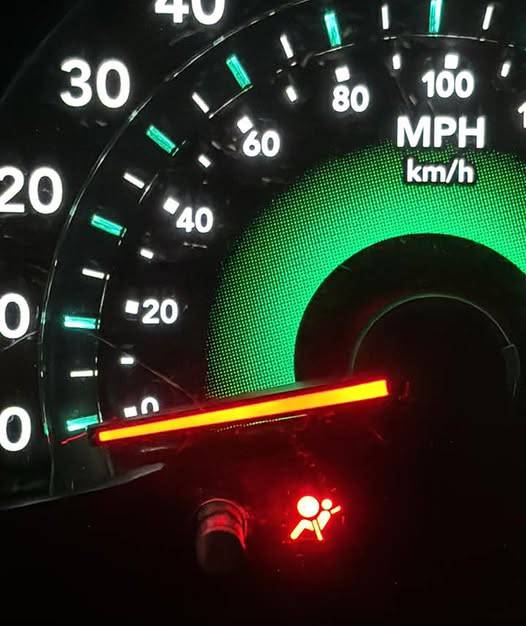
Why Is the Dodge Journey Airbag Light On?
The Dodge Journey airbag light turns on when the Supplemental Restraint System (SRS) detects a malfunction that could affect the operation of one or more safety components. During every ignition cycle, the SRS control module performs a self-diagnostic check on critical components, including the airbag control module, crash sensors, seat belt pretensioners, steering wheel clock spring, seat occupancy sensor, and electrical circuits. If the module identifies an abnormal voltage, resistance value, communication error, or circuit interruption, it stores a Diagnostic Trouble Code (DTC) and illuminates the airbag warning light on the instrument cluster.
Unlike a temporary warning such as an open door indicator, the airbag light typically remains illuminated until the underlying fault is repaired and the stored code is cleared using an SRS-compatible diagnostic scanner. Simply disconnecting the battery rarely resolves the problem because the control module retains fault information in its memory.
Although the vehicle may continue to drive normally, the illuminated warning light indicates that the SRS cannot guarantee full occupant protection during a collision. Depending on the specific fault, the system may disable one airbag, multiple airbags, seat belt pretensioners, or the entire supplemental restraint system to prevent unintended deployment. For this reason, an illuminated airbag light should always be diagnosed as soon as possible rather than ignored.
What Does the Airbag Warning Light Mean on a Dodge Journey?
The airbag warning light indicates that the Dodge Journey’s Supplemental Restraint System has detected a fault and may not deploy correctly during an accident. The warning does not identify which component has failed. Instead, it informs the driver that the SRS has stored one or more fault codes requiring diagnosis.
How the SRS Monitors Safety Components
The SRS control module continuously monitors every critical component connected to the restraint system. It checks electrical resistance, sensor signals, communication between modules, battery voltage, and circuit continuity. These diagnostic checks begin immediately after the ignition is switched on and continue while the vehicle is being driven.
Under normal conditions, the airbag indicator illuminates for several seconds during startup while the system performs its self-test. Once every monitored circuit passes inspection, the warning light turns off automatically. If any monitored component falls outside its expected operating range, the control module records a fault and keeps the warning light illuminated.
What Happens When the System Detects a Fault
When a malfunction is detected, the SRS stores a manufacturer-specific Diagnostic Trouble Code (DTC) that identifies the affected circuit or component. These codes cannot usually be read with a basic OBD-II code reader because they are stored in the airbag control module rather than the engine control module. A professional scan tool capable of communicating with the SRS is typically required to retrieve the fault information accurately.
The system may also enter a protective mode to prevent accidental airbag deployment. Depending on the severity and location of the fault, the control module can disable only the affected circuit or deactivate multiple restraint components until repairs have been completed.
Why the Airbags May Stop Functioning
Airbags rely on precise communication between crash sensors, the airbag control module, steering wheel wiring, seat occupancy sensors, and seat belt pretensioners. A failure in any one of these components can interrupt the deployment strategy designed by the manufacturer. Instead of risking an unintended deployment or deploying with incomplete information, the SRS disables the affected functions and alerts the driver through the warning light.
This protective strategy helps reduce the risk of incorrect airbag deployment but also means that occupants may receive significantly less protection during a crash. As a result, driving with the airbag light illuminated should be considered a temporary situation until the root cause has been identified and repaired.
What Are the Most Common Causes of a Dodge Journey Airbag Light?
Most Dodge Journey airbag warning lights are triggered by electrical faults, failed sensors, damaged wiring, or worn safety components that the SRS continuously monitors. While the exact cause varies by vehicle age and maintenance history, several failures appear far more frequently than others.
Faulty Clock Spring
The clock spring is a spiral electrical connector located behind the steering wheel that maintains communication between the airbag module, steering wheel controls, and vehicle wiring while the wheel rotates. Over time, repeated steering movement can wear or break the internal ribbon cable, interrupting the airbag circuit and triggering the warning light. Drivers may also notice that the horn or steering wheel buttons stop functioning, making the clock spring one of the easiest faults to recognize.
Loose Seat Wiring Connector
Electrical connectors beneath the driver and front passenger seats move whenever the seats are adjusted. Continuous movement can loosen connectors or place stress on the wiring harness, causing intermittent resistance changes that the SRS interprets as a circuit fault. This issue commonly causes the warning light to appear after moving the seats forward or backward.
Defective Seat Occupancy Sensor
The passenger seat occupancy sensor determines whether someone is sitting in the front passenger seat and helps the SRS decide whether the passenger airbag should deploy during a collision. A failed sensor may incorrectly detect passenger weight or stop communicating with the control module altogether, resulting in an illuminated airbag light and reduced restraint functionality.
Seat Belt Pretensioner Failure
Seat belt pretensioners tighten the belts instantly during a collision to reduce occupant movement before the airbags deploy. Because pretensioners are integrated into the SRS, electrical failures, damaged connectors, or internal resistance problems can trigger the airbag warning light even though the seat belt appears to function normally during everyday driving.
Airbag Impact Sensor Malfunction
Crash sensors measure vehicle deceleration and provide critical information that allows the airbag control module to determine whether deployment is necessary. Corrosion, moisture intrusion, collision damage, or internal sensor failure can interrupt these signals, causing the system to store diagnostic codes and illuminate the warning indicator.
Low Battery Voltage
The SRS requires a stable electrical supply to operate correctly. A weak battery, failing alternator, or poor battery connections can temporarily reduce system voltage below acceptable limits during engine startup. When this occurs, the control module may record low-voltage faults that keep the airbag light on until the electrical system is tested and the stored codes are cleared.
Airbag Control Module Fault
The airbag control module serves as the central computer for the entire restraint system. Internal electronic failure, water damage, previous collision data, or communication problems with other vehicle modules can prevent normal operation. Although less common than wiring or sensor issues, module failures typically require specialized diagnostic equipment and, in many cases, programming after replacement.
Blown Fuse or Damaged Wiring
The SRS depends on uninterrupted electrical communication between multiple components throughout the vehicle. Blown fuses, damaged wiring harnesses, corroded connectors, or broken ground connections can interrupt these circuits and trigger diagnostic trouble codes. A careful visual inspection combined with circuit testing is often necessary to identify wiring-related faults before replacing expensive components.
Can You Drive With the Airbag Light On?
Yes, you can usually drive a Dodge Journey with the airbag light on, but it is not considered safe because the Supplemental Restraint System may not protect occupants as designed during a collision. The warning light indicates that the SRS has detected a fault and can no longer verify that every airbag and seat belt pretensioner will function correctly if an accident occurs. While the vehicle’s engine, transmission, and braking systems are generally unaffected, the failure of the restraint system significantly increases the risk of injury in a moderate or severe crash.
Is It Safe?
Driving with the airbag warning light illuminated should only be viewed as a temporary measure until the vehicle can be diagnosed. The SRS is engineered to work together with the seat belts by determining crash severity, occupant position, and deployment timing within milliseconds. If the system detects an electrical fault, it may disable specific restraint components or suspend deployment altogether to prevent accidental activation.
Many drivers assume the warning light affects only one airbag, but the actual impact depends on the stored fault code. A failed clock spring may disable the driver’s airbag, while a communication failure inside the airbag control module can affect multiple restraint devices simultaneously. Because the dashboard warning alone cannot identify the failed component, diagnosing the system is essential before assuming the vehicle remains adequately protected.
What Protection May Be Lost During a Crash?
An active airbag warning light means one or more safety components may not operate during an accident. Depending on the recorded fault, the affected components may include the driver’s airbag, passenger airbag, side curtain airbags, side-impact airbags, seat belt pretensioners, or the passenger occupancy detection system. In some situations, the SRS control module disables only the malfunctioning circuit, while more serious communication or module failures can prevent the entire supplemental restraint system from deploying.
Modern restraint systems rely on coordinated activation rather than independent operation. Crash sensors, seat belt pretensioners, occupant sensors, and airbags exchange information continuously before deployment decisions are made. If one critical component provides invalid data, the control module may cancel deployment because it cannot accurately determine the safest response for vehicle occupants.
When Should You Stop Driving?
The vehicle should be inspected immediately if the airbag warning light appears after a collision, remains illuminated continuously, flashes repeatedly, or is accompanied by other electrical warning indicators. These symptoms may indicate control module damage, communication failures, or electrical system problems that extend beyond a single sensor.
Drivers should also avoid delaying repairs if the warning light appeared after steering wheel repairs, seat removal, battery replacement, water intrusion, or interior electrical work. These maintenance activities frequently disturb SRS connectors or wiring harnesses and can introduce faults that require recalibration or code clearing after repairs are completed.
How Do You Diagnose a Dodge Journey Airbag Light?
Diagnosing a Dodge Journey airbag light requires reading the Supplemental Restraint System fault codes before replacing any components. Because the SRS stores manufacturer-specific Diagnostic Trouble Codes that are separate from engine fault codes, diagnosis should always begin with a scan tool capable of communicating with the airbag control module. Replacing parts without confirming the stored code often increases repair costs and fails to solve the original problem.
Scan the SRS Module
The first step is connecting a professional diagnostic scanner that supports Chrysler, Dodge, Jeep, and RAM SRS systems. After communication with the airbag control module is established, the scanner retrieves active, stored, and historical Diagnostic Trouble Codes. These codes identify the affected circuit and provide a starting point for further testing instead of relying on visual inspection alone.
Many inexpensive OBD-II readers only access engine and transmission modules. Even if they display no engine fault codes, the SRS may still contain multiple airbag-related faults that require manufacturer-level diagnostic equipment.
Read Airbag Diagnostic Trouble Codes
Each Diagnostic Trouble Code corresponds to a specific component or electrical circuit. For example, the code may identify excessive resistance in the driver’s airbag circuit, an open passenger seat occupancy sensor, or communication loss between the SRS module and another controller. Understanding the code description allows technicians to determine whether the fault originates from wiring, a connector, a sensor, or the control module itself.
Stored codes should never be erased before confirming the repair because they provide valuable diagnostic information. Clearing codes prematurely can make intermittent faults more difficult to reproduce during testing.
Inspect Seat Connectors
Loose electrical connectors beneath the front seats are among the most common causes of intermittent airbag warnings. Inspect both front seat wiring harnesses for partially disconnected plugs, damaged locking tabs, corrosion, moisture contamination, or pinched wiring caused by repeated seat adjustment. Even a small increase in electrical resistance can trigger an SRS fault because the control module continuously monitors circuit integrity.
If connector damage is found, repairs should follow manufacturer procedures rather than bypassing the circuit with aftermarket modifications that could compromise system reliability.
Check Battery Voltage
The airbag control module depends on a stable electrical supply during startup and normal vehicle operation. Measure battery voltage with the engine off and again while the charging system is operating. Weak batteries, poor ground connections, or alternator charging problems can generate temporary low-voltage faults that illuminate the airbag warning light without indicating a failed airbag component.
Correcting battery or charging system issues before replacing SRS parts helps eliminate unnecessary repairs and prevents recurring warning lights.
Inspect the Clock Spring
If the airbag warning light appears together with an inoperative horn, malfunctioning steering wheel controls, or cruise control problems, the clock spring becomes a primary suspect. Inspect the steering wheel wiring and test clock spring continuity according to manufacturer specifications. Because the driver’s airbag connects through this component, internal ribbon cable damage frequently interrupts communication with the airbag module.
Clock spring replacement should always be performed with the battery disconnected and following the manufacturer’s airbag safety procedures to reduce the risk of accidental deployment.
Verify Crash Sensor Operation
Impact sensors should be inspected for physical damage, corrosion, loose mounting points, and wiring integrity. If no visible problems are found, compare live sensor data and electrical values with factory specifications using the diagnostic scanner. Sensor replacement should only occur after confirming the fault through diagnostic testing, since communication or wiring failures can produce similar warning codes.
What Airbag Codes Are Common on a Dodge Journey?
The most common Dodge Journey airbag codes identify faults involving the driver’s airbag circuit, passenger occupancy system, seat belt pretensioners, crash sensors, and communication between SRS modules. The exact code varies by model year and equipment level, but most fall into several diagnostic categories that guide technicians toward the affected component.
B1xxx Airbag System Codes
B1xxx Diagnostic Trouble Codes typically indicate faults within the Supplemental Restraint System itself. These codes often relate to high circuit resistance, open circuits, short circuits, squib failures, seat belt pretensioners, occupancy sensors, or steering wheel airbag circuits. Because each code corresponds to a specific monitored circuit, technicians use the accompanying diagnostic procedure to isolate the failed component before replacing parts.
U-Code Communication Faults
U-codes indicate communication problems between electronic control modules connected through the Controller Area Network (CAN Bus). If the airbag control module cannot exchange information with other vehicle controllers, the SRS may disable certain safety functions and illuminate the warning light. Communication faults can result from damaged wiring, module failures, poor ground connections, or unstable system voltage.
Occupancy Sensor Codes
Passenger seat occupancy sensor codes occur when the SRS receives invalid weight or position data from the Occupant Classification System. These faults may prevent the passenger airbag from deploying correctly because the control module cannot accurately determine whether the seat is occupied or whether deployment is appropriate.
Pretensioner Codes
Seat belt pretensioner codes indicate abnormal resistance or electrical faults within the pretensioner circuits. Although the seat belt may still latch and retract normally, the pretensioner may not tighten the belt during a collision if the circuit cannot be activated by the control module.
Clock Spring Related Codes
Clock spring faults generally appear when communication between the driver’s airbag and the SRS control module is interrupted during steering wheel rotation. These codes often occur alongside inoperative steering wheel buttons or horn failures, allowing technicians to narrow the diagnosis more quickly before performing continuity testing or replacing the spiral cable.
How Do You Fix the Dodge Journey Airbag Light?
Fixing the Dodge Journey airbag light requires repairing the component that triggered the Supplemental Restraint System (SRS) fault rather than simply clearing the warning light. The SRS continuously monitors every airbag circuit, sensor, and control module. If the underlying problem remains, the warning light will usually return immediately after the codes are cleared. For this reason, repairs should always follow a complete diagnostic procedure instead of replacing parts based on guesswork.
Repair Damaged Wiring
Damaged wiring is one of the most common causes of intermittent airbag faults because the SRS depends on stable electrical resistance throughout every circuit. Inspect the wiring harnesses under both front seats, around the steering column, behind interior trim panels, and near crash sensors for loose connectors, corrosion, broken insulation, pinched wires, or moisture damage.
If damaged wiring is found, repair or replace the affected section according to the manufacturer’s wiring specifications. Using incorrect connectors or bypassing damaged circuits can create additional resistance that causes the airbag light to remain illuminated even after repairs.
Replace the Clock Spring
A worn clock spring should be replaced when diagnostic testing confirms an open or intermittent circuit between the steering wheel airbag and the SRS control module. Because the clock spring rotates every time the steering wheel turns, the internal ribbon cable gradually wears and may eventually break after years of normal use.
Common symptoms of a failed clock spring include an illuminated airbag warning light, an inoperative horn, non-functioning steering wheel buttons, and cruise control problems. Replacing the clock spring restores communication between the steering wheel components and the airbag module, but the repair should always be completed with the battery disconnected and following manufacturer safety procedures.
Replace the Occupancy Sensor
A defective passenger seat occupancy sensor must be replaced or recalibrated if it can no longer accurately determine whether the front passenger seat is occupied. The Occupant Classification System sends weight and seating position information to the airbag control module so it can determine whether the passenger airbag should deploy during a collision.
After replacement, many Dodge Journey models require sensor calibration using a professional scan tool. Skipping this procedure may cause the SRS to continue displaying the warning light even though the faulty sensor has been replaced.
Repair Seat Belt Pretensioners
Seat belt pretensioners should be replaced if diagnostic testing identifies excessive resistance, an open circuit, or deployment damage. Pretensioners are designed to tighten the seat belts instantly during a collision and are considered part of the Supplemental Restraint System. Once deployed, they cannot be reused and must be replaced before the SRS can operate correctly again.
Electrical connector damage around the pretensioner can also trigger warning lights. Inspect the wiring carefully before replacing the assembly, especially if the fault appeared after seat removal or interior repairs.
Replace the Airbag Control Module
The airbag control module may require replacement if it has suffered internal electronic failure, water intrusion, or stored crash data that cannot be erased. Because the module coordinates every deployment decision, replacing it is generally one of the more expensive SRS repairs.
Most replacement modules require programming or initialization before they can communicate correctly with the vehicle. Installing a replacement module without programming often results in communication faults and additional warning lights.
Clear the Diagnostic Codes
After the faulty component has been repaired, the stored Diagnostic Trouble Codes should be cleared using an SRS-compatible diagnostic scanner. The technician should then perform another system scan and verify that the warning light turns off after the self-test completes.
If the airbag light returns immediately after clearing the codes, another active fault is still present. Additional diagnosis should be completed before replacing more components because multiple faults can exist simultaneously within the SRS.
How Much Does It Cost to Repair a Dodge Journey Airbag Light?
The cost to repair a Dodge Journey airbag light depends on the failed component, labor rates, and whether replacement parts require programming after installation. Simple electrical repairs may cost less than one hundred dollars, while replacing electronic control modules or multiple restraint components can exceed one thousand dollars.
Diagnostic Cost
Most repair shops charge between $80 and $180 for an SRS diagnostic scan, depending on the diagnostic equipment used and local labor rates. This inspection identifies the stored fault codes and significantly reduces the risk of replacing unnecessary parts.
Clock Spring Replacement
Replacing the clock spring generally costs $250 to $500, including parts and labor. The final price depends on the model year, the quality of replacement components, and the labor time required to remove the steering wheel and reinstall the airbag safely.
Occupancy Sensor Replacement
A passenger seat occupancy sensor replacement typically ranges from $300 to $700 because the repair may involve removing the seat, replacing the sensor assembly, and recalibrating the Occupant Classification System using factory-level diagnostic equipment.
Airbag Control Module Replacement
Replacing the airbag control module generally costs $600 to $1,500. The price reflects the cost of the module itself, programming, initialization, and additional diagnostic procedures to confirm proper communication with the rest of the vehicle’s electronic systems.
Labor Costs
Labor rates vary by region, but most automotive repair facilities charge $100 to $180 per hour. Repairs involving steering wheel components, seat removal, dashboard disassembly, or module programming usually require more labor than replacing connectors or repairing wiring, making labor a significant portion of the total repair cost.
Which Dodge Journey Model Years Experience Airbag Light Problems More Often?
Airbag warning light complaints appear more frequently on earlier Dodge Journey model years, particularly vehicles that have accumulated higher mileage or experienced repeated interior repairs. As these vehicles age, normal wear, vibration, and environmental exposure increase the likelihood of electrical faults within the Supplemental Restraint System.
Models produced between 2009 and 2015 are commonly reported to experience issues involving worn clock springs, loose seat wiring connectors, passenger occupancy sensors, and deteriorating wiring harnesses. These failures are largely age-related rather than the result of a single defective component. Vehicles that are frequently used in harsh climates may also develop corrosion inside connectors, increasing circuit resistance and triggering intermittent SRS faults.
Later model years generally benefit from updated components and software revisions, but they are not immune to airbag warning lights. Battery voltage problems, communication faults, damaged wiring, collision repairs, and water intrusion can affect Dodge Journey vehicles regardless of production year. Before replacing any component based solely on model year, technicians should confirm the exact Diagnostic Trouble Code because identical warning lights can result from entirely different failures.
Owners should also determine whether their vehicle is covered by any manufacturer recall or Technical Service Bulletin related to the Supplemental Restraint System. If a known safety campaign applies to the vehicle’s VIN, the repair may be completed by an authorized dealership without the owner paying for affected components.
How Can You Prevent the Airbag Light From Coming Back?
Preventing the Dodge Journey airbag light from returning depends on maintaining the Supplemental Restraint System, protecting its electrical connections, and addressing small electrical problems before they develop into permanent faults. While some component failures are caused by normal wear, many recurring SRS warnings result from damaged wiring, unstable battery voltage, or improper repairs.
Maintain a Healthy Battery and Charging System
The SRS relies on consistent system voltage to monitor sensors and communicate with other control modules. A weak battery, failing alternator, or poor battery terminals can trigger low-voltage Diagnostic Trouble Codes that illuminate the airbag warning light. Testing the battery during routine maintenance and replacing it before it reaches the end of its service life helps reduce unnecessary SRS faults.
Avoid Damaging Seat Wiring
The wiring harnesses beneath the front seats move every time the seats are adjusted. Sliding the seats aggressively, storing objects underneath them, or pulling on the wiring during interior cleaning can loosen connectors or damage electrical terminals. When cleaning the cabin or removing the seats, inspect the harnesses carefully and ensure every connector is fully locked before reassembly.
Inspect Electrical Connectors After Repairs
Many recurring airbag warnings appear after steering wheel replacement, dashboard repairs, seat removal, stereo installation, or collision repairs. Any work involving interior trim can disturb SRS wiring or connectors. Before completing these repairs, verify that every connector is securely installed and that no wires have been pinched behind trim panels or mounting brackets.
Address Dashboard Warning Lights Promptly
Ignoring an intermittent airbag warning allows minor electrical problems to become more difficult to diagnose. A loose connector that occasionally loses contact may eventually develop corrosion or terminal damage, creating a permanent fault. Diagnosing warning lights when they first appear usually reduces repair time and prevents unnecessary replacement of expensive components.
Perform Periodic Diagnostic Scans
Professional diagnostic scans can identify pending or stored SRS faults before they develop into active warning lights. This is particularly beneficial for older Dodge Journey models with high mileage, previous collision repairs, or recurring electrical issues. Early diagnosis allows technicians to repair deteriorating connectors, weak wiring, or voltage problems before they affect the entire restraint system.
When Should You See a Professional Mechanic?
A professional mechanic should inspect the Dodge Journey immediately if the airbag warning light remains illuminated after startup or returns repeatedly after the codes have been cleared. Because the Supplemental Restraint System contains explosive inflators and complex electronic control modules, many repairs require specialized diagnostic equipment and manufacturer-approved service procedures.
Professional diagnosis is recommended when the vehicle has been involved in a collision, experienced flood or water damage, undergone steering wheel or dashboard repairs, or displays multiple warning lights simultaneously. These situations often involve communication faults or module failures that cannot be accurately diagnosed with basic scan tools.
You should also seek professional service if Diagnostic Trouble Codes indicate internal control module failures, crash sensor malfunctions, or occupant classification system faults. Many of these components require calibration or programming after installation, and improper repairs can leave the restraint system partially disabled even if the warning light temporarily disappears.
If the airbag warning light is accompanied by inoperative steering wheel controls, a non-functioning horn, battery charging problems, or intermittent electrical issues, technicians should inspect the vehicle for shared wiring or CAN Bus communication faults rather than replacing individual airbag components one at a time.
Frequently Asked Questions
Can a weak battery cause the Dodge Journey airbag light to turn on?
Yes. A weak battery or unstable charging system can reduce system voltage below the operating threshold required by the Supplemental Restraint System. The airbag control module may store low-voltage Diagnostic Trouble Codes, causing the warning light to remain illuminated until the electrical problem is corrected and the codes are cleared.
Will disconnecting the battery reset the airbag light?
No. Disconnecting the battery rarely clears an active SRS fault because the airbag control module stores Diagnostic Trouble Codes in non-volatile memory. If the underlying problem remains, the warning light will usually return immediately after the vehicle completes its next self-diagnostic test.
Can a standard OBD-II scanner read airbag codes?
Usually not. Most basic OBD-II scanners communicate only with the engine and transmission control modules. Reading SRS Diagnostic Trouble Codes typically requires a professional scan tool that supports Dodge airbag systems and manufacturer-specific modules.
Will the airbags deploy if the warning light is on?
Not always. Depending on the stored fault, one airbag, several restraint components, or the entire Supplemental Restraint System may be disabled. Because the dashboard warning light does not identify which components are affected, the system should be diagnosed before relying on it for occupant protection.
How long does it take to diagnose an airbag warning light?
A standard SRS diagnostic inspection typically takes 30 to 60 minutes when the fault is straightforward. Intermittent wiring problems, communication failures, or multiple stored Diagnostic Trouble Codes may require additional testing, increasing the total diagnostic time.
Can I clear the airbag light without repairing the problem?
No. Although an SRS scanner can erase stored Diagnostic Trouble Codes, the warning light will usually return if the underlying electrical fault, sensor failure, or communication problem has not been repaired. Clearing codes without fixing the root cause does not restore the Supplemental Restraint System to normal operation.