The Chevy P1626 code means the powertrain control module (PCM) has not received the expected theft-deterrent fuel enable signal. This signal is part of the vehicle’s anti-theft authorization process. When the required authorization is missing, the PCM can store P1626 and, depending on the Chevrolet model, model year, and fault condition, the vehicle may experience starting or security-system problems.
P1626 does not automatically mean the PCM, body control module (BCM), ignition switch, or key has failed. The code identifies a problem with the theft-deterrent authorization or its communication path, while further diagnosis is required to identify the failed circuit, component, connection, or module. Replacing parts based on the code alone can therefore result in unnecessary repairs.
Common concerns associated with Chevy P1626 include an illuminated security indicator, intermittent starting problems, or a crank-no-start condition. Diagnosis should begin by confirming the code and checking related trouble codes before testing battery voltage, power and ground circuits, wiring, connectors, security-system data, and the modules involved. This guide explains what Chevy P1626 means, how serious it is, its symptoms and causes, how to diagnose and fix it, and what to expect from the repair process.
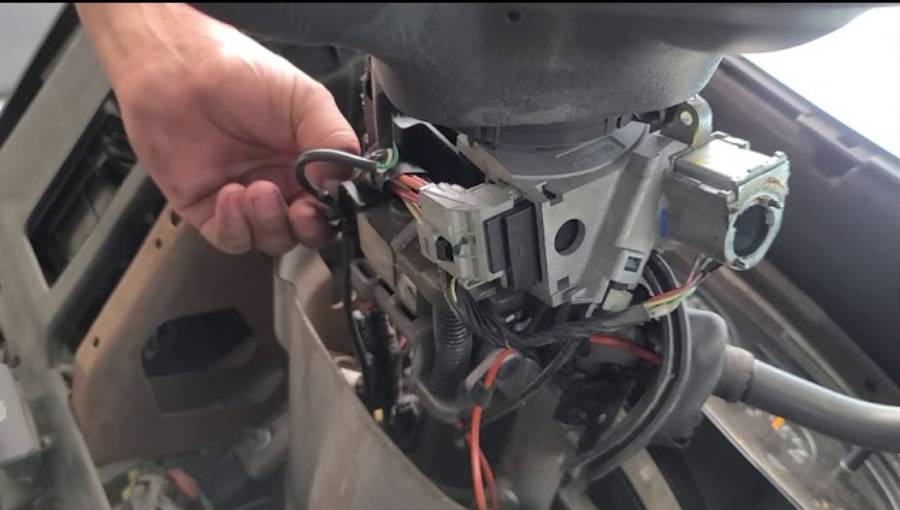
What Does the P1626 Code Mean on a Chevy?
The P1626 code on a Chevy means the powertrain control module (PCM) did not receive the expected theft-deterrent fuel enable signal. GM uses this authorization signal as part of the vehicle’s theft-deterrent strategy to determine whether engine operation should be permitted. When the expected authorization is absent or cannot be recognized correctly, the PCM can store diagnostic trouble code P1626.
The description commonly associated with P1626 is “Theft Deterrent Fuel Enable Signal Not Received.” The important distinction is that this description identifies the condition detected by the PCM, not the component responsible for it. P1626 alone does not prove that the key, ignition switch, body control module (BCM), theft-deterrent module, wiring, or PCM has failed. Diagnosis is required to determine where the authorization process or communication path has been interrupted.
The basic relationship can be understood as theft-deterrent authorization → fuel enable information → PCM → engine operation. The security system first determines whether the appropriate authorization conditions have been satisfied. The PCM then uses the relevant security information when controlling engine operation. A fault in this process can result in P1626 being stored and may affect the vehicle’s ability to start.
The exact system configuration is not identical across every Chevrolet. GM has used different theft-deterrent systems, modules, communication methods, and diagnostic procedures across models and production years. For this reason, the diagnostic procedure for a P1626 on one Chevy should not automatically be applied to another model without checking the appropriate service information.
How Serious Is the P1626 Code on a Chevy?
Chevy P1626 should be treated as a potentially serious code because a theft-deterrent authorization fault can interfere with starting the engine. The practical severity depends on whether the code is stored without current symptoms, appears intermittently, or accompanies a no-start condition.
A stored P1626 with a vehicle that starts and operates normally requires diagnosis, but it does not automatically indicate an immediate breakdown. The code may be associated with an intermittent electrical, communication, or security-system condition. Clearing the code without determining why it was stored provides little diagnostic value because the underlying fault can remain present and trigger P1626 again.
An intermittent starting problem increases the urgency. A Chevy that starts normally on one attempt but experiences security-related starting problems on another can leave the driver unable to restart the vehicle after it has been shut off. Security indicator behavior and related diagnostic trouble codes become particularly useful in this situation because they can provide additional evidence about where the fault occurs.
A Chevy that currently cranks but does not start requires immediate diagnosis rather than continued attempts to clear P1626. The technician or vehicle owner should first determine whether the theft-deterrent system is actually preventing engine operation and whether other DTCs are present. P1626 identifies a missing theft-deterrent fuel enable signal, but it should be evaluated together with the vehicle’s symptoms, related codes, scan data, electrical condition, and model-specific service information before any component is replaced.
What Symptoms Can a Chevy Have With Code P1626?
A Chevy with code P1626 can have security-system warnings and engine-starting problems because the PCM is not receiving the expected theft-deterrent fuel enable signal. The exact symptoms depend on the Chevrolet model, model year, theft-deterrent system, and whether the fault is current or intermittent. A stored P1626 therefore does not mean every vehicle will display the same symptoms.
An illuminated or flashing security light is an important symptom to check when P1626 is present. The theft-deterrent system determines whether the required authorization conditions have been satisfied before normal engine operation is allowed. When the system detects an authorization or communication problem, the security indicator may provide additional evidence that the P1626 code is related to an active theft-deterrent fault. The specific indicator behavior varies by vehicle, so it should be interpreted using service information for the model and year being diagnosed.
Starting problems are another significant symptom. A Chevy may crank without starting when the engine is physically turning over but the required security authorization is not being recognized by the PCM. An intermittent fault can produce less consistent behavior: the vehicle may start normally during one attempt and fail during another. Wiring connections, electrical conditions, module communication, and the security system itself must be tested before attributing this behavior to a specific component.
P1626 may also exist as a stored diagnostic code when the Chevy currently starts and runs normally. This situation is especially important with intermittent faults because the condition responsible for setting the code may no longer be active when the vehicle is inspected. Instead of assuming that the problem has disappeared, the diagnostic process should include related DTCs and available module data to determine what happened when the fault occurred.
Can Chevy P1626 Cause a No-Start Condition?
Yes, Chevy P1626 can be associated with a no-start condition when the theft-deterrent system does not provide the authorization required for normal engine operation. The PCM depends on security-system information as part of the process used to determine whether engine operation is authorized. A failure within that process can therefore produce a situation in which the engine cranks but does not start.
A crank-no-start condition should not automatically be blamed on P1626, however. An engine also requires the correct fuel delivery, ignition, electrical power, engine-speed information, and other operating inputs to start. P1626 becomes stronger diagnostic evidence when the no-start condition occurs together with abnormal security-system behavior, relevant security DTCs, or scan data indicating a theft-deterrent authorization problem.
The distinction matters because replacing a key, ignition switch, BCM, or PCM solely because P1626 is stored can lead to unnecessary repairs. The correct approach is to confirm the no-start condition, scan all relevant modules for related codes, observe security-system data where supported, and test the affected circuits before identifying the failed component. P1626 narrows the diagnostic direction toward the theft-deterrent fuel-enable process; it does not identify the failed part by itself.
What Causes the P1626 Code on a Chevy?
Chevy P1626 is caused when the PCM does not receive the theft-deterrent fuel enable signal it expects during the vehicle’s security authorization process. The underlying problem can originate in the theft-deterrent system, its electrical circuits, module communication, power supply, or a control module involved in authorization. For this reason, P1626 identifies the failed signal condition rather than a single failed component.
A theft-deterrent system fault is one possible cause. The security system must recognize the required authorization information and communicate the appropriate status before normal engine operation can occur. A fault within this process can prevent the expected fuel enable information from reaching the PCM. When P1626 appears together with security-related DTCs or abnormal security-light behavior, those additional indicators help narrow the diagnosis.
Key recognition or ignition-related problems can also contribute on Chevrolet models where these components participate in the theft-deterrent authorization process. A worn or damaged component, incorrect recognition of the security information, or an intermittent electrical connection can disrupt the sequence required for authorization. However, P1626 alone does not prove that the ignition switch or key is defective. The exact theft-deterrent design must be identified before either component is considered a repair target.
Damaged wiring and poor electrical connections can interrupt the circuits used by the security system and its control modules. Common electrical faults include open circuits, short circuits, corroded terminals, loose connectors, damaged harness sections, and poor grounds. An intermittent connection is particularly difficult to identify because the circuit may operate normally while the vehicle is being tested and fail only when vibration, temperature, or connector movement changes the electrical contact.
Low system voltage or an unstable power supply should also be investigated when other evidence points to an electrical problem. Control modules require adequate power and ground connections to operate and communicate correctly. A weak battery, excessive voltage drop, poor ground, or interrupted module power supply can therefore affect module operation. Battery replacement should not be treated as a universal P1626 repair; voltage and power-supply conditions need to be measured before identifying them as the cause.
Communication problems between the modules involved in theft-deterrent authorization provide another diagnostic path. Depending on the Chevrolet model and year, security information may involve the BCM, PCM, a dedicated theft-deterrent component, or another configuration used by GM. If the necessary information cannot reach the PCM because of a circuit or communication failure, P1626 can be stored even though the PCM itself remains functional. Related communication and security codes are valuable because they can reveal a broader module-network problem.
A faulty BCM, theft-deterrent module, or PCM is also possible, but module failure should be considered only after power, ground, wiring, connectors, communication, and relevant inputs have been tested. Replacing a control module before verifying these circuits can produce an expensive repair without correcting the original fault. Replacement modules may also require vehicle-specific setup, programming, or security procedures before they operate correctly.
Programming or relearn-related conditions can become relevant after certain security-system or control-module repairs. If a component has been replaced or the vehicle has undergone work affecting theft-deterrent authorization, the required security information may need to be relearned according to the applicable GM procedure. A relearn is not a substitute for repairing damaged wiring, poor connections, loss of power, or a defective component. The physical or electrical fault must first be corrected when one exists.
The most reliable way to identify the cause of Chevy P1626 is therefore to diagnose the authorization path rather than replace the component that appears most likely. The next steps should confirm P1626, identify related DTCs, evaluate the vehicle’s electrical condition and security-system behavior, and then test the relevant circuits and module data. This sequence separates an actual component failure from wiring, voltage, communication, and configuration problems that can produce the same code.
How Do You Diagnose the P1626 Code on a Chevy?
Diagnose Chevy P1626 by confirming the code, checking related DTCs, verifying battery voltage and module power, inspecting the theft-deterrent circuits, and analyzing security-system data before replacing any components. The objective is to determine why the PCM is not receiving the expected theft-deterrent fuel enable signal. A scan tool and digital multimeter are useful for this process, while model-specific service information is necessary when circuit testing or module procedures differ by Chevrolet model and year.
Start by connecting a scan tool and confirming that P1626 is currently stored. Record all other DTCs before clearing anything. Security-system, BCM, communication, voltage, and PCM-related codes can provide additional context that P1626 alone cannot provide. If several modules report communication or low-voltage faults, diagnosing those conditions first may reveal a common electrical problem rather than an isolated theft-deterrent failure.
Next, determine whether the fault is current or intermittent. Attempt to start the engine and observe whether it starts normally, cranks without starting, starts intermittently, or displays abnormal security-indicator behavior. Matching the stored code with an active symptom helps establish whether the theft-deterrent authorization problem is occurring during the diagnostic test. A Chevy that currently starts normally may require investigation of an intermittent connection or previous electrical event rather than an immediately failed component.
Check the battery and basic electrical supply before performing deeper module diagnosis. Verify that battery voltage is adequate and inspect the relevant fuses, power feeds, and grounds according to the vehicle’s wiring information. Poor module power or ground can affect security-system operation and communication. Voltage should be measured rather than judged from whether the dashboard lights illuminate or the starter turns, because those observations do not confirm that every control module has a stable electrical supply.
Inspect accessible wiring and connectors associated with the theft-deterrent and control-module circuits. Look for loose connectors, backed-out terminals, corrosion, damaged insulation, previous wiring repairs, water intrusion, and harness sections exposed to abrasion. When an intermittent fault is suspected, connector and harness movement during testing may help reveal a connection that fails only under certain conditions. Any circuit testing should follow the wiring diagram for the specific Chevrolet rather than assuming the pin assignments are identical across GM vehicles.
Use a capable scan tool to examine theft-deterrent and module data when the vehicle supports those parameters. The goal is to determine whether the security system recognizes the required authorization and whether the expected information reaches the module responsible for engine operation. A basic OBD-II reader that only retrieves generic powertrain codes may confirm P1626 but may not provide access to BCM, theft-deterrent, or manufacturer-specific data needed for deeper diagnosis.
Compare scan data with the physical symptom. For example, a crank-no-start condition accompanied by security-system data showing unsuccessful authorization provides a different diagnostic direction from a no-start vehicle whose security data indicates normal authorization. In the second situation, fuel delivery, ignition, crankshaft position information, or another engine-management problem may need to be investigated rather than assuming P1626 is responsible for the current no-start condition.
If scan data points toward a communication or signal problem, test the appropriate circuits using the model-specific service procedure. Verify continuity, voltage, ground integrity, terminal condition, and other specified electrical values before condemning a control module. A circuit that appears visually intact can still have excessive resistance, an intermittent open, or a poor terminal connection that disrupts the information required by the PCM.
Only consider a BCM, theft-deterrent module, PCM, or another control module defective after its external requirements have been verified. The module should have the correct power, ground, wiring integrity, communication, and relevant inputs before replacement is justified. This diagnostic order reduces the risk of replacing an expensive module when the actual cause is a damaged wire, corroded connector, poor ground, or power-supply fault.
What Should You Check Before Replacing Any Parts?
Check the related trouble codes, battery condition, fuses, module power and grounds, connectors, wiring, security indicator, and available security-system scan data before replacing parts for Chevy P1626. These checks establish whether the fault originates from a component or from the electrical and communication paths supporting it.
Pay particular attention to evidence that changes the diagnostic direction. Multiple low-voltage codes point toward an electrical supply investigation, while communication codes can justify network or module-circuit testing. Abnormal theft-deterrent data can direct diagnosis toward the security authorization process. A single P1626 stored without current symptoms may require investigation for an intermittent condition rather than immediate component replacement.
Do not replace the key, ignition switch, BCM, PCM, or theft-deterrent component simply because it appears on a list of possible P1626 causes. Each replacement should follow a test result that identifies the component or its circuit as faulty. This evidence-based sequence prevents “parts cannon” diagnosis and provides a clear transition from identifying the P1626 fault to selecting the correct repair.
How Do You Fix the P1626 Code on a Chevy?
Fix Chevy P1626 by repairing the specific fault that prevents the PCM from receiving the expected theft-deterrent fuel enable signal. The correct repair can involve restoring a damaged electrical connection, repairing a security-system circuit, correcting a power or ground problem, completing a required relearn, or replacing a failed component after testing confirms the failure. There is no single repair that fixes P1626 on every Chevrolet.
Repair damaged wiring and connectors when circuit testing identifies an open circuit, excessive resistance, corrosion, loose terminal, damaged connector, or other connection problem. The repair should restore the circuit to the electrical condition specified for that Chevrolet model. Clearing P1626 without repairing an intermittent connection can temporarily remove the warning while allowing the same fault to return when vibration, temperature, or harness movement interrupts the circuit again.
Correct power and ground problems before replacing a control module. A module that lacks stable voltage or a reliable ground can malfunction even when the module itself is not defective. Repairing a corroded ground connection, damaged power circuit, faulty connection, or another verified supply problem can restore normal module operation without replacing the BCM or PCM. Battery-related repairs should likewise be based on voltage and battery testing rather than P1626 alone.
Repair or replace a theft-deterrent or ignition-related component only when diagnosis identifies that component as the source of the authorization failure. The applicable component depends on the theft-deterrent architecture used by the specific Chevrolet. Because GM security-system designs vary by model and year, a key, ignition component, or theft-deterrent component that is relevant on one Chevy may not be the correct repair target on another.
A communication fault requires repairing the communication path or the component responsible for disrupting it. Diagnosis should first establish that the modules have proper power and grounds and that the associated wiring and connectors are functional. If the communication circuit passes its electrical tests but a required module fails to communicate or provide the expected information, further module-specific diagnosis is necessary before replacement.
Replace a BCM, PCM, or another control module only after testing confirms that its external circuits are functioning correctly and the module itself has failed. Module replacement is one of the repairs most likely to become unnecessarily expensive when diagnosis is skipped. A replacement module may also require programming, configuration, or theft-deterrent procedures to operate correctly with the vehicle, so installing the hardware alone may not complete the repair.
After the underlying fault has been corrected, clear P1626 and any related codes with an appropriate scan tool. Restart the vehicle and verify normal starting and security-system operation. Scan the relevant modules again to confirm that P1626 does not reset. For an intermittent problem, additional operating cycles may be required before the repair can be considered verified.
Does Chevy P1626 Require a Security Relearn?
Chevy P1626 does not always require a security relearn; a relearn is appropriate only when the vehicle’s repair procedure or replaced component requires the theft-deterrent system to learn or synchronize security information again. A relearn can be relevant after certain theft-deterrent, ignition, or control-module repairs, but the exact requirement depends on the Chevrolet model, year, and system configuration.
A security relearn should not be used as a substitute for electrical diagnosis. It cannot repair a broken wire, corroded terminal, poor module ground, unstable power supply, or failed component. If one of these physical faults prevents the required information from reaching the PCM, completing or repeatedly attempting a relearn will not remove the underlying cause of P1626.
The relearn procedure itself should be obtained from service information applicable to the specific vehicle. Different GM theft-deterrent systems and model years can use different procedures, and some repairs may require scan-tool functions or module programming rather than a simple manual relearn. Following an unrelated internet procedure solely because it applies to another Chevrolet can result in an unsuccessful relearn or an incorrect diagnosis.
The repair is complete when the diagnosed fault has been corrected, any required programming or relearn has been performed, the engine starts and operates normally, and P1626 does not return during verification. This sequence keeps the repair tied to diagnostic evidence rather than treating a relearn or module replacement as a universal solution for the code.
How Much Does It Cost to Fix Chevy P1626?
The cost to fix Chevy P1626 depends on the fault causing the missing theft-deterrent fuel enable signal rather than the code itself. A wiring or connector repair can require substantially less work than replacing and programming a control module. The total also depends on the Chevrolet model and year, diagnostic labor time, local labor rates, and whether programming or a security relearn is required.
Diagnosis should be considered part of the repair cost because P1626 does not identify a failed component by itself. A technician may need to scan multiple modules, check related DTCs, inspect theft-deterrent data, verify power and grounds, and test wiring before determining the root cause. Paying for accurate diagnosis can prevent a more expensive mistake such as replacing a BCM or PCM when the actual problem is a damaged wire or poor electrical connection.
Wiring and connector faults generally involve repairing the affected circuit rather than replacing a major module. The amount of labor depends on the location and extent of the damage. An accessible corroded terminal can require relatively little repair time, while an intermittent open buried inside a wiring harness can take considerably longer to locate and correct.
Security-system component repairs vary because Chevrolet has used different theft-deterrent configurations across models and years. A repair involving an ignition or security-related component may also require a relearn or other setup procedure after installation. The component price alone therefore does not represent the complete repair cost.
BCM or PCM replacement can be among the more expensive P1626 repairs because the job may include the module itself, installation, programming, configuration, and theft-deterrent synchronization. A control module should consequently be replaced only after testing confirms that its power supply, grounds, wiring, connectors, communication paths, and relevant inputs are functioning correctly.
A universal P1626 repair-price range would be misleading without specifying the vehicle and diagnosed failure. The most useful estimate is obtained after identifying the root cause and then calculating the required parts, labor, programming, and relearn work for that specific Chevrolet.
Can You Drive a Chevy With the P1626 Code?
You may be able to drive a Chevy with P1626 if the engine starts and operates normally, but the code should still be diagnosed because a security-system authorization problem can lead to starting difficulties. Whether the vehicle should continue to be driven depends more on its current symptoms than on the presence of the stored code alone.
A Chevy that starts consistently, runs normally, and has P1626 stored without an active security symptom is different from a vehicle already experiencing intermittent starting problems. The first situation provides an opportunity to diagnose the code before the condition becomes more disruptive. The code should not simply be erased and ignored, because an intermittent electrical or communication fault can return.
Driving becomes less advisable when the vehicle has intermittent starting or abnormal security-system behavior. The primary practical risk is that the engine may operate during the current trip but fail to restart after being switched off. A vehicle that repeatedly exhibits security-related starting problems should therefore be diagnosed before it is relied on for regular transportation.
If the Chevy already cranks without starting, driving is no longer an option and the no-start condition requires diagnosis. P1626 should be evaluated together with related DTCs, security-system data, power and ground conditions, and other engine-start requirements. The presence of P1626 does not eliminate other possible causes of a crank-no-start condition.
The decision to continue driving should therefore follow the vehicle’s actual behavior. A stored code without current symptoms calls for scheduled diagnosis, while intermittent starting problems justify more urgent attention. A current no-start condition requires troubleshooting and repair before the vehicle can return to normal use.
How Do You Clear the P1626 Code on a Chevy?
Clear Chevy P1626 with a compatible scan tool after diagnosing and repairing the fault that caused the PCM to lose the expected theft-deterrent fuel enable signal. Erasing the DTC removes the stored code from module memory, but it does not repair the electrical, communication, security-system, or module problem responsible for setting P1626.
Start by scanning the vehicle and recording P1626 along with any related trouble codes before erasing them. Related security, communication, voltage, BCM, or PCM codes can provide diagnostic information that becomes harder to evaluate once the codes have been cleared. If the vehicle has an active starting or security problem, diagnose that condition before using code clearing as a troubleshooting step.
After completing the diagnosed repair, connect the appropriate scan tool and clear the stored codes. Start the engine and observe the security indicator and starting behavior. Scan the vehicle again to determine whether P1626 resets immediately. An immediate return indicates that the condition responsible for the code is still present or that an additional required repair or procedure has not been completed.
A code that does not return immediately still requires repair verification when the original problem was intermittent. Operate and restart the vehicle under conditions similar to those in which the fault previously occurred when this can be done safely. Intermittent wiring, connector, power-supply, or communication faults can disappear during diagnosis and return after vibration, temperature changes, or repeated operating cycles affect the circuit again.
Disconnecting the battery should not be treated as a repair for P1626. Removing electrical power may erase certain stored information or change the immediate symptoms on some vehicles, but it does not repair a damaged circuit or failed component. Battery disconnection can also have vehicle-specific consequences, making the appropriate scan-tool and service-information procedure the better approach.
If P1626 returns after clearing, the underlying theft-deterrent authorization problem has not been fully resolved or the condition has occurred again. Return to the diagnostic process rather than repeatedly erasing the code. Check related DTCs, security-system data, power and grounds, wiring integrity, module communication, and any required programming or relearn procedure based on the specific repair performed.
Read more: What Happens If My Power Valve Is Too Big? Know The Right Power Valve Size You Need
Does the P1626 Diagnosis Differ by Chevy Model and Year?
Yes, P1626 diagnosis can differ by Chevy model and model year because Chevrolet vehicles do not all use the same theft-deterrent architecture, module configuration, wiring, or service procedures. The definition of P1626 establishes the diagnostic direction, but the tests required to find the root cause must match the system installed in the vehicle being repaired.
GM has used different theft-deterrent strategies across Chevrolet platforms and generations. The modules involved in recognizing security information and communicating authorization to the powertrain controller can therefore vary. The location of components, connector terminals, circuit design, scan-tool parameters, and relearn requirements can also differ. A diagnostic test that is valid for one Chevrolet should not be assumed to apply unchanged to another.
Model year is especially important when following wiring diagrams or testing module circuits. Manufacturers can change electrical architecture during a model’s production life, including changes between generations or even specific production configurations. Testing the wrong connector pin or expecting a signal that is not used by that configuration can lead to an incorrect diagnosis.
The same rule applies to security relearn and module replacement. A procedure that works on one GM theft-deterrent system may not be the correct procedure for another. Some repairs can involve a vehicle-specific relearn, while others may require scan-tool functions, module setup, or programming. The procedure should therefore be selected according to the actual system and repair rather than P1626 alone.
Before performing advanced P1626 circuit tests, identify the Chevrolet model, model year, engine or powertrain configuration when relevant, and the theft-deterrent system used by that vehicle. Then use the corresponding service information to obtain wiring diagrams, connector views, diagnostic specifications, and programming or relearn instructions.
This model-specific approach also prevents a common P1626 diagnostic mistake: assuming that a repair reported for another Chevy is automatically applicable. A replacement key, ignition component, BCM, PCM, wiring repair, or security relearn is justified only when the diagnostic evidence for the specific vehicle points to that solution. P1626 provides the starting point for diagnosis; the vehicle’s actual system configuration determines the tests and final repair.