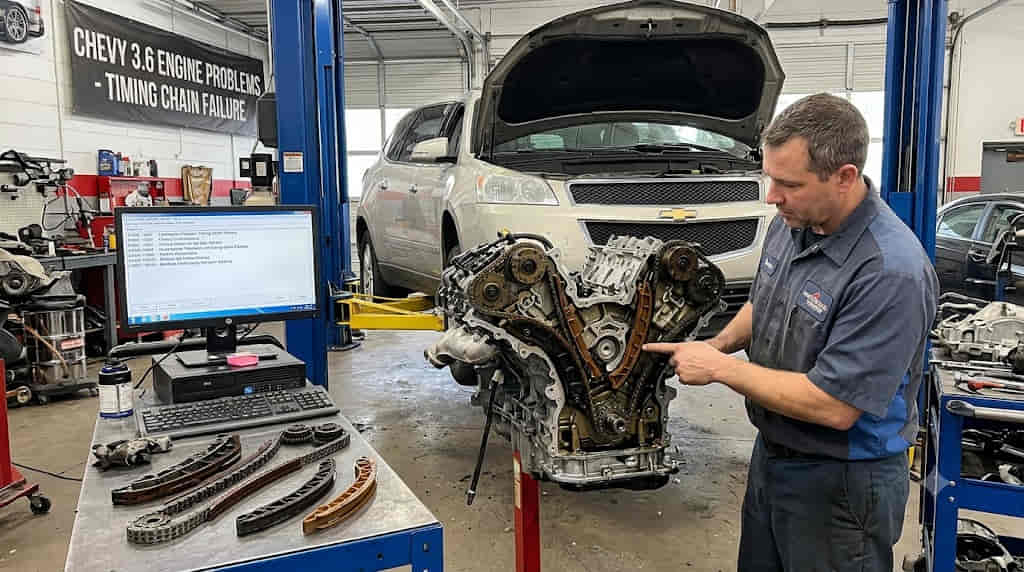
Chevy 3.6 engine problems can range from timing chain wear and oil leaks to engine misfires, variable valve timing (VVT) faults, and cooling system failures. The GM 3.6L V6 engine has been used in several Chevrolet vehicles, including the Camaro, Traverse, Equinox, and Impala, but its design and reliability characteristics vary by engine generation, model year, and engine code. Understanding these differences is essential because a symptom reported by one owner does not necessarily indicate a widespread defect across every 3.6L V6 version.
The most effective way to identify a Chevy 3.6 engine problem is to connect the symptoms with diagnostic evidence. A rattling noise during startup, for example, requires a different investigation from a check engine light, unexplained oil loss, overheating, or rough idling. Diagnostic trouble codes, maintenance records, oil condition, and a mechanical inspection can help narrow down the cause before expensive components are replaced.
This guide explains the common problems associated with the Chevy 3.6L V6, the symptoms drivers may notice, and the diagnostic steps that help distinguish minor faults from serious engine issues. It also examines repair cost factors, long-term reliability, and what to inspect before buying a used Chevrolet with this engine. Because not every 3.6L engine shares the same weaknesses, identifying the specific model year and engine version is the first step toward an accurate diagnosis.
What Are the Most Common Chevy 3.6 Engine Problems?
The most frequently discussed Chevy 3.6 engine problems include timing chain wear, oil leaks, excessive oil consumption, ignition-related misfires, variable valve timing (VVT) faults, and cooling system failures. However, the likelihood of each problem depends on the specific GM 3.6L V6 engine generation, vehicle model, model year, maintenance history, and operating conditions. The 3.6L V6 is not a single unchanged engine design, so a problem associated with an older version should not automatically be attributed to every Chevrolet vehicle equipped with a 3.6-liter engine.
Timing chain wear is an important concern in certain 3.6L V6 applications because the timing system must keep the crankshaft and camshafts synchronized. When the chain stretches or related components wear, the engine may develop startup rattling, camshaft timing faults, or rough running. Oil-related problems also deserve attention because low oil levels, degraded oil, or incorrect oil maintenance can affect lubrication and variable valve timing performance. Oil leaking from gaskets or seals is different from internal oil consumption, even though both conditions can cause the engine oil level to fall.
Ignition system faults can produce misfires, hesitation, rough idling, and reduced acceleration. Worn spark plugs, failing ignition coils, damaged wiring, or other engine management issues can contribute to these symptoms. Cooling system faults, including problems involving the water pump, thermostat, radiator, or coolant circulation, may cause the engine to run hotter than intended. Persistent overheating requires prompt investigation because excessive temperature can damage internal engine components.
These problems require different diagnostic approaches. A timing-related fault may require camshaft and crankshaft correlation checks, while a misfire may require inspection of ignition components, fuel delivery, and compression. Oil loss calls for checking the oil level and inspecting for external leaks before assuming internal engine damage. The correct diagnosis therefore depends on the vehicle’s engine code, trouble codes, service history, and physical inspection rather than on the 3.6L designation alone.
What Are the Symptoms of Chevy 3.6 Engine Problems?
The symptoms of Chevy 3.6 engine problems vary according to the affected component. Common warning signs include unusual engine noises, a check engine light, rough idling, hesitation during acceleration, reduced power, falling oil levels, coolant loss, and rising engine temperature. These symptoms help identify which systems need inspection, but none of them independently confirms a specific failure. For example, rough idling can result from an ignition misfire, an air intake problem, a vacuum leak, or a fault in engine timing.
A rattling sound during startup deserves attention when it is persistent, unusually loud, or accompanied by warning lights or abnormal engine operation. In some applications, timing chain or tensioner wear can contribute to this noise, but other mechanical components may also produce rattling sounds. A technician should determine whether the noise comes from the timing system, accessory drive, or another part of the engine before recommending repairs. Continued operation with a suspected serious timing fault can increase the risk of additional damage.
A check engine light accompanied by shaking, hesitation, or poor acceleration may indicate a misfire or an engine management problem. Diagnostic trouble codes such as P0300, which indicates random or multiple-cylinder misfires, and P0301, which indicates a misfire detected in cylinder 1, can help narrow the investigation. These codes identify the type of fault detected by the engine control module; they do not automatically prove that a spark plug or ignition coil has failed. Further testing may be needed to evaluate fuel delivery, wiring, compression, or valve timing.
Oil and cooling system symptoms require equally careful attention. A falling oil level may indicate an external leak, internal oil consumption, or an incomplete maintenance history, while a low coolant level may point to a leak or another cooling system fault. An overheating warning, a flashing check engine light with severe engine shaking, or a sudden loss of oil pressure calls for immediate attention. Stop driving when the vehicle shows signs of serious overheating or low oil pressure, and follow the owner’s manual’s instructions. Identifying the symptom early and confirming its cause can help prevent a manageable repair from developing into a much more expensive engine problem.
Read more: SBC Valve Adjustment
Why Do Chevy 3.6 Timing Chain Problems Occur?
Chevy 3.6 timing chain problems can develop when the chain, tensioners, guides, or related timing components wear beyond their service limits. The timing chain synchronizes crankshaft rotation with camshaft movement, allowing the engine’s intake and exhaust valves to operate at the correct points in the combustion cycle. If this synchronization becomes inaccurate, the engine control module may detect a mismatch between commanded and actual camshaft timing. Depending on the engine version and severity of the fault, the result can include startup rattling, a check engine light, rough running, reduced performance, or difficulty starting.
Lubrication and maintenance history are important factors in timing system condition. The timing chain and its associated components rely on proper lubrication, while hydraulic tensioners on applicable versions depend on engine oil pressure to maintain chain tension. Low oil levels, unsuitable oil, extended oil change intervals, or oil pressure problems can interfere with the operation or durability of oil-dependent components. These conditions do not mean that every poorly maintained engine will develop timing chain failure, but they can increase the risk of accelerated wear in a system that depends on consistent lubrication.
A timing chain problem should not be diagnosed from engine noise alone. A brief rattle may have several possible causes, including components outside the timing system, while a stretched chain may produce timing correlation faults without an obvious noise. A mechanic can retrieve diagnostic trouble codes, review camshaft timing data where supported, and compare crankshaft and camshaft signals. Codes in the P0016–P0019 range, for example, can indicate crankshaft and camshaft position correlation problems, although the exact interpretation depends on the vehicle and code description. Oil condition, oil pressure, sensor operation, and the condition of the timing components may also need to be checked.
Repair costs depend on the specific engine version, the extent of wear, labor requirements, and whether related components need replacement. Accessing the timing system can be labor-intensive, so replacing only one worn component may not be appropriate if the chain guides, tensioners, or other parts are also damaged. The repair plan should follow the service information for the exact engine code and model year. If severe rattling occurs alongside timing-related trouble codes or abnormal engine operation, prompt inspection is advisable because continued driving with incorrect valve timing can cause more extensive damage.
Why Does a Chevy 3.6 Engine Consume or Leak Oil?
A Chevy 3.6 engine can lose oil through external leaks or consume oil internally, and these are two different conditions that require different diagnostic methods. External leaks occur when oil escapes through a gasket, seal, housing, or other sealing surface. Internal oil consumption occurs when engine oil enters the combustion process and burns during operation. Both conditions can lower the dipstick reading, but the absence of visible oil underneath the vehicle does not rule out oil loss. Identifying the route of the oil loss is the first step toward selecting the correct repair.
External oil leaks may develop as seals and gaskets age, harden, or lose their ability to maintain a tight seal. The actual leak location depends on the engine design and vehicle configuration, so inspection should focus on the relevant sealing surfaces rather than assuming a particular component is responsible. Oil may collect on engine surfaces or travel away from the original leak under airflow and gravity, making the source difficult to identify visually. A technician may need to clean the affected area and inspect the engine after operation, or use an approved leak-detection method, to locate the origin accurately.
Internal oil consumption can have several causes, including worn piston rings, cylinder wear, valve stem sealing problems, or crankcase ventilation faults. The crankcase ventilation system helps manage gases that pass the piston rings and return them to the intake system. If ventilation components malfunction, oil may be drawn into the intake under certain operating conditions. Mechanical wear can also allow more oil to enter the combustion chamber than intended. Blue-gray exhaust smoke may support a diagnosis of oil burning, but its absence does not exclude consumption because the amount of oil burned and the operating conditions affect how visible the smoke becomes.
Accurate monitoring is essential when investigating oil consumption. Check the oil level using the procedure specified in the owner’s manual, park the vehicle on the required surface, and record the mileage and amount of oil added. This information helps establish whether the oil level is falling and how quickly. The technician may then inspect for leaks, examine the crankcase ventilation system, and perform additional tests if internal engine wear is suspected. The acceptable consumption rate and recommended procedure should be confirmed using the service information for the specific model year and engine version rather than applying a single threshold to every Chevy 3.6 engine.
Preventing avoidable oil-related damage starts with using the oil specification and service interval recommended for the vehicle. Regularly checking the oil level is especially important if the engine has a documented history of oil loss. If the oil pressure warning appears, follow the owner’s manual’s instructions and stop the engine as directed; continuing to run an engine with inadequate oil pressure can damage internal components. Repairing an identified leak or ventilation fault early may be less expensive than allowing prolonged oil loss to cause secondary problems.
What Causes Chevy 3.6 Engine Misfires and Rough Idling?
Chevy 3.6 engine misfires and rough idling can result from ignition system faults, fuel delivery problems, air leaks, mechanical wear, or incorrect valve timing. A misfire occurs when a cylinder fails to burn its air-fuel mixture properly, causing the engine to run unevenly or lose power. Drivers may notice shaking at idle, hesitation during acceleration, reduced fuel economy, or a flashing check engine light. Because several systems can produce similar symptoms, replacing spark plugs or ignition coils without confirming the cause can lead to unnecessary repair costs.
Spark plugs and ignition coils are common starting points when diagnosing an ignition-related misfire. Worn or fouled spark plugs may struggle to ignite the mixture consistently, while a failing ignition coil can weaken or interrupt the spark supplied to an individual cylinder. Diagnostic trouble codes can help identify the affected cylinder or indicate that misfires are occurring across multiple cylinders. For example, P0301 identifies a misfire detected in cylinder 1, while P0300 indicates random or multiple-cylinder misfires. These codes narrow the investigation but do not independently prove which component has failed.
Fuel delivery and air intake problems can produce similar symptoms. An injector that does not deliver the correct amount of fuel, a vacuum leak, or an airflow measurement problem can disrupt the air-fuel mixture and cause unstable combustion. If misfires persist after ignition components have been checked, diagnosis may require fuel pressure testing, injector evaluation, intake leak testing, or inspection of relevant sensors. When a misfire affects a particular cylinder repeatedly, a compression or leak-down test may also be necessary to investigate valve sealing, piston ring condition, or other mechanical causes.
Valve timing problems should also be considered when a misfire occurs alongside timing-related codes, abnormal engine noise, or a broader loss of performance. Incorrect camshaft timing can affect cylinder filling and combustion, creating symptoms that resemble an ignition fault. A systematic diagnosis compares trouble codes with live engine data and physical test results before parts are replaced. If the check engine light flashes and the engine shakes severely, reduce engine load and stop driving as soon as it is safe, because an active misfire can overheat and damage the catalytic converter.
Can VVT or Cooling System Problems Affect the Chevy 3.6 Engine?
Yes, variable valve timing (VVT) faults and cooling system problems can affect Chevy 3.6 engine performance, fuel efficiency, and long-term durability. VVT adjusts camshaft timing to suit operating conditions, helping the engine balance power delivery, efficiency, and emissions. The system depends on correctly functioning control components and, on oil-operated designs, suitable oil condition and pressure. When the commanded camshaft position differs from the actual position, the engine control module may store a timing-related trouble code and the vehicle may experience rough idling, hesitation, reduced power, or an illuminated check engine light.
VVT-related faults do not always mean the camshaft actuator itself has failed. Low oil levels, unsuitable or degraded engine oil, restricted oil passages, faulty control solenoids, wiring problems, or timing chain wear can interfere with camshaft positioning. Diagnostic codes such as P0010 or P0011 may help identify a problem involving camshaft timing control or performance, but their exact meaning and diagnostic procedure depend on the vehicle. A technician should check the oil level and condition, inspect the electrical circuit, evaluate the relevant control components, and compare commanded versus actual camshaft timing when the vehicle supports that data.
The cooling system is equally important because the engine must maintain an appropriate operating temperature to protect internal components. The water pump circulates coolant, the thermostat regulates coolant flow according to temperature, and the radiator releases heat to the surrounding air. A coolant leak, a malfunctioning thermostat, a water pump fault, restricted radiator flow, or a cooling fan problem can prevent the system from controlling temperature properly. Depending on the fault, the driver may notice a rising temperature gauge, a coolant warning, coolant loss, or visible leakage.
Overheating should not be treated as a minor issue because excessive temperature can damage gaskets, distort engine components, and compromise lubrication. If the temperature warning appears or the gauge enters a dangerous range, stop in a safe location and follow the owner’s manual’s instructions. Never remove a pressurized cooling system cap while the engine is hot, because escaping hot coolant can cause serious burns. Allow the engine to cool before any checks that the manufacturer permits the owner to perform, and arrange professional inspection if overheating persists or coolant continues to disappear.
VVT and cooling problems should be diagnosed separately unless evidence connects them. For instance, a camshaft timing code does not automatically indicate a cooling system fault, and overheating does not by itself prove that the timing system is damaged. Checking the vehicle’s diagnostic codes, fluid levels, service history, and actual operating temperature helps establish the underlying cause. Correcting the fault promptly can restore normal operation and reduce the risk of more extensive engine damage.
How Do You Diagnose Chevy 3.6 Engine Problems?
Diagnosing Chevy 3.6 engine problems starts with identifying the exact vehicle, model year, and engine version before interpreting symptoms or diagnostic trouble codes. Chevrolet vehicles equipped with a 3.6L V6 do not all use identical engine configurations or service procedures. Confirming the engine identification helps a technician select the correct specifications, wiring diagrams, diagnostic procedures, and applicable service information. Without this step, a repair recommendation based on another 3.6L application may not apply to the vehicle being inspected.
The next step is to retrieve diagnostic trouble codes with a compatible scan tool and record the available freeze-frame data before clearing anything. Freeze-frame data captures selected operating conditions when a fault was detected, helping establish whether the problem occurred during startup, idle, acceleration, or another operating condition. Codes related to misfires, camshaft timing, or sensor performance can narrow the investigation, but a code identifies a detected condition rather than automatically identifying a failed part. For example, a camshaft correlation code may involve timing chain wear, a sensor signal problem, wiring, or another fault that affects synchronization.
Physical inspection and targeted testing should then confirm or eliminate the most likely causes. An oil-loss complaint calls for checking the oil level, looking for external leaks, and assessing consumption history. A cooling system complaint requires checking coolant level and investigating leaks, circulation, temperature regulation, and fan operation as appropriate. A misfire may require inspecting spark plugs and ignition coils before proceeding to fuel delivery, intake leaks, or mechanical testing. If the symptoms suggest a timing problem, the technician may need to evaluate camshaft and crankshaft signals, commanded timing, oil pressure, and the condition of the timing components according to the manufacturer’s procedure.
A reliable diagnosis ends when the suspected fault is supported by test results and the repair can be verified. After the repair, the technician should follow the appropriate procedure to confirm that the original symptom has been resolved and that relevant faults do not return. This may involve checking live data, verifying fluid levels, testing the cooling system, or performing a road test under suitable conditions. A structured diagnostic process reduces unnecessary parts replacement and helps distinguish a relatively simple repair from an internal engine problem that requires more extensive work.
How Much Does It Cost to Fix Chevy 3.6 Engine Problems?
The cost of fixing Chevy 3.6 engine problems depends on the failed component, engine generation, vehicle model, labor rate, parts availability, and extent of secondary damage. Replacing a faulty ignition coil or spark plug generally involves less labor than accessing an internal timing chain assembly. Similarly, repairing an external oil leak may be relatively straightforward if the source is accessible, but the cost can increase substantially when the leak originates from a component that requires extensive disassembly. There is no single repair price that accurately represents every Chevrolet 3.6L V6 application.
Timing chain repairs can be expensive because accessing the chain, guides, tensioners, and associated components may require substantial labor. The final estimate depends on whether the repair involves only a confirmed failed component or a broader set of worn timing parts. If the engine has experienced incorrect valve timing for an extended period, additional inspection may be necessary to determine whether internal damage has occurred. Owners should ask the repair shop to explain the diagnostic evidence, identify which components are included in the estimate, and clarify whether related parts should be replaced during the same repair.
Oil leaks, oil consumption, ignition faults, VVT problems, and cooling system failures have different cost drivers. An accessible gasket leak may require fewer labor hours than a leak involving a difficult-to-reach sealing surface. A misfire caused by an ignition component may be less expensive to repair than one caused by low compression or an internal mechanical fault. Cooling system costs also vary depending on whether the problem involves a thermostat, water pump, radiator, fan, or another component. Accurate estimates therefore require a confirmed diagnosis and vehicle-specific labor information rather than a generic price range.
Before approving a repair, compare written estimates that specify parts, labor, diagnostic charges, taxes, warranty coverage, and any additional work that may be required. Ask whether the quoted repair addresses the root cause or only a symptom, and whether the shop has inspected for related damage. If an engine replacement or major internal repair is recommended, obtaining a second opinion may be worthwhile because the financial difference between repairing the existing engine and replacing it can be substantial. A vehicle-specific estimate is more useful than an online average that may reflect a different model year or engine configuration.
Is the Chevy 3.6 V6 Engine Reliable?
The reliability of the Chevy 3.6 V6 depends on the specific engine generation, maintenance history, driving conditions, and quality of previous repairs. The 3.6L designation covers multiple applications, so it is inaccurate to classify every version as either reliable or unreliable based on a problem reported in one vehicle. A well-maintained engine with documented oil changes, a functioning cooling system, and no unresolved warning signs presents a different ownership risk from an engine with recurring timing faults, unexplained oil loss, or a history of overheating.
Maintenance plays an important role in long-term engine condition because lubrication, temperature control, and accurate valve timing all affect internal wear. Following the correct oil specification and service schedule helps protect lubrication-dependent components, while monitoring oil and coolant levels can reveal developing problems. Responding promptly to warning lights, unusual noises, misfires, and overheating can also reduce the likelihood that a localized fault will cause secondary damage. Maintenance cannot eliminate every mechanical failure, but it provides a stronger basis for reliability than mileage alone.
A reliability assessment should consider evidence from the individual vehicle rather than relying exclusively on owner anecdotes or general reputation. Relevant information includes the engine code, service records, diagnostic history, repair invoices, oil consumption, coolant loss, and any repeated check engine light. A vehicle with high mileage and consistent maintenance may be a better prospect than a lower-mileage example with neglected servicing and unresolved engine symptoms. Conversely, a complete service history does not guarantee that all components remain in good condition.
For prospective owners, the most useful question is not simply whether the Chevy 3.6 V6 is reliable, but whether the particular engine has been maintained and currently passes a competent inspection. Confirming that applicable repairs have been completed, checking for active and pending diagnostic codes, and evaluating engine operation from a cold start can help reveal potential concerns. Reliability is best judged through engine-specific service information and the condition of the individual vehicle, not through a blanket claim that all Chevy 3.6 engines share the same weaknesses.
What Should You Check Before Buying a Used Chevy 3.6 Vehicle?
Before buying a used Chevrolet with a 3.6L V6 engine, check its maintenance records, cold-start behavior, oil and coolant condition, diagnostic trouble codes, and evidence of previous engine repairs. These checks help reveal problems that a visual inspection alone may miss. Because the 3.6L V6 has been used across different Chevrolet models and engine generations, confirm the vehicle’s model year and engine code before comparing its known service concerns with the inspection findings.
Start by reviewing the service history for documented oil changes, cooling system maintenance, and previous repairs involving the timing chain, ignition system, or variable valve timing. Invoices are more useful than a seller’s verbal assurance because they show which components were replaced and whether the repair was completed professionally. Look for repeated visits related to the check engine light, engine rattling, oil consumption, coolant loss, or overheating. A history of repeated symptoms may indicate that an earlier repair addressed the immediate warning rather than resolving the underlying cause.
A cold-start inspection can provide useful information about engine condition. When possible, ask the seller not to warm up the vehicle before the inspection so that the engine can be evaluated from a genuinely cold start. Listen for persistent abnormal rattling, observe whether the engine idles smoothly, and watch for warning lights that remain illuminated after startup. Brief noises are not enough to confirm timing chain failure, but persistent rattling combined with timing-related diagnostic codes deserves further investigation. If the engine shakes, misfires, or produces abnormal mechanical noises, arrange a professional assessment before committing to the purchase.
Check the oil level and inspect accessible engine surfaces for signs of leakage. Oil around sealing surfaces may indicate an external leak, while a low oil level without visible leakage may warrant further investigation into consumption or previous maintenance. Inspect the coolant reservoir when the engine is cold and look for signs of leakage around accessible hoses and cooling system components. The absence of visible leaks does not guarantee that the engine is free of oil consumption or internal coolant problems, so unexplained fluid loss should be investigated rather than dismissed.
A pre-purchase diagnostic scan and independent mechanical inspection provide additional protection. The technician should review current and pending trouble codes, examine relevant engine data, and investigate any symptoms identified during the test drive. Stored diagnostic information may reveal faults even when the check engine light is not currently illuminated, although recently cleared codes or incomplete readiness monitors can limit what the scan reveals. A qualified technician can determine whether further testing is needed to evaluate timing performance, misfires, cooling system operation, or suspected internal engine wear.
Finally, assess the vehicle’s condition alongside its purchase price and likely maintenance needs. A Chevrolet with documented servicing and no unresolved engine faults may be a more sensible purchase than a cheaper vehicle with unexplained oil loss, recurring timing codes, or a history of overheating. If the seller refuses an independent inspection or cannot explain significant engine repairs, consider that uncertainty when deciding whether to proceed. Verifying the specific engine version, checking the service history, and obtaining a professional inspection are practical ways to reduce the risk of buying a used Chevy 3.6 vehicle with expensive hidden problems.