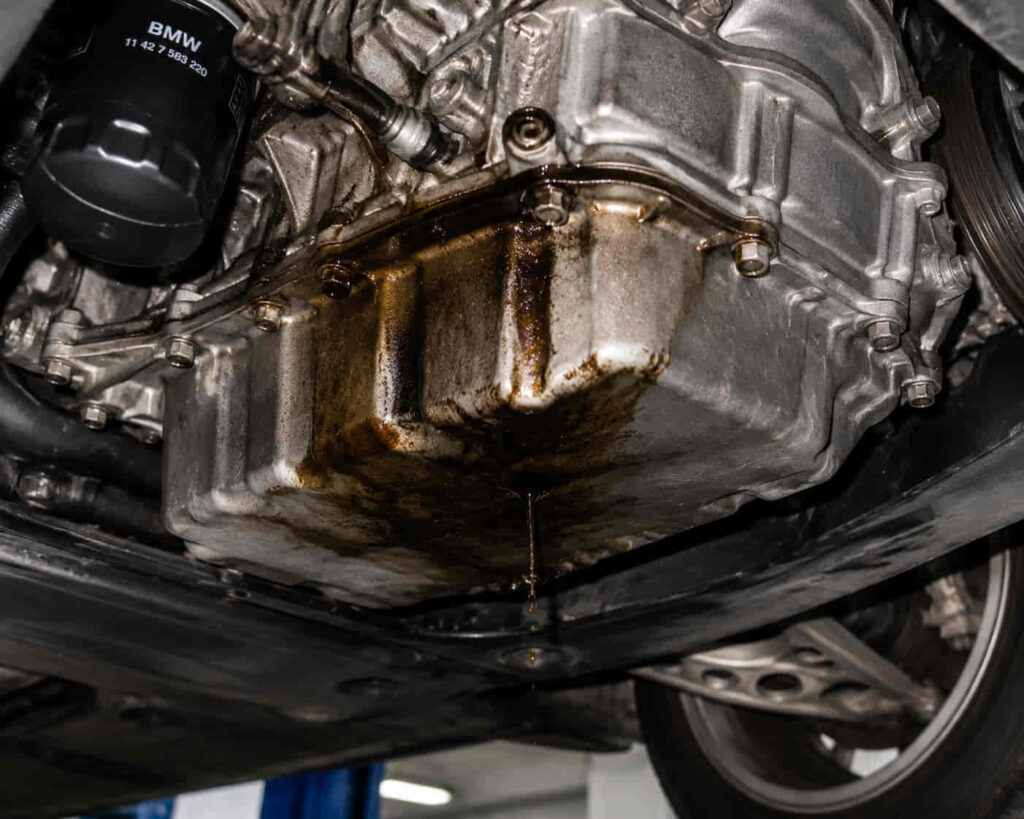
A BMW 328i oil leak is usually caused by failed gaskets, seals, or oil-system components that allow engine oil to escape from the lubrication system. Common leak sources include the valve cover gasket, oil filter housing gasket, oil pan gasket, timing cover area, and engine seals. However, the location where oil appears on the ground or underneath the vehicle does not always identify the exact source because engine oil can travel across surfaces before it drips.
A BMW 328i relies on a sealed lubrication system to maintain proper oil pressure and protect internal engine components. When a gasket loses its ability to seal, a seal becomes worn, or crankcase pressure changes, oil can escape and create symptoms such as oil residue in the engine bay, a burning oil smell, visible leaks, or a gradual drop in oil level.
Finding the actual cause requires more than adding oil or replacing the first component that appears damaged. The correct approach is to identify where the oil begins leaking, understand which component has failed, and determine whether the leak affects engine reliability or requires immediate repair.
This guide explains the 7 main reasons a BMW 328i develops an oil leak, how each failure occurs, what symptoms indicate each problem, and when professional diagnosis is necessary.
What Are the 7 Reasons Your BMW 328i Is Leaking Oil?
The 7 main reasons a BMW 328i develops an oil leak are valve cover gasket failure, oil filter housing gasket failure, oil pan gasket deterioration, timing cover leaks, crankshaft or camshaft seal failure, PCV system-related problems, and oil service-related leaks. These failures allow engine oil to escape from different areas of the lubrication system, so identifying the leak source is more important than simply identifying the presence of oil underneath the vehicle.
A valve cover gasket failure is one of the common causes of BMW 328i oil leaks because the gasket must maintain a seal between the valve cover and the cylinder head while exposed to engine heat and repeated temperature changes. Over time, gasket material can become hardened, compressed, or unable to maintain a proper seal. When this happens, engine oil can escape from the upper area of the engine and spread across nearby surfaces. Drivers may notice oil residue around the valve cover area, a burning oil smell when oil reaches hot engine components, or visible oil accumulation in the engine bay. Because oil can move downward after leaving the original leak point, the area where oil is found may not always be the actual source.
The oil filter housing gasket is another important BMW 328i oil leak source because the gasket creates a seal between the oil filter housing and the engine. When this gasket deteriorates, oil can escape from the connection point and spread into surrounding areas of the engine compartment. This type of leak can be difficult to identify because oil movement can make nearby components appear responsible even when the gasket is the original failure point. A leaking oil filter housing gasket can also allow oil to reach areas where contamination creates additional maintenance concerns, making early diagnosis important.
An oil pan gasket leak occurs when the seal between the oil pan and the lower engine assembly no longer prevents oil from escaping. The oil pan stores engine oil at the bottom of the lubrication system, which means leaks from this area often become visible underneath the vehicle. A driver may notice oil spots after parking or fresh oil residue around the lower engine area. However, oil appearing under the vehicle does not automatically confirm an oil pan problem because oil from higher locations can travel downward before dripping. Proper diagnosis requires tracing the oil path back to the highest point where fresh oil begins to appear.
A timing cover leak develops when the sealing components around the front section of the engine lose their ability to contain oil. The timing cover area protects internal engine components while maintaining separation between moving parts and the outside environment. When its sealing surfaces or gaskets deteriorate, oil can escape from the front portion of the engine. This type of leak requires careful inspection because oil from upper engine components can also move toward the timing cover area and create a similar appearance. Identifying the starting point of the leak prevents replacing the wrong gasket or seal.
Crankshaft or camshaft seal failure can cause oil leaks because these seals are designed to prevent oil from escaping around rotating engine components. Engine shafts must rotate while maintaining lubrication, which requires sealing surfaces that can withstand movement, heat, and pressure changes. When these seals wear or lose their ability to maintain contact, oil may leak from deeper areas of the engine. These leaks can require more involved repairs because the affected seals are connected to components that are less accessible than external gaskets.
A PCV system problem can contribute to BMW 328i oil leaks by changing the pressure conditions inside the crankcase. The positive crankcase ventilation system regulates internal pressure and helps manage gases produced during engine operation. When this system does not operate correctly, abnormal pressure can increase stress on gaskets and seals that are designed to contain engine oil. In some cases, addressing the PCV-related issue is necessary because replacing an external gasket alone may not solve the underlying pressure condition that contributed to the leak.
Oil service-related leaks can occur after maintenance procedures when a sealing component, filter installation, drain plug, or related connection does not maintain proper oil containment. Engine oil changes involve several points where components are removed and reinstalled, meaning installation accuracy affects leak prevention. A leak that appears shortly after an oil service should be evaluated in relation to recent maintenance history. Confirming the timing and location of the leak helps distinguish a service-related issue from a gasket or seal that failed due to age or operating conditions.
Read more: BMW 1 Series Not Starting
How Can You Find Where Your BMW 328i Is Leaking Oil?
You can find where a BMW 328i is leaking oil by tracing fresh oil back to its highest visible point on the engine rather than assuming that the oil spot underneath the vehicle is the original leak source. Engine oil moves through gravity, airflow, and contact with surrounding components, which means oil can travel away from the failed gasket or seal before becoming noticeable.
A visual inspection should begin by identifying where oil is present and whether the residue appears fresh or accumulated over time. Fresh oil usually provides better evidence because older oil contamination can cover multiple areas and make the original leak path difficult to identify. Cleaning affected surfaces and monitoring where new oil appears can help separate the active leak source from old residue.
The upper sections of the engine should be considered before lower areas because oil naturally moves downward. For example, oil found near the bottom of the engine does not automatically confirm an oil pan gasket failure. A valve cover gasket leak or oil filter housing gasket leak can allow oil to travel downward and create the appearance of a lower-engine leak. Following the oil path upward helps identify the component that actually failed.
Professional diagnosis becomes more important when the leak source is unclear or multiple areas appear contaminated. Technicians can use inspection methods designed to identify active oil movement and distinguish between external gasket leaks, seal failures, and oil contamination caused by previous maintenance. Correct identification prevents unnecessary repairs because replacing the wrong gasket does not stop oil from escaping.
How Serious Is a BMW 328i Oil Leak?
A BMW 328i oil leak can range from a minor external seepage issue to a serious lubrication problem depending on the amount of oil lost, the leak location, and whether engine components are affected. Not every visible oil leak creates the same level of risk, but every active leak indicates that the engine’s oil containment system is no longer operating as designed.
A small seep from an aging gasket may develop slowly and only create minor oil residue without a rapid drop in oil level. In this situation, the vehicle may continue operating while the owner schedules inspection and repair. However, the condition should still be monitored because a minor leak can worsen as gasket material continues to deteriorate.
A more serious oil leak occurs when oil loss becomes significant, the oil level drops below the recommended range, or escaping oil reaches high-temperature engine components. Engine oil protects internal components by reducing friction and managing heat, so insufficient oil supply increases the risk of accelerated wear. A leak that reaches exhaust components can also create additional concerns because engine oil is exposed to surfaces designed to operate at high temperatures.
The oil warning system should be treated as an important diagnostic signal rather than ignored. A warning related to oil pressure or oil level indicates that the engine may not be receiving the lubrication conditions required for normal operation. Continuing to drive without understanding the cause can transform a repairable gasket or seal issue into a larger engine problem.
The severity of a BMW 328i oil leak depends on the relationship between the leak source and the engine’s operating condition. A slow external leak from an accessible gasket has a different repair implication from a leak affecting oil pressure, internal seals, or components where oil contamination creates additional damage. Proper diagnosis determines whether the issue requires immediate repair or scheduled maintenance.
Can You Drive a BMW 328i With an Oil Leak?
You should not continue driving a BMW 328i with an active oil leak until the cause and oil loss level have been evaluated because reduced oil supply can affect engine lubrication and component protection. The risk depends on where the oil is leaking, how quickly oil is being lost, and whether the engine maintains the correct oil level and pressure.
A minor external leak from an aging gasket does not create the same immediate risk as a rapid oil leak that lowers the engine oil level or affects oil pressure. However, ignoring a small leak can allow the problem to progress because gasket and seal deterioration usually does not repair itself. As the leak becomes larger, oil contamination can spread to other engine areas and make diagnosis more difficult.
Driving becomes more concerning when there are signs of active oil loss, such as fresh oil dripping underneath the vehicle, a noticeable burning oil smell, visible smoke from oil contacting hot components, or an oil warning message. These symptoms indicate that the lubrication system may not be operating within normal conditions and require inspection before continued use.
The correct decision depends on confirming the source rather than judging severity only by the amount of visible oil. A small amount of residue around a gasket area and a continuous oil drip represent different conditions. Identifying the leak location and checking the oil level provide the information needed to determine whether the vehicle can be driven temporarily or requires immediate repair.
What Should You Check First When Your BMW 328i Has an Oil Leak?
The first checks for a BMW 328i oil leak should confirm the oil level, identify the visible leak area, review recent maintenance history, and determine whether the oil loss is active or residual. These steps create a diagnostic foundation before replacing any gasket, seal, or engine component.
Checking the engine oil level establishes whether the leak has affected the amount of oil available for lubrication. A vehicle can have an external leak while still maintaining an acceptable oil level, but a significant reduction indicates that the leak requires faster attention. Monitoring oil level changes over time also helps determine whether oil loss is stable or increasing.
The visible location of oil should then be evaluated carefully. Oil around the top of the engine may indicate a valve cover-related issue, while oil near the oil filter housing area may point toward a housing gasket problem. Oil underneath the vehicle requires further tracing because lower areas collect oil from many possible leak sources. The first visible drip point is not always the original failure point.
Recent maintenance history can provide additional diagnostic information. If the leak appeared shortly after an oil change or repair, components involved in that service should be considered during inspection. If the vehicle has accumulated significant mileage without gasket or seal replacement, age-related deterioration becomes a stronger possibility.
Avoiding immediate parts replacement is important because several BMW 328i oil leak sources can create similar symptoms. Correct diagnosis identifies the failed component before repair begins, reducing the chance of replacing a functioning part while the actual leak remains unresolved.
How Can You Prevent BMW 328i Oil Leaks?
You can reduce BMW 328i oil leak problems by monitoring early symptoms, maintaining the lubrication system correctly, and repairing small leaks before they develop into larger failures. Preventive maintenance does not eliminate gasket and seal aging, but it helps identify problems before they affect engine reliability.
Regularly checking oil level and inspecting for visible residue can reveal changes before a serious leak develops. A burning oil smell, fresh oil marks in the engine bay, or small oil spots after parking can indicate that a gasket or seal is beginning to lose its ability to contain oil. Early inspection provides more diagnostic information because the original leak path is easier to identify.
Following proper oil service procedures also supports leak prevention. Correct filter installation, proper drain plug sealing, and accurate oil filling help maintain the integrity of the lubrication system. Service-related leaks often occur when a sealing point does not perform correctly after maintenance, so attention during oil service reduces avoidable problems.
Replacing deteriorated gaskets and seals at the appropriate time helps maintain engine oil containment. Components exposed to heat cycles and engine vibration naturally experience material changes over time. Addressing known weak points before they create active leaks can prevent oil contamination, unexpected breakdowns, and more expensive repairs.
BMW 328i oil leaks should be treated as diagnostic signals rather than normal vehicle behavior. Identifying the source early, understanding the affected component, and completing the correct repair maintains the connection between engine lubrication, reliability, and long-term vehicle operation.