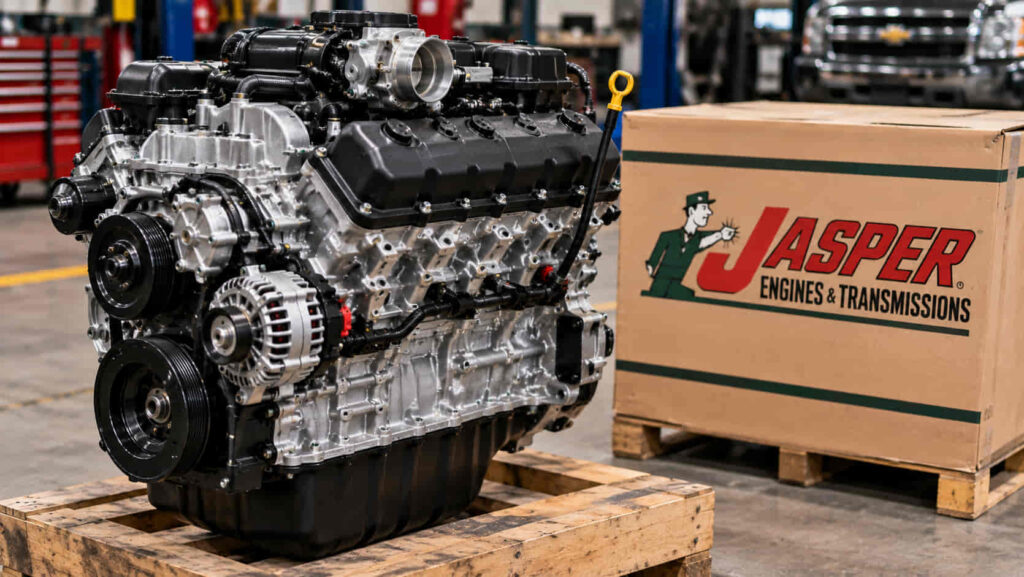
Yes, Jasper engines can be a good choice for replacing a failed engine, particularly when you want a professionally remanufactured powertrain backed by a nationwide warranty. JASPER Engines & Transmissions has operated since 1942 and has become one of the most established remanufacturing companies in the United States.
The company specializes in remanufactured gasoline engines, diesel engines, transmissions, differentials, and other drivetrain components. Its engine remanufacturing process includes complete disassembly, cleaning, inspection, precision machining, replacement of wear components, assembly, and quality testing.
One of the company’s most important advantages is its warranty. Most complete remanufactured gasoline engines for ordinary passenger cars and light-duty trucks receive a 3-year/100,000-mile nationwide limited warranty covering eligible parts and labor.
However, this warranty is not unlimited. Coverage depends on the product format, vehicle application, installation procedure, maintenance history, and the written warranty terms.
JASPER diesel engine warranties also differ. Certain running-complete diesel applications receive two years of unlimited-mileage coverage, while other diesel engine formats may have shorter warranty periods.
Jasper engines also receive mixed customer reviews. Some repair shops report successful installations and satisfactory warranty support, while other customers describe premature failures, unexpected repair expenses, and disputes over warranty coverage.
As of October 2026, ConsumerAffairs displayed a 1.5-out-of-5 rating based on 142 submitted reviews of Jasper Engines & Transmissions. However, these reviews cover multiple product categories and represent a self-selected group of customers rather than a statistically representative engine reliability study.
This distinction matters because negative reviews provide evidence of real customer complaints but do not establish the failure rate of all Jasper remanufactured engines.
The most useful question is therefore not simply whether Jasper engines are good or bad. It is whether a particular Jasper engine provides the right combination of manufacturing quality, application-specific improvements, installation support, warranty protection, and total cost for your vehicle.
This guide explains Jasper engine reliability, manufacturing processes, common complaints, warranty coverage, replacement costs, and how the company compares with used, rebuilt, OEM remanufactured, and new crate engines.
Are Jasper Engines Good Quality?
Jasper engines offer a structured remanufacturing process and substantial warranty coverage, making them a credible replacement-engine option, although individual engine quality and customer experiences can vary.
The company does more than clean and reinstall used engine components.
JASPER describes a comprehensive manufacturing process that includes inspection of the block, crankshaft, connecting rods, camshaft, and cylinder heads.
Parts are measured against the appropriate original equipment specifications.
Certain components undergo machining to restore the required dimensions and surface finishes.
Wear components are replaced according to the company’s remanufacturing procedures.
The engine is then assembled and subjected to quality checks.
JASPER also live-tests many popular complete gasoline engines to evaluate operating characteristics.
These procedures provide meaningful reasons to consider a professionally remanufactured engine.
However, the process should be distinguished from an independent reliability guarantee.
JASPER’s claims about meeting or exceeding OEM tolerances describe its manufacturing standards.
They do not independently establish that every individual Jasper engine will outlast a new original-equipment engine.
The quality of an installed replacement also depends on the repair shop.
An incorrectly installed engine can fail even when its internal components were manufactured correctly.
For this reason, Jasper is best evaluated as an established remanufacturing supplier with documented quality procedures, a defined warranty, and a mixed customer feedback record.
Who Makes Jasper Engines?
Jasper engines are remanufactured by JASPER Engines & Transmissions, an American company headquartered in Jasper, Indiana.
The company began operations in 1942.
Over subsequent decades, it expanded beyond engine rebuilding into transmissions, differentials, diesel components, and other automotive powertrain products.
JASPER is an employee-owned company.
Its manufacturing operations and distribution network serve repair facilities throughout the United States.
The company does not manufacture every engine block from raw materials in the same manner as an original automobile manufacturer.
Instead, remanufacturing begins with existing engine cores.
These cores contain components such as engine blocks, cylinder heads, crankshafts, and connecting rods.
The usable materials are inspected, cleaned, and processed.
Replacement components are installed where necessary.
This allows the original engine architecture to be restored for another period of service.
JASPER also produces application-specific versions using engineering changes intended to address certain original engine weaknesses.
However, not every engine receives the same upgrades.
The applicable improvements depend on the engine family and its remanufacturing specification.
The company’s American remanufacturing operations should not be confused with the origin of every individual replacement component.
Bearings, gaskets, pistons, and other parts may come from outside suppliers.
The final quality depends on both the components selected and the remanufacturing process.
Are Jasper Engines New or Remanufactured?
Most standard Jasper replacement engines are remanufactured rather than completely new engines built exclusively from new castings and internal components.
This distinction is important.
A remanufactured engine begins with an existing engine core.
The engine is disassembled.
Its major components are inspected to determine whether they can be restored.
Reusable components are machined or requalified as necessary.
Wear items are replaced according to the remanufacturer’s standards.
The completed assembly is intended to restore the engine’s original operating characteristics.
However, remanufactured does not mean every single component is new.
A serviceable engine block may be reused after inspection and machining.
The same can apply to a crankshaft or connecting rod when it meets the required specifications.
A completely new engine, by comparison, uses newly manufactured major components.
However, both types of engines can provide dependable service when correctly designed, built, and installed.
JASPER also offers performance crate engine products.
These may use different component combinations from its ordinary stock replacement engines.
A buyer should therefore request the exact engine format and part number.
The term Jasper engine alone does not identify which internal components are new, which are requalified, or which external accessories are included.
How Are Jasper Engines Remanufactured?
JASPER remanufactures engines through disassembly, cleaning, precision measurement, machining, component replacement, controlled assembly, and testing.
The process begins with a used engine core.
The core is disassembled so its major components can be inspected.
The block and cylinder heads undergo cleaning.
Removing sludge, carbon deposits, and machining debris is essential because contamination can damage newly installed components.
The crankshaft journals are inspected and machined as required.
Oil passages are cleaned to reduce the risk of debris circulating through the lubrication system.
Connecting rods are checked for dimensional accuracy and alignment.
Cylinder bores are measured.
When necessary, machining restores the appropriate cylinder geometry and finish.
Cylinder heads receive separate inspection.
Cracks, damaged valve seats, worn valve guides, and sealing surface problems must be addressed.
The components are then assembled using the specified replacement parts.
JASPER describes additional quality checks involving clearances, cleanliness, and lubrication.
However, the exact operations depend on engine design.
A modern overhead-camshaft engine may have different requirements from an older pushrod V8.
Diesel engines also use specialized injection and testing procedures.
The important advantage is that remanufacturing follows a defined process rather than simply reinstalling an uninspected used engine.
Does Jasper Test Its Engines Before Shipping?
JASPER performs inspection and testing during remanufacturing, including live-run testing of many popular complete gasoline engines and dynamometer testing of its running-complete diesel engines.
The distinction between engine formats matters.
JASPER states that popular complete gasoline engines undergo live testing.
During these tests, technicians monitor operating temperature, oil pressure, vacuum, and compression.
The engines may also be inspected for external leakage using fluorescent inspection methods.
These checks can identify certain assembly or operating problems before the engine leaves the facility.
However, not every engine format receives the same test.
For diesel applications, JASPER distinguishes between complete and running-complete engines.
Its complete diesel engines undergo inspection and testing that includes checking compression.
Running-complete diesel engines are subjected to live dynamometer testing.
The dynamometer allows technicians to evaluate engine performance under varying loads.
Horsepower, operating speed, and oil pressure can be monitored.
These procedures provide additional assurance that the engine operates before installation.
However, passing a factory test does not guarantee unlimited service life.
A short test cannot reproduce every condition encountered over years of driving.
Engine reliability still depends on installation quality, maintenance, and the condition of supporting vehicle systems.
Are Jasper Engines as Good as New Engines?
A properly remanufactured Jasper engine can restore performance close to the original design specifications, but it should not automatically be considered identical to a completely new OEM engine.
JASPER states that its machining and assembly processes are designed to meet or exceed original equipment measured tolerances.
This provides a useful technical standard for remanufacturing.
However, dimensional accuracy is only one part of engine durability.
Material quality, component design, thermal management, lubrication, and operating conditions also influence service life.
A remanufactured engine may reuse its original block and crankshaft after inspection.
A new OEM engine may use newly manufactured versions of those components.
A Jasper engine may also incorporate application-specific improvements intended to address recurring problems in the original design.
In some cases, these revisions can be beneficial.
However, the buyer should identify exactly which improvements apply to the engine being purchased.
The warranty also deserves comparison.
A new OEM replacement engine may have a different warranty period and different labor coverage.
Therefore, Jasper should not automatically be considered better or worse than an OEM replacement.
The correct comparison involves the exact engine, included components, documented revisions, installation cost, warranty, and parts availability.
For some older vehicles, a remanufactured Jasper engine can be a practical choice when a new OEM assembly is unavailable.
How Reliable Are Jasper Engines?
Jasper engine reliability depends on the engine application, remanufacturing quality, installation procedure, and maintenance, and there is no publicly verified company-wide engine failure rate that allows every Jasper product to be assigned one reliability score.
The company has operated in engine remanufacturing for decades.
It has developed a nationwide installer network and a substantial replacement-engine business.
These factors suggest an established manufacturing and service infrastructure.
However, company size does not establish a particular failure percentage.
Customer complaints also require careful interpretation.
Some reports describe engine failures shortly after installation.
Others describe engines operating successfully for years.
These experiences can both be genuine.
However, a reliable failure-rate calculation would require knowing how many specific engines were installed, their operating mileage, their maintenance histories, and how many developed qualifying failures.
Public review platforms generally do not provide that information.
Engine model also matters.
A remanufactured GM V8 with a cylinder-deactivation system has different potential failure mechanisms from a Ford diesel or an older Toyota four-cylinder engine.
A remanufacturer may also change its parts and processes over time.
Therefore, the best reliability assessment should focus on the exact engine part number and its known technical updates.
A Jasper engine can be a reasonable long-term replacement, but no purchaser should assume it is immune to premature failure.
How Long Do Jasper Engines Last?
A properly installed and maintained Jasper remanufactured engine can provide many years of service, but JASPER does not establish one universal engine lifespan or guarantee that every engine will last 100,000 miles without problems.
The commonly advertised 100,000-mile figure refers to the mileage limit of the applicable gasoline engine warranty.
It is not a guaranteed mechanical lifespan.
A well-maintained remanufactured engine may operate beyond the warranty mileage.
However, the actual service life depends on several factors.
Lubrication is essential.
Incorrect engine oil or inadequate oil changes can damage bearings and other components.
Cooling system condition also matters.
A defective radiator, water pump, or thermostat can cause overheating.
Fuel injection and ignition problems can affect combustion.
Severe detonation or abnormal temperatures may damage pistons and cylinder components.
Installation quality is another consideration.
A replacement engine can be contaminated by debris left in the oil cooler or other supporting components after the original failure.
The vehicle’s workload also influences durability.
A truck used for frequent heavy towing may experience different operating stresses from a passenger car driven primarily on highways.
Therefore, predictions of 150,000, 200,000, or 250,000 miles should not be presented as guaranteed Jasper engine lifespans.
The appropriate expectation is that the replacement engine should operate according to its design when installed and maintained correctly.
What Are the Advantages of Jasper Engines?
The main advantages of Jasper engines are their structured remanufacturing process, extensive application coverage, nationwide installer network, quality testing, documented warranty, and potential improvements over certain original engine components.
Professional remanufacturing is one of the clearest advantages.
A used salvage engine may arrive with an uncertain maintenance history.
By comparison, JASPER disassembles its engine cores and inspects their internal components.
Precision machining helps restore the required dimensions.
Replacement wear components reduce dependence on the condition of the original internal parts.
Testing provides another layer of inspection.
The nationwide distribution system can also be valuable.
A repair shop may be able to obtain a popular replacement engine without waiting for an existing engine to be rebuilt locally.
JASPER’s warranty is another major consideration.
For eligible complete gasoline engines, it includes parts and labor coverage for up to three years or 100,000 miles.
The company also offers optional additional service protection.
However, these benefits come with trade-offs.
A professionally remanufactured engine can cost more than a used salvage engine.
The warranty has limitations.
The quality of the installation still matters.
JASPER is therefore most attractive when the buyer values a standardized replacement process and documented support rather than simply the lowest possible price.
Read more: Detroit DD16 Engine Specs
What Are the Disadvantages of Jasper Engines?
The main disadvantages of Jasper engines include potentially higher prices than used alternatives, application-specific warranty limitations, additional installation costs, core charges, and the possibility of product or warranty disputes.
JASPER is not necessarily the least expensive replacement-engine supplier.
Its remanufacturing process, distribution network, and warranty services contribute to the overall product cost.
A lower-priced used engine may be available for the same vehicle.
However, that alternative usually involves greater uncertainty about internal condition.
Warranty limitations are another important consideration.
Parts and labor coverage does not automatically mean that every expense following a failure will be reimbursed.
Labor payments are subject to the written agreement.
Towing, rental vehicles, replacement fluids, and other incidental expenses may require additional protection.
The company offers a Premium Service Plan for eligible products, but it is separate from standard coverage.
Core charges can also affect the initial invoice.
The old engine generally must be returned according to the applicable conditions to receive the appropriate credit.
Customer complaints provide another reason to evaluate the purchase carefully.
Some owners report repeated failures or difficulty obtaining complete reimbursement.
These reports do not establish that the entire product line is defective.
They do demonstrate why the buyer should understand the warranty process before authorizing the installation.
What Do Mechanics Say About Jasper Engines?
Mechanics report mixed experiences with Jasper engines, ranging from dependable service and responsive warranty support to premature failures and difficult claim resolutions.
Some independent repair facilities use Jasper products regularly.
These shops may value the availability of replacement engines and the ability to work with a familiar supplier.
A standardized engine replacement process can reduce uncertainty compared with sourcing an unknown used engine.
The warranty network may also help when a legitimate manufacturing defect is confirmed.
However, other mechanics report problems.
Complaints may involve components that fail shortly after installation, additional diagnostic time, or warranty reimbursement that does not cover the repair shop’s full labor cost.
These experiences deserve consideration.
However, they are not controlled comparisons between engine manufacturers.
A repair facility installing hundreds of engines may encounter some failures even if the overall defect rate is relatively low.
Conversely, one repair shop’s favorable experience does not establish the reliability of every Jasper product.
The most useful question to ask a mechanic is whether the shop has recent experience with the exact engine being considered.
A technician who has successfully installed several units for the same vehicle may provide more relevant insight than a generalized opinion about the brand.
The shop’s willingness to handle warranty issues is equally important.
Are Jasper Engine Reviews Good or Bad?
Online Jasper engine reviews are mixed, with some positive installer experiences and significant negative customer feedback involving product failures, warranty disputes, and repair expenses.
ConsumerAffairs displayed a 1.5-out-of-5 rating based on 142 submitted reviews as of its October 22, 2026 update.
Many of the submitted reviews describe dissatisfaction.
However, the profile covers Jasper Engines & Transmissions as a company.
It includes complaints involving transmissions and other drivetrain components, not only engines.
Therefore, the score should not be interpreted as a measured engine failure rate.
The Better Business Bureau also identifies product quality and warranty issues as recurring complaint topics.
Its public complaint profile displayed 39 complaints over the preceding three years when reviewed in early November 2026.
However, the BBB complaint count is not equivalent to the total number of defective Jasper engines.
The company’s total product volume and the operating exposure of installed engines are not supplied alongside those complaints.
There are also favorable accounts from repair facilities that report successful installations and helpful warranty support.
The evidence therefore supports a balanced conclusion.
Jasper has an established remanufacturing business and documented quality procedures.
At the same time, some customers experience expensive and frustrating failures.
Buyers should treat individual reviews as useful warnings about possible problems, not as a substitute for verified statistical reliability data.
Why Do Some Jasper Engines Fail?
A Jasper engine can fail because of a manufacturing defect, incorrect component assembly, improper installation, unresolved vehicle problems, or inadequate maintenance.
These causes must be distinguished because they have different warranty implications.
A manufacturing defect may involve an improperly machined component, a defective replacement part, or an assembly problem.
However, a failure after installation does not automatically prove that the engine was defective when shipped.
The vehicle’s supporting systems can also cause damage.
For example, a cooling system that caused the original engine to overheat may damage the replacement if the underlying problem is not repaired.
An oil cooler contaminated by metal debris can introduce damaging particles into a newly installed engine.
A defective fuel injector can also damage internal components under certain conditions.
Improper installation creates another risk.
Incorrect engine timing, inadequate lubrication priming, or incompatible external components can prevent normal operation.
Maintenance is equally important after installation.
The engine requires the correct oil, filters, coolant, and service intervals.
When a failure occurs, the technician should document the symptoms and identify the root cause before disassembling the engine.
JASPER’s warranty procedure requires authorization before certain covered repairs.
Therefore, the buyer and repair shop should communicate with the manufacturer before proceeding with major warranty work.
Are Jasper Engines Better Than Used Engines?
A Jasper remanufactured engine generally provides more documented inspection and replacement of wear components than an ordinary salvage-yard engine, but it usually costs more.
A used engine is typically removed from another vehicle.
Its internal components may remain in their existing condition.
The seller may provide mileage information, but the engine’s previous maintenance and operating history may be incomplete.
A used engine can still be a good choice.
For example, a low-mileage engine from a verified donor vehicle may provide excellent value.
However, internal condition is not always known.
A Jasper remanufactured engine follows a different process.
The engine is disassembled.
Its major components are inspected and measured.
Appropriate parts are machined or replaced.
The completed assembly is then subjected to specified quality checks.
This reduces some of the uncertainty associated with an uninspected engine.
However, remanufacturing introduces its own potential risks involving parts quality and assembly accuracy.
The warranty is another major difference.
A used engine may have a limited parts-only warranty.
A qualifying Jasper complete gasoline engine includes broader parts and labor coverage.
The correct decision depends on purchase price, vehicle value, warranty conditions, and the buyer’s tolerance for risk.
A well-documented low-mileage used engine may be economical, while Jasper may be preferable when predictable product support is a priority.
Jasper Engines vs Rebuilt Engines
A Jasper remanufactured engine is produced through a standardized industrial process, while the term rebuilt engine can describe a wide range of repair and restoration procedures.
A local engine rebuild may involve disassembly, cleaning, inspection, and replacement of damaged components.
However, the exact work depends on the engine builder and agreed repair scope.
Some rebuilds are very comprehensive.
A highly skilled machine shop may restore the engine to strict dimensional specifications and use premium internal components.
Other rebuilds may replace only the visibly damaged parts.
JASPER’s remanufacturing process is more standardized.
Its published procedures address major engine components and include specified inspection and testing.
However, a standardized process does not automatically produce a better engine than every custom rebuild.
A specialist rebuilding one particular engine may have substantial experience addressing that model’s weaknesses.
A custom rebuild can also preserve the original engine block.
This may matter for classic vehicles or numbers-matching restorations.
The correct comparison should therefore evaluate the actual scope of work.
An itemized rebuild quote should identify machining, replacement parts, testing, and warranty coverage.
A Jasper quote should identify the corresponding engine format and included components.
The best choice is the one that offers appropriate quality and value for the specific vehicle.
Jasper Engines vs OEM Remanufactured Engines
Jasper and OEM remanufactured engines are both potential replacement options, but their differences depend on the vehicle manufacturer, engine application, parts included, and warranty terms.
An OEM remanufactured engine is supplied through a manufacturer-associated service parts program.
For example, Ford, General Motors, and other automakers have offered remanufactured powertrain assemblies for selected applications.
However, not every vehicle has an OEM remanufactured engine readily available.
A Jasper engine may provide an alternative when the original manufacturer no longer supplies the required assembly.
Both approaches can involve machining and replacement of internal wear components.
The correct question is which process and components apply to the exact engine.
An OEM remanufactured engine may incorporate manufacturer-specific engineering updates.
A Jasper engine may also contain application-specific revisions.
However, those changes should be documented.
Warranty comparison is particularly important.
An OEM warranty may have different mileage limits, labor reimbursement terms, and dealer service requirements.
Jasper’s nationwide parts and labor warranty can be attractive for qualifying gasoline engines.
However, it should not be assumed to be broader than every OEM warranty.
Buyers should compare the complete written terms.
Engine price, installation labor, availability, and supporting components also influence the final decision.
Jasper Engines vs Crate Engines
Jasper remanufactured engines and new crate engines can serve similar replacement needs, but they differ in component sourcing, intended use, and available configurations.
A crate engine is an engine supplied as a prepared assembly.
However, the term crate engine does not necessarily mean the engine is completely new.
Some crate engines are remanufactured.
Others are assembled using entirely new components.
JASPER offers stock and performance crate engine products.
Its performance lineup includes engines intended for restoration and modified vehicle projects.
These engines may use different camshaft specifications or other performance components.
A standard Jasper replacement engine is generally intended to restore the original engine’s normal operating characteristics.
A performance crate engine may prioritize additional horsepower or torque.
However, performance upgrades can affect emissions compatibility and drivetrain requirements.
An engine with a larger camshaft may not operate correctly with the original electronic calibration.
Transmission, cooling, exhaust, and fuel system compatibility must also be considered.
A new OEM crate engine may be appropriate for certain modern or performance applications.
However, it can be more expensive or unavailable for older vehicles.
The correct comparison should include whether the engine is new or remanufactured, the actual parts supplied, installation requirements, and the warranty.
Are Jasper Diesel Engines Good?
Jasper diesel engines can be a viable replacement option, particularly when the correct remanufacturing format and warranty are selected for the intended diesel application.
JASPER remanufactures diesel engines for several manufacturers.
Its product information identifies applications involving Ford, International, Cummins, Caterpillar, General Motors, and other diesel engine families.
However, diesel engines have different manufacturing and service requirements from gasoline engines.
High-pressure injection equipment, turbochargers, and complex lubrication systems require specialized testing.
JASPER offers different diesel engine formats.
A complete diesel engine may include the block, cylinder heads, oil pump, oil pan, and other components.
A running-complete engine generally includes additional systems and receives dynamometer testing.
However, the precise contents vary by application.
Diesel warranty coverage also differs from the standard gasoline engine warranty.
JASPER states that many running-complete diesel applications receive up to two years of unlimited-mileage parts and labor coverage.
Other formats may have shorter periods.
This is an important distinction for heavy-duty fleet owners.
The engine should be selected according to its expected duty cycle and the components included.
A properly remanufactured diesel engine may provide substantial service life.
However, the fuel system, turbocharger, cooling system, and installation quality strongly influence the result.
Are Jasper Ford Power Stroke Engines Reliable?
A Jasper Ford Power Stroke engine can be a practical replacement when its remanufactured components and supporting systems match the truck’s technical requirements.
Ford Power Stroke engines include several generations.
The 7.3L, 6.0L, 6.4L, and 6.7L engines have different designs and known service concerns.
For example, the 7.3L and 6.0L use HEUI injection systems.
These systems depend on high-pressure engine oil.
The 6.7L uses a modern common-rail injection system.
Its fuel system and emissions equipment introduce different repair considerations.
A remanufactured long block may restore the crankshaft, pistons, bearings, cylinder heads, and other major components.
However, the complete repair must also address the components responsible for the original failure.
A 6.0L that experienced repeated overheating should have its cooling system evaluated.
A 6.7L with high-pressure fuel system contamination may require extensive fuel system service.
A new long block will not correct every external fault.
JASPER’s warranty documentation identifies specific coverage arrangements for several Ford and International diesel applications.
However, the precise protection depends on the product format.
Before purchasing, the owner should verify the included components, engineering revisions, fuel system condition, and applicable warranty.
The installation shop should also have experience with the particular Power Stroke generation.
Are Jasper Chevy and GMC Engines Good?
Jasper remanufactured Chevy and GMC engines can be appropriate replacement options, but buyers should investigate application-specific design concerns before choosing a replacement.
General Motors has produced several popular V8 engine families.
These include the 4.8L, 5.3L, 6.0L, and 6.2L engines used in trucks and SUVs.
Their internal designs and common problems vary.
For example, certain GM 5.3L and 6.2L engines use Active Fuel Management or Dynamic Fuel Management.
These systems involve specialized hydraulic lifters and electronic controls.
Some versions have documented lifter failures.
A remanufactured replacement engine should be evaluated for the appropriate lifter design and applicable engineering updates.
However, the presence of a Jasper remanufactured engine does not automatically prove that every original engine weakness has been eliminated.
The buyer should request application-specific information.
Oil consumption, cooling problems, timing components, and fuel system issues should also be considered according to engine family.
The external equipment transferred from the original engine must be serviceable.
The installation shop should inspect the intake, cooling system, exhaust components, and engine management system as required.
A correctly rebuilt engine may provide years of service, but its durability depends on using the proper parts and correcting the original failure cause.
What Is the Jasper Engine Warranty?
Most qualifying Jasper complete gasoline engines for ordinary passenger cars and light-duty trucks carry a limited nationwide warranty of three years or 100,000 miles, whichever comes first, covering eligible parts and labor.
This is one of Jasper’s main selling points.
However, several qualifications are important.
The warranty applies to the relevant engine format and application.
A gasoline short block does not receive the same coverage as a complete gasoline engine.
JASPER’s published limited warranty lists gasoline short blocks at six months or 8,000 miles.
Industrial and nonautomotive gasoline engines have separate terms.
Performance engines also have different coverage depending on their classification.
Certain commercial-use vehicles receive shorter protection.
JASPER identifies applications such as taxis, tow trucks, package delivery, police vehicles, and vehicles over one ton as subject to an 18-month or 100,000-mile warranty in the relevant gasoline engine category.
The exact written terms should be reviewed before purchase.
Parts and labor coverage is also subject to authorization, labor allowances, and exclusions.
It does not mean every expense associated with the failure is automatically reimbursed.
A buyer should request the warranty document applicable to the actual engine part number and purchase date.
Does Jasper Warranty Cover Labor?
Jasper’s applicable parts and labor warranties provide reimbursement for eligible repair labor, but payments are subject to the manufacturer’s approved labor procedures and allowances.
This distinction is essential.
An engine can have a parts and labor warranty without providing unlimited reimbursement for every repair invoice.
JASPER’s written warranty specifies that labor expenses are determined using approved labor time guides or factory-approved rates.
A repair shop may charge a higher hourly rate.
It may also estimate additional diagnostic or disassembly work beyond the approved repair time.
Consequently, the customer may still face a difference between the actual bill and the warranty reimbursement.
The exact amount depends on the claim and applicable contract.
JASPER also requires a warranty case number and authorization before certain repair work is completed.
A customer who independently approves a major repair without following the claims procedure may encounter coverage problems.
The optional Premium Service Plan provides additional labor protection for qualifying products.
However, its terms and limits must be reviewed separately.
Buyers should ask the installing shop how it handles Jasper warranty claims.
The shop should explain who submits the claim, how labor rates are calculated, and who pays any amount not covered.
Does the Jasper Warranty Cover Towing and Rental Cars?
Jasper’s standard warranty should not be assumed to cover towing, rental vehicles, replacement fluids, or every incidental expense associated with an engine failure.
The standard warranty focuses on eligible defects involving the covered product.
Its written terms contain exclusions involving incidental and consequential expenses.
These can include transportation-related costs and other losses.
JASPER offers an optional Premium Service Plan for qualifying products.
The plan can provide additional allowances for labor, towing, rental vehicles, and fluids.
However, this protection is separate from the standard warranty.
It must be selected and purchased according to the applicable terms.
The actual reimbursement amounts and limits should be confirmed in the current plan documentation.
Owners should not assume that buying a Jasper engine automatically provides a rental car when the vehicle is out of service.
This can become important when a replacement engine fails.
The cost of towing a truck to an approved repair facility can be substantial.
Rental transportation may also become expensive when the repair takes several days or weeks.
Therefore, warranty evaluation should include more than the stated duration.
A buyer should identify the expenses that remain their responsibility if a covered defect occurs.
What Can Void a Jasper Engine Warranty?
Jasper warranty coverage can be denied when an engine failure is caused by excluded conditions such as improper installation, inadequate maintenance, overheating, lack of lubrication, or unauthorized modifications.
The company’s limited warranty contains several conditions.
These involve how the engine is installed, maintained, and operated.
The replacement engine must receive suitable lubricants and fluids.
The installer must also follow the required procedures.
An engine damaged by a failed cooling system may not qualify for coverage if the failure results from unresolved external vehicle problems.
The same concern applies to contamination introduced from components not included with the engine.
Improper modifications can create additional problems.
A performance calibration that increases combustion pressure or operating speed beyond the engine’s approved specification may affect warranty eligibility.
However, warranty decisions must be made under the applicable written terms and facts of the failure.
A manufacturer should not automatically assume misuse simply because an engine has failed.
The correct process involves diagnosing the cause and documenting the condition.
Owners should keep installation invoices, maintenance records, and correspondence.
These documents can be important when evaluating a disputed claim.
The exact warranty supplied with the engine should take precedence over generalized information.
How Much Does a Jasper Engine Cost?
Jasper engine prices vary significantly by engine model, vehicle application, included components, and whether the quotation covers the engine alone or complete installation.
There is no reliable single price applicable to every Jasper engine.
A remanufactured four-cylinder gasoline engine may have different parts and machining costs from a modern V8.
A diesel engine can be considerably more expensive because of its size and supporting systems.
The engine format also matters.
A short block includes fewer components than a complete engine.
A running-complete diesel engine may include additional fuel injection and turbocharger equipment.
JASPER encourages customers to obtain pricing through its online catalog or an installing repair facility.
The company also operates a nationwide network of installers.
However, a quoted engine price may not represent the complete cost of restoring the vehicle.
Labor can be substantial.
Engine removal and installation may require many hours.
Additional gaskets, fluids, filters, hoses, sensors, and other components can increase the bill.
Core and shipping charges should also be considered.
For a meaningful comparison, the customer should request an itemized estimate.
The estimate should distinguish the replacement engine price, labor, supplementary components, freight, taxes, and core credit.
Without these details, comparing Jasper with another remanufacturer can be misleading.
Why Are Jasper Engines Expensive?
Jasper engines can cost more than some competing replacement options because their price reflects remanufacturing operations, parts replacement, testing, distribution, and warranty support.
A salvage engine may be removed from a donor vehicle and sold with limited preparation.
A remanufactured engine requires additional work.
The original engine must be disassembled.
Components are cleaned and inspected.
Machining equipment and skilled labor are required.
Replacement wear components must be installed.
Quality checks and testing introduce additional expenses.
JASPER also operates a nationwide distribution system.
This infrastructure can improve product availability and support.
However, maintaining that network contributes to the company’s overall business costs.
The warranty is another part of the value proposition.
Eligible claims may require replacement components and authorized repair labor.
These potential obligations are part of the manufacturer’s business model.
However, a higher price does not automatically establish superior reliability.
A buyer should compare the actual engine specification and warranty with competing products.
Some OEM remanufactured engines or independent rebuilds may offer better value for particular applications.
The most expensive option is not necessarily the best.
The correct purchase should balance initial cost, verified quality, installation support, and the potential financial consequences of future problems.
Does Jasper Charge a Core Deposit?
JASPER generally applies core and shipping-skid charges to remanufactured units, with credits determined by the condition and return of the original components.
The core is the old engine being replaced.
Remanufacturers use returned cores as the starting material for future products.
The core must meet the supplier’s acceptance requirements.
JASPER’s published gasoline engine FAQ states that returned cores must match the required make, model, and type.
They must also be returned according to the specified packaging and fluid-draining procedures.
The company identifies a 30-day return period in its general core policy information.
However, the actual core policy can vary by engine.
A severely damaged or incomplete core may receive a reduced credit.
A missing core may result in the charge remaining on the customer’s invoice.
The skid or shipping container may also have separate return requirements.
These conditions should be clarified before purchasing.
For example, an engine with a broken block may have a different core value from a complete rebuildable engine.
The buyer should ask the installer who handles core pickup and return.
The final invoice should show the expected core credit and any deductions.
A low advertised engine price can become substantially less attractive when core-related charges are not understood in advance.
Can You Buy a Jasper Engine Directly?
JASPER generally directs private vehicle owners to purchase remanufactured engines through automotive repair facilities, while installation shops, fleets, and commercial customers can access additional purchasing channels.
The company’s official FAQ recommends obtaining an engine through the repair shop that services the vehicle.
Buyers who do not already have a preferred facility can use JASPER’s installer locator.
The company also provides a pricing catalog and customer support.
This business model can be convenient when the same facility supplies and installs the engine.
The installer can handle parts selection, engine removal, installation, and warranty communication.
However, it can also limit the buyer’s ability to compare an engine-only price with independent labor quotations.
A customer should still request a detailed estimate.
The repair shop should identify the exact JASPER engine part number.
It should also explain which components are included and which must be transferred from the old engine.
The warranty process should be understood before installation.
For buyers who want to install an engine themselves, purchasing arrangements and warranty eligibility should be confirmed directly with JASPER.
The availability of a product through a catalog does not automatically establish that every consumer can purchase it under the same terms as a commercial installer.
What Should Be Replaced When Installing a Jasper Engine?
A successful Jasper engine installation should address the cause of the original failure and replace or service supporting components that could damage the new engine.
This is one of the most important steps in the entire replacement process.
If the original engine failed because of overheating, the cooling system must be diagnosed.
A defective thermostat, radiator, cooling fan, or water pump can damage the replacement.
If the original engine suffered a bearing failure, metal debris may remain inside an external oil cooler or related passages.
These components must be cleaned or replaced according to the manufacturer’s instructions.
An engine with a damaged turbocharger may also require additional repairs.
For diesel applications, JASPER specifically warns about contaminated turbochargers and supporting oil systems.
The fuel system must also operate correctly.
A leaking injector or other fuel delivery fault can contribute to abnormal combustion.
The installer should inspect relevant hoses, belts, filters, and seals.
Some components are included in JASPER installation kits for particular applications.
However, not every kit contains the same parts.
The shop should identify what is required for the actual engine.
A replacement engine cannot provide reliable service if the problem that destroyed the original remains unresolved.
Do Jasper Engines Need a Break-In Period?
Jasper replacement engines should be operated and maintained according to the manufacturer’s installation and initial service instructions, which can include an early oil and filter change.
The exact requirements depend on engine type and product format.
Newly machined cylinders and piston rings undergo an initial operating period.
The engine’s bearings and other components must also receive proper lubrication.
However, modern remanufactured engines may already receive testing before shipment.
Therefore, the correct break-in procedure should come from JASPER’s current instructions rather than generic advice intended for every rebuilt engine.
JASPER’s published limited warranty documentation includes an initial oil and filter change requirement for gasoline engines at approximately 500 miles.
The same document identifies an early oil change after approximately 8–10 operating hours for certain diesel applications.
However, buyers should verify whether those instructions apply unchanged to their specific engine and current warranty.
After the initial service, the engine should receive the appropriate approved oil.
The installation shop should also verify that the cooling and fuel systems operate normally.
Abnormal oil pressure, overheating, or persistent mechanical noise requires immediate investigation.
A successful break-in cannot compensate for incorrect assembly or installation.
Proper initial operation supports durability, but the complete engine and vehicle must already be mechanically sound.
Is a Jasper Engine Worth It for an Older Car?
A Jasper engine can be worth installing in an older vehicle when the vehicle’s overall condition and expected future use justify the replacement expense.
An engine replacement can restore a vehicle that would otherwise be unusable.
However, the engine is only one part of the vehicle.
The transmission, suspension, brakes, electrical system, steering components, and body may also require attention.
A Jasper engine may be expensive relative to the market value of an older car.
However, market value is not the only consideration.
An owner may have a reliable vehicle with a recently serviced transmission and suspension.
Replacing its failed engine could provide better value than purchasing another used car with an unknown maintenance history.
The opposite can also be true.
An older vehicle with extensive corrosion and several major mechanical problems may not justify a costly remanufactured engine.
The owner should compare the total repair bill with the cost of a suitable replacement vehicle.
Future maintenance expenses should also be considered.
The warranty can improve the value calculation.
However, warranty coverage is limited and does not eliminate every potential repair cost.
A Jasper engine is most appealing when the rest of the vehicle is worth keeping.
Is a Jasper Engine Better Than Buying Another Vehicle?
Replacing a failed engine with a Jasper remanufactured unit may be more economical than purchasing another vehicle, but the decision depends on the complete ownership cost rather than the engine price alone.
A newer vehicle may require a substantial down payment or financing commitment.
Insurance and taxes can also differ.
A replacement engine may allow the owner to continue using a familiar vehicle without taking on those expenses.
However, the existing vehicle’s condition is critical.
A remanufactured engine does not restore worn transmission components.
It does not repair corrosion or improve outdated safety equipment.
A truck with a healthy chassis and transmission may be an excellent candidate for engine replacement.
A vehicle requiring multiple major repairs may not be.
The correct comparison should include the installed engine cost and any necessary supporting-system repairs.
The expected service life of the transmission and other major components should also be considered.
The vehicle’s use matters.
An owner who depends on a truck for work may prioritize predictable availability and warranty support.
Someone who drives infrequently may prefer a less expensive repair.
JASPER provides a replacement option, but the overall financial decision should be based on the complete vehicle.
How Do You Choose the Best Jasper Engine Installer?
The quality of the installing repair facility is one of the most important factors when purchasing a Jasper remanufactured engine.
An experienced installer should be familiar with the specific engine design.
The technician should also understand the original failure.
A professional diagnosis is essential.
If the original engine failed because of an unresolved cooling or fuel problem, simply replacing the engine may lead to another failure.
The installer should provide a detailed written quotation.
The document should identify the replacement engine part number and format.
It should explain which additional parts will be installed.
The repair shop should also confirm how the old engine core will be returned.
Warranty responsibility must be clear.
A buyer should know whether the shop will handle a Jasper warranty claim if the engine develops problems.
The shop should also explain its own workmanship warranty.
A manufacturer warranty and an installation workmanship warranty are different protections.
The installer should use the appropriate fluids and follow the required startup procedure.
After installation, the engine should be inspected for leakage, normal temperature, and correct operation.
A road test and final diagnostic checks may be appropriate.
The best installer is not necessarily the one offering the lowest labor price.
It is the facility that can document the complete repair and support the customer afterward.
What Should You Ask Before Buying a Jasper Engine?
Before purchasing a Jasper engine, the buyer should confirm the exact engine format, included components, engineering updates, total installed cost, warranty terms, and responsibility for future claims.
The replacement must match the vehicle.
The engine identification number and relevant vehicle specifications should be used to confirm compatibility.
The shop should identify whether the product is a short block, complete engine, or running-complete assembly.
These formats contain different components.
The buyer should also ask which components will be transferred from the original engine.
An old intake manifold, fuel injection component, or oil cooler can create additional risk if it has been contaminated or damaged.
The warranty should be provided in writing.
The buyer should verify its starting date, time and mileage limits, labor allowance, and exclusions.
The optional Premium Service Plan should be evaluated separately.
The complete quotation should include removal, installation, fluids, filters, necessary accessory repairs, shipping, taxes, and core charges.
The expected completion process should also be explained.
A clear quotation reduces the chance of unexpected expenses after the vehicle is disassembled.
A reputable installer should be willing to explain these details before the repair begins.
Final Verdict: Are Jasper Engines Good?
Jasper engines can be a good investment for vehicle owners who want a professionally remanufactured engine with documented quality-control procedures and nationwide warranty support. However, the company’s products should not be treated as universally superior to every OEM replacement, custom rebuild, or low-mileage used engine.
JASPER has operated since 1942.
Its remanufacturing process includes engine disassembly, cleaning, inspection, machining, replacement of wear components, assembly, and testing.
These are meaningful advantages over purchasing an uninspected used engine.
The company’s nationwide distribution and installer network also support replacement-engine availability.
For most qualifying complete gasoline engines used in passenger cars and light-duty trucks, JASPER advertises a three-year or 100,000-mile limited parts and labor warranty.
However, shorter coverage applies to certain gasoline short blocks, commercial applications, and other product categories.
Diesel engines have separate warranty arrangements.
The labor portion of the warranty is also subject to limitations.
Towing, rental vehicles, fluids, and other expenses may require optional Premium Service Plan coverage.
Customer reviews deserve consideration.
Some mechanics report positive experiences, while other customers describe premature failures and warranty disagreements.
These complaints demonstrate potential ownership risks.
However, public reviews do not provide enough information to calculate a reliable failure percentage across all Jasper engines.
A good purchasing decision therefore requires more than trusting the brand’s reputation.
The exact engine application, remanufacturing improvements, installation quality, and written warranty matter.
The total cost should also be compared with alternatives.
An OEM remanufactured engine may be preferable in some applications.
A carefully inspected used engine may provide better value for a vehicle with limited remaining service life.
A custom rebuild may be more appropriate for a classic or performance vehicle.
For a well-maintained car or truck that is otherwise worth keeping, a correctly selected and professionally installed Jasper remanufactured engine is a reasonable option.
The strongest value comes from a dependable installer, a properly documented repair, a verified warranty, and correction of whatever caused the original engine to fail.
Ultimately, the answer to whether Jasper engines are good is yes, they can be—but engine quality, installation workmanship, warranty limitations, and total ownership cost must all be evaluated before purchase.