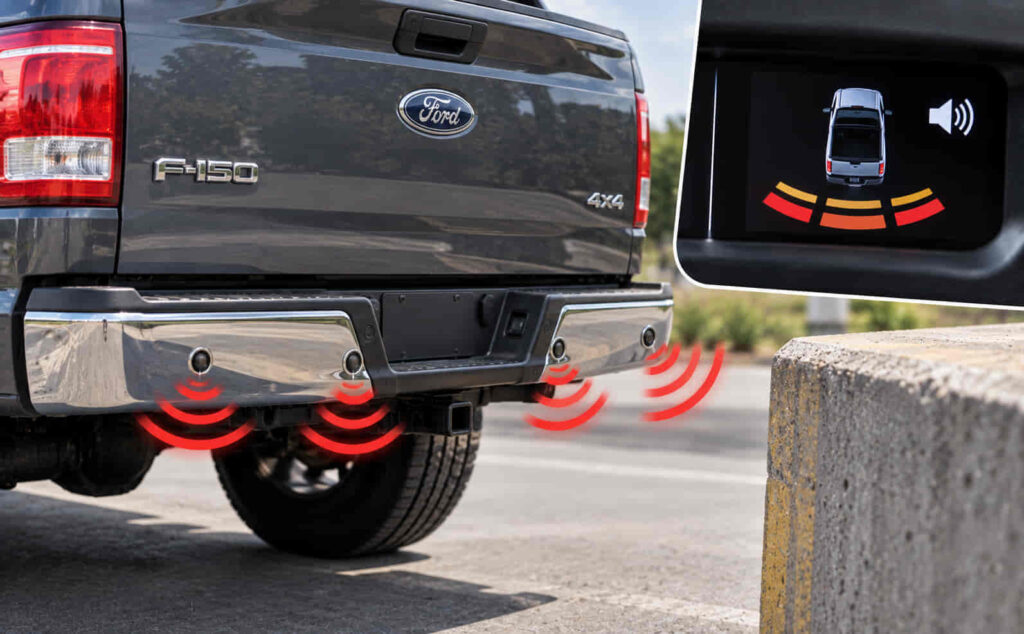
The Ford F-150 backup sensor buzzer provides an audible warning when the rear parking aid system detects an object behind the truck. If the warning sound stops working, sounds continuously, or behaves differently from the detected distance, the problem can involve the rear parking sensors, sensor surfaces, wiring and connectors, parking aid settings, or the electrical and control system responsible for processing the sensor signals. The exact warning configuration and diagnostic procedure also depend on the F-150 model year and equipment.
The behavior of the parking aid system provides the first diagnostic clue. A Ford F-150 that produces no backup warning sound requires a different diagnostic path from one that continuously beeps or displays a parking aid fault. When only one detection area behaves incorrectly, an individual rear sensor or its circuit becomes more relevant. When the entire parking aid system is unavailable, diagnosis needs to extend beyond a single sensor to shared electrical and control conditions.
This guide explains how the Ford F-150 backup sensor buzzer works within the rear parking aid system, why the warning can stop working or beep abnormally, how to identify a faulty backup sensor, where the warning sound originates, and how to diagnose and repair the underlying problem.
What Is the Ford F-150 Backup Sensor Buzzer and How Does It Work?
The Ford F-150 backup sensor buzzer is the audible warning associated with the rear parking aid system, which alerts the driver when the system detects an object within its monitored area behind the truck. The rear parking sensors detect nearby objects, the parking aid system interprets those inputs, and an audible warning communicates the changing proximity to the driver. The sound is therefore an output of the complete parking aid process rather than proof that the buzzer or warning device itself is responsible when the system stops working.
The rear sensors are positioned to monitor areas behind the vehicle when the parking aid system is active. Each sensor must be able to transmit and receive the signals required for object detection without its sensing surface being obstructed or its electrical connection being interrupted. When an object enters the relevant detection area, the system processes the sensor information and uses the warning output to notify the driver. Changes in the warning pattern communicate changes in the detected proximity rather than functioning as a simple on-or-off alarm.
This relationship between detection and warning is important during diagnosis. A Ford F-150 can lose its expected backup warning because the system never receives valid information from a sensor, because the parking aid function is unavailable or disabled, because an electrical or communication problem interrupts the system, or because the warning output itself is not being produced correctly. Hearing no sound does not by itself identify which stage has failed.
The term “backup sensor buzzer” can also create confusion when searching for a replacement component. The way the audible parking warning is produced can depend on the model year and vehicle configuration, so a separate physical buzzer should not be assumed to exist in the same location on every Ford F-150. The truck’s exact year and equipment should be identified before removing interior components or purchasing a part based only on the assumption that the warning sound comes from a dedicated buzzer.
This makes the complete rear parking aid system the correct diagnostic context for the Ford F-150 backup sensor buzzer. The sensors provide detection inputs, the system evaluates those inputs, and the driver receives an audible warning. A fault at any relevant stage can change or eliminate the expected sound, which is why diagnosis should begin with the behavior of the entire system rather than replacement of the presumed buzzer.
Why Is the Ford F-150 Backup Sensor Buzzer Not Working?
The Ford F-150 backup sensor buzzer can stop working when the rear parking aid is disabled or unavailable, a sensor cannot detect correctly, a sensor or its circuit has failed, wiring or a connector is damaged, or the system cannot produce the expected audible warning. The correct cause depends on whether object detection has stopped completely, only part of the rear sensing area is affected, a parking aid fault appears, or the system appears to function without producing the expected sound.
The parking aid operating state should be established before individual components are replaced. A system that has been disabled does not present the same fault as a system that is active but unable to detect an object. Likewise, a parking aid warning or fault indication changes the diagnostic context because it shows that the problem extends beyond the simple observation that no buzzer can be heard. Establishing the system state prevents a normal configuration or system condition from being mistaken for a failed sensor.
Sensor condition becomes important when the system is active but detection is inconsistent or absent. Rear parking sensors depend on an unobstructed sensing surface and correct installation to monitor the area behind the truck. Dirt, ice, snow, mud, or another material covering the sensor surface can interfere with operation without the sensor itself necessarily requiring replacement. Physical damage or an incorrectly positioned sensor creates a different problem because cleaning the surface does not restore a component that can no longer operate in its intended position or condition.
An individual sensor fault becomes more relevant when the malfunction is localized rather than system-wide. If one area behind the Ford F-150 consistently fails to produce the expected response while other areas continue to be detected, diagnosis should focus on the corresponding sensor and its electrical path. The sensor, connector, and wiring need to be considered together because replacing the sensor does not repair an open circuit, damaged connector, or wiring fault that prevents the sensor signal from reaching the rest of the parking aid system.
A complete loss of parking aid operation requires a broader diagnostic scope. When none of the rear sensors appears to function and the expected warning is absent, a shared system condition is more relevant than assuming that every rear sensor failed simultaneously. Parking aid settings, electrical supply, wiring shared by the system, control functions, and any available fault information should be examined before multiple sensors are replaced.
The warning output should become the primary suspect only after the detection side of the system has been separated from the sound problem. If the parking aid system demonstrably detects obstacles and otherwise behaves normally but the expected audible warning is missing, diagnosis can move toward the component or vehicle system responsible for producing that sound on the applicable model year. This sequence matters because replacing a presumed buzzer cannot restore a parking aid system that is not detecting obstacles in the first place.
Model year must remain part of the diagnosis throughout this process. Ford F-150 generations and equipment configurations can differ in sensor arrangement, system architecture, controls, warning behavior, and diagnostic procedures. The reliable approach is therefore to identify the exact truck, establish what the parking aid system is doing, and then trace the failed function from detection to warning instead of applying one component location or repair procedure to every F-150.
Read more: Toyota Sienna Automatic Doors Not Working
Why Does the Ford F-150 Backup Sensor Keep Beeping?
The Ford F-150 backup sensor can keep beeping when the rear parking aid continuously detects an object, a sensor surface is obstructed, a sensor is damaged or incorrectly positioned, or a sensor-related fault causes abnormal parking aid behavior. Continuous or repeated beeping should first be separated from normal proximity warnings because the system is designed to change its audible warning as the truck approaches a detected object.
The location of the truck and nearby objects provides the first distinction. A warning that occurs only when an object is close to the rear bumper can represent normal parking aid operation rather than a malfunction. The warning becomes more relevant to troubleshooting when it continues with no apparent obstacle behind the vehicle, starts in the same conditions repeatedly, or is accompanied by another indication that the parking aid system is not operating normally.
An obstructed sensor can create misleading detection because the sensing surface needs a clear path to monitor the area behind the truck. Mud, accumulated dirt, snow, ice, or material covering the rear sensor area should therefore be considered before a sensor is classified as defective. Cleaning the sensor surface is diagnostically useful because it removes an external variable without replacing a component. If normal operation returns after the obstruction is removed, sensor replacement is not justified by the original symptom alone.
Physical sensor condition becomes more important when abnormal beeping continues with clean sensing surfaces. A sensor that has been affected by bumper damage, impact, incorrect installation, or displacement may no longer monitor its intended area correctly. This is particularly relevant when the symptom begins after rear bumper work or an impact. The sensor mounting and orientation should be examined together with the sensor itself because a functioning sensor installed incorrectly can still produce an incorrect detection pattern.
A defective sensor or its electrical circuit can also affect the warning behavior. The sensor does not operate independently of its connector and wiring, so a sensor-related fault must be diagnosed as a circuit rather than assumed to be a failed sensing element. A damaged connector, wiring problem, or poor electrical connection can prevent reliable information from reaching the parking aid system and produce symptoms that resemble sensor failure.
The pattern of the malfunction helps narrow the affected area. Abnormal behavior associated consistently with one portion of the rear bumper makes an individual sensor or its circuit more relevant. A problem affecting the entire parking aid system requires a wider diagnostic scope because a shared electrical, control, or system condition can influence all rear sensors simultaneously.
Continuous beeping should therefore be diagnosed from the detection side before the audible warning itself is blamed. The buzzer or warning output communicates what the parking aid system has determined; it does not independently decide that an obstacle exists. When the system repeatedly commands a warning without an obvious obstacle, the useful diagnostic question is why the parking aid system is generating that warning.
A Ford F-150 parking aid fault or unavailable indication means the rear parking aid cannot provide its expected assistance under the current system condition. The cause can involve an obstructed or malfunctioning sensor, a sensor circuit problem, wiring or connector damage, an electrical or control fault, or another condition that prevents the system from relying on its sensor information. This symptom should be treated as a system-level diagnostic clue rather than simply as a buzzer failure.
The distinction matters because an audible warning is only one output of the parking aid system. When the truck explicitly indicates that parking aid is faulty or unavailable, replacing a sound-producing component does not address the reason the system cannot perform its detection function. Diagnosis needs to move upstream toward the sensors, their circuits, the conditions required for parking aid operation, and any diagnostic information available from the vehicle.
Sensor obstruction remains relevant because the system depends on usable sensor input. A sensor covered by contamination or affected by environmental material cannot be evaluated in the same way as a clean, correctly mounted sensor with an electrical fault. The sensor surfaces and surrounding bumper area should therefore be inspected before deeper electrical diagnosis. This step establishes whether the system is being affected by an external condition or whether the fault remains after obvious interference has been removed.
Visible damage provides another diagnostic boundary. A rear bumper impact can affect more than the bumper surface because the parking sensors and their mounting positions are integrated into that area. A sensor that appears displaced, damaged, or incorrectly seated should be investigated together with its mounting and connector. The timing of the fault is useful evidence when the parking aid problem begins immediately after bumper damage, sensor replacement, body repair, or work involving the rear wiring.
When no obstruction or visible damage explains the fault, the electrical path becomes more important. The individual sensor circuits, connectors, wiring, shared electrical conditions, and control side of the parking aid system need to be distinguished before parts are replaced. Multiple sensors becoming unavailable at the same time creates a different failure pattern from one sensor producing inconsistent detection, so the number and location of affected sensing areas should guide the diagnostic scope.
Diagnostic trouble information can further narrow a persistent parking aid fault when the applicable F-150 system provides it. The purpose of diagnostic data is to identify the circuit or system area requiring testing rather than to convert a fault indication directly into a replacement decision. A fault associated with a sensor circuit, for example, still requires the sensor, connector, wiring, and relevant electrical conditions to be distinguished before the sensor itself is condemned.
The parking aid system should be considered restored only when the fault or unavailable condition no longer returns and the rear sensors consistently provide the expected detection and warning behavior. Clearing a warning without correcting its underlying cause does not establish a successful repair. The original operating condition must be reproduced and tested so that the absence of the fault is supported by normal system operation rather than by a temporary reset.
How Do You Tell Which Ford F-150 Backup Sensor Is Bad?
You identify a bad Ford F-150 backup sensor by determining which sensing area produces abnormal or missing detection and then testing the sensor together with its connector and wiring. A single area that repeatedly fails while the remaining rear parking sensors respond normally makes the corresponding sensor circuit a stronger suspect. The sensor itself should not be declared faulty until physical obstruction, mounting problems, connector condition, and wiring have been considered.
Begin with the symptom pattern because it establishes whether diagnosis should remain localized. If the parking aid system reacts normally to objects across most of the rear bumper but consistently fails in one area, the fault is more compatible with an individual sensor or circuit than with a failure affecting the complete parking aid system. If all sensing areas stop working simultaneously, testing one sensor in isolation is less useful because a shared system condition may be responsible.
The physical condition of the suspected sensor should then be evaluated. Its sensing surface should be clean and unobstructed, and the sensor should sit correctly in its intended mounting position. Dirt, ice, accumulated material, bumper damage, or an incorrectly seated sensor can alter detection without proving an internal sensor failure. This distinction becomes especially important when the problem appears after rear bumper repair, collision damage, or removal and installation of parking aid components.
Connector and wiring condition must remain part of the same diagnosis. The parking sensor requires an electrical path to communicate its information to the system, so an open circuit, damaged wiring, loose connection, corrosion, or connector damage can create the same visible result as a defective sensor. Replacing the sensing element without checking its circuit can leave the Ford F-150 with the original parking aid problem.
A comparison between sensor positions can provide additional diagnostic context, but the testing method must be appropriate for the specific F-150 model year and parking aid system. Informal methods that rely only on touching or listening to a sensor can indicate that a sensor appears to behave differently, but they do not establish the electrical cause of the difference. A reliable diagnosis uses the vehicle’s applicable service information and available diagnostic data to separate the sensor from its circuit.
When diagnostic trouble information identifies a particular sensor or sensor circuit, that information should narrow the test rather than automatically authorize replacement. The corresponding sensor, connector, wiring, mounting, and related electrical conditions still need to be verified. The goal is to identify which function has failed, not merely which component name appears closest to the symptom.
A Ford F-150 backup sensor should be considered defective when testing isolates the malfunction to the sensor after external obstruction, mounting condition, connector integrity, and relevant wiring have been excluded. This approach prevents unnecessary replacement and preserves the distinction between a bad sensor and a bad sensor circuit.
How Do You Diagnose a Ford F-150 Backup Sensor Buzzer Problem?
To diagnose a Ford F-150 backup sensor buzzer problem, first identify exactly how the rear parking aid behaves and then trace the failure from object detection through the electrical and control system to the audible warning. The most useful distinction is whether the truck has no warning sound, produces an abnormal warning, loses detection in one area, or reports that the parking aid system is unavailable. Each symptom identifies a different point at which diagnosis should begin.
When the backup warning is completely absent, determine whether the rear parking aid itself is functioning before investigating the warning output. A truck that does not detect obstacles presents a detection or system problem, while a truck that demonstrably detects obstacles but fails to provide the expected audible warning presents a different diagnostic path. This distinction prevents the sound-producing portion of the system from being blamed for a failure that begins at the sensors.
The operating state of the parking aid system should be established next. Confirm that the relevant parking aid function is enabled and that the current vehicle condition allows it to operate as intended. The applicable owner’s information for the exact model year should be used because controls, displays, system behavior, and available features can vary across Ford F-150 generations and equipment configurations.
The rear sensor surfaces and mounting positions should then be inspected when detection is absent, inconsistent, or accompanied by abnormal beeping. Each sensor needs an unobstructed sensing surface and correct physical position. Cleaning contamination and correcting an obvious external obstruction removes variables that can interfere with detection before electrical components are tested.
Visible bumper and sensor damage provides the next layer of diagnostic information. A symptom that begins after a rear impact, bumper replacement, body repair, or parking sensor work should direct attention toward the affected sensor positions, mounts, connectors, and wiring. The timing of the malfunction does not prove which component failed, but it identifies the area in which inspection has the greatest diagnostic value.
Electrical diagnosis becomes necessary when the parking aid problem remains after external conditions have been excluded. Individual sensor circuits should be distinguished from shared system conditions. One malfunctioning detection zone points more strongly toward a localized sensor or circuit, whereas the simultaneous loss of all rear sensing functions requires investigation of conditions capable of affecting the complete parking aid system.
Available diagnostic trouble information should be used to narrow persistent faults. A code or system message is evidence about the area requiring testing, not a substitute for testing. The identified circuit still needs to be evaluated so that a failed sensor can be separated from wiring, connector, electrical supply, or control-related problems.
The audible warning output should be investigated after the detection and processing stages have been established as functional. If the Ford F-150 correctly recognizes obstacles but the expected warning sound is absent, the diagnosis can move toward the vehicle component or audio path responsible for generating the parking aid warning on that specific model year and configuration. Assuming that every F-150 uses the same dedicated backup buzzer risks diagnosing or purchasing the wrong component.
The final verification should reproduce the original conditions that caused the problem. Test the parking aid under controlled conditions and confirm that the relevant rear sensing areas detect as expected, the audible warning corresponds with system operation, and any previous fault indication does not return. A temporary disappearance of the warning after a reset or component disturbance does not establish a repair unless normal operation remains consistent.
Where Is the Ford F-150 Backup Sensor Buzzer Located?
The location of the Ford F-150 backup sensor buzzer depends on the model year and the way the vehicle’s parking aid warning is integrated into its electrical and audio systems. A separate buzzer should not be assumed to exist behind the rear bumper or in one universal interior location on every F-150. The correct component responsible for the audible warning should be identified from model-specific service information before interior trim is removed or a replacement buzzer is purchased.
The rear bumper sensors themselves are not the same component as the audible warning output. Their function is to detect objects within the operating area of the rear parking aid system and provide information that the system can use. The audible warning occurs after that sensor information has been processed. This means that searching around the rear sensors for the source of the warning sound can lead diagnosis toward the wrong part of the system.
The distinction becomes more important across different F-150 model years and equipment configurations. Vehicle electrical architecture, parking aid controls, displays, and warning-output arrangements can change between generations. A component location documented for one F-150 should therefore not be transferred automatically to another model year. The truck’s year and equipment should be established first, followed by identification of the component or audio path used to produce its parking aid warning.
The direction from which the sound appears to originate can provide diagnostic context, but sound location alone should not determine which component is replaced. Interior acoustics can make a warning appear to come from a nearby panel even when another vehicle system produces it. Model-specific wiring information and service documentation provide a stronger basis for locating the relevant warning-output component.
This distinction also prevents an unnecessary buzzer replacement when the actual fault occurs earlier in the parking aid process. If the Ford F-150 is not detecting objects correctly, the problem remains on the sensor, circuit, or system side even though the driver’s visible symptom is the absence of a warning sound. The warning-output component becomes the primary diagnostic target only when object detection and the relevant parking aid functions have already been verified.
How Do You Fix a Ford F-150 Backup Sensor Buzzer That Is Not Working?
You fix a Ford F-150 backup sensor buzzer problem by repairing the stage of the rear parking aid system that has failed. An obstructed sensor requires removal of the obstruction, a damaged or failed sensor requires sensor-specific repair or replacement, a wiring or connector fault requires restoration of the electrical path, and a warning-output problem requires diagnosis of the component or audio system responsible for producing the sound on that specific F-150. Replacing a presumed buzzer is not a universal repair for a missing backup warning.
When the sensor surfaces are covered by dirt, mud, snow, ice, or another obstruction, restoring a clean sensing area should precede component replacement. The parking aid system depends on usable sensor input, so an externally obstructed sensor can produce abnormal detection without being internally defective. After the sensor surfaces are cleaned, the original operating condition should be recreated to determine whether normal warning behavior has returned.
Physical damage requires a different repair path. A sensor that has been damaged, displaced, or incorrectly mounted may require correction of its mounting or replacement of the affected component. The surrounding bumper area should be considered at the same time because the sensor must remain positioned correctly to monitor its intended detection zone. This is especially relevant when the parking aid problem begins after a rear impact or bumper repair.
Electrical faults should be repaired at the point where the circuit fails. A damaged connector, open or damaged wiring, or another electrical problem can prevent a functional sensor from communicating correctly with the parking aid system. Installing a new sensor on a defective circuit leaves the communication problem unresolved. The sensor and its electrical path therefore need to be separated diagnostically before replacement parts are selected.
A system-wide malfunction requires broader diagnosis than an individual sensor problem. When all rear parking aid functions become unavailable at approximately the same time, the repair should target the shared condition responsible for the failure rather than replacing multiple sensors independently. The exact diagnostic path depends on the F-150 model year, available fault information, system architecture, and the electrical conditions identified during testing.
The warning-output side should be repaired only after the detection side has been verified. If the system detects objects as expected but the audible parking warning remains absent, the component or vehicle audio path responsible for the warning can then be diagnosed using information specific to that truck. This order follows the actual functional sequence from detection to warning and reduces the risk of replacing an output component for an upstream parking aid fault.
A repair is successful when the original malfunction no longer occurs under the same operating conditions. The Ford F-150 should detect objects consistently within the relevant parking aid area, produce the expected warning behavior, and remain free of the previous fault or unavailable indication. A temporary return of the warning sound does not confirm a complete repair when intermittent sensor or wiring problems remain.
How Do You Replace a Bad Ford F-150 Backup Sensor?
You replace a bad Ford F-150 backup sensor by accessing the affected rear sensor, disconnecting its electrical connection, removing it from its mounting position, installing the correct replacement for the specific vehicle, and verifying parking aid operation after installation. The exact access and removal procedure depends on the F-150 model year and bumper configuration, so the replacement process should follow service information applicable to the truck rather than a universal removal sequence.
Sensor replacement should begin only after diagnosis has isolated the failure to the sensor itself. A sensor that appears inactive can still be affected by an obstructed sensing surface, damaged connector, wiring fault, or incorrect mounting. Replacing the sensor before these conditions are excluded converts diagnosis into parts substitution and can leave the same parking aid symptom after the new component is installed.
Access to the rear sensor depends on how it is mounted within the bumper assembly. The surrounding components should be handled without damaging the sensor mount, connector, or wiring harness. A replacement sensor also needs to fit and sit in its intended orientation because the parking aid system relies on the sensor monitoring a defined area behind the vehicle. Correct electrical connection alone does not compensate for incorrect physical installation.
The connector should be inspected during replacement rather than treated only as a plug that transfers from the old sensor to the new one. Damage, contamination, loose terminals, or wiring problems near the connector can explain why the original sensor appeared to have failed. Installing a replacement sensor without correcting a connector fault can reproduce the same symptom immediately or create an intermittent parking aid problem.
The replacement part should match the requirements of the exact Ford F-150 model year and configuration. Physical similarity does not by itself establish compatibility because the parking aid system must be able to operate with the installed sensor. Vehicle-specific parts information provides a stronger basis for selection than choosing a sensor solely because it is advertised generally for an F-150.
After installation, the parking aid system should be tested under controlled conditions. The repaired sensing area should respond consistently, the audible warning should correspond with object detection, and any previous parking aid fault should remain absent. The other rear sensors should also continue to function normally. This final verification distinguishes a completed sensor repair from a replacement that has merely changed a component without proving that the original problem was corrected.
How Do You Test the Ford F-150 Backup Sensors After a Repair?
You test Ford F-150 backup sensors after a repair by recreating the operating conditions that originally produced the problem and confirming that object detection, system response, and the audible parking warning now function consistently. The test should verify the repaired sensing area as well as the complete rear parking aid system because eliminating one symptom does not prove that every affected function has been restored.
Begin by confirming that the parking aid system is available and operating under the conditions required for the specific F-150. The system should no longer display the fault or unavailable condition associated with the original problem. If the warning immediately returns, further diagnosis is required because replacing or reconnecting a component has not corrected the underlying fault.
The repaired sensing area should then be compared with the other rear sensor areas under controlled conditions. The purpose is to establish that the repaired sensor responds consistently rather than merely producing one successful detection. An individual sensing zone that still behaves differently from the others keeps the sensor, its mounting, connector, wiring, or related circuit relevant to the diagnosis.
The audible warning should correspond with the operation of the parking aid system. If object detection has returned but the expected sound remains absent, the repair has restored the detection side without resolving the warning-output problem. If the warning sounds when no relevant obstacle is present, the system still has an abnormal detection condition that requires investigation. Detection and audible warning therefore need to be verified together.
Intermittent problems require repeated verification because a single successful cycle has limited diagnostic value. Wiring and connector faults can change when the vehicle moves or when components are disturbed during repair. A symptom that disappears immediately after a connector has been handled but later returns indicates that the circuit has not necessarily been permanently repaired.
The repair is complete when the original Ford F-150 backup sensor problem cannot be reproduced under the same relevant conditions, the rear parking aid detects consistently, the warning behavior corresponds with detection, and previous fault indications remain absent. Verification is the final stage of diagnosis because it establishes whether the identified cause actually explains the original symptom.
How Much Does It Cost to Fix a Ford F-150 Backup Sensor Problem?
The cost to fix a Ford F-150 backup sensor problem depends on the component that failed, the truck’s model year and equipment, the amount of diagnostic labor required, and whether the repair involves a sensor, mounting hardware, connector, wiring, or a broader parking aid system fault. A single confirmed sensor replacement and an unresolved electrical problem are different repairs, so one universal price does not accurately represent every backup sensor malfunction.
Diagnosis affects the total repair cost because the visible symptom does not always identify the failed component. A driver may report that the backup sensor buzzer does not work, but the underlying problem can exist at the sensor, connector, wiring, system-control, or warning-output stage. Paying for accurate diagnosis can prevent the cost of replacing a sensor or presumed buzzer that was not responsible for the malfunction.
A localized sensor problem generally has a narrower repair scope than a system-wide electrical fault. When testing confirms that one sensor has failed and its wiring and mounting remain serviceable, the repair can focus on that sensor. When the fault involves damaged wiring, an intermittent connector, multiple sensing areas, or system-level diagnosis, labor can increase because the failed electrical path must first be isolated.
Rear bumper damage can also change the repair scope. A parking aid malfunction following an impact may involve the sensor itself, its holder or mounting position, the connector, wiring, or surrounding bumper components. The cost should therefore be based on the complete damage found during inspection rather than the price of a replacement parking sensor alone.
Model year is another important cost variable. Ford F-150 generations and configurations can use different parts and service procedures, so an estimate for one truck should not automatically be applied to another. Labor rates also vary between repair facilities and locations. A useful estimate identifies the exact vehicle and confirmed failed component before parts and labor are calculated.
For the same reason, replacing the least expensive suspected component first is not necessarily the least expensive repair strategy. Multiple incorrect replacements can cost more than diagnosing the circuit once. The repair estimate should connect the recommended part or labor operation to the specific function that testing has shown to be defective.
How Can You Prevent Ford F-150 Backup Sensor Problems?
Ford F-150 backup sensor problems can be reduced by keeping the rear sensor surfaces unobstructed, protecting their mounting positions, and investigating intermittent detection or warning behavior before it develops into a persistent parking aid fault. Prevention should focus on the conditions that affect sensor detection and electrical reliability rather than unrelated general vehicle maintenance.
The rear sensor surfaces should remain clear because material covering the sensing area can interfere with object detection. Dirt, mud, snow, ice, or other accumulated material should be removed without damaging the sensor surface. Cleaning is particularly relevant when abnormal parking aid behavior appears during conditions that can cover the rear bumper.
Sensor mounting should be inspected after an impact or rear bumper repair. The sensor needs to remain correctly positioned in its mounting location to monitor its intended area. A sensor that has shifted, been installed incorrectly, or sits in damaged mounting hardware can produce abnormal detection even when its electrical connection remains intact.
Connectors and wiring deserve attention when work is performed around the rear bumper. Parking sensor wiring can be affected when bumper components are removed, repaired, or replaced. A parking aid problem that begins immediately after such work should therefore be investigated before repeated sensor replacement is attempted.
Intermittent symptoms should not be ignored simply because the system begins working again. A backup warning that disappears occasionally, a sensor that responds inconsistently, or a parking aid fault that appears and then clears can provide early evidence of a developing connection, wiring, sensor, or system problem. Recording the conditions associated with the malfunction makes later diagnosis more precise.
Preventive attention is most effective when it preserves both physical sensor condition and electrical integrity. A clean sensor cannot operate correctly through a failed circuit, and an electrically functional sensor cannot provide reliable detection when its sensing surface or mounting condition interferes with operation. Both sides of the system need to remain functional for consistent backup warnings.
When Should a Ford F-150 Parking Sensor Problem Be Professionally Diagnosed?
A Ford F-150 parking sensor problem should be professionally diagnosed when the rear parking aid remains faulty after basic sensor and operating checks, multiple sensors stop responding, the problem is intermittent and cannot be isolated visually, wiring or connector testing is required, or the warning remains abnormal after a suspected component has been replaced. Professional diagnosis is also appropriate when identifying the fault requires model-specific service information or diagnostic data that is not available through basic inspection.
A persistent parking aid fault is one of the clearest reasons to move beyond basic troubleshooting. Cleaning the sensor surfaces and confirming that there is no obvious physical obstruction can eliminate simple external causes, but they cannot identify an internal sensor failure or an electrical problem elsewhere in the system. Continued replacement of components without testing becomes inefficient once those basic causes have been excluded.
Multiple affected sensors also justify a wider diagnostic approach. Several rear sensors failing at approximately the same time can indicate a condition shared by the system rather than several unrelated sensor failures. Testing the electrical and control side of the parking aid system is more useful in this situation than replacing sensors individually until the symptom changes.
Intermittent electrical symptoms require particular attention because the fault may disappear while the truck is being inspected. Connector movement, wiring position, temperature, moisture, or vibration can influence an unstable electrical connection. A technician can use the symptom history together with appropriate electrical and diagnostic testing to isolate a fault that is not visible from the outside of the bumper.
Professional diagnosis is also appropriate when the parking aid detects obstacles but the Ford F-150 backup warning sound remains absent. Once sensor detection has been verified, the investigation must identify how the applicable model year and configuration generate the audible warning. This prevents unnecessary removal of interior components or replacement of a presumed dedicated buzzer that may not be the source of the warning.
The diagnostic process is complete when the failed function has been identified and the repair restores consistent object detection, normal audible warning behavior, and normal parking aid availability. A Ford F-150 that still produces intermittent warnings, unexplained continuous beeping, missing detection, or recurring parking aid faults requires further diagnosis even if one component has already been replaced.