Choosing between 75W90 vs 75W140 gear oil depends on your vehicle, driving conditions, and lubrication needs. Both oils use the same 75W low temperature rating, but they behave differently at high operating temperatures. The main difference appears in their viscosity level when the gears generate heat.
75W90 gear oil gives vehicles a balanced combination of protection, efficiency, and smooth operation. Many passenger vehicles use this viscosity because it works well for normal driving conditions. It reduces friction while maintaining enough protection for standard drivetrain components.
75W140 gear oil provides a thicker oil film at higher temperatures. This characteristic helps vehicles handle heavy loads, extreme heat, and demanding conditions. Drivers of towing vehicles, off road vehicles, and performance cars often choose this viscosity for additional gear protection.
A higher viscosity rating does not always mean better performance. The right choice depends on the vehicle manufacturer’s specification, differential design, driving style, and operating environment. Using the wrong gear oil can reduce efficiency and affect component protection.
This guide compares 75W90 and 75W140 gear oil based on viscosity, performance, benefits, and applications. It also explains how to choose the right gear oil for your vehicle.
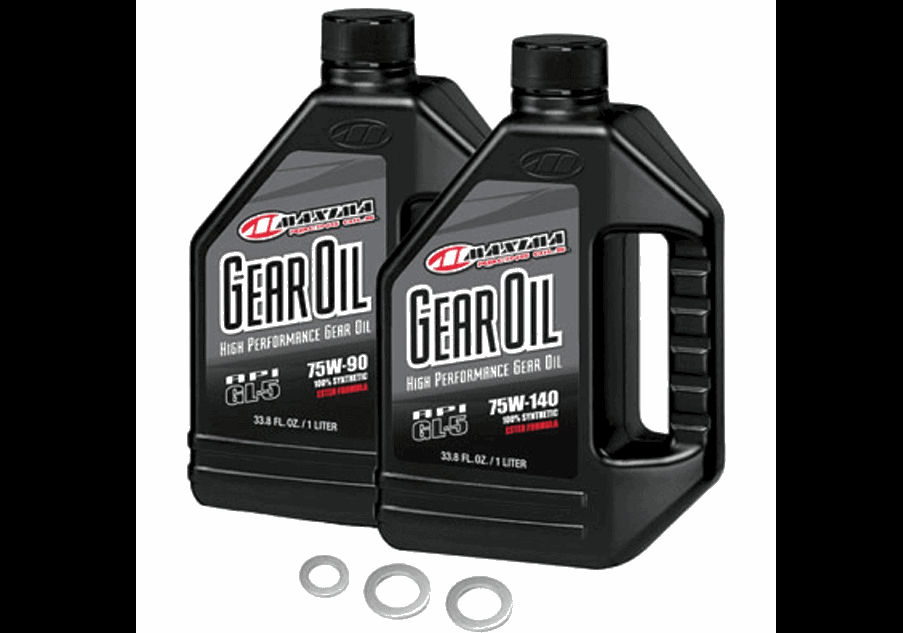
What Is the Difference Between 75W90 and 75W140 Gear Oil?
75W90 and 75W140 gear oil are different viscosity grades that affect how the lubricant protects gears under operating conditions. Both oils belong to the SAE gear oil classification system, and both provide lubrication for drivetrain components such as differentials, hypoid gears, and manual transmissions. The key difference appears in their high temperature viscosity rating, where 75W140 remains thicker than 75W90 when the oil reaches operating temperature.
The SAE viscosity rating uses two numbers to describe gear oil behavior. The first number, 75W, represents the oil’s performance during cold conditions. The “W” refers to winter performance, which indicates how well the oil flows during low temperature operation. The second number describes the oil thickness at higher temperatures. A 140 grade maintains a thicker consistency than a 90 grade when the drivetrain produces heat.
75W140 gear oil creates a thicker protective film compared with 75W90 gear oil during high temperature operation. This thicker film helps separate metal surfaces inside gears and reduces direct contact under heavy pressure. This characteristic makes 75W140 suitable for applications where differentials experience high loads, frequent towing, or extreme heat. For example, a heavy duty truck pulling a trailer generates more gear stress than a passenger car during normal commuting.
75W90 gear oil provides a lower viscosity balance that supports efficiency while still protecting drivetrain components. The thinner fluid moves more easily through the gear system and creates less internal resistance during operation. This makes 75W90 a common choice for vehicles that operate under normal driving conditions, including sedans, SUVs, and light duty trucks.
The difference between these two gear oils is not simply that one is better than the other. Each viscosity grade serves a different purpose. Vehicle manufacturers select gear oil specifications based on differential design, gear clearance, expected temperature range, and load requirements. Using the correct viscosity helps maintain lubrication performance and extends drivetrain component life.
How Do 75W90 and 75W140 Gear Oil Compare in Performance?
75W90 and 75W140 gear oil deliver different performance characteristics because they manage heat, friction, and gear pressure in different ways. The main performance difference comes from their high temperature viscosity. When the drivetrain operates under stress, 75W140 maintains a thicker lubricant layer, while 75W90 provides easier fluid movement and lower resistance.
75W140 gear oil provides stronger protection under high temperature and heavy load conditions. The thicker oil film helps maintain separation between gear teeth when pressure increases. This protection becomes important in applications such as towing, racing, off road driving, and heavy duty vehicles. For example, a truck that regularly pulls heavy loads creates more heat and pressure inside the differential than a vehicle used for short daily trips.
75W90 gear oil offers better efficiency for standard driving conditions because it creates less internal drag. A lower viscosity lubricant flows more easily through the gear system, which allows components to move with less resistance. This characteristic can support smoother operation in passenger vehicles and light duty applications where extreme gear stress does not occur.
Heat management also separates these two gear oils. 75W140 performs better when temperatures rise because it keeps a stable viscosity under demanding conditions. The thicker formulation helps protect gears during long periods of high stress. In comparison, 75W90 works effectively in moderate temperature environments where the drivetrain operates within normal load limits.
Gear protection also depends on the complete lubricant formulation, not only viscosity. Both 75W90 and 75W140 gear oils can include extreme pressure additives, synthetic base oils, and API GL specifications that improve protection. A properly formulated 75W90 can outperform an unsuitable 75W140 if the vehicle manufacturer designed the drivetrain for the lighter viscosity.
The best choice depends on how the vehicle operates. Drivers who prioritize daily reliability and efficiency often choose 75W90, while drivers who demand maximum protection under heat and load conditions usually select 75W140.
What Are the Benefits of 75W90 Gear Oil?
75W90 gear oil provides balanced lubrication performance for vehicles that need reliable protection without excessive fluid resistance. This viscosity grade is one of the most commonly used options for differentials and drivetrain systems because it combines wear protection, smooth operation, and efficient power transfer. It works well when vehicles operate under normal temperature ranges and standard driving conditions.
75W90 gear oil reduces internal friction while maintaining sufficient protection for gear components. The lower high temperature viscosity allows the lubricant to flow through gear assemblies more easily compared with thicker grades such as 75W140. This characteristic helps reduce energy loss inside the drivetrain and supports efficient vehicle operation. For example, passenger cars and light SUVs that mainly drive on highways or city roads usually operate within conditions where 75W90 provides adequate protection.
75W90 gear oil supports everyday driving applications because it offers a practical balance between performance and durability. Many manufacturers recommend this viscosity for vehicles with standard differential systems, manual transmissions, and moderate load requirements. The oil maintains a protective layer between moving gear surfaces while allowing smooth engagement and consistent lubrication.
Another benefit of 75W90 is its versatility across different environments. It performs well in mild to moderately demanding climates where the drivetrain does not experience continuous extreme heat or heavy mechanical stress. Drivers who use their vehicles for commuting, regular road trips, and normal transportation often benefit from this balanced viscosity.
However, 75W90 is not designed for every situation. Vehicles that frequently tow heavy trailers, carry maximum loads, participate in racing, or operate in extreme off road conditions may require a thicker lubricant. In these cases, 75W140 can provide additional protection because it maintains a thicker oil film under higher stress.
Choosing 75W90 depends on matching the gear oil characteristics with the vehicle’s requirements. When the application matches the viscosity grade, 75W90 can deliver reliable protection, efficient operation, and long service performance.
What Are the Benefits of 75W140 Gear Oil?
75W140 gear oil provides enhanced protection for drivetrain systems that operate under high loads, high temperatures, and demanding conditions. This viscosity grade maintains a thicker oil film compared with 75W90 when the gear system reaches operating temperature. The thicker lubricant layer helps protect gear surfaces from excessive wear when pressure and friction increase.
75W140 gear oil improves gear protection during heavy duty applications because it maintains stronger film strength under stress. Vehicles that tow trailers, carry heavy loads, or operate in extreme environments generate additional heat inside the differential. A thicker oil film helps prevent metal to metal contact between gear teeth and supports long term component durability. For example, pickup trucks that regularly tow equipment experience higher differential loads than vehicles used mainly for commuting.
75W140 gear oil performs well in performance and off road applications because these conditions create intense mechanical stress. Racing vehicles, four wheel drive vehicles, and off road trucks often produce higher temperatures due to increased torque demand and limited airflow around drivetrain components. The higher viscosity helps the lubricant maintain its protective properties during extended operation.
Another benefit of 75W140 is its ability to handle temperature changes during demanding use. When a vehicle climbs steep terrain, pulls heavy weight, or operates in hot environments, the differential temperature can rise significantly. The thicker formulation helps maintain lubrication consistency when heat reduces oil thickness.
However, 75W140 is not the ideal choice for every vehicle. A thicker lubricant can increase internal resistance in drivetrain systems designed for lower viscosity oil. This may affect efficiency and operating characteristics if the vehicle manufacturer specifies a different grade.
The correct use of 75W140 depends on the vehicle design and operating conditions. When a drivetrain requires additional protection against heat and heavy loads, 75W140 provides the viscosity characteristics needed for demanding applications.
Is 75W140 Better Than 75W90 Gear Oil?
75W140 gear oil is not always better than 75W90 gear oil because the correct viscosity depends on the vehicle application and operating conditions. A higher viscosity rating means the oil maintains a thicker film at high temperatures, but it does not automatically provide better performance in every drivetrain system. Gear oil selection requires matching lubricant characteristics with the mechanical requirements of the vehicle.
75W140 provides advantages when a differential experiences high heat and heavy mechanical pressure. The thicker lubricant layer helps protect gear surfaces during demanding operation. Vehicles that frequently tow, carry heavy loads, or operate in extreme conditions benefit from this additional protection because the drivetrain generates more heat and stress. For example, a truck used for towing a large trailer may require 75W140 because the differential works harder than a passenger vehicle during normal driving.
75W90 provides advantages when efficiency and balanced performance are more important. Its lower viscosity allows easier oil movement through the gear system and reduces internal resistance. Vehicles designed for regular road use often perform better with 75W90 because the drivetrain does not require the additional thickness of a heavier lubricant.
The idea that thicker oil always provides better protection is a common misunderstanding. Gear systems have specific lubrication requirements based on gear design, operating clearance, temperature range, and manufacturer specifications. Using an excessively thick oil in a system designed for thinner lubricant can affect fluid circulation and drivetrain efficiency.
The best gear oil choice depends on the vehicle’s intended use. Drivers should follow the manufacturer’s recommendation and consider factors such as towing frequency, climate, driving style, and load conditions. A properly selected 75W90 can outperform an unsuitable 75W140, while the correct 75W140 can provide superior protection in demanding environments.
Can You Use 75W140 Instead of 75W90 Gear Oil?
You can use 75W140 instead of 75W90 gear oil only when the vehicle manufacturer allows the higher viscosity grade for that specific drivetrain system. Gear oil selection depends on the differential design, operating temperature, gear clearance, and lubrication requirements. A thicker oil may improve protection in demanding conditions, but it may not provide the best performance in every application.
Using 75W140 instead of 75W90 can increase protection when a vehicle operates under heavy stress. The thicker viscosity helps maintain a stronger oil film when temperatures rise and gear pressure increases. This advantage applies to vehicles used for towing, hauling, off road driving, or high performance applications. For example, a truck that regularly pulls heavy loads may benefit from 75W140 because the differential produces more heat during operation.
Using 75W140 in a system designed for 75W90 can also create unwanted effects. A thicker lubricant may increase internal resistance because the gears need more energy to move through the oil. This change can affect efficiency and may reduce the smooth operation of components that require a lighter viscosity fluid.
Replacing 75W90 with 75W140 should follow the vehicle manufacturer’s specification rather than personal preference. Manufacturers select gear oil viscosity based on engineering factors such as gear design, bearing requirements, and expected operating conditions. The recommended viscosity ensures that the lubricant reaches all necessary components and maintains proper protection.
The opposite replacement also requires careful consideration. Using 75W90 instead of 75W140 in a high stress application may reduce protection because the thinner oil film can struggle to handle extreme heat and pressure. A vehicle that regularly operates under demanding conditions needs a gear oil that matches its workload.
Choosing between 75W90 and 75W140 requires understanding the vehicle’s actual requirements. The best replacement is not always the thickest oil but the lubricant that matches the drivetrain design and operating environment.
Which Gear Oil Should You Choose Between 75W90 and 75W140?
Choosing between 75W90 and 75W140 gear oil depends on your vehicle requirements, driving conditions, and expected drivetrain stress. The correct viscosity provides the right balance between protection, efficiency, and component durability. Instead of selecting gear oil based only on thickness, drivers should consider how the vehicle operates and what the manufacturer recommends.
Choose 75W90 gear oil for vehicles that operate under normal driving conditions and moderate loads. This viscosity works well for daily commuting, highway driving, and standard passenger vehicles because it provides reliable lubrication without creating excessive internal resistance. For example, a sedan used mainly for city driving and regular road trips usually does not require the additional thickness of 75W140.
Choose 75W140 gear oil for vehicles that experience higher stress, heat, or mechanical pressure. This viscosity suits applications such as towing, off road driving, heavy duty trucks, and performance vehicles. These conditions increase gear temperature and load, which require a lubricant that maintains a stronger protective film during operation.
Check the vehicle manufacturer’s specification before selecting a gear oil grade. The manufacturer considers factors such as differential design, gear material, operating temperature, and lubrication flow requirements when choosing the recommended viscosity. Following the specified grade helps maintain proper protection and prevents potential drivetrain issues.
Driving conditions also influence the best choice. A vehicle used in hot climates, mountainous areas, or frequent towing situations may benefit from 75W140 because the drivetrain experiences greater thermal stress. A vehicle used for normal transportation may perform better with 75W90 because it provides sufficient protection with better efficiency.
The simplest way to choose between 75W90 and 75W140 is to match the gear oil with the vehicle’s workload. Normal use generally fits 75W90, while demanding applications often require the additional protection of 75W140.
What Should You Check Before Buying 75W90 or 75W140 Gear Oil?
Checking the correct specifications before buying 75W90 or 75W140 gear oil helps ensure proper drivetrain protection and performance. Gear oil selection involves more than choosing a viscosity grade. Drivers should evaluate product specifications, vehicle requirements, and operating conditions before selecting a lubricant for their differential or transmission system.
Check the API classification to confirm that the gear oil meets the required protection standard for your vehicle. Many differential systems use API GL-5 gear oil because it contains additives designed to protect gears under extreme pressure conditions. These additives help reduce wear when gear teeth experience high contact forces. However, some transmissions require different specifications, so drivers should always follow the manufacturer’s recommendation.
Check limited slip differential compatibility when your vehicle uses a limited slip system. Limited slip differentials require specific friction characteristics because their clutch components need controlled engagement. Using an incompatible lubricant can cause noise, vibration, or reduced differential performance. For example, many performance vehicles and off road vehicles use limited slip differentials that require compatible gear oil formulations.
Check whether the gear oil uses synthetic technology for improved temperature stability and durability. Synthetic gear oils generally maintain more consistent performance across temperature changes compared with conventional lubricants. This characteristic helps vehicles that operate in demanding environments, including towing, extreme climates, and high performance applications.
Check the manufacturer’s recommended viscosity before replacing your existing gear oil. The recommended grade reflects the engineering requirements of the drivetrain system. A vehicle designed for 75W90 may not benefit from switching to 75W140, while a heavy duty application may require the additional protection of the thicker lubricant.
The best gear oil purchase decision combines viscosity, specifications, and vehicle requirements. Choosing the correct 75W90 or 75W140 product helps maintain gear protection, improve reliability, and support long term drivetrain performance.
Which Gear Oil Is Better for Your Vehicle, 75W90 or 75W140?
The better gear oil between 75W90 and 75W140 depends on how your vehicle operates and the level of protection your drivetrain needs. Both viscosity grades provide reliable lubrication, but they serve different purposes. 75W90 focuses on balanced performance, smooth operation, and efficiency, while 75W140 focuses on maximum protection under high heat and heavy loads.
Choose 75W90 gear oil when your vehicle operates under normal driving conditions. This viscosity provides sufficient protection for many passenger vehicles, light trucks, and standard differential systems. It offers a practical balance between lubrication performance and drivetrain efficiency without adding unnecessary fluid resistance.
Choose 75W140 gear oil when your vehicle experiences demanding operating conditions. Heavy towing, off road driving, high performance use, and extreme temperatures create additional stress inside the differential. In these situations, the thicker oil film of 75W140 helps maintain protection when gears experience higher pressure and heat.
The most important factor is matching the gear oil specification with the vehicle manufacturer’s recommendation. A thicker lubricant does not automatically provide better results, and a thinner lubricant does not always provide less protection. The correct viscosity depends on the drivetrain design, operating environment, and intended vehicle use.
Understanding the differences between 75W90 vs 75W140 gear oil helps drivers make better maintenance decisions. By selecting the right lubricant for the application, vehicle owners can support smoother operation, reduce unnecessary wear, and maintain long term drivetrain reliability.