Replacing the ICP sensor on a 7.3 Powerstroke involves locating the sensor, disconnecting its electrical connector, removing the old unit, installing a compatible replacement, and checking the engine for proper operation. The procedure requires basic hand tools, but sensor accessibility varies between early 1994–1997 engines and later 1999–2003 models.
The Injection Control Pressure (ICP) sensor monitors high-pressure engine oil in the 7.3L Powerstroke’s Hydraulic Electronic Unit Injection (HEUI) system. It sends pressure feedback to the Powertrain Control Module (PCM), which uses this information to regulate injection control pressure through the Injection Pressure Regulator (IPR) valve. A faulty ICP sensor can contribute to hard starting, rough idle, engine stalling, and inconsistent throttle response.
Before replacing the sensor, inspect its electrical connector for oil contamination, damaged terminals, or deteriorated wiring. These problems can produce symptoms similar to sensor failure. Diagnostic trouble codes and live ICP readings can help determine whether the sensor itself needs replacement.
This guide explains how to locate, remove, and install a 7.3 Powerstroke ICP sensor, which tools are required, how to verify the repair, and what to check if engine performance problems continue after replacement.
How Do You Replace the ICP Sensor on a 7.3 Powerstroke?
To replace the ICP sensor on a 7.3 Powerstroke, locate the sensor on the engine’s high-pressure oil system, disconnect its electrical connector, remove the old sensor, and install a compatible replacement. The procedure requires careful handling of the sensor threads, electrical connections, and sealing surface to prevent oil leaks and wiring damage.
The replacement process consists of 7 main steps:
- Confirm the sensor fault. Check for diagnostic trouble codes, inspect the ICP connector, and review sensor readings with a compatible diagnostic scanner. Hard starting, rough idle, and stalling alone do not confirm a defective sensor.
- Locate the ICP sensor. Identify its position on the engine’s high-pressure oil system. Sensor placement differs between early and later 7.3L Powerstroke configurations.
- Prepare the engine. Park on a level surface, switch off the ignition, allow the engine to cool, and clean the area surrounding the sensor. Never loosen the sensor while the engine is running.
- Disconnect the electrical connector. Release the connector’s locking mechanism and inspect the terminals for oil contamination, corrosion, or damage.
- Remove the old ICP sensor. Use an appropriately sized wrench or sensor socket to loosen the sensor counterclockwise. Keep dirt and debris away from the exposed opening.
- Install the replacement sensor. Verify part compatibility, inspect the sealing components, start the threads by hand, and tighten the sensor according to the applicable service specification. Reconnect the wiring harness securely.
- Verify the repair. Start the engine, inspect for oil leaks, check ICP readings, and confirm whether the original symptoms have been resolved.
The ICP sensor measures injection control pressure rather than directly regulating it. The Powertrain Control Module (PCM) uses the sensor’s feedback to control the Injection Pressure Regulator (IPR) valve, which regulates high-pressure oil supplied to the fuel injectors. An inaccurate ICP signal can interfere with injection pressure control even when the High-Pressure Oil Pump (HPOP) is functioning correctly.
Replacing the ICP sensor does not automatically correct every injection pressure problem. A malfunctioning IPR valve, damaged wiring, internal high-pressure oil leaks, or inadequate oil pressure can produce similar symptoms. Confirming the fault before replacement helps avoid unnecessary repairs.
Where Is the ICP Sensor Located on a 7.3 Powerstroke?
The ICP sensor on a 7.3 Powerstroke is installed in the engine’s high-pressure oil system, where it measures the oil pressure used to operate the hydraulically actuated fuel injectors. Its exact location depends on the engine generation and vehicle configuration.
On 1994–1997 7.3L Powerstroke engines, the ICP sensor is generally located toward the front of the engine on the driver’s side, in the high-pressure oil system near the high-pressure oil pump area. Access can be restricted by surrounding engine components and the routing of the wiring harness. Identifying the sensor by its electrical connector and threaded pressure-sensing body helps distinguish it from nearby components.
On 1999–2003 7.3L Powerstroke engines, the ICP sensor is typically located on the driver’s-side cylinder head, toward the front of the engine, near the high-pressure oil rail area. The sensor has a three-wire electrical connector and threads into a pressurized oil passage. Depending on the vehicle configuration, surrounding components may limit the space available for a wrench or sensor socket.
The ICP sensor should not be confused with the IPR valve. The ICP sensor measures actual injection control pressure, while the IPR valve controls that pressure by regulating oil flow within the high-pressure injection system. Both components influence engine starting and running performance, but they perform different functions and occupy different mounting locations.
Before removing the sensor, confirm its position using the correct engine-year service information. This is particularly important for engines that have undergone repairs, component replacements, or modifications. Correct identification prevents accidental removal of another oil-system component and helps determine which tools are needed for access.
What Tools Do You Need to Replace a 7.3 Powerstroke ICP Sensor?
Replacing a 7.3 Powerstroke ICP sensor requires a correctly sized wrench or sensor socket, a ratchet with extensions when necessary, cleaning supplies, and basic protective equipment. A diagnostic scanner capable of reading Ford diesel engine data is also recommended to confirm the fault before removal and verify sensor operation after installation.
The exact tool combination depends on the engine model year, sensor design, and available working space. Earlier 7.3L Powerstroke configurations can have different access restrictions than 1999–2003 engines, so inspect the sensor before selecting a removal tool.
The following tools and supplies support the replacement procedure:
| Tool or Supply | Purpose |
|---|---|
| Correctly sized deep socket or ICP sensor socket | Removes and installs the sensor without damaging its body |
| Ratchet and socket extensions | Provides access around surrounding engine components |
| Open-end or crowfoot wrench | Helps reach sensors where socket clearance is limited |
| Torque wrench | Tightens the replacement sensor to the applicable specification |
| Clean shop towels | Removes oil residue and protects the work area from contamination |
| Electrical contact cleaner | Cleans suitable electrical connector surfaces when necessary |
| Flashlight or inspection light | Improves visibility around the sensor and wiring harness |
| Safety glasses and protective gloves | Protects against oil exposure, sharp components, and debris |
| Ford-compatible diagnostic scanner | Reads diagnostic trouble codes and live ICP pressure data |
A correctly fitting sensor socket is the most important removal tool. Using an oversized wrench, poorly fitting socket, or excessive force can round the sensor’s hexagonal body or damage its mounting threads. Some replacement sensors have different external dimensions from the original component, so verify tool fit before beginning the repair.
A torque wrench is recommended for installation because the ICP sensor threads into an oil-pressure passage. Excessive tightening can damage the threads or sealing components, while insufficient tightening can allow engine oil to leak around the sensor. Use the torque specification provided for the exact replacement sensor and engine application rather than applying a generic value.
A diagnostic scanner provides additional value beyond clearing trouble codes. Monitoring ICP pressure, ICP sensor voltage, and IPR command data helps distinguish an electrical sensor fault from an actual high-pressure oil system problem. This is especially useful when the engine has starting difficulties or continues running poorly after the sensor is replaced.
How Do You Remove the Old ICP Sensor from a 7.3 Powerstroke?
To remove the old ICP sensor from a 7.3 Powerstroke, shut down the engine, allow it to cool, disconnect the sensor’s electrical connector, and carefully unscrew the sensor from its mounting port. Keep the surrounding area clean and prevent dirt from entering the high-pressure oil system during removal.
Begin by parking the truck on a stable, level surface and engaging the parking brake. Switch off the ignition, remove the key, and wait until the engine has cooled sufficiently for safe handling. The HEUI injection system operates at high oil pressure while the engine runs, so never attempt to loosen the ICP sensor with the engine operating. Follow the applicable service procedure for pressure-related precautions before opening the system.
Locate the sensor using the engine’s model-year configuration and inspect the surrounding area. Remove loose dirt and accumulated oil with a clean shop towel. If access is restricted, identify which nearby components can be safely moved or removed without disturbing high-pressure oil lines or damaging the wiring harness.
How Do You Disconnect the ICP Sensor Electrical Connector?
Disconnect the ICP sensor electrical connector by releasing its locking tab and pulling the connector housing straight away from the sensor. Avoid pulling directly on the wires because excessive tension can loosen terminals, break conductors, or damage aging insulation.
The ICP sensor uses a three-wire electrical connection that carries its reference voltage, signal, and ground circuits. A secure connection is necessary for the PCM to receive accurate injection control pressure feedback. Damaged terminals or intermittent wiring connections can produce incorrect sensor readings even when the sensor itself is functional.
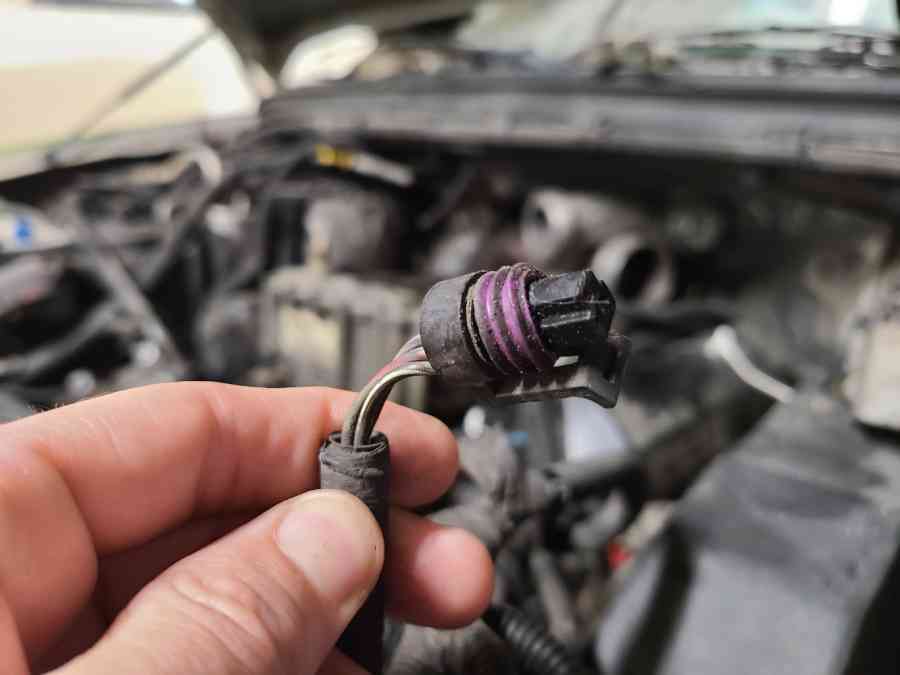
Inspect the connector immediately after disconnecting it. Engine oil inside the electrical connector is an important sign of possible ICP sensor leakage. Oil can enter through a failing internal sensor seal and contaminate the connector terminals. Check for oil residue, green or white corrosion deposits, bent terminals, broken locking tabs, and brittle wire insulation.
If the connector contains oil, clean it using an electrical contact cleaner suitable for automotive connectors and allow it to dry according to the product instructions. Inspect the connector seals and terminal condition before deciding whether the harness pigtail also needs replacement. Cleaning alone will not correct damaged terminals, weakened electrical contact, or an internal sensor leak.
A connector that no longer locks securely should be repaired or replaced rather than forced onto the new sensor. Poor terminal contact can cause intermittent ICP signals, resulting in rough idle, stalling, or starting problems after the replacement procedure is complete.
How Do You Remove the ICP Sensor Without Damaging the Engine?
Remove the ICP sensor by placing a correctly fitting wrench or sensor socket over its hexagonal body and turning it counterclockwise. Apply controlled force while keeping the tool aligned with the sensor to avoid rounding the hex or damaging the threaded mounting port.
Before loosening the sensor, position clean shop towels beneath the work area to catch residual engine oil. A small amount of oil may escape when the sensor is removed because its threaded opening connects to the engine’s high-pressure oil system. Keep electrical connectors and surrounding components protected from oil contamination.
Break the sensor loose using steady pressure rather than sudden impacts. Once the threads begin turning freely, continue unscrewing the sensor carefully. If resistance increases unexpectedly, stop and inspect the sensor’s alignment and thread condition instead of applying additional force.
After removing the sensor, inspect its threaded section, sealing surface, and electrical connector end. Damaged threads, a deteriorated sealing component, or oil contamination inside the connector can provide useful evidence about the original failure. However, these findings should be considered alongside diagnostic readings because visible damage is not present in every failed ICP sensor.
Inspect the exposed mounting port for dirt, damaged threads, and remaining sealing material. Do not insert tools, abrasive materials, or loose cleaning cloth fibers into the oil passage. Contamination introduced during sensor replacement can interfere with the operation of high-pressure oil system components.
Keep the opening protected while preparing the replacement sensor, using a clean, suitable cover if necessary. Do not reuse a damaged sealing component or apply thread sealant unless the replacement sensor manufacturer’s instructions specifically require it.
Once the old sensor has been removed and the mounting area inspected, the engine is ready for installation of the compatible replacement ICP sensor.
How Do You Install a New ICP Sensor on a 7.3 Powerstroke?
To install a new ICP sensor on a 7.3 Powerstroke, verify the replacement sensor’s compatibility, inspect its threads and sealing components, thread it into the mounting port by hand, and tighten it to the correct specification. Reconnect the electrical harness and inspect the installation before starting the engine.
Start by comparing the replacement ICP sensor with the original component. Check the electrical connector configuration, threaded section, sensor body, and sealing arrangement. The replacement must match the specific 7.3L Powerstroke engine application because sensor designs and electrical connections can differ between production years and replacement part revisions.
Inspect the new sensor for damaged threads, bent electrical terminals, or missing sealing components. A replacement sensor with damaged threads can harm the mounting port, while an incorrect sealing arrangement can allow pressurized engine oil to escape. Use the sealing components supplied or specified by the sensor manufacturer, and do not add thread sealant unless the installation instructions explicitly require it.
Clean the mounting area and ensure that no debris has entered the exposed oil passage. Position the replacement sensor squarely against the threaded opening and rotate it clockwise by hand. The sensor should engage smoothly without requiring significant force. If it binds immediately or becomes difficult to turn, remove it and inspect the threads before continuing.
How Do You Tighten a New ICP Sensor Correctly?
Tighten the new ICP sensor using a properly fitting socket or wrench and the torque specification applicable to the replacement part and engine configuration. Begin threading the sensor by hand to prevent cross-threading, then complete the installation with a suitable torque wrench.
The ICP sensor mounts directly into a high-pressure oil passage, making thread engagement and sealing critical to a successful repair. Excessive tightening can damage the sensor body, distort sealing components, or strip the mounting threads. Insufficient tightening can leave the sensor improperly seated and allow oil leakage when injection control pressure increases.
Before applying final torque, confirm the tightening specification using the appropriate Ford service information or the replacement sensor manufacturer’s installation instructions. Do not estimate the tightening torque or assume that every aftermarket ICP sensor uses the same specification. Sensor design, sealing arrangement, and manufacturer requirements must be considered.
Keep the socket aligned with the sensor while tightening. If a crowfoot adapter or extension changes the effective length of the torque wrench, account for that configuration according to the tool manufacturer’s instructions. Avoid applying force through the sensor’s electrical connector or plastic housing.
After tightening the sensor, reconnect the electrical harness by aligning the connector with the sensor terminals and pressing the housing into place until its locking mechanism engages. Do not force a misaligned connector. Check that the connector is fully seated and that the wires are not stretched, twisted, or positioned against hot or moving engine components.
Inspect the surrounding area for tools, loose wiring, and residual oil. Reinstall any components removed to gain access to the sensor. The installation is complete when the sensor is securely mounted, the electrical connection is properly engaged, and the engine compartment is ready for post-replacement testing.
How Do You Test a 7.3 Powerstroke After ICP Sensor Replacement?
To test a 7.3 Powerstroke after ICP sensor replacement, inspect the sensor for oil leaks, start the engine, monitor ICP data with a compatible diagnostic scanner, and confirm that the original symptoms have been resolved. A successful replacement should restore a plausible pressure signal without introducing new electrical faults or oil leaks.
Begin with a visual inspection before starting the engine. Check the sensor’s mounting area for damaged threads, an improperly seated sealing component, or visible oil residue. Verify that the electrical connector is locked and that the wiring harness is clear of surrounding moving components.
Start the engine and observe its initial behavior. A properly functioning ICP sensor should provide pressure feedback that allows the PCM to monitor and regulate the high-pressure oil injection system. Listen for unusual engine operation and watch for rough idle, hesitation, or stalling.
Allow the engine to idle while inspecting the sensor mounting area for fresh oil leakage. Use a flashlight to examine the surrounding surfaces without touching the sensor or reaching near moving engine components. Never loosen the sensor or place your hands near a suspected pressurized oil leak while the engine is running.
If oil appears around the sensor, shut down the engine and allow it to cool before inspecting the installation. Check the sensor’s seating, sealing components, and mounting threads. A persistent leak requires correction before the vehicle is returned to normal operation.
How Do You Check ICP Sensor Readings with a Diagnostic Scanner?
Check ICP sensor readings by connecting a Ford-compatible diagnostic scanner to the vehicle’s diagnostic port and monitoring injection control pressure while cranking, idling, and operating the engine. Compare the measured pressure with the PCM’s commanded pressure and the applicable service specifications.
The ICP sensor sends an electrical signal representing high-pressure engine oil conditions. The PCM uses this feedback to adjust IPR valve operation and maintain the pressure required for fuel injection. Comparing actual ICP pressure with desired ICP pressure helps determine whether the high-pressure oil system is responding correctly.
During engine cranking, a 7.3L Powerstroke generally requires approximately 500 psi of injection control pressure for starting. This value is a useful diagnostic reference rather than proof that the ICP sensor is functioning correctly. An engine that cannot develop sufficient injection control pressure may have an IPR valve problem, high-pressure oil leak, HPOP issue, or another mechanical fault.
At warm idle, ICP pressure is commonly around 475–550 psi on a properly operating 7.3L Powerstroke, although readings vary with engine conditions and control strategy. The scanner should display a stable, plausible pressure value rather than an obviously incorrect or erratic signal. Use model-specific service information to interpret the readings and avoid diagnosing a fault from a single pressure value.
Where supported by the scanner, monitor the following parameters:
| Diagnostic Parameter | What to Check |
|---|---|
| Actual ICP pressure | Whether measured pressure responds appropriately to engine operating conditions |
| Desired ICP pressure | Whether actual pressure follows the PCM’s requested pressure |
| ICP sensor voltage | Whether the electrical signal changes plausibly with pressure |
| IPR duty cycle | Whether the PCM is commanding pressure regulation appropriately |
| Diagnostic trouble codes | Whether ICP-related electrical or pressure-control faults remain |
After reviewing live data, check for stored, pending, or returning diagnostic trouble codes. Codes such as P1280, P1281, and P1283 can indicate problems involving the ICP sensor circuit, while P1211 relates to injection control pressure being outside the expected operating range. These codes require interpretation alongside wiring condition, live pressure readings, and engine behavior.
Clear diagnostic trouble codes only after recording the original fault information and completing the necessary checks. Restart the engine and verify that the same faults do not immediately return.
Finally, perform a controlled road test once the engine starts and idles normally, no oil leaks are present, and no critical faults remain. Observe acceleration, throttle response, idle stability, and engine behavior under normal operating conditions.
The ICP sensor replacement is successful when the sensor provides plausible pressure feedback, the mounting area remains free of oil leaks, and the original engine symptoms no longer occur. If starting difficulties, rough idle, or pressure-related trouble codes persist, continue diagnosing the electrical harness, IPR valve, HPOP, and high-pressure oil system rather than replacing the new sensor again.
What Are the Symptoms of a Bad ICP Sensor on a 7.3 Powerstroke?
The most common symptoms of a bad ICP sensor on a 7.3 Powerstroke include hard starting, rough idle, engine stalling, inconsistent throttle response, and ICP-related diagnostic trouble codes. These symptoms occur when the Powertrain Control Module (PCM) receives inaccurate injection control pressure feedback and cannot regulate the high-pressure oil injection system as intended.
The ICP sensor measures the oil pressure used to operate the engine’s hydraulically actuated fuel injectors. When its signal becomes inaccurate, intermittent, or unavailable, the PCM may command inappropriate Injection Pressure Regulator (IPR) valve operation. The resulting difference between actual and desired injection control pressure can affect fuel injection timing and engine performance.
Hard starting is a potential symptom because the 7.3L Powerstroke requires sufficient high-pressure oil to operate its fuel injectors during cranking. A faulty ICP signal can interfere with pressure regulation or prevent the PCM from accurately monitoring injection control pressure. However, low cranking ICP pressure can also result from high-pressure oil leaks, a malfunctioning IPR valve, or inadequate HPOP output.
Rough idle can occur when unstable ICP feedback causes inconsistent pressure regulation. The engine may shake, fluctuate in speed, or operate unevenly at idle. These symptoms can resemble problems caused by injector wiring, fuel delivery, or other injection system components, making diagnostic testing necessary before replacing the sensor.
Engine stalling may occur when the ICP signal becomes intermittent or the injection control system cannot maintain the pressure needed for stable engine operation. A damaged sensor connector or wiring harness can interrupt the pressure signal, causing sudden changes in engine behavior. Stalling alone does not identify the ICP sensor as the source of the problem.
Inconsistent throttle response can result from inaccurate pressure feedback during acceleration. As engine load increases, the PCM adjusts injection control pressure to meet fuel injection requirements. Incorrect ICP readings can interfere with these adjustments, producing hesitation, uneven acceleration, or reduced engine response.
ICP sensor problems can also trigger diagnostic trouble codes, including P1280, P1281, and P1283. These codes relate to ICP circuit conditions and should be evaluated with electrical testing and live sensor data. Code P1211 indicates that injection control pressure is outside the expected control range, but it does not specifically confirm sensor failure.
The presence of several symptoms increases the need for inspection but does not establish that the ICP sensor is defective. The most reliable diagnosis combines fault-code analysis, connector inspection, ICP signal testing, and evaluation of actual injection control pressure.
How Do You Know If a 7.3 Powerstroke ICP Sensor Needs Replacement?
A 7.3 Powerstroke ICP sensor needs replacement when diagnostic testing identifies an inaccurate, unstable, or failed sensor signal and confirms that the electrical connector, wiring, and related high-pressure oil components are not responsible. Engine symptoms and trouble codes provide diagnostic clues, but sensor replacement should be based on evidence of sensor malfunction.
Begin by connecting a Ford-compatible diagnostic scanner and retrieving stored and pending diagnostic trouble codes. Record the codes before clearing them because they provide information about the conditions detected by the PCM. Codes P1280, P1281, and P1283 can help identify ICP circuit problems, while P1211 directs attention toward injection control pressure regulation.
Next, examine live ICP pressure and voltage data during engine cranking and operation. The ICP sensor produces a voltage signal corresponding to pressure in the high-pressure oil system. A signal that remains implausibly fixed, changes erratically, or disagrees with other diagnostic evidence may indicate a sensor or circuit problem.
During cranking, the 7.3L Powerstroke generally needs approximately 500 psi of injection control pressure to start. If the scanner reports insufficient pressure, determine whether the reading represents genuinely low oil pressure or an inaccurate sensor signal. A weak HPOP, internal high-pressure oil leak, or malfunctioning IPR valve can prevent the engine from developing adequate pressure even when the ICP sensor is operating correctly.
A useful diagnostic check on applicable 7.3L Powerstroke systems is to observe engine behavior with the ICP sensor electrically disconnected. When the PCM detects a missing ICP signal, it can use a substitute control strategy. If starting or idle quality improves after disconnecting the sensor, the ICP signal or its circuit deserves further investigation. However, improved operation with the sensor unplugged does not conclusively prove that the sensor is defective, and the test should be performed only according to the appropriate service procedure.
Electrical testing provides additional confirmation. Check the ICP sensor’s reference voltage, ground circuit, and signal wiring using the correct service information for the engine year. A missing reference voltage, poor ground, or damaged signal wire can produce abnormal scanner readings without an internal sensor failure.
Replace the ICP sensor when testing establishes that the sensor itself is responsible for the incorrect pressure signal. If the electrical circuits operate correctly but actual injection control pressure remains below specification, investigate the IPR valve, HPOP, and high-pressure oil system before replacing additional components.
Can a Bad ICP Sensor Connector Cause the Same Symptoms?
A bad ICP sensor connector can cause the same symptoms as a failed ICP sensor because damaged terminals, oil contamination, and broken wiring can interrupt or distort the pressure signal sent to the PCM. The resulting symptoms can include hard starting, rough idle, intermittent stalling, and ICP-related trouble codes.
One important connector problem is engine oil contamination. An ICP sensor can develop an internal leak that allows pressurized oil to reach its electrical connector. Oil inside the connector may accompany sensor failure and can interfere with reliable electrical contact, particularly when terminals or seals have deteriorated.
Inspect the connector for oil residue, corrosion, loose terminals, damaged insulation, and broken locking tabs. A connector that does not engage securely may lose electrical contact as the engine vibrates. Similarly, wiring that has become brittle from heat exposure can develop intermittent faults near the sensor.
A wiring fault may also produce incorrect ICP readings. The sensor circuit depends on a stable reference voltage, a functional ground, and an intact signal wire. Excessive resistance, an open circuit, or a short can prevent the PCM from receiving accurate pressure information.
To distinguish a connector problem from an internal sensor failure, inspect the terminals and perform appropriate electrical continuity and voltage checks. A technician may also monitor live ICP data while carefully checking the harness for intermittent connections, following safe diagnostic procedures. Unexpected changes in the signal during harness movement can indicate an electrical connection problem.
If the connector is damaged, replace the affected connector or wiring pigtail using an appropriate repair component and proper automotive wiring practices. If oil contamination originates from an internally leaking ICP sensor, replacing the sensor may also be necessary.
Replacing the ICP sensor without repairing a damaged connector can leave the original engine problem unresolved. Confirming the integrity of both components helps restore reliable pressure feedback and prevents unnecessary repeat repairs.
Read more: AFM Lifter Failure: Symptoms, Causes & Repair
How Much Does It Cost to Replace a 7.3 Powerstroke ICP Sensor?
Replacing a 7.3 Powerstroke ICP sensor generally costs $100–$230 for a quality replacement sensor, while professional installation adds labor and any necessary diagnostic or connector repair charges. The final cost depends on the replacement part brand, engine accessibility, local labor rates, and the condition of the electrical connector.
For a DIY replacement, the sensor is usually the main expense because the procedure requires only basic automotive tools. Professional replacement costs more because the repair shop must account for diagnosis, removal, installation, and verification of the high-pressure oil system.
How Much Does a Replacement ICP Sensor Cost?
A replacement ICP sensor for a 7.3 Powerstroke generally costs between $100 and $230 for established aftermarket or genuine Ford options. Lower-priced aftermarket sensors are available, but their quality, calibration, and durability should be evaluated before installation.
For example, a GB Remanufacturing replacement sensor has been listed at approximately $105, while a genuine Ford ICP sensor has been listed at approximately $164. Alliant Power AP63418 sensors have appeared in retailer listings at approximately $166–$233. These are indicative US retail prices, not fixed quotations, and may change with supplier availability.
Before purchasing a sensor, verify the vehicle’s model year, engine application, electrical connector, and applicable OEM part number. A physically similar sensor is not necessarily compatible with every engine configuration.
The electrical connector can increase the repair cost if its terminals are corroded, its locking mechanism is damaged, or engine oil has entered the connector housing. Replacing a damaged pigtail alongside the sensor helps prevent intermittent electrical faults from continuing after installation.
How Much Does a Mechanic Charge to Replace an ICP Sensor?
Professional ICP sensor replacement labor depends on the shop’s hourly rate, the accessibility of the sensor, and whether additional diagnostic work is necessary. A straightforward replacement may require less than one hour of hands-on labor, although difficult access, damaged connectors, or seized components can increase the time required.
For budgeting purposes, a shop charging $100–$180 per labor hour would charge approximately $50–$180 for a job billed at 0.5–1.0 hour. This is an illustrative calculation rather than a verified national labor average or manufacturer-established labor allowance. Shops may also apply a minimum labor charge.
A repair shop may charge separately for diagnostic testing when the cause of hard starting, stalling, or rough idle has not been confirmed. This testing is valuable because replacing the ICP sensor will not repair an IPR valve malfunction, high-pressure oil leak, or damaged wiring harness.
DIY replacement eliminates professional labor charges but requires the correct tools and enough mechanical knowledge to avoid damaging the sensor mounting threads. Professional service is the better option when the connector needs extensive repair, the sensor is difficult to remove, or the engine has unresolved injection control pressure faults.
Why Does a 7.3 Powerstroke Still Run Poorly After ICP Sensor Replacement?
A 7.3 Powerstroke may continue running poorly after ICP sensor replacement because the original problem involves the IPR valve, high-pressure oil pump, internal oil leakage, electrical wiring, or another engine control component. A new ICP sensor restores pressure measurement only when the original sensor was defective; it cannot correct mechanical pressure loss or unrelated electrical faults.
Begin troubleshooting by comparing engine behavior before and after the replacement. If hard starting, rough idle, stalling, or hesitation remains unchanged, retrieve diagnostic trouble codes and review live ICP pressure data. Compare actual injection control pressure with the PCM’s requested pressure while observing IPR duty cycle and engine operating conditions.
A stable ICP sensor signal combined with insufficient actual pressure suggests that the problem may exist elsewhere in the high-pressure oil system. An unstable or implausible signal, however, requires inspection of the replacement sensor’s compatibility, connector engagement, reference voltage, ground circuit, and signal wiring.
Can a Faulty IPR Valve Cause Problems After ICP Sensor Replacement?
A faulty Injection Pressure Regulator (IPR) valve can cause hard starting, rough idle, stalling, and poor acceleration even after a new ICP sensor has been installed. The IPR valve regulates high-pressure engine oil, while the ICP sensor measures the resulting pressure and reports it to the PCM.
The PCM adjusts IPR valve duty cycle to control the oil pressure supplied to the hydraulically actuated fuel injectors. If the IPR valve sticks, develops an electrical fault, or has damaged sealing components, the high-pressure oil system may fail to achieve the pressure required for normal engine operation.
A common diagnostic pattern involves actual ICP pressure remaining below the requested value while the PCM increases IPR duty cycle in an attempt to raise pressure. This pattern indicates a pressure-control problem but does not identify the IPR valve as the only possible cause. High-pressure oil leaks and inadequate pump output can produce similar results.
Inspect the IPR valve’s electrical connection and evaluate its operation using the appropriate Ford diesel diagnostic procedure. Where supported, commanded IPR tests and pressure measurements can help distinguish a control problem from insufficient pressure generation.
Replacing the IPR valve without confirming its condition can create another unnecessary repair. The correct approach is to verify electrical control, pressure response, and the integrity of the high-pressure oil system before selecting a replacement component.
High-pressure oil pump problems can also explain poor engine operation after ICP sensor replacement. The HPOP supplies pressurized engine oil to the HEUI injection system. If the pump cannot produce adequate pressure under the required operating conditions, the injectors may not function correctly regardless of the ICP sensor’s condition.
During cranking, a 7.3L Powerstroke generally needs approximately 500 psi of injection control pressure to start. When measured pressure remains below this threshold, inspect the engine oil supply and follow the appropriate diagnostic procedure to determine whether the problem involves pump output, pressure regulation, or internal leakage.
Internal high-pressure oil leaks can occur at injector sealing components, oil rail connections, or other pressurized passages. These leaks allow oil to escape from the injection control circuit, reducing the pressure available to operate the injectors. Some leaks become more noticeable when the engine is hot because oil viscosity decreases as temperature rises.
A truck that starts normally when cold but becomes difficult to restart after reaching operating temperature may require investigation for temperature-sensitive high-pressure oil leakage. This symptom does not prove that the HPOP or IPR valve has failed.
Electrical wiring faults are another reason engine symptoms may continue after replacing the ICP sensor. A damaged connector, loose terminal, broken conductor, or incorrect pigtail repair can interrupt the pressure signal even when the new sensor is operating correctly.
Inspect the three-wire ICP circuit for proper reference voltage, ground integrity, and signal continuity using the applicable wiring diagram. When replacing a connector pigtail, verify terminal positions rather than relying only on wire colors, because replacement harness colors may differ from the original wiring.
If ICP readings are stable and actual pressure follows commanded pressure, expand the diagnosis beyond the injection control system. Fuel delivery restrictions, injector electrical faults, and other engine management problems can produce symptoms similar to ICP sensor failure.
The repair should be considered complete only after the engine starts reliably, maintains a stable idle, responds normally to acceleration, and operates without recurring relevant trouble codes or oil leaks. Persistent symptoms require systematic diagnosis rather than repeated replacement of the ICP sensor.