The 5.7 Hemi engine is a well known modern V8 engine from Chrysler. It belongs to the Chrysler 5.7L HEMI V8 engine family. This engine delivers strong performance, high torque output, and practical daily usability.
The 5.7 Hemi engine uses a hemispherical combustion chamber design. It also includes modern technologies such as Multi Displacement System (MDS) and Variable Valve Timing (VVT). These features help balance power production and fuel efficiency.
Chrysler used the 5.7 Hemi engine in many popular vehicles. These include the Dodge Charger, Dodge Challenger, Ram 1500, Jeep Grand Cherokee, and Chrysler 300. The engine became popular because it provides V8 power for both performance cars and utility vehicles.
The 5.7 Hemi engine specs explain its capability through key measurements such as horsepower, torque, displacement, compression ratio, and engine design. This guide covers the complete specifications, technology, applications, reliability, and performance characteristics of the 5.7 Hemi engine.
Understanding these specifications helps drivers, buyers, and automotive enthusiasts evaluate the engine’s strengths. It also helps them compare the 5.7 Hemi with other V8 engines.
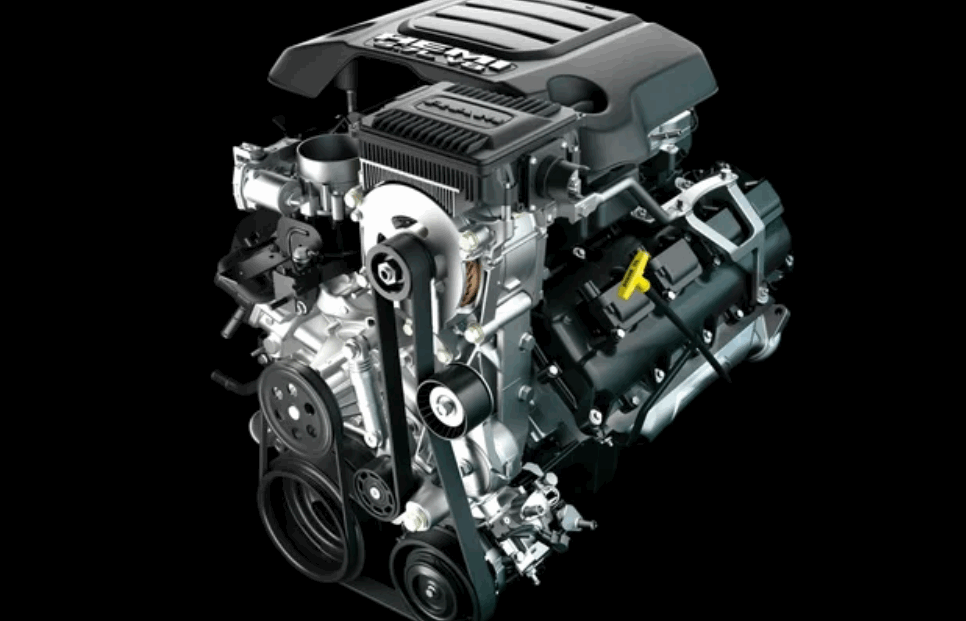
What Are the Complete Specifications of the 5.7 Hemi Engine?
The 5.7 Hemi engine is a 5.7 liter naturally aspirated V8 engine designed by Chrysler as part of the modern HEMI engine family. It has a 345 cubic inch displacement and uses a 90 degree V8 configuration. This engine combines traditional pushrod architecture with modern technologies to deliver strong power output and everyday drivability.
The 5.7 Hemi engine uses an overhead valve (OHV) design with two valves per cylinder. The engine has a cast iron block and aluminum cylinder heads in most applications. This construction provides durability while reducing overall engine weight. The pushrod design also creates a compact engine structure, which helps manufacturers install the V8 in different vehicle platforms.
The standard 5.7 Hemi engine has a bore size of 3.92 inches and a stroke length of 3.58 inches. This bore and stroke combination creates a balanced design between high speed performance and low end torque production. The engine also uses sequential multiport fuel injection to deliver fuel efficiently to all eight cylinders.
The compression ratio depends on the engine generation and vehicle application. Earlier versions commonly used a compression ratio around 9.6:1, while later Eagle HEMI versions increased efficiency through improved cylinder heads, higher compression, and updated combustion technology.
The 5.7 Hemi also includes Variable Valve Timing (VVT) and Multi Displacement System (MDS) in many applications. VVT adjusts valve operation according to engine speed and load conditions. MDS allows the engine to deactivate four cylinders during light driving conditions to reduce fuel consumption.
These specifications explain why the 5.7 Hemi remains a popular V8 engine. It combines a durable mechanical design with modern control systems, allowing it to support performance vehicles, trucks, and SUVs.
How Much Horsepower and Torque Does the 5.7 Hemi Engine Produce?
The 5.7 Hemi engine produces different horsepower and torque ratings depending on the vehicle model, production year, and engine generation. Most versions produce between 340 and 395 horsepower, while torque output ranges from approximately 375 to 410 lb ft. These numbers make the 5.7 Hemi a strong V8 option for both performance vehicles and trucks.
The early 5.7 Hemi engines introduced in 2003 produced around 345 horsepower and 375 lb ft of torque. Chrysler improved the engine over time through updated cylinder heads, improved combustion design, and Variable Valve Timing technology. Later Eagle HEMI versions increased output, with some applications reaching 395 horsepower and 410 lb ft of torque.
Horsepower measures the engine’s ability to produce power at higher engine speeds. Torque measures the engine’s twisting force, which affects acceleration and towing capability. The 5.7 Hemi produces strong low end torque because of its V8 configuration and relatively long stroke design. This characteristic makes it suitable for vehicles that require pulling power, such as the Ram 1500 pickup truck.
The engine tuning varies between different vehicle applications. Performance models such as the Dodge Charger R/T and Dodge Challenger R/T focus on responsive acceleration and higher power delivery. Truck applications such as the Ram 1500 focus on balanced torque output for towing, hauling, and daily driving.
The 5.7 Hemi’s performance comes from the combination of displacement, cylinder design, airflow efficiency, and electronic engine management. These factors allow the engine to provide the power expected from a V8 while maintaining practical reliability for everyday use.
What Technology Does the 5.7 Hemi Engine Use?
The 5.7 Hemi engine uses several technologies that improve power delivery, fuel efficiency, and engine operation. Chrysler developed these systems to combine the performance advantages of a V8 engine with better fuel management during everyday driving conditions. The main technologies include the hemispherical combustion chamber design, Multi Displacement System (MDS), Variable Valve Timing (VVT), and electronic fuel injection.
The hemispherical combustion chamber is a key feature of the HEMI engine family. This design places the spark plug closer to the center of the combustion chamber. The position improves flame travel during combustion and helps the engine produce efficient power. The design also supports better airflow through the cylinder head, which contributes to stronger performance.
How Does the Multi Displacement System Work on the 5.7 Hemi?
The Multi Displacement System allows the 5.7 Hemi engine to operate as a four cylinder engine during low demand driving conditions. The system deactivates four cylinders when the vehicle cruises at a steady speed or requires less power. It reactivates all eight cylinders when the driver needs stronger acceleration.
MDS works by controlling valve operation and fuel delivery through electronic engine management. The system reduces fuel consumption because the engine does not use all eight cylinders when full power is unnecessary. This technology helps the 5.7 Hemi provide better efficiency during highway driving while maintaining V8 performance when required.
How Does Variable Valve Timing Improve the 5.7 Hemi?
Variable Valve Timing changes the timing of valve opening and closing based on engine speed and load. The system helps the engine produce better power across different driving conditions. At lower speeds, it improves efficiency and response. At higher speeds, it supports stronger airflow and power production.
The 5.7 Hemi also uses electronic fuel injection to control fuel delivery precisely. The system adjusts fuel flow according to engine conditions, which improves combustion efficiency and reduces unnecessary fuel use. Together, these technologies allow the 5.7 Hemi engine to deliver reliable V8 performance with improved control compared with older naturally aspirated engines.
Which Vehicles Use the 5.7 Hemi Engine?
The 5.7 Hemi engine has powered a wide range of vehicles from Chrysler, Dodge, Ram, and Jeep. Manufacturers used this V8 engine in performance cars, pickup trucks, and SUVs because it provides strong horsepower, high torque, and dependable daily performance. The engine became a common choice for drivers who wanted V8 power without moving to larger displacement engines.
Dodge used the 5.7 Hemi engine in several performance-oriented models. The Dodge Charger R/T and Dodge Challenger R/T are two of the most recognized applications. In these vehicles, the engine delivers responsive acceleration and the traditional V8 driving experience. The engine tuning focuses on smooth power delivery, quick throttle response, and performance-focused driving characteristics.
Ram used the 5.7 Hemi engine extensively in its pickup trucks, especially the Ram 1500. In this application, the engine focuses on torque production and towing capability. The strong low end torque helps the truck handle heavy loads, trailers, and daily utility tasks. The combination of the 5.7 Hemi engine and automatic transmission systems made the Ram 1500 a popular option among truck buyers.
Jeep also used the 5.7 Hemi engine in models such as the Jeep Grand Cherokee. The engine provides additional power for drivers who need SUV capability with V8 performance. The extra torque improves acceleration and supports towing requirements.
Chrysler installed the 5.7 Hemi engine in models such as the Chrysler 300. This application focused on combining luxury features with powerful V8 performance. Across these different vehicles, the 5.7 Hemi maintained the same core characteristics: strong torque, reliable operation, and versatile performance.
The wide use of the 5.7 Hemi engine shows its flexibility across multiple vehicle categories. It can support performance driving, truck capability, and everyday transportation while maintaining the characteristics expected from a modern V8 engine.
Is the 5.7 Hemi Engine Reliable?
The 5.7 Hemi engine is generally considered a reliable V8 engine when owners follow proper maintenance schedules. Its durable construction, simple pushrod design, and strong internal components allow many examples to achieve high mileage. The engine can often exceed 200,000 miles when drivers perform regular oil changes, maintain the cooling system, and address mechanical issues early.
The reliability of the 5.7 Hemi comes from its proven engine architecture. The cast iron block provides strength under high loads, while the overhead valve design uses fewer moving components compared with some overhead cam engines. This simpler structure reduces mechanical complexity and supports long term durability.
Maintenance plays an important role in the lifespan of the 5.7 Hemi. Regular oil changes protect internal components such as the camshaft, lifters, and valve train system. Using the correct oil specification helps maintain proper lubrication, especially in engines equipped with Multi Displacement System technology.
What Are the Common Problems With the 5.7 Hemi Engine?
The 5.7 Hemi engine has several known issues that owners should monitor. One common concern is the HEMI tick, a ticking sound that may come from lifter wear, exhaust manifold leaks, or other valve train related conditions. The severity depends on the source of the noise and the condition of the engine.
Another common issue involves exhaust manifold bolts. Some 5.7 Hemi engines can experience broken exhaust manifold bolts because of repeated heat cycles. This problem may create an exhaust leak and produce a ticking sound during engine operation.
The Multi Displacement System can also create maintenance concerns in some engines. Components such as lifters and camshafts require proper lubrication to operate correctly. Neglected oil changes can increase wear on these parts.
Despite these potential problems, the 5.7 Hemi remains a dependable engine for many applications. Proper maintenance, quality oil, and timely repairs significantly improve its durability. The engine’s combination of power, simple design, and widespread availability makes it a popular choice among vehicle owners.
How Does the 5.7 Hemi Compare With Other V8 Engines?
The 5.7 Hemi engine competes with several popular V8 engines from Ford and General Motors. Its main advantages come from strong torque output, proven durability, and versatile applications across cars, trucks, and SUVs. Compared with other V8 engines, the 5.7 Hemi focuses on balanced performance rather than maximum horsepower.
The 5.7 Hemi and the 6.4 Hemi represent two different approaches within the Chrysler HEMI engine family. The 6.4 Hemi, also known as the 392 HEMI, has a larger displacement and produces significantly more horsepower and torque. It is designed for drivers who prioritize maximum performance. The 5.7 Hemi provides better balance by offering strong V8 power with lower operating costs and wider availability.
The Ford 5.0 Coyote V8 uses a different engineering approach. It features a dual overhead cam design with four valves per cylinder. This configuration allows the engine to achieve higher engine speeds and strong horsepower output. The 5.7 Hemi uses a pushrod design with fewer moving components, which provides a compact structure and strong low speed torque.
The General Motors 5.3 EcoTec3 V8 follows a similar philosophy to the 5.7 Hemi by focusing on efficiency and practical performance. It uses technologies such as cylinder deactivation and direct injection to improve fuel economy. However, the 5.7 Hemi generally provides a larger displacement advantage and stronger torque characteristics.
The best choice depends on the intended use. The 5.7 Hemi works well for drivers who want traditional V8 performance, towing capability, and long term reliability. The Ford 5.0 Coyote suits drivers who prefer high RPM performance, while the 6.4 Hemi targets maximum power applications. Each engine offers different strengths based on vehicle purpose and driving needs.
What Is the Towing Capability of the 5.7 Hemi Engine?
The 5.7 Hemi engine provides strong towing capability because of its high torque output and V8 architecture. It is especially popular in pickup trucks and SUVs that require consistent pulling power. The engine’s 375 to 410 lb ft of torque allows vehicles such as the Ram 1500 to handle trailers, equipment, and heavy loads effectively.
The towing capacity of a vehicle with the 5.7 Hemi depends on more than engine power. Factors such as transmission type, axle ratio, drivetrain configuration, suspension setup, cooling system, and vehicle weight rating directly affect maximum towing ability. A properly equipped Ram 1500 with the 5.7 Hemi can achieve towing capacities above 10,000 pounds in certain configurations.
The engine’s torque characteristics make it suitable for towing applications. Torque provides the rotational force needed to move heavy loads from a stop and maintain speed under higher resistance. The 5.7 Hemi produces strong low end torque, which helps reduce engine strain during trailer towing and heavy hauling.
The combination of the 5.7 Hemi engine and modern transmission systems improves towing performance. Automatic transmissions with multiple gear ratios allow the engine to operate within its effective power range. Features such as electronic throttle control and engine management systems also help maintain consistent performance under different load conditions.
The 5.7 Hemi is not only a performance engine but also a practical work engine. Its balance between horsepower, torque, reliability, and availability makes it a popular choice for truck and SUV owners. For drivers who need towing capability without moving to a larger heavy duty engine, the 5.7 Hemi provides a strong combination of performance and everyday usability.
Conclusion
The 5.7 Hemi engine remains one of Chrysler’s most recognized V8 engines because it delivers a strong combination of performance, durability, and versatility. Its 5.7 liter displacement, V8 configuration, high torque output, and advanced technologies allow it to support different driving needs across performance cars, trucks, and SUVs.
The 5.7 Hemi engine specs show why this engine became popular among drivers who want traditional V8 power with practical everyday usability. Features such as Multi Displacement System (MDS) and Variable Valve Timing (VVT) help improve efficiency without removing the power characteristics expected from a HEMI engine.
The engine’s applications in vehicles such as the Dodge Charger, Dodge Challenger, Ram 1500, Jeep Grand Cherokee, and Chrysler 300 demonstrate its flexibility. It can provide quick acceleration in performance vehicles while also delivering towing capability in trucks and SUVs.
Although the 5.7 Hemi has some known maintenance concerns, regular service and proper ownership practices can help extend engine life. Its proven design, strong aftermarket support, and widespread availability continue to make it a valuable V8 option.
For readers researching engine performance, reliability, or vehicle selection, understanding the complete 5.7 Hemi engine specifications provides a clearer picture of what this V8 engine offers.