O’Reilly Auto Parts does not make its own motor oil. The company sells O’Reilly branded oil through a private label business model. Specialized oil manufacturers produce the products, while O’Reilly manages branding, retail distribution, and customer access.
The manufacturer behind O’Reilly’s oil depends on supply agreements and production partnerships. These companies create motor oil formulas that meet industry requirements for engine protection, viscosity performance, and quality standards.
Knowing who makes O’Reilly’s oil helps drivers understand the product’s origin. It also helps them compare O’Reilly oil with major brands such as Mobil 1, Valvoline, Castrol, and Pennzoil.
Motor oil quality does not depend only on the brand name. Drivers should also evaluate factors such as base oil type, additive technology, API certification, and SAE viscosity ratings.
This guide explains how O’Reilly oil production works, how private label motor oil differs from major oil brands, and whether O’Reilly oil provides reliable performance for everyday vehicles.
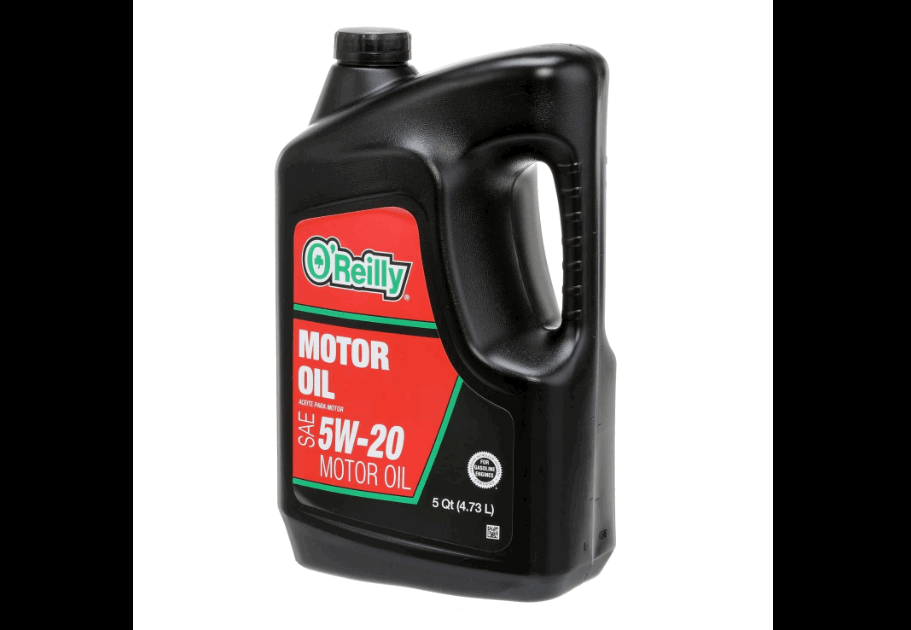
Who makes O’Reilly’s oil?
O’Reilly’s oil comes from third party oil manufacturers that produce private label motor oil for the O’Reilly Auto Parts brand. O’Reilly Auto Parts focuses on selling and distributing the product, while specialized lubricant companies handle the oil production process.
Private label motor oil allows retailers to offer their own branded products without operating their own petroleum manufacturing facilities. The retailer defines product requirements, selects suppliers, and sells the finished product under its brand name. This business model appears across the automotive industry because it helps companies provide competitive pricing and maintain product availability.
The exact manufacturers that produce every O’Reilly oil product are not publicly listed by O’Reilly Auto Parts. Oil suppliers can change based on product type, supply agreements, and regional distribution needs. However, these manufacturers typically operate large blending facilities that combine base oils with additive packages to create engine lubricants that meet industry specifications.
O’Reilly’s motor oil products follow established automotive lubricant standards rather than relying only on brand recognition. These standards include specifications from organizations such as the American Petroleum Institute (API) and Society of Automotive Engineers (SAE). These certifications help ensure that the oil provides appropriate lubrication, temperature performance, and engine protection.
The relationship between O’Reilly Auto Parts and its oil suppliers works differently from traditional oil companies such as ExxonMobil or Valvoline. Traditional oil companies usually control their own petroleum production, formulation, and branding. O’Reilly operates mainly as a retail brand that provides customers with accessible motor oil options through its automotive parts network.
Understanding this manufacturer relationship helps explain why private label motor oil can compete with well known brands. The quality of the final product depends on the formulation, testing process, certifications, and supplier capabilities rather than only the company name on the bottle.
Does O’Reilly Auto Parts manufacture its own motor oil?
O’Reilly Auto Parts does not operate its own oil manufacturing facilities. The company works with external lubricant manufacturers that produce motor oil according to specific product requirements. This approach allows O’Reilly to offer branded engine oil without managing the complex process of petroleum refining and lubricant production.
The difference between a brand owner and a manufacturer is important in the automotive oil industry. A brand owner controls the product identity, marketing, distribution, and customer experience. A manufacturer handles the technical process, including selecting base oils, adding performance additives, blending formulas, and testing the finished lubricant.
Private label manufacturing creates a partnership between retailers and production companies. Retailers such as O’Reilly Auto Parts use this model to expand their product range and provide customers with more affordable alternatives. Manufacturers use their existing facilities and technical knowledge to create products that meet required industry standards.
What is the difference between an oil brand owner and an oil manufacturer?
An oil brand owner manages how customers see and purchase a product, while an oil manufacturer creates the actual lubricant. For example, O’Reilly Auto Parts provides its own branded motor oil products, but specialized companies handle the production process.
The manufacturer’s role involves several technical steps. These steps include selecting base oils, combining chemical additives, controlling viscosity levels, and performing quality tests. These processes determine how well the oil protects engine components under different driving conditions.
The brand owner’s role focuses on product availability and customer needs. O’Reilly connects drivers with different oil options, including conventional oil, synthetic blend oil, and full synthetic oil. Customers can select products based on vehicle requirements, mileage, and driving conditions.
Why do automotive retailers sell private label motor oil?
Automotive retailers sell private label motor oil because it gives them more control over pricing, product availability, and customer choices. A retailer can create a branded product line without investing billions of dollars in petroleum production infrastructure.
Private label oil also helps retailers compete in a crowded automotive market. Customers often compare motor oils based on price, specifications, and certifications rather than only the company behind the bottle. A retailer brand can attract buyers who want reliable engine protection at a lower cost.
The private label model also benefits consumers because it increases product variety. Drivers can choose between retailer brands and established oil companies while still checking important factors such as API certification, SAE viscosity grade, and vehicle manufacturer recommendations.
Where is O’Reilly motor oil manufactured?
O’Reilly motor oil is manufactured through a network of lubricant suppliers and production facilities rather than a single O’Reilly owned factory. These suppliers use industrial blending facilities to create engine oil products that match O’Reilly’s specifications and meet automotive industry requirements.
The manufacturing location can vary depending on the product line, supplier agreements, and distribution needs. Oil manufacturers usually operate multiple facilities that produce different lubricant products for automotive retailers, vehicle manufacturers, and independent brands.
How is private label motor oil produced?
Private label motor oil production follows several technical steps before the product reaches retail shelves. Manufacturers begin with base oil, which forms the primary component of the lubricant. They then combine the base oil with additive packages that improve engine protection, cleaning performance, oxidation resistance, and temperature stability.
The blending process determines the final characteristics of the motor oil. Manufacturers adjust the formula to achieve specific viscosity grades, such as 5W 30 or 10W 40, based on the intended vehicle applications. Each viscosity grade controls how the oil flows during cold starts and high temperature operation.
After blending, manufacturers test the oil to confirm that it meets performance requirements. These tests evaluate factors such as lubrication ability, wear protection, thermal stability, and compatibility with engine systems.
Quality control plays an important role in private label oil production. Manufacturers must ensure that each batch maintains consistent performance before distribution. This process allows retailer brands like O’Reilly to provide motor oil products that follow the same industry standards used across the automotive lubricant market.
The production process shows why the manufacturer behind a bottle of oil is only one part of product quality. The formulation, testing procedures, certifications, and compliance with automotive standards also determine how well the oil performs inside an engine.
What standards does O’Reilly oil meet?
O’Reilly oil follows industry standards that define motor oil performance, viscosity, and engine protection requirements. These standards help drivers understand whether a lubricant matches the needs of their vehicles. The most important specifications include API certification, SAE viscosity grades, and ILSAC performance standards.
Motor oil manufacturers use these standards to create products that work under different engine conditions. A properly formulated oil must maintain lubrication during cold starts, high operating temperatures, and extended driving periods.
How do API and SAE ratings affect engine protection?
API certification shows that a motor oil meets performance requirements established by the American Petroleum Institute. These requirements evaluate important factors such as engine wear protection, deposit control, oxidation resistance, and overall lubricant performance.
API standards change as engine technology develops. Modern engines require oils that support improved fuel efficiency, tighter engine designs, and advanced emission systems. A motor oil with the correct API rating helps ensure compatibility with the vehicle manufacturer’s recommendations.
SAE viscosity grades describe how oil flows at different temperatures. For example, 5W 30 oil performs differently from 10W 40 oil because each formula has a different viscosity range. The first number represents cold temperature flow performance, while the second number represents oil thickness at high operating temperatures.
Choosing the correct viscosity grade helps the engine receive proper lubrication in different driving conditions. A vehicle designed for 5W 30 oil may not perform optimally with a different viscosity because the oil flow characteristics can affect engine efficiency and protection.
ILSAC standards also influence many passenger vehicle oils, especially products designed for gasoline engines. These standards focus on areas such as fuel economy, emission system protection, and engine performance.
O’Reilly oil products must meet these industry requirements to compete in the automotive lubricant market. Certifications and specifications provide more useful information about oil performance than brand recognition alone. Drivers should always check their vehicle owner’s manual to select the correct oil specification for their engine.
Is O’Reilly oil good compared with major oil brands?
O’Reilly oil can provide reliable engine protection when drivers choose the correct product for their vehicles. The main difference between O’Reilly oil and major brands such as Mobil 1, Valvoline, Castrol, and Pennzoil often comes from brand reputation, research investment, and marketing rather than basic performance requirements.
Motor oil quality depends on several technical factors, including base oil quality, additive technology, viscosity performance, and industry certifications. A private label oil can perform well when it meets the same standards required for modern engines.
O’Reilly synthetic oil uses synthetic formulations designed to improve protection compared with conventional oil. Synthetic formulas usually provide better temperature stability, oxidation resistance, and performance during demanding driving conditions. However, premium oil brands often invest more in proprietary technology, product testing, and long term research.
The most important factor when comparing O’Reilly oil with other brands is whether the product matches the vehicle manufacturer’s requirements. API certification, SAE viscosity grade, and engine compatibility provide stronger indicators of performance than the brand name alone.
For everyday vehicles, O’Reilly oil can be a practical choice when it meets the recommended specifications. Drivers should check their owner’s manual before selecting motor oil, especially for high performance engines, newer vehicles, or engines that require specific lubricant standards.
A suitable motor oil protects engine components, maintains proper lubrication, and supports efficient operation. The right choice depends on vehicle requirements, driving conditions, and maintenance needs rather than choosing the most recognized brand.
Should you buy O’Reilly motor oil for your vehicle?
You should buy O’Reilly motor oil if the product matches your vehicle’s required specifications and maintenance needs. The brand offers different types of motor oil, including conventional oil, synthetic blend oil, full synthetic oil, and high mileage oil. Each type serves different engine conditions and driving requirements.
Choosing the right O’Reilly oil starts with checking your vehicle manufacturer’s recommendations. The owner’s manual provides important information about the correct viscosity grade, performance standards, and oil specifications required for the engine.
Drivers should also consider their driving habits when selecting motor oil. Vehicles used for daily commuting may require different oil characteristics compared with vehicles that experience heavy towing, extreme temperatures, or frequent short trips. The correct formulation helps maintain lubrication, reduce engine wear, and support long term engine performance.
O’Reilly oil can be suitable for many passenger vehicles when it meets the required API certification and SAE viscosity rating. These specifications help ensure that the oil works properly with the engine’s design and operating conditions.
The best motor oil choice does not depend only on the brand name. Drivers should evaluate product specifications, vehicle compatibility, driving environment, and maintenance intervals before making a decision. A correctly selected oil can help protect engine components and maintain reliable vehicle operation.
Who makes O’Reilly’s oil and what should drivers know?
O’Reilly’s oil comes from third party lubricant manufacturers that produce private label motor oil for O’Reilly Auto Parts. The company does not operate its own oil production facilities, but it provides customers with branded motor oil products that follow industry requirements.
The manufacturer behind the oil is only one factor that determines product performance. Drivers should also consider API certification, SAE viscosity grade, engine compatibility, and driving conditions before choosing a lubricant.
O’Reilly oil can be a suitable option for many vehicles when it matches the manufacturer’s recommended specifications. Private label motor oil can provide reliable performance because quality depends on formulation, testing, and compliance with automotive standards.
Understanding how O’Reilly oil is produced helps drivers make better maintenance decisions. Instead of choosing oil only by brand reputation, vehicle owners should focus on the specifications that protect their specific engine.