Cummins Inc. manufactures Cummins engines. The American company designs, engineers, tests, and produces engines for commercial trucks, pickup trucks, construction equipment, agricultural machinery, marine vessels, and power generation systems. Founded in 1919 and headquartered in Columbus, Indiana, Cummins has grown into one of the world’s leading engine manufacturers. Today, the company serves customers in more than 190 countries through a global production and service network.
Many drivers believe that brands such as Ram, Kenworth, or Peterbilt build Cummins engines because they offer vehicles powered by them. That assumption is incorrect. These manufacturers purchase engines directly from Cummins through OEM partnerships. Cummins develops the engine, controls the manufacturing process, and verifies product quality. The vehicle manufacturer installs the completed engine into its own truck or equipment.
The answer becomes more complex when production locations enter the discussion. Cummins operates manufacturing plants in the United States and several other countries. Every facility follows the company’s engineering standards and quality requirements. This global network allows Cummins to supply engines efficiently while maintaining consistent performance and reliability.
This guide explains who makes Cummins engines, where the company builds them, which vehicles use them, and why Cummins remains one of the most trusted names in the global diesel engine industry.
Who Makes Cummins Engines?
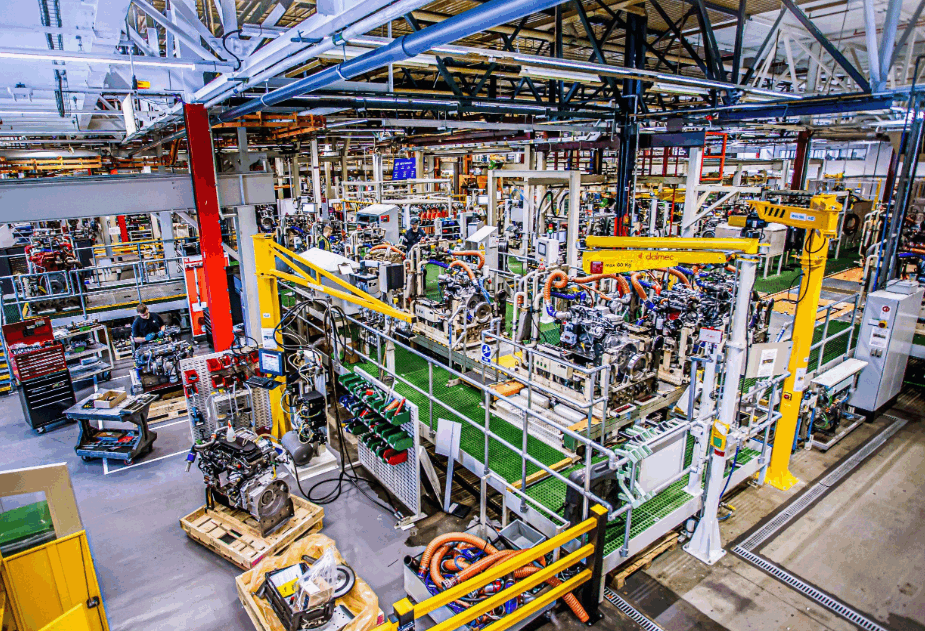
Cummins Inc. makes Cummins engines. The company develops, manufactures, and supports its own engine lineup instead of outsourcing production to another engine builder. Since its founding in 1919, Cummins has focused on designing reliable power solutions for commercial transportation, industrial equipment, agriculture, mining, marine applications, and power generation. This long history has helped the company become one of the largest independent engine manufacturers in the world.
Cummins manages every major stage of engine development. Its engineering teams design new engine platforms, improve fuel efficiency, reduce emissions, and test each model before production begins. The company also manufactures key engine components, assembles complete engines, and performs strict quality inspections. By controlling the entire process, Cummins maintains consistent performance across different engine families and global markets.
Many people confuse Cummins with truck manufacturers because several well-known brands offer vehicles equipped with Cummins engines. In reality, companies such as Ram, Kenworth, Peterbilt, and International purchase engines from Cummins through original equipment manufacturer (OEM) agreements. Cummins builds the engine, while the vehicle manufacturer installs it into the finished truck and integrates it with the vehicle’s transmission, electronics, and chassis.
Cummins also continues to invest heavily in research and innovation. The company develops diesel, natural gas, hydrogen, and hybrid power solutions to meet changing emissions standards and customer demands. This commitment allows Cummins to remain competitive across multiple industries while expanding its portfolio beyond traditional diesel engines.
Today, millions of Cummins engines operate in trucks, buses, construction equipment, generators, agricultural machinery, and marine vessels worldwide. The company’s reputation comes from decades of engineering expertise, dependable performance, and continuous product development rather than partnerships with any single vehicle manufacturer.
Where Are Cummins Engines Manufactured?
Cummins manufactures its engines in the United States and many other countries. The company operates a global production network that helps supply regional markets while maintaining consistent engineering and quality standards. This manufacturing strategy allows Cummins to shorten delivery times, improve supply chain efficiency, and meet customer demand across different industries.
The United States remains one of Cummins’ most important manufacturing bases. Several facilities produce engines, engine components, and power systems for domestic and international customers. The company’s headquarters in Columbus, Indiana, also supports engineering, product development, and corporate operations. Many heavy-duty and medium-duty engines sold in North America come from American manufacturing plants.
Cummins also operates factories in countries such as the United Kingdom, India, China, Brazil, Mexico, and Australia. Each facility serves specific markets while following the same production standards established by Cummins. Engineers use standardized manufacturing processes, advanced testing equipment, and strict quality inspections to ensure every engine delivers reliable performance regardless of where production takes place.
Many buyers wonder whether an engine built outside the United States offers the same level of quality. Cummins addresses this concern by applying uniform engineering specifications across its global operations. Every manufacturing plant follows the company’s quality management system and testing procedures before an engine reaches customers. Production location does not change the engine’s design, durability, or performance standards.
Customers can identify where a Cummins engine was assembled by checking the engine serial number or the identification plate. Dealers and authorized service centers can also verify manufacturing information, engine specifications, and production details using Cummins’ official database. This information helps owners confirm engine authenticity and locate the correct replacement parts when maintenance or repairs become necessary.
Which Vehicles and Equipment Use Cummins Engines?
Cummins engines power a wide range of vehicles and industrial equipment around the world. The company supplies engines for light-duty pickups, heavy-duty trucks, buses, construction machines, agricultural equipment, marine vessels, and power generators. This broad product portfolio allows Cummins to serve transportation, infrastructure, mining, farming, and energy industries with reliable power solutions.
The most recognized application appears in Ram Heavy Duty pickup trucks. Cummins has partnered with Ram for decades to provide diesel engines that deliver strong towing capacity, high torque, and long service life. This partnership has made the Cummins-powered Ram one of the most popular diesel pickup combinations in North America.
Commercial truck manufacturers also rely on Cummins engines for medium-duty and heavy-duty vehicles. Brands such as Kenworth, Peterbilt, International, Freightliner, and FUSO offer selected models equipped with Cummins engines. Although these companies build the trucks, Cummins designs and manufactures the engine before delivering it to the vehicle manufacturer for installation.
Beyond the trucking industry, Cummins engines support many types of heavy equipment. Construction companies use them in excavators, loaders, cranes, and compressors. Farmers depend on Cummins-powered tractors, harvesters, and irrigation equipment to complete demanding seasonal work. Marine operators also choose Cummins engines for commercial fishing boats, ferries, and recreational vessels because they provide dependable performance in challenging environments.
Cummins also produces engines for standby and prime power generators. Hospitals, data centers, factories, airports, and commercial buildings use these systems to maintain electrical power during outages or in remote locations. This wide range of applications demonstrates that Cummins is more than a truck engine manufacturer. It is a global power technology company that supplies engines for many industries and operating conditions.
Does Cummins Build Its Own Engines?
Yes, Cummins builds its own engines. The company controls every major stage of engine development, from initial design to final assembly. Unlike many vehicle manufacturers that purchase engines from outside suppliers, Cummins specializes in engine technology and focuses on developing complete power solutions for a wide range of industries.
The process begins with research and engineering. Cummins engineers design new engine platforms, improve combustion systems, develop advanced fuel injection technology, and reduce exhaust emissions. After completing the design phase, the company manufactures major components, including engine blocks, cylinder heads, crankshafts, and fuel systems. Production teams then assemble each engine and perform detailed inspections before releasing it for sale.
Cummins also invests heavily in testing before a new engine reaches the market. Engineers evaluate durability, fuel efficiency, power output, and emissions under different operating conditions. These tests help identify potential issues early and ensure each engine meets performance targets and environmental regulations. Continuous testing also supports long-term reliability, which has become one of the company’s strongest competitive advantages.
Many people believe Ram or other truck brands manufacture Cummins engines because the engine carries the Cummins badge inside those vehicles. In reality, Cummins produces the engine at its own facilities before shipping it to vehicle manufacturers. Companies such as Ram, Kenworth, Peterbilt, and International install the completed engine during vehicle assembly and integrate it with their own transmissions, chassis, and electronic systems.
This manufacturing model allows each company to focus on its area of expertise. Cummins continues to develop advanced engine technology, while vehicle manufacturers concentrate on designing trucks and equipment that meet customer needs. As a result, both companies contribute to the final product without sharing responsibility for engine production.
Why Are Cummins Engines So Popular?
Cummins engines have earned a strong reputation because they combine durability, performance, fuel efficiency, and long-term reliability. Fleet operators, business owners, and individual drivers often choose Cummins engines because they perform well under demanding conditions while keeping operating costs under control. This reputation has developed through decades of continuous engineering improvements and real-world experience.
One of the biggest advantages of a Cummins engine is its durability. Many engines remain in service for hundreds of thousands of miles with proper maintenance. Heavy-duty models can often exceed one million miles before requiring a major overhaul. This long service life reduces replacement costs and increases the overall value of commercial vehicles and industrial equipment.
Cummins engines also deliver high torque at low engine speeds. This characteristic improves towing performance, climbing ability, and load-carrying capacity. Truck drivers benefit from smoother acceleration, while construction and agricultural equipment can handle demanding workloads without placing unnecessary stress on the engine. Strong low-end torque also helps improve productivity in industries that depend on consistent pulling power.
Fuel efficiency remains another important reason for the brand’s popularity. Cummins continuously develops advanced combustion systems, turbocharging technology, and electronic engine controls to reduce fuel consumption without sacrificing power. Lower fuel usage helps businesses reduce operating expenses, especially when managing large commercial fleets that travel long distances every day.
Another key strength is Cummins’ extensive service and support network. Authorized dealers and service centers operate in many countries, making it easier for owners to find genuine replacement parts, qualified technicians, and technical support. This global infrastructure reduces downtime and helps customers keep their vehicles and equipment operating efficiently throughout their service life.
Cummins also continues to invest in new technologies that support future transportation needs. The company develops diesel, natural gas, hydrogen, battery-electric, and hybrid power solutions to meet stricter emissions standards and changing market demands. This commitment to innovation allows Cummins to remain competitive while maintaining the reliability that customers have trusted for more than a century.
Are Cummins Engines Made in the USA?
Yes, many Cummins engines are made in the United States, but the company also manufactures engines in several other countries. Cummins uses a global production network to supply regional markets while maintaining the same engineering and quality standards across every facility. This approach helps the company improve production efficiency and deliver engines faster to customers worldwide.
The United States remains a major manufacturing center for Cummins. The company operates multiple production facilities that build engines, power systems, and engine components for domestic and international markets. These plants produce many of the medium-duty and heavy-duty engines used in North America. Cummins also carries out engineering, product development, and product testing at several U.S. locations.
To support growing demand, Cummins has expanded manufacturing into countries such as China, India, Brazil, Mexico, and the United Kingdom. Each facility serves nearby customers and reduces shipping times for local markets. Although production takes place in different regions, every plant follows the same manufacturing procedures, quality inspections, and engineering specifications established by Cummins.
Some buyers believe that an engine built outside the United States offers lower quality. However, Cummins applies standardized production methods throughout its global manufacturing network. Every engine must pass the same testing process before leaving the factory. As a result, manufacturing location does not determine engine durability, reliability, or performance.
Owners who want to verify where their engine was built can check the engine serial number or identification plate. Authorized Cummins dealers can also confirm manufacturing details, production dates, and engine specifications through the company’s official service database. This information helps owners identify genuine Cummins engines and order the correct replacement parts during maintenance or repairs.
Conclusion
Cummins Inc. designs, manufactures, and supports its own engines, making it one of the few independent engine manufacturers with complete control over product development and production. The company does not rely on vehicle manufacturers to build its engines. Instead, brands such as Ram, Kenworth, Peterbilt, and many others purchase Cummins engines through OEM partnerships and install them in their own vehicles and equipment.
Cummins has also built a global manufacturing network that includes facilities in the United States and several other countries. Every production plant follows the same engineering standards, quality requirements, and testing procedures. This consistent approach allows the company to deliver reliable engines to customers around the world without compromising performance or durability.
The popularity of Cummins engines comes from more than a century of engineering experience. Strong reliability, excellent torque, long service life, fuel efficiency, and worldwide service support continue to make Cummins a preferred choice for commercial transportation, construction, agriculture, marine applications, and power generation. Whether you are buying a pickup truck, a heavy-duty truck, or industrial equipment, understanding who makes Cummins engines helps you make a more informed purchasing decision and better evaluate the long-term value of the equipment you choose.