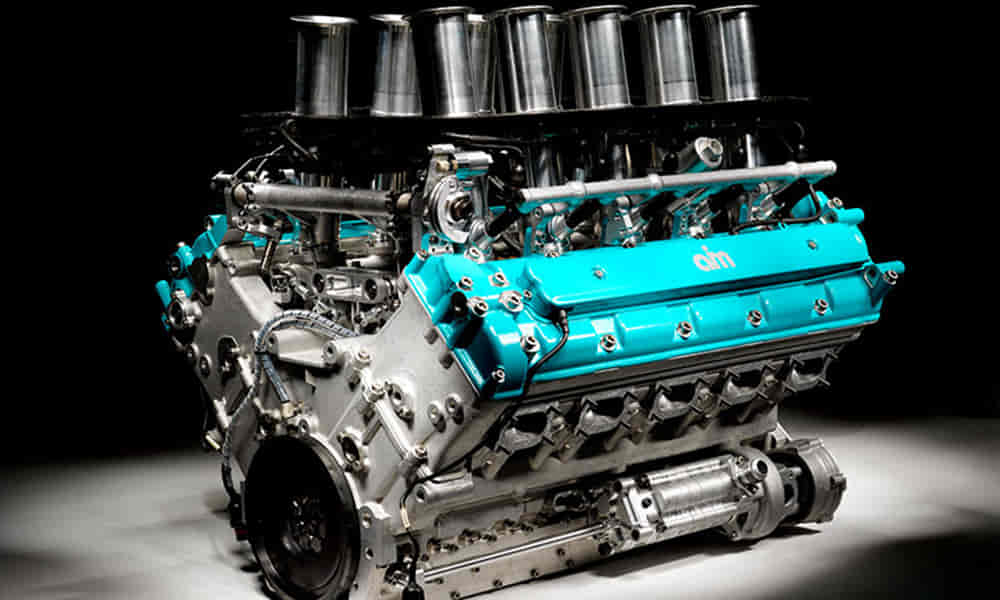
Cars with V10 engines include high-performance supercars, sports cars, luxury sedans, and even some pickup trucks and SUVs. Notable examples include the Dodge Viper, Lamborghini Gallardo, Lamborghini Huracán, Audi R8 V10, BMW M5 E60, BMW M6, Porsche Carrera GT, and Lexus LFA. V10 engines have also powered vehicles such as the Volkswagen Touareg V10 TDI, Dodge Ram SRT-10, and certain Ford Super Duty trucks. These vehicles demonstrate that a 10-cylinder engine is not limited to exotic sports cars; manufacturers have also used this configuration to deliver strong towing capability, high-speed performance, and substantial torque.
A V10 engine has 10 cylinders arranged in two banks that form a V shape. Compared with smaller engine configurations, a V10 can deliver a distinctive combination of power delivery, high-revving performance, and engine sound, although its actual performance depends on displacement, engine design, aspiration, and tuning. Some V10 engines use naturally aspirated gasoline designs, while others, such as Volkswagen’s V10 TDI, use turbocharged diesel technology.
This guide explains what cars have V10 engines, organizes notable production models by vehicle type, and distinguishes gasoline-powered V10s from diesel versions. It also examines why V10 engines have become less common in modern vehicles and what buyers should consider when shopping for a used V10-powered car or truck.
What Cars Have V10 Engines?
Several production cars have used V10 engines, particularly in the supercar, sports car, and high-performance sedan segments. Notable examples include the Dodge Viper, Lamborghini Gallardo, Lamborghini Huracán, Audi R8 V10, BMW M5 E60, BMW M6 E63/E64, Porsche Carrera GT, and Lexus LFA. Each model uses a different engine design, displacement, and tuning strategy, so V10 configuration alone does not determine a vehicle’s performance or driving characteristics. These cars instead illustrate how manufacturers have adapted 10-cylinder engines to different performance goals, from high-revving naturally aspirated power to large-displacement torque.
The Dodge Viper is one of the best-known American cars with a V10 engine. Its large-displacement gasoline engine was designed to deliver strong torque and substantial power, giving the Viper a distinctive character among American performance cars. In Europe, Lamborghini used V10 engines in the Gallardo and Huracán, while Audi offered V10 versions of the R8 sports car. These models combine a compact performance-oriented layout with high power output, making them prominent examples of modern road-going V10 sports cars.
V10 engines have also appeared in luxury performance sedans. The BMW M5 E60/E61 and BMW M6 E63/E64 use BMW’s naturally aspirated 5.0-liter S85 V10, an engine known for its high-revving design. Audi took a different approach with the S6 C6, S8 D3, and RS6 C6, which used V10 engines in executive sedans and a high-performance wagon. The RS6 C6 featured twin turbochargers, demonstrating that V10 engines can use forced induction rather than relying exclusively on natural aspiration.
Other notable examples include the Porsche Carrera GT, which uses a naturally aspirated 5.7-liter V10, and the Lexus LFA, powered by a naturally aspirated 4.8-liter V10 developed for high-performance driving. Beyond passenger cars, Volkswagen produced V10 TDI diesel versions of the Touareg SUV and Phaeton luxury sedan. Dodge also offered the Ram SRT-10 pickup with a V10 derived from the Viper’s engine family. Together, these vehicles show that V10 engines have served several automotive categories, although the exact models and configurations vary by generation and market.
Read more: What Year Duramax to Avoid
Which Supercars Have V10 Engines?
Several iconic supercars use V10 engines, including the Lamborghini Gallardo, Lamborghini Huracán, Audi R8 V10, Lexus LFA, and Porsche Carrera GT. These models demonstrate different approaches to performance engineering, from high-revving naturally aspirated engines to configurations optimized for road performance and precise power delivery. Although they share a 10-cylinder layout, their engine displacement, output, induction systems, and chassis designs differ substantially. Identifying the exact model generation is therefore important when comparing specifications or researching a particular V10 supercar.
The Lamborghini Gallardo helped establish the modern Lamborghini V10 as a defining feature of the brand’s smaller supercar line. Produced from 2003 through 2013, the Gallardo used a naturally aspirated V10 whose displacement and power output varied across versions. Lamborghini followed it with the Huracán, introduced for the 2014 model year, which continued the naturally aspirated V10 formula across multiple variants. Both models use a mid-engine layout, placing the engine behind the passenger compartment and ahead of the rear axle. This arrangement supports the weight distribution and packaging requirements of a high-performance sports car, while the naturally aspirated engine delivers power without a turbocharger or supercharger.
The Audi R8 V10 shares important engineering connections with Lamborghini’s V10-powered models. First-generation and second-generation R8 V10 variants combine a naturally aspirated V10 with a mid-engine layout, offering a different styling and driving experience from the Lamborghini models built around related engine technology. Depending on the version, the R8 was available with different power outputs and driveline configurations. Buyers comparing used examples should distinguish the early R8 V10 from later performance variants because equipment, transmission options, and specifications changed over the model’s production life.
The Lexus LFA and Porsche Carrera GT provide two additional examples of naturally aspirated V10 engineering. The Lexus LFA uses a 4.8-liter V10 developed with an emphasis on high-revving performance and rapid engine response. The Porsche Carrera GT uses a 5.7-liter V10 and was engineered as a lightweight, high-performance supercar with a manual transmission. Both vehicles are rare, specialized performance cars, and their ownership considerations extend beyond engine specifications to include parts availability, specialist servicing, and the condition of individual examples. Together, these five models show why V10 engines remain closely associated with some of the most distinctive supercars of the modern era.
Which Sedans Have V10 Engines?
Several production sedans have used V10 engines, most notably the BMW M5 E60/E61, BMW M6 E63/E64, Audi S6 C6, and Audi S8 D3. Audi also introduced a V10-powered RS6 C6, available as a high-performance sedan in some markets and as an Avant wagon in others. These vehicles show how manufacturers adapted 10-cylinder engines for high-speed road performance, combining substantial power with the comfort and practicality expected from premium passenger cars. Their V10 configurations differ in displacement, induction, and tuning, so the engine specifications should be matched to the exact model and generation.
The BMW M5 E60 sedan and E61 Touring, produced during the mid-to-late 2000s, use BMW’s naturally aspirated 5.0-liter S85 V10. The same basic engine family was installed in the BMW M6 E63 coupe and E64 convertible. Designed to deliver high-revving performance, the S85 distinguishes these BMW M models from many contemporary performance sedans that used V8 engines. Its performance character comes with ownership considerations, however, including the importance of proper maintenance and specialist knowledge. Anyone considering a used example should review service records and obtain an inspection from a workshop familiar with the S85 engine.
The Audi S6 C6 and S8 D3 use a naturally aspirated 5.2-liter V10 derived from Volkswagen Group’s V10 engine architecture and adapted for their respective applications. The S6 places the engine in a performance-oriented executive sedan, while the S8 combines V10 power with the equipment and comfort expected from Audi’s flagship luxury sedan of that period. Both models differ from the BMW S85-powered cars in their engine design and overall driving character. When comparing used vehicles, buyers should verify the model year, engine specification, maintenance history, and condition of the associated systems rather than relying solely on the V10 badge.
The Audi RS6 C6 takes a different engineering approach by using a twin-turbocharged 5.0-liter V10. Its turbochargers help produce substantial power and torque, giving the RS6 a distinct performance profile compared with naturally aspirated V10 sedans. The model was offered as a sedan in selected markets and as an Avant wagon, depending on market availability. Because forced induction adds components and thermal demands, evaluating a used RS6 requires attention to service documentation, cooling-system condition, turbocharger health, and diagnostic results. Together, these BMW and Audi models demonstrate that V10 engines have appeared in both naturally aspirated executive cars and turbocharged performance vehicles.
Which Trucks and SUVs Have V10 Engines?
Several production trucks and SUVs have used V10 engines, including the Dodge Ram 2500 and 3500 with the 8.0-liter gasoline V10, the Dodge Ram SRT-10, certain Ford Super Duty trucks, the Ford Excursion, and the Volkswagen Touareg V10 TDI. These vehicles illustrate two distinct uses of the V10 configuration. American manufacturers used large gasoline V10 engines to provide the power and torque needed for heavy-duty work or high-performance pickups, while Volkswagen developed a turbocharged diesel V10 for strong pulling power and long-distance driving. The engine design, fuel type, and intended use vary considerably across these vehicles.
The Dodge Ram 2500 and 3500 offered an 8.0-liter V10 gasoline engine during the late 1990s and early 2000s. Designed for heavy-duty pickup applications, this engine provided substantial displacement and low-speed torque for towing and hauling. Ford also offered a 6.8-liter Triton V10 in selected Super Duty pickups, chassis-cab vehicles, and the Ford Excursion SUV. These engines were developed primarily for work-oriented applications rather than the high-revving performance associated with supercars. When comparing used examples, buyers should consider towing history, cooling-system condition, maintenance records, and the condition of the transmission and drivetrain.
The Dodge Ram SRT-10 represents a different approach to the V10 pickup. Produced during the 2000s, it used an 8.3-liter V10 related to the engine in the Dodge Viper. Instead of focusing primarily on heavy-duty towing, the SRT-10 was engineered as a high-performance street truck, with acceleration and road performance as its main priorities. Its specialized engine and performance-oriented components distinguish it from conventional Ram work trucks. Buyers considering one should verify the vehicle’s maintenance history, inspect for modifications, and confirm that the engine, transmission, brakes, and suspension have been maintained appropriately.
Volkswagen took a different approach with the Touareg V10 TDI, a luxury SUV equipped with a 5.0-liter twin-turbocharged diesel V10. The diesel configuration delivered strong torque, making it suitable for a large SUV while offering a different driving character from gasoline-powered American trucks. Volkswagen also offered a V10 TDI in the Phaeton luxury sedan, although that model is not an SUV. These vehicles demonstrate that V10 engines were used beyond gasoline performance cars, including diesel-powered passenger vehicles. Because the Touareg V10 TDI uses a complex powertrain and specialized systems, buyers should carefully review service records and obtain an inspection from a technician familiar with the model before purchasing a used example.
Which Cars Have V10 Gasoline Engines and Which Have V10 Diesel Engines?
V10 engines are available in both gasoline and diesel configurations, but manufacturers have generally used them for different purposes. Gasoline V10 engines appear prominently in supercars, sports cars, performance sedans, and specialized pickups, where high power output and responsive acceleration are important. Diesel V10 engines, by contrast, have been used in large SUVs and luxury passenger vehicles where strong torque is a major advantage. Examples of gasoline V10 vehicles include the Dodge Viper, Lamborghini Gallardo, Audi R8 V10, BMW M5 E60, Porsche Carrera GT, and Lexus LFA. Notable diesel examples include the Volkswagen Touareg V10 TDI and Volkswagen Phaeton V10 TDI.
Gasoline V10 engines are particularly associated with high-performance vehicles because they can combine substantial displacement with high engine speeds and strong power output. The Lamborghini Gallardo and Huracán, for example, use naturally aspirated gasoline V10 engines designed for performance-oriented driving. The Audi R8 V10 also uses a naturally aspirated gasoline engine, while the BMW M5 E60 features BMW’s high-revving 5.0-liter S85 V10. The Dodge Viper takes a different approach with a much larger-displacement gasoline V10 designed to deliver strong torque alongside high power. These examples show that even within the gasoline category, V10 engines can have different characteristics depending on displacement, engine speed, and tuning.
Diesel V10 engines serve a different engineering purpose. The Volkswagen Touareg V10 TDI uses a 5.0-liter twin-turbocharged diesel engine, while the Volkswagen Phaeton V10 TDI uses the same general engine concept in a luxury sedan application. Diesel engines are designed to deliver strong torque at relatively low engine speeds, making them suitable for moving heavy vehicles and maintaining pulling power under load. Turbocharging further increases the amount of air available for combustion, helping the engine produce substantial torque without requiring the high operating speeds associated with some naturally aspirated gasoline performance engines.
The distinction between gasoline and diesel V10 vehicles matters when comparing performance, operating costs, and maintenance requirements. Gasoline V10 supercars typically prioritize acceleration, high-speed performance, and engine response, while diesel V10 vehicles emphasize torque and the ability to move heavier vehicles efficiently under suitable conditions. Neither fuel type automatically guarantees lower ownership costs or greater reliability. Buyers should evaluate the specific engine design, vehicle weight, fuel consumption, service history, parts availability, and repair complexity before deciding which V10-powered vehicle best fits their needs.
Why Are V10 Engines So Rare in Modern Cars?
V10 engines have become rare in modern production cars because manufacturers face increasing pressure to improve fuel efficiency, meet emissions regulations, and reduce powertrain development costs. A V10 contains 10 cylinders and requires a more complex engine structure than many smaller alternatives, including additional combustion components and associated systems. Although a V10 can deliver high power and a distinctive driving character, manufacturers must justify its cost against the performance and efficiency available from modern turbocharged V8 engines, hybrid powertrains, and other configurations. As a result, V10 engines are now concentrated in a smaller number of specialized performance applications rather than being widely used across multiple vehicle categories.
Fuel consumption and emissions requirements have played an important role in this shift. A large-displacement, naturally aspirated V10 can deliver substantial power, but its efficiency depends on engine design, vehicle weight, gearing, and driving conditions. Modern turbocharging allows manufacturers to produce high power from smaller-displacement engines, while hybrid systems can supplement combustion engines with electric torque and improve efficiency under certain operating conditions. These alternatives give automakers more flexibility when developing vehicles that must meet emissions and fuel-economy targets across different markets. The transition does not mean every smaller engine is automatically more efficient in every situation, but it gives manufacturers additional ways to balance performance with regulatory requirements.
Development and ownership costs also help explain why V10 engines are less common. Designing, manufacturing, and validating a specialized 10-cylinder engine requires significant investment, while fewer applications make it harder to spread those costs across a large production volume. A manufacturer may instead adapt an existing V8 or smaller engine family for several vehicles. For owners, a complex V10 powertrain can also mean more specialized servicing and potentially higher repair expenses, depending on the vehicle and the fault involved. These considerations are particularly relevant for rare supercars and older performance sedans, where parts availability and technician experience may vary.
The changing lineups of Lamborghini and Audi illustrate this trend. The Lamborghini Gallardo and Huracán helped establish the modern naturally aspirated V10 supercar, while the Audi R8 V10 became a prominent example of a road car built around a similar engine configuration. As these models reached the end of their production lives, manufacturers increasingly turned toward different powertrain strategies for future performance vehicles. The V10 remains significant in automotive history, but its rarity reflects a shift in engineering priorities rather than a lack of performance potential. For enthusiasts, the remaining V10-powered cars offer a distinctive combination of engine sound, character, and mechanical design that is increasingly uncommon in new vehicles.
Are V10 Engines More Powerful Than V8 Engines?
V10 engines are not automatically more powerful than V8 engines because cylinder count alone does not determine an engine’s output. Horsepower and torque depend on factors such as displacement, engine speed, air intake, fuel delivery, compression ratio, turbocharging, and engine tuning. A naturally aspirated V10 can produce substantial power through displacement and high engine speeds, while a turbocharged V8 can achieve comparable or greater output by forcing more air into its cylinders. The actual comparison therefore depends on the specific engines being evaluated, not simply whether they have 10 or eight cylinders.
The BMW M5 E60 provides an example of a high-revving naturally aspirated V10. Its 5.0-liter S85 engine was designed to deliver strong power at high engine speeds, giving the car a performance character different from that of many turbocharged engines. By comparison, modern turbocharged V8 engines can generate substantial torque at lower engine speeds because turbochargers increase the air entering the cylinders. This can improve acceleration in everyday driving and under load, although the outcome depends on the engine calibration, transmission, vehicle weight, and gearing. Neither configuration has an inherent advantage in every driving situation.
Engine design also affects how power is delivered. Some V10 engines provide a progressive rise in power as engine speed increases, while turbocharged V8 engines may deliver a stronger torque response earlier in the rev range. These are general tendencies rather than fixed rules, because turbo sizing, throttle calibration, and engine architecture can significantly change the driving experience. A high-performance V10 supercar may prioritize throttle response and high-speed performance, while a turbocharged V8 performance car may emphasize broad torque delivery and flexible acceleration.
When comparing V10 and V8 vehicles, buyers should examine verified horsepower and torque figures, the engine’s operating range, acceleration testing, fuel consumption, and maintenance requirements. Vehicle weight and transmission performance also influence real-world results. A V10 may appeal to enthusiasts because of its distinctive sound and high-revving character, while a turbocharged V8 may offer a different balance of torque, efficiency, and tuning potential. The best choice depends on the specific vehicle and the driver’s priorities, rather than the number of cylinders alone.
What Should You Know Before Buying a Used V10 Car?
Buying a used V10-powered car requires careful evaluation of its maintenance history, mechanical condition, parts availability, and expected ownership costs. Many V10 vehicles were built as specialized performance cars or low-volume luxury models, so their maintenance requirements can differ significantly from those of ordinary passenger vehicles. A BMW M5 E60, for example, uses a high-revving S85 V10 with specific maintenance considerations, while a Lamborghini Gallardo or Audi R8 V10 may require specialist knowledge and model-specific replacement parts. Before purchasing any of these vehicles, buyers should confirm the exact engine version, review service invoices, and arrange an independent inspection with a technician experienced in that model.
The engine and cooling system deserve particular attention during a pre-purchase inspection. A technician should check for fluid leaks, abnormal noises, irregular idle, warning lights, and signs of overheating or previous mechanical repairs. The inspection should also cover the transmission, drivetrain, suspension, brakes, and electronic systems because the condition of the entire vehicle affects reliability and repair expenses. For turbocharged V10 models such as the Audi RS6 C6, the inspection should include the turbocharging system and related components. For naturally aspirated performance engines, the technician should follow the manufacturer’s model-specific inspection and maintenance procedures rather than applying a generic checklist to every V10.
Parts availability and servicing costs are also important when assessing a used V10 vehicle. Rare models such as the Lexus LFA and Porsche Carrera GT have specialized components and limited production numbers, which can make sourcing certain parts more challenging. Older performance sedans and SUVs may have more accessible replacement parts, but their age and accumulated mileage can still create substantial maintenance needs. Buyers should obtain estimates for routine servicing and investigate the availability of qualified repair shops before committing to a purchase. The initial purchase price alone does not reflect the full cost of ownership.
Fuel consumption, insurance, taxes, and the intended use of the vehicle should also factor into the decision. A V10 supercar used mainly for weekend driving has different ownership demands from a V10-powered truck expected to tow or haul regularly. Review the vehicle’s documented history, verify major repairs, and compare its condition with similar examples on the market. An independent pre-purchase inspection cannot guarantee that future failures will not occur, but it can identify existing problems and help estimate likely repair needs. Choosing a used V10 based on documented condition and realistic ownership costs is more reliable than selecting one solely because of its engine configuration or performance reputation.