A VW 507 00 oil equivalent must satisfy the same Volkswagen oil requirements for your engine. The same viscosity grade alone does not make two oils equivalent. For example, a 5W 30 oil does not automatically meet VW 507 00. VW 507 00 defines an engine oil specification. In contrast, SAE grades such as 5W 30 and 0W 30 describe oil viscosity at different temperatures.
Volkswagen uses VW 507 00 mainly for specific diesel applications, including many TDI engines with diesel particulate filters. These engines need oil that protects internal components and supports the emissions system. You may also find ACEA C3, VW 504 00, and VW 505 01 when comparing oils. However, these specifications have different requirements and applications. You should not treat them as direct substitutes without checking vehicle requirements.
Start with the oil specification listed in your vehicle manual when choosing an alternative. Next, confirm the required viscosity and check the approvals on the oil container. You can also check the manufacturer’s technical data sheet for approval details. This guide explains VW 507 00 equivalents, related specifications, suitable viscosity grades, and DPF compatibility. It also shows you how to choose the correct oil for your engine.
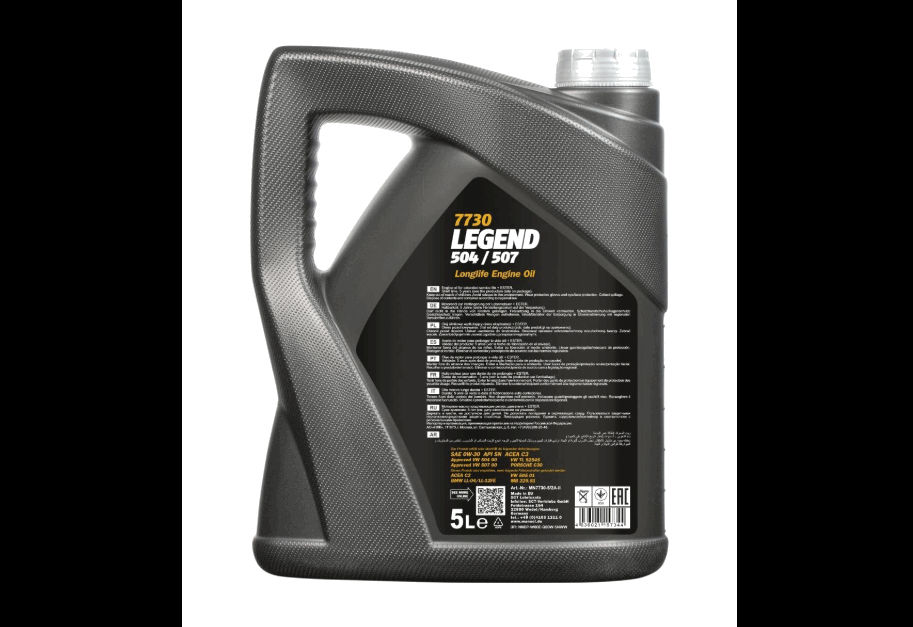
What Is the Best VW 507 00 Oil Equivalent?
The best VW 507 00 oil equivalent is an engine oil that carries the VW 507 00 approval required by your vehicle. Start with the Volkswagen specification before comparing brands or viscosity grades. An oil with the correct approval meets the performance requirements Volkswagen sets for compatible engines. This approach gives you a more reliable match than choosing oil by viscosity alone.
VW 507 00 and viscosity describe different properties of engine oil. VW 507 00 defines performance requirements for specific Volkswagen Group applications. In contrast, SAE grades such as 5W 30 and 0W 30 describe how an oil behaves at different temperatures. Therefore, two 5W 30 oils can carry different manufacturer approvals. One may meet VW 507 00 requirements while another may not.
You should also distinguish an official approval from a general compatibility claim. Oil labels and technical data sheets may use terms such as “approved,” “meets requirements,” or “recommended for.” These terms do not always indicate the same approval status. Check the product documentation and compare it with the specification in your vehicle manual.
Related standards can also create confusion. ACEA C3, VW 504 00, and VW 505 01 have connections to oils used in European vehicles. However, their presence does not automatically make an oil a direct VW 507 00 substitute. Choose the required VW specification first. Then use viscosity and vehicle requirements to narrow your oil options.
What Does the VW 507 00 Oil Specification Mean?
VW 507 00 is a Volkswagen engine oil specification for specific diesel engine applications. It defines performance requirements that an engine oil must satisfy for compatible Volkswagen Group vehicles. The specification matters because engine oil must do more than reach the correct viscosity. It must also protect engine components and work with the vehicle’s emissions system.
Volkswagen uses VW 507 00 for many diesel applications, including TDI engines with a diesel particulate filter. These engines need suitable oil because the DPF captures particulate matter from the exhaust system. The lubricant must support this emissions equipment while providing reliable engine protection. This requirement explains why viscosity alone cannot determine whether an oil suits the engine.
VW 507 00 oils also use low SAPS formulations. SAPS refers to sulfated ash, phosphorus, and sulfur. These substances relate to the additive chemistry inside engine oil. Controlling them helps limit deposits that can affect emissions equipment over time. This characteristic makes DPF compatibility an important part of the VW 507 00 specification.
Some Volkswagen applications also connect VW 507 00 with LongLife service requirements. However, the correct specification still depends on the individual vehicle and engine. Check the owner’s manual or manufacturer service information before selecting oil. This step confirms whether your engine requires VW 507 00 and helps you avoid choosing oil based only on its viscosity or diesel classification.
Is ACEA C3 Equivalent to VW 507 00?
ACEA C3 is not a direct equivalent to VW 507 00. The two standards can appear on the same engine oil, but they serve different purposes. ACEA C3 defines an industry performance category for certain engine oils. VW 507 00 sets Volkswagen specific requirements for compatible engines.
ACEA C3 covers oils designed for vehicles with certain exhaust aftertreatment systems. These oils use controlled levels of sulfated ash, phosphorus, and sulfur. This formulation makes ACEA C3 relevant when discussing DPF compatible lubricants. However, an ACEA C3 rating alone does not confirm that an oil satisfies VW 507 00 requirements.
An oil can carry both ACEA C3 and VW 507 00 on its product information. In this case, each designation communicates a separate set of performance requirements. The ACEA category describes broader European oil performance. The VW specification addresses requirements that Volkswagen defines for specific applications.
Check for VW 507 00 when your vehicle requires this specification. Do not choose an oil only because the label lists ACEA C3. First, confirm the Volkswagen specification in your owner’s manual. Then check the oil container or technical data sheet for VW 507 00. This process prevents you from treating two related standards as interchangeable when they represent different approval requirements.
Is VW 504 00 the Same as VW 507 00?
VW 504 00 and VW 507 00 are not the same specification, although many engine oils carry both approvals. Volkswagen developed each specification for different engine applications. VW 504 00 primarily applies to compatible gasoline engines. VW 507 00 primarily covers compatible diesel engines, including many applications with a diesel particulate filter.
You will often see “VW 504 00 / 507 00” on an engine oil label. This combined wording means the oil satisfies the requirements associated with both listed specifications. It does not mean Volkswagen uses two names for one standard. The manufacturer keeps separate specification numbers because each one addresses a different application.
The combined approval also explains why many oils appear in searches for a VW 507 00 oil equivalent. A product can satisfy both standards while using one viscosity grade, such as 5W 30 or 0W 30. The viscosity still does not determine the approval. The oil must satisfy the relevant Volkswagen requirements.
Choose VW 507 00 when your diesel engine specifically requires this specification. A product that lists both VW 504 00 and VW 507 00 can satisfy that requirement. However, do not assume that VW 504 00 alone automatically replaces VW 507 00. Check the exact approvals on the oil label and compare them with your vehicle manual. This method keeps the engine specification as the primary selection criterion.
Can VW 505 01 Be Used Instead of VW 507 00?
VW 505 01 should not automatically replace VW 507 00 when your vehicle requires VW 507 00. Both specifications apply to Volkswagen Group engine oils, but they do not represent the same requirements. Your engine manufacturer specification should determine which oil you use.
VW 505 01 appears in applications that require a specific oil performance level for certain Volkswagen diesel engines. VW 507 00 addresses different requirements and supports compatible applications with modern emissions control systems. These differences matter when an engine uses a diesel particulate filter or follows a specific service schedule.
Engine age can also affect the correct oil specification. Older diesel engines may use VW 505 01, while newer applications may require VW 507 00. However, you should not identify the required specification from engine age alone. The engine code, model year, market, and manufacturer’s service information can affect the correct oil requirement.
Do not choose VW 505 01 simply because the oil has a similar viscosity or works with a Volkswagen diesel engine. Check your owner’s manual first. If it specifies VW 507 00, choose an oil that carries the required VW 507 00 approval. A product can support several Volkswagen specifications, but the label must clearly identify the specification required by your vehicle.
This distinction also matters when you search for a VW 507 00 oil equivalent. A related Volkswagen specification does not automatically qualify as a replacement. The required manufacturer approval remains the primary selection criterion.
Can You Use 5W 30 or 0W 30 Instead of VW 507 00 Oil?
You can use 5W 30 or 0W 30 for a VW 507 00 application only when the specific oil also meets the required VW specification. SAE viscosity and VW 507 00 describe different properties. The viscosity grade tells you how the oil flows at different temperatures. The VW specification identifies the performance requirements for compatible Volkswagen engines.
A 5W 30 oil does not automatically meet VW 507 00. The same rule applies to 0W 30 oil. Two products can share the same SAE grade while carrying different manufacturer approvals. One product may suit a VW 507 00 application, while another may not meet the required specification.
This distinction matters because drivers often search for a replacement by viscosity. However, viscosity only forms part of the oil selection process. You must first identify the specification required by the vehicle. Then check whether the product carries that approval. After that, confirm that its viscosity matches the vehicle manufacturer’s requirements.
Is All 5W 30 Oil VW 507 00 Approved?
No, not all 5W 30 oil carries VW 507 00 approval. Manufacturers produce 5W 30 oils for many different engine requirements. A bottle may list several industry standards or manufacturer approvals without including VW 507 00.
Check the oil label and technical data sheet for the exact VW specification. Do not treat “5W 30” as proof of compatibility. The same approach applies when comparing 0W 30 products.
Therefore, the correct selection is not simply 5W 30 or 0W 30. Choose the viscosity required by your vehicle and verify the VW 507 00 approval on the specific oil product.
Why Does VW 507 00 Matter for Diesel Engines With a DPF?
VW 507 00 matters for compatible diesel engines with a DPF because the engine oil must meet the manufacturer’s requirements for both engine operation and emissions equipment. Volkswagen states that many of its diesel models use diesel particulate filters. The company also tells owners to compare the VW oil standard in the owner’s manual with the specification shown on the oil bottle.
A diesel particulate filter traps soot from the engine’s exhaust. The filter helps reduce particulate emissions as the vehicle operates. Volkswagen describes the DPF as an important component of its diesel emissions system because it captures fine soot particles produced during diesel combustion.
Engine oil also interacts with the emissions system through its additive chemistry and combustion residues. This relationship makes the correct oil specification important for vehicles that use particulate filters. Volkswagen’s LongLife III FE oil, for example, carries VW 504 00 and 507 00 approvals and uses a reduced ash formulation. Volkswagen also states that the oil suits approved engines with diesel particulate filters.
This does not mean every diesel engine with a DPF requires VW 507 00. The vehicle manufacturer determines the required oil specification for each engine application. Check the owner’s manual before selecting oil. Then verify the required VW approval on the product label or technical documentation. A matching viscosity alone does not confirm DPF or engine compatibility.
How Can You Tell If an Oil Meets VW 507 00?
You can tell whether an oil meets VW 507 00 by checking the exact Volkswagen specification on the product label or technical data sheet. Start with the vehicle owner’s manual. It tells you which oil specification and viscosity your engine requires. Use that information as the reference point before you compare oil products.
Next, inspect the oil container. Look for a clear reference to VW 507 00 in the manufacturer’s approvals or specifications. Do not rely on the product name, SAE grade, or general claims about European vehicles. A 5W 30 label does not confirm VW 507 00 approval by itself.
Pay attention to the wording used by the oil manufacturer. Terms such as “approved,” “meets requirements,” “suitable for,” and “recommended for” can communicate different levels of compatibility. The product’s technical data sheet can provide more detailed information when the bottle does not clearly explain the approval.
You should also confirm the viscosity after you verify the required specification. For example, your vehicle may require VW 507 00 together with a specific SAE grade. In that case, you need a product that satisfies both requirements. Neither the correct viscosity nor a related industry standard can replace the required Volkswagen specification on its own.
Use the owner’s manual and product documentation together. This approach gives you a reliable way to verify a VW 507 00 oil equivalent before an oil change and reduces the risk of choosing a product based only on marketing claims.
How Do You Choose the Correct VW 507 00 Oil for Your Car?
Choose the correct VW 507 00 oil by matching your vehicle requirement with the required Volkswagen approval and SAE viscosity. Start with the owner’s manual or manufacturer service information. These sources identify the oil specification that applies to your engine. Do not start with a brand or a viscosity grade.
Next, confirm the Volkswagen approval on the oil product. Look for VW 507 00 on the bottle or technical data sheet. This step confirms that the product targets the required manufacturer specification. Then check the SAE viscosity listed by the vehicle manufacturer. A suitable product should satisfy both requirements when the application specifies both.
Vehicle details also matter. The correct oil can depend on the engine, model year, market, and service requirements. Two Volkswagen vehicles can use different oil specifications even when they share the same fuel type. You should therefore avoid selecting oil from the vehicle badge or engine fuel type alone.
Operating conditions can also influence your final product choice. Consider the climate, driving pattern, service interval, and manufacturer recommendations after you establish the required specification. These factors help you choose between suitable products without replacing the primary approval requirement.
Use this selection order: vehicle requirement, VW approval, SAE viscosity, operating conditions, then product choice. This method keeps the manufacturer’s specification at the center of the decision. It also prevents common mistakes, such as treating 5W 30 as a VW 507 00 equivalent or assuming that every related Volkswagen specification provides the same compatibility.
Conclusion
The best VW 507 00 oil equivalent is an oil that meets the Volkswagen specification required by your vehicle. SAE viscosity alone does not establish equivalence. A 5W 30 or 0W 30 oil only fits the requirement when the specific product also carries the necessary approval.
VW 504 00, VW 505 01, and ACEA C3 can appear in related oil applications, but they do not automatically replace VW 507 00. The same principle applies to diesel engines with a DPF. The correct oil must match the requirements of the specific engine and emissions system.
Choosing the right oil starts with your owner’s manual or manufacturer service information. Confirm the required VW specification first. Then check the oil label or technical data sheet for the exact approval. Finally, verify the required SAE viscosity and other vehicle requirements.
When your vehicle requires VW 507 00, prioritize the exact manufacturer approval over viscosity, brand, or general compatibility claims. This approach gives you a clear basis for selecting an appropriate engine oil and avoids treating similar oil specifications as automatic equivalents.