The “Volvo Anti Skid Service Required” warning often appears without notice. Many drivers see it while driving normally and feel confused or worried. This message directly relates to the vehicle stability and traction systems, so you should not ignore it.
Volvo designs its safety systems to monitor road grip, wheel movement, and braking performance in real time. When the system detects abnormal data, it triggers a warning on the dashboard. The goal is to protect the driver by alerting them early.
This warning does not always mean a serious failure. In many cases, a small sensor issue or a weak battery can trigger it. However, the same message can also appear when important components such as the ABS system or steering sensors fail. This makes diagnosis important before replacing any parts.
Drivers often misinterpret the warning and continue driving without checking the system. This can increase safety risks, especially on wet or slippery roads. A proper inspection helps identify the root cause and prevents further damage.
This guide explains the full meaning of the Volvo Anti Skid Service Required warning. It covers the system logic, common causes, symptoms, repair methods, and cost expectations. You will also learn how to prevent the issue from returning in the future.
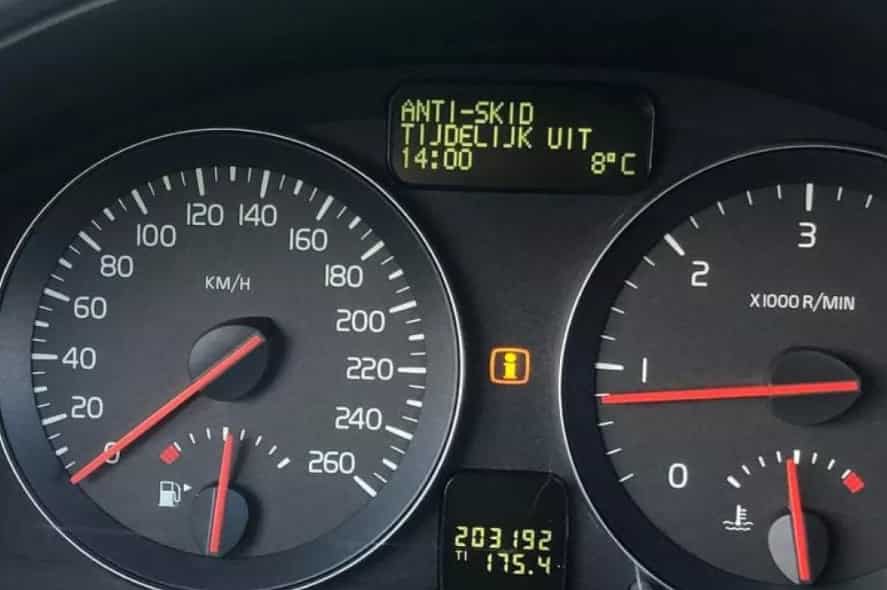
What Does Volvo Anti-Skid Service Required Mean?
The “Volvo Anti Skid Service Required” message indicates a fault in the vehicle stability system. This system controls traction, braking balance, and wheel grip during driving. When the system detects an error, it disables or limits certain safety functions and alerts the driver.
Volvo uses an integrated safety system that combines Electronic Stability Control, Traction Control, and ABS. These systems work together to keep the car stable during acceleration, braking, and cornering. When one part fails, the entire system may show a warning message.
The anti skid system constantly reads data from multiple sensors. These include wheel speed sensors, steering angle sensors, and brake pressure sensors. The system compares this data in real time. If it detects inconsistent signals, it triggers the warning message on the dashboard.
In some cases, the system still allows normal driving but reduces stability support. This means the car may not correct skidding or wheel slip as effectively. In other cases, the system may disable traction control completely to prevent further errors.
Drivers often see this warning alongside ABS or traction control lights. This combination usually confirms that the issue comes from a shared sensor or control module rather than a single isolated fault.
Understanding this message helps drivers react correctly. It signals a technical fault that requires diagnosis, not just a temporary alert that can be ignored.
Common Causes of Volvo Anti Skid Service Required
The Volvo Anti Skid Service Required warning appears when the stability system detects abnormal signals from key components. This system relies on accurate data from multiple sensors and control units. When one part fails or sends incorrect information, the system activates the warning to protect driving safety.
One of the most common causes is a faulty wheel speed sensor. This sensor measures the rotation speed of each wheel and sends real time data to the control module. Dirt, moisture, or corrosion can damage the sensor and lead to incorrect readings. When this happens, the system cannot calculate traction correctly and triggers the warning.
A defective ABS sensor can also cause the issue. The ABS system works closely with the anti skid function to control braking pressure during sudden stops. When the ABS sensor fails, the system loses braking stability data and activates multiple dashboard warnings at the same time.
The steering angle sensor is another important factor. It tracks the position of the steering wheel and helps the system understand driver intention. If this sensor loses calibration, especially after battery replacement or wheel alignment, the system receives conflicting data and shows the warning message.
Low battery voltage can also trigger the problem. Volvo stability systems require stable electrical power to operate correctly. When voltage drops, sensors and modules may behave unpredictably and generate false alerts.
In some cases, the issue comes from the ABS control module or damaged wiring. Electrical faults, loose connectors, or corrosion can interrupt communication between system components. This prevents the system from processing accurate data and leads to the Anti Skid Service Required warning.
Symptoms Associated With the Volvo Anti Skid Service Required Warning
When the Volvo Anti Skid Service Required warning appears, it often comes with other visible signs in the vehicle. These symptoms help identify that the stability system is not working as intended. In many cases, more than one symptom appears at the same time because the system components are closely connected.
One of the most common signs is the ABS warning light. This light appears when the anti lock braking system detects a fault. It often shows together with the anti skid message because both systems share sensors and control modules.
The traction control light may also turn on. This indicates that the system has stopped managing wheel slip effectively. As a result, the vehicle may lose grip more easily on wet or slippery roads.
Some drivers also notice reduced stability during cornering. The car may feel less controlled when turning at higher speeds. This happens because the system no longer corrects wheel imbalance or skidding behavior.
In certain cases, cruise control may stop working. The stability system and cruise control share data from wheel speed sensors. When the system detects an error, it disables cruise control as a safety measure.
Another possible symptom is inconsistent engine response. The vehicle may reduce power output to prevent further instability. This is a protective mode designed to maintain basic driving safety.
These symptoms do not always appear in every case. However, when combined with the Volvo Anti Skid Service Required message, they strongly indicate a fault in the stability or braking system that requires diagnosis.
Is It Safe to Drive With Volvo Anti Skid Service Required
When the Volvo Anti Skid Service Required warning appears, the vehicle may still drive normally in many cases. However, this does not mean the car is fully safe. The warning indicates that part of the stability system has stopped working or is operating with limited function.
In some situations, you can continue driving for a short distance. This is usually the case when the issue comes from a weak battery or a minor sensor fault. The vehicle may still brake and accelerate normally, but it will lose electronic stability support. This means the system will not help correct skidding or wheel slip.
The risk becomes higher in poor road conditions. Wet roads, ice, or sharp turns can expose the weakness of the system. Without traction control or stability assistance, the driver must handle all corrections manually. This increases the chance of losing control, especially at higher speeds.
In more serious cases, driving becomes unsafe. If the ABS system or control module fails, the vehicle may lose important braking assistance. This can affect stopping distance and braking balance. In this situation, you should avoid driving and seek immediate repair.
The safest approach is to treat the warning as an early alert. You should continue driving only if necessary and at reduced speed. You should also avoid aggressive acceleration and hard braking.
The best action is to diagnose the issue as soon as possible. A quick inspection can identify whether the problem is minor or related to a critical safety component.
How to Diagnose Volvo Anti Skid Service Required
To diagnose the Volvo Anti Skid Service Required warning correctly, you need a step by step approach. The system depends on multiple sensors and control units, so one simple scan is not always enough to find the root cause.
The first step is to read diagnostic trouble codes using an OBD2 scanner. Volvo vehicles store specific error codes in the ABS and stability control modules. These codes help identify which component triggered the warning.
Next, you should scan both the ABS module and the stability control system. In many cases, the issue does not come from the engine control unit. Instead, it comes from safety related modules that standard scans may miss.
After that, inspect the wheel speed sensors. These sensors are common failure points. You should check for dirt, corrosion, or physical damage. Even a small amount of debris can affect signal accuracy.
Battery voltage should also be tested. Low voltage can create false warnings across multiple systems. A healthy battery should maintain stable voltage during startup and idle conditions.
Wiring and connectors must also be checked. Loose or damaged wiring can interrupt communication between sensors and control modules. This often causes intermittent warnings that appear and disappear.
Finally, you should inspect brake system components. Brake pressure sensors and fluid levels can also affect system performance. If any abnormality is found, it can directly trigger the anti skid warning.
A complete diagnosis helps avoid unnecessary part replacement. It also ensures that the real root cause is fixed instead of only clearing the warning temporarily.
How to Fix Volvo Anti Skid Service Required
Fixing the Volvo Anti Skid Service Required warning depends on identifying the exact cause first. Each component in the system has a specific role, so the repair method must match the fault.
If the issue comes from a faulty wheel speed sensor, you need to replace the damaged sensor. In some cases, cleaning the sensor area can restore normal function if dirt or corrosion is the main problem. This is one of the most common and simplest fixes.
When the ABS sensor fails, replacement is usually required. The sensor cannot always be repaired, especially if it has internal damage or signal loss. After replacement, the system may need recalibration.
If the steering angle sensor is misaligned, recalibration is necessary. This often happens after battery replacement or wheel alignment. A diagnostic tool can reset the sensor and restore correct data input.
For wiring problems, you need to repair or replace damaged cables and connectors. Corrosion or loose connections can interrupt signals between system components. Fixing the wiring often solves intermittent warning issues.
If the ABS control module fails, replacement or software repair may be required. In some cases, updating the vehicle software can restore communication between modules. Severe hardware failure usually requires full module replacement.
A weak battery should be replaced or fully charged. Stable voltage is essential for all stability and braking systems. After fixing the battery, you may need to reset system errors.
Once repairs are completed, a full system scan should be performed. This ensures the warning is cleared and the system is working correctly again.
Volvo Anti Skid Service Required Repair Costs
The repair cost for the Volvo Anti Skid Service Required warning can vary widely depending on the root cause of the problem. Some issues are simple and affordable to fix, while others involve expensive electronic components.
If the problem comes from a wheel speed sensor, the cost is usually low to moderate. The sensor itself is not expensive, but labor costs can increase the total price depending on the workshop. This is one of the most common and cost effective repairs.
ABS sensor replacement is slightly more expensive. The sensor price is higher, and installation may require additional calibration. However, it is still considered a standard repair in most Volvo service centers.
Steering angle sensor calibration or replacement can cost more depending on whether the issue is software related or hardware related. A simple recalibration is cheaper, while full replacement increases the cost significantly.
If the ABS control module fails, the repair becomes expensive. This component is one of the most critical parts of the system. Replacement often requires both parts and software programming, which increases total cost.
Wiring repairs are usually moderate in cost. Small fixes like connector cleaning are cheap, but replacing damaged harnesses can be more expensive due to labor time.
Battery replacement is one of the simplest and most affordable fixes. However, if low voltage has caused multiple system errors, additional diagnostic work may be required.
Overall, the total repair cost depends on how early the issue is diagnosed. Early detection usually prevents expensive component failures.
Volvo Models Commonly Affected by Anti Skid Service Required
The Volvo Anti Skid Service Required warning can appear on many Volvo models because they share similar stability and braking systems. The issue is not limited to one specific vehicle but often depends on sensor wear, electrical conditions, and maintenance history.
The Volvo XC90 is one of the models where this warning appears more frequently. This SUV uses a complex stability system due to its size and weight. When sensors or modules start to fail, the system quickly detects inconsistencies and triggers the warning.
The Volvo XC60 also commonly experiences this issue. As a mid size SUV, it relies heavily on wheel speed sensors and steering angle data to maintain balance. Any disruption in these signals can activate the warning message.
The Volvo S60 sedan can also show the anti skid warning, especially in older versions. Electrical wear and battery aging are common factors that affect system stability in this model.
The Volvo V70 and XC70 are older models that may experience more frequent sensor or wiring issues. Over time, exposure to moisture and road conditions can affect electrical components and trigger stability system warnings.
Although these models share similar systems, the root cause is usually not model specific. Instead, it often comes from common issues like sensor failure, weak battery voltage, or wiring damage.
Understanding how these models behave helps drivers identify the problem faster. It also supports more accurate diagnosis and prevents unnecessary part replacement.
How to Prevent Volvo Anti Skid System Problems
Preventing the Volvo Anti Skid Service Required warning starts with regular maintenance of key electronic and braking components. The stability system depends on accurate data, so even small issues can trigger warnings if the vehicle is not properly maintained.
One of the most important steps is maintaining battery health. A weak or unstable battery often causes false system alerts. You should test the battery regularly and replace it when performance drops. A stable power supply helps all control modules work correctly.
Regular brake system inspections also help prevent problems. Brake fluid should stay at the correct level and in good condition. Worn brake components can affect pressure readings and trigger stability system errors.
Wheel speed sensors should be kept clean and free from dirt or corrosion. These sensors are exposed to road conditions, so they can easily collect debris. Cleaning them during routine service helps maintain accurate readings.
Electrical connections should also be checked during maintenance. Loose or corroded wiring can interrupt communication between sensors and control modules. Fixing small wiring issues early prevents larger system failures.
Software updates from Volvo service centers can also improve system stability. These updates help the vehicle manage sensor data more accurately and reduce false warnings.
Routine diagnostic scans are also useful. Early detection of small faults helps prevent expensive repairs later. A simple scan can identify issues before they affect the full stability system.
Consistent maintenance is the most effective way to avoid Anti Skid warnings. It keeps the system stable and ensures safe driving performance in all conditions.
Frequently Asked Questions
Can a weak battery cause the Volvo Anti Skid Service Required warning
Yes, a weak battery can trigger this warning. Volvo stability systems depend on stable voltage. When voltage drops, sensors and control modules may send incorrect signals and activate the warning.
Can I reset the warning myself
You can sometimes reset the warning by restarting the vehicle or replacing a weak battery. However, if the root cause still exists, the warning will return. A proper diagnostic scan gives a permanent solution.
Will the warning disappear automatically
In some cases, the warning may disappear if the issue is temporary, such as low voltage. However, most faults require repair before the system clears the message completely.
Is it safe to ignore the warning
No, you should not ignore it. The warning indicates reduced stability support. This increases risk during braking or driving on slippery roads.
How long does it take to fix the issue
Repair time depends on the cause. Simple sensor cleaning or replacement may take a short time. More complex issues like ABS module replacement take longer due to calibration and programming.
Conclusion
The Volvo Anti Skid Service Required warning is an important safety alert. It shows that the stability system has detected a problem and may not function at full capacity. While some causes are minor, others can affect braking and vehicle control.
Understanding the root cause helps you avoid unnecessary repairs and reduce costs. Early diagnosis is always the best approach. It prevents small issues from turning into major system failures.
Regular maintenance, battery checks, and sensor inspections help keep the system stable. When the warning appears, you should act quickly and ensure the vehicle is checked by proper diagnostic tools.
Keeping your Volvo stability system in good condition ensures safer driving in all road conditions and protects both the vehicle and the driver.