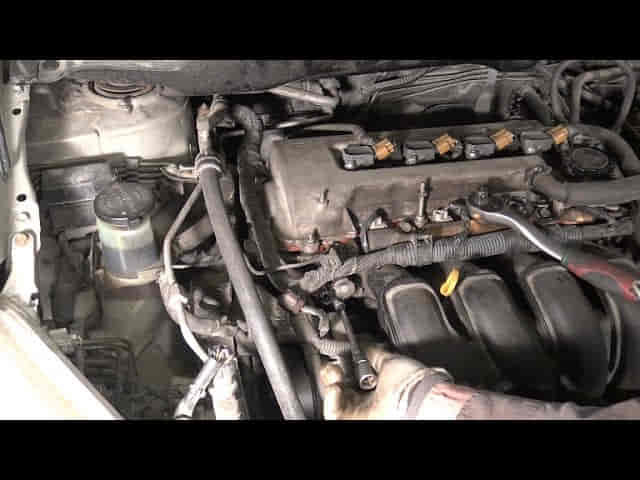
Seeing the Check Engine Light appear on a Toyota can be frustrating, especially when a diagnostic scan returns Toyota P1656 without clearly identifying what has failed. Unlike generic OBD-II codes that have broadly standardized definitions, P1656 is a manufacturer-specific diagnostic trouble code, which means its exact meaning and diagnostic strategy can depend on the Toyota model, engine, model year, and control system involved. Understanding that distinction is essential because assuming that P1656 always points to the same component can lead to unnecessary parts replacement and higher repair costs.
When Toyota P1656 is stored, the fault may be associated with an electrical circuit, control signal, sensor or actuator, wiring harness, connector, power supply, ground circuit, or another part of the engine management system depending on the vehicle application. The engine control module monitors these systems continuously and uses electrical feedback and operating data to determine whether the commanded function is working within the expected range. A problem anywhere along this communication and control path can potentially trigger a diagnostic code.
For Toyota owners, the most important question is therefore not simply what part should be replaced when P1656 appears. The more useful question is why the control system detected the fault in the first place. A damaged wire, corroded connector, unstable voltage supply, failed component, or control-module issue can produce very different repair requirements even when the same diagnostic code is stored.
This complete Toyota P1656 guide explains what the code means, the symptoms it can cause, its most likely causes, how technicians diagnose the underlying fault, available repair options, expected repair costs, driving considerations, and ways to prevent the problem from returning. By understanding the relationship between the diagnostic code and the vehicle’s electrical and engine control systems, you can approach Toyota P1656 with a more accurate diagnosis instead of relying on guesswork or unnecessary component replacement.
What Does the Toyota P1656 Code Mean?
Toyota P1656 is a manufacturer-specific diagnostic trouble code that indicates the vehicle’s control system has detected an abnormal condition associated with a monitored engine control function. Unlike universal OBD-II codes, the precise definition of P1656 is not necessarily identical across every Toyota model, engine family, and model year. This is an important distinction because a generic description found in a scan tool database may not provide enough information to identify the actual failed component or circuit on a particular vehicle.
The engine control module, or ECM, constantly monitors electrical signals and operating conditions throughout the engine management system. Depending on the Toyota application, these monitored functions can involve a sensor, actuator, control circuit, wiring harness, connector, power supply, ground circuit, or communication between control components. When the ECM detects a signal or operating condition that falls outside its expected parameters, it can store P1656 and illuminate the Check Engine Light.
The code itself should therefore be viewed as a diagnostic starting point rather than a direct parts replacement instruction. A stored P1656 does not automatically prove that the ECM has failed, nor does it necessarily mean that a particular sensor or actuator must be replaced. Electrical resistance, voltage supply, circuit continuity, connector condition, and component operation may all need to be verified before the underlying cause can be identified.
This is particularly important when P1656 appears together with additional diagnostic trouble codes. Related codes can reveal whether the fault is isolated to one circuit or part of a broader electrical or engine management problem. For example, abnormal system voltage, communication faults, sensor-related codes, or actuator-related codes may provide additional context that changes the diagnostic direction.
Another important factor is the condition of the vehicle’s electrical system. Weak battery voltage, charging-system irregularities, corroded grounds, damaged wiring, or poor terminal contact can create abnormal signals that confuse the control system. In some situations, the original problem may be relatively simple even though the diagnostic code appears to indicate a more complex control-system fault.
For that reason, an accurate Toyota P1656 diagnosis should begin with the exact vehicle identification and factory-specific diagnostic information. The model year, model, engine, transmission configuration, stored codes, freeze-frame data, and current symptoms can all influence the correct diagnostic path. Once those details are established, the technician can determine which circuit or component Toyota intended the P1656 code to identify and test that system systematically.
Understanding this distinction helps prevent one of the most expensive mistakes in diagnostic repair: treating a manufacturer-specific code as if it were a universal parts-failure code. Toyota P1656 identifies a condition detected by the vehicle’s control system, but the diagnostic process must determine the physical cause behind that condition before an effective repair can be selected.
Common Symptoms of Toyota P1656
The symptoms associated with Toyota P1656 can vary considerably because the code is manufacturer-specific and its exact monitored function depends on the vehicle application. Some Toyota vehicles may display the Check Engine Light while continuing to drive almost normally, whereas others may develop noticeable engine or drivability problems. The severity of the symptoms often depends on whether the underlying fault affects an essential engine control function or only an electrical circuit that the ECM can compensate for temporarily.
The Check Engine Light is usually the most obvious indication that a diagnostic fault has been detected. The light may appear continuously after the ECM recognizes the abnormal condition, or the code may be stored as a pending fault before the malfunction becomes consistent enough to trigger a confirmed diagnostic trouble code. This means a Toyota can sometimes have P1656 stored even when the driver has not yet noticed a major change in engine performance.
Engine hesitation or reduced throttle response can occur when the affected control system influences engine operation. The vehicle may feel less responsive during acceleration, particularly when the engine is under load or when operating conditions require precise electronic control. In some cases, the driver may notice that the engine does not respond as smoothly as it normally does when accelerating from a stop or when climbing a hill.
Rough or unstable engine operation is another possible symptom when P1656 is associated with a system that directly affects combustion or engine management. The engine may feel uneven at idle, develop intermittent surging, or operate less smoothly than usual. However, these symptoms are not specific to P1656 and can also result from ignition, fuel, air intake, sensor, or mechanical engine problems. Their presence should therefore be considered alongside scan-tool data and other diagnostic codes.
Starting problems may occur if the fault affects a control function that the ECM considers important for proper engine operation. Depending on the specific Toyota application, this could range from extended cranking to an intermittent no-start condition. If the vehicle starts normally but develops symptoms after warming up, an intermittent electrical fault, temperature-sensitive connection, or control-system problem may need to be investigated.
Changes in fuel economy can also accompany certain engine management faults. When the ECM receives an incorrect signal or cannot control a monitored function as expected, it may adjust engine operation using substitute values or protective strategies. The resulting changes in fuel delivery, ignition control, or other operating parameters can sometimes increase fuel consumption. A noticeable decrease in fuel economy alone, however, is not enough to confirm P1656.
In more serious situations, the vehicle may enter a reduced-performance or fail-safe strategy. The purpose of this strategy is to protect the engine, emissions system, or other components when the ECM determines that normal control cannot be maintained. If the Toyota experiences substantial power loss, repeated stalling, severe running problems, or multiple warning indicators, continued driving should be avoided until the vehicle has been properly diagnosed.
It is also possible for Toyota P1656 to produce few or no noticeable drivability symptoms. Modern engine control systems can compensate for certain faults and maintain acceptable operation even when a monitored circuit is not functioning perfectly. This can make the problem seem unimportant, but an apparently normal driving experience does not prove that the electrical or control system is healthy.
For this reason, the combination of symptoms and diagnostic data is more valuable than any single symptom. When P1656 is detected, the most useful next step is to identify the exact Toyota application, record all stored and pending codes, review freeze-frame information, and determine which system the ECM is monitoring. That approach provides a much stronger foundation for diagnosis than attempting to identify the failed component from symptoms alone.
Common Causes of Toyota P1656
The causes of Toyota P1656 can vary depending on the specific Toyota model, engine, model year, and control system associated with the code. Because P1656 is a manufacturer-specific diagnostic trouble code, the most reliable diagnosis begins by confirming the exact factory definition for the vehicle rather than assuming that every Toyota uses the same component or circuit. Once the affected system has been identified, the investigation can focus on the electrical, electronic, and mechanical conditions capable of producing the abnormal signal detected by the ECM.
A wiring fault is one of the first areas that deserves attention when an engine control code is present. Wiring harnesses inside the engine compartment are exposed to heat, vibration, moisture, oil, and repeated movement. Over time, insulation can become brittle, wires can break internally, or a conductor can develop excessive resistance. An open circuit, short circuit, or intermittent connection may prevent the ECM from receiving or sending the expected electrical signal, causing the monitored system to operate outside its normal parameters.
Connector problems can produce similar symptoms. A terminal that is loose, corroded, bent, contaminated, or not fully seated may create an unstable electrical connection. The problem can sometimes appear only when the engine is vibrating, when the wiring becomes hot, or when moisture reaches the connector. This makes intermittent connector faults particularly difficult to identify through a simple visual inspection.
Power supply and ground problems should also be considered. Engine control components depend on stable voltage and reliable ground connections. A weak battery, charging-system problem, damaged ground strap, corroded ground point, or unstable power supply can alter electrical signals throughout the vehicle. In some cases, the resulting diagnostic code may appear to point toward a particular control circuit when the underlying problem is actually a broader electrical-system condition.
A failed sensor or actuator can also be responsible when the component monitored by P1656 is no longer producing the expected response. Internal electrical failure, excessive resistance, shorting, mechanical binding, or degradation caused by heat and contamination can change the signal received by the ECM. However, the component should be tested against the vehicle-specific specifications before replacement because a circuit fault can create the same apparent symptom.
Environmental contamination is another possible contributor. Moisture, oil, dirt, and corrosion around electrical connections can interfere with signal integrity. Engine-bay contamination can become especially important when a fault appears intermittently or returns shortly after a component has been replaced.
In less common situations, the ECM or another control module may itself be involved. A control module should generally not be considered the first suspect because wiring and component faults are more practical causes to eliminate. Proper testing should establish that the power supply, grounds, communication circuits, and external components are functioning correctly before a control module is condemned.
Finally, P1656 may sometimes appear alongside another underlying problem rather than representing an isolated failure. Additional diagnostic trouble codes, abnormal battery voltage, recent electrical work, aftermarket equipment, or previous repairs can provide important context. Looking at the complete fault pattern helps determine whether P1656 is the primary problem or a secondary result of another electrical or engine management issue.
The central principle is that Toyota P1656 should be diagnosed according to its vehicle-specific definition and system architecture. The code identifies an abnormal condition detected by the control system, but the actual repair depends on determining whether that condition originates from wiring, connectors, power or ground circuits, a sensor or actuator, communication, or the control module itself.
Read more: Toyota P0010
How to Diagnose Toyota P1656
Diagnosing Toyota P1656 correctly starts with identifying exactly what the code means for the specific Toyota being serviced. Because P1656 is a manufacturer-specific code, a generic scan tool description may not contain enough information to determine the affected circuit or component. The model year, engine, vehicle configuration, and factory diagnostic information should therefore be confirmed before electrical or component testing begins. This first step prevents a common mistake in OBD diagnosis, which is applying a generic definition to a vehicle-specific fault.
Once the correct definition has been established, the technician should scan the vehicle for all stored, pending, and history diagnostic trouble codes. P1656 should not be evaluated in isolation because another code may reveal the underlying electrical or control-system problem. Freeze-frame data can also provide useful information about engine speed, coolant temperature, battery voltage, load, and other operating conditions present when the ECM detected the fault. Comparing these conditions with the symptoms reported by the driver can help determine whether the problem is continuous or intermittent.
The next stage is a careful visual inspection of the relevant wiring harness, connectors, terminals, sensors, actuators, grounds, and power-supply circuits. The inspection should focus on areas exposed to engine heat, vibration, moisture, oil, and mechanical movement. Loose terminals, corrosion, damaged insulation, broken wires, or evidence of previous repairs can provide an immediate diagnostic direction. However, a circuit that looks normal should not automatically be considered functional because internal wire damage and excessive resistance may not be visible.
Electrical testing should then be performed using the vehicle-specific wiring diagram and technical specifications. Depending on the system involved, this can include checking supply voltage, ground integrity, reference voltage, signal voltage, resistance, continuity, and unwanted shorts to power or ground. Voltage-drop testing can be particularly useful when a connection appears intact but cannot carry the required electrical load. The exact expected values must come from the appropriate Toyota service information rather than a universal specification.
If the wiring and power supply pass testing, the affected sensor, actuator, or control component should be evaluated according to its specified operating procedure. A component that produces a plausible reading at rest may still fail under actual operating conditions, so dynamic testing or scan-tool monitoring may be necessary. The technician should compare commanded operation with actual feedback whenever the system provides that information.
If all external circuits and components test correctly, attention can move toward the ECM or related control module. Before condemning a control module, its power, grounds, communication lines, and input and output circuits should be verified. Module replacement should be considered only when the diagnostic evidence supports it because unnecessary control-module replacement can be expensive and may require programming or initialization.
After the identified fault has been repaired, the diagnostic codes should be cleared according to the appropriate procedure and the vehicle should be operated under conditions similar to those recorded in the original freeze-frame data. The system should then be rescanned to confirm that P1656 does not return. A repair is not fully verified simply because the Check Engine Light turns off after the code is cleared.
The most reliable Toyota P1656 diagnosis is therefore a process of elimination based on vehicle-specific information and measured evidence. By confirming the code definition, examining related DTCs, testing the electrical circuit, verifying component operation, and evaluating the control system only when justified, a technician can reduce unnecessary parts replacement and identify the actual source of the fault more efficiently.
How to Fix Toyota P1656
Fixing Toyota P1656 begins with correcting the condition that caused the ECM to detect the fault. Because P1656 is a manufacturer-specific diagnostic code, there is no single repair that applies to every Toyota. The appropriate solution depends on the exact system identified by the factory diagnostic definition and the results of electrical and component testing.
If the diagnosis confirms damaged wiring, the affected circuit should be repaired using an appropriate automotive-grade repair method. A temporary splice or poorly secured connection may restore operation briefly but can allow the fault to return because engine-compartment wiring is exposed to heat, vibration, moisture, and oil. After repairing the harness, the circuit should be tested again to confirm that voltage, resistance, continuity, and signal behavior are within the applicable specifications.
When a connector or terminal is responsible, the repair may involve cleaning corrosion, restoring terminal tension, repairing a damaged terminal, or replacing the connector housing when necessary. Simply disconnecting and reconnecting a connector may temporarily improve contact without correcting the underlying problem. The connection should therefore be inspected carefully whenever P1656 disappears and then returns intermittently.
If testing identifies a defective sensor or actuator associated with the code, replacing the component may resolve the fault. The replacement should be appropriate for the specific Toyota application, and the circuit should be verified before installation. A new component cannot compensate for an open wire, poor ground, unstable power supply, or damaged connector.
Power and ground problems require a different repair strategy. If testing reveals low system voltage, a weak battery, charging-system irregularity, or excessive voltage drop across a ground connection, those electrical problems should be corrected first. Control modules and engine-management components require stable electrical conditions, and repairing the monitored circuit without correcting an unstable power source can allow P1656 to return.
If the affected component and wiring are functioning correctly but the control module does not provide or interpret the expected signal, further testing of the ECM and communication circuits may be necessary. ECM replacement should remain a carefully verified repair rather than an assumption based solely on the stored code. Depending on the Toyota application, a replacement control module may require programming, initialization, or other setup procedures before the vehicle can operate correctly.
After the repair has been completed, the stored code should be cleared and the vehicle should be operated under appropriate conditions while the relevant system is monitored. A follow-up scan should confirm that P1656 remains absent and that no related diagnostic codes have appeared. If the code returns, the diagnostic process should be revisited instead of repeatedly replacing components.
The most effective Toyota P1656 repair is therefore a targeted repair supported by measured evidence. Identifying whether the fault originates in the wiring, connector, power supply, ground circuit, sensor, actuator, communication path, or control module helps reduce unnecessary expense and increases the likelihood of a lasting repair.
Toyota P1656 Repair Cost
The repair cost for Toyota P1656 can vary significantly because the diagnostic code does not represent one universal failed component across every Toyota application. The final price depends on the exact model, model year, engine, affected control system, diagnostic time, parts required, and local labor rates. A relatively simple connector or wiring repair can cost much less than replacing an electronic component or control module, so identifying the cause before estimating the repair is essential.
If P1656 is caused by a damaged wire, loose terminal, corroded connector, or poor ground connection, the repair may be comparatively affordable. In these situations, much of the cost can come from diagnostic labor because intermittent electrical faults may require additional time to locate. A technician may need to perform voltage-drop testing, continuity checks, harness inspections, or circuit testing while manipulating the wiring to reproduce the fault.
A failed sensor or actuator can result in a moderate parts and labor expense. The component price depends heavily on the specific Toyota application, while labor depends on accessibility and the amount of surrounding equipment that must be removed. Before replacing the component, the associated wiring and power supply should be tested because an external circuit problem can create symptoms that appear to indicate component failure.
Electrical system problems can sometimes be less expensive to correct if the underlying issue is a weak battery, charging-system fault, or poor ground connection. However, these problems should not be overlooked simply because they appear unrelated to P1656. Unstable system voltage can affect multiple control circuits and may cause diagnostic codes that disappear after the electrical system is restored.
The potential cost increases when diagnosis points toward an ECM or another control module. Control-module repairs can involve expensive parts as well as programming, initialization, configuration, or additional diagnostic procedures. For this reason, replacing a module based only on the presence of P1656 is generally poor diagnostic practice. The external circuit and module power and ground supplies should be verified first.
Another factor is diagnostic complexity. A fault that occurs continuously may be identified relatively quickly, while an intermittent P1656 caused by vibration, temperature, moisture, or an internal wiring break can require substantially more testing. The cost of finding the problem can therefore sometimes represent a significant portion of the total repair bill.
Because of these variables, a universal Toyota P1656 repair price would not be reliable. The most accurate estimate comes after confirming the exact P1656 definition for the vehicle and identifying the failed circuit or component. Asking the repair shop to separate diagnostic labor, parts, and installation costs can also make it easier to understand what you are actually paying for.
The best way to control Toyota P1656 repair costs is to diagnose before replacing parts. A confirmed wiring or connector fault may require only a targeted repair, while a verified control-module problem may justify a much larger investment. Understanding this difference can prevent unnecessary component replacement and improve the chance of resolving P1656 permanently on the first repair.
Can You Drive With Toyota P1656?
Whether you can continue driving with Toyota P1656 depends on the exact system affected and the symptoms the vehicle is experiencing. Because P1656 is a manufacturer-specific Toyota code, its severity cannot be determined from the code alone. A Toyota that only displays the Check Engine Light and continues to run normally may have a less immediate problem than a vehicle experiencing stalling, severe hesitation, starting difficulties, or substantial loss of engine power.
If the Toyota starts normally, maintains a stable idle, accelerates normally, and shows no unusual warning signs, a short drive to a repair facility may be reasonable. However, this should be considered a temporary measure rather than an indication that the code can safely be ignored. An electrical fault that currently appears minor can become intermittent or develop into a complete circuit failure as wiring, terminals, or components deteriorate.
Greater caution is necessary when P1656 is accompanied by noticeable changes in engine performance. Hesitation, rough running, repeated stalling, difficult starting, reduced power, or abnormal engine behavior can indicate that the affected control system is important to normal engine operation. Continuing to drive under these conditions may create an unsafe situation, particularly if the engine loses power during acceleration or stalls in traffic.
The presence of multiple diagnostic trouble codes can also change the level of concern. If P1656 appears together with battery voltage, charging-system, communication, sensor, actuator, or other engine-management codes, the vehicle may have a broader electrical or control-system problem. In this situation, diagnosing the complete fault pattern is more important than simply clearing P1656.
A flashing Check Engine Light or severe drivability problem should be treated more urgently than a steady warning light with normal vehicle operation. If the Toyota repeatedly stalls, struggles to start, loses substantial power, or operates very roughly, it is better to stop driving and have the vehicle professionally inspected rather than risk worsening the problem or creating a safety hazard.
For a Toyota with no serious symptoms, arranging a diagnosis as soon as practical is the safest approach. Avoiding unnecessary long-distance driving or heavy engine loads until the cause is identified can reduce the risk of an intermittent fault developing into a more serious failure.
Ultimately, Toyota P1656 does not automatically mean the vehicle must be towed, but it should not be dismissed simply because the vehicle still drives. The correct decision depends on the exact P1656 definition for the vehicle, the presence of related codes, and how the engine and electrical systems are actually behaving.
Toyota P1656 vs. Related Toyota Codes
Toyota P1656 should be interpreted together with other diagnostic trouble codes whenever multiple codes are stored in the ECM. Because P1656 is a manufacturer-specific code, the surrounding DTC pattern can provide important clues about whether the problem is isolated to one control circuit or is part of a broader electrical, communication, or engine management fault. Looking at the codes as a connected system can often prevent unnecessary component replacement.
A second code related to a sensor or actuator can help identify the circuit that should receive priority during diagnosis. If P1656 appears with a code pointing to an input signal problem, for example, the technician may need to determine whether the sensor itself has failed or whether the shared power, ground, reference, or signal circuit is responsible for both conditions. This distinction is particularly important when multiple components appear to malfunction at the same time.
Electrical-system codes can provide another valuable clue. If P1656 is accompanied by codes related to low system voltage, charging performance, or control-module power supply, the battery, alternator, grounds, and main power circuits should be evaluated before individual engine components are replaced. Unstable voltage can affect multiple electronic systems and create diagnostic codes that appear unrelated at first.
Communication-related codes can also change the diagnostic direction. Modern Toyota vehicles use multiple electronic control modules that exchange information over vehicle communication networks. If P1656 occurs alongside communication faults, the problem may involve power supply, grounding, wiring, network connections, or a control module rather than the component suggested by a simplified scan-tool description.
Camshaft, crankshaft, fuel, ignition, or other engine-management codes may also appear alongside P1656 depending on the affected system. These additional codes should not automatically be treated as separate failures. A single electrical problem can sometimes disrupt several monitored signals, particularly when components share a power source, ground circuit, reference voltage, or wiring path.
The order in which codes appeared can also be useful when diagnostic equipment provides that information. A primary electrical or power-supply fault may trigger several secondary codes after the ECM loses expected signals. Clearing all codes without recording their original status can remove valuable diagnostic evidence, which is why stored and pending DTC information should be documented before repairs begin.
The most important principle is that diagnostic trouble codes describe conditions detected by the vehicle’s control system rather than guaranteeing which physical component has failed. Toyota P1656 should therefore be analyzed in combination with related codes, freeze-frame information, symptoms, electrical measurements, and the vehicle-specific diagnostic procedure. This approach creates a more complete picture of the fault and helps determine whether the repair should focus on a component, circuit, power supply, communication path, or control module.
How the Toyota Engine Control System Works
To understand why Toyota P1656 can be difficult to diagnose, it helps to understand how the engine control system monitors electrical signals and operating conditions. Modern Toyota vehicles rely on the Engine Control Module, or ECM, to collect information from sensors, process that information against programmed operating parameters, and control different actuators throughout the engine and related systems. The ECM does not simply turn components on and off. It continuously evaluates whether the electrical signals and system responses are consistent with expected operating conditions.
The process begins with inputs from various sensors and electrical circuits. Depending on the specific Toyota application, the ECM may monitor information such as engine speed, temperature, position, pressure, voltage, or other operating conditions. It then uses this information to control components that influence engine operation. These components can include electrically operated valves, solenoids, relays, motors, and other actuators. The exact component associated with P1656 depends on the vehicle-specific Toyota diagnostic definition.
Electrical integrity is essential to this process. A control circuit needs the correct power supply, ground path, wiring continuity, connector contact, and signal characteristics for the ECM to interpret the system correctly. A damaged wire, loose terminal, corrosion, poor ground, or unstable voltage can therefore create a fault even when the sensor or actuator itself is functioning correctly.
The ECM also uses diagnostic monitoring to compare expected behavior with actual electrical or operational feedback. When the detected condition remains outside the programmed criteria, the module can store a diagnostic trouble code such as P1656 and illuminate the Check Engine Light. The stored code identifies a detected abnormal condition, but it does not necessarily identify the failed physical component.
This is why diagnosing Toyota P1656 requires more than reading the code description from a scan tool. The technician needs to understand the relationship between the ECM, power and ground circuits, wiring harness, connectors, sensors or actuators, and the monitored system. Testing these relationships in the correct sequence makes it possible to determine whether the underlying problem is electrical, mechanical, component-related, or associated with the control module itself.
When Toyota P1656 Requires Major Repair
Toyota P1656 does not automatically indicate that the vehicle needs a major repair. In many cases, the underlying problem can be traced to a wiring fault, damaged connector, poor ground, unstable power supply, or a failed electrical component. These issues may affect engine control without requiring replacement of the ECM or major engine components. The key is determining whether the fault is isolated to an external circuit or connected to a deeper control-system problem.
Major repair becomes more likely when diagnostic testing confirms that the affected component has failed internally and cannot be repaired separately. Depending on the specific Toyota application, this could involve an actuator, sensor, control device, or another component associated with the P1656 monitoring circuit. Replacement should be based on measured test results and the manufacturer’s diagnostic procedure rather than the presence of the code alone.
An ECM-related repair requires an even higher level of diagnostic confidence. Before condemning the ECM, the technician should verify its power supplies, grounds, connectors, communication circuits, and external wiring. The affected input or output circuit should also be tested under the conditions specified by Toyota. If the external circuit and connected components operate correctly but the ECM cannot produce or interpret the required signal, control-module failure becomes a more reasonable possibility.
Intermittent P1656 faults can sometimes require more diagnostic time than straightforward failures. A vehicle may operate normally during a workshop inspection while the fault occurs only during vibration, temperature changes, moisture exposure, engine movement, or a particular driving condition. In these cases, technicians may need to monitor live data, perform voltage-drop testing, inspect wiring while the circuit is operating, or reproduce the conditions recorded in the freeze-frame data.
The presence of multiple related DTCs can also indicate a more complex electrical problem. If several systems lose communication or receive abnormal voltage simultaneously, the root cause may be a shared power supply, ground connection, harness section, fuse, relay, or network circuit rather than multiple failed components.
For this reason, Toyota P1656 should be considered a diagnostic starting point rather than a direct instruction to perform major repairs. The most expensive repair should only be considered after simpler possibilities have been systematically eliminated. Confirming the vehicle-specific code definition, testing the complete circuit, and verifying the repair afterward can significantly reduce the risk of unnecessary ECM replacement or other costly work.
How to Prevent Toyota P1656 From Returning
Preventing Toyota P1656 from returning starts with repairing the underlying condition rather than simply clearing the diagnostic trouble code. Because P1656 is a manufacturer-specific code, the most effective preventive strategy depends on the exact system monitored by the ECM in the particular Toyota. Once the vehicle-specific fault has been identified, maintaining the electrical and control-system components involved can significantly reduce the likelihood of another failure.
The condition of the wiring harness and connectors is particularly important. Engine-bay wiring is exposed to heat, vibration, moisture, oil, chemicals, and repeated movement. Over time, insulation can deteriorate, terminals can lose contact tension, and corrosion can increase electrical resistance. A repair that restores the circuit temporarily without addressing the physical cause may allow P1656 to return. Proper routing, secure connections, suitable terminal repairs, and protection from heat or mechanical damage are therefore important after an electrical repair.
Battery and charging-system health should also be maintained. Electronic control systems depend on stable voltage, and abnormal system voltage can affect sensors, actuators, and control modules. A weak battery, charging problem, poor ground connection, or loose power connection may create electrical conditions that produce diagnostic trouble codes. Checking the battery, alternator output, main grounds, and relevant power circuits can help prevent recurring electrical faults.
Regular maintenance can also reduce the risk of related engine-management problems. Following the correct Toyota maintenance schedule, using the appropriate replacement components, and addressing warning signs early can prevent small electrical or mechanical issues from developing into more complicated faults. Aftermarket electrical accessories should also be installed carefully because poorly integrated wiring can introduce voltage drops, grounding problems, or interference with factory circuits.
After repairing P1656, the system should be verified rather than assuming the repair is successful because the warning light has disappeared. The diagnostic codes should be cleared according to the appropriate procedure, the vehicle should be operated under suitable conditions, and the ECM should be rescanned to determine whether the fault returns or remains pending. Freeze-frame information and original test results should be retained when possible because they can provide useful reference if an intermittent problem reappears.
The most effective way to prevent Toyota P1656 from returning is therefore to treat the code as evidence of a system condition rather than as a part replacement instruction. Correct diagnosis, quality electrical repairs, stable power and ground circuits, proper connector maintenance, and post-repair verification create a stronger foundation for long-term reliability.
Frequently Asked Questions About Toyota P1656
What is Toyota P1656?
Toyota P1656 is a manufacturer-specific diagnostic trouble code, which means its exact definition can vary depending on the Toyota model, engine, model year, and market. It generally points the diagnostic process toward a monitored electrical, control, sensor, actuator, or engine-management condition, but the exact factory definition should always be confirmed for the specific vehicle. A scan tool description alone should not be treated as proof that a particular component has failed.
Is Toyota P1656 a serious code?
Toyota P1656 can range from a relatively minor electrical issue to a more significant control-system fault. The seriousness depends on the affected system and the symptoms produced by the vehicle. A steady Check Engine Light with normal driving behavior may allow limited driving to a repair facility, while stalling, severe hesitation, difficult starting, substantial power loss, or other abnormal engine behavior requires more urgent attention.
Can a wiring problem cause Toyota P1656?
Yes. Wiring faults are an important possibility when diagnosing a manufacturer-specific electrical or control-system code. Damaged insulation, broken conductors, corrosion, loose terminals, poor connector contact, or short circuits can change the electrical conditions monitored by the ECM. Proper circuit testing is therefore important before replacing a sensor, actuator, or control module.
Can a weak battery cause Toyota P1656?
Low or unstable system voltage can contribute to electronic diagnostic problems, particularly when several electrical or communication codes appear together. However, the presence of P1656 does not automatically mean the battery is defective. Battery condition, charging voltage, grounds, and relevant power circuits should be tested when the diagnostic evidence points toward a voltage-related problem.
Does Toyota P1656 mean the ECM is bad?
No. P1656 should not be interpreted as automatic proof of ECM failure. The ECM can store a code because it detects an abnormal condition somewhere in an external circuit or monitored system. Before replacing the ECM, technicians should verify the relevant wiring, connectors, power supply, grounds, sensors or actuators, and communication circuits according to the Toyota diagnostic procedure.
Can I clear Toyota P1656 myself?
A compatible OBD-II scan tool can usually clear stored diagnostic trouble codes, but clearing the code does not repair the underlying problem. If the fault remains, the ECM may detect the condition again and restore the code after the appropriate monitoring conditions are met. It is better to record the code and freeze-frame information first, diagnose the cause, complete the repair, and then verify that the fault does not return.
How long can I drive with Toyota P1656?
There is no universal safe mileage or time limit for Toyota P1656. Driving suitability depends on the exact system involved and the vehicle’s symptoms. If the Toyota runs normally with only a steady Check Engine Light, a short trip for diagnosis may be reasonable. If the engine stalls, loses significant power, struggles to start, or operates abnormally, continued driving should be avoided until the cause is identified.
Why does Toyota P1656 keep coming back after repair?
A recurring P1656 can indicate that the original fault was not fully corrected or that an intermittent condition remains. Possible areas include wiring damage, connector problems, poor grounds, unstable voltage, component faults, or an incorrect initial diagnosis. In some cases, the repaired component was functioning normally and the actual problem was located elsewhere in the monitored circuit. Rechecking the complete circuit and comparing the results with the vehicle-specific factory diagnostic procedure is the most reliable approach.
Does Toyota P1656 require a transmission or engine replacement?
P1656 alone does not justify replacing an engine or transmission. Because the code is manufacturer-specific, the correct repair depends on the exact Toyota application and the system associated with the code. Even when the code affects engine management, the underlying problem may be limited to wiring, a connector, power supply, ground, sensor, actuator, or control circuit. Major component replacement should only be considered when diagnostic testing provides clear evidence that it is necessary.
Conclusion
Toyota P1656 should be treated as a diagnostic starting point rather than a direct instruction to replace a specific component. Because this is a manufacturer-specific diagnostic trouble code, its exact meaning can vary according to the Toyota model, engine, model year, and market. The most reliable diagnosis therefore begins by confirming the factory definition for the specific vehicle before interpreting the electrical or engine-management system involved.
The symptoms associated with Toyota P1656 can range from a simple Check Engine Light with little noticeable change in driving behavior to hesitation, rough operation, starting difficulties, reduced performance, or other drivability concerns. Common diagnostic areas can include wiring, connectors, power supply, ground circuits, sensors, actuators, control circuits, and, less commonly, the ECM itself. However, none of these components should be replaced simply because the code is present.
A proper diagnostic process connects the stored DTC with freeze-frame data, related codes, visual inspection, wiring diagrams, voltage and resistance measurements, continuity testing, voltage-drop testing, and component operation. This approach helps separate a genuine component failure from an electrical problem that may be affecting an otherwise functional component.
Repair costs for Toyota P1656 can vary considerably because the final price depends on the exact fault, vehicle configuration, parts required, diagnostic time, labor rates, and whether programming or initialization is necessary. In many cases, repairing the underlying electrical or component fault is more appropriate than replacing an expensive control module without sufficient evidence.
If your Toyota has stored P1656, the most important step is not simply clearing the Check Engine Light. Confirm the exact code definition, identify the affected system, test the circuit systematically, repair the verified cause, and then confirm that the fault does not return. With a vehicle-specific diagnostic approach, Toyota P1656 can be resolved more efficiently while reducing the risk of unnecessary parts replacement and repeat repairs.