Toyota’s hybrid vehicles have earned a reputation for exceptional reliability, fuel efficiency, and long-term durability. Models such as the Toyota Prius, Camry Hybrid, RAV4 Hybrid, and Corolla Hybrid have become popular choices for drivers seeking lower fuel costs and reduced environmental impact. However, even the most dependable hybrid systems can occasionally experience issues.
One warning that often causes concern among Toyota owners is the “Toyota Hybrid System Malfunction” message. Seeing this alert appear on the dashboard can be alarming, especially because it may indicate a problem within the vehicle’s sophisticated hybrid powertrain. In some cases, the issue may be relatively minor, such as a weak 12-volt battery or a faulty sensor. In other situations, it could signal a more serious problem involving the hybrid battery, inverter, or electrical components.
Ignoring the warning can lead to reduced fuel economy, poor vehicle performance, unexpected breakdowns, and potentially expensive repairs. Understanding what triggers this message is the first step toward preventing further damage and restoring your vehicle’s efficiency.
In this guide, we’ll explore the most common causes of a Toyota Hybrid System Malfunction, the warning signs you should never ignore, and the most effective solutions to help you diagnose and resolve the issue before it becomes a costly problem.
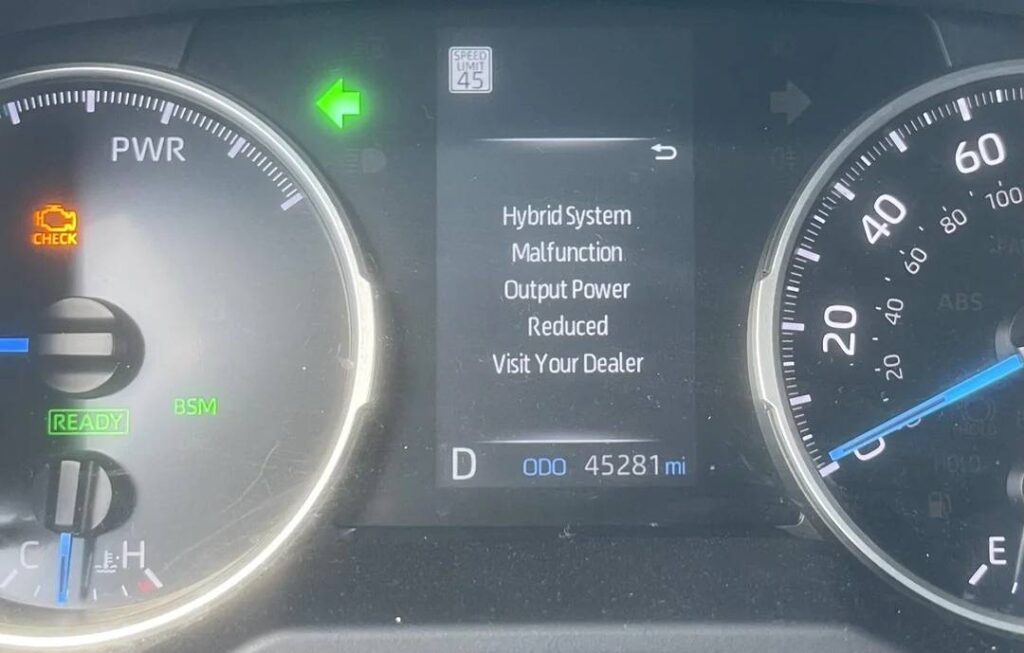
What Does Toyota Hybrid System Malfunction Mean?
The “Toyota Hybrid System Malfunction” warning is a general diagnostic alert generated by the vehicle’s onboard computer when it detects an abnormal condition within the hybrid powertrain system. Unlike a simple maintenance reminder, this warning indicates that one or more components responsible for the hybrid operation may not be functioning as intended.
Toyota’s hybrid technology combines a gasoline engine, an electric motor, a high-voltage hybrid battery, an inverter, and several control modules that continuously communicate with one another. These components work together to maximize fuel efficiency while maintaining smooth performance. When the Hybrid Control ECU identifies irregular data, voltage fluctuations, communication errors, or mechanical faults, it may trigger the warning message to protect the system from further damage.
Many drivers immediately assume that the hybrid battery has failed when they see this alert. However, that is not always the case. The warning can be caused by a wide range of issues, including a weak 12-volt battery, faulty sensors, damaged wiring, inverter problems, cooling system malfunctions, or software-related errors.
The severity of the issue depends on the underlying cause. Some vehicles may continue operating normally with only a warning light displayed, while others may experience reduced performance or enter a protective mode designed to prevent additional damage. Because the message itself does not identify the exact fault, a proper diagnostic scan is essential to determine the root cause.
Understanding the meaning behind this warning helps vehicle owners avoid unnecessary panic while taking the appropriate steps to address the problem before it develops into a more expensive repair.
Common Causes of Toyota Hybrid System Malfunction
Several different issues can trigger a Toyota Hybrid System Malfunction warning. Identifying the underlying cause is critical because repair costs and urgency can vary significantly.
Failing Hybrid Battery
The hybrid battery is one of the most important components in a Toyota hybrid vehicle. Although Toyota hybrid batteries are known for their longevity, they can eventually degrade due to age, heat exposure, and repeated charging cycles.
As battery cells wear out, they may become unbalanced, causing voltage differences between modules. When the system detects these inconsistencies, it may activate the warning message. Drivers often notice reduced fuel economy, more frequent engine operation, and fluctuating battery charge levels before a complete failure occurs.
Inverter Failure
The inverter converts high-voltage direct current from the hybrid battery into alternating current used by the electric motor. It also manages energy flow throughout the hybrid system.
If the inverter begins to overheat or malfunction, vehicle performance can suffer dramatically. Common symptoms include sluggish acceleration, warning lights, and sudden power loss. Because the inverter plays a critical role in hybrid operation, failures should be addressed immediately.
Weak 12-Volt Battery
A surprisingly common cause of hybrid system warnings is a weak or failing 12-volt auxiliary battery. This battery powers many electronic systems and helps initialize vehicle computers during startup.
When voltage drops below acceptable levels, the vehicle’s control modules may receive inaccurate information and trigger false error messages. Replacing an aging 12-volt battery is often one of the simplest and least expensive solutions.
Faulty Sensors and Wiring
Toyota hybrid vehicles rely on numerous sensors to monitor battery temperature, voltage, current flow, and system performance. A defective sensor can send incorrect data to the Hybrid Control ECU, leading to warning messages even when major components remain functional.
Damaged wiring, loose connectors, corrosion, or rodent-related electrical damage can produce similar symptoms. In some cases, a simple wiring repair may resolve the issue entirely.
Warning Signs You Should Never Ignore
The Toyota Hybrid System Malfunction warning rarely appears without other symptoms. Recognizing these early indicators can help prevent extensive damage and costly repairs.
One of the most noticeable warning signs is a sudden decrease in fuel efficiency. If your hybrid vehicle begins consuming significantly more fuel than usual, the hybrid system may not be operating at full capacity. This often occurs when the battery, inverter, or control systems are experiencing difficulties.
Poor acceleration is another common symptom. Because hybrid vehicles rely on both electric and gasoline power, any disruption in the electric drive system can reduce overall performance. Drivers may notice slower response times, difficulty maintaining speed, or reduced power during uphill driving.
Unusual noises can also indicate developing problems. A hybrid battery cooling fan that runs constantly, excessive humming sounds, or unexpected electrical noises should not be ignored. These symptoms may suggest overheating or battery-related issues.
Another serious warning sign is when the vehicle enters limp mode. In this condition, the system intentionally limits power output to protect critical components from damage. While the vehicle may still be drivable, performance will be severely restricted, and immediate diagnostics are recommended.
If multiple warning lights appear simultaneously, including the Check Engine Light, Master Warning Light, or Hybrid System Warning, professional inspection should be scheduled as soon as possible. Early diagnosis often prevents minor issues from becoming major repair expenses.
Can You Continue Driving with a Toyota Hybrid System Malfunction?
One of the first questions Toyota owners ask after seeing the warning message is whether it is safe to continue driving. The answer depends entirely on the cause of the malfunction and the symptoms accompanying the warning.
In some situations, the vehicle may continue operating normally despite displaying the alert. For example, a weak 12-volt battery or a minor sensor issue may trigger the warning without significantly affecting performance. In these cases, drivers can often travel a short distance to a repair facility without immediate danger.
However, not all hybrid system warnings are minor. If the vehicle experiences a noticeable loss of power, struggles to accelerate, stalls unexpectedly, or enters limp mode, continuing to drive could worsen the problem. Components such as the inverter and hybrid battery are expensive to replace, and prolonged operation under fault conditions may cause additional damage.
Drivers should also pay close attention to warning indicators related to overheating. If the temperature warning light appears or the vehicle displays messages suggesting excessive heat within the hybrid system, stopping the vehicle as soon as it is safe to do so is strongly recommended.
Another important factor is battery performance. A severely degraded hybrid battery may cause the gasoline engine to work harder than normal, reducing fuel efficiency and placing additional strain on other components. Ignoring these symptoms for an extended period can lead to more costly repairs.
As a general rule, if the warning appears without any noticeable change in vehicle behavior, scheduling diagnostics as soon as possible is usually sufficient. If performance problems accompany the warning, immediate inspection should be considered a priority. Prompt action not only protects the hybrid system but may also save thousands of dollars in repair costs.
How to Diagnose Toyota Hybrid System Malfunction
Accurate diagnosis is essential because the warning message itself does not identify the specific component causing the issue. Fortunately, several diagnostic steps can help narrow down the source of the problem.
The first and most important step is scanning the vehicle for diagnostic trouble codes using a compatible OBD-II scanner. Toyota hybrid systems generate specialized fault codes that provide valuable information about battery performance, inverter operation, communication failures, and sensor readings. Codes such as P0A80, P3000, P0A7F, P0A94, and P0A1F are among the most frequently encountered when hybrid system issues occur.
Checking the condition of the 12-volt battery is another critical step. Many hybrid-related warning messages stem from insufficient auxiliary battery voltage. A battery load test can quickly determine whether the battery is capable of maintaining proper voltage under operating conditions.
Visual inspection should also be performed whenever possible. Technicians often examine wiring harnesses, connectors, and grounding points for signs of corrosion, moisture intrusion, loose connections, or physical damage. Rodent damage is surprisingly common in some regions and can create intermittent electrical faults that are difficult to detect without careful inspection.
The hybrid battery cooling system should also be evaluated. Dust accumulation, blocked air vents, or malfunctioning cooling fans can cause excessive battery temperatures. Overheating not only reduces battery efficiency but can also trigger protective fault codes.
For more advanced diagnostics, professional technicians may use Toyota-specific diagnostic software capable of monitoring individual battery module voltages, temperature readings, charging behavior, and inverter performance in real time. This level of analysis is often necessary when intermittent or complex hybrid system faults are present.
A systematic diagnostic process helps eliminate guesswork and ensures that the actual problem is repaired rather than simply replacing parts unnecessarily.
Solutions for Toyota Hybrid System Malfunction
Once the root cause has been identified, the appropriate repair strategy can be selected. The solution varies depending on the affected component and the severity of the malfunction.
If the issue originates from a weak 12-volt battery, replacement is typically straightforward and relatively inexpensive. Many Toyota owners are surprised to discover that replacing this small battery resolves warning messages that initially appeared to indicate major hybrid system problems.
When faulty sensors are responsible, technicians can usually replace the defective component without extensive repairs. Temperature sensors, voltage sensors, and current sensors are commonly replaced when inaccurate readings trigger false alerts.
Electrical repairs may be required if damaged wiring or corroded connectors are discovered. Cleaning connections, repairing broken wires, and restoring proper grounding can often eliminate communication errors within the hybrid control network.
For vehicles experiencing battery cooling problems, cleaning the cooling fan and air passages may significantly improve system performance. Preventive maintenance of the cooling system is especially important in vehicles that operate in dusty environments or carry pets frequently, as debris can accumulate around the battery ventilation system.
Hybrid battery replacement becomes necessary when battery modules have deteriorated beyond acceptable limits. Owners generally have two options: installing a new original equipment battery or choosing a professionally refurbished unit. While refurbished batteries typically cost less, new batteries often provide greater long-term reliability and warranty coverage.
In cases involving inverter failure, repairs can be more complex and expensive. Depending on the extent of the damage, the inverter may require component-level repair or complete replacement. Because the inverter manages critical electrical functions, professional service is strongly recommended.
Regardless of the specific repair, addressing the warning promptly remains the best strategy. Early intervention often prevents secondary damage, reduces repair costs, and helps maintain the reliability and efficiency that Toyota hybrid vehicles are known for.
How to Prevent Toyota Hybrid System Malfunction
While some hybrid system issues are unavoidable due to normal wear and aging, many problems can be prevented through routine maintenance and proactive care. Taking a few simple steps can significantly extend the life of critical hybrid components and reduce the risk of unexpected warning messages.
Regular maintenance remains the most effective preventive measure. Following Toyota’s recommended service schedule allows technicians to identify developing issues before they become major problems. Periodic inspections can reveal battery deterioration, cooling system restrictions, electrical faults, and software-related concerns at an early stage.
Maintaining the hybrid battery cooling system is particularly important. The battery generates heat during operation and relies on proper airflow to remain within safe temperature limits. Owners should ensure that air intake vents remain unobstructed and have the cooling fan inspected and cleaned when necessary. Vehicles used in dusty environments or those that frequently transport pets may require more frequent cleaning.
Monitoring the condition of the 12-volt battery is another important preventive practice. Even though it is much smaller than the high-voltage hybrid battery, a weak auxiliary battery can create a wide range of electrical issues and warning messages. Replacing an aging battery before failure occurs can prevent unnecessary diagnostic headaches.
Avoiding extended periods of inactivity can also help preserve battery health. Hybrid batteries perform best when used regularly. Vehicles left unused for weeks or months may experience battery discharge and reduced performance over time.
Drivers should also pay attention to unusual symptoms such as declining fuel economy, excessive engine operation, slow acceleration, or recurring warning lights. Addressing these signs early can prevent more serious damage and costly repairs later.
Finally, periodic diagnostic scans can help identify hidden fault codes before they trigger visible warnings. Early detection often translates into lower repair costs and improved long-term reliability.
Frequently Asked Questions
What causes a Toyota Hybrid System Malfunction warning?
The warning can be triggered by several issues, including a failing hybrid battery, inverter problems, a weak 12-volt battery, faulty sensors, cooling system failures, damaged wiring, or communication errors within the vehicle’s electronic control systems.
Can a weak 12-volt battery cause a hybrid system warning?
Yes. A weak or failing 12-volt battery is one of the most common causes of hybrid system warnings. Low voltage can interfere with communication between electronic control modules and generate fault messages even when the high-voltage hybrid battery is functioning properly.
How much does it cost to fix a Toyota Hybrid System Malfunction?
Repair costs vary significantly depending on the cause. A 12-volt battery replacement may cost only a few hundred dollars, while hybrid battery replacement or inverter repairs can range from several thousand dollars depending on the vehicle model and location.
Is it safe to drive with the warning light on?
It depends on the severity of the problem. If the vehicle operates normally without performance issues, short-term driving may be possible. However, if the vehicle loses power, enters limp mode, overheats, or displays multiple warning lights, professional inspection should be arranged immediately.
Does a Toyota hybrid battery need regular replacement?
Hybrid batteries are designed to last many years and often exceed 100,000 to 150,000 miles. Some owners experience significantly longer service life. Replacement is only necessary when battery performance declines beyond acceptable levels or diagnostic testing confirms internal failure.
Can diagnostic codes identify the exact problem?
Diagnostic trouble codes provide valuable information and often point technicians toward the affected system. However, additional testing is frequently required to determine the precise cause and confirm the correct repair.
Conclusion
A Toyota Hybrid System Malfunction warning should never be ignored, but it does not automatically mean that your hybrid battery has failed. The alert can be triggered by a variety of issues ranging from a simple 12-volt battery problem to more complex faults involving the inverter, sensors, cooling system, or high-voltage battery pack.
Understanding the common causes, warning signs, and diagnostic procedures allows vehicle owners to make informed decisions when this message appears. Early detection is often the key to minimizing repair costs and preventing minor issues from developing into major mechanical or electrical failures.
Regular maintenance, proper battery care, routine inspections, and prompt attention to warning indicators can significantly improve the long-term reliability of any Toyota hybrid vehicle. Whether you drive a Prius, Camry Hybrid, Corolla Hybrid, RAV4 Hybrid, or another Toyota hybrid model, proactive maintenance remains the best defense against unexpected system malfunctions.
If your vehicle displays a Toyota Hybrid System Malfunction warning, schedule a professional diagnostic inspection as soon as possible. Identifying the root cause early can help restore performance, protect critical hybrid components, and ensure that your vehicle continues delivering the efficiency and dependability that Toyota hybrids are known for.