Have you noticed your Toyota’s Blind Spot Monitor (BSM) warning light staying on, flashing unexpectedly, or failing to detect vehicles in adjacent lanes? If so, you’re not alone. Many Toyota owners encounter BSM issues after replacing the battery, performing body repairs, or driving in harsh weather conditions. While these problems can be frustrating, they do not always mean that a major component has failed.
The Toyota Blind Spot Monitor is an advanced driver assistance feature designed to improve safety by alerting drivers to vehicles traveling in their blind spots. By using radar sensors typically mounted behind the rear bumper, the system helps reduce the risk of lane-change collisions. However, like any electronic safety system, it can occasionally experience errors, warning messages, or temporary malfunctions that may require a reset.
Understanding how to perform a Toyota Blind Spot Monitor reset can save time, reduce unnecessary repair costs, and help restore normal system operation. In many cases, a simple reset or sensor inspection is all that’s needed. However, some situations may indicate a deeper issue requiring professional diagnosis and calibration.
In this guide, you’ll learn when a BSM reset is necessary, the most common causes of Blind Spot Monitor errors, and the exact steps to reset the system safely and effectively.
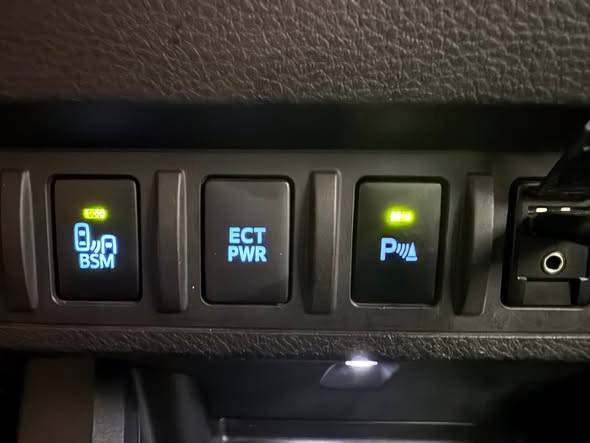
What Is Toyota Blind Spot Monitor (BSM)?
Toyota Blind Spot Monitor, commonly referred to as BSM, is an advanced safety feature designed to help drivers detect vehicles that may not be visible in their side mirrors. The system uses radar sensors located behind the rear bumper to monitor adjacent lanes and identify vehicles approaching or traveling within the driver’s blind spots.
When another vehicle enters a monitored area, an indicator light illuminates on the corresponding side mirror. If the driver activates the turn signal while a vehicle is detected in the blind spot, the warning light typically flashes to provide an additional alert. This extra layer of awareness can help reduce the likelihood of side impact collisions during lane changes.
Many modern Toyota models also integrate Blind Spot Monitor with Rear Cross Traffic Alert. This feature assists drivers when reversing out of parking spaces by detecting approaching vehicles from either side. Together, these technologies contribute to a safer driving experience, particularly in busy traffic environments and crowded parking lots.
Although Blind Spot Monitor is highly effective, it is important to remember that it serves as a driving aid rather than a replacement for proper observation. Drivers should continue checking mirrors and visually scanning surrounding traffic before changing lanes or making turns.
When Does a Toyota Blind Spot Monitor Need to Be Reset?
A Blind Spot Monitor reset may be necessary when the system begins displaying unusual behavior or warning messages. In many cases, the issue is temporary and can be resolved without replacing any components.
One of the most common situations occurs after a battery replacement. Disconnecting the battery may interrupt communication between various electronic control modules, causing the BSM system to display warning messages or operate inconsistently until it is reset.
Drivers may also need to reset the system after repairing collision damage, replacing the rear bumper, or performing maintenance near the radar sensors. Even a slight change in sensor position can affect the system’s ability to accurately detect surrounding vehicles.
Environmental factors can also trigger temporary faults. Heavy rain, snow accumulation, mud, road salt, or dirt covering the sensor area may interfere with radar signals. When this happens, the vehicle may display messages such as “Blind Spot Monitor Unavailable” or “BSM Malfunction.”
Some common signs that indicate a reset may be required include:
The BSM warning light remains illuminated.
The system fails to detect nearby vehicles.
Warning messages appear on the instrument cluster.
The side mirror indicators stop functioning.
The system becomes unavailable after battery replacement.
If any of these symptoms occur, performing a reset is often a good first troubleshooting step before pursuing more extensive repairs.
Common Causes of Toyota Blind Spot Monitor Problems
Before attempting a reset, it is helpful to understand what may have caused the issue in the first place. Identifying the root cause can prevent unnecessary repairs and save valuable time.
Dirty radar sensors are among the most frequent causes of Blind Spot Monitor errors. Because the sensors are located behind the rear bumper, road debris, dirt, ice, and moisture can accumulate and obstruct radar signals. Even a thin layer of contamination may reduce system performance.
Battery related issues can also trigger BSM faults. A weak battery, voltage fluctuation, or recent battery replacement may temporarily disrupt communication between vehicle modules. In many cases, the system resumes normal operation after a reset.
Physical damage is another common factor. Minor rear end collisions, parking lot impacts, or improper bumper repairs can shift sensor alignment. Since Blind Spot Monitor relies on precise positioning, even small deviations may affect detection accuracy.
Electrical problems may also be responsible. Damaged wiring, loose connectors, corroded terminals, or malfunctioning control modules can prevent the system from functioning correctly. These issues typically require diagnostic testing with professional equipment.
Finally, calibration problems should not be overlooked. If radar sensors have been removed, replaced, or repositioned, the system may require recalibration. Without proper calibration, the sensors may generate false alerts or fail to detect vehicles entirely.
Understanding these potential causes will help determine whether a simple reset is likely to solve the problem or whether further inspection and professional service may be necessary.
How to Reset Toyota Blind Spot Monitor Step by Step
If your Toyota Blind Spot Monitor is displaying warning messages or not functioning correctly, follow these steps carefully. In many situations, a basic reset can restore normal operation without requiring expensive repairs.
Step 1: Park the Vehicle Safely
Begin by parking your vehicle on a level surface away from traffic. Shift the transmission into Park and engage the parking brake. Turn off the engine completely and remove the key if your vehicle uses a traditional ignition system.
Allow the vehicle to remain powered off for several minutes. This gives electronic control modules time to shut down and reset temporary faults that may have triggered the warning.
Step 2: Inspect and Clean the Sensor Area
Before attempting any electronic reset, inspect the rear bumper where the Blind Spot Monitor sensors are typically located. Dirt, mud, ice, snow, and road debris can interfere with radar signals and trigger warning messages.
Use a soft microfiber cloth and clean water to remove any buildup from the bumper surface. Avoid pressure washers at extremely close range and do not use abrasive cleaning materials that could damage the paint or sensor area.
After cleaning, restart the vehicle and check whether the warning message has disappeared. In many cases, contamination is the sole cause of the issue.
Step 3: Turn the Blind Spot Monitor Off and On
Most Toyota models allow drivers to enable or disable the Blind Spot Monitor through the vehicle settings menu.
Start the engine and access the Multi Information Display located in the instrument cluster. Navigate to the Settings menu and locate the Blind Spot Monitor option. Turn the system off and wait approximately thirty seconds before turning it back on.
Once reactivated, drive the vehicle for several minutes under normal traffic conditions. This process often refreshes communication between system components and clears temporary software glitches.
Performing a Battery Disconnect Reset
If the previous steps do not resolve the issue, a battery disconnect reset may help clear stored temporary faults.
Turn off the vehicle completely and open the hood. Using the appropriate tools, disconnect the negative battery terminal. Leave the battery disconnected for approximately five to ten minutes. This allows various electronic modules to power down completely.
Reconnect the terminal securely and start the vehicle. After the engine starts, allow the vehicle to idle for a few minutes so that onboard systems can reinitialize.
Next, take the vehicle for a short drive. Observe whether the Blind Spot Monitor warning light remains illuminated or if the system resumes normal operation.
It is important to note that disconnecting the battery may reset certain vehicle settings such as radio presets, clock settings, seat memory functions, and driver preferences. Refer to your owner’s manual for information specific to your Toyota model.
If the warning returns immediately after reconnecting the battery, the issue is likely related to a sensor, calibration, or electrical fault rather than a temporary software problem.
Using an OBD2 Scanner to Diagnose and Clear BSM Errors
For a more advanced troubleshooting approach, an OBD2 diagnostic scanner can provide valuable information about the source of the problem.
Modern Toyota vehicles store diagnostic trouble codes whenever the Blind Spot Monitor system detects abnormal operation. Connecting an OBD2 scanner allows you to read these codes and identify the specific component or system involved.
Start by plugging the scanner into the vehicle’s diagnostic port, typically located beneath the dashboard on the driver’s side. Turn the ignition on and follow the scanner instructions to retrieve stored fault codes.
Common BSM related codes may indicate sensor communication issues, radar obstruction, alignment problems, low voltage conditions, or control module faults. Some advanced scanners also allow users to clear stored codes after repairs have been completed.
After clearing the codes, restart the vehicle and verify whether the warning light remains off. If the same code returns immediately, further diagnosis will be necessary because the underlying problem has not been resolved.
Using an OBD2 scanner can save significant time and money by pinpointing the exact cause of a Blind Spot Monitor malfunction. However, if the scan reveals sensor calibration errors or radar alignment faults, specialized equipment may be required to complete the repair properly.
When a Toyota Blind Spot Monitor Reset Will Not Solve the Problem
While a reset can resolve many temporary issues, it is important to understand that not every Blind Spot Monitor warning can be fixed by restarting the system. Some faults are caused by hardware failures or sensor misalignment that require professional attention.
One of the most common situations occurs after a rear-end collision. Even a relatively minor impact can affect the positioning of the radar sensors located behind the rear bumper. Because these sensors operate with extremely precise measurements, a slight shift can significantly reduce their ability to detect surrounding vehicles accurately.
Water intrusion is another potential cause of persistent Blind Spot Monitor failures. If moisture enters a sensor housing, electrical connector, or wiring harness, the system may continue displaying warnings even after multiple reset attempts. In these cases, the affected component often requires repair or replacement.
Damaged wiring can also prevent the system from operating correctly. Wiring issues may develop due to corrosion, rodent damage, improper repairs, or normal wear over time. Since the Blind Spot Monitor communicates with multiple vehicle modules, a single damaged wire can interrupt the entire system.
A faulty radar sensor is another possibility. Although radar sensors are generally reliable, they can fail due to age, impact damage, manufacturing defects, or environmental exposure. When a sensor fails internally, resetting the system will not restore functionality.
If the warning light returns immediately after every reset attempt, there is a strong possibility that a physical component or calibration issue is present and should be inspected by a qualified technician.
When Professional Calibration Is Required
Many Toyota owners are surprised to learn that Blind Spot Monitor systems often require calibration after certain repairs or maintenance procedures. Calibration ensures that radar sensors are correctly aligned and able to detect vehicles within the intended monitoring zones.
Professional calibration is commonly required after replacing the rear bumper, repairing collision damage, replacing a radar sensor, removing sensor brackets, or performing structural repairs near the sensor mounting locations.
During the calibration process, specialized equipment is used to measure sensor positioning and verify that radar signals are being transmitted and received within factory specifications. The procedure typically involves placing calibration targets at specific distances and angles relative to the vehicle.
Without proper calibration, the Blind Spot Monitor may generate false warnings, miss approaching vehicles, or display continuous malfunction messages. In some cases, the system may disable itself entirely to prevent inaccurate operation.
Because calibration requires specialized tools and manufacturer-specific procedures, it is generally not a do-it-yourself task. Most Toyota dealerships and advanced repair facilities equipped for ADAS service can perform the procedure safely and accurately.
If your vehicle recently underwent body repairs and the Blind Spot Monitor warning appeared afterward, calibration should be one of the first items investigated.
Toyota Blind Spot Monitor Repair Costs and Common Issues After Reset
The cost of repairing a Blind Spot Monitor problem can vary significantly depending on the underlying cause. Fortunately, some issues can be resolved with little or no expense.
Cleaning dirty sensor areas is usually free and often solves temporary warning messages caused by environmental conditions. Diagnostic scanning typically involves a moderate service fee but can quickly identify the root cause of the problem.
Sensor calibration generally costs more because it requires specialized equipment and trained technicians. The exact price varies depending on the vehicle model, repair facility, and local labor rates.
Replacing a damaged radar sensor is typically one of the more expensive repairs. Additional costs may apply if sensor brackets, wiring harnesses, control modules, or bumper components are also damaged.
After performing a reset, some drivers continue to experience issues such as intermittent warnings, delayed detection, or false alerts. These symptoms often indicate a calibration problem rather than a software malfunction.
Another common complaint involves one mirror indicator functioning while the other side fails to respond. This situation may point to a sensor issue, wiring problem, or communication fault within the system.
Drivers may also notice that the Blind Spot Monitor appears to work at lower speeds but becomes unreliable on highways. Such behavior can indicate alignment errors, radar obstruction, or degraded sensor performance.
Whenever a warning message returns repeatedly after resetting the system, it is important to avoid relying solely on repeated resets. Continuing to clear warnings without addressing the underlying issue may allow a safety-related problem to persist undetected.
A properly functioning Blind Spot Monitor can significantly enhance driving awareness and confidence. Taking the time to diagnose the real cause of a warning message will help ensure that the system continues to provide accurate and reliable assistance whenever it is needed.
Frequently Asked Questions About Toyota Blind Spot Monitor Reset
Can I Reset My Toyota Blind Spot Monitor Myself?
Yes, in many situations you can perform a basic Toyota Blind Spot Monitor reset yourself. Common methods include turning the system off and back on through the vehicle settings menu, cleaning the sensor area, or performing a battery disconnect reset. These procedures can often resolve temporary software glitches and sensor obstruction warnings. However, if the warning message returns repeatedly, professional diagnosis may be necessary.
Why Is My Toyota Blind Spot Monitor Warning Light Staying On?
A continuously illuminated warning light may indicate dirty sensors, a weak battery, radar obstruction, damaged wiring, sensor misalignment, or a malfunctioning radar unit. If simple troubleshooting steps do not clear the warning, diagnostic scanning should be performed to identify the exact cause.
Does Replacing the Battery Affect the Blind Spot Monitor?
Yes, replacing or disconnecting the battery can sometimes affect the Blind Spot Monitor system. Temporary communication interruptions between vehicle control modules may trigger warning messages or cause certain settings to reset. In many cases, normal operation returns after a short drive cycle or system reset.
Where Are Toyota Blind Spot Monitor Sensors Located?
On most Toyota vehicles, the radar sensors used by the Blind Spot Monitor system are mounted behind the rear bumper, typically near the left and right corners of the vehicle. Because they are hidden behind body panels, damage or misalignment may not be immediately visible.
Do I Need Calibration After Replacing the Rear Bumper?
In many cases, yes. If the bumper replacement affects sensor positioning, calibration may be required to ensure accurate vehicle detection. Driving without proper calibration can result in false warnings or missed detections.
Is It Safe to Drive With a Blind Spot Monitor Malfunction?
The vehicle can generally still be driven if a Blind Spot Monitor malfunction occurs, provided no other safety-critical systems are affected. However, drivers should exercise extra caution because the additional blind spot detection assistance may no longer be available. The issue should be diagnosed and repaired as soon as possible.
Conclusion
Understanding how to perform a Toyota Blind Spot Monitor reset can help drivers quickly resolve minor system issues and restore normal operation without unnecessary repair expenses. In many cases, warning messages are caused by temporary conditions such as dirty sensors, battery replacement, software glitches, or environmental interference. A simple inspection and reset procedure may be all that is needed to get the system working properly again.
However, it is equally important to recognize when a reset is not enough. Persistent warning lights, repeated malfunction messages, collision damage, sensor replacement, and calibration errors often indicate underlying problems that require professional attention. Ignoring these issues can reduce the effectiveness of one of your vehicle’s most valuable safety technologies.
By following the troubleshooting steps outlined in this guide, you can identify the most common causes of Blind Spot Monitor problems and determine the appropriate solution. Whether the fix involves cleaning the sensors, resetting the system, scanning for fault codes, or scheduling professional calibration, taking action promptly helps ensure that your Toyota Blind Spot Monitor continues to provide accurate and reliable protection on every journey.
If your Toyota Blind Spot Monitor warning light remains on after completing these steps, consider having the vehicle inspected by a qualified technician to prevent minor issues from developing into more costly repairs.