Have you recently seen the “Headlight System Malfunction” warning message appear on your Toyota’s dashboard? If so, you are not alone. This warning can be alarming, especially when it appears unexpectedly and leaves you wondering whether your vehicle is still safe to drive.
Modern Toyota vehicles rely on more than just traditional headlights. Advanced lighting systems often include automatic high beams, adaptive front lighting, auto leveling mechanisms, light sensors, and electronic control modules that work together to improve visibility and driving safety. When one of these components fails or stops communicating properly, the vehicle may trigger a Headlight System Malfunction warning.
Many Toyota owners face common concerns after seeing this message. Is the problem serious? Can the vehicle still be driven safely? Will the repair require an expensive trip to the dealership? In some cases, the issue may be as simple as a blown fuse or weak battery. In others, it could involve faulty sensors, damaged wiring, or a malfunctioning control module.
In this comprehensive guide, we will explain the most common causes of a Toyota Headlight System Malfunction, how to diagnose the issue, practical repair solutions, and the typical costs involved. By understanding what triggers this warning, you can make informed decisions and potentially avoid unnecessary repair expenses.
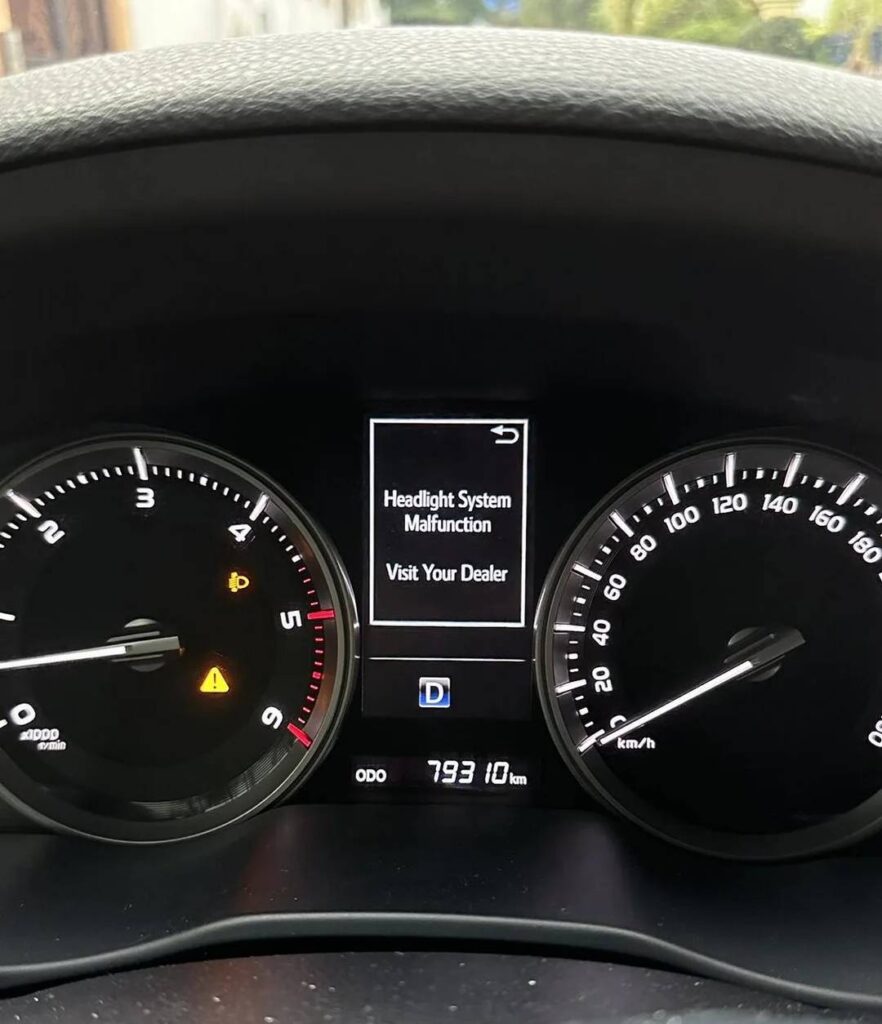
What Does Toyota Headlight System Malfunction Mean?
The “Headlight System Malfunction” warning indicates that your Toyota has detected an issue within the vehicle’s lighting system. Unlike older vehicles that relied on simple electrical circuits, modern Toyota models use sophisticated lighting technologies controlled by multiple sensors and electronic modules.
Depending on the model and trim level, the warning may be related to the Adaptive Front Lighting System (AFS), automatic high beam functions, headlight leveling sensors, light detection sensors, wiring connections, or the headlight control module. When one of these components fails to operate correctly, the vehicle’s onboard diagnostic system records the fault and displays a warning message on the dashboard.
This issue is commonly reported in popular Toyota models such as the Camry, Corolla, RAV4, Highlander, Prius, and other vehicles equipped with advanced LED or adaptive headlights. In some cases, the headlights may continue functioning normally despite the warning. However, the message should never be ignored because it often indicates an underlying problem that can worsen over time.
Drivers may notice the warning immediately after starting the vehicle, during nighttime driving, after replacing the battery, or following repairs involving the electrical system. Identifying the root cause early can help prevent more expensive repairs and ensure optimal visibility on the road.
Common Symptoms of a Toyota Headlight System Malfunction
The symptoms associated with a headlight system malfunction can vary depending on which component has failed. Some issues are obvious, while others may only become noticeable under specific driving conditions.
One of the most common signs is a headlight that stops working entirely. In many cases, only one side may fail while the other continues operating normally. This often points to a defective bulb, damaged wiring, or a blown fuse.
Another frequent symptom involves automatic headlights that no longer switch on or off based on ambient light conditions. Drivers may notice that the system fails to respond when entering tunnels, parking garages, or driving after sunset.
Vehicles equipped with adaptive headlights may also experience unusual beam movement. Instead of adjusting according to steering input or road conditions, the headlights may remain fixed or move erratically. This can significantly reduce nighttime visibility.
Some Toyota owners report flickering LED headlights. Flickering can indicate unstable voltage, a failing control module, poor electrical connections, or battery-related problems.
The warning message may also appear shortly after replacing the vehicle’s battery. In these situations, the system may require recalibration or initialization before it can operate correctly again.
Additional symptoms may include reduced brightness, warning lights that appear intermittently, delayed headlight activation, or headlights aimed too high or too low.
10 Common Causes of Toyota Headlight System Malfunction
1. Burned Out Headlight Bulb
A failed headlight bulb remains one of the simplest and most common causes of the warning. Although LED units generally last longer than halogen bulbs, they can still fail due to age, manufacturing defects, or electrical stress.
2. Blown Headlight Fuse
Every headlight circuit is protected by fuses. If a fuse blows because of a power surge or electrical fault, the system may detect the interruption and trigger a malfunction warning.
3. Faulty Headlight Relay
The relay controls electrical power delivery to the headlights. A defective relay can cause intermittent operation, delayed activation, or complete headlight failure.
4. Weak or Failing Battery
Modern Toyota lighting systems are highly sensitive to voltage fluctuations. A weak battery may not provide sufficient power to support all electronic functions, leading to warning messages and erratic behavior.
5. Malfunctioning Light Sensor
The ambient light sensor helps determine when automatic headlights should activate. If the sensor becomes dirty, damaged, or disconnected, the system may misinterpret lighting conditions.
6. Adaptive Front Lighting System Failure
Toyota’s Adaptive Front Lighting System adjusts headlight direction to improve visibility around curves. Sensor failures, actuator problems, or software issues can trigger a headlight system malfunction warning.
7. Damaged Headlight Leveling Sensor
Many Toyota vehicles use leveling sensors to automatically adjust headlight height based on vehicle load. A damaged sensor can cause improper beam alignment and generate warning messages.
8. Corroded Wiring or Electrical Connectors
Moisture intrusion, road salt, and aging components can corrode electrical connectors. Poor electrical contact often results in communication errors and intermittent system failures.
9. Faulty Headlight Control Module
The headlight control module acts as the brain of the lighting system. If it becomes damaged due to electrical faults or internal failure, various lighting functions may stop working correctly.
10. Software or Calibration Issues
After battery replacement, collision repairs, or electronic system updates, some Toyota models may require recalibration. Without proper initialization, the system may incorrectly detect faults and display warning messages even when hardware components are functioning normally.
Is It Safe to Drive With a Toyota Headlight System Malfunction?
Whether it is safe to continue driving depends on the specific cause of the warning and the condition of the headlights at the time the message appears.
If the warning appears but both headlights continue operating normally, the issue may be related to a sensor, calibration error, or communication fault within the lighting system. In these situations, short term driving is generally possible, but the problem should still be diagnosed as soon as possible to prevent further complications.
However, if one or both headlights fail to illuminate properly, nighttime driving can become significantly more dangerous. Reduced visibility increases the risk of accidents, especially on poorly lit roads, during adverse weather conditions, or in areas with heavy traffic.
Drivers should also pay attention to adaptive lighting functions. If the headlights are aimed too high, they can blind oncoming drivers. If they are aimed too low, the driver may not have enough visibility to identify hazards ahead. Both situations create potential safety risks.
In some regions, malfunctioning headlights may also lead to traffic citations or inspection failures. For this reason, ignoring the warning for an extended period is not recommended.
As a general rule, if the headlights appear dim, flicker frequently, fail to adjust correctly, or stop working altogether, the vehicle should be inspected immediately by a qualified technician.
How to Diagnose a Toyota Headlight System Malfunction at Home
Before scheduling an appointment with a repair shop, there are several basic checks that vehicle owners can perform to identify potential causes of the warning.
Start by visually inspecting both headlights. Check whether one side is noticeably dimmer or completely inoperative. A failed bulb is often easy to identify through a simple visual inspection.
Next, evaluate the condition of the battery. A weak battery can trigger multiple warning messages throughout the vehicle, including lighting system faults. Using a digital multimeter, verify that the battery voltage falls within the recommended operating range.
The next step involves inspecting the headlight fuses. Locate the fuse box using the owner’s manual and check for any blown fuses associated with the lighting system. Replacing a damaged fuse may immediately resolve the issue if no underlying electrical problem exists.
Drivers should also examine visible wiring and connectors near the headlights. Look for corrosion, loose connections, moisture intrusion, or signs of physical damage.
Testing the automatic headlight feature can provide additional clues. Park the vehicle in a dark area or cover the light sensor to determine whether the system responds correctly.
For a more accurate diagnosis, use an OBD II scanner capable of reading manufacturer specific codes. Diagnostic trouble codes can help identify issues involving sensors, control modules, adaptive lighting systems, and communication networks.
Documenting symptoms before visiting a repair facility can help technicians locate the fault more efficiently and reduce diagnostic time.
How to Fix a Toyota Headlight System Malfunction
The appropriate repair depends entirely on the root cause of the warning. Fortunately, some issues are relatively simple and inexpensive to resolve.
If a burned out bulb is responsible, replacing the defective bulb may restore normal operation immediately. Always use replacement components that meet Toyota specifications to ensure proper performance and compatibility.
When a blown fuse is identified, install a new fuse with the correct amperage rating. If the replacement fuse blows again shortly afterward, a deeper electrical issue may be present and should be professionally diagnosed.
Battery related problems often disappear after charging or replacing the battery. In some cases, the vehicle may require a system reset or calibration procedure after battery replacement.
Corroded connectors and wiring issues can often be corrected by cleaning terminals, repairing damaged wires, or replacing faulty connectors. Addressing moisture intrusion early can prevent recurring electrical problems.
Vehicles equipped with adaptive headlights may require recalibration after repairs, suspension work, or battery replacement. This procedure is typically performed using specialized diagnostic equipment.
If diagnostic testing reveals a defective sensor, relay, actuator, or control module, replacement of the failed component will usually be necessary. While some repairs can be completed by experienced DIY enthusiasts, electronic control modules often require programming after installation.
Software related issues may be resolved through firmware updates released by Toyota. Updating system software can correct communication errors and improve overall system reliability.
After any repair is completed, clear diagnostic trouble codes and verify that the warning message does not return during normal vehicle operation.
Toyota Headlight System Malfunction Repair Costs
Repair costs can vary significantly depending on the vehicle model, the specific component that has failed, and whether the repair is performed at a Toyota dealership or an independent repair facility.
One of the least expensive repairs involves replacing a blown fuse. In most cases, the total cost ranges from $5 to $20 if the issue is limited to the fuse itself. Relay replacement is also relatively affordable, typically costing between $20 and $80 depending on the vehicle and labor rates.
Headlight bulb replacement costs depend on the type of lighting technology used. Traditional halogen bulbs are generally inexpensive, with replacement costs ranging from $20 to $80. LED headlight assemblies are considerably more expensive because many modern Toyota models integrate LEDs into sealed units. Replacing these components can cost anywhere from $150 to $600 or more per side.
Battery related repairs vary depending on battery size and vehicle requirements. Replacing a weak battery typically costs between $100 and $350, including installation.
If the problem involves sensors used for automatic leveling or adaptive lighting functions, repair costs can increase substantially. Sensor replacement often ranges from $100 to $300, while recalibration services may add another $50 to $150.
More serious issues involving the headlight control module or electronic control unit can become costly. Depending on the model and programming requirements, replacement costs may range from $300 to $1,500 or higher.
Diagnostic fees should also be considered. Many repair facilities charge between $80 and $200 to perform a comprehensive diagnostic evaluation before repairs begin.
Obtaining multiple repair estimates can help vehicle owners compare costs and determine the most cost effective solution.
How to Prevent Headlight System Malfunctions in the Future
Preventive maintenance is one of the most effective ways to reduce the likelihood of headlight system issues and avoid unexpected repair expenses.
Regular inspection of the vehicle’s lighting system should become part of routine maintenance. Drivers should periodically verify that all headlights, daytime running lights, and automatic lighting functions are operating correctly.
Battery maintenance is equally important. Since many modern lighting systems rely on stable voltage, keeping the battery in good condition can help prevent numerous electrical faults. If the vehicle is several years old, periodic battery testing can identify weakening performance before problems occur.
Protecting electrical connectors from moisture exposure can also extend component lifespan. Water intrusion is a common cause of corrosion, particularly in regions with heavy rainfall, snow, or road salt usage.
When replacing bulbs or electrical components, using high quality parts that meet manufacturer specifications helps ensure proper compatibility and long term reliability. Low quality aftermarket components may create communication errors or inconsistent performance.
Drivers should also address warning messages promptly. Ignoring small electrical issues can allow them to develop into larger and more expensive repairs over time.
Routine vehicle inspections, proper battery care, and early diagnosis of warning indicators can significantly reduce the risk of future headlight system malfunctions.
Frequently Asked Questions
Can a Toyota Headlight System Malfunction warning disappear on its own?
Yes, in some cases the warning may disappear temporarily if it was triggered by a momentary voltage fluctuation or communication error. However, the underlying issue may still exist and could return later. A proper diagnostic inspection is recommended whenever the warning appears.
Why did the warning appear after replacing my battery?
Many Toyota models require electronic systems to be recalibrated after battery replacement. Loss of stored settings or temporary communication interruptions can trigger a headlight system warning until the system is properly initialized.
How much does it cost to fix a Toyota Headlight System Malfunction?
Repair costs can range from less than $20 for a simple fuse replacement to more than $1,500 if a control module or advanced lighting component requires replacement. The final cost depends on the root cause of the problem.
Can I reset the warning myself?
In some situations, disconnecting and reconnecting the battery or clearing diagnostic trouble codes with an OBD II scanner may remove the warning. However, if the underlying fault remains unresolved, the warning will typically return.
Does this warning mean my headlights will stop working?
Not necessarily. Some warnings are triggered by sensor faults, calibration issues, or communication errors while the headlights continue functioning normally. Nevertheless, the warning should always be investigated to ensure the system remains safe and reliable.
Can a failed battery trigger a headlight system malfunction warning?
Yes. Low voltage is one of the most common causes of electronic warning messages in modern vehicles. A weak or failing battery can affect sensors, modules, and lighting system performance.
Conclusion
A Toyota Headlight System Malfunction warning should never be ignored, even if the headlights appear to function normally. Modern Toyota lighting systems rely on a complex network of sensors, control modules, electrical connections, and adaptive technologies that work together to provide optimal visibility and safety.
The most common causes include burned out bulbs, blown fuses, weak batteries, faulty sensors, damaged wiring, adaptive lighting system failures, and software related issues. Fortunately, many of these problems can be identified through basic troubleshooting and addressed before they lead to more extensive repairs.
Taking the time to inspect your vehicle, perform diagnostic testing, and address warning messages promptly can help prevent costly component failures and ensure safe driving conditions. Whether the solution is as simple as replacing a fuse or as complex as repairing a control module, early diagnosis is the key to minimizing repair costs and maintaining reliable headlight performance.
If you encounter a Toyota Headlight System Malfunction warning, begin with the simplest checks first and consult a qualified technician whenever advanced diagnostics or programming procedures are required. A proactive approach can save both time and money while keeping your Toyota operating safely on the road.