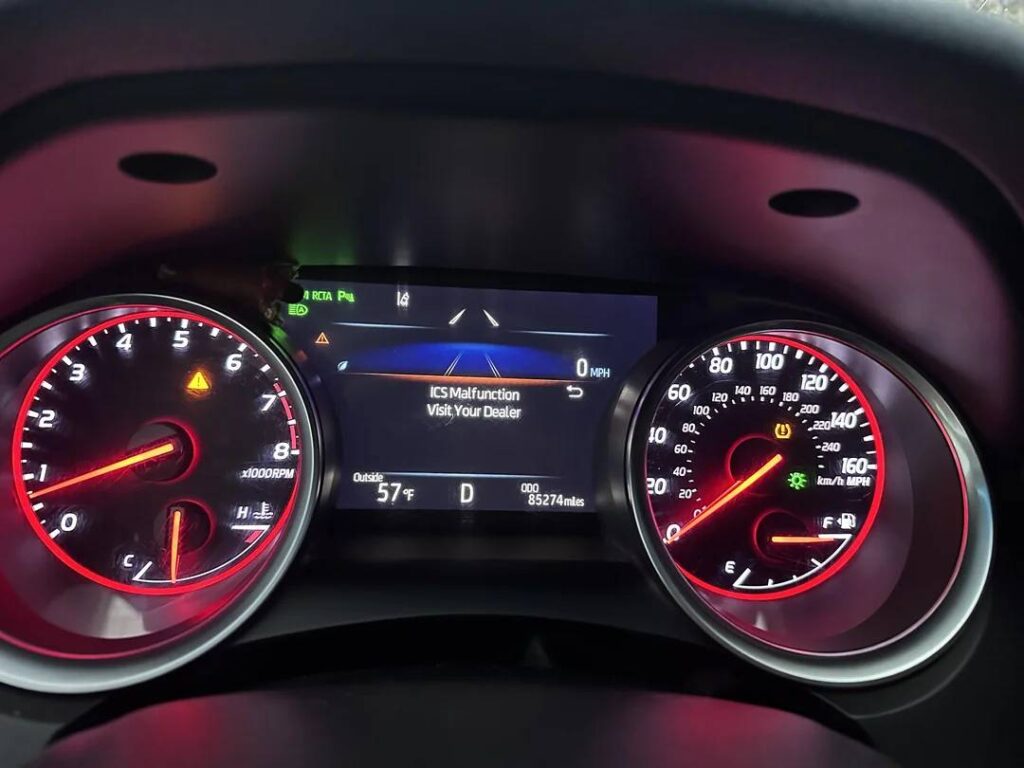
Have you recently seen the “Toyota ICS Malfunction” warning message appear on your dashboard? If so, you’re not alone. Many Toyota owners encounter this warning unexpectedly and immediately wonder whether it is safe to continue driving or if an expensive repair is around the corner.
The Intelligent Clearance Sonar (ICS) system is one of Toyota’s advanced safety technologies designed to help drivers avoid low-speed collisions while parking or maneuvering in tight spaces. By using ultrasonic sensors positioned around the vehicle, the system can detect nearby obstacles and, in certain situations, automatically reduce engine power or apply braking assistance to prevent accidents.
When the Toyota ICS Malfunction warning appears, it indicates that the system has detected a problem and may no longer function as intended. While the issue is often caused by something simple such as dirty sensors or temporary environmental interference, it can also be linked to damaged sensors, wiring problems, software glitches, or system calibration issues.
In this guide, you’ll learn what Toyota ICS Malfunction means, the most common causes behind the warning, how to troubleshoot the problem, and when professional repair may be necessary. Understanding the issue early can help you avoid unnecessary costs and restore your vehicle’s safety features quickly.
What Is Toyota ICS Malfunction?
Toyota ICS Malfunction refers to a fault detected within the vehicle’s Intelligent Clearance Sonar (ICS) system. This advanced driver assistance feature is designed to help prevent low-speed collisions by monitoring obstacles around the vehicle using ultrasonic sensors installed in the front and rear bumpers.
The ICS system works by continuously scanning the area surrounding the vehicle. When an object is detected too close to the car, the system alerts the driver with audible and visual warnings. In certain situations, it can also reduce engine output or apply braking assistance to help avoid accidental collisions caused by sudden acceleration or driver error.
When the dashboard displays an ICS Malfunction warning, the system has identified a problem that prevents it from operating correctly. As a result, some parking assistance and collision avoidance functions may be disabled until the issue is resolved.
Although the warning does not usually affect the vehicle’s engine or basic driving capabilities, it can reduce the effectiveness of important safety features. For this reason, drivers should investigate the cause as soon as possible rather than ignoring the warning message.
Symptoms of a Toyota ICS Malfunction
The most obvious symptom is the appearance of the “ICS Malfunction” message on the dashboard or infotainment display. However, several other signs may indicate that the Intelligent Clearance Sonar system is not functioning properly.
Many drivers notice that their parking sensors stop detecting nearby obstacles. The usual warning beeps may disappear, even when the vehicle is close to another car, wall, or object. In some cases, the parking assist system may become completely unavailable.
Another common symptom is the illumination of additional warning lights related to safety systems. Since modern Toyota vehicles often integrate multiple driver assistance technologies, a malfunction in one system can sometimes trigger warnings in others.
Drivers may also experience inconsistent sensor performance. The system may detect obstacles that are not actually present, fail to recognize real obstacles, or generate warning signals at inappropriate times. These symptoms are particularly noticeable when parking or maneuvering in confined spaces.
The warning often appears after a minor collision, bumper repair, heavy rainstorm, vehicle washing, or driving through muddy conditions. These situations can interfere with the sensors or affect their calibration.
Common Causes of Toyota ICS Malfunction
Several factors can trigger an ICS Malfunction warning, ranging from simple maintenance issues to more complex electrical failures.
One of the most common causes is dirty or obstructed sensors. Mud, dust, snow, road salt, and debris can block the ultrasonic sensors and prevent them from accurately detecting nearby objects. Even a thin layer of dirt can sometimes affect sensor performance.
Physical damage to the sensors is another frequent cause. Minor impacts during parking or low-speed accidents can crack, misalign, or damage the sensors. Since these components are mounted on the bumpers, they are vulnerable to external impacts.
Wiring problems can also trigger the warning. Loose connectors, corroded terminals, damaged wiring harnesses, or water intrusion may interrupt communication between the sensors and the vehicle’s control module.
Battery-related issues should not be overlooked. A weak battery or unstable voltage supply can cause electronic systems to behave unpredictably, resulting in temporary fault messages.
Software glitches occasionally contribute to ICS warnings as well. Some Toyota models may require software updates to correct communication errors or improve system reliability.
Improper repairs or aftermarket modifications can also create problems. If a bumper has been replaced, repainted, or modified without properly recalibrating the sensors, the system may no longer function correctly and generate an ICS Malfunction alert.
In more serious cases, the fault may originate from a defective control module or internal system failure. These situations typically require professional diagnostics using specialized Toyota service equipment.
How to Fix Toyota ICS Malfunction
The appropriate solution depends on the underlying cause of the warning. Fortunately, many cases can be diagnosed with a few basic checks before visiting a repair shop.
Start by inspecting all ultrasonic sensors located on the front and rear bumpers. Look for dirt, mud, ice, road grime, or any objects that may be blocking the sensor surface. Clean each sensor carefully using a soft microfiber cloth and avoid abrasive cleaners that could damage the sensor housing.
After cleaning the sensors, restart the vehicle. In some cases, the warning is triggered by a temporary communication error and may disappear after the system reboots.
Next, inspect the sensors for visible damage. Cracks, dents, scratches, or signs of water intrusion can affect their ability to transmit and receive ultrasonic signals. If a sensor appears damaged, replacement may be necessary.
Checking the vehicle’s battery is another important step. Low voltage can cause unexpected electronic malfunctions throughout the vehicle. If the battery is weak or nearing the end of its service life, replacing it may resolve the issue.
For a more accurate diagnosis, use an OBD2 scanner capable of reading Toyota-specific fault codes. Diagnostic trouble codes can identify the exact component causing the malfunction and significantly reduce troubleshooting time.
If the warning appeared after a bumper repair, repainting job, or collision, the sensors may require recalibration. Modern Toyota vehicles often need specialized calibration procedures to ensure proper sensor alignment and performance.
When basic troubleshooting does not solve the problem, professional inspection is recommended. Certified technicians have access to factory diagnostic tools that can identify wiring faults, software issues, and control module failures that may not be visible during a visual inspection.
Is It Safe to Drive With a Toyota ICS Malfunction?
In most situations, a Toyota vehicle remains drivable when the ICS Malfunction warning appears. The warning typically affects the Intelligent Clearance Sonar system rather than essential vehicle functions such as steering, braking, or engine performance.
However, drivers should understand that some safety features may no longer operate correctly. Parking assistance, obstacle detection, and collision mitigation functions could be partially or completely disabled. This increases the risk of low-speed parking accidents, especially in crowded areas or tight parking spaces.
Extra caution should be exercised when reversing, parallel parking, or maneuvering near pedestrians, walls, and other vehicles. Drivers should rely on mirrors, cameras, and direct visual observation rather than assuming the sonar system will provide warnings.
Immediate inspection is recommended if the ICS warning appears together with other alerts related to braking systems, collision avoidance systems, or electronic stability control. Multiple warning messages may indicate a broader electrical or safety system issue that requires prompt attention.
While driving with an ICS malfunction is generally possible, postponing repairs for an extended period is not advisable. Addressing the problem early can prevent additional complications and ensure all safety systems continue functioning as intended.
Toyota ICS Malfunction Repair Costs
Repair costs can vary significantly depending on the source of the problem, the vehicle model, and local labor rates.
Simple fixes such as cleaning blocked sensors are often free if performed by the vehicle owner. Professional cleaning and inspection services are usually inexpensive and can quickly determine whether contamination is causing the issue.
Sensor recalibration typically falls into the lower to moderate cost range. This procedure is commonly required after bumper repairs, sensor replacement, or minor collisions.
Replacing a faulty ultrasonic sensor generally costs more due to both parts and labor. The exact amount depends on the specific Toyota model and the number of sensors involved.
Electrical repairs involving damaged wiring, connectors, or harnesses can vary widely in cost. Labor expenses may increase if technicians need to remove bumper components or trace wiring faults throughout the vehicle.
Software updates are usually among the least expensive solutions and may even be covered during routine dealership service visits if an applicable technical service bulletin exists.
The most expensive repairs involve replacing control modules or addressing major electrical system failures. Fortunately, these issues are less common than sensor contamination or physical sensor damage.
Frequently Asked Questions
Can a Toyota ICS Malfunction go away on its own?
Yes. If the warning was triggered by temporary sensor obstruction, heavy rain, dirt buildup, or a brief communication error, it may disappear after cleaning the sensors or restarting the vehicle. Persistent warnings usually indicate a problem that requires further diagnosis.
Can I reset the Toyota ICS Malfunction warning myself?
In some cases, cleaning the sensors and restarting the vehicle may clear the warning. An OBD2 scanner can also erase fault codes, but the warning will likely return if the underlying problem has not been repaired.
Does an ICS Malfunction affect engine performance?
Typically, no. The Intelligent Clearance Sonar system is primarily a parking and collision avoidance feature. The warning usually does not impact normal engine operation or vehicle drivability.
Why did the warning appear after a bumper replacement?
The sensors may have been installed incorrectly, misaligned during repair, or not recalibrated after installation. Professional calibration is often required to restore proper system operation.
Which Toyota models commonly use the ICS system?
The Intelligent Clearance Sonar system is available on many modern Toyota vehicles, including the Camry, Corolla, RAV4, Highlander, Avalon, Prius, Sienna, and several Lexus models equipped with advanced parking assistance technologies.
Conclusion
The Toyota ICS Malfunction warning is an indication that the vehicle’s Intelligent Clearance Sonar system has detected a fault and may not be able to perform its intended safety functions. While the message can be alarming, the underlying cause is often less serious than many drivers initially assume.
In many cases, the issue is triggered by dirty sensors, temporary environmental interference, minor sensor misalignment, or low battery voltage. These problems can frequently be resolved through simple inspection and maintenance. However, persistent warnings may point to damaged sensors, wiring faults, software issues, or control module failures that require professional diagnosis and repair.
Ignoring the warning is not recommended. Although the vehicle can usually be driven safely, important features such as parking assistance and low-speed collision prevention may be unavailable when the system is malfunctioning. Addressing the problem early can help prevent further complications and ensure that all driver assistance technologies continue to operate as designed.
If you notice an ICS warning on your Toyota, begin with the basic troubleshooting steps outlined in this guide. Clean the sensors, inspect for visible damage, check battery health, and scan for diagnostic trouble codes if possible. If the warning remains, a qualified technician can perform a comprehensive inspection and restore the system to proper working condition.
By understanding the causes, symptoms, and solutions associated with a Toyota ICS Malfunction, you can make informed decisions, reduce unnecessary repair costs, and maintain the safety and reliability of your vehicle for years to come.