Modern Toyota vehicles come equipped with advanced driver assistance technologies designed to make parking safer and more convenient. Among these features, the Parking Assist System plays a crucial role by helping drivers detect obstacles and avoid minor collisions when maneuvering in tight spaces. However, many Toyota owners are surprised when a warning message such as “Toyota Parking Assist Malfunction”, “Parking Support Brake Malfunction”, or “Check Parking Assist System” suddenly appears on the dashboard.
Seeing this warning can be frustrating, especially if you rely on parking sensors and driver-assistance features every day. In some cases, the system may stop detecting obstacles, disable audible alerts, or become completely unavailable. While the message may seem alarming, it does not always indicate a major mechanical failure. The problem can be caused by something as simple as dirty sensors, low battery voltage, or temporary software glitches. In other situations, damaged sensors, wiring issues, or calibration errors may be responsible.
Understanding the root cause of a Toyota Parking Assist Malfunction is essential for avoiding unnecessary repair costs and restoring the system’s functionality as quickly as possible. In this guide, we will explain what the warning means, the most common causes behind it, step-by-step troubleshooting methods, and the best solutions to get your Toyota’s parking assistance system working properly again.
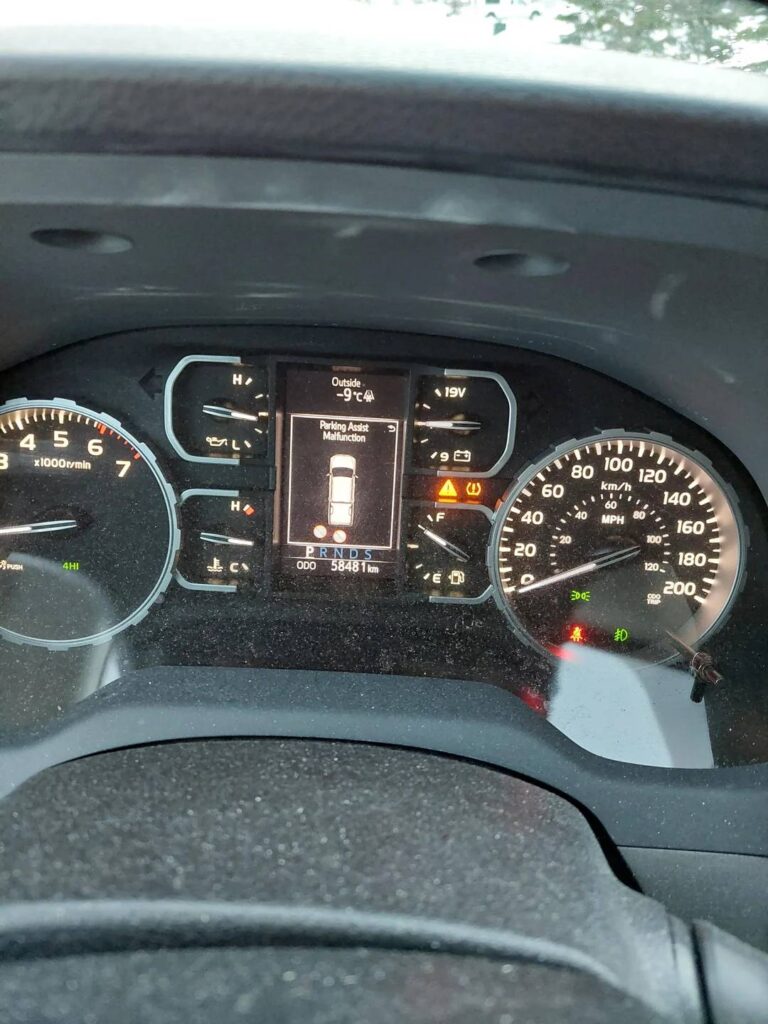
What Does Toyota Parking Assist Malfunction Mean?
A Toyota Parking Assist Malfunction warning indicates that the vehicle’s parking assistance system has detected a fault that may prevent it from functioning correctly. This system relies on multiple components working together, including ultrasonic sensors, control modules, cameras, wiring harnesses, and software. When one or more of these components fail to communicate properly, the vehicle will display a warning message to alert the driver.
The primary purpose of the Parking Assist System is to help drivers identify obstacles around the vehicle during low speed maneuvers such as parking or reversing. Depending on the Toyota model, the system may also work alongside Intelligent Clearance Sonar and Parking Support Brake technologies to provide additional protection against accidental collisions.
When the malfunction warning appears, the vehicle may disable some or all parking assistance functions as a precautionary measure. Drivers may notice that obstacle detection becomes inaccurate, warning sounds disappear, or the system stops responding entirely.
Although the warning does not usually affect the engine, transmission, or basic driving performance, it should not be ignored. Parking assistance features contribute significantly to vehicle safety, especially in crowded parking lots, narrow garages, and urban environments where visibility may be limited.
Understanding what this warning means is the first step toward identifying the underlying issue and determining whether a simple fix or professional diagnosis is required.
Common Symptoms of a Toyota Parking Assist Malfunction
The symptoms associated with a Toyota Parking Assist Malfunction can vary depending on the specific component that has failed. Some issues may appear intermittently, while others can disable the entire system immediately.
One of the most common symptoms is a warning message displayed on the instrument cluster or infotainment screen. Messages such as “Parking Assist Malfunction,” “Check Parking Assist System,” or “Parking Support Brake Malfunction” often indicate that the vehicle has detected an error within the system.
Another common sign is the loss of audible alerts. Normally, parking sensors emit warning beeps that increase in frequency as the vehicle approaches an obstacle. When a malfunction occurs, these sounds may become inconsistent or disappear completely.
Drivers may also notice that the parking sensors fail to detect nearby objects. In some cases, obstacles that would normally trigger warnings are ignored by the system. This can create safety concerns when parking in tight spaces.
Certain Toyota models may deactivate additional driver assistance features connected to the parking system. For example, Intelligent Clearance Sonar or Parking Support Brake functions may become unavailable until the fault is resolved.
Intermittent operation is another symptom frequently reported by owners. The system may work normally on some days and display warnings on others, particularly when the root cause involves moisture, loose electrical connections, or sensor contamination.
Recognizing these symptoms early can help prevent further complications and reduce diagnostic costs.
Top Causes of Toyota Parking Assist Malfunction
Several factors can trigger a Toyota Parking Assist Malfunction warning. Some are relatively minor and can be fixed within minutes, while others require professional inspection and repair.
Dirty parking sensors are among the most common causes. Road grime, mud, snow, ice, and debris can cover the ultrasonic sensors located in the front and rear bumpers. When sensors cannot accurately transmit or receive signals, the system may generate a malfunction warning.
Damaged sensors are another frequent culprit. Even minor impacts from parking incidents, shopping carts, or road debris can crack or misalign the sensors. A damaged sensor often causes the system to stop functioning correctly.
Low battery voltage can also create unexpected electronic errors. Modern Toyota vehicles rely heavily on stable electrical power. A weak battery may trigger multiple warning messages, including those related to parking assistance systems.
Faulty wiring or loose electrical connectors can interrupt communication between sensors and the control module. Wiring problems may develop due to vibration, corrosion, water intrusion, or previous repair work.
Software issues occasionally cause false warnings. In some situations, outdated software or temporary glitches within the electronic control unit can trigger error messages even when no hardware failure exists.
Water damage represents another potential cause. Heavy rain, flooding, or improper washing techniques can allow moisture to enter sensor housings or electrical connections, leading to communication failures.
Finally, calibration problems may occur after body repairs, bumper replacement, or sensor installation. If the system is not recalibrated correctly, the vehicle may interpret normal sensor readings as faults and display a malfunction warning.
Identifying the exact cause is essential because the appropriate repair strategy depends entirely on the source of the problem.
How to Fix a Toyota Parking Assist Malfunction
Before scheduling an appointment with a dealership or repair shop, there are several troubleshooting steps you can perform yourself. In many cases, the issue can be resolved without replacing expensive components.
Start by inspecting all parking sensors located on the front and rear bumpers. Carefully clean each sensor using a soft microfiber cloth and mild automotive cleaning solution. Dirt, road salt, insects, and water spots can interfere with sensor performance and trigger false warnings.
Next, restart the vehicle. Temporary software glitches can occasionally cause electronic systems to malfunction. Turn off the engine, wait several minutes, and restart the vehicle to see if the warning message disappears.
Check the condition of the battery. A weak or aging battery may not provide sufficient voltage for electronic modules and sensors to operate correctly. If the battery is more than a few years old or has shown signs of weakness, have it tested by a professional.
If the warning remains active, inspect the bumpers for signs of impact damage. Even a small collision can knock a sensor out of alignment or damage internal components. Look for cracks, scratches, or loose sensor housings.
Using an OBD2 diagnostic scanner can help identify stored fault codes related to the parking assistance system. These codes often provide valuable information about which sensor or component is causing the malfunction.
If none of these steps resolve the issue, professional diagnosis may be necessary. A qualified technician can perform advanced testing, inspect wiring connections, verify sensor operation, and determine whether calibration or component replacement is required.
How to Reset the Toyota Parking Assist System
Many Toyota owners wonder whether a simple reset can clear the Parking Assist Malfunction warning. The answer depends on the underlying cause of the problem.
For temporary software issues, a basic reset may restore normal operation. Begin by turning off the vehicle completely. Allow the vehicle to remain off for several minutes before restarting it. In some cases, the system will automatically perform a self-check during startup and clear the warning if no active fault is detected.
Another method involves disconnecting the battery. After turning off the ignition, disconnect the negative battery terminal and wait approximately ten to fifteen minutes before reconnecting it. This process can reset certain electronic modules and clear temporary errors. However, vehicle settings such as radio presets and clock settings may also be affected.
More advanced resets require a professional diagnostic tool. Toyota dealerships and specialized repair facilities can access the parking assist control module directly and clear stored fault codes. This approach is often necessary when repairs have already been completed and the warning remains stored in memory.
It is important to understand that resetting the system will not repair a damaged sensor, broken wire, or failed control module. If a hardware problem exists, the warning message will typically return shortly after the reset procedure is completed.
For this reason, resetting should be viewed as a diagnostic step rather than a permanent solution unless the root cause has already been addressed.
Toyota Parking Assist Repair Costs
Repair costs for a Toyota Parking Assist Malfunction can vary significantly depending on the specific problem, vehicle model, and labor rates in your area.
The least expensive repair is often sensor cleaning. If dirt or debris is responsible for the warning, the issue may be resolved with little to no cost. Many owners can perform this task themselves within a few minutes.
Diagnostic inspections generally represent the first professional expense. A technician may charge a diagnostic fee to retrieve fault codes and determine the exact source of the problem.
Replacing a single parking sensor is one of the most common repairs. Costs typically include both the replacement part and labor. Premium Toyota models equipped with advanced parking technologies may have higher component prices than entry-level vehicles.
Wiring repairs can vary considerably depending on the location and extent of the damage. Simple connector repairs may be relatively inexpensive, while extensive wiring replacement can require significant labor time.
Software updates and system recalibration usually fall into the moderate cost category. These services are often necessary after collision repairs, sensor replacement, or bumper replacement.
The most expensive scenario involves replacing a control module or electronic control unit associated with the parking assistance system. Although such failures are less common, they can significantly increase repair costs due to programming and configuration requirements.
Obtaining a professional diagnosis before authorizing repairs is the best way to avoid unnecessary expenses. Accurate troubleshooting ensures that only the faulty component is repaired or replaced, reducing both cost and downtime.
Can You Drive with a Toyota Parking Assist Malfunction?
In most situations, you can continue driving your Toyota after a Parking Assist Malfunction warning appears. The parking assistance system is designed as a convenience and safety feature rather than a critical component required for basic vehicle operation. As a result, the engine, transmission, steering, and braking systems will typically continue to function normally.
However, drivers should understand that the warning indicates the vehicle may no longer be able to accurately detect obstacles during parking maneuvers. Without functioning sensors, the risk of minor collisions, bumper damage, and property damage can increase, especially when parking in crowded areas or reversing in locations with limited visibility.
If the warning appears shortly after heavy rain, a car wash, or driving through muddy conditions, the issue may simply be caused by dirty or obstructed sensors. In these cases, cleaning the sensors and monitoring the system may be sufficient.
On the other hand, if the malfunction warning is accompanied by multiple dashboard alerts, unusual electrical behavior, or other driver assistance system failures, a professional inspection should be scheduled as soon as possible. These symptoms could indicate a broader electrical or communication issue within the vehicle.
While it is generally safe to drive with a Toyota Parking Assist Malfunction, it is not recommended to postpone diagnosis indefinitely. Restoring the system ensures that all safety and convenience features continue to operate as intended.
Frequently Asked Questions
Why does my Toyota say Parking Assist Malfunction?
The warning appears when the vehicle detects a problem affecting the parking assistance system. Common causes include dirty sensors, damaged ultrasonic sensors, low battery voltage, wiring issues, software glitches, or calibration errors.
Can a dirty sensor trigger a Parking Assist Malfunction warning?
Yes. Dirt, mud, snow, ice, and road debris can block sensor signals and cause the system to generate a warning message. Cleaning the sensors is often the first troubleshooting step recommended by technicians.
Will the warning go away on its own?
In some cases, yes. If the issue is caused by temporary environmental conditions such as moisture or sensor contamination, the warning may disappear once the sensors are cleaned or conditions improve. Persistent warnings usually indicate an underlying problem that requires further diagnosis.
How much does it cost to repair a Toyota Parking Assist Malfunction?
Repair costs vary depending on the cause. Cleaning sensors may cost little or nothing, while replacing sensors, repairing wiring, recalibrating the system, or replacing control modules can result in significantly higher repair expenses.
Can I reset the Toyota Parking Assist System myself?
You may be able to clear temporary software-related faults by restarting the vehicle or disconnecting the battery for a short period. However, if a hardware failure exists, the warning will likely return after the reset.
Does a Parking Assist Malfunction affect vehicle safety?
The warning typically does not affect the vehicle’s ability to drive. However, it reduces your ability to detect nearby obstacles when parking, increasing the likelihood of accidental contact with objects, vehicles, or pedestrians.
Conclusion
A Toyota Parking Assist Malfunction warning can be concerning, but it does not always signal a serious mechanical problem. In many cases, the issue can be traced to relatively simple causes such as dirty parking sensors, temporary software glitches, moisture buildup, or low battery voltage. These problems can often be identified and resolved without extensive repairs.
At the same time, drivers should not ignore persistent warnings. Damaged sensors, faulty wiring, calibration issues, and electronic control module failures can prevent the system from operating correctly and may require professional diagnosis. Identifying the root cause early can help prevent unnecessary repair costs and ensure that the parking assistance system continues to provide reliable support.
The best approach is to begin with the simplest troubleshooting steps. Clean the sensors, inspect the vehicle for visible damage, verify battery condition, and perform a system reset if appropriate. If the warning remains active, using a diagnostic scanner or consulting a qualified technician can help pinpoint the exact problem.
Toyota’s Parking Assist System is an important safety feature designed to make parking easier and reduce the risk of minor collisions. By understanding the common causes of a Toyota Parking Assist Malfunction and taking prompt action when warnings appear, drivers can restore full functionality and maintain the safety and convenience their vehicle was designed to deliver.