Seeing the airbag warning light suddenly appear on your Toyota dashboard can be alarming. Many drivers assume it is just another harmless dashboard notification, but in reality, an illuminated SRS warning light may indicate that part of your vehicle’s airbag system is no longer functioning properly.
Modern Toyota vehicles rely on a complex Supplemental Restraint System designed to protect passengers during a collision. If the system detects a fault, the airbag light turns on to warn you that one or more airbags may fail to deploy in an accident. In some situations, the problem can be as simple as a loose connector under the seat. In others, it may involve a damaged clock spring, faulty sensor, or crash-related system error.
One of the biggest frustrations for Toyota owners is not knowing whether the issue is minor or potentially dangerous. Some drivers continue using the vehicle for months, while others spend hundreds of dollars replacing parts they did not actually need. Understanding the real cause behind the warning light can help you avoid unnecessary repair costs and protect your safety on the road.
In this guide, we will explain the most common reasons why your Toyota airbag light is on, how serious each issue may be, and what steps you should take next.
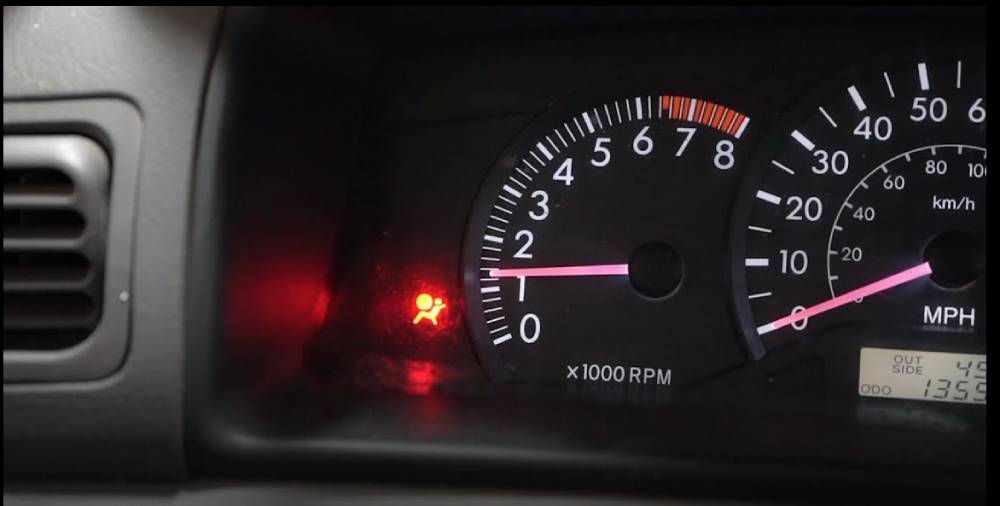
What Does the Airbag Light Mean on a Toyota?
The airbag warning light, often labeled as the SRS light, is part of your Toyota’s Supplemental Restraint System. This system works together with seat belts, impact sensors, and airbags to reduce injuries during a collision. When the warning light turns on, the vehicle’s computer has detected a fault somewhere within the safety system.
In most Toyota models, the airbag light appears on the instrument cluster as a seated passenger icon with a circular airbag symbol in front of it. Under normal conditions, the light briefly illuminates when the engine starts and then disappears after a few seconds. If the light remains on, flashes continuously, or returns while driving, the system has stored an error code that requires attention.
Many drivers mistakenly believe the vehicle is still completely safe because it continues to drive normally. However, the problem is that the airbags may not deploy correctly during an accident. In some cases, certain airbags can even deploy unexpectedly due to electrical faults or sensor failures.
A solid airbag light usually indicates a stored fault code, while a blinking light may suggest a more active or severe communication problem inside the SRS system. Either way, the issue should never be ignored because the airbag system is one of the most important safety features in any modern Toyota vehicle.
Ignoring the warning light for too long can lead to larger repair bills and increased safety risks. Diagnosing the issue early is usually far cheaper than replacing damaged components later.
1. Faulty Seat Belt Sensor
One of the most common reasons why a Toyota airbag light turns on is a faulty seat belt sensor. The SRS system constantly monitors whether passengers are wearing seat belts because the airbags and seat belts work together during a crash. If the sensor detects incorrect information, the airbag warning light may activate immediately.
Over time, seat belt sensors can become dirty, loose, or damaged through normal use. Spilled drinks, dust accumulation, moisture, or worn wiring connections are all common causes. In many Toyota models such as the Corolla, Camry, and RAV4, repeated seat movement and frequent passenger use can slowly wear down the sensor connections beneath the seats.
Drivers often notice additional symptoms along with the illuminated airbag light. The seat belt reminder may chime randomly even when the belt is fastened correctly. In some situations, the warning light may appear intermittently and disappear after restarting the vehicle.
Fortunately, this issue is often less serious than major airbag module failures. A technician may simply need to clean the connector or tighten loose wiring. However, if the sensor itself has failed internally, replacement may be necessary.
Repair costs vary depending on the Toyota model and labor rates, but seat belt sensor repairs are usually among the more affordable SRS fixes. Catching the issue early can prevent unnecessary stress and reduce the risk of larger electrical problems developing later.
2. Loose Wiring Under the Seat
Loose wiring underneath the front seats is another extremely common reason for a Toyota airbag warning light. Many drivers are surprised to learn that simply adjusting the seat position can accidentally affect sensitive electrical connectors connected to the SRS system.
Under the driver and passenger seats, Toyota vehicles contain multiple wiring harnesses responsible for seat occupancy sensors, seat belt tensioners, and airbag communication systems. Over time, these connectors may loosen due to constant seat movement, vibration, or accidental pulling during interior cleaning.
The problem often appears suddenly after moving the seat backward or forward. Some owners notice the airbag light turning on immediately after vacuuming the interior or storing items beneath the seats. In other cases, the warning light may appear inconsistently, turning on and off without any obvious pattern.
This issue creates a major frustration for many Toyota owners because some repair shops may recommend expensive module replacements before checking the basic wiring connections first. In reality, a loose connector can sometimes trigger the same warning light as a more serious system fault.
Although reconnecting a loose wire may sound simple, the SRS system is highly sensitive. Disconnecting or handling the wrong connector incorrectly can potentially trigger additional faults or disable safety components. For that reason, drivers who are unfamiliar with automotive electrical systems should avoid experimenting with the wiring themselves.
A proper diagnostic scan is usually the fastest way to confirm whether loose seat wiring is responsible for the airbag warning light.
3. Dead or Weak Battery
A weak or recently disconnected battery can also trigger the Toyota airbag warning light. Many drivers do not realize that the SRS system depends heavily on stable electrical voltage to communicate properly with sensors and control modules throughout the vehicle.
When the battery becomes weak, loses charge, or is temporarily disconnected during replacement, the airbag control module may detect abnormal voltage readings and store an error code. This situation is especially common after jump-starting a vehicle, replacing an old battery, or leaving the car unused for an extended period.
In some Toyota models, the airbag light may appear together with other dashboard warnings such as the check engine light, traction control light, or ABS warning light. Drivers often panic because multiple systems suddenly appear to malfunction at the same time, even though the root cause may simply be unstable battery voltage.
A weak battery may also create intermittent electrical communication issues. As a result, the airbag light can turn on one day and disappear the next, making the problem difficult to diagnose without scanning the vehicle’s computer system.
Fortunately, this issue is often relatively inexpensive to fix compared to replacing major airbag components. In many cases, charging or replacing the battery and clearing the stored fault codes with an OBD2 scanner will solve the problem completely.
However, drivers should avoid repeatedly resetting the warning light without addressing the actual electrical issue. If the battery or charging system continues to fail, the SRS warning may eventually return and create additional system errors over time.
4. Damaged Clock Spring
A damaged clock spring is one of the more serious reasons why the Toyota airbag light may stay illuminated. The clock spring is an electrical connector located inside the steering wheel assembly. Its job is to maintain communication between the steering wheel controls, the driver’s airbag, and the vehicle’s electrical system while allowing the wheel to rotate freely.
Over time, the thin internal wiring inside the clock spring can wear out or break due to repeated steering wheel movement. This problem becomes more common as vehicles age or accumulate higher mileage. In some cases, previous steering repairs or accident damage may also contribute to clock spring failure.
One of the clearest warning signs is when multiple steering wheel functions stop working at the same time. Drivers may notice that the horn no longer functions properly, steering wheel audio controls become unresponsive, or cruise control buttons fail intermittently. Shortly afterward, the airbag warning light often appears on the dashboard.
Unlike minor sensor issues, a damaged clock spring directly affects the driver’s airbag connection. That means the airbag may fail to deploy during a collision, significantly increasing injury risk during an accident.
Repair costs for a clock spring replacement are usually higher than simple wiring repairs because the steering wheel assembly must be partially disassembled. Depending on the Toyota model, labor and parts costs can vary considerably.
Because the steering wheel contains explosive airbag components, this repair should only be performed by qualified technicians with proper safety procedures and diagnostic equipment.
5. Previous Accident or Crash History
A previous accident is another major reason why a Toyota airbag light may remain on permanently. Even after body damage has been repaired, the vehicle’s airbag control module can continue storing crash-related fault codes that keep the warning light active.
During a collision, Toyota’s SRS system records crash data inside the airbag module. If airbags deployed during the accident, the module often requires resetting or replacement before the system can function normally again. Some vehicles also need additional parts replaced, including impact sensors, seat belt pretensioners, or wiring harnesses.
This issue is particularly important for used car buyers. Many people purchase a secondhand Toyota without knowing the vehicle was previously involved in an accident. Cosmetic repairs may make the car appear completely normal, while hidden SRS problems remain unresolved underneath the surface.
One common warning sign is when the airbag light stays on continuously even after extensive body repairs have already been completed. In some cases, dishonest sellers may temporarily clear the warning light before selling the vehicle, only for the problem to return later.
Drivers dealing with a crash-related airbag warning should perform a full diagnostic scan using a quality OBD2 scanner capable of reading Toyota SRS codes. This helps identify whether the system still contains stored crash data or damaged safety components.
Repair costs can become expensive if airbags, sensors, or modules require replacement. However, ignoring crash-related SRS faults can create serious safety risks because the airbags may not function properly in future accidents.
Can You Drive With the Toyota Airbag Light On?
Technically, your Toyota may still drive normally even when the airbag warning light is illuminated. The engine, transmission, and braking systems are usually unaffected by an SRS fault. However, the real danger lies in what may happen during an accident.
When the airbag light stays on, the Supplemental Restraint System has detected a malfunction somewhere within the vehicle’s safety network. Depending on the specific issue, one or more airbags may fail to deploy properly during a collision. In certain situations, the system may disable the airbags entirely until the problem is repaired.
Many drivers postpone repairs because the vehicle appears to operate perfectly fine during daily driving. Unfortunately, this creates a false sense of security. Airbags are designed to work together with seat belts to reduce injuries during high-impact crashes. If the system is compromised, passengers may face significantly greater risk during an accident.
Another concern is that some SRS faults can worsen over time. Loose wiring may eventually disconnect completely, weak electrical components may fail entirely, and unresolved crash data can interfere with future system operation. What begins as a small warning light could eventually turn into a much more expensive repair.
While it may be possible to drive the vehicle temporarily, delaying diagnosis for weeks or months is not recommended. Having the system inspected early can help prevent both safety hazards and rising repair costs later.
How to Diagnose and Reset the Toyota Airbag Light
Diagnosing the Toyota airbag light correctly is extremely important because simply clearing the warning without fixing the root problem will usually cause the light to return. The first step is identifying the exact SRS fault code stored inside the vehicle’s computer system.
The most reliable method is using an OBD2 scanner capable of reading Toyota airbag and SRS codes. Basic code readers may only access engine-related faults, so drivers often need a more advanced diagnostic scanner designed for safety systems. Once connected, the scanner will display specific fault codes that point toward the affected sensor, wiring circuit, or airbag component.
After identifying the code, technicians typically inspect the related parts physically. This may include checking wiring beneath the seats, examining seat belt connectors, testing battery voltage, or inspecting steering wheel components such as the clock spring.
Once repairs are completed, the stored fault codes can be cleared using the scanner. In some cases, the warning light disappears immediately after resetting the system. However, if the original issue has not been repaired properly, the airbag light will usually return within a short period of time.
Drivers should avoid disconnecting airbags or experimenting with electrical connectors without proper knowledge. Airbag systems contain sensitive components that can potentially deploy unexpectedly if handled incorrectly.
If you are unsure about the cause of the warning light, visiting a qualified Toyota technician or experienced diagnostic specialist is often the safest and fastest solution.
Toyota Airbag Light Repair Costs
The cost to repair a Toyota airbag warning light can vary widely depending on the underlying problem. Some issues are inexpensive and quick to fix, while others involve replacing major SRS components that require specialized labor and programming.
Minor problems such as loose wiring connectors or dirty seat belt sensors are usually among the cheapest repairs. In many cases, a technician can resolve these issues relatively quickly during a standard diagnostic appointment. Battery-related faults are also typically affordable if the problem only requires replacing the battery and clearing stored codes.
More serious repairs become significantly more expensive. Replacing a damaged clock spring inside the steering wheel generally costs more because of the labor involved in disassembling the steering column safely. Airbag control module repairs or crash-data resets can also increase costs substantially depending on the Toyota model and the complexity of the damage.
The most expensive scenario occurs when airbags themselves require replacement after an accident. Deployed airbags, damaged sensors, seat belt pretensioners, and control modules can collectively create repair bills reaching thousands of dollars.
Many Toyota owners become frustrated because some repair shops recommend replacing parts before completing a full diagnostic inspection. For that reason, obtaining a professional scan before authorizing repairs is extremely important. Identifying the exact fault code early can help avoid unnecessary expenses and prevent replacing components that are still functioning correctly.
Although repair costs can sometimes feel high, restoring the SRS system properly is essential because airbags play a critical role in protecting passengers during serious collisions.
Conclusion
Seeing the Toyota airbag light turn on can be stressful, especially when you are unsure whether the issue is minor or potentially dangerous. While some causes are relatively simple, such as loose seat wiring or a weak battery, others may involve critical safety components like the clock spring or airbag control module.
The most important thing to remember is that the warning light should never be ignored. Even if your Toyota drives normally, the Supplemental Restraint System may not function correctly during an accident. Delaying repairs could increase both safety risks and future repair costs.
Early diagnosis is often the key to saving money. A quick scan with the proper diagnostic equipment can identify whether the problem comes from a sensor issue, electrical fault, crash history, or damaged airbag component. In many situations, fixing the problem early prevents more serious system failures later.
For Toyota owners, understanding the common causes behind an illuminated SRS warning light helps eliminate confusion and avoid unnecessary repairs. Whether you drive a Corolla, Camry, RAV4, Tacoma, or Prius, addressing the issue promptly is always the safest decision.
If your Toyota airbag light is currently on, consider having the vehicle inspected as soon as possible. A small dashboard warning today could make a major difference in protecting you and your passengers in the future.