Maintaining your Subaru involves more than regular oil changes and tire rotations. One critical service that many owners overlook is the differential fluid change. While it may not receive as much attention as engine maintenance, fresh differential fluid plays a vital role in protecting your vehicle’s all wheel drive system and ensuring smooth power delivery to the wheels.
Over time, differential fluid breaks down due to heat, friction, and contamination from microscopic metal particles. As the fluid loses its protective properties, internal gears and bearings can experience increased wear, potentially leading to expensive drivetrain repairs. Common warning signs include whining noises, vibrations during acceleration, and reduced driving performance.
Whether you own a Subaru Outback, Forester, Crosstrek, Impreza, Legacy, or WRX, following the recommended differential service intervals can significantly extend the lifespan of your vehicle’s drivetrain. The good news is that a Subaru differential fluid change is a relatively straightforward maintenance task that many owners can perform at home with basic tools and the correct gear oil.
In this complete DIY guide, you will learn when to change your Subaru differential fluid, which tools and supplies you need, and the exact steps required to complete the service safely and correctly. By doing it yourself, you can save money while helping your Subaru deliver reliable performance for years to come.
Understanding Subaru Differential Fluid
What Does Differential Fluid Do?
Differential fluid, often referred to as gear oil, is responsible for lubricating the gears, bearings, and internal components inside the differential housing. In a Subaru all wheel drive system, both the front and rear differentials work continuously to distribute power efficiently to the wheels.
As gears mesh together under heavy loads, significant friction and heat are generated. Differential fluid creates a protective film that reduces metal to metal contact, minimizes wear, and helps dissipate heat. Without adequate lubrication, the differential can suffer premature damage that may result in costly repairs.
High quality gear oil also contains additives designed to prevent corrosion, reduce oxidation, and maintain proper viscosity under varying temperatures. This ensures consistent protection whether the vehicle is driven in freezing winter conditions or extreme summer heat.
Why Subaru AWD Systems Depend on Proper Differential Maintenance
Subaru vehicles are known for their Symmetrical All Wheel Drive system, a key feature that provides excellent traction, stability, and handling. Unlike many front wheel drive vehicles, Subaru drivetrains place additional demands on differential components because power is constantly being distributed between the front and rear wheels.
As differential fluid ages, its ability to protect gears gradually declines. Contaminants such as moisture and microscopic metal particles accumulate over time, accelerating wear inside the differential. Neglecting fluid changes can lead to increased operating temperatures, gear noise, and reduced drivetrain efficiency.
Regular differential maintenance helps preserve the performance characteristics Subaru owners value most. Fresh fluid ensures smoother operation, reduces mechanical stress, and contributes to the long term reliability of the AWD system.
Front Differential vs Rear Differential
Many Subaru owners are surprised to learn that their vehicle contains both a front differential and a rear differential.
The front differential is typically integrated with the transmission assembly and helps distribute power between the front wheels. The rear differential performs a similar function for the rear axle. Together, these components allow the wheels to rotate at different speeds when cornering, improving traction and reducing tire wear.
Although both differentials require gear oil, service procedures and fluid capacities may vary depending on the model and drivetrain configuration. During maintenance, it is important to verify the correct fluid specifications and capacities for your specific Subaru model.
Properly servicing both differentials helps maintain balanced power delivery throughout the AWD system and reduces the risk of premature drivetrain failure.
When Should You Change Subaru Differential Fluid?
Subaru Recommended Service Intervals
The ideal differential fluid change interval depends on driving conditions, vehicle usage, and manufacturer recommendations. For most Subaru models, differential fluid should generally be inspected regularly and replaced between 30,000 and 60,000 miles under normal driving conditions.
Drivers who frequently tow trailers, drive on unpaved roads, encounter heavy traffic, or operate in extreme climates may need more frequent service. These severe conditions place additional stress on the drivetrain and accelerate fluid degradation.
The following table provides a general guideline:
| Driving Condition | Recommended Interval |
|---|---|
| Normal Driving | 30,000 to 60,000 miles |
| Severe Driving | 15,000 to 30,000 miles |
| Frequent Towing | Inspect regularly and service sooner |
| Off Road Driving | 15,000 to 20,000 miles |
Always consult your owner’s manual for model specific recommendations.
Warning Signs Your Differential Fluid Needs Replacement
Several symptoms may indicate that your Subaru differential fluid is no longer providing adequate protection.
A high pitched whining noise from the front or rear of the vehicle is one of the most common warning signs. This sound often becomes more noticeable during acceleration or when driving at highway speeds.
Grinding noises may indicate excessive gear wear caused by insufficient lubrication. Vibrations felt through the floor or drivetrain can also suggest internal differential issues.
Another warning sign is a burning smell coming from the drivetrain area. Overheated gear oil loses its effectiveness and may allow components to wear rapidly.
When draining old fluid, the presence of excessive metal particles or metallic sludge may indicate abnormal wear that requires further inspection.
Risks of Delaying Service
Ignoring differential maintenance can lead to serious mechanical problems over time.
As fluid deteriorates, gears and bearings lose critical protection against friction and heat. Increased wear can cause pitting, scoring, and eventual component failure.
A damaged differential can negatively affect vehicle handling, generate excessive noise, and compromise AWD performance. In severe cases, complete differential replacement may be required, resulting in repair bills that can reach thousands of dollars.
Routine fluid changes are relatively inexpensive compared to major drivetrain repairs. Investing a small amount of time and money in preventive maintenance can significantly extend the lifespan of your Subaru’s drivetrain components.
Tools and Supplies Needed
Essential Tools
Before beginning the service, gather all necessary tools to ensure a smooth and efficient workflow.
A socket set is required for removing drain and fill plugs. Depending on the model, specific socket sizes may vary, so verify requirements beforehand.
A breaker bar can be extremely helpful when loosening stubborn plugs that have not been removed for many years. A torque wrench is equally important for reinstalling plugs according to manufacturer specifications.
You will also need an oil drain pan to collect used fluid and a fluid transfer pump to fill the differential with fresh gear oil. Since fill ports are often difficult to access, a pump makes the process significantly easier.
A floor jack and quality jack stands are essential if additional vehicle clearance is needed. Never rely solely on a hydraulic jack when working underneath a vehicle.
Recommended Differential Fluid
Using the correct gear oil is critical for maintaining Subaru drivetrain performance.
Most Subaru differentials require a high quality GL 5 gear oil. Many owners choose Subaru OEM gear oil because it meets factory specifications and provides reliable protection. Premium synthetic gear oils from reputable manufacturers can also deliver excellent performance and enhanced thermal stability.
Always confirm the proper viscosity grade and fluid specification listed in your owner’s manual before purchasing supplies.
Safety Equipment
Safety should always be a priority during any maintenance procedure.
Wear safety glasses to protect your eyes from debris and accidental fluid splashes. Nitrile gloves help keep your hands clean while providing protection against chemicals and contaminants.
Having shop towels available will make it easier to clean drain plugs, wipe spills, and inspect fluid condition during the service process.
A clean and organized work area reduces the risk of accidents and helps ensure a successful differential fluid change.
Subaru Differential Fluid Change Step by Step
Step 1: Prepare the Vehicle
Begin by parking your Subaru on a level surface. A level vehicle is important because it allows the differential to drain completely and ensures the correct fluid level during refilling.
Allow the drivetrain to cool if the vehicle has been driven recently. Warm fluid drains more easily, but extremely hot components can pose a safety risk.
Engage the parking brake and place wheel chocks behind the tires for added stability. If additional clearance is required, raise the vehicle using a floor jack and securely support it with jack stands positioned at the manufacturer’s recommended lift points.
Locate the front and rear differential housings before proceeding. Familiarizing yourself with the drain and fill plug locations will save time during the service.
Step 2: Remove the Fill Plug First
This is one of the most important steps in the entire process.
Before draining any fluid, loosen and remove the fill plug. Many experienced technicians follow this practice because it confirms that the fill plug can be removed successfully.
Imagine draining all the old fluid only to discover that the fill plug is seized and cannot be removed. The vehicle would be left unusable until the problem is resolved.
Once the fill plug is removed, inspect its condition and set it aside in a clean location.
Step 3: Drain the Old Differential Fluid
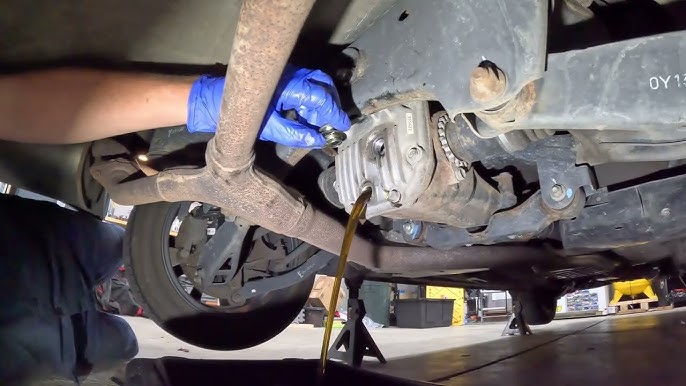
Position a drain pan directly beneath the differential housing and carefully remove the drain plug.
As the fluid drains, observe its color and consistency. Healthy gear oil is typically dark amber in color, while severely degraded fluid may appear black, thick, or contaminated.
Many Subaru differential drain plugs contain a magnetic tip designed to collect microscopic metal particles generated during normal operation. A small amount of fine metallic paste is generally normal. However, large metal fragments or excessive debris may indicate internal wear that warrants further investigation.
Allow the differential to drain completely before moving to the next step.
Step 4: Clean and Reinstall the Drain Plug
Thoroughly clean the drain plug, paying special attention to the magnetic surface.
Remove all accumulated metal particles and inspect the threads for damage. If your Subaru uses crush washers, replace them with new ones to help prevent future leaks.
Reinstall the drain plug and tighten it according to the manufacturer’s torque specifications. Avoid overtightening, as excessive force can damage threads in the differential housing.
Step 5: Fill with New Gear Oil
Using a fluid transfer pump, slowly add fresh gear oil through the fill port.
The differential is considered full when fluid begins to reach the lower edge of the fill opening and starts to trickle out slightly. This indicates that the correct fluid level has been achieved.
Take your time during this process. Filling too quickly can create air pockets that make it difficult to determine the actual fluid level.
Always use the gear oil specification recommended for your Subaru model to ensure proper lubrication and long term drivetrain protection.
Step 6: Reinstall the Fill Plug
Once the differential has been filled correctly, clean the area around the fill port and reinstall the fill plug.
Tighten the plug according to factory torque specifications. Proper torque helps prevent leaks while protecting the threads from damage.
Wipe away any excess fluid around the housing so that future leak inspections are easier to perform.
Step 7: Test Drive and Final Inspection
After lowering the vehicle, start the engine and take a short test drive.
Pay attention to any unusual noises, vibrations, or warning signs during acceleration and cornering. The drivetrain should operate smoothly and quietly.
Once the test drive is complete, inspect both differential housings for signs of fluid leakage around the drain and fill plugs. If everything remains dry, the service has been completed successfully.
Common Mistakes to Avoid
Using the Wrong Fluid
One of the most common mistakes made by vehicle owners is using an incorrect gear oil specification.
Differentials are engineered to operate with specific lubricant properties. Using a fluid that does not meet Subaru requirements can reduce lubrication effectiveness, increase operating temperatures, and accelerate component wear.
Always verify the correct viscosity and specification before purchasing fluid. A few extra minutes of research can prevent expensive drivetrain repairs later.
Forgetting to Remove the Fill Plug First
Many first time DIY mechanics focus immediately on draining the old fluid without checking the fill plug.
If the fill plug is damaged, seized, or impossible to remove, you may end up with an empty differential that cannot be refilled. This mistake can turn a simple maintenance task into a frustrating repair project.
Always remove the fill plug before opening the drain plug.
Overfilling the Differential
Adding too much gear oil can create excessive internal pressure and lead to leaks through seals and vents.
Overfilled differentials may also experience increased fluid aeration, reducing lubrication effectiveness. Follow the recommended fill procedure and stop adding fluid once it reaches the proper level at the fill port.
Ignoring Metal Debris
The magnetic drain plug provides valuable insight into the condition of the differential.
A small amount of fine metallic residue is usually normal. However, significant metal fragments, chips, or excessive buildup may indicate abnormal gear or bearing wear.
Ignoring these warning signs can allow minor issues to develop into major failures. If excessive debris is present, consider performing a more thorough inspection before returning the vehicle to regular service.
Subaru Differential Fluid Change Cost
DIY Cost Breakdown
One of the biggest advantages of performing your own differential fluid change is the potential cost savings.
Most Subaru owners can complete the service for a relatively modest investment in supplies and tools.
| Item | Estimated Cost |
|---|---|
| Gear Oil | $30 to $80 |
| Fluid Pump | $10 to $20 |
| Crush Washers | $5 to $10 |
| Drain Pan and Shop Supplies | $10 to $25 |
If you already own basic hand tools, the total cost of a DIY service is often well under $100.
Dealership Service Cost
Professional differential fluid replacement services vary depending on location, vehicle model, and labor rates.
Many Subaru dealerships charge between $150 and $350 for front and rear differential service. Premium service centers or high cost regions may charge even more.
While professional service offers convenience, labor costs account for a significant portion of the total expense.
Potential Savings
Performing a Subaru differential fluid change at home can save anywhere from $100 to $250 or more per service visit.
Over the lifetime of the vehicle, these savings can add up significantly. More importantly, regular maintenance helps avoid major drivetrain repairs that could cost thousands of dollars.
For owners comfortable with basic automotive maintenance, differential fluid replacement remains one of the most cost effective services to perform at home.
Maintenance Tips for Longer Differential Life
Check for Leaks Regularly
Routine inspections can help identify minor issues before they become expensive repairs.
Make it a habit to visually inspect the front and rear differential housings during oil changes, tire rotations, or other scheduled maintenance. Look for signs of fluid seepage around drain plugs, fill plugs, axle seals, and housing gaskets.
Even a small leak can gradually lower fluid levels and reduce lubrication performance. If left unchecked, insufficient gear oil can accelerate wear on gears and bearings.
Addressing leaks early is often far less expensive than replacing damaged drivetrain components.
Avoid Mixing Different Gear Oils
Not all gear oils are formulated the same way. Different brands and formulations may contain unique additive packages that are designed to work under specific operating conditions.
Mixing incompatible fluids can reduce lubricant performance and potentially affect long term protection.
Whenever possible, use the same gear oil type throughout the service interval. If you are switching to a different product, consider performing a complete fluid replacement rather than topping off with a different formulation.
Always choose a fluid that meets Subaru’s recommended specifications.
Follow Severe Service Intervals
Many Subaru owners unknowingly fall into the severe service category.
Frequent stop and go traffic, towing, mountain driving, off road adventures, extreme temperatures, and carrying heavy loads all place additional stress on drivetrain components.
Under these conditions, differential fluid can degrade more quickly than during normal highway driving.
Following a more aggressive maintenance schedule helps ensure that the differential receives consistent protection and remains in optimal condition throughout the vehicle’s lifespan.
Inspect Differentials During Tire Rotations
Tire rotations provide an excellent opportunity to inspect drivetrain components.
With the vehicle already elevated, you can quickly check differential housings for leaks, damaged seals, loose hardware, or signs of contamination.
Listening for unusual noises during routine maintenance can also help detect potential problems before they become severe.
A few minutes of inspection several times per year can significantly reduce the likelihood of unexpected drivetrain failures.
Frequently Asked Questions
Can I change Subaru differential fluid myself?
Yes. Most Subaru owners with basic mechanical knowledge and the proper tools can perform a differential fluid change at home. The procedure is relatively straightforward and typically requires only standard hand tools, a fluid transfer pump, and the correct gear oil.
Following the proper steps and observing safety precautions can make this an excellent DIY maintenance project.
How often should Subaru differential fluid be changed?
For most Subaru models, differential fluid should generally be replaced every 30,000 to 60,000 miles under normal driving conditions.
Vehicles exposed to severe service conditions such as towing, off road driving, frequent short trips, or extreme weather may require more frequent fluid changes.
Consult your owner’s manual for model specific recommendations.
What gear oil does Subaru recommend?
Most Subaru differentials require a high quality GL 5 gear oil that meets factory specifications.
The exact viscosity may vary depending on the vehicle model and production year. Subaru OEM gear oil is a popular choice, although many premium synthetic alternatives also provide excellent protection when they meet the required specifications.
Always verify requirements in your owner’s manual before purchasing fluid.
Can old differential fluid damage the AWD system?
Yes. As differential fluid ages, it gradually loses its ability to protect gears and bearings from friction and heat.
Contaminated or degraded fluid can accelerate wear inside the differential, potentially leading to gear damage, bearing failure, increased noise, and reduced AWD performance.
Regular fluid changes are one of the most effective ways to protect the drivetrain and avoid expensive repairs.
How long does a Subaru differential fluid change take?
For most DIY enthusiasts, a complete front and rear differential fluid change typically takes between one and two hours.
The exact time depends on vehicle accessibility, experience level, and whether any seized plugs or unexpected issues are encountered during the service.
After becoming familiar with the procedure, many owners can complete the job more quickly during future maintenance intervals.
Conclusion
A Subaru differential fluid change is one of the most important yet frequently overlooked maintenance services for all wheel drive vehicles. While engine oil changes often receive the most attention, differential fluid plays an equally critical role in protecting the gears and bearings responsible for transferring power to the wheels.
Over time, heat, friction, and contamination reduce the effectiveness of gear oil. Ignoring this routine service can lead to increased drivetrain wear, unwanted noise, reduced performance, and potentially costly repairs. Fortunately, replacing differential fluid is a relatively simple maintenance task that most Subaru owners can perform at home with basic tools and the correct supplies.
By following the step by step process outlined in this guide, you can help maintain smooth AWD operation, extend the lifespan of your drivetrain components, and save a significant amount of money compared to dealership service costs.
Whether you drive an Outback, Forester, Crosstrek, Impreza, Legacy, or WRX, keeping fresh differential fluid in both the front and rear differentials is a smart investment in your vehicle’s long term reliability.
Take a moment to review your maintenance records today. If your Subaru is approaching the recommended service interval, now may be the perfect time to perform a differential fluid change and keep your AWD system operating at its best for years to come.