A charging malfunction warning on your Mini Cooper can be frustrating and concerning, especially when it appears unexpectedly during your daily commute. While many drivers immediately assume the battery is failing, the reality is often more complex. The warning can be triggered by several components within the charging system, including the alternator, voltage regulator, battery sensor, wiring, or even a worn serpentine belt.
The charging system plays a critical role in keeping your Mini Cooper running properly. It supplies power to essential electrical components while simultaneously recharging the battery. When one part of this system begins to fail, you may notice warning lights, dim headlights, electrical glitches, difficulty starting the vehicle, or even complete engine shutdown in severe cases.
Ignoring a charging malfunction can quickly turn a minor repair into a costly breakdown. A failing alternator or damaged charging circuit may leave your battery depleted, potentially stranding you on the road without warning. Understanding the root cause of the problem is the first step toward preventing further damage and restoring your vehicle’s reliability.
In this guide, we will explore the most common causes of a Mini Cooper charging malfunction, the warning signs you should never ignore, and the most effective fixes to help keep your MINI performing at its best.
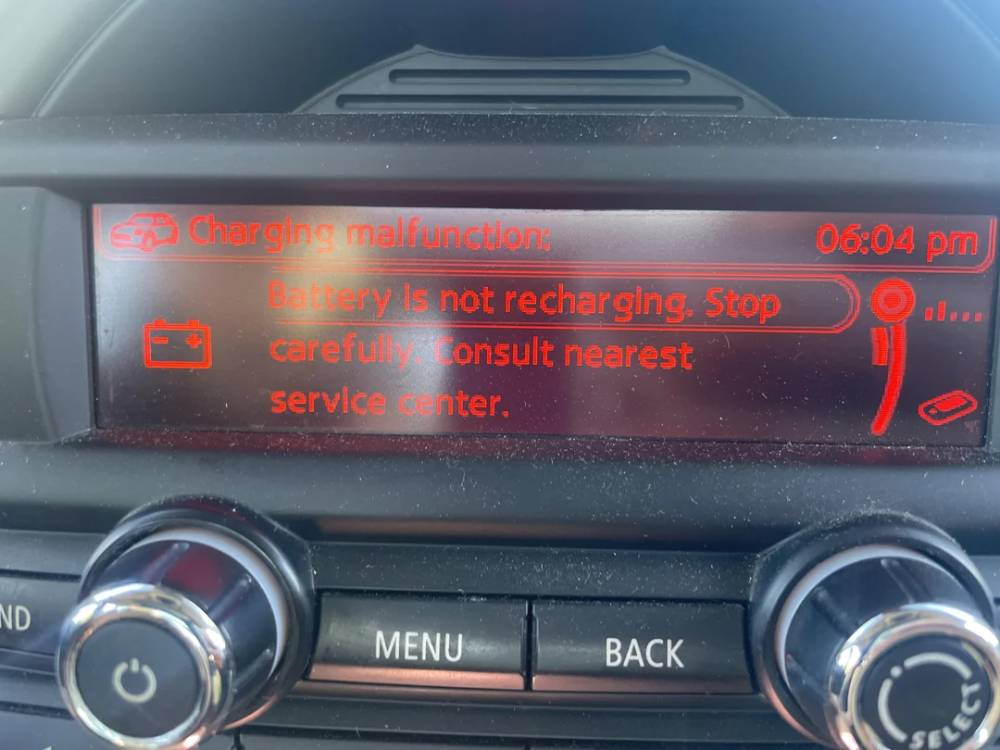
What Does a Mini Cooper Charging Malfunction Mean?
A charging malfunction warning indicates that your Mini Cooper’s charging system is not operating as intended. The charging system is responsible for supplying electrical power to the vehicle while keeping the battery charged. When the system detects abnormal voltage levels or communication errors between critical components, the vehicle’s onboard computer triggers a warning message to alert the driver.
Many owners mistakenly assume that this warning automatically means the battery has failed. In reality, the battery is only one component of a larger electrical network. A charging malfunction can result from issues involving the alternator, voltage regulator, battery sensor, wiring, ground connections, or drive belt.
Under normal operating conditions, the alternator generates electricity while the engine is running. This power is used to operate electrical systems such as headlights, infotainment systems, climate control, and engine management modules. At the same time, the alternator replenishes the battery’s charge. If the alternator cannot produce sufficient voltage or if power cannot reach the battery efficiently, the charging system warning may appear.
Modern MINI models are equipped with sophisticated battery management technology, including an Intelligent Battery Sensor (IBS). This sensor continuously monitors battery condition, charging performance, and power consumption. When inaccurate readings or sensor failures occur, the vehicle may display a charging malfunction message even if the battery itself remains healthy.
Understanding what the warning means is important because prolonged operation with a faulty charging system can eventually leave the vehicle unable to start or maintain essential electrical functions.
Common Causes of a Mini Cooper Charging Malfunction
Several components can trigger a charging malfunction warning in a Mini Cooper. Identifying the root cause is essential before replacing parts unnecessarily.
Failing Alternator
A worn or failing alternator is one of the most common reasons for charging system problems. Over time, internal components such as bearings, brushes, and diodes can wear out, reducing the alternator’s ability to generate electricity. As output decreases, the battery begins supplying more power than it receives, eventually causing the warning light to appear.
Weak or Damaged Battery
Although the battery may not be the primary cause in every case, an aging or internally damaged battery can create charging system irregularities. Most automotive batteries last between three and five years. Once battery capacity deteriorates, voltage fluctuations may trigger fault messages.
Faulty Voltage Regulator
The voltage regulator controls the amount of electrical output produced by the alternator. If the regulator fails, the system may either overcharge or undercharge the battery. Both conditions can damage electrical components and generate charging-related warnings.
Defective Intelligent Battery Sensor
Many MINI owners encounter issues related to the Intelligent Battery Sensor. When this sensor provides inaccurate information to the vehicle’s computer, the charging system may behave unpredictably, causing warning messages and battery management errors.
Worn or Slipping Serpentine Belt
The alternator relies on the serpentine belt for mechanical power. A loose, cracked, or slipping belt may prevent the alternator from spinning at the proper speed. As a result, charging performance declines and electrical issues may begin to appear.
Corroded Connections and Damaged Wiring
Electrical resistance caused by corrosion, loose battery terminals, damaged cables, or poor grounding points can interrupt charging current flow. Even a small amount of resistance can reduce system efficiency and trigger fault messages.
Blown Fuses and Electrical Control Module Issues
In some cases, charging malfunctions originate from blown fuses, damaged relays, or faults within the vehicle’s electrical control modules. These problems are less common but can be difficult to diagnose without proper testing equipment.
Symptoms of a Charging Malfunction
A charging system problem rarely appears without warning. Recognizing the symptoms early can help prevent a complete breakdown and reduce repair costs.
Battery Warning Light Illuminates
The battery symbol on the dashboard is often the first sign that something is wrong. While many drivers associate this light with battery failure, it frequently points to charging system issues instead.
Dim or Flickering Lights
Headlights, interior lighting, and dashboard illumination may become noticeably dim or begin flickering when system voltage drops below normal levels. This symptom often indicates alternator or wiring problems.
Difficulty Starting the Vehicle
A weak charging system gradually drains the battery. As battery voltage decreases, the engine may crank slowly or fail to start altogether. Drivers often experience intermittent starting issues before complete failure occurs.
Electrical Accessories Behaving Erratically
Modern MINI vehicles depend heavily on electronic systems. A charging malfunction may cause the infotainment system to restart unexpectedly, power windows to operate slowly, or climate control systems to function inconsistently.
Engine Stalling While Driving
In severe cases, the vehicle may stall because critical engine management systems no longer receive sufficient electrical power. This situation can create a significant safety risk, especially at highway speeds.
Burning Smell or Unusual Noises
A failing alternator bearing may produce grinding or whining noises. Likewise, an overheated alternator, slipping belt, or damaged wiring can create a burning smell. These symptoms should never be ignored because they may indicate imminent component failure.
Reduced Vehicle Performance
Some MINI models enter a protective mode when charging system problems are detected. The vehicle may disable nonessential features or reduce electrical loads in an attempt to preserve battery power. Drivers may notice warning messages, reduced comfort features, or limited system functionality as a result.
The sooner these symptoms are addressed, the greater the likelihood of avoiding expensive repairs and unexpected roadside breakdowns.
How to Diagnose a Mini Cooper Charging Malfunction
Accurately diagnosing a charging malfunction is essential before replacing any parts. Many MINI owners spend hundreds of dollars on unnecessary repairs because they assume the battery or alternator is at fault without performing proper testing. A systematic approach can save both time and money.
Check Battery Voltage
The first step is to measure battery voltage using a digital multimeter. With the engine turned off, a healthy battery should typically read around 12.4 to 12.7 volts. Anything significantly lower may indicate a weak or discharged battery.
Next, start the engine and measure voltage again. A properly functioning charging system should produce approximately 13.5 to 14.8 volts. If the reading remains close to the battery’s resting voltage, the alternator may not be charging correctly.
Inspect Battery Terminals and Ground Connections
Corrosion around battery terminals can create resistance that interferes with charging performance. Examine both positive and negative terminals for white, green, or blue deposits. Clean any corrosion and ensure all connections are tight and secure.
Ground connections should also be inspected carefully. Loose or damaged grounds can produce symptoms that mimic alternator failure.
Examine the Serpentine Belt
A visual inspection of the serpentine belt can reveal cracks, glazing, fraying, or excessive wear. A slipping belt may prevent the alternator from generating sufficient electrical power, particularly under heavy load conditions.
Scan for Diagnostic Trouble Codes
Using an OBD-II scanner can provide valuable information about the source of the problem. Modern MINI vehicles store fault codes whenever charging system abnormalities are detected. These codes often point technicians toward specific components requiring further inspection.
Test Alternator Performance
If voltage readings remain abnormal, the alternator should undergo additional testing. Professional load tests evaluate whether the alternator can maintain proper output under varying electrical demands. An alternator may appear functional at idle while failing under higher loads.
Inspect the Intelligent Battery Sensor
Many MINI charging issues involve the Intelligent Battery Sensor. Technicians should verify sensor communication and check for stored battery management faults. A malfunctioning sensor can produce inaccurate charging data and trigger warning messages even when major charging components are functioning correctly.
Common Fault Codes Related to Charging System Problems
When a charging malfunction occurs, the vehicle’s computer often stores diagnostic trouble codes that help identify the underlying issue. While fault codes should never be used as the sole basis for repairs, they provide important clues during the diagnostic process.
P0562: System Voltage Low
This code indicates that system voltage has dropped below the acceptable operating range. Common causes include a failing alternator, weak battery, poor electrical connections, excessive power draw, or damaged wiring.
Drivers may experience dim lights, slow engine cranking, and intermittent electrical failures when this code is present.
P0563: System Voltage High
This fault code appears when charging voltage exceeds safe limits. In most cases, a faulty voltage regulator is responsible. Overcharging can shorten battery life and potentially damage sensitive electronic components throughout the vehicle.
P0620: Generator Control Circuit Malfunction
The generator control circuit manages communication between the alternator and the engine control module. Problems within this circuit may prevent proper charging system operation and trigger warning lights.
Potential causes include damaged wiring, connector issues, alternator faults, or module communication failures.
P2503: Charging System Voltage Low
This code is commonly associated with insufficient charging performance. The battery may not be receiving enough current from the alternator, causing voltage to gradually decrease during vehicle operation.
Battery Management System Faults
Many MINI models generate manufacturer-specific codes related to battery monitoring and charging management. These codes often involve the Intelligent Battery Sensor, battery registration errors, energy management functions, or communication issues between electronic control units.
Why Fault Codes Matter
Fault codes provide valuable diagnostic direction, but they should always be interpreted alongside physical inspections and electrical testing. Replacing parts based solely on stored codes can lead to unnecessary expenses and unresolved problems.
Professional diagnostic equipment capable of reading MINI-specific modules often reveals information that generic code readers cannot access, making advanced diagnostics worthwhile for persistent charging issues.
Fixes for a Mini Cooper Charging Malfunction
Once the root cause has been identified, the appropriate repair can restore normal charging system operation and prevent future electrical problems.
Replace a Faulty Alternator
If testing confirms inadequate alternator output, replacement is typically the most effective solution. Modern MINI alternators are highly integrated units, and rebuilding is often less practical than installing a quality replacement.
Using OEM or high-quality aftermarket components helps ensure long-term reliability and proper communication with the vehicle’s electrical systems.
Install a New Battery
A battery that can no longer hold a charge should be replaced promptly. Selecting the correct battery type and capacity is important because MINI vehicles use sophisticated energy management systems that depend on accurate battery specifications.
Many newer models require battery registration after replacement so that the vehicle can properly manage charging behavior and battery health.
Replace a Defective Voltage Regulator
When charging voltage fluctuates excessively or exceeds recommended levels, replacing the voltage regulator may resolve the issue. In some MINI models, the regulator can be serviced separately, while others require replacement of the entire alternator assembly.
Repair or Replace the Serpentine Belt
A worn belt can significantly reduce charging performance. Replacing a cracked, stretched, or slipping serpentine belt restores proper alternator operation and prevents additional accessory drive issues.
Replace the Intelligent Battery Sensor
If diagnostics reveal battery sensor faults, installing a new Intelligent Battery Sensor may eliminate inaccurate charging data and recurring warning messages. This repair is relatively common on certain MINI generations.
Clean and Secure Electrical Connections
Corroded terminals and loose connectors can often be corrected without expensive component replacement. Thoroughly cleaning battery terminals, tightening connections, and repairing damaged grounds may restore proper voltage flow throughout the charging system.
Repair Damaged Wiring
Electrical wiring problems can be challenging to locate but are critical to address. Damaged insulation, broken conductors, water intrusion, or connector corrosion can interrupt charging system communication and power delivery.
Verify the Repair
After completing repairs, the charging system should be retested under various operating conditions. Voltage readings, fault code scans, and road testing help confirm that the issue has been fully resolved.
Addressing charging system problems early not only prevents unexpected breakdowns but also protects expensive electronic components from damage caused by unstable voltage conditions.
Can You Drive With a Charging Malfunction Warning?
The short answer is that you may be able to drive for a limited time, but it is generally not recommended. A charging malfunction warning indicates that the battery may not be receiving sufficient power from the charging system. Once the battery’s stored energy is depleted, the vehicle can lose critical electrical functions and eventually shut down.
The amount of time you can continue driving depends on the severity of the fault, battery condition, electrical load, and vehicle model. In some cases, drivers may travel several miles without experiencing noticeable issues. In others, the vehicle may stall within a short period after the warning appears.
One of the biggest risks involves unexpected engine shutdown. Modern MINI vehicles rely heavily on electronic control modules, fuel injection systems, sensors, and ignition components. Without adequate electrical power, these systems cannot operate correctly.
You should stop driving immediately if you notice multiple warning lights appearing simultaneously, headlights becoming significantly dimmer, electrical accessories shutting off unexpectedly, unusual burning smells, smoke, or signs of overheating. These symptoms may indicate a severe charging system failure that could lead to further damage or safety hazards.
If the warning appears while driving, reduce unnecessary electrical loads by turning off seat heaters, climate control, and nonessential accessories. Then proceed to a safe location or repair facility as soon as possible. Delaying diagnosis and repair can transform a relatively simple charging issue into a complete breakdown.
How Much Does It Cost to Fix a Mini Cooper Charging Malfunction?
Repair costs vary depending on the underlying cause, vehicle model, labor rates, and the quality of replacement parts. Because several components can trigger a charging malfunction warning, obtaining an accurate diagnosis before authorizing repairs is essential.
Battery replacement is often the least expensive repair, with total costs typically ranging from $150 to $450 depending on battery type and registration requirements. Premium AGM batteries used in many MINI models generally cost more than conventional batteries.
Alternator replacement is usually one of the more expensive repairs. Owners can expect costs ranging from $500 to $1,500, including parts and labor. Pricing varies significantly based on vehicle generation and engine configuration.
A faulty voltage regulator may cost between $200 and $700 to repair. In some cases, the regulator can be replaced separately, while other vehicles require complete alternator replacement.
Serpentine belt replacement is relatively affordable, typically ranging from $100 to $350. Replacing the belt early can help prevent more expensive charging system failures later.
Intelligent Battery Sensor replacement commonly costs between $150 and $500. The final price depends on the sensor location, labor complexity, and vehicle model.
Wiring repairs can vary dramatically. Minor connector repairs may cost less than $100, while extensive wiring harness replacement can exceed $1,000 due to labor-intensive troubleshooting and installation requirements.
Investing in proper diagnostics may seem costly initially, but it often prevents unnecessary part replacements and reduces overall repair expenses.
How to Prevent Future Charging System Problems
Preventive maintenance is the most effective way to avoid unexpected charging system failures and costly repairs. While some component failures occur naturally with age, many charging problems develop gradually and can be detected before they become serious.
Regular battery testing should be part of every maintenance routine. Having the battery tested annually allows potential weaknesses to be identified before they leave you stranded. This is particularly important in regions with extreme temperatures, where batteries often experience accelerated wear.
Routine inspection of the serpentine belt can also help prevent charging issues. Cracks, glazing, fraying, or unusual belt noise may indicate the need for replacement. Addressing belt wear early helps maintain consistent alternator performance.
Keeping battery terminals clean is another simple but important maintenance task. Corrosion can restrict electrical flow and create charging irregularities that may trigger warning messages. Periodic cleaning and inspection of terminal connections can improve overall system reliability.
Vehicle owners should also pay close attention to dashboard warning lights. Ignoring early warning signs often allows minor electrical issues to develop into major failures. Prompt diagnosis frequently results in lower repair costs and less downtime.
Using high-quality replacement parts is equally important. Inferior batteries, alternators, sensors, and electrical components may not meet factory specifications, potentially causing recurring problems and reduced service life.
Consistent maintenance, regular inspections, and timely repairs significantly reduce the likelihood of experiencing a charging malfunction and help ensure dependable vehicle performance.
Frequently Asked Questions
Why does my Mini Cooper say charging malfunction even though the battery is new?
A new battery does not guarantee a healthy charging system. The warning may be caused by a failing alternator, faulty Intelligent Battery Sensor, voltage regulator issues, damaged wiring, or battery registration problems in newer MINI models.
Can a bad alternator damage a new battery?
Yes. A defective alternator can undercharge or overcharge the battery. Both conditions can shorten battery lifespan and potentially cause permanent damage.
How long can I drive with a charging malfunction warning?
There is no fixed answer because it depends on battery condition and the severity of the fault. Some vehicles may continue operating for several miles, while others may shut down much sooner. Diagnosis should be performed as soon as possible.
Does a charging malfunction always mean I need a new alternator?
No. Although alternator failure is a common cause, charging malfunctions can also result from battery problems, faulty sensors, wiring defects, poor connections, blown fuses, or voltage regulator issues.
What voltage should a Mini Cooper charging system produce?
Most MINI charging systems operate between 13.5 and 14.8 volts while the engine is running. Readings outside this range may indicate charging system problems that require further inspection.
Conclusion
A Mini Cooper charging malfunction warning should never be ignored. While the battery is often the first component owners suspect, the actual cause can involve the alternator, voltage regulator, Intelligent Battery Sensor, serpentine belt, wiring, or electrical connections. Understanding how the charging system works makes it easier to identify potential problems before they lead to a complete breakdown.
Common symptoms such as dim lights, starting difficulties, battery warning indicators, electrical malfunctions, and engine stalling often provide valuable clues that something is wrong. Performing basic voltage tests, inspecting connections, and scanning for diagnostic trouble codes can help narrow down the source of the issue. However, professional diagnostics may be necessary when dealing with complex electrical faults.
The good news is that most charging system problems can be repaired successfully once the root cause is identified. Whether the solution involves replacing a battery, alternator, sensor, or damaged wiring, timely action can prevent more expensive repairs and improve long-term reliability.
By following a proactive maintenance schedule, monitoring warning signs, and addressing electrical issues promptly, MINI owners can reduce the risk of unexpected failures and enjoy a more dependable driving experience. If your vehicle displays a charging malfunction warning, treating it as an early warning rather than a minor inconvenience can save significant time, money, and frustration in the future.