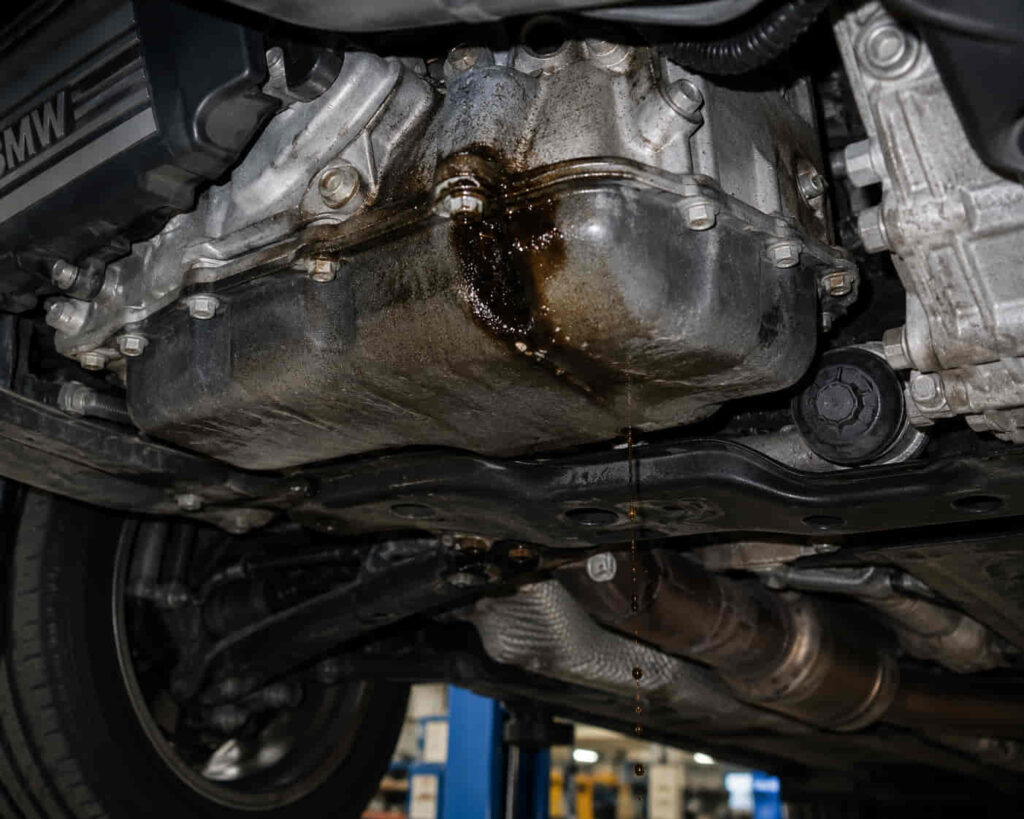
A BMW X5 oil leak most often develops when an engine gasket, seal, or oil-system connection no longer contains engine oil effectively. The exact source varies by engine, model year, and component location, so oil visible under the vehicle does not always reveal where the leak started. Oil can travel down the engine or along surrounding components before reaching the ground, making accurate diagnosis important before any part is replaced.
An oil leak can range from minor seepage around a gasket to an active leak that causes measurable oil loss. Common warning signs include oil spots after parking, visible oil residue around the engine, a burning-oil smell, smoke from the engine bay, and a declining engine oil level. The severity depends primarily on the leak rate, oil level, leak location, and whether escaping oil reaches hot or sensitive components.
Identifying the source early helps prevent a relatively localized sealing problem from developing into a more expensive repair. This guide explains the common causes and locations of BMW X5 oil leaks, the symptoms that help identify them, how serious a leak can become, how technicians diagnose the source, and which repair options address the underlying problem.
What Are the Most Common Causes of a BMW X5 Oil Leak?
The most common BMW X5 oil leaks develop when a gasket or seal loses its ability to maintain an oil-tight connection between engine components. The exact failure point depends on the engine and model year, but the valve cover gasket, oil filter housing gasket, oil pan gasket, and engine seals are key areas to inspect when engine oil appears outside the lubrication system. Heat cycles, age, and deterioration of sealing materials can allow oil to move through a connection that was previously sealed.
A valve cover gasket leak develops around the upper portion of the engine where the gasket seals the valve cover to the cylinder head. Once this seal deteriorates, engine oil can escape around the perimeter of the valve cover and spread across nearby surfaces. Because the leak begins relatively high on the engine, gravity can carry the oil downward and make the source appear to be a lower component. Oil reaching a sufficiently hot surface can also produce a burning-oil odor, so a smell from the engine compartment can be an important diagnostic clue rather than evidence that the engine is internally burning oil.
The oil filter housing is another potential leak source because its gasket maintains a seal between oil-carrying components. A failed oil filter housing gasket allows pressurized engine oil to escape around the housing rather than remaining inside the lubrication circuit. The resulting residue can spread beyond the original sealing point, particularly after the vehicle has been driven. Correct diagnosis therefore requires identifying fresh oil at its highest or earliest visible source rather than replacing a component simply because oil has collected near it.
Oil can also escape from the lower portion of the engine around the oil pan and its sealing surfaces. An oil pan gasket leak is especially likely to produce wet residue underneath the engine and may eventually leave drops on the ground after the BMW X5 is parked. However, oil found around the oil pan does not prove that the oil pan gasket has failed. A leak originating higher on the engine can travel downward and collect around the same area, which is why cleaning and inspecting the engine may be necessary before the true source becomes apparent.
Engine seals can create additional leak paths. Crankshaft seals and other sealing points are designed to retain oil where moving and stationary engine components meet. When one of these seals fails, repairing the BMW X5 oil leak requires addressing the failed seal itself, not simply replacing the oil that has been lost. Access requirements can differ substantially between sealing points, so two leaks that appear similar from outside the vehicle can require very different repair procedures and labor time.
Where Does a BMW X5 Commonly Leak Oil From?
A BMW X5 can leak oil from the upper engine, around oil-system connections, from lower engine sealing surfaces, or from engine seals. Finding the physical location of oil is the first diagnostic step, but the lowest wet component should not automatically be treated as the source. Engine oil flows downward under gravity and can also spread across adjacent surfaces while the vehicle is moving.
Oil visible near the top of the engine directs attention toward upper sealing areas such as the valve cover and its gasket. Oil around an oil filter housing requires inspection of the housing and its sealing surfaces, while fresh oil concentrated around the bottom of the engine can indicate a lower-engine leak such as an oil pan sealing problem. The diagnostic distinction is important because residue from an upper leak can eventually reach the underbody and produce symptoms that resemble a leak originating at the bottom of the engine.
The location of the oil spot underneath a parked BMW X5 is also not a reliable component-level diagnosis by itself. Underbody panels and surrounding components can catch leaking oil, allow it to travel, and release it at a different point. For example, a drop appearing near the center of the vehicle does not necessarily mean that the component directly above that spot has failed. The engine must be inspected for the path the oil followed back toward its origin.
The correct leak location is the point where fresh engine oil first escapes from the engine or lubrication system. Establishing that point before replacing gaskets or seals reduces the risk of repairing the wrong component. This distinction becomes particularly important when several areas are covered with old oil residue or when a BMW X5 has more than one potential sealing problem.
What Are the Signs of an Oil Leak on a BMW X5?
The main signs of a BMW X5 oil leak are visible oil residue, oil spots under the vehicle, a burning-oil smell, smoke from the engine bay, and a declining engine oil level. These symptoms indicate that engine oil may be escaping from the lubrication system, but they do not identify the failed component by themselves. The location, amount, and condition of the leaked oil must be considered together to determine where the problem originates.
Oil underneath a parked BMW X5 is one of the clearest external signs of an active leak. A small spot indicates that oil has reached the ground, while repeated spots or a growing puddle indicate continued fluid loss that requires investigation. The position of the spot should only be treated as an initial clue because oil can travel across the engine, underbody panels, and surrounding components before dripping onto the ground. Fresh residue must be traced toward its highest point to identify the actual source.
A burning-oil smell develops when escaping engine oil reaches a component hot enough to heat or burn the residue. This symptom can occur even when no oil reaches the ground because a leak from an upper engine sealing point may deposit oil on nearby hot surfaces first. Visible smoke from the engine bay can occur through the same mechanism. Smoke accompanied by an active leak requires prompt inspection because the problem involves more than cosmetic oil residue.
A declining engine oil level provides another important warning sign. Repeated oil loss means the cause must be identified even when there is no visible puddle beneath the BMW X5. An external leak is one possible explanation, but oil consumption can also reduce the measured oil level. Diagnosis therefore needs to distinguish oil escaping externally from oil being consumed internally instead of assuming that every drop in oil level is caused by a leaking gasket.
How Serious Is an Oil Leak on a BMW X5?
A BMW X5 oil leak becomes serious when it causes significant oil loss, lowers the engine oil level, reaches hot or sensitive components, or produces warning indicators while the vehicle is operating. Minor seepage and rapid oil loss do not represent the same level of risk. Severity should be determined from the leak rate, remaining oil level, leak location, and associated symptoms rather than from the presence of oil residue alone.
Minor seepage generally describes a sealing area that is damp with oil without producing substantial dripping or measurable oil loss over a short period. An active leak is different because fresh oil continues to escape and may form drops beneath the vehicle. The distinction matters because an active leak can progressively lower the available engine oil and turn a localized gasket or seal problem into a lubrication problem.
Low engine oil increases the potential for engine damage because engine components depend on an adequate supply of oil for lubrication. The immediate mechanical risk increases when the leak causes the oil level to fall below the level required for proper engine lubrication. Adding oil can restore the level temporarily, but it does not repair the gasket, seal, housing, or other component that allowed the oil to escape.
Leak location also changes the level of urgency. Oil that remains around a relatively cool external surface creates a different condition from oil reaching hot engine or exhaust-related surfaces. A burning smell or visible smoke indicates that leaked oil is contacting an area where temperature has become part of the problem. Similarly, an oil warning combined with continuing fluid loss requires greater attention than old, dry residue discovered during a routine inspection.
For this reason, the seriousness of a BMW X5 oil leak should be classified by its effect rather than by leak size alone. A technician needs to establish where the oil originates, how quickly it is escaping, whether the engine oil level is declining, and which components are being contaminated. These factors determine whether the vehicle requires monitoring, scheduled repair, or immediate attention.
Can You Drive a BMW X5 With an Oil Leak?
You should not continue driving a BMW X5 with an oil leak when the engine oil level is critically low, an oil-pressure warning appears, the leak is rapidly losing oil, or leaked oil is producing significant smoke. Continuing to operate the engine under these conditions can increase the risk of lubrication-related engine damage and can allow the underlying leak to worsen.
A minor seep does not automatically mean the BMW X5 must stop operating immediately, but it still requires diagnosis. The important distinction is whether the engine retains an adequate oil level and whether the leak is stable or actively worsening. A small amount of residue discovered during maintenance is different from fresh oil repeatedly appearing underneath the vehicle after each drive.
Checking the oil level helps determine the immediate condition, but maintaining the correct level is not a permanent repair. Repeatedly adding engine oil compensates for lost fluid while leaving the failed sealing point unchanged. The leak can also spread oil across additional components, making later diagnosis more difficult and potentially increasing the scope of cleanup or repair.
Stop driving and arrange an inspection when an oil warning is accompanied by substantial oil loss, abnormal engine behavior, heavy smoke, or evidence of a rapidly developing leak. When the symptoms are less severe, the BMW X5 should still be inspected to establish the leak source before a minor sealing issue develops into a larger oil-loss problem.
How Is a BMW X5 Oil Leak Diagnosed?
A BMW X5 oil leak is diagnosed by locating the first point where fresh engine oil escapes, identifying the component or sealing surface responsible, and confirming that the residue is from an active leak rather than an older spill. Diagnosis should establish the source before parts are replaced because oil can travel downward from an upper-engine leak and accumulate around components that are not actually leaking.
The inspection begins by examining the engine and surrounding areas for fresh oil, wet sealing surfaces, accumulated residue, and the path the oil has followed. The highest fresh point is particularly important. Oil around the lower engine, for example, does not automatically confirm an oil pan gasket leak when oil has already traveled downward from a valve cover or another higher sealing point. Following the oil path toward its origin provides stronger diagnostic evidence than relying on the location of a puddle underneath the vehicle.
Old residue can make the diagnosis less clear. Oil left from a previous leak, repair, or spill may remain on engine surfaces after the original problem has been corrected. Cleaning contaminated areas and inspecting them again after the engine has operated can help separate existing residue from newly escaping oil. An active leak produces fresh evidence around the source, while old contamination does not continue to develop in the same way.
The diagnosis should also consider the rate of oil loss and changes in engine oil level. A wet gasket with no measurable loss presents a different condition from a component that releases enough oil to require repeated topping up. Burning-oil odor, smoke, warning indicators, and the areas contaminated by the leak provide additional context for determining urgency.
When the source cannot be identified through a straightforward visual inspection, further leak-detection procedures may be required. The appropriate method depends on the suspected location and engine configuration. The objective remains the same: confirm the actual failure point before recommending a BMW X5 oil leak repair. This prevents unnecessary replacement of nearby gaskets or seals simply because they are covered with oil.
How Do You Fix an Oil Leak on a BMW X5?
Fixing a BMW X5 oil leak requires repairing or replacing the component, gasket, seal, or connection that allows engine oil to escape. Cleaning leaked oil or repeatedly adding engine oil does not correct the underlying failure. The repair must restore the oil-tight seal at the confirmed source.
A leaking valve cover gasket is repaired by accessing the valve cover sealing area, replacing the failed sealing material as required, and ensuring that the mating surfaces can form an effective seal again. An oil filter housing leak requires attention to the housing and its sealing connection, while a confirmed oil pan gasket leak requires repair of the lower-engine sealing surface. A failed engine seal requires a different procedure because access to the seal can involve additional component removal.
This difference in access explains why BMW X5 oil leak repairs can vary substantially in complexity even when the visible symptoms appear similar. Replacing a gasket is not defined only by the price of the gasket itself. Components that obstruct access must be removed and reinstalled correctly, contaminated areas may need to be cleaned, and the repaired sealing point should be checked for continued leakage after the work is completed.
Correct diagnosis should therefore come before the repair decision. Replacing the component nearest to visible oil without confirming the source can leave the original BMW X5 oil leak unresolved. For example, oil accumulated around the lower engine may originate from a sealing point higher above it. Replacing a lower gasket in that situation would address the location where oil collected rather than the location where it escaped.
After the repair, the affected area should be inspected for fresh leakage and the engine oil level should remain within the correct operating range. This final verification distinguishes a completed repair from a temporary cleanup. If fresh oil reappears, either the original sealing problem remains or another leak source requires diagnosis.
How Much Does It Cost to Fix a BMW X5 Oil Leak?
The cost to fix a BMW X5 oil leak depends primarily on the failed component, the labor required to reach it, the engine configuration, and whether the leak has affected surrounding parts. There is no single repair price that accurately represents every BMW X5 oil leak because replacing an accessible gasket and repairing a difficult-to-reach engine seal involve different parts and labor requirements.
Labor can account for a significant portion of the repair because access varies by leak location. A relatively inexpensive gasket can still result in a higher total repair bill when multiple components must be removed before the sealing surface can be reached. Conversely, a leak that can be accessed with less disassembly may cost less to repair even when both problems involve deteriorated sealing materials.
The BMW X5 model year and engine also affect the estimate because component layout and repair procedures are not identical across every X5. A meaningful quote should therefore identify the vehicle and confirmed leak source before assigning a price. A repair estimate based only on the phrase “BMW X5 oil leak” is less reliable than an estimate based on the specific engine, failed component, required parts, and labor time.
Additional work can increase the final cost when leaked oil has contaminated surrounding areas or when another problem is discovered during diagnosis. This is another reason to inspect an oil leak before it progresses. Repairing a confirmed sealing failure while the problem remains localized can prevent continued oil loss and reduce the amount of contamination that must be addressed during service.
For an accurate BMW X5 oil leak repair cost, the leak should first be diagnosed and the estimate should then separate the required repair from any additional recommended work. This approach gives the vehicle owner a component-specific repair decision instead of a generic price range that may not apply to the actual leak.
Do BMW X5 Oil Leak Problems Differ by Model Year or Engine?
BMW X5 oil leak problems can differ by model year, generation, engine configuration, and the location of the sealing components used on that engine. The X5 name covers multiple vehicle generations and powertrains, so a leak source associated with one configuration should not automatically be described as a common failure across every BMW X5.
Engine configuration matters because the location of the valve cover, oil filter housing, oil pan, seals, and surrounding components determines both how a leak develops and where the escaping oil becomes visible. Different component layouts also change the amount of disassembly required to reach a failed sealing point. As a result, two BMW X5 models displaying similar oil spots underneath the vehicle may have different leak sources and require different repair procedures.
Model year should therefore be treated as diagnostic context rather than proof of a specific failure. A technician can use the vehicle’s year and engine to narrow the inspection to relevant components, but the repair should still be based on physical evidence of the active leak. This prevents a component from being replaced solely because it has been associated with oil leaks on other BMW X5 vehicles.
The engine and confirmed leak location provide more useful repair information than the BMW X5 name alone. Vehicle-specific identification becomes especially important when estimating labor because component accessibility and the steps required for replacement can change between engine configurations. A reliable diagnosis should therefore connect the individual vehicle to the actual failed component before a repair procedure or cost is determined.
How Can You Prevent Oil Leaks on a BMW X5?
BMW X5 oil leak problems can be limited by monitoring the engine oil level, inspecting developing seepage, checking for fresh oil residue during maintenance, and repairing confirmed sealing failures before substantial oil loss occurs. Preventive maintenance cannot guarantee that a gasket or seal will never deteriorate, but it can identify a developing leak before the problem becomes more severe.
Regular inspection is valuable because an oil leak can begin as wet residue around a sealing surface before enough oil escapes to leave a visible spot on the ground. Finding fresh oil during routine maintenance creates an opportunity to determine whether the condition is minor seepage or an active leak. The location should then be monitored or diagnosed rather than assuming that every trace of oil requires immediate replacement of a component.
Monitoring engine oil level provides another way to identify a developing problem. A level that repeatedly declines after being corrected requires investigation because the oil is either escaping externally or being consumed elsewhere. Adding oil restores the quantity available to the engine, but repeated topping up should not replace diagnosis when the level continues to fall.
Keeping the engine and affected areas reasonably free of accumulated oil residue also improves future diagnosis. Heavy contamination can hide the point where fresh oil first appears and make multiple components look as though they are leaking. Once an active leak has been repaired, removing residual oil makes it easier to determine whether the repair remains dry or another source is present.
The most effective preventive action is to address a confirmed active leak before it causes significant oil loss or contaminates additional components. Early inspection keeps the repair focused on the original failure and provides a clearer basis for deciding when the sealing component actually needs replacement.
When Should a BMW X5 Oil Leak Be Inspected by a Repair Shop?
A BMW X5 oil leak should be professionally inspected when fresh oil repeatedly appears under the vehicle, the engine oil level continues to fall, a burning-oil smell or smoke develops, an oil-related warning appears, or the leak source cannot be identified visually. These conditions indicate that the problem requires more than observing old residue around the engine.
Repeated dripping is particularly important because it confirms that oil continues to leave the system. The amount visible on the ground does not necessarily represent the total amount lost, since oil can remain on engine surfaces and underbody components before reaching the pavement. An inspection should trace that oil back to its origin and determine whether the responsible component is a gasket, seal, housing connection, or another oil-containing part.
A burning-oil smell or visible smoke also justifies prompt inspection because the location of the leak has allowed oil to reach a hot surface. The objective is not only to replace lost oil but to stop the source of the contamination. Similarly, a declining oil level requires investigation when repeated corrections do not stabilize it.
An oil-related warning changes the priority of the problem. Do not treat a warning associated with substantial oil loss as a routine seepage issue. The engine depends on adequate lubrication, so the operating condition must be evaluated before continued driving when oil loss is significant or an oil-pressure warning is present.
Professional diagnosis is also appropriate when several areas of the engine are covered with oil and the original source cannot be distinguished. Replacing the most visibly contaminated gasket without establishing where fresh oil begins can lead to an unnecessary repair while leaving the actual leak unresolved. A component-specific diagnosis provides the basis for selecting the correct repair, estimating the required labor, and verifying that the BMW X5 oil leak has stopped after service.