When your Mercedes-Benz dashboard suddenly shows the check engine light, finding the exact cause can be frustrating. One of the most common and confusing diagnostic issues is the Mercedes P0300 Code, which indicates a random or multiple cylinder misfire detected by the engine control unit. Unlike a single cylinder misfire code, this problem does not immediately point to one specific component, making diagnosis more challenging for many vehicle owners.
A Mercedes with a P0300 code may experience rough idling, engine shaking, poor acceleration, reduced fuel efficiency, or hesitation during driving. In some cases, drivers replace spark plugs or ignition coils only to discover that the misfire problem returns because the real cause has not been identified.
Understanding why the Mercedes P0300 Code appears is the first step toward an effective repair. The issue can come from several areas, including the ignition system, fuel delivery system, air intake system, engine compression, or electronic components. A proper diagnosis helps prevent unnecessary repairs and protects expensive engine parts from further damage.
In this guide, you will learn what the Mercedes P0300 Code means, the most common causes behind random engine misfires, the symptoms you should watch for, the correct diagnostic process, and the best solutions to fix the problem. Whether you drive a Mercedes C-Class, E-Class, GLC, or another model, this information will help you understand the issue and make better repair decisions.
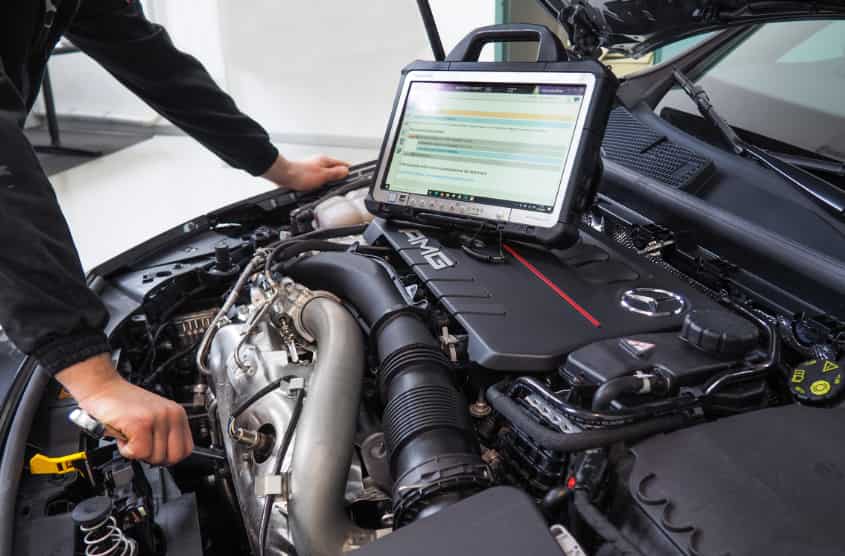
What Does Mercedes P0300 Code Mean?
The Mercedes P0300 Code is a diagnostic trouble code that indicates the engine control unit has detected random or multiple cylinder misfires. In simple terms, the engine is not burning the air and fuel mixture correctly in one or more cylinders, but the system cannot identify a single cylinder responsible for the problem.
When a misfire occurs, the combustion process becomes unstable. The engine control unit monitors changes in crankshaft speed to determine whether each combustion event happens correctly. If the system detects irregular engine rotation caused by incomplete combustion, it stores the P0300 code and activates the check engine light.
Unlike specific misfire codes such as P0301 or P0302, which identify a problem with a particular cylinder, the Mercedes P0300 Code suggests that the issue may involve multiple cylinders or a condition affecting the entire engine. This makes troubleshooting more complex because the cause can come from different systems rather than one failed component.
Several factors can trigger a Mercedes P0300 Code, including worn spark plugs, weak ignition coils, fuel injector problems, vacuum leaks, sensor failures, or mechanical engine issues. Some Mercedes engines with direct injection technology may also develop carbon buildup over time, which can affect combustion efficiency and contribute to misfire problems.
Correct diagnosis is important because replacing parts without identifying the root cause can lead to unnecessary expenses. A professional inspection usually involves scanning the engine control unit, checking misfire data, testing ignition components, inspecting the fuel system, and evaluating engine performance. Finding the real cause allows Mercedes owners to repair the problem effectively and prevent the misfire from returning.
Common Symptoms of Mercedes P0300 Code
Recognizing the symptoms of a Mercedes P0300 Code helps owners detect engine problems early. This code indicates a random or multiple cylinder misfire. The symptoms can change based on the cause and severity of the issue.
The most common warning sign is the check engine light. The light may stay on while the vehicle still runs normally. In more serious cases, the light can flash. A flashing check engine light usually means the misfire is severe. It can send unburned fuel into the exhaust system and damage the catalytic converter.
Another common symptom is a rough engine idle. The Mercedes engine may shake or vibrate when the vehicle is stopped. The RPM may also become unstable. This happens because the combustion process is not consistent across the cylinders.
Many drivers also notice hesitation during acceleration. The vehicle may feel slower than usual. It may struggle when climbing hills or gaining speed. A misfiring engine cannot produce the same level of power as a healthy engine.
Poor fuel economy is another sign of a Mercedes P0300 Code. When combustion becomes inefficient, the engine may require more fuel to maintain performance. As a result, fuel consumption increases while engine output decreases.
Some Mercedes owners experience difficult starts, especially when the engine is cold. Problems with spark plugs, ignition coils, fuel delivery, or air intake can prevent stable combustion during startup.
Ignoring these symptoms can lead to bigger issues. Continuous misfires can increase engine stress and reduce vehicle reliability. They can also cause expensive damage to components such as the catalytic converter.
Early diagnosis is the best way to prevent unnecessary repairs. Understanding these symptoms allows Mercedes owners to take action before the problem becomes more serious.
What Causes Mercedes P0300 Random Misfire?
A Mercedes P0300 Code can appear because of many different problems. This code does not point to one specific failed part. Instead, it shows that the engine is experiencing inconsistent combustion across one or more cylinders.
Finding the real cause is important. Replacing parts without proper testing can become expensive. Many Mercedes owners replace spark plugs or ignition coils first, but the misfire may continue because another system is causing the problem.
Ignition System Problems
The ignition system is one of the most common causes of a Mercedes P0300 Code. This system creates the spark needed to ignite the air and fuel mixture inside the combustion chamber.
Worn spark plugs can reduce ignition performance. Over time, the spark plug electrode can wear down. Carbon buildup can also weaken the spark. When the spark becomes inconsistent, the engine may misfire.
Faulty ignition coils are another common cause. A weak coil cannot provide enough voltage for proper combustion. The problem may become more noticeable during acceleration because the engine requires a stronger spark under higher load.
Mercedes engines such as the M272, M274, and M276 can experience ignition-related misfire problems as mileage increases. Regular inspection of spark plugs and ignition coils can help prevent these issues.
Fuel System Problems
The fuel system also plays an important role in engine combustion. If the engine does not receive the correct amount of fuel, misfires can occur.
Dirty or failing fuel injectors are common causes of poor combustion. An injector that does not spray fuel correctly can create an uneven air and fuel mixture. This can affect one or multiple cylinders.
Low fuel pressure can also trigger a Mercedes P0300 Code. A weak fuel pump, restricted fuel filter, or fuel delivery issue may prevent the engine from receiving enough fuel.
Fuel quality should also be considered. Contaminated or poor-quality fuel can affect injector performance and engine operation.
Air Intake and Mixture Problems
The engine needs the correct balance of air and fuel to operate smoothly. Any issue that changes this balance can create a misfire.
A vacuum leak is a common example. Damaged hoses, intake leaks, or problems with the PCV system can allow extra air to enter the engine. This creates a lean air and fuel mixture.
A lean mixture makes combustion weaker. The engine may run rough, lose power, and trigger the Mercedes P0300 Code.
Problems with sensors can also affect the air and fuel balance. A faulty mass airflow sensor or oxygen sensor may send incorrect information to the engine control unit.
Engine Mechanical Problems
Sometimes, the cause of a Mercedes P0300 Code is related to internal engine conditions. These problems require deeper diagnosis.
Low engine compression can prevent proper combustion. This may happen because of worn piston rings, damaged valves, or cylinder problems.
Carbon buildup is another possible cause, especially on Mercedes engines with direct injection technology. Deposits inside the intake system or combustion chamber can affect airflow and fuel burning efficiency.
Mechanical problems are usually more expensive to repair. However, identifying them early can prevent further engine damage.
Electronic and Control System Issues
Modern Mercedes engines depend on many electronic components. A failure in the control system can also contribute to random misfires.
Faulty sensors, incorrect engine data, or outdated ECU software may affect how the engine manages fuel and ignition timing.
A complete diagnostic scan is necessary before replacing expensive components. The goal is to identify the root cause and choose the correct repair method.
Understanding these common causes helps Mercedes owners approach a P0300 problem correctly. A proper diagnosis can save time, reduce repair costs, and prevent the same misfire issue from returning.
How To Diagnose Mercedes P0300 Code Step by Step
Diagnosing a Mercedes P0300 Code requires a systematic approach. This code can be caused by many different issues. A proper diagnosis helps identify the real problem before replacing any parts.
Many repair mistakes happen because technicians replace common components without testing the complete system. Spark plugs and ignition coils are often replaced first, but they are not always the actual cause. A detailed inspection can save time and reduce unnecessary repair costs.
Scan the Engine Control Unit
The first step is connecting a diagnostic scanner to the Mercedes engine control unit. Professional Mercedes technicians often use XENTRY diagnostic equipment. Advanced OBD2 scanners can also provide useful information.
The scan should include more than reading the P0300 code. Important data includes freeze frame information, engine temperature, RPM, fuel trim values, and misfire counters.
The misfire counter shows how often the engine detects combustion problems. This information helps determine whether the problem affects specific cylinders or multiple cylinders.
Inspect Spark Plugs and Ignition Components
After scanning the system, the next step is checking the ignition system. Spark plugs should be inspected for wear, carbon deposits, or abnormal coloring.
A damaged spark plug can create a weak spark. This prevents the fuel mixture from burning correctly.
Ignition coils should also be tested. A common method is moving a suspected coil to another cylinder. If the misfire moves with the coil, the ignition coil may be faulty.
This testing method helps avoid replacing good parts unnecessarily.
Check the Fuel System
The fuel system should be inspected when ignition components appear normal. Fuel injectors need to deliver the correct amount of fuel at the correct time.
A technician may test injector performance, fuel pressure, and fuel delivery. Dirty injectors can often be cleaned. However, damaged injectors may require replacement.
Fuel pressure problems should also be considered. A weak fuel pump or restricted fuel supply can create a lean condition and trigger a Mercedes P0300 Code.
Inspect for Vacuum Leaks
Air leaks are another important area to check. A vacuum leak allows extra air to enter the engine without being measured correctly.
Common leak locations include intake hoses, vacuum lines, and PCV system components.
A lean air and fuel mixture can cause unstable combustion. This often leads to rough idle, hesitation, and random misfires.
Smoke testing is a common method used to locate hidden vacuum leaks. It allows technicians to identify small leaks that are difficult to see during a visual inspection.
Perform Engine Compression Testing
If ignition, fuel, and air systems appear normal, the engine itself should be tested.
A compression test checks whether each cylinder can create enough pressure during the combustion process. Low compression may indicate internal engine problems.
Possible causes include damaged valves, worn piston rings, or cylinder wear.
Mechanical issues require more advanced repairs. However, identifying them early can prevent further engine damage.
Review Sensor and ECU Data
Modern Mercedes engines depend on sensors to control fuel delivery and ignition timing. Faulty sensors can create incorrect engine adjustments.
Important components to check include the mass airflow sensor, oxygen sensors, crankshaft position sensor, and camshaft position sensor.
ECU software updates may also solve certain performance issues on some Mercedes models.
A complete diagnosis of a Mercedes P0300 Code should always focus on finding the root cause. Testing each system in the correct order prevents unnecessary part replacement and leads to a more reliable repair.
How To Fix Mercedes P0300 Code
Fixing a Mercedes P0300 Code starts with finding the correct cause. There is no single repair that works for every vehicle. The solution depends on which system is creating the random misfire.
A proper repair should focus on the root problem. Replacing multiple parts without testing can increase costs and may not solve the issue. Once the cause has been identified, the repair process becomes more accurate and effective.
Replace Worn Spark Plugs
Spark plug replacement is one of the most common solutions for a Mercedes P0300 Code. Spark plugs wear over time and lose their ability to create a strong ignition spark.
Old spark plugs may have worn electrodes, carbon buildup, or incorrect gaps. These problems reduce combustion efficiency and can cause engine misfires.
Installing high-quality spark plugs that meet Mercedes specifications can restore proper ignition performance. Regular spark plug maintenance also helps prevent future misfire problems.
Replace Faulty Ignition Coils
Ignition coils provide the voltage needed for spark plug operation. When a coil becomes weak or fails, the engine may experience unstable combustion.
A faulty ignition coil can create hesitation, rough idle, and poor acceleration. In many cases, replacing the damaged coil will resolve the Mercedes P0300 Code.
It is important to test the ignition system before replacement. Some misfire problems may come from wiring issues or other engine conditions instead of the coil itself.
Clean or Replace Fuel Injectors
Fuel injectors control how fuel enters the combustion chamber. When injectors become dirty or fail, the engine may receive an incorrect amount of fuel.
Cleaning the injectors can restore proper fuel flow in some cases. However, damaged injectors may need complete replacement.
A balanced fuel delivery system is essential for smooth engine operation. Correct fuel pressure and injector performance help maintain efficient combustion.
Repair Vacuum Leaks
A vacuum leak can create a lean air and fuel mixture. This means the engine receives too much air and not enough fuel for proper combustion.
Common repairs include replacing damaged hoses, fixing intake leaks, or repairing PCV system components.
After repairing a vacuum leak, the engine control unit can return to normal fuel adjustments. This often improves idle quality and reduces misfire symptoms.
Remove Carbon Buildup
Some Mercedes engines use direct injection technology. Over time, carbon deposits can build up inside the intake system and combustion areas.
Heavy carbon buildup can affect airflow and combustion efficiency. Cleaning the affected areas may improve engine performance and reduce misfire problems.
This repair is more common on engines with higher mileage or poor maintenance history.
Repair Engine Mechanical Problems
If testing shows low compression or internal engine damage, mechanical repairs may be required.
Possible repairs include valve repair, cylinder repair, or piston-related work. These issues are more complex and usually require professional service.
Mechanical problems should not be ignored because they can become more expensive over time.
Update or Repair Electronic Components
Some Mercedes P0300 problems may involve electronic systems. Faulty sensors or outdated ECU software can affect ignition and fuel control.
A diagnostic scan can reveal sensor problems or communication issues. In some cases, a software update may improve engine operation.
The best way to fix a Mercedes P0300 Code is to follow a complete diagnostic process. Correct identification of the problem leads to a faster repair, lower costs, and better long-term reliability.
Mercedes P0300 Repair Cost: What Should You Expect?
The Mercedes P0300 repair cost depends on the cause of the random misfire. Some repairs are simple, while others require advanced diagnosis and expensive engine work.
The first step is a proper diagnostic inspection. A technician needs to identify the source of the misfire before replacing any parts. This helps prevent unnecessary repairs and reduces long-term costs.
The average repair cost can change based on the Mercedes model, engine type, damaged components, and local labor rates.
| Repair Type | Estimated Cost |
|---|---|
| Diagnostic scan | $100 to $200 |
| Spark plug replacement | $150 to $400 |
| Ignition coil replacement | $200 to $800 |
| Fuel injector repair | $300 to $1,500 |
| Vacuum leak repair | $100 to $500 |
| Engine repair | $1,500 or more |
Spark plugs and ignition coils are among the most common repairs for a Mercedes P0300 Code. These components are easier to replace and usually cost less than major engine repairs.
Fuel injector problems can increase repair expenses because testing, cleaning, or replacement may be required. If the issue involves low compression or internal engine damage, the cost can become significantly higher.
Early diagnosis is the best way to control Mercedes P0300 repair costs. Ignoring a misfire can lead to additional damage, including catalytic converter failure and reduced engine performance.
A correct diagnosis helps Mercedes owners choose the right repair solution and avoid spending money on unnecessary parts.
Can You Drive a Mercedes With P0300 Code?
Driving with a Mercedes P0300 Code depends on the severity of the misfire. In some cases, the vehicle may still operate normally. However, ignoring the problem for too long can create serious engine damage.
If the check engine light is steady and the vehicle runs smoothly, short-distance driving may be possible. However, the issue should still be diagnosed as soon as possible. A small misfire can become a larger problem over time.
A flashing check engine light is a more serious warning. It usually indicates an active and severe misfire. Continuing to drive in this condition can send unburned fuel into the exhaust system. This can overheat and damage the catalytic converter.
Drivers should also avoid continuing to drive if the Mercedes has strong shaking, major power loss, or unusual engine noises. These symptoms may indicate a more serious combustion or mechanical problem.
A persistent misfire can affect fuel economy, engine performance, and overall reliability. It may also increase repair costs because other components can become damaged.
The safest approach is to diagnose the Mercedes P0300 Code early. A professional inspection can identify the cause and prevent unnecessary damage. Addressing the problem quickly helps maintain engine performance and protects expensive Mercedes components.
Mercedes Models Commonly Affected by P0300 Code
The Mercedes P0300 Code can appear on many Mercedes-Benz models because modern engines rely on complex ignition, fuel, and electronic systems. While the code is not limited to one specific vehicle, some models and engine families are more commonly associated with random misfire problems.
The Mercedes C-Class is one of the models where owners may experience P0300 related issues. Models such as the C250 and C300 can develop misfire symptoms caused by ignition problems, carbon buildup, or fuel system issues. Regular maintenance is important because worn spark plugs and weak ignition coils can affect engine performance.
The Mercedes E-Class can also experience random misfire problems. Models such as the E250, E300, and E350 use advanced engine technology that requires precise fuel and ignition control. Problems with spark plugs, ignition coils, injectors, or sensors may trigger a Mercedes P0300 Code.
SUV models such as the Mercedes GLC and GLE can also develop misfire issues. These vehicles often use turbocharged or direct injection engines. Over time, carbon deposits, air intake problems, and fuel system issues may affect combustion quality.
Several Mercedes engine families are known for specific maintenance concerns. The M272 engine may experience ignition and carbon-related issues as mileage increases. The M274 engine can develop problems related to ignition components and direct injection systems. The M276 engine may also experience misfire conditions caused by fuel, ignition, or carbon buildup problems.
Although certain models may have common patterns, every Mercedes P0300 Code requires individual diagnosis. The same fault code can have different causes depending on the engine condition, mileage, maintenance history, and driving habits.
Understanding the affected models and engine families helps owners prepare for possible issues. However, accurate testing remains the most important step in finding the correct repair solution.
Frequently Asked Questions About Mercedes P0300 Code
What does Mercedes P0300 Code mean?
The Mercedes P0300 Code means the engine control unit has detected a random or multiple cylinder misfire. It means the combustion process is not working correctly, but the system cannot identify one specific cylinder as the source.
Is Mercedes P0300 Code serious?
A Mercedes P0300 Code can become a serious problem if it is ignored. A continuous misfire can reduce engine performance, increase fuel consumption, and damage the catalytic converter.
Can bad spark plugs cause P0300 Mercedes?
Yes. Worn or damaged spark plugs are one of the most common causes of a Mercedes P0300 Code. Weak spark performance can prevent proper combustion and create engine misfires.
Why does my Mercedes still have P0300 after changing spark plugs?
If the code returns after spark plug replacement, another issue may exist. Possible causes include faulty ignition coils, fuel injector problems, vacuum leaks, sensor failures, or engine compression problems.
How much does it cost to fix Mercedes P0300?
The repair cost depends on the cause of the misfire. Simple repairs such as spark plug replacement may cost a few hundred dollars, while fuel system or engine repairs can cost much more.
Conclusion
The Mercedes P0300 Code is a common but complex engine problem. It indicates a random or multiple cylinder misfire that can come from different systems, including ignition, fuel delivery, air intake, sensors, and engine components.
The most important step is accurate diagnosis. Replacing parts without testing the root cause can waste money and may not solve the problem. A complete inspection helps identify the correct repair and prevents future misfire issues.
Whether you drive a Mercedes C-Class, E-Class, GLC, or another model, early attention can protect engine performance and reduce repair costs. Symptoms such as rough idle, poor acceleration, increased fuel consumption, or a flashing check engine light should never be ignored.
Have you experienced a Mercedes P0300 Code problem? Share your Mercedes model, engine type, mileage, and symptoms. This information can help identify possible causes and guide other owners facing the same issue.