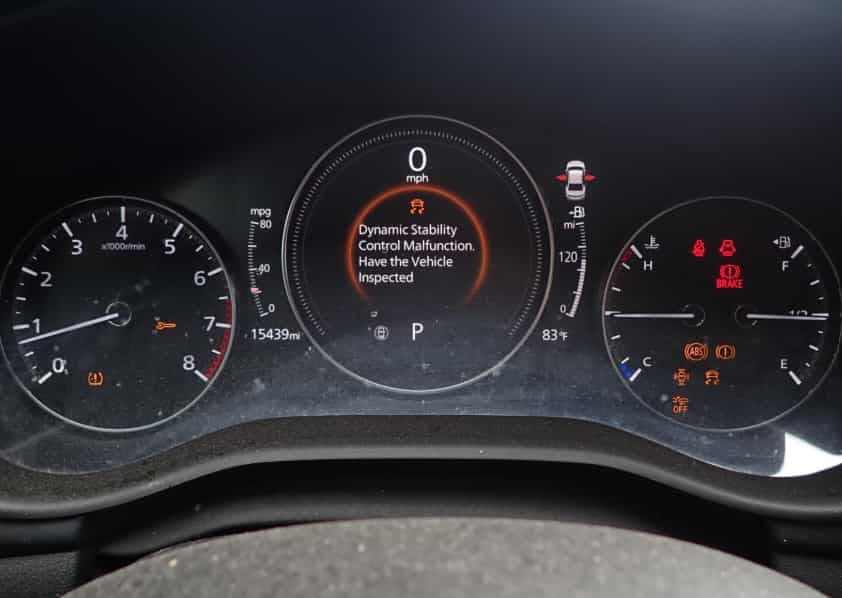
A Mazda DSC Malfunction warning can be alarming, even if your vehicle still drives normally. Many drivers immediately think the braking system has failed. Others worry about an expensive repair. Fortunately, that is not always the case.
The warning usually means the Dynamic Stability Control system has detected a problem. This system helps your vehicle maintain traction and stability during difficult driving conditions. It works continuously in the background and reacts within seconds when it detects wheel slip or loss of control.
Dynamic Stability Control works closely with the Anti lock Braking System and the Traction Control System. Together, these systems monitor wheel speed, steering input, and vehicle movement. They adjust braking force and engine power whenever additional stability is needed. If one component sends incorrect data, the system may disable some safety functions and display a warning.
Several issues can trigger a Mazda DSC Malfunction message. A faulty wheel speed sensor is one of the most common causes. Low battery voltage, damaged wiring, steering angle sensor problems, and ABS module faults can also trigger the warning. In some cases, the message appears after a battery replacement or wheel alignment because the system needs recalibration.
The warning does not always mean the vehicle is unsafe to drive. However, you should never ignore it. The risk becomes much higher when the DSC warning appears with the ABS, brake, or Check Engine light. These warning combinations may indicate that multiple safety systems are no longer operating correctly.
This guide explains everything you need to know about a Mazda DSC Malfunction. You will learn how the system works, what causes the warning, and which symptoms deserve immediate attention. You will also discover proven diagnostic methods, effective repair solutions, reset procedures, estimated repair costs, and practical maintenance tips. By the end of this article, you will understand the problem and know the best steps to restore your Mazda’s safety and performance.
What Is the DSC System in a Mazda?
The Dynamic Stability Control system, often called DSC, is one of the most important safety features in modern Mazda vehicles. It helps drivers maintain control when road conditions become slippery or when the vehicle suddenly changes direction. Most drivers never notice the system because it operates automatically whenever additional stability is needed.
DSC does not work alone. It communicates with several electronic systems throughout the vehicle. These systems collect data hundreds of times every second. The control module compares that information with the driver’s steering input and the vehicle’s actual movement. If the system detects a loss of traction or stability, it reacts almost instantly.
What Does DSC Stand For?
DSC stands for Dynamic Stability Control. Mazda developed this technology to reduce the risk of skidding during emergency maneuvers and low traction conditions. Instead of waiting for the driver to correct a slide, the system steps in as soon as it detects unstable vehicle movement.
The primary goal of DSC is simple. It helps keep the vehicle moving in the direction the driver intends. This additional control can improve safety during sudden lane changes, sharp turns, or unexpected obstacles on the road.
How Does the Mazda DSC System Work?
The DSC system relies on information from multiple sensors located throughout the vehicle. Each sensor performs a specific task. Together, they create a complete picture of how the vehicle is moving.
The wheel speed sensors monitor the rotational speed of each wheel. They help the system detect wheel slip during acceleration or braking. If one wheel rotates much faster or slower than the others, DSC recognizes that traction may be decreasing.
The steering angle sensor measures the direction chosen by the driver. At the same time, the yaw rate sensor tracks how the vehicle actually rotates while driving. The system compares these two values continuously. If the vehicle begins to move differently than expected, DSC responds immediately.
The control module can reduce engine power when excessive wheel spin occurs. It can also apply braking force to individual wheels. These small adjustments help stabilize the vehicle before the driver loses control. Most drivers never feel these corrections because they happen within fractions of a second.
Systems That Work Together With DSC
Dynamic Stability Control depends on several related systems to operate correctly. A fault in one component can affect the entire stability control system.
The Anti Lock Braking System prevents the wheels from locking during hard braking. This allows the driver to maintain steering control while slowing the vehicle.
The Traction Control System limits wheel spin during acceleration. It improves grip on wet roads, snow, loose gravel, and other slippery surfaces.
The engine control module manages engine output whenever DSC requests less power. Meanwhile, the braking system applies precise braking pressure to individual wheels when necessary. Every component must communicate correctly for the system to function as designed.
When Does DSC Activate?
Most drivers experience DSC activation without realizing it. The system only intervenes when it detects that the vehicle may become unstable.
For example, DSC may activate while driving through a sharp curve at excessive speed. It may also engage when accelerating on wet pavement or icy roads. Sudden lane changes can trigger the system as well, especially if the tires begin to lose grip.
During normal operation, the driver can continue steering the vehicle while DSC provides additional support. The warning indicator may flash briefly to show that the system is actively helping maintain stability. A flashing light usually indicates normal operation rather than a malfunction.
Although DSC improves vehicle control, it cannot overcome the laws of physics. Excessive speed, severely worn tires, or dangerous road conditions can still cause a loss of control. Drivers should always maintain safe speeds and proper vehicle maintenance, even when advanced safety systems are available.
What Does a Mazda DSC Malfunction Mean?
A Mazda DSC Malfunction warning means the vehicle has detected a problem within the Dynamic Stability Control system or one of the components that supports it. The warning does not identify the exact fault. Instead, it tells the driver that the system cannot guarantee normal stability control until the problem is diagnosed and repaired.
In many cases, the vehicle remains drivable. However, the system may disable some electronic safety features to prevent incorrect operation. This means the vehicle may no longer provide the same level of assistance during sudden steering maneuvers or when driving on slippery roads.
The warning can appear for many reasons. A faulty wheel speed sensor is one of the most common causes. Other possible causes include low battery voltage, damaged wiring, a steering angle sensor fault, a failed yaw rate sensor, or an issue within the ABS control module. Because many systems work together, one fault can trigger several warning lights at the same time.
Drivers should also understand that a DSC warning does not always indicate a mechanical failure. Sometimes the system loses calibration after a battery replacement, wheel alignment, or steering repair. In these situations, the solution may be as simple as recalibrating the affected sensor instead of replacing expensive components.
Flashing DSC Light Versus Solid DSC Light
The behavior of the warning light provides important clues about the condition of the system.
A flashing DSC indicator usually means the system is working as intended. It appears when the vehicle detects wheel slip or reduced traction. During this time, DSC automatically adjusts engine output or braking force to help maintain stability. The light normally disappears once road conditions improve.
A solid DSC warning light usually indicates a fault within the stability control system. The vehicle may disable DSC, Traction Control, or related safety functions until the problem is repaired. The driver may not notice any change during normal driving, but electronic assistance may not be available when it is needed most.
If the warning remains on after restarting the vehicle, further diagnosis is recommended. Ignoring the warning could allow a small electrical issue to develop into a more expensive repair.
What If Other Warning Lights Appear?
A Mazda DSC warning often appears together with other dashboard indicators. These warning combinations can help narrow down the source of the problem.
If the ABS warning light appears with the DSC warning, the issue often involves a shared component such as a wheel speed sensor, damaged wiring, or the ABS control module. Since both systems rely on the same sensor data, one fault can affect them simultaneously.
If the Check Engine light appears at the same time, the problem may involve the engine or powertrain. Certain engine faults can prevent the stability control system from managing engine torque correctly. As a result, the vehicle may temporarily disable DSC until the engine problem is repaired.
A battery warning light may point to low system voltage or charging system problems. Modern control modules require stable electrical power. A weak battery or failing alternator can cause multiple electronic systems to display warning messages even when no sensor has failed.
The red brake warning light deserves immediate attention. If it appears together with the DSC warning, the braking system itself may have a serious fault. Drivers should stop the vehicle in a safe location as soon as possible and inspect the problem before continuing.
Does a DSC Warning Mean the Vehicle Is Unsafe?
Not necessarily. The answer depends on which warning lights appear and how the vehicle behaves.
If the vehicle drives normally and only the amber DSC warning is illuminated, you can often drive carefully to a repair facility. Even so, the system cannot provide full stability assistance until the fault is corrected. Drivers should reduce speed and avoid aggressive steering or hard acceleration, especially on wet or slippery roads.
If the DSC warning appears with the ABS warning, the brake warning, unusual noises, poor braking performance, or reduced engine power, the vehicle requires immediate inspection. Continuing to drive under these conditions may increase the risk of losing control during an emergency.
Understanding what the warning means is the first step toward an accurate diagnosis. The next step is identifying the component that caused the fault. Fortunately, several problems appear far more often than others, making the diagnostic process much easier when you know where to begin.
Common Symptoms of a Mazda DSC Malfunction
A Mazda DSC Malfunction can produce different symptoms depending on the affected component. Some drivers only notice a warning light on the dashboard. Others experience changes in vehicle performance or the operation of electronic safety systems. Recognizing these symptoms can help you identify the problem sooner and avoid unnecessary repairs.
DSC Warning Light Stays On
The most common symptom is a DSC warning light that remains illuminated after the engine starts. The light should normally turn off within a few seconds. If it stays on while driving, the system has detected a fault that requires attention.
Although the vehicle may continue to operate normally, Dynamic Stability Control may no longer provide assistance during sudden steering or low traction conditions.
ABS Warning Light Appears
Many Mazda owners notice the ABS warning light at the same time as the DSC warning. This happens because both systems rely on several shared components, including the wheel speed sensors and the ABS control module.
When both lights remain on, the vehicle may lose electronic stability control and anti lock braking assistance. Normal braking usually remains available, but emergency braking performance may be reduced.
Traction Control Stops Working
A faulty DSC system often disables the Traction Control System. Drivers may notice excessive wheel spin when accelerating on wet pavement, gravel, snow, or other slippery surfaces.
Instead of reducing engine power automatically, the drive wheels may continue spinning until the driver eases off the accelerator.
Vehicle Feels Less Stable on Slippery Roads
Many drivers report that the vehicle feels different during poor weather conditions. The steering may still respond normally, but the vehicle may slide more easily when turning or accelerating.
This symptom usually becomes noticeable only when road conditions reduce available tire grip.
Check Engine Light Appears
The Check Engine light sometimes appears together with the DSC warning. This combination often indicates that an engine or powertrain fault is affecting the stability control system.
Modern Mazda vehicles allow several control modules to communicate with each other. If the engine control module detects a serious problem, it may temporarily disable stability control until the underlying fault is repaired.
Cruise Control Stops Operating
Some Mazda models automatically disable cruise control when the DSC system detects a fault. This safety feature prevents the vehicle from maintaining speed if important electronic control systems cannot operate correctly.
If cruise control suddenly becomes unavailable while a DSC warning is active, both symptoms may share the same cause.
Warning Appears After Battery Replacement
Many owners become concerned when a Mazda DSC Malfunction message appears shortly after replacing the battery.
In some situations, the system simply needs to relearn sensor values or complete a steering angle calibration. In other cases, low system voltage before the battery replacement may have stored diagnostic trouble codes that remain active until they are cleared.
Warning Appears After Wheel Alignment or Suspension Repair
A steering angle sensor must accurately measure the direction of the steering wheel. After suspension work or a wheel alignment, this sensor may require recalibration.
If calibration does not occur correctly, the DSC system may receive inaccurate steering information and display a warning message.
Intermittent Warning Light
Some drivers notice that the DSC warning appears only occasionally. The light may disappear after restarting the engine and return several days later.
An intermittent warning often points to a loose electrical connector, damaged wiring, moisture inside a sensor, or an electronic component that fails only under certain temperatures or driving conditions.
Because the fault is not always active, diagnosing intermittent problems usually requires reading stored diagnostic codes and monitoring live sensor data.
Multiple Warning Lights Appear Together
A serious electrical or communication problem can trigger several dashboard warnings at once.
You may see the DSC warning together with the ABS warning, Check Engine light, tire pressure warning, power steering warning, or battery warning. Although this situation looks alarming, the root cause is often a single failed component that affects multiple control modules.
A professional diagnostic scan is the fastest way to determine whether the warnings share the same source.
Limp Mode or Reduced Engine Performance
Some Mazda vehicles enter a reduced power mode after detecting faults that affect engine management and stability control.
The vehicle may accelerate more slowly or limit engine output to protect critical components. This condition often occurs when the DSC warning appears alongside the Check Engine light.
Drivers should avoid long trips until the fault has been diagnosed and repaired.
Unusual Wheel Speed Readings
A damaged wheel speed sensor may cause inconsistent wheel speed information. Although drivers cannot see these readings without a scan tool, they may notice unusual behavior.
The ABS system may activate unexpectedly during light braking. The traction control system may intervene without reason. In some cases, the speedometer may behave abnormally if the affected sensor also supplies vehicle speed information.
Why Symptoms Can Vary Between Mazda Models
Not every Mazda model responds the same way to a DSC fault. The warning signs depend on the vehicle’s electronic architecture, model year, and installed safety features.
For example, a Mazda CX 5 may disable several driver assistance systems after detecting a wheel speed sensor fault. A Mazda3 may only display the DSC and ABS warnings. Newer models with advanced driver assistance technology often generate additional warnings because more systems depend on the same sensor network.
For this reason, dashboard symptoms alone cannot identify the exact cause of a Mazda DSC Malfunction. They provide valuable clues, but the stored diagnostic trouble codes remain the most reliable source of information.
10 Common Causes of a Mazda DSC Malfunction
A Mazda DSC Malfunction warning rarely points to a single defective part. Instead, it indicates that the stability control system has detected abnormal data or lost communication with one of its supporting components. Because DSC depends on several electronic systems, even a minor fault can disable important safety functions.
Understanding the most common causes can help narrow the diagnosis and prevent unnecessary parts replacement.
Faulty Wheel Speed Sensor
A faulty wheel speed sensor is the most common reason for a Mazda DSC Malfunction warning. Every wheel has its own sensor that measures rotational speed and sends that information to the ABS control module.
The DSC system constantly compares the speed of all four wheels. If one sensor reports incorrect data, the control module may assume the vehicle is losing traction. Instead of risking incorrect intervention, it disables the stability control system and stores a diagnostic trouble code.
Wheel speed sensors often fail because of age, corrosion, road debris, or physical damage. Dirt and metal particles can also interfere with the magnetic signal, especially after years of driving in harsh weather conditions.
Common symptoms include an illuminated DSC warning, an ABS warning light, intermittent traction control operation, and inconsistent wheel speed readings during a diagnostic scan. In some vehicles, cruise control may also stop working because it depends on accurate wheel speed information.
Diagnosis begins with reading ABS fault codes using a scan tool that can access chassis modules. Live data should then be reviewed while driving at low speed. If one wheel reports a different speed than the others, the sensor or its wiring becomes the primary suspect.
If the sensor is dirty, cleaning the mounting area may restore a stable signal. However, damaged sensors, cracked housings, or broken internal circuits usually require replacement. After installation, the technician should clear stored fault codes and confirm that all wheel speed readings remain consistent during a road test.
Damaged Wheel Speed Sensor Wiring
The sensor itself is not always the problem. The wiring that connects the sensor to the control module operates in a harsh environment where it is exposed to water, mud, heat, road salt, and constant suspension movement.
Over time, insulation can crack, connectors may corrode, and wires can stretch or break. Even a small interruption in the electrical signal can cause the DSC system to lose confidence in the sensor data.
Unlike a completely failed sensor, damaged wiring often creates intermittent faults. The warning light may appear one day and disappear the next. Some drivers only notice the problem while driving over rough roads because vibration temporarily interrupts the electrical connection.
A careful visual inspection is an important first step. Look for damaged insulation, loose connectors, corrosion, or wires that have rubbed against suspension components. If no damage is visible, a multimeter and wiring diagram can help verify continuity between the sensor and the control module.
Repairing damaged wiring is usually less expensive than replacing electronic modules. High quality waterproof connectors and proper sealing techniques are essential because poor repairs often lead to recurring electrical problems.
Weak Battery or Low System Voltage
Modern Mazda vehicles rely on stable electrical power to operate dozens of electronic control modules. Even a healthy DSC system may display a warning if battery voltage drops below the level required for reliable communication.
A weak battery often causes multiple dashboard warnings during engine startup. Drivers may see the DSC warning together with the ABS warning, power steering warning, or battery indicator. In many cases, these warnings disappear after the alternator restores normal system voltage.
Battery related problems become more common during cold weather because low temperatures reduce battery performance. An aging battery may still start the engine but fail to provide enough voltage for sensitive electronic systems.
Diagnosis should begin with a battery and charging system test. The technician should inspect the battery terminals for corrosion and verify that all ground connections remain clean and secure. Alternator output should also be checked because an undercharging alternator can create the same symptoms as a weak battery.
Replacing the battery may solve the problem if low voltage is the only cause. However, if the warning remains after installing a new battery, additional diagnosis is necessary because another fault is likely affecting the DSC system.
Faulty Steering Angle Sensor
The steering angle sensor measures the position and direction of the steering wheel. It tells the DSC system where the driver wants the vehicle to go. The control module compares this information with the vehicle’s actual movement to determine whether the car is following the intended path.
If the steering angle sensor sends incorrect data, the DSC system cannot accurately calculate vehicle stability. As a result, it may disable stability control and display a Mazda DSC Malfunction warning.
This problem sometimes appears after a wheel alignment, steering rack replacement, suspension repair, or battery disconnection. In many cases, the sensor still works correctly but loses its calibration. The control module then receives inaccurate steering information and interprets it as a fault.
Drivers may notice the DSC warning immediately after starting the vehicle. Some may also see the ABS warning or experience limited operation of driver assistance features. However, the steering itself usually feels normal because the problem affects electronic control rather than mechanical steering components.
Diagnosis begins with reading fault codes from the stability control module. A compatible scan tool can also display the steering angle in real time. When the steering wheel is centered, the displayed value should remain close to zero. If the reading is incorrect or changes unexpectedly, the sensor may require recalibration or replacement.
Many steering angle sensor issues are resolved through calibration rather than part replacement. If calibration fails or the sensor no longer provides reliable data, replacing the sensor becomes the next step. After the repair, the technician should perform another calibration and verify proper operation during a road test.
Failed Yaw Rate Sensor
The yaw rate sensor measures how quickly the vehicle rotates around its vertical axis. This information allows the DSC system to determine whether the vehicle is turning as expected or beginning to slide.
When the sensor detects movement that differs from the driver’s steering input, the system can reduce engine power or apply braking force to individual wheels. This rapid response helps maintain vehicle stability during emergency maneuvers.
A failed yaw rate sensor prevents the control module from accurately monitoring vehicle movement. Since the system cannot confirm the vehicle’s actual direction, it disables stability control and stores a fault code.
Symptoms often include a persistent DSC warning, reduced traction control operation, and additional ABS or stability related warnings. In some vehicles, advanced driver assistance systems may also become unavailable because they rely on the same sensor network.
Diagnosing a yaw rate sensor requires a scan tool capable of reading live data. The technician compares the sensor output with steering angle and wheel speed information while the vehicle moves. If the values remain fixed or change erratically, the sensor or its electrical circuit may have failed.
Sensor replacement should only occur after verifying the wiring and power supply. Because these sensors require precise calibration, professional programming equipment is often necessary after installation.
ABS Control Module Failure
The ABS control module acts as the central communication hub for several electronic safety systems. It processes information from the wheel speed sensors and coordinates both the Anti Lock Braking System and the Dynamic Stability Control system.
If the module develops an internal fault, communication between these systems may stop completely. The vehicle responds by disabling stability control and displaying multiple warning lights.
Unlike a failed sensor, an ABS control module problem often triggers several symptoms at the same time. Drivers may notice the DSC warning, ABS warning, traction control warning, and brake warning together. Depending on the failure, the speedometer, cruise control, or other electronic systems may also stop working correctly.
Internal module failures can result from age, moisture intrusion, vibration, overheating, or damaged circuit boards. Electrical problems outside the module can produce similar symptoms, which is why careful diagnosis is essential before replacing expensive components.
Technicians normally begin by scanning all available control modules. Communication errors, internal module faults, or multiple sensor failures can help identify the source of the problem. Wiring integrity and power supply should always be confirmed before condemning the module itself.
If replacement becomes necessary, the new module may require programming and initialization. Some Mazda models also require brake system bleeding and module coding before the repair is complete.
Faulty Brake Light Switch
The brake light switch is a small component, but it plays an important role in several vehicle systems. It tells the control modules when the driver presses the brake pedal. This information supports brake light operation, cruise control, transmission functions, and stability control.
A faulty switch can send incorrect signals or fail to send any signal at all. When this happens, the DSC system may detect inconsistent brake pedal information and disable stability control.
Common symptoms include brake lights that stay on continuously, brake lights that fail to illuminate, cruise control that suddenly stops working, and an active Mazda DSC Malfunction warning.
Fortunately, diagnosing this component is usually straightforward. A technician first checks whether the brake lights operate correctly. A scan tool can then confirm whether the control module receives accurate brake pedal input.
Brake light switches are relatively inexpensive compared with many other DSC related components. Replacing the switch often restores normal system operation if no additional faults are present. After installation, technicians should confirm proper brake light operation and clear any stored diagnostic trouble codes before performing a final road test.
Incorrect Tire Size or Uneven Tire Pressure
Many drivers overlook their tires when a Mazda DSC Malfunction warning appears. However, tire condition has a direct impact on the stability control system. DSC relies on accurate wheel speed information. If one tire rotates at a different speed because of its size or inflation pressure, the system may detect abnormal vehicle behavior.
Installing tires with different diameters is one of the most common causes of false stability control warnings. Even if the difference seems small, the control module may interpret the variation as wheel slip. Excessive tread wear can create the same effect because worn tires have a smaller rolling circumference.
Low tire pressure can also affect wheel speed. An underinflated tire flexes more as it rolls, which changes its effective diameter. Although the change is minor, it may be enough to confuse the DSC system under certain driving conditions.
Drivers should inspect all four tires carefully. Verify that the tire size matches the manufacturer’s specifications. Check the inflation pressure when the tires are cold and adjust each tire to the recommended value. Tread depth should also remain as even as possible across all four wheels.
If the warning appeared after replacing only one tire, compare the new tire with the remaining three. Significant differences in size or wear may require replacing additional tires to restore proper system operation.
Engine or Transmission Problems
The DSC system does more than apply the brakes. It also works with the engine control module to reduce engine power whenever additional traction is needed. Because of this relationship, certain engine or transmission faults can also trigger a Mazda DSC Malfunction warning.
For example, an engine misfire may prevent the control module from delivering smooth torque. A faulty throttle body may limit engine response. Transmission faults can also affect torque delivery. When the powertrain cannot respond correctly, the stability control system may disable itself as a protective measure.
Drivers often notice the DSC warning together with the Check Engine light. The vehicle may also enter reduced power mode, accelerate slowly, or shift differently than normal. These symptoms suggest that the underlying problem may not be within the DSC system itself.
Diagnosis should always begin with a complete vehicle scan. Reading only engine fault codes may overlook important information stored in the ABS or stability control modules. Technicians should compare fault codes from every control module before deciding which component requires repair.
Once the engine or transmission problem has been corrected, the DSC warning often disappears after the fault codes are cleared and the vehicle completes a successful road test.
Software or Communication Problems
Modern Mazda vehicles contain multiple electronic control modules that exchange information through a high speed communication network. The DSC system depends on this network to receive data from the engine, braking, steering, and transmission systems.
If communication becomes unstable, the control module may stop receiving critical information. Instead of operating with incomplete data, it disables stability control and stores a communication related fault code.
Software problems are less common than sensor failures, but they can still occur. An interrupted software update, an incorrectly programmed replacement module, or a communication error within the network can all trigger a Mazda DSC Malfunction warning.
Electrical issues can produce similar symptoms. Loose connectors, damaged wiring, poor ground connections, or corrosion inside electrical terminals may interrupt communication between control modules.
Diagnosing communication faults requires advanced diagnostic equipment. Technicians usually inspect the wiring first because damaged electrical connections are more common than failed control modules. They then verify software versions, network communication, and module programming before replacing any electronic component.
If a software update is available, installing the latest calibration may resolve the issue without replacing hardware. When a control module requires replacement, it should always be programmed according to Mazda specifications to ensure proper communication with the rest of the vehicle.
Why Accurate Diagnosis Matters
Many different problems can trigger a Mazda DSC Malfunction warning. Some repairs cost very little, while others involve advanced electronic components. Replacing parts without confirming the root cause often increases repair costs and wastes valuable time.
A systematic diagnosis always produces better results. Start by identifying every warning light on the dashboard. Continue by scanning all available control modules, reviewing live sensor data, and inspecting the affected electrical circuits. This method helps eliminate unnecessary guesswork and ensures that the correct component is repaired the first time.
Understanding the possible causes is only part of the process. The next step is learning how to identify the exact fault in your vehicle through a structured diagnostic procedure.
How to Diagnose a Mazda DSC Malfunction
Finding the exact cause of a Mazda DSC Malfunction requires more than reading the warning message on the dashboard. The DSC system depends on several electronic components that work together continuously. A fault in one sensor, a wiring issue, or unstable battery voltage can all trigger the same warning. For this reason, replacing parts without proper testing often leads to unnecessary expenses and does not solve the problem.
A systematic diagnosis always produces the most accurate results. By starting with simple inspections and gradually moving toward advanced testing, you can identify the root cause while avoiding common diagnostic mistakes.
Start by Checking Every Warning Light
The first step is to examine the instrument cluster carefully. The DSC warning rarely appears by itself. In many cases, other dashboard indicators provide valuable clues about the affected system.
For example, a DSC warning accompanied by an ABS light often points toward a wheel speed sensor, damaged wiring, or an ABS control module issue. If the Check Engine light also appears, the problem may originate from the engine management system rather than the stability control system itself. A battery warning, on the other hand, may indicate that low system voltage is disrupting communication between electronic control modules.
Before turning the engine off, take a photo of the dashboard or write down every warning that appears. This information becomes much more valuable if the warning disappears during the next restart.
Observe When the Warning Appears
The timing of the warning can reveal important information.
If the warning appears immediately after starting the engine, the problem may involve battery voltage, sensor calibration, or communication between control modules. When the warning only appears after driving for several minutes, the cause is more likely related to wheel speed sensors, overheating electronic components, or intermittent wiring faults.
Some owners notice that the warning appears only during rainy weather or after driving through deep water. Moisture inside electrical connectors can interrupt sensor signals and create temporary communication failures. In these situations, the warning may disappear once the connectors dry out.
Understanding exactly when the fault occurs helps narrow the diagnosis before any components are removed.
Inspect the Tires Before Looking for Electrical Problems
Many drivers immediately suspect an electronic failure when they see a Mazda DSC Malfunction warning. However, the inspection should begin with the tires because the DSC system constantly compares wheel rotation to calculate vehicle stability.
Check that all four tires have the correct size and similar tread depth. A significant difference between one tire and the others can change wheel speed readings enough to confuse the stability control system.
Next, measure tire pressure while the tires are cold. Underinflated or overinflated tires can rotate differently under load, especially during cornering or heavy acceleration. Although incorrect tire pressure is not the most common cause of a DSC warning, it is one of the easiest problems to eliminate before moving to more advanced diagnostics.
Verify Battery Condition and Charging Voltage
Modern Mazda vehicles depend on stable electrical voltage. Every control module communicates through a shared electronic network, and even a brief voltage drop can interrupt that communication.
A battery that still starts the engine is not necessarily healthy. As batteries age, their voltage may fall during engine cranking. This temporary voltage loss can trigger multiple warning messages even though the sensors themselves remain fully functional.
Inspect the battery terminals for corrosion and confirm that every connection is tight. If possible, test both the battery and alternator before replacing electronic components. Solving a charging system problem early may eliminate several warning lights at the same time.
Read Diagnostic Trouble Codes
After completing the basic inspection, the next step is connecting a professional scan tool.
Many inexpensive code readers only communicate with the engine control module. While they are useful for engine faults, they cannot access the chassis systems responsible for a Mazda DSC Malfunction. A complete diagnosis requires a scanner that can communicate with the ABS control module and the Dynamic Stability Control system.
Stored fault codes provide valuable direction. They identify which component reported abnormal data and indicate whether the fault is currently active or occurred earlier. Reading these codes before clearing them preserves important diagnostic information that may otherwise be lost.
Analyze Live Sensor Data
Fault codes identify the affected system, but live data explains why the warning occurred.
Wheel speed readings should remain nearly identical while the vehicle travels at a constant speed. If one wheel reports a significantly different value, the corresponding sensor or wiring should become the primary inspection point.
The steering angle sensor should also respond smoothly as the steering wheel turns. Sudden jumps or unrealistic values often indicate a calibration problem or an internal sensor failure.
At the same time, the technician should monitor yaw rate data, brake pedal status, and battery voltage. Comparing these values makes it easier to identify communication problems that cannot be detected through a simple visual inspection.
Inspect Wiring Before Replacing Parts
Electrical wiring deserves much more attention than it usually receives.
Wheel speed sensor wiring operates close to suspension components where it is constantly exposed to vibration, water, dirt, and road debris. Over time, insulation may crack, connectors can corrode, and wires may break internally without visible external damage.
Many expensive control modules have been replaced unnecessarily because a damaged wire interrupted the sensor signal. A careful inspection of every connector and wiring harness should always take place before replacing electronic components.
Complete Any Required Calibration
Some repairs are not complete until the control module performs a calibration procedure.
Replacing a steering angle sensor, disconnecting the battery, or performing a wheel alignment may require the system to relearn its reference values. Without this process, the control module may continue displaying a Mazda DSC Malfunction warning even though the original fault has already been repaired.
Calibration procedures vary between Mazda models. Following the manufacturer’s service procedure ensures that every sensor reports accurate information before the vehicle returns to normal operation.
Confirm That the Problem Has Been Resolved
The final step is confirming that the repair solved the original problem.
Clear all stored fault codes and restart the engine. Verify that no warning lights remain illuminated. Next, perform a road test under normal driving conditions while monitoring live sensor data. The wheel speed sensors should report consistent values, steering angle data should remain stable, and the DSC warning should not return.
A successful road test confirms more than the absence of a warning light. It demonstrates that every component communicates correctly and that the Dynamic Stability Control system can respond properly when additional traction or stability is needed.
How to Fix a Mazda DSC Malfunction
Fixing a Mazda DSC Malfunction starts with identifying the actual cause instead of simply clearing the warning light. The Dynamic Stability Control system depends on accurate information from multiple sensors and control modules. If one component continues to send incorrect data, the warning will usually return after a short period, even if the fault codes have been erased.
The most common repair involves replacing a faulty wheel speed sensor or repairing damaged sensor wiring. Since the DSC, ABS, and Traction Control systems all rely on wheel speed data, restoring a reliable signal often resolves the warning. Battery and charging system problems should also be addressed because unstable voltage can interrupt communication between electronic control modules and trigger false stability control warnings.
Some repairs do not require new parts. A steering angle sensor may only need recalibration after a wheel alignment, battery replacement, or steering repair. Likewise, correcting uneven tire pressure or replacing mismatched tires can restore normal DSC operation if inconsistent wheel rotation caused the warning.
When diagnostic testing identifies an internal ABS control module fault, professional repair or replacement may be necessary. Because this component controls several critical safety systems, technicians should always verify the power supply, wiring, and sensor signals before installing a new module. Engine or transmission faults should also be repaired promptly because the DSC system depends on accurate engine torque management.
After completing the repair, clear all stored diagnostic trouble codes and perform a road test under different driving conditions. If the warning light remains off and the vehicle responds normally, the repair has been successful and the Dynamic Stability Control system is operating as intended.
How to Reset the Mazda DSC Warning Light
Resetting a Mazda DSC Malfunction warning depends on what triggered the fault. If the warning appeared because of a temporary communication issue or low battery voltage, it may disappear automatically after the problem has been resolved. However, if a sensor, control module, or electrical circuit is still faulty, the warning will return regardless of how many times the system is reset.
Begin by turning the engine off and restarting the vehicle after a few minutes. If the warning does not reappear, the issue may have been temporary. You should still scan the vehicle for stored diagnostic trouble codes because some intermittent faults remain in the control module even after the warning light disappears.
If the warning appeared after replacing the battery, performing a wheel alignment, or repairing the steering system, the vehicle may require a steering angle sensor calibration. Many Mazda models will not clear the warning until this procedure has been completed with a compatible diagnostic scanner.
Avoid disconnecting the battery as a way to reset the system. Although this method may erase some stored memory, it does not repair the underlying fault. In some cases, disconnecting the battery can even create additional relearn procedures for other electronic systems.
The most reliable way to reset the DSC warning is to repair the original problem, clear the diagnostic trouble codes with a professional scan tool, and confirm the repair during a road test. If the warning light remains off and no new fault codes appear, the Dynamic Stability Control system has successfully returned to normal operation.
Mazda DSC Malfunction Repair Cost
The cost of repairing a Mazda DSC Malfunction depends on the underlying cause rather than the warning itself. Some problems require only a simple adjustment or sensor calibration, while others involve replacing expensive electronic components. An accurate diagnosis is essential because replacing the wrong part can significantly increase repair costs without solving the issue.
Wheel speed sensor problems are usually among the most affordable repairs. If the sensor is dirty or the wiring is damaged, cleaning or repairing the electrical connection may be enough to restore normal operation. Replacing a failed sensor generally costs less than repairing an ABS control module or other advanced electronic components.
Battery related issues also tend to be inexpensive. Cleaning corroded terminals, tightening loose connections, or replacing an aging battery can often eliminate multiple warning lights at the same time. If the steering angle sensor only requires recalibration after a battery replacement or wheel alignment, the repair cost is usually much lower than replacing the sensor itself.
More complex repairs involve components such as the ABS control module, yaw rate sensor, or hydraulic control unit. These parts often require specialized diagnostic equipment, programming, and calibration after installation, which increases both labor and repair costs.
Before approving any repair, ask the repair facility to explain the diagnostic results and identify the failed component. A professional scan report provides valuable evidence that the recommended repair is based on test results rather than assumptions. Investing in a proper diagnosis first is often the most effective way to reduce the total cost of repairing a Mazda DSC Malfunction while avoiding unnecessary parts replacement.
Mazda DSC Malfunction Repair Cost
The cost of repairing a Mazda DSC Malfunction depends on the underlying cause rather than the warning itself. Some problems require only a simple adjustment or sensor calibration, while others involve replacing expensive electronic components. An accurate diagnosis is essential because replacing the wrong part can significantly increase repair costs without solving the issue.
Wheel speed sensor problems are usually among the most affordable repairs. If the sensor is dirty or the wiring is damaged, cleaning or repairing the electrical connection may be enough to restore normal operation. Replacing a failed sensor generally costs less than repairing an ABS control module or other advanced electronic components.
Battery related issues also tend to be inexpensive. Cleaning corroded terminals, tightening loose connections, or replacing an aging battery can often eliminate multiple warning lights at the same time. If the steering angle sensor only requires recalibration after a battery replacement or wheel alignment, the repair cost is usually much lower than replacing the sensor itself.
More complex repairs involve components such as the ABS control module, yaw rate sensor, or hydraulic control unit. These parts often require specialized diagnostic equipment, programming, and calibration after installation, which increases both labor and repair costs.
Before approving any repair, ask the repair facility to explain the diagnostic results and identify the failed component. A professional scan report provides valuable evidence that the recommended repair is based on test results rather than assumptions. Investing in a proper diagnosis first is often the most effective way to reduce the total cost of repairing a Mazda DSC Malfunction while avoiding unnecessary parts replacement.
Conclusion
A Mazda DSC Malfunction warning should never be ignored, but it does not always indicate a major mechanical failure. In many cases, the problem is caused by a faulty wheel speed sensor, low battery voltage, damaged wiring, or a steering angle sensor that requires recalibration. More serious issues, such as an ABS control module failure or communication problem, are less common but require professional diagnosis and repair.
The key to solving the problem is identifying the root cause instead of replacing parts based on guesswork. A systematic inspection that includes checking dashboard warnings, scanning diagnostic trouble codes, reviewing live sensor data, and testing the electrical system provides the most accurate results. This approach not only reduces repair costs but also helps restore the full performance of the Dynamic Stability Control system.
Regular vehicle maintenance can also lower the risk of future DSC problems. Keeping the battery in good condition, maintaining correct tire pressure, and addressing warning lights as soon as they appear all contribute to reliable system operation and improved driving safety.
If your vehicle displays a Mazda DSC Malfunction warning, diagnose the issue as early as possible and repair the underlying fault before it affects other safety systems. Taking prompt action will help keep your Mazda stable, predictable, and safe in all driving conditions.