A working Blind Spot Monitoring system helps you change lanes with greater confidence. When it stops working, every lane change requires extra attention. You may notice that the mirror warning light never appears. You might also see a warning message on the dashboard. In some cases, the entire system shuts off without any obvious reason.
Fortunately, a faulty sensor is not always the cause. Dirt, snow, heavy rain, or a weak battery can prevent the system from working properly. Incorrect settings can also disable Blind Spot Monitoring. If the problem continues, damaged wiring, a misaligned radar sensor, or a failed control module may be responsible.
This guide explains why your Mazda Blind Spot Monitoring is not working. You will learn how the system operates and how to identify the most common causes. We will also show you practical troubleshooting steps that you can perform at home. Finally, you will learn when a simple reset is enough and when professional diagnosis or radar calibration becomes necessary. By the end of this guide, you will know how to restore your Mazda Blind Spot Monitoring safely and avoid unnecessary repair costs.
How Mazda Blind Spot Monitoring Works
Understanding how the system works makes troubleshooting much easier. Many drivers assume that Blind Spot Monitoring relies on cameras, but that is not how most Mazda models operate. Instead, the system uses radar technology to detect nearby vehicles and alert the driver before a lane change.
Rear Radar Sensors Detect Nearby Vehicles
Most modern Mazda vehicles use two radar sensors mounted behind the rear bumper. One sensor sits on the left side, while the other sits on the right. These sensors constantly scan the lanes beside and behind your vehicle. When another vehicle enters the monitored area, the system analyzes its speed, distance, and direction.
If the system detects a potential hazard, it prepares to warn the driver. Because the sensors sit behind the bumper, dirt, ice, snow, or physical damage can reduce their ability to detect surrounding traffic. Even a small parking lot collision may change the sensor angle and affect system performance.
Mirror Indicators Warn the Driver
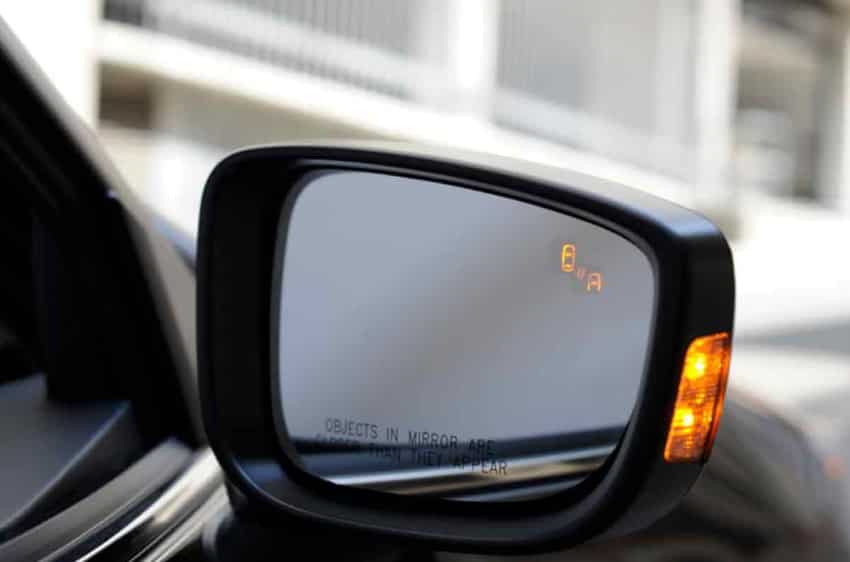
When another vehicle enters your blind spot, the warning light inside the corresponding side mirror turns on. The light stays illuminated while the vehicle remains inside the monitored area. If you activate the turn signal toward the occupied lane, the warning light flashes. Many Mazda models also produce an audible alert to capture the driver’s attention.
These alerts give you additional information before changing lanes. However, they do not replace safe driving habits. You should always check your mirrors and look over your shoulder before moving into another lane.
Blind Spot Monitoring Does Not Work in Every Situation
Blind Spot Monitoring operates only under specific driving conditions. The system usually activates after the vehicle reaches a minimum speed. That speed varies slightly between Mazda models and production years. If you test the system while driving very slowly or while the vehicle is parked, it may appear inactive even though it is working normally.
Road conditions also influence system performance. Heavy rain, dense fog, snow, or thick mud on the rear bumper can temporarily reduce radar accuracy. Under these conditions, the system may delay a warning or stop working until visibility improves. Knowing these normal limitations helps you avoid confusing temporary interruptions with actual mechanical problems.
Signs Your Mazda Blind Spot Monitoring Is Not Working
Your Mazda Blind Spot Monitoring system usually shows clear signs when something goes wrong. Some issues appear suddenly, while others develop over time. Recognizing these symptoms early can help you identify the problem before it becomes more expensive to repair.
The most obvious sign is that the mirror warning light never turns on. Another vehicle may enter your blind spot, but no visual alert appears. If this happens several times during normal driving, the system may not detect nearby traffic correctly. Before assuming the system has failed, make sure Blind Spot Monitoring is enabled and test it at normal driving speeds.
Another common symptom is a warning message on the dashboard. Your Mazda may display a message indicating that Blind Spot Monitoring is unavailable or requires inspection. In some cases, the warning disappears after you clean the rear bumper or drive in better weather. If it returns every time you start the vehicle, the system likely has an underlying fault.
You may also notice that only one side works correctly. For example, the left mirror indicator responds normally while the right side never detects nearby vehicles. This often points to a problem with a single radar sensor, damaged wiring, or an alignment issue behind the rear bumper.
Some drivers also report that Rear Cross Traffic Alert stops working at the same time. Because both systems often share the same rear radar sensors, a single fault can disable multiple safety features. If the system works only occasionally or produces false warnings without nearby vehicles, inspect the rear bumper for dirt or damage and schedule a professional diagnosis if the problem continues.
Why Is My Mazda Blind Spot Monitoring Not Working?
Several factors can prevent your Mazda Blind Spot Monitoring system from working properly. Some problems have simple solutions, while others require professional diagnosis and calibration. Understanding the possible causes helps you avoid unnecessary repairs and identify the issue more quickly.
Blind Spot Monitoring Is Turned Off
The simplest explanation is that the system has been disabled. Many Mazda models allow drivers to turn Blind Spot Monitoring on or off through the vehicle settings or a dedicated switch. The feature may also become disabled after certain maintenance procedures or software changes.
Start by checking the safety settings on the infotainment screen. Make sure Blind Spot Monitoring is enabled before looking for mechanical problems. If the BSM OFF indicator remains illuminated after enabling the system, restart the vehicle and check again. If the warning stays on, continue with the next inspection steps.
The Vehicle Is Moving Too Slowly
Many drivers test Blind Spot Monitoring in a parking lot and assume the system has failed because no warning appears. In reality, the system only activates after the vehicle reaches a minimum operating speed. The exact speed varies by model and model year, but the feature does not monitor surrounding traffic while the vehicle is parked or moving very slowly.
Test the system on a safe multi lane road where another vehicle can enter your blind spot naturally. Avoid trying to force a warning because unexpected traffic conditions can create unnecessary risks.
Dirt or Debris Covers the Rear Radar Sensors
The rear radar sensors sit behind the left and right corners of the rear bumper. Although they remain hidden from view, they still need a clean surface to operate correctly. Dirt, mud, road salt, snow, or thick ice can block radar signals and reduce detection accuracy.
This problem becomes more common during winter or after driving on muddy roads. Even dried mud from a recent trip can interfere with radar performance. Wash both corners of the rear bumper with clean water and a mild car shampoo. Dry the surface before testing the system again.
Avoid using sharp tools to remove ice because they may damage the bumper or the paint. If the warning disappears after cleaning, the sensors were likely blocked rather than damaged.
Heavy Rain or Bad Weather Affects Detection
Radar systems perform well in most conditions, but severe weather can reduce their effectiveness. Heavy rain, dense fog, wet snow, or thick slush may weaken the radar signal. As a result, Blind Spot Monitoring may stop working temporarily or respond more slowly than usual.
In many cases, the system returns to normal after the weather improves. If the warning disappears once the bumper dries and visibility increases, there is usually no need for further repairs. However, if the problem continues on a clear day, another issue is likely responsible.
The Rear Bumper Has Been Damaged
Even a small impact can affect Blind Spot Monitoring. A minor parking accident may not leave obvious damage, but it can shift the radar sensor behind the bumper. A small change in sensor position is enough to reduce detection accuracy.
Previous body repairs can also create problems. Thick paint, excessive body filler, or poorly installed replacement bumpers may interfere with radar signals. If your vehicle developed the problem after a collision or bumper repair, inspect the repair area carefully. In many cases, the radar sensors require professional alignment after body work to restore normal operation.
Low Battery Voltage Causes Electronic Problems
Modern Mazda vehicles rely on several electronic control modules to operate their safety features. Blind Spot Monitoring is one of them. If the battery becomes weak, the system may not receive stable voltage. As a result, warning lights can appear even though the radar sensors still work correctly.
Battery problems often occur during cold weather or after the vehicle has been parked for a long time. Some drivers notice the warning immediately after jump starting the vehicle. Others experience the problem after replacing an old battery.
Start by checking the battery terminals. Make sure they are clean and firmly connected. Next, test the battery voltage. If the battery no longer holds a proper charge, replace it before investigating other components. A healthy electrical system is essential for every driver assistance feature.
Battery Replacement May Trigger Temporary Warnings
Many owners become concerned after replacing the battery because Blind Spot Monitoring suddenly stops working. In most cases, the battery replacement does not damage the system. Instead, the control modules need time to complete their normal startup process.
Drive the vehicle for several miles under normal conditions. Some temporary warning messages disappear automatically after the modules complete their self checks. If the warning remains after several driving cycles, scan the vehicle for diagnostic trouble codes before replacing any parts.
Damaged Wiring Can Interrupt Sensor Communication
The radar sensors depend on wiring to communicate with the control module. If a wire becomes damaged, the system may lose communication with one or both sensors.
Moisture, road debris, corrosion, and previous collision repairs can damage the wiring behind the rear bumper. Loose connectors can produce the same result. In some cases, the system works normally until the vehicle drives over a bump. The warning then appears because the connection becomes unstable.
Inspect any visible wiring for damage. If you cannot access the harness safely, allow a qualified technician to perform a complete electrical inspection. Replacing a radar sensor will not solve the problem if damaged wiring is the real cause.
A Radar Sensor May Have Failed
Each rear radar sensor operates continuously while the system is active. Although these sensors are reliable, they can fail because of water intrusion, physical impact, or internal electronic damage.
A failed sensor often causes one side of the system to stop working. Some vehicles also disable the entire Blind Spot Monitoring system to prevent incorrect warnings. The only reliable way to confirm sensor failure is by reading manufacturer specific diagnostic codes.
Avoid replacing the sensor based on guesswork. Many symptoms that look like sensor failure actually result from wiring damage or incorrect sensor alignment.
Sensor Misalignment Reduces Detection Accuracy
A radar sensor does not need to break before it causes problems. A slight change in its position can affect the detection area. Even a low speed collision or improper bumper installation can move the sensor enough to create false warnings or missed detections.
Professional calibration restores the correct sensor angle. Specialized equipment measures the radar position and adjusts it according to Mazda specifications. Without calibration, the system may continue to produce inaccurate warnings even after new parts are installed.
A Control Module or Software Problem May Exist
Blind Spot Monitoring communicates with several electronic modules inside the vehicle. A software fault or communication error can interrupt normal operation. In some cases, multiple driver assistance systems display warning messages at the same time.
A professional diagnostic scan can identify communication errors, software faults, and stored trouble codes. This process helps technicians locate the real problem without replacing unnecessary parts.
If your Mazda has received a recent software update or electrical repair, mention this information during the inspection. It can help reduce diagnostic time and lead to a faster repair.
How to Fix Mazda Blind Spot Monitoring Not Working
Fixing a Blind Spot Monitoring problem starts with a few simple checks. Many issues result from dirt, incorrect settings, or electrical problems rather than a failed radar sensor. Taking a logical approach can save both time and repair costs.
First, confirm that Blind Spot Monitoring is enabled. Open the vehicle settings or press the BSM switch if your Mazda has one. If the BSM OFF indicator remains on, restart the vehicle and check the system again.
Next, clean both corners of the rear bumper. The radar sensors sit behind this area, so mud, snow, road salt, or heavy dirt can reduce their ability to detect nearby vehicles. After cleaning the bumper, drive the vehicle under normal traffic conditions to see whether the warning disappears.
If the problem continues, inspect the rear bumper for dents, cracks, or signs of previous repairs. Even a minor collision can change the sensor position and affect detection accuracy. You should also check the battery condition because low voltage can interrupt communication between electronic control modules.
When these basic inspections do not solve the problem, perform a diagnostic scan with a tool that supports Mazda driver assistance systems. The scan can identify sensor faults, wiring problems, communication errors, or calibration issues. Repair the confirmed fault before replacing any components. If the radar sensor has been replaced or the rear bumper has been repaired, professional calibration is usually necessary to restore normal system operation.
How to Reset Mazda Blind Spot Monitoring
A reset can resolve temporary Blind Spot Monitoring issues, but it cannot repair damaged sensors or electrical faults. Before attempting a reset, make sure the rear bumper is clean and the system is turned on.
Park your Mazda in a safe location and switch off the engine. Wait for a few minutes so the electronic modules can shut down completely. Restart the vehicle and check the instrument cluster for any warning messages. If Blind Spot Monitoring is disabled, enable it through the vehicle settings or by using the BSM switch, depending on your model.
Next, drive the vehicle at normal road speeds. Blind Spot Monitoring does not operate in every driving situation, so testing the system in a parking lot may produce misleading results. Allow another vehicle to enter your blind spot naturally and watch for the mirror warning indicator.
If the warning message remains after restarting the vehicle, a simple reset is unlikely to solve the problem. Disconnecting the battery is not a recommended solution because it cannot fix damaged wiring, a failed radar sensor, or incorrect sensor alignment. It may also erase stored information that helps technicians diagnose the fault.
When the problem persists, scan the vehicle with a diagnostic tool that supports Mazda driver assistance systems. Read and repair any stored fault codes before clearing them. If the vehicle has received a new radar sensor or rear bumper repair, professional radar calibration may also be required before Blind Spot Monitoring operates normally again.
Mazda Blind Spot Monitoring Repair Cost
The cost to repair Mazda Blind Spot Monitoring depends on the actual cause of the problem. A simple cleaning or software reset may cost nothing, while a damaged radar sensor or wiring repair can increase the total expense. For this reason, a professional diagnosis is often the most cost effective first step.
If the warning appears after heavy rain, snow, or driving on muddy roads, cleaning the rear bumper may restore normal operation without any additional repairs. A weak battery or loose battery terminals can also trigger warning messages, and fixing these issues is usually less expensive than replacing electronic components.
More serious problems involve damaged wiring, faulty radar sensors, or incorrect sensor alignment. These repairs often require removing the rear bumper and inspecting the electrical connections. If a radar sensor needs replacement, the new component usually requires professional calibration before the system can detect nearby vehicles accurately.
Labor costs also vary by location and repair shop. Independent specialists may charge less than a dealership, but they should have the proper equipment to diagnose Mazda driver assistance systems and perform radar calibration when necessary.
Before approving any repair, ask for a complete diagnostic report and an itemized estimate. A detailed inspection helps confirm the real cause of the problem and prevents unnecessary parts replacement. Investing in an accurate diagnosis can save money and ensure that your Blind Spot Monitoring system operates safely and reliably.
Frequently Asked Questions
Why is my Mazda Blind Spot Monitoring not working?
The system may stop working because it is turned off, the rear radar sensors are dirty, the battery voltage is low, or the rear bumper has been damaged. Wiring faults, sensor misalignment, and failed radar sensors can also prevent the system from detecting nearby vehicles correctly.
Can I reset Mazda Blind Spot Monitoring myself?
Yes. You can restart the vehicle and make sure Blind Spot Monitoring is enabled in the settings. If the warning remains after driving normally, the system likely needs further diagnosis instead of another reset.
Does a weak battery affect Blind Spot Monitoring?
Yes. A weak battery can interrupt communication between electronic control modules. This may trigger warning messages even when the radar sensors are working properly.
Why did Blind Spot Monitoring stop working after a battery replacement?
The control modules may need time to complete their startup process after the battery is replaced. If the warning does not disappear after several normal driving cycles, scan the vehicle for diagnostic trouble codes.
Can dirt or snow disable Blind Spot Monitoring?
Yes. Mud, snow, road salt, and thick dirt can block radar signals. Cleaning both rear corners of the bumper often restores normal operation if contamination is the only problem.
Does Blind Spot Monitoring work at low speeds?
No. The system activates only after the vehicle reaches a minimum operating speed. The exact speed varies by Mazda model and model year.
Can I drive with Blind Spot Monitoring not working?
Yes, but you should drive with extra caution. The vehicle remains drivable, but you lose an important safety feature. Always check your mirrors and look over your shoulder before changing lanes.
Does a new radar sensor require calibration?
Yes. Most Mazda models require professional calibration after replacing a radar sensor or repairing the rear bumper. Without calibration, the system may not detect nearby vehicles accurately.
Conclusion
A Mazda Blind Spot Monitoring problem does not always mean that an expensive repair is necessary. Many issues result from simple causes such as dirt on the rear bumper, incorrect settings, or a weak battery. These problems are often easy to identify and may not require replacement parts.
If basic troubleshooting does not solve the problem, inspect the rear bumper for damage and scan the vehicle for diagnostic trouble codes. Avoid replacing radar sensors without confirming the actual fault. A professional inspection can identify wiring damage, sensor failure, or alignment problems before repair costs increase.
If your Mazda Blind Spot Monitoring is still not working after completing these steps, professional diagnosis is the safest option. Repairing the correct component and performing proper radar calibration will restore system performance and help keep every lane change as safe as possible.
What Mazda model and model year do you drive? Have you noticed a specific Blind Spot Monitoring warning message on the dashboard? Share your experience in the comments below.