A reliable air conditioning system keeps every drive comfortable, especially during hot weather. If your car blows warm air or cools the cabin too slowly, you may need a Mazda 6 AC recharge. However, low refrigerant is not always the real cause of poor cooling. Understanding the problem before adding refrigerant can save both time and money.
Many Mazda 6 owners think that weak cooling always means the system needs more refrigerant. In many cases, another issue causes the problem. A refrigerant leak, a failing compressor, a dirty condenser, or a clogged cabin air filter can all reduce cooling performance. Adding refrigerant without checking the system may only provide a temporary improvement.
A healthy air conditioning system operates as a sealed system. It should not lose refrigerant during normal operation. When cooling performance drops, you should inspect the system carefully before performing a recharge. This simple step helps prevent unnecessary repairs and protects expensive AC components.
This Mazda 6 AC recharge guide explains each step in a clear and practical way. You will learn how to identify the warning signs, choose the correct refrigerant, locate the low pressure service port, recharge the system safely, and avoid common mistakes. You will also discover when a recharge is enough and when your Mazda 6 requires professional diagnosis or repair.
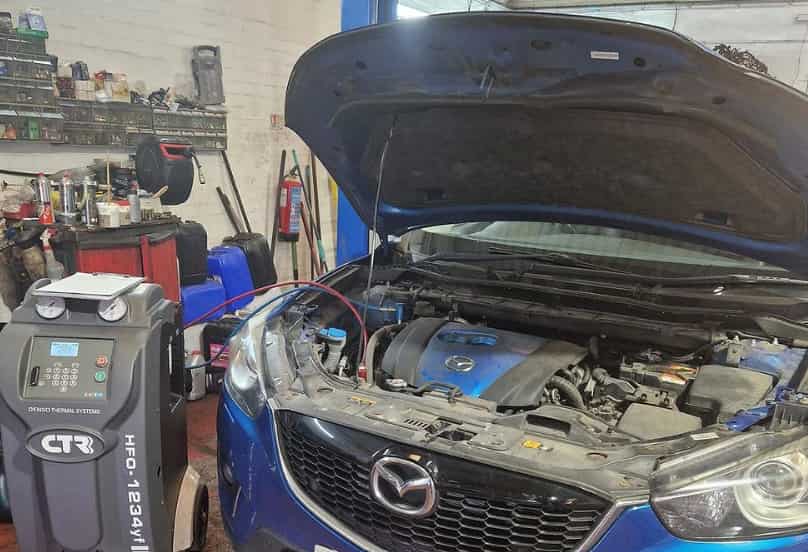
What Is a Mazda 6 AC Recharge?
A Mazda 6 AC recharge restores the correct amount of refrigerant inside the air conditioning system. Refrigerant absorbs heat from the cabin and releases it outside the vehicle. This process allows the system to deliver cool air through the dashboard vents. When the refrigerant level drops, the air conditioner loses its ability to cool the cabin efficiently.
Many drivers believe an AC recharge simply means adding more refrigerant. In reality, the process involves much more than that. You should first inspect the system for leaks, damaged components, or abnormal pressure readings. If the system has a leak, adding refrigerant will only solve the problem for a short time.
The air conditioning system in a Mazda 6 works as a sealed circuit. Under normal conditions, it should keep the same refrigerant charge for many years. Unlike engine oil or windshield washer fluid, refrigerant is not a regular maintenance item. If the system loses refrigerant, it usually indicates a leak or another mechanical issue.
A proper AC recharge also requires the correct refrigerant type and the correct charge amount. Some Mazda 6 models use R134a, while newer models may use R1234yf. Mixing different refrigerants can damage the system and increase repair costs. Before starting any recharge procedure, always check the information label under the hood to confirm the correct specification.
Understanding what an AC recharge can and cannot do helps you make better maintenance decisions. A recharge can restore cooling performance when the refrigerant level is low. However, it cannot repair a faulty compressor, a damaged condenser, or a leaking hose. Identifying the root cause always leads to a safer repair and longer lasting results.
Signs Your Mazda 6 Needs an AC Recharge
The first sign of low refrigerant is warm air coming from the air vents. Your Mazda 6 may still produce airflow, but the air no longer feels cold enough to keep the cabin comfortable. This problem often becomes more noticeable on hot days when the air conditioning system works harder to remove heat.
Weak cooling performance is another common symptom. The air conditioner may cool the cabin eventually, but the process takes much longer than before. Some drivers also notice that the system performs better while driving than when the vehicle sits at a stoplight. This change may point to low refrigerant, but it can also indicate airflow or cooling fan problems.
Frequent compressor cycling is another warning sign. The compressor may switch on and off every few seconds because the system cannot maintain the correct pressure. Although this behavior often appears when refrigerant is low, electrical faults or pressure sensor issues can produce the same symptom. Checking the system before adding refrigerant helps prevent unnecessary repairs.
You should also inspect the engine compartment for visible signs of leakage. Refrigerant usually escapes together with compressor oil, leaving oily residue around hoses, fittings, or the condenser. Service ports may also show traces of oil when a leak develops. Finding these signs early makes repairs easier and reduces the risk of further damage.
Pay attention to changes in cooling performance over time. A healthy air conditioning system delivers stable cooling throughout the drive. If the cabin takes longer to cool each week or the air gradually becomes warmer, the refrigerant level may be decreasing. Instead of adding more refrigerant immediately, inspect the system to identify the underlying cause. A proper diagnosis helps restore reliable cooling and prevents the same problem from returning.
Choosing the Correct Refrigerant
Selecting the correct refrigerant is one of the most important steps before performing a Mazda 6 AC recharge. Using the wrong refrigerant can reduce cooling performance, damage the air conditioning system, and increase repair costs. Before buying any recharge kit, confirm the refrigerant specified for your vehicle.
The easiest way to identify the correct refrigerant is to check the information label under the hood. Most Mazda 6 models have a factory label that lists the refrigerant type and the recommended charge amount. Always follow this label instead of relying only on the model year, as specifications may vary between different markets and production years.
Many older Mazda 6 models use R134a refrigerant, while some newer models use R1234yf. These refrigerants have different chemical properties and require different service equipment. Their service ports also use different fittings to reduce the risk of accidental mixing. Never attempt to combine the two refrigerants, even if the system appears to be low.
Adding the correct amount of refrigerant is just as important as choosing the correct type. Too little refrigerant reduces cooling efficiency and forces the compressor to work harder. Too much refrigerant can increase system pressure and affect cooling performance. In some cases, overcharging may shorten the life of expensive air conditioning components.
If you are unsure which refrigerant your Mazda 6 requires, stop before adding anything to the system. Take a few minutes to verify the factory specifications or consult a trusted repair manual. This simple check helps protect the air conditioning system and ensures that your Mazda 6 AC recharge delivers the best possible results.
Tools and Safety Precautions
Preparing the right tools before you begin makes the recharge process easier and safer. A basic Mazda 6 AC recharge usually requires the correct refrigerant, a compatible recharge hose with a pressure gauge, safety glasses, protective gloves, and a thermometer to measure the air temperature at the center vent. If you plan to perform more advanced air conditioning work, a manifold gauge set and a vacuum pump provide more accurate results.
Always verify that your recharge kit matches the refrigerant used in your Mazda 6. Recharge hoses and service fittings are designed for specific refrigerants. Using incompatible equipment can damage the system and create unnecessary safety risks. Keep the product instructions nearby and follow them throughout the procedure.
Safety should remain your top priority during the entire recharge process. Park the vehicle on a level surface and engage the parking brake before opening the hood. Keep your hands, clothing, and tools away from moving belts and cooling fans while the engine is running. Wear safety glasses and gloves because refrigerant can cause severe skin and eye injuries if it comes into direct contact.
Never connect a recharge hose to the high pressure service port. The high pressure side operates at much higher pressure than the low pressure side and can become dangerous if handled incorrectly. Always identify the correct service port before attaching any equipment.
Avoid adding refrigerant to a system that shows obvious signs of damage or leakage. If you notice oily residue, damaged hoses, or broken AC components, inspect and repair the problem first. Recharging a leaking system wastes refrigerant and will not restore reliable cooling for long.
Work slowly and monitor the pressure gauge throughout the procedure. Stop immediately if the pressure rises above the recommended range or the system behaves abnormally. Careful preparation and safe working habits help protect both your Mazda 6 and everyone working around the vehicle.
How to Recharge a Mazda 6 AC System
Recharging your Mazda 6 air conditioning system is not difficult when you follow the correct procedure. Taking your time and checking each step carefully helps improve cooling performance while reducing the risk of damaging the system.
Start by parking the vehicle on a level surface and applying the parking brake. Open the hood and locate the air conditioning components. Before you begin, check the label under the hood to confirm the correct refrigerant type and the recommended refrigerant capacity for your specific model.
Next, inspect the system for obvious signs of damage. Look closely at the refrigerant lines, hose connections, condenser, and compressor. If you notice oily residue, damaged fittings, or broken components, repair the problem before adding refrigerant. Recharging a leaking system will only provide temporary results.
Locate the low pressure service port and remove its protective cap. The low pressure port is usually found on the larger diameter refrigerant line between the evaporator and the compressor. Make sure you identify the correct port before connecting the recharge hose. Never attach the hose to the high pressure service port.
Start the engine and set the air conditioning system to the lowest temperature with the blower running at the highest speed. Turn on recirculation mode if your Mazda 6 is equipped with this feature. Allow the system to run for several minutes before checking the pressure reading.
Connect the recharge hose securely to the low pressure service port. Read the pressure gauge and compare the reading with the recommended range for the current outdoor temperature. If the pressure indicates that the refrigerant level is low, begin adding refrigerant slowly according to the instructions provided with the recharge kit.
Add refrigerant in small amounts instead of emptying the entire can at once. Pause regularly and allow the pressure to stabilize before checking the gauge again. At the same time, monitor the air temperature coming from the center vents. The air should gradually become colder as the refrigerant level reaches the correct range.
Once the system reaches the recommended pressure, stop adding refrigerant immediately. Disconnect the recharge hose carefully and reinstall the protective cap on the service port. The cap helps keep dirt and moisture out of the system while protecting the service valve.
Finish by testing the air conditioning system under normal driving conditions. Check whether the air remains consistently cold at both idle and highway speeds. If cooling does not improve or quickly becomes weak again, inspect the system for leaks or mechanical problems instead of performing another Mazda 6 AC recharge.
Common Mazda 6 AC Recharge Mistakes
Many AC problems become worse because drivers rush through the recharge process or skip important inspection steps. Understanding the most common mistakes can help you protect the air conditioning system and avoid unnecessary repair costs.
One of the biggest mistakes is adding refrigerant without checking for leaks. A properly sealed air conditioning system should not lose refrigerant during normal operation. If the system becomes low again after a recharge, a leak is the most likely cause. Continuing to refill the system only wastes refrigerant and delays the necessary repair.
Using the wrong refrigerant is another serious mistake. Every Mazda 6 requires a specific refrigerant based on its model year and factory specifications. Mixing different refrigerants can reduce cooling performance and contaminate the entire system. Always verify the information label under the hood before purchasing a recharge kit.
Many people also add too much refrigerant because they expect colder air with a higher charge. In reality, overcharging can increase system pressure and reduce cooling efficiency. Excess pressure also places additional stress on the compressor, seals, and other air conditioning components. Following the recommended refrigerant capacity delivers the best results.
Connecting the recharge hose to the wrong service port creates another unnecessary risk. The low pressure service port is the only location designed for a standard AC recharge. Attempting to connect a recharge kit to the high pressure side can damage the equipment and create a dangerous situation. Always identify the correct service port before starting the procedure.
Some recharge products include sealants that claim to stop refrigerant leaks. Although these products may seem convenient, they rarely solve the underlying problem. In some cases, they can block internal passages or contaminate professional service equipment. Repairing the leak remains the safest and most reliable solution.
Another common mistake is focusing only on refrigerant while ignoring other parts of the air conditioning system. A dirty cabin air filter, a faulty cooling fan, a blocked condenser, or a failing compressor can all reduce cooling performance. Inspecting the complete system helps you find the real cause instead of treating only the symptoms.
Why the AC Is Still Not Cold After a Recharge
If your Mazda 6 still blows warm air after an AC recharge, low refrigerant may not have been the real problem. A successful recharge restores cooling only when the refrigerant level is below the factory specification. If another component fails, the air conditioner will continue to perform poorly even with the correct refrigerant charge.
A refrigerant leak is the most common reason for repeated cooling problems. Small leaks often develop around hose connections, seals, the condenser, or service ports. Refrigerant slowly escapes from the sealed system until cooling performance begins to decline again. Finding and repairing the leak is the only long term solution.
A worn or damaged compressor can also prevent the system from producing cold air. The compressor circulates refrigerant through the entire air conditioning system. If it cannot build the correct pressure, the refrigerant cannot absorb and release heat efficiently. Strange noises, poor cooling, or a compressor that never engages often indicate this type of failure.
The condenser also plays an important role in cooling performance. It releases heat after the refrigerant leaves the compressor. Dirt, road debris, or physical damage can restrict airflow through the condenser. As a result, the system cannot remove heat effectively, especially during hot weather or while the vehicle is idling.
Cooling fans deserve careful attention as well. These fans pull air through the condenser when the vehicle is moving slowly or waiting at traffic lights. If a fan stops working, the air conditioner may cool normally on the highway but produce warm air at idle. This symptom often leads drivers to suspect low refrigerant even though the real problem lies elsewhere.
Airflow inside the cabin also affects cooling performance. A clogged cabin air filter limits the amount of air passing through the evaporator. Blend door problems inside the HVAC system can also direct warm air into the cabin even when the evaporator produces cold air. In both situations, the air conditioner may appear to have a refrigerant problem when it actually does not.
If the system still fails to cool after a proper Mazda 6 AC recharge, avoid adding more refrigerant. Instead, inspect the air conditioning system or have it tested with professional diagnostic equipment. Identifying the root cause early helps prevent additional damage and restores reliable cooling more efficiently.
DIY vs. Professional AC Recharge
Many Mazda 6 owners choose a DIY AC recharge because it costs less and takes only a short time to complete. A recharge kit is easy to find, and the basic procedure does not require advanced mechanical experience. If the air conditioning system has only lost a small amount of refrigerant and shows no signs of damage, a careful DIY recharge may restore normal cooling performance.
A DIY recharge works best when the system still produces some cool air and no obvious leaks are present. You should also know the correct refrigerant type and understand how to read the pressure gauge. Taking time to inspect the system before adding refrigerant helps reduce the chance of making an expensive mistake.
Professional service offers several advantages that a basic recharge kit cannot provide. Technicians use specialized equipment to recover refrigerant, measure the exact charge, perform leak detection, and verify system pressure. They can also diagnose electrical faults, compressor problems, and restricted components that a simple pressure gauge cannot identify.
Professional diagnosis becomes the better choice when the air conditioner stops cooling completely, refrigerant leaks return quickly, or unusual noises develop. It is also recommended after major AC repairs because the system must be evacuated before adding the correct refrigerant charge. Accurate testing often saves money by identifying the real problem before additional parts fail.
Choosing between a DIY recharge and professional service depends on the condition of your Mazda 6. A minor refrigerant loss may only require a careful recharge. However, repeated cooling problems usually indicate a deeper issue that needs proper inspection and repair.
Mazda 6 AC Recharge Cost
The cost of a Mazda 6 AC recharge depends on the condition of the system, the refrigerant type, and whether you perform the work yourself or visit a repair shop. A DIY recharge usually costs much less because you only pay for the refrigerant and the recharge kit. This option is often suitable when the system has no leaks and only needs a small amount of refrigerant.
Professional AC service costs more because it includes additional equipment and diagnostic procedures. Many repair shops inspect the system, recover any remaining refrigerant, check for leaks, and recharge the system with the exact factory specified amount. Some shops also measure vent temperature and operating pressure to confirm that the air conditioner performs correctly before returning the vehicle.
Repair costs increase when technicians discover damaged components. A leaking condenser, worn compressor, faulty expansion valve, or damaged hose can add significantly to the final bill. Ignoring these problems and continuing to recharge the system often leads to higher repair costs in the future.
Although a DIY recharge may appear to save money, it is not always the most economical solution. Finding and repairing the actual cause of poor cooling usually provides better long term value. A properly repaired air conditioning system delivers consistent cooling, protects expensive components, and reduces the need for repeated Mazda 6 AC recharge services.
How to Maintain Your Mazda 6 Air Conditioning System
Regular maintenance helps your Mazda 6 air conditioning system deliver reliable cooling and reduces the chance of unexpected repairs. Simple habits can extend the life of important components and improve overall system efficiency.
Run the air conditioner for several minutes every few weeks, even during cooler months. This practice keeps the compressor lubricated and helps maintain the seals inside the system. It also reduces the risk of refrigerant leaks caused by dry or damaged seals.
Replace the cabin air filter according to the maintenance schedule or whenever airflow becomes weak. A clean filter allows air to move freely through the evaporator and improves cooling performance. It also helps reduce dust, pollen, and unpleasant odors inside the cabin.
Keep the condenser clean by removing leaves, dirt, and road debris from its surface. Good airflow allows the condenser to release heat more efficiently, especially during hot weather. Restricted airflow forces the air conditioning system to work harder and may reduce cooling performance.
Pay attention to changes in cooling performance throughout the year. If the air conditioner takes longer to cool the cabin, produces unusual noises, or cycles more frequently than normal, inspect the system as soon as possible. Early diagnosis often prevents minor problems from becoming expensive repairs.
Avoid performing repeated Mazda 6 AC recharge procedures without identifying the reason for refrigerant loss. A sealed air conditioning system should maintain its refrigerant for many years. If the refrigerant level continues to drop, repairing the leak will always provide a better long term solution than adding more refrigerant.
Frequently Asked Questions
Can I perform a Mazda 6 AC recharge myself?
Yes, you can perform a Mazda 6 AC recharge if the system only has a low refrigerant level and no major mechanical problems. Before adding refrigerant, verify the correct refrigerant type, inspect the system for leaks, and follow the instructions included with the recharge kit.
What refrigerant does a Mazda 6 use?
The refrigerant depends on the model year and market. Many older Mazda 6 models use R134a, while some newer models use R1234yf. Always check the factory label under the hood before purchasing refrigerant.
How much refrigerant does a Mazda 6 need?
The correct refrigerant capacity varies by model year and engine configuration. The factory specification label provides the exact amount required for your vehicle. Following this specification helps achieve the best cooling performance and prevents overcharging.
Where is the low pressure service port located?
The low pressure service port is usually installed on the larger refrigerant line between the evaporator and the compressor. Its exact location may vary depending on the model year and engine. Consult the owner’s manual or a service manual if you have difficulty locating it.
How long should an AC recharge last?
A properly sealed air conditioning system should maintain its refrigerant for several years. If cooling performance declines again within a short period, the system most likely has a refrigerant leak or another mechanical problem that requires repair.
Can too much refrigerant damage the AC system?
Yes. Overcharging increases system pressure and may reduce cooling efficiency. It can also place extra stress on the compressor and other air conditioning components. Always follow the factory recommended refrigerant capacity.
Conclusion
Performing a Mazda 6 AC recharge can restore strong cooling when the refrigerant level has dropped below the recommended specification. However, a recharge is only effective when the rest of the air conditioning system operates correctly. Understanding the symptoms, selecting the correct refrigerant, following the proper recharge procedure, and avoiding common mistakes will help you achieve better results and protect your vehicle from unnecessary damage.
Regular inspection is just as important as the recharge itself. A sealed air conditioning system should not require frequent refrigerant refills. If cooling performance continues to decline after a recharge, inspect the system for leaks, compressor problems, airflow restrictions, or other mechanical faults instead of adding more refrigerant again.
By following the guidance in this Mazda 6 AC Recharge Guide, you can make informed maintenance decisions and keep your air conditioning system performing at its best. Whether you choose a DIY recharge or professional service, focusing on accurate diagnosis and proper repairs will provide reliable cooling, lower long term maintenance costs, and improve driving comfort throughout the year.