Seeing the Land Rover HDC Fault System Not Available warning on your dashboard can be frustrating. Many drivers assume the vehicle has a serious mechanical problem. In reality, the warning often points to an issue with a sensor, the electrical system, or communication between control modules. Finding the real cause early can save both time and repair costs.
Hill Descent Control, also known as HDC, helps your Land Rover maintain a safe speed on steep or slippery roads. The system works with the Anti lock Braking System, Electronic Stability Control, Terrain Response, and several onboard sensors. These components share data every second while you drive. If one component stops working correctly, the vehicle may display the HDC warning together with ABS, Traction Control, or Suspension Fault messages. In many cases, a single fault can trigger several dashboard alerts at the same time.
This guide explains what the Land Rover HDC Fault System Not Available warning means and why it appears. You will learn the most common causes, including a weak battery, a faulty wheel speed sensor, a damaged brake light switch, steering angle sensor errors, ABS module problems, and software issues. The guide also shows you how to diagnose the fault, apply the correct repair, reset the warning, estimate repair costs, and reduce the risk of future HDC problems. Whether you drive a Range Rover, Discovery, Defender, or another Land Rover model, you will gain practical knowledge that helps you solve the problem with confidence.
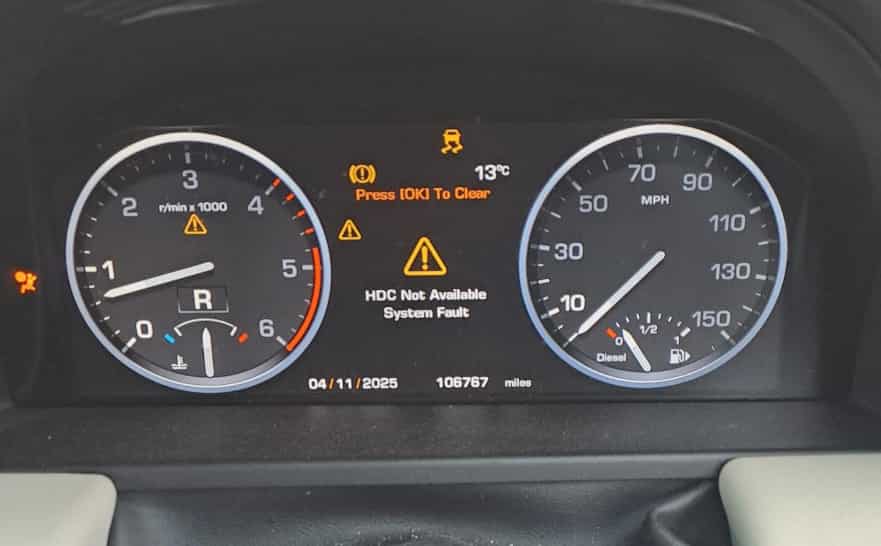
What Does “HDC Fault System Not Available” Mean?
The Land Rover HDC Fault System Not Available warning indicates that the Hill Descent Control system cannot operate normally because the vehicle has detected a fault. This message does not always mean the HDC system has failed. In many cases, another component sends incorrect information to the control module, forcing the vehicle to disable HDC as a safety precaution. Since several electronic systems work together, a single fault can trigger multiple dashboard warnings at the same time. Drivers often notice ABS, Traction Control, or Terrain Response alerts alongside the HDC message, making the issue appear more serious than it actually is.
Hill Descent Control helps your Land Rover maintain a steady and controlled speed while driving down steep hills or slippery surfaces. Instead of relying entirely on the driver, the system automatically adjusts the braking force at each wheel to improve stability and traction. To achieve this, HDC constantly receives information from the wheel speed sensors, steering angle sensor, ABS module, brake system, engine control module, and Terrain Response system. Every component must communicate accurately for the system to perform as intended. If one module reports invalid data or loses communication, the vehicle immediately disables HDC to protect both the driver and the drivetrain.
You can often continue driving after the Land Rover HDC Fault System Not Available warning appears, but you should never ignore it. Although the vehicle may still operate normally on regular roads, its safety features could become limited during difficult driving conditions. An early inspection helps identify the root cause before a minor electrical issue develops into an expensive repair. Understanding what this warning means also makes the diagnostic process faster and prevents unnecessary replacement of parts that still function correctly.
Symptoms That Usually Appear with an HDC Fault
The Land Rover HDC Fault System Not Available warning rarely appears on its own. In most cases, it comes with other dashboard alerts because several vehicle systems work together to maintain stability and traction. The most common warning lights include ABS, Traction Control, Electronic Stability Control, and Terrain Response. Some drivers also notice Suspension Fault or Transmission Fault messages, depending on the affected component. These warnings often point to a shared electrical or communication problem rather than multiple independent failures.
Besides the warning lights, you may experience noticeable changes in the way the vehicle performs. Hill Descent Control may stop working completely, making it more difficult to control speed on steep or slippery roads. The Terrain Response system may switch to a limited mode or become unavailable, reducing the vehicle’s off road capability. In some situations, cruise control stops functioning because it relies on accurate data from the same sensors and control modules. Drivers may also notice reduced traction, inconsistent braking performance, or a temporary loss of stability assistance during challenging driving conditions.
The severity of these symptoms depends on the underlying cause. A weak battery or a low voltage condition can trigger several warnings without affecting normal driving. However, a failed wheel speed sensor, a faulty ABS module, or damaged wiring can reduce the effectiveness of important safety systems. If the vehicle displays multiple warning messages or the symptoms become more frequent, perform a diagnostic scan as soon as possible. Early diagnosis helps prevent additional damage, reduces repair costs, and restores the full performance of your Land Rover’s electronic safety systems.
What Causes the Land Rover HDC Fault System Not Available Message?
The Land Rover HDC Fault System Not Available warning usually appears when the vehicle detects a problem that affects the Hill Descent Control system. However, the fault does not always originate from HDC itself. Modern Land Rover models rely on several electronic systems that continuously share information while the vehicle is moving. If one system sends inaccurate data or stops communicating, the control module may disable Hill Descent Control to maintain safe vehicle operation.
A weak battery is one of the most common reasons behind this warning. Low voltage can interrupt communication between electronic control modules and trigger multiple dashboard alerts at the same time. Wheel speed sensors also play a critical role because they provide the data needed to control braking on steep or slippery roads. When one sensor fails or loses its signal, the HDC system can no longer calculate wheel speed accurately, causing the warning message to appear.
Other components can produce the same symptom. A faulty ABS module may interrupt brake control functions, while a damaged brake light switch can prevent the system from detecting the driver’s braking input. Problems with the steering angle sensor, Terrain Response system, or CAN Bus network may also cause communication errors that disable HDC. In some cases, outdated software or transfer case faults contribute to the problem as well.
Because several systems work together, the warning message alone cannot identify the exact cause. A proper diagnostic scan combined with a basic inspection of the battery, sensors, and electrical connections offers the fastest and most accurate way to locate the fault and restore normal HDC operation.
How to Diagnose the HDC Fault Properly
Diagnosing the Land Rover HDC Fault System Not Available warning requires a systematic approach because several components can trigger the same message. Replacing parts without confirming the root cause often leads to unnecessary expenses and fails to solve the problem. A complete diagnosis helps identify the faulty component before it affects other vehicle systems.
Start by scanning the vehicle with a professional diagnostic tool that supports Land Rover systems. The stored diagnostic trouble codes provide valuable information about communication errors, sensor failures, or control module faults. After reading the fault codes, inspect the battery and charging system. Low battery voltage is a common cause of HDC warnings and can generate multiple fault messages across the dashboard.
The next step involves checking the wheel speed sensors, wiring, and electrical connectors for signs of damage, corrosion, or loose connections. Since Hill Descent Control relies on accurate wheel speed data, even a minor sensor issue can disable the system. You should also inspect the brake fluid level, brake light switch, and steering angle sensor because these components directly support the vehicle’s braking and stability systems.
If no obvious fault is found, examine the ABS module, Terrain Response system, and CAN Bus network for communication problems. In some cases, outdated software or incorrect sensor calibration may also trigger the warning. After completing the necessary repairs, clear the diagnostic codes and perform a road test to confirm that the Land Rover HDC Fault System Not Available warning does not return. This step ensures every system communicates correctly and operates as intended.
How to Fix the Land Rover HDC Fault
Fixing the Land Rover HDC Fault System Not Available warning depends on the underlying cause, so completing a proper diagnosis should always come first. Once the fault has been identified, start with the simplest and least expensive repairs before considering major component replacements. This approach reduces unnecessary costs and increases the chance of resolving the issue quickly.
If the battery no longer provides stable voltage, recharge it or replace it if testing confirms poor performance. A healthy battery often restores communication between electronic control modules and clears multiple warning messages. When the fault involves a damaged wheel speed sensor, replace the affected sensor and inspect the wiring for corrosion or broken connections. If the brake light switch or steering angle sensor fails, installing a new component and performing the required calibration usually restores normal system operation.
Some repairs require more advanced equipment. A faulty ABS module may need professional testing, repair, or replacement, while software related issues often require the latest manufacturer updates. Communication problems caused by damaged wiring or loose electrical connectors should also be repaired immediately because they can affect several safety systems at the same time. After completing the repair, clear the stored fault codes with a compatible diagnostic scanner and perform a road test under different driving conditions. If the warning does not return and all related systems operate normally, the repair has been successful. Regular maintenance, timely software updates, and routine inspections can also reduce the risk of future HDC faults and help keep your Land Rover performing safely in all driving conditions.
How to Reset the HDC Fault System
Resetting the Land Rover HDC Fault System Not Available warning only works after the underlying problem has been repaired. If the original fault remains, the warning will usually return within a short period or after the next ignition cycle. For this reason, always diagnose and fix the root cause before attempting any reset procedure.
The simplest method is to turn off the engine, wait a few minutes, and restart the vehicle. Minor communication errors or temporary voltage fluctuations may disappear after the control modules complete a new system check. If the warning remains, use a compatible diagnostic scanner to clear the stored fault codes. This method resets the affected control modules and confirms whether the repair has solved the problem. If the warning returns immediately after clearing the codes, the vehicle still detects an active fault that requires further inspection.
Some owners disconnect the battery to reset the vehicle’s electronic systems. Although this method may clear temporary faults on certain models, it should not replace a proper diagnostic procedure. Disconnecting the battery can also erase stored settings and may require additional system calibration. If the warning persists after a battery reset or diagnostic scan, the problem likely involves a faulty sensor, damaged wiring, or a control module that still requires repair. Completing a final road test after the reset ensures that Hill Descent Control, ABS, and other related safety systems operate correctly without displaying new warning messages.
Land Rover HDC Fault Repair Costs
The cost of repairing the Land Rover HDC Fault System Not Available warning varies depending on the failed component, labor rates, and the vehicle model. Simple electrical faults usually cost far less than replacing major control modules. Performing an accurate diagnosis before replacing any parts can prevent unnecessary expenses and reduce repair time. In many cases, a weak battery, a faulty wheel speed sensor, or a brake light switch causes the warning, making the repair relatively affordable.
| Component | Estimated Repair Cost | Typical Labor Time |
|---|---|---|
| Battery Replacement | $180 to $450 | 30 to 60 minutes |
| Wheel Speed Sensor | $120 to $350 | 1 to 2 hours |
| Brake Light Switch | $80 to $180 | 30 to 60 minutes |
| Steering Angle Sensor | $250 to $600 | 1 to 2 hours |
| ABS Module Repair or Replacement | $600 to $1,500 | 2 to 4 hours |
| Wiring or CAN Bus Repair | $150 to $800 | 1 to 5 hours |
| Software Update or Module Programming | $100 to $300 | 30 to 90 minutes |
| Transfer Case Repair | $800 to $2,500+ | 4 to 8 hours |
These figures provide general estimates and may vary by region or repair shop. Premium dealerships often charge higher labor rates than independent Land Rover specialists. If your vehicle displays multiple warning messages, invest in a professional diagnostic scan before authorizing repairs. Identifying the exact fault at the beginning of the process often saves hundreds of dollars and helps avoid replacing components that still function correctly.
Can You Drive with an HDC Fault?
Many drivers ask whether it is safe to continue driving after seeing the Land Rover HDC Fault System Not Available warning. The answer depends on the cause of the fault and whether other warning lights appear at the same time. In some cases, the vehicle remains safe to drive on normal roads because only the Hill Descent Control function has been disabled. However, you should avoid assuming the warning is harmless without checking the system.
If the warning appears by itself and the vehicle brakes, steers, and accelerates normally, you can usually drive to your destination or the nearest repair shop. Even so, you should schedule a diagnostic inspection as soon as possible. Ignoring the warning may allow a minor electrical or sensor problem to develop into a more expensive repair. The risk becomes much higher if the dashboard also displays ABS, Traction Control, Suspension, or Transmission warnings. These systems work together to improve stability, especially on wet roads, loose gravel, or steep hills.
Stop driving immediately if you notice reduced braking performance, unusual steering behavior, warning lights flashing continuously, or abnormal noises from the drivetrain. These symptoms may indicate a fault that affects vehicle safety rather than just the Hill Descent Control system. Repairing the problem early not only restores HDC but also protects other electronic systems from additional damage. A timely diagnosis is always safer and more cost effective than waiting for the fault to become more serious.
How to Prevent Future HDC Faults
Preventing the Land Rover HDC Fault System Not Available warning is often easier and less expensive than repairing it. Most HDC faults develop gradually because of low battery voltage, worn sensors, poor electrical connections, or missed maintenance. Regular inspections help identify these issues before they trigger warning messages or affect other safety systems.
Start by keeping the battery and charging system in good condition. A stable power supply allows every control module to communicate correctly and reduces the risk of random electronic faults. During routine maintenance, inspect the wheel speed sensors and electrical connectors for dirt, moisture, or corrosion. Cleaning these components can improve signal quality and prevent communication errors. You should also monitor the brake fluid level and replace worn brake components according to the manufacturer’s maintenance schedule.
Software updates are another important part of preventive maintenance. Land Rover periodically releases updates that improve system performance, fix communication issues, and resolve known software bugs. Installing these updates can reduce the chance of recurring HDC warnings. If you frequently drive in mud, deep water, or harsh weather conditions, inspect the underbody wiring and connectors more often because moisture and debris can damage sensitive electrical components.
Finally, never ignore a warning light, even if it disappears after restarting the engine. Temporary faults often indicate an underlying problem that may become more serious over time. Addressing small issues early helps protect the ABS, Terrain Response, and Hill Descent Control systems while reducing long term repair costs. Consistent maintenance remains the best way to keep your Land Rover reliable and ready for every journey.
Frequently Asked Questions
Why does my Land Rover say HDC Fault System Not Available?
This warning appears when the vehicle detects a problem that prevents the Hill Descent Control system from operating safely. The fault may involve the battery, wheel speed sensors, ABS module, brake light switch, steering angle sensor, or communication between electronic control modules.
Can a weak battery cause an HDC fault?
Yes. A weak or failing battery is one of the most common causes of the Land Rover HDC Fault System Not Available warning. Low voltage can interrupt communication between control modules and trigger multiple dashboard warnings at the same time.
Will the HDC warning disappear after replacing the faulty part?
In many cases, yes. However, some faults remain stored in the control module until they are cleared with a compatible diagnostic scanner. After completing the repair, clear the fault codes and perform a road test to confirm the warning does not return.
Can I drive with an HDC fault?
You can usually continue driving if the vehicle operates normally and no additional safety warnings appear. If you notice ABS, Traction Control, or Suspension warnings, reduced braking performance, or unusual handling, stop driving when it is safe and have the vehicle inspected immediately.
How much does it cost to repair an HDC fault?
Repair costs vary depending on the failed component. Minor repairs such as replacing a brake light switch or wheel speed sensor may cost less than a few hundred dollars, while replacing an ABS module or repairing the transfer case can exceed one thousand dollars.
Final Thoughts
The Land Rover HDC Fault System Not Available warning should never be ignored, but it does not always indicate a major mechanical failure. In many situations, the problem starts with a weak battery, a faulty sensor, or a communication issue between electronic systems. Understanding how Hill Descent Control interacts with the ABS, Terrain Response, and other control modules makes it easier to identify the real cause and avoid replacing parts unnecessarily.
A structured diagnosis remains the most effective way to solve the problem. Checking the battery, scanning for diagnostic trouble codes, inspecting sensors, and repairing damaged wiring often resolves the warning without extensive repairs. Once the fault has been corrected, resetting the system and completing a road test will confirm that every safety feature operates correctly.
Regular maintenance, software updates, and routine inspections can significantly reduce the risk of future HDC faults. By addressing warning signs early, you can improve vehicle reliability, reduce long term repair costs, and ensure your Land Rover continues to deliver the performance and confidence expected in every driving condition.