The GM L87 6.2L EcoTec3 V8 is one of the most capable naturally aspirated truck engines available in the modern full size pickup and SUV market. Found under the hood of popular models such as the Chevrolet Silverado 1500, GMC Sierra 1500, Chevrolet Tahoe, GMC Yukon, and Cadillac Escalade, the L87 delivers an impressive combination of power, towing capability, and refined everyday drivability. Whether you are considering buying a vehicle equipped with this engine, researching its specifications, or simply comparing it with other GM V8 options, understanding the L87 engine specs is essential.
Unlike a simple specification sheet, the L87 represents years of engineering improvements over previous generations. It features advanced technologies such as Dynamic Fuel Management, Direct Fuel Injection, Variable Valve Timing, and an all aluminum construction designed to maximize both performance and efficiency. These innovations allow the engine to produce outstanding horsepower and torque while meeting increasingly strict emissions and fuel economy standards.
In this complete guide, we will break down every important aspect of the L87 engine specs, including displacement, horsepower, torque, compression ratio, bore and stroke, oil capacity, fuel requirements, and engine architecture. We will also examine the vehicles that use the L87, discuss its real world performance, towing capability, reliability, maintenance requirements, and compare it with the earlier L86 engine. By the end of this article, you will have a comprehensive understanding of why the GM L87 remains one of the most respected V8 engines in today’s truck and SUV segment.
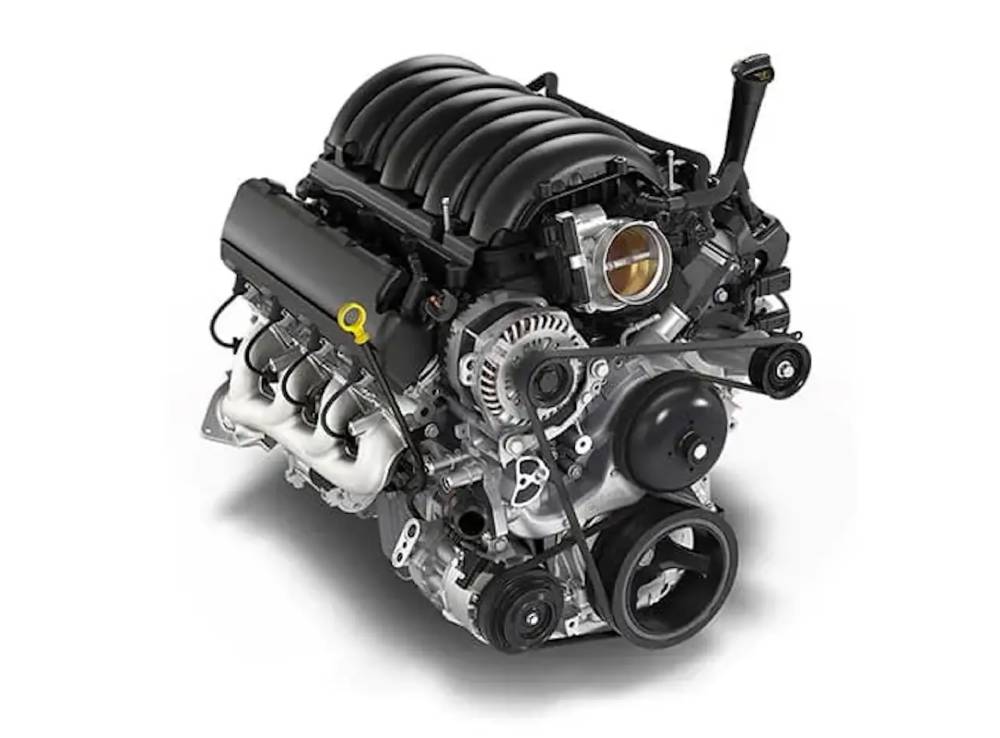
What Is the GM L87 Engine?
The L87 is a 6.2-liter naturally aspirated V8 gasoline engine developed by General Motors as part of the third-generation EcoTec3 engine family. Introduced for the 2019 model year, it serves as the flagship V8 powerplant for many of GM’s full-size trucks and SUVs. The engine was engineered to deliver exceptional towing capability, strong low-end torque, and refined highway performance while meeting modern emissions and fuel efficiency standards.
Unlike its predecessor, the L86, the L87 incorporates Dynamic Fuel Management (DFM), an advanced cylinder deactivation system capable of operating in multiple cylinder patterns rather than switching only between eight and four cylinders. This technology continuously analyzes driving conditions and determines the optimal number of active cylinders, helping improve fuel economy without sacrificing performance when full power is required.
The engine features an aluminum block and aluminum cylinder heads, reducing overall weight while maintaining excellent durability. It also utilizes Direct Fuel Injection (DI), continuously Variable Valve Timing (VVT), and an advanced combustion chamber design to maximize power output and combustion efficiency. Together, these technologies allow the L87 to deliver responsive acceleration, smooth power delivery, and impressive towing performance.
Today, the L87 powers several of General Motors’ most popular vehicles, including the Chevrolet Silverado 1500, GMC Sierra 1500, Chevrolet Tahoe, Chevrolet Suburban, GMC Yukon, and Cadillac Escalade. Its combination of high horsepower, abundant torque, and proven reliability has made it one of the most desirable naturally aspirated V8 engines in the North American truck and SUV market.
L87 Engine Specs at a Glance
The table below summarizes the most important L87 engine specs. These specifications provide a quick overview of the engine’s architecture, performance, and maintenance requirements.
| Specification | Value |
|---|---|
| Engine Code | L87 |
| Manufacturer | General Motors |
| Engine Family | EcoTec3 Gen V Small Block |
| Configuration | 90° V8 |
| Displacement | 6.2L (6,162 cc / 376 cu in) |
| Bore | 4.06 in (103.25 mm) |
| Stroke | 3.62 in (92 mm) |
| Compression Ratio | 11.5:1 |
| Horsepower | 420 hp @ 5,600 rpm |
| Torque | 460 lb-ft @ 4,100 rpm |
| Fuel System | Direct Fuel Injection |
| Aspiration | Naturally Aspirated |
| Valvetrain | Overhead Valve (OHV), 2 Valves per Cylinder |
| Variable Valve Timing | Yes |
| Dynamic Fuel Management | Yes |
| Engine Block Material | Aluminum |
| Cylinder Head Material | Aluminum |
| Recommended Fuel | Premium Unleaded (91 Octane or Higher Recommended) |
| Oil Capacity | Approximately 8 quarts with filter |
| Recommended Oil | SAE 0W-20 Full Synthetic |
| Emissions Standard | EPA Compliant |
| Cooling System | Liquid Cooled |
These specifications highlight why the L87 is considered one of GM’s most capable gasoline V8 engines. While its 420 horsepower and 460 lb-ft of torque are impressive on paper, the combination of advanced fuel management, lightweight construction, and efficient airflow allows the engine to deliver strong real-world performance in towing, hauling, and daily driving.
Understanding Each L87 Engine Specification
Looking at a specification sheet only tells part of the story. To fully appreciate the capabilities of the L87, it is important to understand what each specification means and how it affects real-world driving performance.
Engine Architecture
The L87 belongs to GM’s legendary Gen V Small Block family and features a traditional 90-degree V8 configuration. This layout has been refined over decades to provide excellent balance, compact dimensions, and strong low-end torque. Unlike many modern turbocharged engines, the naturally aspirated design delivers smooth and predictable power throughout the entire RPM range while reducing complexity.
Displacement
With a displacement of 6.2 liters (6,162 cc), the L87 offers significantly more air and fuel capacity than smaller V8 engines. The larger displacement contributes directly to stronger acceleration, higher towing capability, and improved performance under heavy loads. Drivers towing boats, campers, or work trailers benefit from abundant torque without relying on turbochargers.
Bore and Stroke
The engine uses a 4.06-inch bore and a 3.62-inch stroke, creating an oversquare design where the bore is larger than the stroke. This configuration allows larger intake and exhaust valves, improves airflow at higher engine speeds, and enables the engine to produce impressive horsepower while maintaining excellent throttle response.
Compression Ratio
An 11.5:1 compression ratio is relatively high for a naturally aspirated truck engine. Higher compression improves thermal efficiency and allows more energy to be extracted from each combustion cycle. This contributes to stronger performance and better fuel efficiency but also explains why GM recommends premium gasoline for optimal operation.
Horsepower
The L87 produces 420 horsepower at 5,600 rpm, placing it among the most powerful naturally aspirated V8 engines available in the half-ton pickup segment. This level of power provides confident highway merging, effortless passing, and responsive acceleration even when the vehicle is carrying passengers or cargo.
Torque
Peak torque reaches 460 lb-ft at 4,100 rpm, but the engine delivers substantial pulling power well below that point. This broad torque curve makes towing heavy trailers easier and reduces the need for frequent downshifts during uphill climbs or acceleration.
Fuel Injection System
Direct Fuel Injection sprays fuel directly into each combustion chamber at extremely high pressure. Compared with traditional port injection, this system improves combustion efficiency, increases power output, reduces fuel consumption, and lowers emissions. It also supports the engine’s relatively high compression ratio without increasing the risk of engine knock.
Dynamic Fuel Management
Dynamic Fuel Management is one of the L87’s most advanced technologies. Instead of operating only in V8 or V4 mode, the system can activate or deactivate different combinations of cylinders based on engine load and driving conditions. This intelligent approach improves fuel economy during light cruising while instantly restoring full eight-cylinder performance whenever additional power is needed.
Variable Valve Timing
Continuously Variable Valve Timing adjusts valve timing in real time to optimize engine breathing across the RPM range. The result is improved low-speed torque, stronger high-speed power, smoother operation, and reduced emissions without compromising reliability.
Oil Capacity and Recommended Oil
The L87 requires approximately 8 quarts of SAE 0W-20 full synthetic oil when replacing both the oil and filter. Using the correct oil grade helps maintain proper lubrication, protects internal engine components from wear, and ensures the Dynamic Fuel Management system operates as intended. Following GM’s recommended maintenance schedule can significantly extend engine life and preserve long-term performance.
Which Vehicles Use the L87 Engine?
Since its introduction in 2019, the L87 6.2L EcoTec3 V8 has been reserved for General Motors’ premium full size trucks and SUVs. Designed to provide exceptional power, towing capability, and long distance comfort, the engine is commonly available as the top gasoline engine option across several Chevrolet, GMC, and Cadillac models.
Chevrolet Silverado 1500
The Chevrolet Silverado 1500 is one of the most popular applications of the L87 engine. Buyers looking for maximum towing performance without stepping up to a heavy duty diesel often choose the 6.2L V8 because it delivers 420 horsepower and 460 lb-ft of torque. Combined with GM’s 10 speed automatic transmission, the Silverado offers quick acceleration, smooth gear changes, and confident highway passing even while towing heavy trailers.
The engine is typically available on higher trim levels such as the LT Trail Boss, High Country, LTZ, RST, and ZR2, depending on the model year and configuration.
GMC Sierra 1500
The GMC Sierra 1500 shares its powertrain with the Silverado but emphasizes premium refinement and luxury. In Denali, Denali Ultimate, AT4, and AT4X trims, the L87 provides effortless performance for both daily commuting and demanding towing applications.
The combination of strong torque, quiet operation, and advanced Dynamic Fuel Management allows the Sierra to remain comfortable during long road trips while still providing impressive pulling capability when hauling boats, campers, or utility trailers.
Chevrolet Tahoe
For families requiring three rows of seating without sacrificing performance, the Chevrolet Tahoe equipped with the L87 engine offers one of the strongest naturally aspirated V8 options in the segment.
The additional horsepower significantly improves highway merging, mountain driving, and towing confidence compared with the standard 5.3L V8. Drivers carrying multiple passengers or cargo will appreciate the engine’s abundant low end torque and smooth power delivery.
Chevrolet Suburban
The Chevrolet Suburban is the longest running SUV nameplate in America, and the L87 engine complements its large dimensions perfectly. Whether transporting a full family, towing recreational equipment, or traveling across long distances, the 6.2L V8 provides consistent performance with minimal engine strain.
Its naturally aspirated design also delivers predictable throttle response, making the vehicle feel lighter and more responsive despite its size.
GMC Yukon
The GMC Yukon combines premium comfort with truck based durability, making the L87 an excellent match for buyers who frequently tow while enjoying luxury features.
Available primarily on Denali and Denali Ultimate models, the engine provides smooth acceleration, refined cruising characteristics, and enough reserve power to confidently handle steep grades or fully loaded road trips.
Cadillac Escalade
As Cadillac’s flagship luxury SUV, the Escalade benefits tremendously from the L87 engine. The powerful V8 delivers effortless acceleration while maintaining the smooth, quiet driving experience expected from a premium luxury vehicle.
Even with advanced sound insulation and a spacious interior, the Escalade can accelerate confidently, tow substantial loads, and maintain highway speeds with ease. The engine’s refined characteristics make it one of the key reasons the Escalade continues to compete successfully in the luxury SUV segment.
L87 Engine Performance
The L87 engine specs tell only part of the story. While 420 horsepower and 460 lb-ft of torque are impressive figures on paper, the real strength of the L87 lies in how it delivers power under everyday driving conditions. Whether accelerating onto the interstate, climbing steep mountain roads, or towing heavy equipment, the engine provides smooth, linear performance without relying on forced induction.
One of the biggest advantages of the naturally aspirated 6.2L V8 is its immediate throttle response. Unlike turbocharged engines that may exhibit slight turbo lag before reaching peak boost, the L87 responds instantly to throttle input. This creates a more predictable and engaging driving experience, particularly when overtaking slower traffic or merging onto busy highways.
The engine’s broad torque curve is another major advantage. Rather than concentrating maximum torque within a narrow RPM range, the L87 produces strong pulling power across much of the rev range. This characteristic reduces the need for frequent downshifts and allows the engine to maintain momentum even when carrying passengers, cargo, or towing heavy trailers.
When paired with GM’s electronically controlled 10 speed automatic transmission, the engine remains within its optimal power band more consistently. The transmission’s closely spaced gear ratios contribute to smoother acceleration, improved fuel efficiency, and quieter highway cruising. Drivers experience seamless gear changes that make the vehicle feel responsive under acceleration while maintaining relaxed engine speeds during long distance travel.
Fuel economy is also respectable considering the engine’s displacement. Thanks to Direct Fuel Injection, Variable Valve Timing, and Dynamic Fuel Management, the L87 can deactivate selected cylinders during light load conditions to reduce fuel consumption. While actual fuel economy depends on vehicle weight, driving habits, terrain, and towing demands, owners often report competitive highway efficiency for a naturally aspirated V8 of this size.
For towing applications, the L87 remains one of GM’s strongest gasoline engines. Depending on vehicle configuration, axle ratio, drivetrain, and factory towing package, many Silverado and Sierra models equipped with the L87 can tow well over 13,000 pounds. This capability makes the engine a popular choice among contractors, outdoor enthusiasts, and families who regularly tow boats, campers, horse trailers, or utility trailers.
Despite its impressive performance, the L87 also delivers a refined driving experience. Engine vibrations are well controlled, power delivery remains smooth throughout the RPM range, and the distinctive V8 exhaust note provides just enough character without becoming intrusive during highway cruising.
L87 Engine Reliability
The L87 6.2L EcoTec3 V8 is generally regarded as a durable and capable engine when maintained according to General Motors’ recommended service schedule. Its aluminum construction, proven small block architecture, and naturally aspirated design eliminate many of the complexities associated with turbocharged powertrains. Many owners have accumulated well over 150,000 miles with minimal major repairs, demonstrating the engine’s potential for long service life.
Routine maintenance plays a critical role in preserving reliability. Regular oil changes using the recommended SAE 0W-20 full synthetic oil help protect internal components, particularly the lifters and valvetrain that support the Dynamic Fuel Management system. Replacing air filters, spark plugs, coolant, and transmission fluid at the appropriate intervals also contributes to long term durability.
Like many modern direct injected gasoline engines, the L87 may eventually experience carbon deposits on the intake valves because fuel no longer washes over the valves during operation. While this issue develops gradually and does not affect every vehicle equally, periodic intake cleaning can help restore airflow and maintain peak engine performance over higher mileage.
One of the most discussed topics among truck enthusiasts involves the Dynamic Fuel Management system. Although DFM improves fuel economy by selectively deactivating cylinders, some owners have reported lifter related failures. These issues appear to affect only a relatively small percentage of engines, but they have generated considerable attention because repairing failed lifters can be labor intensive. Many vehicles never experience this problem, particularly when serviced regularly with high quality lubricants and maintained according to factory recommendations.
Another area owners should monitor is fuel quality. Because the engine uses a relatively high 11.5:1 compression ratio, premium gasoline is recommended to achieve maximum performance and reduce the likelihood of spark retard under heavy loads. While the engine can operate on regular gasoline in many situations, using premium fuel generally provides better performance, smoother operation, and improved efficiency.
Overall, the L87 has earned a solid reputation for combining strong performance with dependable long term operation. Owners who follow scheduled maintenance, address minor issues promptly, and use quality fluids can reasonably expect many years of reliable service from GM’s flagship naturally aspirated 6.2L V8 engine.
L87 Engine Maintenance Schedule
Proper maintenance is the key to maximizing the lifespan and performance of the GM L87 6.2L EcoTec3 V8. Although the engine is built using proven small-block architecture and modern engineering, routine servicing ensures that critical components such as the Dynamic Fuel Management system, fuel injectors, timing components, and valvetrain continue to operate efficiently. Following General Motors’ recommended maintenance schedule can help prevent premature wear, improve fuel economy, and reduce the likelihood of costly repairs.
Engine Oil and Filter
The most important maintenance task for the L87 engine is regular oil changes. GM recommends using SAE 0W-20 full synthetic oil, with an oil capacity of approximately 8 quarts including the filter. While the Oil Life Monitoring System provides maintenance reminders based on driving conditions, many experienced owners prefer changing the oil every 5,000 to 7,500 miles for additional protection, especially if the vehicle is frequently used for towing or hauling.
Fresh engine oil helps lubricate the crankshaft, camshaft, lifters, piston rings, and other moving components while also maintaining proper operation of the Dynamic Fuel Management system.
Air Filter
The engine air filter should be inspected during every oil service and replaced approximately every 30,000 to 45,000 miles, depending on driving conditions. Vehicles operating on dusty roads or construction sites may require more frequent replacement.
A clean air filter improves airflow into the combustion chambers, allowing the engine to maintain peak horsepower and fuel efficiency.
Spark Plugs
The L87 uses long-life iridium spark plugs that typically last up to 97,500 miles under normal driving conditions. Worn spark plugs can cause rough idling, reduced fuel economy, hesitation during acceleration, and occasional misfires.
Replacing spark plugs at the recommended interval helps maintain efficient combustion and preserves engine performance throughout the vehicle’s life.
Cooling System
Engine coolant should be inspected regularly for proper level and condition. GM’s Dex-Cool coolant generally has a long service life, but it should still be replaced according to the manufacturer’s maintenance schedule.
A properly maintained cooling system protects the aluminum engine block and cylinder heads from overheating while preventing corrosion inside the radiator, water pump, and coolant passages.
Transmission Service
Most vehicles equipped with the L87 engine use GM’s 10-speed automatic transmission. Although transmission fluid replacement intervals vary depending on vehicle usage, trucks and SUVs used for towing, commercial work, or frequent mountain driving may require earlier service than vehicles used primarily for highway commuting.
Maintaining clean transmission fluid ensures smooth shifting and reduces wear on internal clutch packs and hydraulic components.
Fuel System Maintenance
Because the L87 features Direct Fuel Injection, using high-quality fuel and periodic fuel system cleaners can help maintain injector performance. While fuel additives cannot eliminate intake valve carbon deposits, they may assist in keeping fuel injectors clean and operating efficiently.
Drivers who regularly use Top Tier gasoline often experience fewer fuel-related issues over the long term.
Recommended Maintenance Schedule
| Service Item | Recommended Interval |
|---|---|
| Engine Oil and Filter | Every 5,000 to 7,500 miles or as indicated by the Oil Life Monitor |
| Engine Air Filter | Inspect every oil change, replace around 30,000 to 45,000 miles |
| Cabin Air Filter | Approximately every 22,500 miles |
| Spark Plugs | Around 97,500 miles |
| Engine Coolant | Follow GM service schedule, typically around 150,000 miles for the initial replacement |
| Brake Fluid | Inspect regularly and replace as needed |
| Transmission Fluid | Follow owner’s manual, shorten intervals for severe-duty use |
| Differential Fluid | Inspect regularly, especially after towing or off-road use |
Following this maintenance schedule can significantly increase engine longevity while helping preserve fuel economy, towing capability, and overall reliability.
L87 vs L86 Engine
The L87 replaced the earlier L86 6.2L EcoTec3 V8, but both engines share the same displacement, aluminum construction, and Gen V Small Block architecture. At first glance, their specifications appear nearly identical. However, several engineering improvements make the L87 a more advanced powerplant.
The most significant difference is the introduction of Dynamic Fuel Management. The L86 relied on Active Fuel Management, which could only switch between eight-cylinder and four-cylinder operation. In contrast, the L87’s Dynamic Fuel Management system can activate multiple cylinder combinations depending on engine load, allowing more precise fuel-saving strategies.
Another improvement is the refinement of engine management software. GM updated ignition timing, fuel delivery, and cylinder activation strategies to improve throttle response, drivability, and emissions compliance.
Although both engines produce approximately 420 horsepower and 460 lb-ft of torque, many drivers report that the L87 delivers smoother power transitions during highway cruising due to the improved cylinder management system.
| Feature | L86 | L87 |
|---|---|---|
| Production Years | 2014–2018 | 2019–Present |
| Displacement | 6.2L | 6.2L |
| Horsepower | 420 hp | 420 hp |
| Torque | 460 lb-ft | 460 lb-ft |
| Fuel Injection | Direct Injection | Direct Injection |
| Variable Valve Timing | Yes | Yes |
| Cylinder Deactivation | Active Fuel Management | Dynamic Fuel Management |
| Transmission | Mostly 8-Speed Automatic | Primarily 10-Speed Automatic |
| Fuel Economy | Good | Slightly Improved |
| Technology | Previous Generation | Updated Generation |
For buyers considering a newer GM truck or SUV, the L87 offers the advantage of improved fuel management technology and updated calibration while maintaining the same proven performance characteristics that made the L86 highly regarded.
Frequently Asked Questions
Is the L87 a Good Engine?
Yes. The L87 is widely considered one of General Motors’ best naturally aspirated V8 engines. It combines strong horsepower, excellent towing capability, refined highway performance, and proven small-block reliability. When properly maintained, it is capable of providing many years of dependable service.
How Much Horsepower Does the L87 Produce?
The L87 generates 420 horsepower at 5,600 rpm and 460 lb-ft of torque at 4,100 rpm. These figures make it one of the most powerful naturally aspirated gasoline engines available in the half-ton pickup segment.
Which Vehicles Use the L87 Engine?
The engine is available in several General Motors vehicles, including the Chevrolet Silverado 1500, GMC Sierra 1500, Chevrolet Tahoe, Chevrolet Suburban, GMC Yukon, Cadillac Escalade, and Cadillac Escalade ESV.
Does the L87 Require Premium Fuel?
GM recommends premium gasoline with an octane rating of 91 or higher to achieve maximum performance and efficiency. While the engine can operate on regular gasoline, horsepower and fuel economy may decrease slightly under demanding driving conditions.
How Long Does the L87 Engine Last?
With consistent maintenance and proper servicing, many L87 engines are expected to exceed 200,000 miles. Routine oil changes, quality fuel, and timely replacement of wear items play a significant role in maximizing engine life.
What Oil Does the L87 Use?
The recommended oil is SAE 0W-20 full synthetic, with an oil capacity of approximately 8 quarts, including the oil filter.
Is the L87 Better Than the L86?
For most buyers, yes. The L87 retains the same power output as the L86 while introducing Dynamic Fuel Management and updated engine calibration for improved fuel efficiency and smoother everyday operation.
Conclusion
The GM L87 6.2L EcoTec3 V8 continues to stand out as one of the most capable naturally aspirated engines in today’s full-size truck and SUV market. Its combination of 420 horsepower, 460 lb-ft of torque, advanced fuel-saving technologies, and proven Small Block architecture makes it an excellent choice for drivers who need dependable performance for both everyday commuting and demanding towing applications.
Throughout this guide, we’ve explored every major aspect of the L87 engine specs, including its engine architecture, displacement, bore and stroke, compression ratio, horsepower, torque, fuel system, oil capacity, maintenance schedule, and real-world reliability. We’ve also looked at the vehicles that use the L87, compared it with the earlier L86 engine, and answered some of the most frequently asked questions from current and prospective owners.
While no engine is completely free from potential issues, the L87 has established a solid reputation for durability when serviced according to General Motors’ maintenance recommendations. Regular oil changes with high-quality synthetic oil, proper cooling system maintenance, and the use of premium fuel can help maximize performance and extend engine life well beyond 200,000 miles.
If you’re shopping for a Chevrolet Silverado, GMC Sierra, Tahoe, Yukon, Suburban, or Cadillac Escalade, understanding the L87 engine specs can help you make a more informed purchasing decision. Its balance of power, efficiency, refinement, and towing capability continues to make it one of GM’s flagship gasoline V8 engines.
Whether you’re a truck enthusiast, an SUV buyer, or a DIY mechanic researching maintenance requirements, the L87 remains an impressive example of modern V8 engineering. As General Motors gradually transitions toward electrification, the L87 also represents one of the last generations of high-performance naturally aspirated V8 engines, making it especially appealing to drivers who appreciate traditional V8 power and sound.