Seeing the Jeep Service 4 Wheel Drive Light illuminate on your dashboard can be alarming, especially if you rely on your Jeep for off-road adventures, towing, or driving in snow, mud, or heavy rain. While your vehicle may continue to drive normally, this warning indicates that something within the four-wheel-drive (4WD) system requires attention. Ignoring it could lead to reduced traction, unexpected drivetrain issues, or even costly repairs if the underlying problem worsens over time.
The Service 4 Wheel Drive Light does not always mean your 4WD system has completely failed. In many cases, it is triggered by a faulty sensor, a malfunctioning transfer case actuator, low battery voltage, damaged wiring, or an electronic control module issue. However, because multiple components work together to engage and manage the 4WD system, identifying the exact cause without proper diagnosis can be challenging.
This comprehensive guide explains everything you need to know about the Jeep Service 4 Wheel Drive Light. You’ll learn what the warning means, the most common causes behind it, symptoms to watch for, whether it’s safe to continue driving, proven troubleshooting methods, repair options, reset procedures, estimated repair costs, and practical maintenance tips to prevent the warning from returning. Whether you own a Jeep Wrangler, Grand Cherokee, Cherokee, Compass, Renegade, or another model equipped with a four-wheel-drive system, this guide will help you understand the issue and make informed decisions before it turns into a more expensive repair.
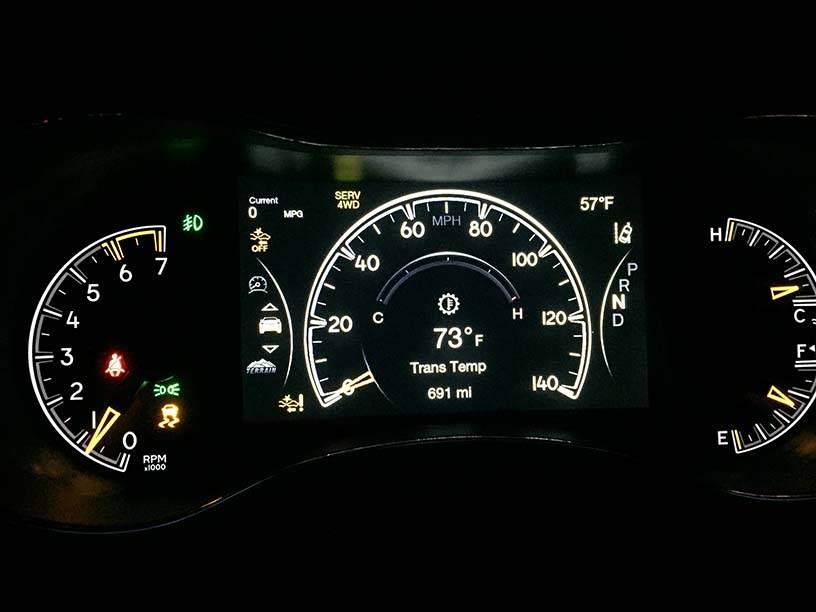
What Does the Jeep Service 4 Wheel Drive Light Mean?
The Jeep Service 4 Wheel Drive Light means the vehicle’s control system has detected a problem affecting the operation of the four wheel drive system. Depending on the Jeep model and the nature of the fault, the system may disable four wheel drive completely, limit certain drive modes, or continue operating with reduced functionality.
A Jeep four wheel drive system depends on both mechanical and electronic components. The transfer case distributes engine power between the front and rear axles, while sensors, actuators, wiring, and control modules determine when and how power should be delivered. If one of these components sends an incorrect signal or fails to respond, the vehicle may display a Service 4WD message on the instrument panel.
In some cases, the warning appears because of a temporary electrical issue, such as low battery voltage, a loose connector, or a software communication error. In other situations, it may indicate a more serious problem involving the transfer case motor, four wheel drive actuator, control module, or internal transfer case components.
The exact meaning can also vary by model. A Jeep Wrangler may use a different four wheel drive configuration from a Jeep Grand Cherokee, Cherokee, Compass, or Renegade. Some models use manually selected four wheel drive modes, while others rely heavily on electronic controls and automatic traction management.
It is important to understand that this warning is not the same as a normal four wheel drive indicator. A standard 4WD symbol usually confirms that a specific drive mode is engaged. The Jeep Service 4 Wheel Drive Light, however, indicates that the system has detected a fault and may not perform as expected.
The vehicle may still feel normal during everyday driving, especially on dry pavement. However, the four wheel drive system could fail to engage when you need extra traction on snow, mud, sand, steep terrain, or slippery roads. That is why the warning should not be ignored, even when no other symptoms are immediately noticeable.
Can You Drive With the Service 4 Wheel Drive Light On?
You may be able to drive with the Jeep Service 4 Wheel Drive Light on, but whether it is safe depends on the symptoms and the underlying problem. If the Jeep drives normally, there are no unusual noises, and no other warning lights appear, you can usually drive a short distance to a safe location or repair facility.
However, you should assume that the four wheel drive system may not be available. This can reduce traction and stability in difficult conditions. Avoid driving through deep snow, mud, sand, floodwater, or steep off road terrain until the problem has been diagnosed.
You should stop driving as soon as it is safe if you notice grinding, clunking, clicking, or binding from underneath the vehicle. These sounds may indicate a mechanical problem inside the transfer case or driveline. Continuing to drive could turn a manageable repair into a much more expensive failure.
You should also avoid driving if the Jeep becomes stuck in four wheel drive low, refuses to shift between drive modes, loses power, vibrates heavily, or displays multiple warnings such as the ABS, traction control, or check engine light. These symptoms can indicate that several vehicle systems are affected.
The following table provides a general guide:
| Condition | Is It Usually Safe to Drive? | Recommended Action |
|---|---|---|
| Warning light only, vehicle feels normal | Usually, for a short distance | Drive carefully and schedule a diagnosis |
| Four wheel drive will not engage | Usually on dry roads | Avoid slippery or off road conditions |
| Vehicle is stuck in four wheel drive | Not recommended for long distances | Stop and arrange an inspection |
| Grinding or clunking noise | No | Stop driving and request assistance |
| Burning smell or fluid leak | No | Shut off the vehicle and inspect it |
| ABS, traction control, and 4WD lights are on | Use caution | Have the vehicle scanned promptly |
| Vehicle loses power or shifts unpredictably | No | Stop driving and seek professional help |
The safest decision depends on driving conditions. A Jeep operating only in two wheel drive may remain manageable on a dry, paved road, but it could become difficult to control on ice, loose gravel, or steep terrain.
Do not keep driving simply because the warning disappears after restarting the engine. An intermittent warning may still point to a loose electrical connection, failing sensor, weak battery, or control module issue. The fault may return when the system is placed under load.
Common Causes of the Jeep Service 4 Wheel Drive Light
The Jeep Service 4 Wheel Drive Light can be triggered by a wide range of electrical, mechanical, and software related problems. Proper diagnosis is important because replacing parts without reading the stored fault codes can waste time and money.
1. Faulty Transfer Case Motor
The transfer case motor helps shift the system between different four wheel drive modes. When the driver selects a mode, the motor moves internal components inside the transfer case.
If the motor becomes worn, stuck, or electrically damaged, the system may fail to complete the requested shift. The Jeep may remain in two wheel drive, become stuck in one mode, or display the service warning.
Common signs include clicking noises, delayed engagement, failure to shift into four wheel drive, and a flashing 4WD indicator. In many cases, the motor must be tested with a diagnostic scanner before replacement.
2. Defective Four Wheel Drive Actuator
The four wheel drive actuator engages or disengages parts of the drivetrain. Depending on the Jeep model, it may operate the front axle disconnect system, transfer case, or another driveline component.
A failing actuator may respond slowly, move only partially, or stop working completely. The control module can detect that the requested position does not match the actual position and activate the warning light.
Actuator problems may be caused by worn internal gears, corrosion, contamination, damaged wiring, or water intrusion.
3. Transfer Case Control Module Failure
The transfer case control module manages electronic four wheel drive functions. It receives information from sensors, processes driver commands, and controls the transfer case motor or actuator.
If the module fails or loses communication with another vehicle computer, the four wheel drive system may become unavailable. The dashboard may show a service message even when the mechanical components are still in good condition.
Module failure can result from electrical surges, moisture, damaged circuits, software corruption, or long term heat exposure. A technician may need to test the module, update its software, reprogram it, or replace it.
4. Damaged Wiring or Loose Connectors
The four wheel drive system relies on wiring to carry power and communication signals between sensors, modules, motors, and actuators. A broken wire, corroded terminal, loose plug, or damaged ground connection can interrupt these signals.
Wiring problems are especially common in vehicles exposed to mud, road salt, moisture, or repeated off road use. Connectors underneath the vehicle may become contaminated or damaged by debris.
An intermittent warning that appears after rain, rough roads, or vehicle washing may be related to a poor electrical connection.
5. Low Battery Voltage
A weak battery can cause unexpected warning lights, including the Jeep Service 4 Wheel Drive Light. Electronic control modules require stable voltage to communicate and operate correctly.
When battery voltage drops during startup, the four wheel drive module may temporarily lose communication or record a fault. This problem is more likely during cold weather or when the battery is nearing the end of its service life.
A battery and charging system test should be one of the first diagnostic steps, especially if the Jeep has slow cranking, dim lights, or several warning messages appearing at the same time.
6. Blown Fuse or Faulty Relay
A blown fuse can prevent the transfer case motor, actuator, or control module from receiving power. A damaged relay can create a similar problem by interrupting the electrical circuit.
Checking the correct fuse is relatively simple, but the cause of the failure must also be investigated. Installing a new fuse without finding the source of the short circuit may cause the fuse to blow again.
Always use a fuse with the correct amperage rating. Installing a higher rated fuse can damage wiring and increase the risk of an electrical fire.
7. Faulty Wheel Speed Sensor
Wheel speed sensors provide information to the ABS, traction control, stability control, and four wheel drive systems. If one sensor sends an inaccurate signal, the vehicle may not be able to calculate wheel slip correctly.
A faulty wheel speed sensor can trigger several warning lights at once. Drivers may see the ABS light, traction control light, electronic stability control warning, and Service 4WD message together.
The problem may involve the sensor itself, damaged wiring, corrosion, debris, or a failing wheel bearing assembly.
8. Software or Communication Glitch
Modern Jeep four wheel drive systems depend on multiple computers that communicate through the vehicle network. A temporary software error or lost communication message can activate the warning even when no major mechanical failure exists.
Restarting the vehicle may temporarily remove the message, but repeated warnings should be diagnosed. Some problems can be corrected with a software update or module reprogramming.
A software update should be performed with the correct equipment and according to the procedures for the specific Jeep model.
9. Water Intrusion
Water can enter connectors, modules, actuators, or wiring harnesses and cause corrosion or short circuits. Jeeps used for off road driving, deep water crossings, or wet climate conditions may face a higher risk.
Water damage may produce intermittent symptoms that become worse over time. The warning might appear only after rain or after the underside of the vehicle has been washed.
Affected connectors should be inspected, cleaned, dried, and repaired. Components with severe internal corrosion may require replacement.
10. Internal Transfer Case Damage
Internal transfer case damage is one of the more serious causes of the warning light. Worn chains, damaged gears, failing bearings, contaminated fluid, or insufficient lubrication can prevent the system from operating correctly.
Possible symptoms include grinding, whining, clunking, vibration, fluid leaks, difficulty changing drive modes, or loss of power to one axle.
Continuing to drive with internal transfer case damage can make the repair significantly more expensive. If the Jeep produces loud mechanical noises or leaks transfer case fluid, stop driving and arrange a professional inspection.
The best way to identify the actual cause is to scan the vehicle for diagnostic trouble codes and inspect the relevant components. Clearing the warning without fixing the underlying fault may only provide temporary relief.
Symptoms That Usually Appear with the Service 4 Wheel Drive Light
The Jeep Service 4 Wheel Drive Light rarely appears by itself. In many cases, it is accompanied by other warning signs that can help identify the source of the problem. Paying attention to these symptoms can make the diagnostic process faster and prevent unnecessary repairs.
One of the most common symptoms is the inability to switch between two wheel drive and four wheel drive modes. When the driver turns the selector or presses the 4WD button, nothing happens, or the system takes much longer than usual to respond. In some situations, the vehicle may become permanently stuck in either two wheel drive or four wheel drive.
Another common symptom is a flashing four wheel drive indicator. Instead of remaining illuminated steadily, the indicator flashes repeatedly while the system attempts to engage the requested drive mode. If the shift cannot be completed successfully, the Service 4 Wheel Drive Light usually appears shortly afterward.
Many Jeep owners also report hearing unusual sounds from underneath the vehicle. Clicking, grinding, whining, or clunking noises coming from the transfer case area often indicate worn gears, a failing actuator, or a damaged transfer case motor. These noises should never be ignored because they may signal internal mechanical damage.
Electronic warning lights frequently appear together because several vehicle systems share information through the same network. It is common to see the following dashboard warnings at the same time:
| Symptom | Possible Cause |
|---|---|
| ABS Warning Light | Faulty wheel speed sensor or communication issue |
| Traction Control Light | Loss of wheel speed data or drivetrain fault |
| Electronic Stability Control Light | Four wheel drive system malfunction |
| Check Engine Light | Powertrain or transfer case related fault code |
| Service 4WD Light | Electronic or mechanical four wheel drive problem |
Drivers may also notice reduced traction on slippery roads. Even though the vehicle appears to operate normally on dry pavement, the front wheels may fail to receive power when driving through snow, mud, gravel, or sand. This significantly reduces off road capability and can make the vehicle more difficult to control under challenging conditions.
Another symptom is vibration during acceleration or while turning. Excessive vibration may indicate worn universal joints, transfer case damage, or drivetrain misalignment. If the vibration increases with vehicle speed, the Jeep should be inspected immediately.
Some vehicles may display intermittent warning messages. The light may disappear after restarting the engine only to return later. Although this can be frustrating, intermittent faults often point to loose wiring, moisture inside electrical connectors, weak battery voltage, or a control module beginning to fail.
Ignoring these symptoms can lead to more extensive damage. What starts as a minor electrical fault may eventually place additional stress on mechanical components, resulting in significantly higher repair costs.
How to Diagnose the Jeep Service 4 Wheel Drive Light
Accurate diagnosis is essential before replacing any parts. Many four wheel drive components perform similar functions, and replacing the wrong part can quickly become expensive. Following a systematic inspection process will help identify the actual cause of the warning.
Step 1. Scan the Vehicle for Diagnostic Trouble Codes
Begin by connecting a professional OBD-II scanner capable of reading manufacturer-specific Jeep codes. Generic code readers may not access the Transfer Case Control Module or four wheel drive system.
Record every stored, pending, and historical trouble code before clearing anything. These codes provide valuable clues regarding communication failures, actuator problems, sensor faults, and transfer case issues.
Step 2. Inspect the Battery and Charging System
Electronic four wheel drive systems require stable voltage to operate correctly. Measure battery voltage with the engine off and while the engine is running.
A weak battery, failing alternator, or poor battery connections can trigger multiple warning lights simultaneously. If voltage falls below specifications, correct the charging issue before continuing diagnosis.
Step 3. Check Fuses and Relays
Locate the fuse box using the owner’s manual and inspect every fuse related to the transfer case, four wheel drive system, drivetrain control module, and body control module.
Replace any blown fuse with one that matches the original amperage rating. If the replacement fuse fails again, inspect the circuit for a short before installing another fuse.
Step 4. Inspect Wiring and Connectors
Raise the vehicle safely and examine wiring harnesses leading to the transfer case motor, actuators, wheel speed sensors, and control modules.
Look for damaged insulation, loose connectors, corrosion, broken retaining clips, water intrusion, or evidence of rodent damage. Electrical issues are especially common on vehicles that are frequently driven off road.
Step 5. Test the Transfer Case Motor and Actuator
Use a scan tool capable of commanding the transfer case motor through different operating modes.
If the motor fails to respond or responds slowly, inspect power and ground circuits before concluding that the motor itself has failed.
Similarly, verify that the actuator moves smoothly throughout its full range of motion. Binding or incomplete movement often indicates internal wear or contamination.
Step 6. Inspect the Transfer Case
Check the transfer case housing for fluid leaks, cracks, or impact damage.
Remove the fill plug and inspect the fluid condition. Dark fluid containing metallic particles or a burnt smell may indicate internal gear or bearing wear.
Low fluid level can also prevent proper operation and accelerate component failure.
Step 7. Perform a Road Test
After completing the inspection, drive the vehicle in a safe area while monitoring live data from the diagnostic scanner.
Test each available drive mode and verify that the system shifts correctly between two wheel drive, four wheel drive high, and four wheel drive low if applicable.
Observe whether the warning light returns immediately or only under specific driving conditions such as acceleration, cornering, or low speed operation.
Following these diagnostic steps allows technicians to identify the root cause instead of replacing parts based solely on assumptions.
How to Fix the Jeep Service 4 Wheel Drive Light
Once the underlying cause has been identified, the appropriate repair can be performed. The correct solution depends entirely on which component has failed.
Replace the Transfer Case Motor
A worn or seized transfer case motor is one of the most common causes of the warning light. If testing confirms that the motor no longer operates correctly, replacement is typically the most effective solution.
After installation, the system should be recalibrated using a compatible diagnostic scan tool to ensure accurate operation.
Replace the Four Wheel Drive Actuator
If the actuator cannot fully engage or disengage the drivetrain, replacing it restores proper four wheel drive operation.
Always inspect the actuator connector and wiring before installing a new unit, as electrical faults can produce similar symptoms.
Repair Damaged Wiring
Broken wires, corroded terminals, and poor ground connections should be repaired using automotive grade wiring and weatherproof connectors.
Temporary repairs using household electrical tape or improper splices often fail quickly, especially in harsh weather conditions.
Replace Faulty Sensors
Wheel speed sensors, position sensors, and transfer case sensors should be replaced if diagnostic testing confirms incorrect readings.
After replacement, clear stored fault codes and verify proper sensor operation during a road test.
Update or Reprogram Control Modules
Some Jeep models experience software related issues that can trigger false warning messages.
If a software update is available from the manufacturer, reprogramming the affected control module may resolve the problem without replacing any hardware.
Replace the Transfer Case Control Module
If communication testing confirms an internal module failure, replacement may be necessary.
Many control modules require programming after installation so they can communicate correctly with the rest of the vehicle’s electronic systems.
Repair or Replace the Transfer Case
Internal mechanical damage requires more extensive repairs.
Depending on the severity of the damage, technicians may replace worn bearings, gears, chains, or seals. In cases of severe wear or catastrophic failure, installing a remanufactured or new transfer case may be the most cost effective solution.
After every repair, clear all diagnostic trouble codes and perform a complete functional test of the four wheel drive system. Confirm that every drive mode engages correctly and that the Jeep Service 4 Wheel Drive Light no longer returns during normal driving.
How to Reset the Jeep Service 4 Wheel Drive Light
Resetting the Jeep Service 4 Wheel Drive Light should only be attempted after the underlying problem has been repaired. Simply clearing the warning without fixing the root cause will usually result in the light returning after the next drive cycle.
Depending on the model year and the specific fault, there are several methods you can try.
Method 1. Use a Professional OBD-II Scanner
The most reliable way to reset the warning light is with a diagnostic scanner that supports Jeep-specific systems.
Connect the scanner to the vehicle’s OBD-II port, turn the ignition to the ON position without starting the engine, and perform a complete system scan. Once all repairs have been completed, clear the stored Diagnostic Trouble Codes (DTCs). Restart the vehicle and verify that the warning light remains off.
This method is recommended because it also confirms whether any active faults still exist. If the light immediately returns, additional diagnosis is required.
Method 2. Disconnect the Battery
A battery reset can clear temporary electronic faults on some Jeep models.
Turn the ignition off and disconnect the negative battery terminal. Wait approximately 15 to 30 minutes to allow residual electrical power to discharge from the vehicle’s control modules. Reconnect the battery securely and start the engine.
Keep in mind that this method may also reset the clock, radio presets, and other stored vehicle settings. More importantly, it will not eliminate an active mechanical or electrical fault.
Method 3. Complete an Ignition Cycle
Some intermittent software glitches may clear after several ignition cycles.
Turn the ignition on for about 30 seconds without starting the engine. Turn it off and repeat the process several times before starting the vehicle normally.
If the warning was caused by a temporary communication error, it may disappear after the system successfully completes its self-test.
Method 4. Perform a Drive Cycle
Many Jeep control modules automatically verify repairs during normal driving.
Drive the vehicle under various conditions, including city traffic, highway speeds, and several complete stops. Shift into four wheel drive, if conditions allow, and verify that the system engages correctly.
If no additional faults are detected, the warning light may clear automatically after several successful drive cycles.
When Resetting Will Not Work
Resetting the warning light is ineffective if the original problem remains unresolved.
The light will usually return immediately or after a short period if the vehicle still has:
- A failed transfer case motor
- A defective four wheel drive actuator
- Damaged wiring or poor electrical connections
- A faulty wheel speed sensor
- A failed Transfer Case Control Module
- Internal transfer case damage
- Low battery voltage or charging system problems
Repeatedly clearing the warning without repairing the fault can delay necessary maintenance and may allow additional drivetrain damage to occur.
Jeep Service 4 Wheel Drive Light Repair Cost
The cost of repairing the Jeep Service 4 Wheel Drive Light varies depending on the failed component, labor rates, and the specific Jeep model. Minor electrical repairs can often be completed at a relatively low cost, while transfer case repairs may require a significantly larger investment.
The table below provides general repair cost estimates in the United States.
| Repair | Estimated Cost (Parts and Labor) |
|---|---|
| Diagnostic Scan | $75 to $180 |
| Battery Replacement | $180 to $350 |
| Fuse Replacement | $20 to $80 |
| Wiring Repair | $100 to $500 |
| Wheel Speed Sensor Replacement | $150 to $350 |
| Transfer Case Actuator Replacement | $300 to $700 |
| Transfer Case Motor Replacement | $400 to $900 |
| Transfer Case Control Module Replacement | $500 to $1,200 |
| Software Update or Module Programming | $100 to $300 |
| Transfer Case Fluid Service | $120 to $250 |
| Transfer Case Rebuild | $1,200 to $2,500 |
| Complete Transfer Case Replacement | $2,000 to $4,500 |
Several factors can influence the final repair cost.
Vehicle age is one of the most important. Older Jeeps may require additional components because of corrosion or worn hardware discovered during disassembly.
The model also matters. Repairing a Jeep Wrangler may cost less than repairing a luxury Grand Cherokee equipped with a more advanced electronic four wheel drive system.
Labor rates vary significantly depending on your location and whether the work is performed by a dealership, an independent repair shop, or a specialized off road service center.
Addressing the warning light early is usually the most cost effective approach. Replacing a faulty actuator or repairing damaged wiring is considerably less expensive than replacing an entire transfer case after prolonged mechanical wear.
Preventing Future Four Wheel Drive Problems
Although some component failures are unavoidable, regular maintenance can significantly reduce the likelihood of seeing the Jeep Service 4 Wheel Drive Light again.
Follow the manufacturer’s recommended maintenance schedule for transfer case fluid changes. Clean fluid provides proper lubrication for gears, bearings, and internal components, reducing wear and extending service life.
Inspect the vehicle’s battery and charging system at least once a year. Modern four wheel drive systems rely heavily on stable electrical voltage, and weak batteries are responsible for many intermittent electronic faults.
Periodically inspect the underside of the vehicle, especially after off road driving. Mud, rocks, road salt, and moisture can damage wiring harnesses, electrical connectors, and sensors located near the transfer case.
Avoid driving through deep water whenever possible. Water intrusion can cause corrosion inside connectors, actuators, and electronic modules, eventually leading to communication failures.
Engage the four wheel drive system regularly, even if you rarely drive off road. Cycling the system periodically helps keep actuators, shift motors, and internal components moving freely, reducing the chance of sticking after long periods of inactivity.
Pay attention to unusual sounds, delayed engagement, or warning messages. Small problems are often easier and less expensive to repair before they develop into major drivetrain failures.
Finally, have your Jeep inspected whenever software updates become available. Manufacturers occasionally release updated control module software that improves system reliability and resolves known electronic issues.
Frequently Asked Questions
What does the Jeep Service 4 Wheel Drive Light mean?
It indicates that the vehicle has detected a fault affecting the four wheel drive system. The problem may involve electrical components, sensors, actuators, the transfer case, or the control module.
Can I continue driving with the warning light on?
In many cases, yes, especially if the vehicle drives normally and no unusual noises are present. However, your four wheel drive system may not function correctly, so avoid driving in conditions that require maximum traction.
Will disconnecting the battery reset the warning light?
Sometimes it will clear temporary electronic faults, but it will not permanently eliminate an active mechanical or electrical problem.
Can a weak battery trigger the Service 4 Wheel Drive Light?
Yes. Low battery voltage can interrupt communication between electronic control modules and generate false warning messages.
How long does it take to diagnose the problem?
A professional diagnostic inspection typically takes between one and two hours, depending on the complexity of the fault and whether additional mechanical inspection is required.
Is it expensive to repair?
Repair costs range from less than $100 for simple fuse replacements to more than $4,000 for complete transfer case replacement. Early diagnosis usually keeps repair costs much lower.
Can I reset the light without repairing the problem?
You may be able to clear the warning temporarily, but it will usually return once the system detects the fault again.
Which Jeep models are most commonly affected?
The warning can appear on many models equipped with electronic four wheel drive systems, including the Jeep Wrangler, Grand Cherokee, Cherokee, Compass, Renegade, Gladiator, and Commander.
How often should transfer case fluid be replaced?
Always follow the maintenance schedule listed in your owner’s manual. Vehicles used for towing or frequent off road driving often require more frequent fluid changes than those used primarily on paved roads.
When should I visit a repair shop immediately?
Seek immediate service if the warning light is accompanied by grinding noises, severe vibration, fluid leaks, difficulty shifting four wheel drive modes, loss of vehicle control, or multiple dashboard warning lights.
Conclusion
The Jeep Service 4 Wheel Drive Light is an important warning that should never be ignored. While the vehicle may continue to operate normally in some situations, the warning indicates that the four wheel drive system has detected a fault that could affect traction, stability, and overall drivetrain performance.
Common causes include a faulty transfer case motor, a worn actuator, damaged wiring, weak battery voltage, failed wheel speed sensors, software issues, or internal transfer case damage. Fortunately, many of these problems can be identified quickly through a professional diagnostic scan and repaired before they develop into much larger and more expensive failures.
If the warning light appears, begin by checking for diagnostic trouble codes, inspecting the battery and electrical system, and verifying the condition of the transfer case and related components. Avoid relying solely on resetting the warning light, as doing so will not correct the underlying issue.
Routine maintenance, timely fluid changes, regular inspection of electrical connections, and prompt attention to unusual symptoms will help keep your Jeep’s four wheel drive system operating reliably for years to come. By addressing problems early and following recommended service procedures, you can maintain the off road capability, safety, and durability that Jeep vehicles are known for while minimizing unexpected repair costs.