If you’re planning to tow a travel trailer, boat, camper, or utility trailer with your SUV, one of the first questions you should ask is whether your Jeep Grand Cherokee Tow Package is equipped for the job. While the Jeep Grand Cherokee has long been recognized as one of the most capable midsize SUVs, not every model is built with the same towing equipment. Choosing the wrong configuration could limit your towing capacity, increase wear on your vehicle, and even compromise safety on the road.
The Jeep Grand Cherokee Tow Package is much more than a trailer hitch. It combines specialized hardware, cooling systems, advanced safety technologies, and electrical components designed to handle heavier loads with confidence. Whether you’re hauling a fishing boat for a weekend getaway, towing a camper across the country, or transporting recreational vehicles, having the correct tow package can make a significant difference in performance, stability, and peace of mind.
This comprehensive guide covers everything you need to know about the Jeep Grand Cherokee Tow Package in 2026. You’ll learn what’s included in the factory package, how towing capacity varies by engine and model year, how to determine whether your vehicle already has the package installed, the differences between factory and aftermarket options, estimated costs, common towing mistakes to avoid, and the best trailers that pair with the Grand Cherokee. By the end of this guide, you’ll have the knowledge to make informed decisions and tow safely with confidence.
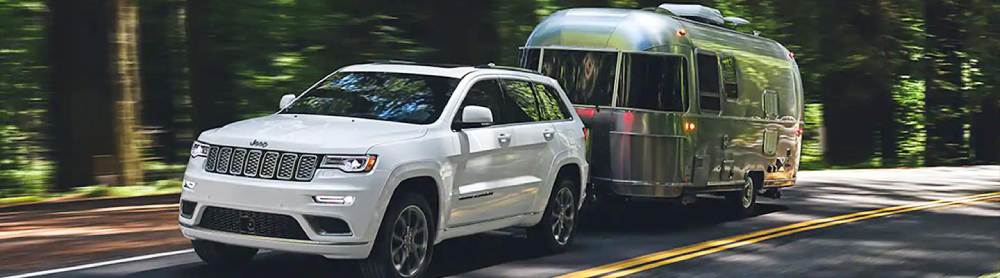
What Is the Jeep Grand Cherokee Tow Package?
The Jeep Grand Cherokee Tow Package is a collection of towing components designed to help the SUV pull a trailer more safely and effectively. Many buyers assume that a visible hitch receiver automatically means the vehicle has the complete factory package. In reality, a hitch is only one part of a properly equipped towing system.
A factory towing configuration may combine structural hardware, electrical connections, cooling upgrades, suspension support, drivetrain calibration, and stability technology. The exact equipment can vary by model year, trim level, engine, drivetrain, and market. For that reason, buyers should verify the vehicle’s build sheet or window sticker rather than relying only on its appearance.
The main purpose of the Jeep Grand Cherokee Tow Package is to prepare the vehicle for the additional heat, weight, and stability demands created by a trailer. Towing places more pressure on the engine, transmission, brakes, tires, cooling system, and rear suspension. A properly equipped Grand Cherokee is better prepared to manage those demands during acceleration, highway cruising, climbing, braking, and low-speed maneuvering.
For 2026, Jeep lists a maximum available towing capacity of 6,200 pounds for the Grand Cherokee when it is properly equipped. The new 2.0-liter Hurricane 4 Turbo engine is paired with a new-generation transmission and is rated to achieve that maximum figure in the appropriate configuration.
However, the words “up to” and “properly equipped” are essential. They mean that not every 2026 Grand Cherokee can automatically tow 6,200 pounds. The actual limit depends on the specific vehicle, installed equipment, passenger load, cargo weight, trailer design, and tongue weight.
This distinction matters because towing capacity is not determined by engine power alone. A powerful engine may help the vehicle accelerate with a trailer, but safe towing also depends on heat management, braking control, axle ratings, hitch capacity, vehicle weight, and trailer stability.
Why the Factory Package Matters
The factory Jeep Grand Cherokee Tow Package has several advantages over simply adding an aftermarket hitch.
First, factory equipment is selected to work with the vehicle’s existing mechanical and electronic systems. Components such as the wiring harness, stability controls, cooling equipment, and hitch structure are designed as part of the complete vehicle configuration.
Second, the package can make ownership more convenient. A buyer does not have to research multiple aftermarket parts, confirm compatibility, arrange separate installations, and troubleshoot electrical connections.
Third, a factory-equipped vehicle may be easier to evaluate when it is time to sell or trade it. The original build sheet can confirm that towing equipment was installed as part of the vehicle’s production configuration.
Most importantly, the factory package helps reduce uncertainty. Installing a receiver hitch after purchase does not necessarily increase the towing rating printed by the manufacturer. The official rating remains limited by the vehicle’s original configuration and the values shown on its certification labels and documentation.
Who Should Consider the Tow Package?
The package is especially valuable for drivers who regularly tow:
- Travel trailers
- Fishing boats
- Utility trailers
- Personal watercraft
- Pop-up campers
- Motorcycle trailers
- ATV or side-by-side trailers
- Small equipment trailers
It may also be a sensible option for drivers who are not currently towing but expect their needs to change. Adding the package when purchasing the vehicle can be easier than attempting to reproduce the complete factory configuration later.
Owners who only use a hitch-mounted bicycle rack or cargo carrier may not need the full towing capability. Even so, they must still respect the receiver’s weight rating and the vehicle’s payload limit.
The key lesson is simple: the Jeep Grand Cherokee Tow Package is not merely an accessory. It is part of a complete towing setup that helps the SUV manage additional weight, electrical demands, heat, and trailer movement.
What Does the Jeep Grand Cherokee Tow Package Include?
The contents of a Jeep Grand Cherokee Tow Package can vary by trim and model year. Before purchasing a vehicle, owners should check the official equipment list, build sheet, or window sticker for that specific VIN.
A typical towing configuration may include several of the following components.
Class IV Receiver Hitch
The receiver hitch is the most visible part of the towing package. It is mounted to the vehicle’s structure and provides the connection point for a ball mount, hitch ball, weight-distribution equipment, or another compatible towing accessory.
A Class IV receiver is commonly associated with heavier towing applications, but the class of the hitch does not determine the vehicle’s final towing capacity. The lowest-rated component in the complete setup controls the safe limit.
For example, a receiver may be capable of supporting more weight than the vehicle itself is rated to tow. In that situation, the Grand Cherokee’s official vehicle rating remains the maximum allowable limit.
Owners must also confirm the ratings of the:
- Ball mount
- Hitch ball
- Safety chains
- Trailer coupler
- Wiring connector
- Weight-distribution system
- Trailer brakes
- Tires
Every component must be suitable for the loaded trailer.
Four-Pin and Seven-Pin Wiring Connections
A trailer wiring harness allows the Grand Cherokee to communicate with the trailer’s lighting and braking systems. Depending on the factory configuration, towing packages may provide four-pin and seven-pin connections.
A four-pin connector normally supports basic lighting functions, including:
- Brake lights
- Turn signals
- Tail lights
- Ground connection
A seven-pin connector can support additional functions needed by larger trailers, such as electric trailer brakes, auxiliary power, and reverse-light circuits.
Previous Grand Cherokee owner documentation states that a Trailer Tow Package may include four-pin and seven-pin wiring. Equipment can change between model years, so 2026 buyers should verify the exact connector configuration installed on their vehicle.
Poor trailer wiring is more than an inconvenience. A loose connection, corroded plug, or incorrect wiring installation can cause the trailer lights or electric brakes to malfunction. Drivers should inspect the plug before every trip and confirm that all lighting functions work correctly.
Heavy-Duty Cooling Support
Towing creates additional heat because the engine and transmission must work harder to move the combined weight of the SUV and trailer. Heat becomes especially challenging during steep climbs, slow traffic, high temperatures, and long-distance travel.
Depending on the configuration, factory towing preparation may include enhanced cooling components intended to help manage this increased thermal load.
This feature can be easy to overlook because it is not visible from outside the vehicle. However, cooling capability is one reason why adding an aftermarket hitch does not necessarily create the same towing performance as ordering a factory-equipped vehicle.
Drivers should continue monitoring vehicle temperatures while towing, even when the SUV has factory cooling upgrades. A warning light, unusual odor, loss of power, or rapidly increasing temperature should never be ignored.
Trailer Sway Control
Trailer sway occurs when a trailer begins moving from side to side behind the tow vehicle. It may be triggered by strong crosswinds, passing trucks, sudden steering inputs, poor weight distribution, excessive speed, or incorrect tongue weight.
Trailer Sway Control can use information from the vehicle’s stability sensors to detect unwanted movement. The system may apply selective braking or reduce engine torque to help bring the vehicle and trailer back under control.
This technology provides an important additional layer of protection, but it cannot overcome unsafe loading or excessive speed. Drivers must still load the trailer correctly and operate at a speed appropriate for the road, weather, and total weight.
When sway begins, the driver should remain calm, keep the steering wheel steady, and reduce speed gradually. Abrupt steering or hard acceleration can make the movement worse.
Rear Load-Leveling Support
A heavy trailer can push the rear of the tow vehicle downward, especially when tongue weight is excessive. This condition may reduce front-tire contact with the road, affect headlight aim, and weaken steering response.
Some Grand Cherokee configurations have offered rear load-leveling suspension or available air suspension. These systems can help maintain a more controlled vehicle stance under load.
Load-leveling technology does not permit the owner to exceed payload, axle, hitch, or tongue-weight limits. It may improve ride height, but it cannot make an overloaded combination safe.
Full-Size Spare Tire and Related Equipment
Certain towing packages from previous model years have included a full-size spare tire or additional equipment. This can be particularly valuable when towing far from home because a compact temporary spare may have speed or load restrictions.
Package contents have changed over time. Therefore, shoppers should not assume that a feature included in an older Trailer Tow Group is automatically included in the 2026 Jeep Grand Cherokee Tow Package.
Integrated Vehicle Technology
Modern Grand Cherokee models can also use electronic systems that support towing indirectly, including stability control, traction management, cameras, parking sensors, and available four-wheel-drive systems.
These features can make it easier to position the vehicle, reverse toward a trailer, manage slippery surfaces, and maintain control. They do not replace careful driving, but they can reduce stress during towing preparation and low-speed maneuvering.
The most important step is to verify the exact equipment attached to the VIN. Two Grand Cherokees that look identical from the outside may have different towing capabilities because of differences in drivetrain, package selection, axle ratings, and factory-installed hardware.
2026 Jeep Grand Cherokee Towing Capacity
The maximum available towing capacity of the 2026 Jeep Grand Cherokee is 6,200 pounds when the vehicle is properly equipped. Jeep associates this rating with the 2.0-liter Hurricane 4 Turbo engine and its new-generation transmission.
Jeep also lists up to 324 horsepower and 332 pound-feet of torque for the 2026 Grand Cherokee. These figures help explain why the updated powertrain can provide strong low-speed response and towing performance.
The maximum rating is useful as a reference, but owners should not use it as the only number when selecting a trailer.
Maximum Towing Capacity
Maximum towing capacity is the greatest trailer weight the manufacturer allows under specified conditions. The trailer weight must include everything loaded inside or attached to it.
That means the calculation should include:
- Water
- Propane
- Batteries
- Food
- Camping equipment
- Tools
- Fuel
- Luggage
- Optional accessories
- Dealer-installed equipment
A travel trailer advertised with a 4,500-pound dry weight may weigh considerably more when prepared for a trip. Buyers should compare the Grand Cherokee’s limit with the trailer’s loaded weight, not only its empty shipping weight.
Tongue Weight
Tongue weight is the downward force the trailer places on the hitch. It is essential for stability because too little tongue weight may increase sway, while too much can overload the rear axle and reduce available payload.
For many conventional trailers, tongue weight often falls within a percentage of the loaded trailer weight. Owners should follow the limits and procedures in the vehicle and trailer manuals rather than relying on a general estimate.
Tongue weight must also be counted as part of the Grand Cherokee’s payload. This is one of the most commonly misunderstood towing calculations.
Payload Capacity
Payload is the total amount of weight carried by the SUV. It generally includes:
- Driver
- Passengers
- Luggage
- Pets
- Accessories
- Cargo
- Trailer tongue weight
Jeep’s official 2026 Grand Cherokee information references an available payload figure of up to 1,280 pounds, although the exact capacity varies by configuration. The vehicle-specific payload shown on the driver-side door label should be treated as the controlling figure.
Consider a Grand Cherokee carrying four adults, luggage, camping supplies, and a trailer with substantial tongue weight. The vehicle may reach its payload limit before the trailer reaches the advertised 6,200-pound maximum.
This is why a combination can remain below the towing limit and still be overloaded.
Gross Vehicle Weight Rating
Gross Vehicle Weight Rating, commonly called GVWR, is the maximum allowable weight of the loaded SUV. It includes the vehicle itself, passengers, cargo, accessories, and trailer tongue weight.
Jeep identifies a 6,050-pound GVWR for the 2026 Grand Cherokee in its general FAQ, but buyers should confirm the certification label on their specific vehicle because ratings may differ across configurations.
The loaded vehicle should never exceed this number.
Gross Combined Weight Rating
Gross Combined Weight Rating, or GCWR, is the maximum allowable combined weight of the loaded Grand Cherokee and loaded trailer.
This rating accounts for the total burden placed on the powertrain, cooling system, chassis, and brakes. Even when the trailer is below its individual limit, the combination may exceed GCWR if the SUV is carrying many passengers or a large amount of cargo.
Owners should weigh the complete combination at a certified scale when towing near the upper limits.
Axle Weight Ratings
Each axle has its own maximum allowable weight. A trailer with excessive tongue weight can overload the rear axle even when the vehicle remains within its overall GVWR.
Jeep’s towing guidance emphasizes that the loaded combination must remain within individual axle weight ratings.
When checking a scale ticket, drivers should compare:
- Front axle weight
- Rear axle weight
- Total vehicle weight
- Trailer axle weight
- Combined weight
A Practical Towing Safety Margin
A trailer that weighs exactly 6,200 pounds when loaded may leave little room for cargo changes, scale variation, unexpected equipment, or future upgrades. Many owners prefer to select a trailer that remains comfortably below the vehicle’s maximum rating.
A sensible margin can make it easier to manage:
- Mountain roads
- Strong winds
- High temperatures
- Emergency braking
- Passenger and cargo weight
- Trailer loading changes
A safety margin does not replace any official rating. It simply gives the owner more flexibility and may create a less stressful towing experience.
Why the VIN-Specific Rating Matters
General online specifications describe the maximum capability of the model line. They do not necessarily describe every vehicle at a dealership.
Before towing, the owner should verify:
- The factory build sheet
- The driver-side certification label
- The payload label
- The owner’s manual
- The hitch label
- The trailer’s GVWR
- The loaded tongue weight
- The ratings of all towing components
The 2026 Jeep Grand Cherokee offers competitive towing capability for an SUV, but reaching its full potential requires the correct configuration. A receiver hitch alone is not proof that the vehicle can tow 6,200 pounds.
When properly equipped and carefully loaded, the Jeep Grand Cherokee Tow Package can support boats, campers, utility trailers, and other recreational equipment while preserving the comfort and everyday usability that make the SUV appealing.
Jeep Grand Cherokee Towing Capacity by Model Year
The towing capability of the Jeep Grand Cherokee has evolved over the years as Jeep introduced new powertrains, updated chassis designs, and improved towing technologies. While the Grand Cherokee has consistently ranked among the most capable midsize SUVs, towing capacity varies depending on the model year, engine, drivetrain, trim level, and optional equipment.
Understanding these differences is especially important if you are shopping for a used Grand Cherokee or comparing multiple generations.
2018 Jeep Grand Cherokee
The 2018 Grand Cherokee offered several engine options, including the 3.6-liter Pentastar V6, the 5.7-liter HEMI V8, the high-performance 6.4-liter V8 in the SRT, and the supercharged 6.2-liter V8 in the Trackhawk.
The standard V6 could tow up to 6,200 pounds when properly equipped. Models equipped with the 5.7-liter HEMI increased maximum towing capacity to approximately 7,200 pounds, making them excellent choices for larger travel trailers and boats.
2019 Jeep Grand Cherokee
The 2019 model retained nearly identical towing specifications. Buyers who selected the Trailer Tow Group and the HEMI V8 enjoyed one of the highest towing capacities available in the midsize SUV segment.
Features such as Trailer Sway Control, Hill Start Assist, and Electronic Stability Control continued to improve driver confidence while towing heavy loads.
2020 Jeep Grand Cherokee
The 2020 Grand Cherokee maintained its reputation for versatility. Depending on engine selection, towing capacity ranged from approximately 3,500 pounds for lightly equipped models to as much as 7,200 pounds for properly equipped HEMI-powered versions.
Many buyers considered this model year one of the most balanced combinations of towing performance, comfort, and long-term reliability.
2021 Jeep Grand Cherokee
The outgoing WK generation continued with similar towing ratings before Jeep introduced the redesigned WL platform.
Drivers who frequently towed campers or utility trailers appreciated the mature powertrain, proven transmission, and wide availability of factory towing equipment.
2022 Jeep Grand Cherokee
The completely redesigned Grand Cherokee introduced a more refined interior, updated suspension, and advanced driver assistance technologies.
The standard 3.6-liter Pentastar V6 offered a maximum towing capacity of approximately 6,200 pounds when properly equipped.
The new Grand Cherokee 4xe plug-in hybrid significantly expanded buyer choices. Despite its electrified powertrain, the 4xe could still tow up to 6,000 pounds when equipped correctly, demonstrating that hybrid technology could deliver both efficiency and practical towing capability.
2023 Jeep Grand Cherokee
The 2023 lineup continued to offer competitive towing performance across multiple trims, including Laredo, Limited, Overland, Summit, Summit Reserve, Trailhawk, and the Grand Cherokee 4xe.
Jeep also continued refining towing-related technologies, including integrated trailer sway control and available air suspension that helped maintain vehicle balance while carrying heavier tongue weights.
2024 Jeep Grand Cherokee
The 2024 model maintained similar towing ratings while adding incremental technology improvements and expanded connectivity features.
Buyers who planned to tow frequently were encouraged to select the Trailer Tow Package during purchase rather than relying solely on aftermarket equipment.
2025 Jeep Grand Cherokee
The 2025 Grand Cherokee continued Jeep’s strategy of combining luxury, off-road capability, and strong towing performance.
Factory towing equipment remained the preferred choice because it ensured compatibility with the vehicle’s electronic systems, cooling components, and factory warranty.
2026 Jeep Grand Cherokee
For 2026, Jeep introduced the all-new 2.0-liter Hurricane 4 Turbo engine paired with an updated transmission. When properly equipped, maximum towing capacity reaches 6,200 pounds.
Although this figure is lower than previous HEMI-powered models, the new turbocharged engine provides improved efficiency while maintaining strong low-speed torque that benefits everyday towing.
Which Model Year Is Best for Towing?
The answer depends on your priorities.
If maximum towing capacity is your primary concern, older HEMI-powered Grand Cherokees remain excellent choices because they can tow up to 7,200 pounds.
If you prefer modern technology, improved fuel efficiency, updated safety systems, and a refined interior, the 2026 Grand Cherokee provides an excellent balance of capability and everyday usability.
Regardless of model year, always verify the vehicle’s VIN, factory equipment list, and official towing specifications before purchasing.
Factory Tow Package vs. Aftermarket Tow Package
One of the most common questions buyers ask is whether they should purchase a Grand Cherokee with the factory tow package or install towing equipment later.
The answer depends on how frequently you tow, how heavy your trailer is, and whether your vehicle already includes the necessary mechanical components.
Factory Tow Package
A factory-installed tow package is engineered specifically for the Grand Cherokee. Every component is designed to work together, from the hitch receiver and wiring harness to the cooling system and electronic safety features.
Advantages include:
• Guaranteed compatibility with the vehicle
• Professional factory installation
• Integrated electrical systems
• Better long-term reliability
• Potential warranty protection
• Higher resale value
• Access to factory towing software and safety features
Factory equipment is particularly valuable for owners who regularly tow campers, enclosed trailers, boats, or equipment trailers over long distances.
Aftermarket Tow Package
An aftermarket tow package can be an excellent solution for owners whose vehicles were not originally equipped for towing.
Depending on the manufacturer, an aftermarket installation may include:
• Receiver hitch
• Ball mount
• Hitch ball
• Wiring harness
• Trailer brake controller
• Weight distribution hitch
• Sway control accessories
High-quality aftermarket components can perform very well when properly installed.
However, buyers should understand that installing an aftermarket hitch does not automatically increase the manufacturer’s towing capacity. The official towing limit remains determined by Jeep’s published ratings for that specific vehicle.
Cost Comparison
Factory Tow Package
Typical purchase cost ranges from several hundred dollars to over one thousand dollars depending on trim level and optional equipment.
Aftermarket Installation
Costs vary significantly depending on parts, labor, electrical upgrades, and whether additional cooling components or brake controllers are required.
For drivers who tow only occasionally, an aftermarket solution may provide good value.
For frequent towing, especially near the vehicle’s maximum capacity, the factory package remains the better long-term investment.
Which One Should You Choose?
Choose the factory package if:
You are purchasing a new vehicle.
You tow frequently.
You plan to tow close to maximum capacity.
You want the highest level of factory integration.
Choose an aftermarket solution if:
You already own the vehicle.
You tow only occasionally.
Your trailer is relatively lightweight.
You are working within a limited budget.
Regardless of your choice, every towing component should be installed correctly and inspected regularly to ensure safe operation.
How to Tell If Your Jeep Grand Cherokee Has the Tow Package
Many used Grand Cherokees are advertised as having a tow package simply because they have a receiver hitch. Unfortunately, this assumption is not always correct.
The most reliable way to determine whether your vehicle has the factory Jeep Grand Cherokee Tow Package is to perform several checks.
Check the Vehicle Identification Number
The VIN provides access to the vehicle’s original factory build information.
A Jeep dealership can look up the VIN and confirm whether the vehicle was built with the Trailer Tow Package or Trailer Tow Group.
Several online VIN decoding services may also display factory-installed equipment.
Inspect the Receiver Hitch
A factory receiver hitch is usually integrated neatly into the rear bumper and secured using factory mounting hardware.
However, appearance alone is not proof that the complete towing package is installed.
Many aftermarket hitches closely resemble factory equipment.
Look for Trailer Wiring
Open the protective cover near the hitch and inspect the electrical connectors.
Vehicles equipped with factory towing equipment often include four-pin or seven-pin trailer wiring connectors.
If no wiring is present, additional investigation is necessary because the hitch may have been installed separately.
Review the Owner’s Manual
The owner’s manual often lists towing specifications, equipment requirements, and package information specific to your model year.
Comparing the installed equipment with the manual can help identify missing components.
Check the Build Sheet
The factory build sheet provides the most accurate description of every option originally installed on the vehicle.
It lists packages, axle ratios, suspension options, and towing equipment using factory option codes.
This document is especially useful when purchasing a used Jeep Grand Cherokee because it removes much of the uncertainty.
Visit a Jeep Dealer
If you remain unsure, an authorized Jeep dealership can inspect the vehicle and verify its original configuration using factory records.
This is often the fastest and most reliable method before purchasing a used vehicle or investing in towing accessories.
Taking a few minutes to verify the tow package can prevent expensive mistakes later. A receiver hitch alone does not guarantee maximum towing capacity, and understanding exactly how your Grand Cherokee was equipped helps ensure safe and confident towing for years to come.
How Much Does the Jeep Grand Cherokee Tow Package Cost?
The cost of a Jeep Grand Cherokee Tow Package depends on whether you purchase it as a factory option on a new vehicle or install towing equipment after buying the SUV. Pricing also varies based on the model year, trim level, dealer pricing, labor rates, and the specific components included.
While many buyers focus only on the price of the receiver hitch, a complete towing system includes much more than a single piece of hardware. Electrical wiring, cooling upgrades, suspension components, trailer brake compatibility, and safety technologies all contribute to the overall cost.
Factory Tow Package Cost
Ordering the factory tow package is usually the most cost-effective solution for buyers purchasing a new Jeep Grand Cherokee.
Depending on the trim level and available options, the factory package typically costs several hundred to just over one thousand dollars. Although this increases the purchase price of the vehicle, it often represents better value than adding comparable equipment later.
The factory package offers several advantages beyond the hardware itself. Every component is engineered to work together, installation is completed during production, and the system is fully integrated with the vehicle’s electronic controls. Buyers also avoid the inconvenience of scheduling aftermarket installations or troubleshooting compatibility issues.
For owners who expect to tow a trailer regularly, the factory package is generally the best long-term investment.
Aftermarket Tow Package Cost
If your Grand Cherokee did not leave the factory with towing equipment, installing an aftermarket tow package remains a practical option.
The total cost depends on the quality of the parts selected and the complexity of the installation.
Typical expenses may include:
- Receiver hitch
- Wiring harness
- Ball mount
- Hitch ball
- Trailer brake controller
- Weight distribution hitch
- Sway control equipment
- Professional installation labor
Simple receiver hitch installations are relatively affordable, while complete towing systems designed for heavier trailers can cost considerably more.
Electrical work is often the most important part of an aftermarket installation. Modern vehicles rely on sophisticated electronic systems, and improperly installed wiring can create warning lights, communication errors, or trailer lighting problems.
Additional Ownership Costs
Many first-time trailer owners underestimate the ongoing costs associated with towing.
These expenses may include:
- Trailer registration
- Hitch locks
- Trailer mirrors
- Brake controller maintenance
- Tire replacements
- Transmission service
- Cooling system maintenance
- Weight distribution adjustments
- Trailer brake inspections
- Wheel bearing service
Regular maintenance becomes increasingly important when towing heavy loads because the engine, transmission, brakes, suspension, and tires operate under greater stress.
Is the Tow Package Worth the Cost?
For occasional light-duty towing, the additional investment may not seem necessary.
However, drivers who tow boats, campers, utility trailers, or enclosed cargo trailers several times each year often find that the factory tow package quickly justifies its cost.
The additional safety, convenience, durability, and resale value frequently outweigh the initial expense.
More importantly, having the correct equipment reduces the risk of mechanical problems that could cost significantly more than the package itself.
Common Towing Mistakes to Avoid
Even the most capable SUV cannot compensate for poor towing practices. Many towing accidents result from preventable mistakes rather than mechanical failures.
Understanding these common errors can help protect your vehicle, your trailer, and everyone sharing the road.
Exceeding the Maximum Towing Capacity
One of the most common mistakes is assuming that every Jeep Grand Cherokee can tow the maximum advertised weight.
Manufacturers publish the highest possible towing capacity for properly equipped vehicles, but individual SUVs may have lower limits depending on engine choice, drivetrain, optional equipment, payload, and axle ratings.
Always verify the specifications for your exact vehicle before connecting a trailer.
Ignoring Payload Limits
Many owners focus entirely on trailer weight while overlooking payload capacity.
Passengers, luggage, pets, aftermarket accessories, and trailer tongue weight all count toward the vehicle’s payload.
Exceeding payload limits can overload the suspension, reduce braking performance, and negatively affect steering stability.
Improper Tongue Weight
Too little tongue weight increases the likelihood of trailer sway.
Too much tongue weight overloads the rear suspension and reduces steering control by lifting weight off the front axle.
Proper loading is one of the most important factors in safe towing.
Heavy cargo should generally be distributed according to the trailer manufacturer’s recommendations rather than concentrated at either end of the trailer.
Skipping Pre-Trip Inspections
Before every trip, inspect both the vehicle and trailer.
A thorough inspection should include:
- Hitch connection
- Safety chains
- Electrical connector
- Brake lights
- Turn signals
- Tire pressure
- Lug nuts
- Trailer brakes
- Load security
- Mirrors
Spending a few extra minutes on these checks can prevent expensive repairs and dangerous roadside emergencies.
Driving Too Fast
High speeds increase stopping distance, reduce reaction time, and make trailer sway more likely.
Even if local speed limits allow faster travel, many experienced towing professionals recommend maintaining moderate speeds for improved stability and control.
Reducing speed is especially important during heavy rain, strong crosswinds, steep descents, or congested traffic.
Forgetting About Braking Distance
A fully loaded trailer dramatically increases stopping distance.
Drivers should leave significantly more space between vehicles and begin braking earlier than they normally would without a trailer.
Sudden braking can destabilize both the vehicle and trailer.
Neglecting Vehicle Maintenance
Frequent towing accelerates wear on several vehicle components.
Owners who tow regularly should pay close attention to:
- Engine oil
- Transmission fluid
- Brake pads
- Brake fluid
- Coolant
- Tires
- Suspension components
- Differential fluids
- Battery condition
Following Jeep’s recommended maintenance schedule helps preserve reliability and maximize towing performance.
Failing to Practice Before a Long Trip
Backing up with a trailer requires patience and experience.
New trailer owners should practice reversing, turning, parking, and maneuvering in an empty parking lot before attempting busy campgrounds or narrow roads.
Building confidence in a controlled environment makes towing safer and far less stressful.
Frequently Asked Questions
Does every Jeep Grand Cherokee come with a Tow Package?
No. While many Grand Cherokee models can tow, not every vehicle includes the factory Tow Package. Equipment varies by trim level, engine, drivetrain, model year, and optional packages.
What is included in the Jeep Grand Cherokee Tow Package?
Depending on the model year and configuration, the package may include a receiver hitch, trailer wiring harness, heavy-duty cooling components, Trailer Sway Control, and other towing-related equipment designed to improve safety and performance.
What is the maximum towing capacity of the 2026 Jeep Grand Cherokee?
When properly equipped, the 2026 Jeep Grand Cherokee offers a maximum towing capacity of up to 6,200 pounds. Actual towing capacity depends on the specific vehicle configuration and should always be verified using the owner’s manual and vehicle certification labels.
Can I install a Tow Package after purchasing my Grand Cherokee?
Yes. Many owners choose to install aftermarket towing equipment after purchasing the vehicle.
However, adding a hitch does not automatically increase the manufacturer’s official towing capacity. Any aftermarket installation should use high-quality components and follow professional installation procedures.
Can the Grand Cherokee tow a travel trailer?
Yes. Many travel trailers fall within the Jeep Grand Cherokee’s towing capabilities.
Before purchasing a trailer, verify its fully loaded weight rather than relying only on its advertised dry weight. Also ensure that payload, tongue weight, and axle ratings remain within Jeep’s published limits.
Does the Jeep Grand Cherokee 4xe have good towing capability?
Yes. The plug-in hybrid Grand Cherokee 4xe combines strong low-speed torque with competitive towing performance. Depending on configuration, properly equipped models can tow up to approximately 6,000 pounds while also providing the efficiency benefits of electrification.
Do I need trailer brakes?
Many jurisdictions require trailer brakes once a trailer exceeds a specified weight threshold.
Even when not legally required, trailer brakes are strongly recommended for heavier trailers because they improve stopping performance and reduce stress on the tow vehicle.
Always check your local regulations before towing.
Conclusion
The Jeep Grand Cherokee has earned its reputation as one of the most capable midsize SUVs by combining everyday comfort with impressive towing performance. Whether you are hauling a fishing boat to the lake, taking a travel trailer on a cross-country adventure, or transporting equipment for work, selecting the right Jeep Grand Cherokee Tow Package is one of the most important decisions you can make.
Throughout this guide, we explored what the factory tow package includes, how towing capacity varies by model year, the differences between factory and aftermarket installations, estimated ownership costs, and the most common mistakes that can compromise towing safety. While the advertised maximum towing capacity is an important benchmark, safe towing depends on much more than a single number. Payload, tongue weight, axle ratings, trailer balance, maintenance, and proper driving techniques all play equally important roles.
If you are shopping for a new or used Grand Cherokee, take the time to verify the factory build sheet, inspect the towing equipment, and understand the exact capabilities of the specific vehicle you plan to purchase. A few minutes of research today can prevent costly mistakes and provide years of safe, reliable towing.
With the proper equipment, careful preparation, and responsible driving habits, the Jeep Grand Cherokee Tow Package delivers the versatility needed for weekend adventures, family vacations, and demanding towing tasks alike. Whether you are an experienced trailer owner or preparing for your first towing experience, choosing the right setup ensures every journey begins with confidence and ends safely.