Seeing a “Service Shifter” warning on your Jeep Cherokee can be alarming, especially if it appears unexpectedly while you’re driving. For many owners, this message raises immediate concerns: Is the transmission failing? Can the vehicle still be driven safely? Will the repair cost hundreds or even thousands of dollars?
The good news is that the Service Shifter warning does not always indicate a catastrophic transmission failure. In many cases, the issue is related to the electronic gear selector system rather than the transmission itself. A faulty shifter bezel, loose wiring, software glitch, low battery voltage, or a malfunctioning shift module can all trigger the warning. However, because the message may also be associated with communication problems between key vehicle control modules, it should never be ignored.
Understanding the root cause is essential before replacing expensive parts. Many Jeep Cherokee owners spend unnecessary money on repairs because the warning is misdiagnosed. A systematic inspection can often identify a simple and inexpensive fix, saving both time and money.
In this comprehensive guide, you’ll learn what the Jeep Cherokee Service Shifter warning means, the most common causes behind it, how to diagnose the problem step by step, available repair options, estimated repair costs, and whether it’s safe to continue driving your vehicle. Whether you’re planning to troubleshoot the issue yourself or visit a professional repair shop, this guide will help you make informed decisions and avoid unnecessary expenses.
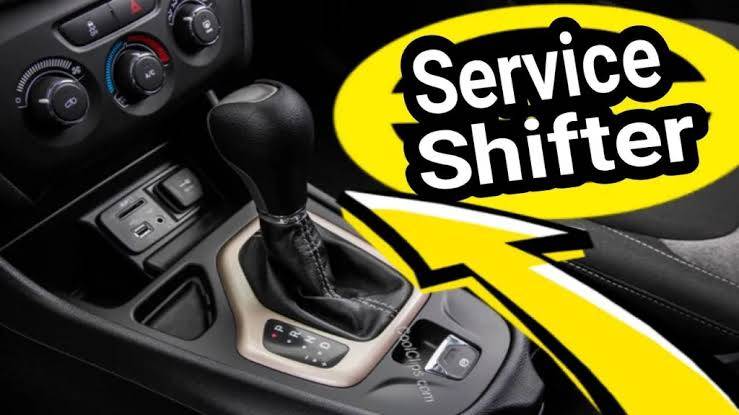
What Does “Service Shifter” Mean on a Jeep Cherokee?
The Jeep Cherokee Service Shifter message indicates that the vehicle has detected a fault within the electronic gear selection system or one of the control circuits that supports it. Unlike a traditional mechanical shifter connected directly to the transmission, many Jeep Cherokee models use electronic components to identify the position selected by the driver and communicate that command to other vehicle systems.
When you move the gear selector into Park, Reverse, Neutral, or Drive, sensors inside the shifter assembly detect your selection. That information is shared with modules responsible for transmission operation, instrument panel displays, vehicle starting authorization, and other functions. If the system receives an incorrect signal, loses communication, or detects an electrical problem, the warning may appear on the dashboard.
The message does not automatically mean that the transmission has suffered internal mechanical damage. In many cases, the transmission itself continues to operate normally. The actual problem may involve the shifter bezel, selector module, electrical connector, wiring circuit, battery voltage, or control module software.
However, the warning should still be treated seriously. Manufacturer documentation has described situations in which a Service Shifter warning may appear together with an unresponsive gear selector or illuminated PRNDM indicators. In some cases, the vehicle may temporarily remain in the previously selected gear.
How the Electronic Shifter System Works
The electronic shifter system depends on several components working together:
Gear selector assembly: Detects the position selected by the driver.
Shifter bezel: Contains the gear position indicators and related electronic components.
Transmission control module: Interprets commands and manages transmission operation.
Body control module: Supports communication between electrical systems inside the vehicle.
Wiring and connectors: Carry signals and electrical power between the shifter and control modules.
Vehicle communication network: Allows the control modules to exchange information.
A fault in any part of this chain can interrupt communication and activate the warning. This is why replacing the transmission or the entire shifter assembly without completing a proper diagnosis can become an expensive mistake.
The warning may remain constantly illuminated, appear only during startup, or disappear after the vehicle is restarted. Even when it clears temporarily, a stored diagnostic trouble code may remain in one or more control modules. Reading those codes with a compatible scan tool is usually the most reliable first step toward finding the underlying cause.
Common Symptoms of a Jeep Cherokee Service Shifter Problem
The warning message is often the first symptom a driver notices, but it may not appear alone. The exact symptoms can vary depending on whether the issue involves a minor electrical interruption, a failing shifter component, a communication error, or a more serious transmission control problem.
1. Service Shifter Message Appears Intermittently
The dashboard message may appear for a few seconds and then disappear. It may return when the vehicle is started, when the shifter is moved, after driving over a rough road, or when the interior becomes hot.
An intermittent warning often suggests an unstable electrical connection, damaged wiring, low voltage, or a component beginning to fail. Although restarting the engine may temporarily clear the message, it does not repair the original fault.
2. All Gear Indicator Lights Illuminate
Some drivers notice that the Park, Reverse, Neutral, and Drive indicators illuminate at the same time. The gear selector lights may also flash or remain brighter than usual.
This symptom can occur when the system cannot confidently determine the selected gear position. The vehicle may still move normally, but the driver should verify the actual gear shown in the instrument cluster before attempting to accelerate.
3. The Shifter Becomes Unresponsive
In more serious cases, moving the selector produces no immediate response. The vehicle may remain in Park or stay in the last selected gear.
A manufacturer service bulletin documented a condition involving an illuminated Service Shifter warning and a temporarily unresponsive shifter. This confirms that the message can sometimes indicate more than a simple dashboard display problem.
Do not force the shifter if it does not respond. Applying excessive pressure can damage trim pieces or internal selector components without correcting the electronic fault.
4. The Vehicle Will Not Shift Out of Park
A Jeep Cherokee may start normally but refuse to shift into Reverse or Drive. This may happen because the system cannot verify the brake pedal input, cannot recognize the selector position, or has detected a fault that prevents normal operation.
Before assuming the transmission has failed, check whether the brake lights work and whether the battery has sufficient voltage. A failed brake switch, weak battery, shifter malfunction, or communication problem can all contribute to a no shift condition.
5. The Vehicle Does Not Recognize Park
The driver may move the selector into Park, but the dashboard continues to display another gear or warns that the vehicle is not in Park. In some cases, the engine may not shut down normally or the vehicle may not restart because the system cannot confirm the Park position.
This symptom requires immediate attention. Always apply the parking brake and avoid leaving the vehicle unattended until you are certain it cannot move.
6. Check Engine Light or Other Warnings Appear
The Service Shifter message may be accompanied by a Check Engine light, Service Transmission warning, electronic parking brake warning, or stability control alert.
Multiple warnings do not necessarily mean that several separate components failed at once. A low voltage condition or communication fault can affect multiple control modules and produce several dashboard messages simultaneously.
7. Delayed or Unexpected Gear Engagement
The vehicle may hesitate before entering Drive or Reverse. The selected gear may also feel different from the gear indicated on the dashboard.
Stop driving if the vehicle selects a gear unexpectedly, shifts without a clear driver command, or behaves as though it is in a different gear. These symptoms may create a safety risk in traffic, parking areas, or on sloped roads.
8. Limp Mode
The transmission may enter a protective operating mode that limits available gears and vehicle speed. This response is designed to reduce additional stress when the control system detects a serious fault.
Limp mode is often accompanied by slow acceleration, restricted shifting, or the transmission remaining in one gear. A diagnostic scan should be completed before the vehicle is driven further.
9. The Engine Will Not Start
Some vehicles will not crank if the control system cannot confirm that the transmission is in Park or Neutral. The battery and starter may be functioning correctly, but the electronic shifter system prevents starting as a safety measure.
Moving the selector back into Park may temporarily restore starting, but repeated no start incidents normally indicate that diagnosis and repair are needed.
Most Common Causes of the Jeep Cherokee Service Shifter Warning
Several different faults can trigger the Jeep Cherokee Service Shifter message. The correct repair depends on identifying which component or circuit is responsible. The causes below should be investigated from the simplest and least expensive possibilities to the more complex ones.
1. Faulty Shifter Bezel
The shifter bezel is one of the first components commonly inspected when the warning appears. It surrounds the gear selector and contains illuminated gear position indicators and electronic connections.
A damaged circuit, internal electrical fault, or poor connection in the bezel can cause all gear indicator lights to illuminate and trigger the dashboard warning. In some cases, replacing the bezel or related wiring resolves the problem without requiring replacement of the entire shifter assembly.
A technician should confirm the failure before installing new parts. Similar symptoms can be caused by damaged wiring or an unstable electrical supply.
2. Defective Electronic Shifter Module
The shifter assembly contains sensors and electronic components that identify the position selected by the driver. If these components send an implausible or incomplete signal, the vehicle may not know whether Park, Reverse, Neutral, or Drive has been selected.
Possible signs of a failing module include an unresponsive selector, incorrect gear display, intermittent warning messages, or an inability to shift out of Park. Depending on the model year and component design, the repair may require replacing a module, wiring kit, or complete selector assembly.
3. Loose, Corroded, or Damaged Connectors
Electrical connectors can loosen because of vibration, repeated interior movement, previous repair work, moisture, or damaged locking tabs. Even a brief loss of contact can interrupt communication and produce the Service Shifter message.
A technician may need to remove the center console trim to inspect the connectors around the shifter. The terminals should be checked for corrosion, bent pins, heat damage, poor tension, and signs of liquid contamination.
Cleaning and securing a connector may solve the problem, but burned or heavily corroded terminals normally require repair or replacement.
4. Damaged Wiring Harness
Wires running between the selector, transmission system, and control modules may become pinched, rubbed through, stretched, or internally broken. An intermittent wire can be particularly difficult to diagnose because the warning may disappear when the vehicle is stationary and return when vibration or temperature changes affect the circuit.
Visual inspection alone may not reveal the fault. A technician may need to test continuity, resistance, reference voltage, power supply, and ground circuits while moving the harness gently to reproduce the problem.
Repairing a small section of wiring is usually less expensive than replacing a major electronic module. This is one reason accurate testing should be completed before parts are ordered.
5. Weak Battery or Low System Voltage
Modern vehicles depend on stable voltage for reliable communication between electronic modules. A weak battery, poor terminal connection, failing charging system, or voltage drop during engine startup can cause modules to behave unpredictably.
Low voltage may produce several warnings at once, especially during cold starts or after the vehicle has been parked for an extended period. The engine may still start, but voltage can briefly fall low enough to disrupt the shifter system.
The battery should be load tested rather than judged only by whether it can crank the engine. Battery terminals, grounding points, and alternator output should also be inspected.
Replacing the battery may correct the warning when low voltage is the true cause. However, disconnecting or replacing the battery should not be treated as a guaranteed fix for a defective shifter component.
6. Blown Fuse or Poor Power Supply
A blown fuse can interrupt power to the shifter or a related control module. The fuse may fail because of age, an electrical short, damaged wiring, moisture, or an overloaded circuit.
Replacing a fuse without finding why it failed can lead to another failure. If a new fuse blows immediately, the vehicle should be inspected for a short circuit before further replacements are attempted.
Always use the correct fuse rating specified for the vehicle. Installing a higher rated fuse can allow wiring to overheat and may create a fire risk.
7. Software or Calibration Problem
The physical components may be functioning correctly while outdated software or a temporary module error causes the warning. Manufacturers periodically release service information and revised software calibrations to address known operating conditions.
A dealership or properly equipped repair shop can check the relevant modules for available software updates. Reprogramming may resolve the issue when the warning is caused by logic or communication errors, but software should not be used to hide a genuine electrical or mechanical fault.
8. Transmission Control Module Fault
The transmission control module manages gear operation and communicates with the electronic selector. If the module loses power, receives corrupted information, develops an internal failure, or cannot communicate with other systems, the Service Shifter warning may appear.
A module related fault should be verified through diagnostic codes, electrical testing, network testing, and software checks. Replacing a control module based only on the dashboard message can be unnecessarily expensive.
Some replacement modules require programming or configuration before the vehicle will operate correctly.
9. Body Control Module or Communication Network Error
The body control module communicates with multiple electrical systems throughout the vehicle. A fault in the module, its power supply, or the vehicle communication network can affect the shifter display and other dashboard functions.
This type of problem may generate several communication codes beginning with the letter U. A professional scan tool capable of accessing all vehicle modules is normally required because a basic engine code reader may not display the information needed.
Technicians should check network wiring and module power supplies before concluding that a control module itself has failed.
10. Internal Transmission or Range Sensor Problem
Although many Service Shifter warnings are caused by electronic components outside the transmission, internal transmission problems remain possible. A faulty transmission range sensor, hydraulic fault, mechanical damage, or internal control issue can prevent the selected gear from matching the gear recognized by the vehicle.
Warning signs of a more serious transmission problem include harsh engagement, slipping, grinding noises, fluid leakage, delayed movement, burning odors, or repeated limp mode operation.
When these symptoms are present, avoid repeatedly shifting the vehicle in an attempt to make it operate. Continuing to drive may increase repair costs or leave the vehicle unable to move.
The safest and most economical approach is to scan the vehicle, inspect the battery and electrical connections, and test the shifter circuits before replacing expensive parts. The Service Shifter message identifies the system in which a fault was detected, but it does not identify the failed component by itself.
Is It Safe to Drive with the Jeep Cherokee Service Shifter Warning?
Whether it is safe to continue driving depends entirely on the symptoms accompanying the Service Shifter warning. In some situations, the warning is triggered by a minor electrical issue and the vehicle continues to operate normally. In others, it may indicate a fault that could affect gear selection or transmission operation, making it unsafe to drive.
If the warning appears but the transmission shifts smoothly, the gear indicator functions correctly, and no additional warning lights are illuminated, you may be able to drive the vehicle carefully to a nearby repair facility. Even in this situation, you should avoid long trips, towing heavy loads, or driving in heavy traffic until the problem has been diagnosed.
If the warning is accompanied by harsh shifting, delayed gear engagement, flashing gear indicators, transmission slipping, limp mode, or difficulty shifting into Park, Reverse, or Drive, you should stop driving as soon as it is safe to do so. Continuing to operate the vehicle could increase repair costs or create a dangerous driving situation.
Drivers should also pay close attention to any unusual noises, burning smells, transmission fluid leaks, or repeated warning messages. These symptoms may indicate a more serious issue than a simple electrical fault.
When You Can Drive Carefully
The following conditions generally indicate a lower level of immediate risk:
The vehicle shifts normally between all gears.
No Check Engine Light or Transmission Warning is displayed.
The Service Shifter message appears only occasionally.
No abnormal noises or vibrations are present.
The vehicle accelerates and decelerates normally.
Even if these conditions are met, schedule a diagnostic inspection as soon as possible. Ignoring an intermittent warning often allows a small electrical problem to become a larger and more expensive repair.
When You Should Stop Driving Immediately
You should avoid driving the vehicle if any of the following symptoms occur:
The transmission will not shift into Drive or Reverse.
The vehicle becomes stuck in one gear.
The transmission enters limp mode.
The engine will not start because the system cannot recognize Park or Neutral.
The gear selector becomes completely unresponsive.
The transmission slips during acceleration.
The vehicle unexpectedly changes gears.
Multiple warning lights appear simultaneously.
If any of these conditions occur, the safest option is to have the vehicle transported to a qualified repair shop rather than attempting to continue driving.
Can the Service Shifter Warning Damage the Transmission?
The warning itself does not damage the transmission. However, ignoring the underlying problem can eventually lead to additional failures.
For example, a loose electrical connector may initially cause only an intermittent warning. If the connection deteriorates further, communication between the shifter and transmission control system may be interrupted completely, preventing normal gear selection.
Likewise, if the warning is actually caused by an internal transmission fault, continued driving may accelerate wear on clutches, gears, or hydraulic components.
Prompt diagnosis almost always results in a less expensive repair than waiting until the vehicle becomes undriveable.
How to Diagnose a Jeep Cherokee Service Shifter Problem
Accurate diagnosis is essential before replacing any parts. Many owners mistakenly replace the shifter assembly only to discover that the real problem was a weak battery, damaged wiring, or outdated software.
The following diagnostic process starts with the simplest inspections before moving to more advanced testing.
Step 1. Check Battery Condition
Modern Jeep Cherokee models rely on stable system voltage for proper communication between electronic control modules.
Begin by inspecting the battery terminals for corrosion or loose connections. Measure battery voltage with the engine off and while the engine is running. A battery that passes a simple voltage check may still fail under load, so a professional load test is recommended.
If the battery is more than four or five years old, replacement may be advisable even if it still starts the engine.
Step 2. Scan the Vehicle for Diagnostic Trouble Codes
Use a professional OBD II scan tool capable of reading manufacturer specific transmission and body control module codes.
Generic code readers often display only engine related faults, leaving important communication and transmission codes undetected.
Record every stored, pending, and history code before clearing anything. The diagnostic codes provide valuable clues that can significantly reduce troubleshooting time.
Step 3. Inspect the Shifter Assembly
Carefully examine the gear selector for physical damage, excessive movement, spilled liquids, or signs of worn components.
Verify that the gear indicator corresponds correctly to the selected gear. Any inconsistency may indicate an internal fault within the selector assembly.
Pay particular attention to the shifter bezel, which has been associated with Service Shifter complaints on certain model years.
Step 4. Check Wiring and Electrical Connectors
Remove the center console trim if necessary and inspect the wiring harness connected to the shifter assembly.
Look for damaged insulation, bent connector pins, corrosion, loose locking tabs, moisture intrusion, or evidence of previous repairs.
Wiggle testing the wiring while monitoring scan tool data may help identify intermittent electrical faults.
Step 5. Verify Software Updates
Some Service Shifter complaints have been resolved through updated software for the transmission control module or body control module.
A dealership or independent repair facility with factory level diagnostic equipment can determine whether software updates are available for your vehicle.
Updating software should only be performed after confirming that no physical electrical faults exist.
Step 6. Test the Control Modules
If wiring, battery condition, and the shifter assembly appear normal, additional testing of the transmission control module and body control module may be required.
This process typically includes checking power supply, ground circuits, communication signals, and module response using manufacturer specific diagnostic equipment.
Control modules should never be replaced solely because the Service Shifter message appears. Proper testing is required to confirm that a module has actually failed.
Step 7. Perform a Road Test
After repairs are completed, clear all diagnostic codes and perform a controlled road test.
Verify that the transmission shifts normally through every gear, the warning message does not return, and no additional diagnostic codes are stored.
Completing a final road test helps confirm that the original fault has been corrected rather than temporarily hidden.
How to Fix the Jeep Cherokee Service Shifter Warning
The correct repair depends on the underlying cause. Replacing expensive components without proper diagnosis often leads to unnecessary costs and repeated repairs.
Below are the most common repair solutions, listed from the least expensive to the most complex.
Replace the Shifter Bezel
If testing confirms a faulty shifter bezel, replacing it is often a straightforward repair.
A new bezel restores proper gear indicator operation and eliminates communication faults caused by failed internal electronics.
Estimated repair time is approximately one hour.
Estimated repair cost ranges from $150 to $400, depending on parts pricing and labor rates.
Repair or Replace Damaged Wiring
If inspection reveals broken wires, corrosion, or loose connectors, repairing the affected wiring may completely eliminate the warning.
This repair is generally much less expensive than replacing electronic modules.
Estimated repair cost ranges from $100 to $350, depending on the location and extent of the damage.
Replace the Electronic Shifter Assembly
If internal sensors within the selector assembly have failed, replacing the complete shifter assembly may be necessary.
After installation, some vehicles require calibration or programming before the system operates correctly.
Estimated repair cost ranges from $400 to $900.
Update Control Module Software
If the manufacturer has released updated software addressing known communication issues, reprogramming the affected module may resolve the warning.
Software updates usually require dealership or factory level diagnostic equipment.
Typical cost ranges from $100 to $250.
Replace the Battery
A weak battery or unstable charging system can trigger multiple electronic warnings, including the Service Shifter message.
Replacing an aging battery is often one of the simplest repairs.
Battery replacement typically costs between $180 and $350, depending on battery type and installation charges.
Replace the Transmission Control Module
A failed transmission control module is considerably less common than wiring or shifter related problems, but it can occur.
Replacement usually requires programming after installation.
Typical repair costs range from $700 to $1,500.
Replace the Body Control Module
If diagnostic testing confirms an internal body control module failure, replacement and programming may be required.
This repair generally costs between $600 and $1,400, depending on vehicle specifications.
Repair Internal Transmission Damage
If the Service Shifter warning is accompanied by severe shifting problems, slipping, or internal transmission failure, more extensive repairs may be necessary.
Depending on the extent of the damage, repairs may include replacing internal components or rebuilding the transmission.
Repair costs commonly range from $2,000 to more than $5,000.
Choosing the Right Repair
The most effective repair is always the one based on accurate diagnosis rather than assumptions.
Many Service Shifter warnings are caused by relatively inexpensive electrical issues rather than complete transmission failure. Performing a thorough inspection, reading diagnostic trouble codes, and testing the affected circuits before replacing parts can significantly reduce repair costs while ensuring the problem is permanently resolved.
Jeep Cherokee Service Shifter Repair Cost
The cost to repair a Jeep Cherokee Service Shifter warning can vary significantly depending on the underlying cause. Some repairs require only a simple battery replacement or wiring repair, while others involve replacing electronic control modules or performing extensive transmission work.
One of the biggest mistakes vehicle owners make is authorizing expensive repairs before a complete diagnostic inspection has been performed. Because the Service Shifter warning can be triggered by several different components, an accurate diagnosis is essential to avoid replacing parts unnecessarily.
The table below provides estimated repair costs based on average labor rates in the United States. Actual prices may vary depending on your location, model year, dealership pricing, and the complexity of the repair.
| Repair | Estimated Cost |
|---|---|
| Diagnostic Inspection | $100 to $200 |
| Battery Replacement | $180 to $350 |
| Fuse Replacement | $20 to $80 |
| Wiring Repair | $100 to $350 |
| Electrical Connector Repair | $80 to $250 |
| Shifter Bezel Replacement | $150 to $400 |
| Electronic Shifter Assembly | $400 to $900 |
| Software Update | $100 to $250 |
| Transmission Control Module Replacement | $700 to $1,500 |
| Body Control Module Replacement | $600 to $1,400 |
| Transmission Range Sensor Replacement | $250 to $700 |
| Transmission Repair or Rebuild | $2,000 to $5,500+ |
Labor Costs
Labor charges represent a significant portion of the total repair bill.
Simple repairs such as replacing a battery or repairing a connector usually require less than one hour of labor. Replacing the shifter assembly generally takes one to two hours, while module replacement may require additional programming time.
Transmission repairs are considerably more labor intensive because the transmission often must be removed from the vehicle.
Parts Cost vs. Diagnostic Cost
Some owners hesitate to pay for professional diagnostics, believing it will increase the overall repair bill. In reality, spending approximately $100 to $200 on a proper diagnosis can save hundreds or even thousands of dollars by preventing unnecessary parts replacement.
For example, replacing an electronic shifter assembly when the actual problem is a corroded connector will not eliminate the warning and only increases repair costs.
Does Warranty Cover the Repair?
If your Jeep Cherokee is still covered by the factory warranty or an extended service contract, certain Service Shifter repairs may be covered depending on the failed component.
Warranty coverage typically depends on several factors, including:
The model year of the vehicle.
Vehicle mileage.
Maintenance history.
Whether the failed component is classified as a covered electronic or powertrain part.
Owners should contact a Jeep dealership with their Vehicle Identification Number (VIN) to verify warranty eligibility before authorizing repairs.
Can You Reset the Service Shifter Warning?
Many Jeep Cherokee owners wonder whether the Service Shifter message can simply be reset without replacing any parts. The answer depends entirely on why the warning appeared in the first place.
If the warning was triggered by a temporary communication interruption or low battery voltage, it may disappear after the issue has been corrected. However, if a component has failed, clearing the warning alone will not solve the problem. In most cases, the message will return shortly after the vehicle is driven again.
Method 1. Repair the Underlying Problem First
The correct way to remove the Service Shifter warning is to repair the component responsible for triggering the fault.
Once the repair has been completed, diagnostic trouble codes can be cleared using a professional scan tool.
If the repair was successful, the warning should not return.
Method 2. Use an OBD II Scan Tool
A professional diagnostic scanner can erase stored fault codes after repairs have been completed.
This should only be done after confirming that the original problem has been corrected.
If the warning immediately returns after clearing the codes, additional diagnosis is still required.
Method 3. Disconnect the Battery
Some owners disconnect the negative battery cable for several minutes in an attempt to reset the warning.
Although this may temporarily erase certain stored information, modern Jeep Cherokee vehicles often retain fault codes in multiple control modules. As a result, disconnecting the battery rarely provides a permanent solution.
In addition, disconnecting the battery may reset radio settings, clock settings, and other vehicle memory functions.
Method 4. Software Relearn Procedure
Certain repairs involving electronic modules require a relearn or calibration procedure after installation.
This process allows the new component to communicate properly with the rest of the vehicle.
Most relearn procedures require manufacturer level diagnostic equipment and cannot be completed using a basic code reader.
Why the Warning Keeps Coming Back
If the Service Shifter message returns repeatedly after being cleared, one or more underlying problems still exist.
Common reasons include:
An intermittent wiring fault.
A loose electrical connector.
A failing shifter module.
Low charging system voltage.
Incomplete repairs.
Control module communication errors.
Repeatedly clearing diagnostic codes without identifying the cause simply delays the repair and may allow the problem to become more severe.
Recall and Technical Service Bulletins
Many Jeep Cherokee owners search online to determine whether the Service Shifter warning is related to an official recall. While several recalls and Technical Service Bulletins have been issued for various Jeep Cherokee model years, not every Service Shifter complaint qualifies for a safety recall.
A recall is issued when the manufacturer or government determines that a defect creates an unreasonable safety risk. Technical Service Bulletins, commonly referred to as TSBs, are different. They provide repair procedures and diagnostic guidance for technicians but do not automatically guarantee free repairs.
Certain Jeep Cherokee model years have been the subject of Technical Service Bulletins addressing conditions involving the electronic shifter system, communication errors, software updates, or gear selector concerns. These documents help technicians identify known issues more efficiently but may only apply to specific production dates or vehicle configurations.
If your vehicle displays a persistent Service Shifter warning, checking for both recalls and applicable Technical Service Bulletins is worthwhile before authorizing repairs.
How to Check for Open Recalls
Finding out whether your Jeep Cherokee has an active recall is straightforward.
Locate your Vehicle Identification Number.
Visit the official National Highway Traffic Safety Administration recall website or contact an authorized Jeep dealership.
Enter your VIN to view any open recalls associated with your vehicle.
If an open recall exists, the repair is generally performed at no cost to the owner.
Why Your Vehicle May Not Qualify
Two Jeep Cherokee vehicles with identical symptoms may receive different repair recommendations because they were built during different production periods or use different components.
Factors affecting recall eligibility include:
Model year.
Production date.
Vehicle Identification Number.
Installed transmission and electronic systems.
Applicable manufacturer service campaigns.
For this reason, owners should never assume that another vehicle with the same warning qualifies for identical repairs or warranty coverage.
Should You Ask About Technical Service Bulletins?
Absolutely.
When scheduling an appointment, ask the service advisor whether any Technical Service Bulletins apply to your specific VIN.
Even if your vehicle is no longer under warranty, an applicable bulletin can reduce diagnostic time because technicians already have manufacturer guidance describing known failure patterns and recommended repair procedures.
Frequently Asked Questions
What does the Service Shifter warning mean on a Jeep Cherokee?
The Service Shifter warning indicates that the vehicle has detected a fault within the electronic gear selector system or one of its related control circuits. The problem may involve the shifter assembly, shifter bezel, wiring harness, electrical connectors, battery voltage, transmission control module, body control module, or communication network. While the warning does not always indicate a transmission failure, it should never be ignored because it can affect the vehicle’s ability to recognize or select gears correctly.
Can I continue driving with the Service Shifter warning?
It depends on how the vehicle is behaving.
If the transmission shifts normally, there are no additional warning lights, and the vehicle drives without hesitation or unusual noises, you may be able to drive carefully to a repair facility.
If the transmission slips, the gear selector becomes unresponsive, the vehicle enters limp mode, or it cannot shift into or out of Park, you should stop driving immediately and have the vehicle inspected by a qualified technician.
Does the Service Shifter warning mean my transmission is failing?
Not necessarily.
Many Service Shifter warnings are caused by electrical faults rather than internal transmission damage. A faulty shifter bezel, damaged wiring, low battery voltage, or software issue can all trigger the warning even when the transmission is mechanically sound.
A professional diagnostic inspection is the only reliable way to determine whether the problem is electronic or mechanical.
Can a weak battery cause the Service Shifter warning?
Yes.
Modern Jeep Cherokee models rely on stable electrical voltage for communication between multiple control modules. A weak battery or charging system can cause communication errors that trigger the Service Shifter message along with other warning lights.
Testing the battery and charging system is one of the first diagnostic steps recommended before replacing expensive components.
Will disconnecting the battery reset the warning?
Disconnecting the battery may temporarily clear certain electronic faults, but it rarely provides a permanent solution.
If the underlying problem still exists, the warning will usually return after the vehicle is restarted or driven.
Instead of relying on a battery reset, the vehicle should be properly diagnosed and repaired before clearing diagnostic trouble codes.
How much does it cost to repair the Service Shifter warning?
Repair costs vary depending on the cause.
Simple repairs such as replacing a fuse or repairing damaged wiring may cost less than $200.
Replacing a shifter bezel generally costs between $150 and $400.
Replacing the electronic shifter assembly may cost between $400 and $900.
Control module replacement can exceed $1,000, while major transmission repairs may cost several thousand dollars.
Accurate diagnosis is the most effective way to avoid unnecessary expenses.
Can I fix the problem myself?
Some basic inspections can be performed at home.
You can check battery voltage, inspect visible wiring, examine electrical connectors, and scan for diagnostic trouble codes if you own a compatible OBD II scanner.
However, diagnosing communication faults, programming electronic control modules, or replacing transmission components usually requires specialized diagnostic equipment and manufacturer specific repair procedures.
Which Jeep Cherokee model years are most commonly affected?
Service Shifter complaints have been reported across multiple Jeep Cherokee model years equipped with electronic gear selector systems.
Although certain production years appear more frequently in owner reports and service documentation, any vehicle using similar electronic shifter components can potentially experience the warning if an electrical or communication fault develops.
The exact repair procedure depends on the vehicle’s model year, transmission configuration, and software version.
Can the warning return after it has been repaired?
Yes.
If only the warning message is cleared without repairing the actual fault, the message will almost certainly return.
Even after replacing a failed component, the warning can reappear if another related problem remains, such as damaged wiring, poor electrical connections, low battery voltage, or outdated software.
A complete diagnostic inspection followed by a verification road test offers the best chance of resolving the problem permanently.
Conclusion
A Jeep Cherokee Service Shifter warning should never be dismissed as a simple dashboard message. While it often points to an issue within the electronic gear selector system rather than a catastrophic transmission failure, it still indicates that the vehicle has detected a fault requiring attention.
Fortunately, many Service Shifter problems are caused by relatively inexpensive issues such as a weak battery, damaged wiring, faulty electrical connectors, software updates, or a defective shifter bezel. These repairs are generally far less costly than replacing the transmission or multiple electronic modules. On the other hand, delaying diagnosis can allow a minor electrical fault to develop into a more complicated and expensive repair.
The key to reducing repair costs is accurate diagnosis. Reading diagnostic trouble codes, inspecting the electrical system, testing the battery, and verifying communication between control modules should always be completed before replacing major components. This systematic approach minimizes unnecessary parts replacement and helps ensure the correct repair is performed the first time.
If your Jeep Cherokee displays the Service Shifter warning, do not rely on temporary resets or assume the problem will disappear on its own. Addressing the issue promptly improves vehicle safety, prevents additional damage, and may save you hundreds or even thousands of dollars in future repair costs.
Have you experienced the Service Shifter warning on your Jeep Cherokee? Share your model year, mileage, diagnostic trouble codes, and repair experience in the comments below. Your experience may help other Jeep owners identify the problem more quickly and choose the most effective repair solution.