The 5.7 HEMI is a generally capable V8 engine, but several engine problems can develop as components wear, mileage increases, or specific parts fail. Key issues owners should watch for include ticking noises, lifter and camshaft damage, broken exhaust manifold bolts, misfires, excessive oil consumption, and cooling-system problems. Some faults produce similar symptoms, so a ticking sound or check engine light alone does not confirm which component has failed.
One of the most important distinctions is the source of the well-known “HEMI tick.” A ticking noise can originate around the exhaust manifold or from components in the valvetrain, and the repair requirements differ substantially. Persistent misfires, rough running, power loss, abnormal oil consumption, or rising engine temperature also require diagnosis rather than replacing parts based on symptoms alone.
This guide explains the common 5.7 HEMI engine problems by connecting each issue with its symptoms, causes, diagnostic process, and appropriate repair path. It also covers repair costs, reliability, engine lifespan, preventive maintenance, and the factors to inspect before buying a used vehicle equipped with a 5.7 HEMI.
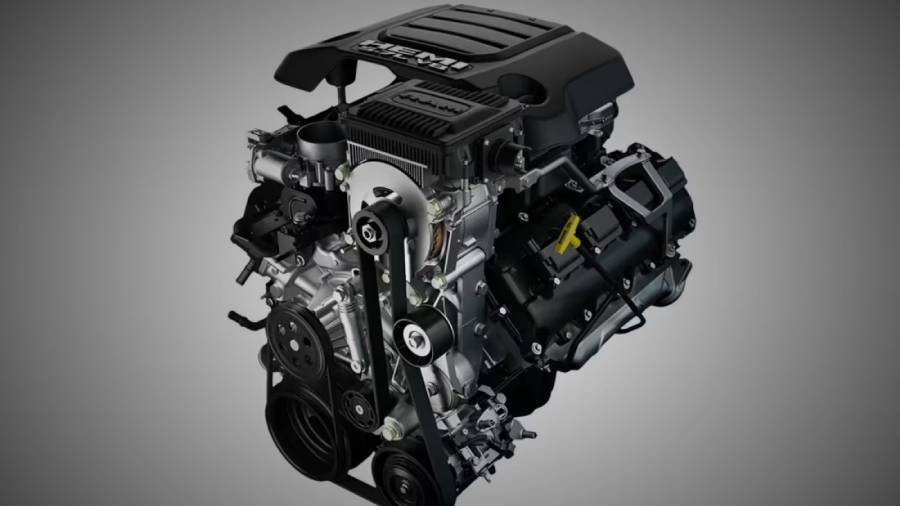
What Are the Most Common 5.7 HEMI Engine Problems?
The most important 5.7 HEMI engine problems to watch for include HEMI tick, lifter and camshaft failure, broken exhaust manifold bolts, MDS-related faults, engine misfires, excessive oil consumption, and overheating. These issues do not have the same cause, severity, or repair cost. An exhaust leak caused by a broken manifold bolt, for example, can produce a ticking noise without indicating internal engine damage, while a damaged lifter and camshaft can require extensive valvetrain repairs.
Mileage alone also does not determine whether a 5.7 HEMI will develop these problems. Maintenance history, oil condition, operating temperature, component wear, and the specific cause of a symptom affect the diagnosis. Owners should therefore identify the source of a noise, misfire, oil loss, or temperature increase before deciding which component needs replacement.
What Causes the 5.7 HEMI Tick?
The 5.7 HEMI tick can originate from an exhaust leak or from mechanical components in the valvetrain, so the sound itself is not a diagnosis. One possible source is an exhaust manifold leak associated with damaged or broken manifold hardware. Another source is valvetrain operation involving components such as lifters and the camshaft. The distinction matters because the required repairs can range from work around the exhaust manifold to internal engine repairs.
The location and behavior of the sound provide useful diagnostic clues. An exhaust-related tick originates near the exhaust manifold and results from exhaust gases escaping through a gap instead of remaining contained in the exhaust path. A valvetrain-related tick originates from mechanical movement inside the engine. A persistent tick accompanied by a misfire, rough running, loss of power, or other changes in engine operation requires more investigation than noise alone.
Owners should therefore avoid treating every HEMI tick as evidence of lifter failure. The correct diagnostic sequence is to identify where the noise originates, check for exhaust leakage, scan the engine control system for diagnostic trouble codes, and investigate valvetrain operation when the accompanying symptoms indicate a mechanical problem.
Why Do 5.7 HEMI Lifters and Camshafts Fail?
5.7 HEMI lifter and camshaft problems develop when the contact and movement between valvetrain components become abnormal enough to damage their working surfaces. The lifters operate as part of the system that controls valve movement, while the camshaft lobes provide the profile that drives that movement. Damage to one component can therefore affect the other instead of remaining an isolated failure.
A damaged lifter can interfere with normal contact at the camshaft lobe. Continued operation under abnormal contact increases mechanical wear and can damage the camshaft surface. As the problem progresses, valve operation can be affected, which helps explain why an internal ticking noise may eventually be accompanied by a misfire, rough idle, reduced performance, or a check engine light.
Diagnosis should confirm mechanical damage before parts are replaced. A ticking sound alone cannot establish that the lifters or camshaft have failed because exhaust leaks can create a similar audible symptom. Persistent valvetrain noise combined with a cylinder-specific misfire or measurable loss of engine performance provides a stronger reason for mechanical inspection.
Why Do 5.7 HEMI Exhaust Manifold Bolts Break?
Broken exhaust manifold bolts can allow a gap to develop between the exhaust manifold and cylinder head, creating an exhaust leak and a characteristic ticking noise. The exhaust system repeatedly heats and cools as the engine moves through operating cycles. These temperature changes create expansion and contraction across the manifold and its mounting hardware, placing repeated stress on the connection.
Once the seal between the manifold and cylinder head is compromised, exhaust pulses can escape through the opening. These pulses can sound like a mechanical tick, which is one reason an exhaust manifold problem may initially be confused with a lifter or other valvetrain problem. The noise may be especially noticeable around the manifold area during certain operating conditions.
The repair depends on what inspection reveals. A technician needs to identify the leaking location, inspect the manifold and mounting hardware, and determine whether damaged hardware must be extracted or additional components require replacement. Correctly locating an exhaust leak before opening the engine can prevent unnecessary internal engine repairs.
What Problems Can the 5.7 HEMI MDS System Cause?
MDS-related problems can affect cylinder deactivation and produce symptoms such as rough operation, misfires, or abnormal engine behavior when the system or associated components do not operate correctly. Multi-Displacement System, or MDS, allows the engine to deactivate selected cylinders under appropriate operating conditions to reduce fuel consumption.
The system depends on coordinated mechanical and electronic operation. A fault involving an MDS-related component can therefore affect how cylinders transition between active and deactivated operation. Diagnostic trouble codes and drivability symptoms can help identify whether the cylinder-deactivation system should be included in the diagnostic process.
MDS should not automatically be blamed for every lifter, camshaft, or misfire problem in a 5.7 HEMI. Similar symptoms can result from ignition faults, fuel-delivery problems, conventional valvetrain damage, or other mechanical conditions. The diagnostic process needs to establish the failed component rather than treating the presence of MDS as proof of the root cause.
What Causes Misfires in a 5.7 HEMI Engine?
A 5.7 HEMI misfire occurs when one or more cylinders fail to produce normal combustion, and the underlying cause can involve ignition, fuel delivery, air, or mechanical operation. Misfire is therefore a symptom of another fault rather than a single engine problem.
Ignition-related causes include components that prevent the spark plug from igniting the air-fuel mixture correctly. Fuel-related faults can prevent a cylinder from receiving the correct amount of fuel. Mechanical problems can also produce misfires when valve operation or cylinder sealing is compromised. On a 5.7 HEMI with abnormal valvetrain noise, for example, a persistent cylinder-specific misfire can justify further investigation of the lifter and camshaft system.
The check engine light and stored OBD-II trouble codes provide a starting point for diagnosis, but a misfire code identifies the affected combustion event rather than automatically identifying the failed part. Correct diagnosis requires connecting the code with physical symptoms and testing the relevant ignition, fuel, and mechanical systems.
Why Does a 5.7 HEMI Engine Consume Oil?
A 5.7 HEMI can consume oil when engine oil enters areas where it is burned or lost instead of remaining within the lubrication system. The significance of the problem depends on the consumption rate, engine condition, mileage, maintenance history, and whether external leakage is also present.
Oil loss should first be separated into external leakage and internal consumption. An external leak leaves the lubrication system through a failed sealing point. Internal consumption occurs when oil reaches the combustion process and is burned. These conditions require different diagnostic paths even though both can cause the dipstick level to fall between oil changes.
Repeatedly adding oil without identifying the reason for a significant loss can conceal an underlying problem. Owners should track oil level and consumption over a defined mileage interval, inspect for visible leaks, and investigate abnormal consumption that persists. Maintaining the correct oil level is particularly important because the 5.7 HEMI’s moving valvetrain and other lubricated components depend on adequate oil supply.
What Causes a 5.7 HEMI Engine to Overheat?
A 5.7 HEMI overheats when the cooling system cannot remove engine heat at the rate required to maintain normal operating temperature. The underlying fault can involve coolant loss, restricted coolant circulation, inadequate airflow through the radiator, or failure of a cooling-system component.
The cooling system transfers heat from the engine into the coolant and then releases that heat through the radiator. A coolant leak reduces the volume available for heat transfer, while a circulation problem prevents coolant from moving through the system correctly. Problems affecting radiator airflow can also reduce heat rejection even when coolant remains in the system.
An overheating 5.7 HEMI should not be treated as a minor symptom because continued operation at excessive temperature can turn a cooling-system fault into engine damage. The appropriate response is to identify the reason for the temperature increase rather than repeatedly adding coolant without locating the loss or failed component.
What Symptoms Indicate a 5.7 HEMI Engine Problem?
The main symptoms of a 5.7 HEMI engine problem include persistent ticking or knocking, engine misfires, rough idle, loss of power, a check engine light, abnormal oil consumption, and overheating. One symptom can have several causes, so identifying the symptom is the first diagnostic step rather than confirmation that a specific component has failed.
The combination of symptoms provides more diagnostic value than an isolated warning sign. A ticking noise without a misfire may lead the inspection toward an exhaust leak, while persistent internal ticking combined with a cylinder-specific misfire and reduced performance provides stronger evidence that the valvetrain requires inspection. Likewise, a check engine light needs to be connected with stored diagnostic trouble codes and actual engine behavior before a repair decision is made.
Drivers should pay particular attention when a symptom becomes persistent, increases in severity, or appears together with another drivability problem. A short-lived noise and a continuing mechanical tick accompanied by rough operation do not carry the same diagnostic significance.
What Does a 5.7 HEMI Lifter Failure Sound Like?
A 5.7 HEMI lifter problem can produce a repetitive metallic ticking noise that follows engine speed and originates from the valvetrain area. The sound results from abnormal mechanical operation within the valve-actuation system rather than exhaust gas escaping around the manifold.
Engine speed provides an important clue because valvetrain components operate in relation to engine rotation. When the engine speed changes, a mechanically generated tick can change frequency with it. The sound may become more concerning when it persists after the engine reaches normal operating conditions or appears together with a misfire, rough idle, or power loss.
Noise alone cannot confirm a failed lifter. A leaking exhaust manifold can also produce rhythmic ticking, particularly around the cylinder-head and manifold area. Diagnosis should therefore combine noise location with engine performance, diagnostic codes, and mechanical inspection before concluding that the lifter or camshaft needs replacement.
Why Is the Check Engine Light On in a 5.7 HEMI?
The check engine light turns on when the engine management system detects an operating condition that falls outside its expected parameters and stores diagnostic information related to the fault. On a 5.7 HEMI, the warning can accompany problems such as misfires, ignition faults, fuel-system faults, emissions-related conditions, or other detected engine-management problems.
The check engine light does not identify a failed component by itself. An OBD-II scanner retrieves diagnostic trouble codes that narrow the search to a system, circuit, operating condition, or affected cylinder. For example, a cylinder-specific misfire code establishes where a misfire has been detected, but further testing is required to determine whether ignition, fuel delivery, compression, or valvetrain operation caused it.
A flashing check engine light requires more immediate attention than treating the warning as a maintenance reminder. Continuing to operate an engine with a severe active misfire can create additional problems, including excessive unburned fuel reaching the exhaust system. The fault should be diagnosed instead of repeatedly clearing the code and continuing to drive.
Why Does a 5.7 HEMI Misfire or Run Rough?
A 5.7 HEMI misfires or runs rough when one or more cylinders cannot complete combustion normally or cannot contribute the expected amount of power. The root cause generally falls into ignition, fuel, air, or mechanical categories, which means replacing spark plugs alone is not a complete diagnostic strategy.
An ignition problem can prevent the air-fuel mixture from receiving the spark required for combustion. A fuel-delivery problem can create an incorrect mixture in the affected cylinder. Mechanical faults can reduce compression or interfere with valve movement. A damaged valvetrain component, for example, can prevent normal valve operation and produce both a recurring misfire and abnormal mechanical noise.
The pattern of the misfire helps narrow the diagnosis. A persistent problem isolated to one cylinder points the inspection toward components and mechanical conditions associated with that cylinder. A problem affecting several cylinders may require a broader evaluation of systems shared across the engine. Diagnostic codes, ignition testing, fuel-system checks, and mechanical tests should be combined rather than interpreting rough idle as evidence of one predetermined failure.
Why Does a 5.7 HEMI Lose Power?
A 5.7 HEMI can lose power when combustion, airflow, fuel delivery, ignition, or mechanical valve operation prevents the engine from producing its expected output. Power loss is therefore a drivability symptom that needs to be connected to other evidence before the cause can be identified.
A misfiring cylinder reduces engine output because that cylinder no longer contributes normal combustion energy. Mechanical valvetrain damage can also reduce cylinder performance when valve movement is affected. Other engine-management problems can produce reduced response or abnormal operation without involving the lifters or camshaft.
The timing and conditions of the power loss provide useful diagnostic information. A constant loss accompanied by rough running suggests a different diagnostic path from an intermittent hesitation under a specific load. Owners should note when the problem occurs and whether it appears with engine noise, warning lights, misfires, abnormal temperature, or other symptoms.
How Can You Diagnose 5.7 HEMI Engine Problems?
Diagnosing a 5.7 HEMI engine problem requires connecting the reported symptom with diagnostic codes, physical inspection, operating data, and mechanical testing. A useful diagnostic sequence starts with confirming the symptom, scanning for stored codes, checking fluid levels and visible problems, locating abnormal noises, testing the systems associated with the fault, and performing internal mechanical inspection only when the evidence supports it.
This sequence prevents symptom-based parts replacement. For example, replacing lifters solely because the engine ticks can miss an exhaust manifold leak. Replacing ignition components solely because the engine has a misfire can also fail to correct the problem when the underlying cause is mechanical.
Maintenance history provides additional context during diagnosis. Oil level, oil-change history, previous overheating, earlier repairs, recurring trouble codes, and recently replaced components can help determine which diagnostic path deserves priority. These factors supplement testing; they do not replace confirmation of the actual fault.
Which OBD-II Codes Can Point to 5.7 HEMI Problems?
OBD-II codes can identify the system or cylinder associated with a 5.7 HEMI fault, but a code should be treated as diagnostic evidence rather than proof that a specific part has failed. Misfire-related codes are particularly useful because they can distinguish a random or multiple-cylinder misfire from a problem detected repeatedly on an individual cylinder.
The value of a diagnostic code comes from combining it with other evidence. If a cylinder-specific misfire appears together with persistent valvetrain noise and measurable performance loss, mechanical inspection becomes more relevant. If the same misfire follows an ignition component when components are tested or exchanged between cylinders, the evidence points toward the ignition system instead.
Codes should therefore guide testing rather than dictate parts replacement. Clearing a code without repairing its root cause can temporarily remove the warning light while leaving the underlying problem unchanged.
How Can You Tell a HEMI Tick From Lifter Failure?
You can distinguish a general HEMI tick from suspected lifter failure by identifying the location of the noise and checking whether it occurs with misfires, rough running, power loss, or other evidence of abnormal valvetrain operation. The term “HEMI tick” describes a symptom and does not establish which component is producing it.
An exhaust leak should be considered when the noise is concentrated around the exhaust manifold area and inspection reveals leakage or damaged mounting hardware. A valvetrain problem becomes more concerning when the tick originates internally and persists with drivability symptoms such as a recurring cylinder misfire.
Mechanical inspection is required for confirmation when external causes have been excluded and the evidence continues to indicate valvetrain damage. This distinction matters because repairing an exhaust manifold leak and repairing a damaged lifter or camshaft involve substantially different levels of engine disassembly.
When Should a Mechanic Inspect a 5.7 HEMI?
A mechanic should inspect a 5.7 HEMI when mechanical noise persists, a misfire repeatedly returns, engine power noticeably decreases, the engine overheats, oil consumption becomes abnormal, or warning lights indicate an unresolved fault. These symptoms justify diagnosis because continuing to operate the engine can allow an existing fault to progress.
Persistent ticking accompanied by a misfire deserves particular attention because the combination can indicate a mechanical problem rather than harmless operating noise. Overheating also requires prompt investigation because excessive temperature can create secondary engine damage when the original cooling-system problem remains unresolved.
Professional inspection is also appropriate when basic diagnostic steps do not isolate the cause. A technician can use scan data, cylinder testing, oil-pressure information where relevant, noise-location methods, and mechanical inspection to separate ignition, fuel, exhaust, cooling, and internal engine faults. The objective is to confirm the failed system before selecting the repair.
How Do You Fix Common 5.7 HEMI Engine Problems?
Fixing a 5.7 HEMI engine problem starts with confirming the failed component and then repairing or replacing the parts responsible for the fault. Lifter and camshaft damage requires a different repair from a broken exhaust manifold bolt, while a misfire can originate from ignition, fuel, or mechanical components. Diagnosis must therefore come before parts replacement.
The scope of the repair also depends on whether the problem has affected surrounding components. A failed part that is identified early may require a more limited repair, while continued operation can allow mechanical wear, overheating, or another fault to affect additional engine components. This is particularly important for internal valvetrain problems because the lifters and camshaft operate as interacting parts of the valve-actuation system.
Owners should also address the root cause rather than only removing the immediate symptom. Clearing a misfire code does not repair the condition that produced it, and replacing a gasket without correcting damaged exhaust manifold hardware may not restore a reliable seal. A complete repair should correct the failed component, inspect related components, and verify that the original symptom has disappeared.
How Is 5.7 HEMI Lifter and Camshaft Failure Repaired?
5.7 HEMI lifter and camshaft failure is repaired by accessing the valvetrain, identifying the damaged components, and replacing the parts that can no longer maintain normal valve operation. When lifter damage has affected a camshaft lobe, replacing only the visibly failed lifter can leave a damaged mating surface inside the engine.
The relationship between these components explains why the repair can become extensive. The camshaft controls valve events through its lobes, while the lifters transfer the camshaft’s movement through the valvetrain. Abnormal contact between these surfaces can create progressive wear. Once the camshaft surface is damaged, installing a new lifter against the damaged surface does not restore the system to its intended mechanical condition.
The repair process should therefore include inspection of the affected lifters, camshaft lobes, and related valvetrain components. The exact replacement scope depends on what inspection finds rather than on the ticking symptom alone. Oil condition and the lubrication system should also be evaluated when relevant because newly installed valvetrain components still depend on proper lubrication.
After the repair, the engine should be checked for the symptoms that originally led to diagnosis. The mechanical tick should no longer indicate abnormal valvetrain operation, the affected cylinder should operate normally, and recurring misfire conditions should be resolved. If a misfire remains, further diagnosis is necessary instead of assuming that every drivability problem originated from the repaired components.
How Are Broken 5.7 HEMI Exhaust Manifold Bolts Fixed?
Broken 5.7 HEMI exhaust manifold bolts are fixed by removing the affected manifold, extracting damaged fasteners where necessary, restoring the mounting connection, and sealing the manifold correctly against the cylinder head. The objective is to eliminate the exhaust leak rather than simply reduce the ticking sound.
Bolt extraction can determine how difficult the repair becomes. A damaged fastener that can be removed without additional complications requires a different amount of labor from one that has broken in a location that is difficult to access or extract. The manifold and sealing surfaces should also be inspected because replacing a bolt alone will not correct a leak if another part of the mounting system cannot seal properly.
This repair demonstrates why the source of a HEMI tick should be diagnosed before internal engine work begins. A tick caused by exhaust pulses escaping near the manifold does not require the same repair as a tick caused by lifter and camshaft damage. Confirming an external exhaust leak can therefore prevent unnecessary valvetrain disassembly.
After reassembly, the exhaust connection should be checked for leakage and the original ticking condition should be reassessed. A remaining tick indicates that another leak or noise source may still exist and requires additional diagnosis.
How Are 5.7 HEMI Misfires Fixed?
A 5.7 HEMI misfire is fixed by identifying whether the affected cylinder has an ignition, fuel, air, or mechanical problem and repairing the specific cause. There is no single misfire repair because a misfire describes failed or incomplete cylinder combustion rather than one defective component.
Ignition faults require testing the components responsible for producing and delivering spark. Fuel-related diagnosis focuses on whether the affected cylinder receives the correct fuel supply. Mechanical diagnosis becomes necessary when ignition and fuel systems function correctly but the cylinder still cannot produce normal combustion. Compression loss or abnormal valve operation can keep the misfire present even after ignition components are replaced.
Cylinder-specific diagnostic codes can make the testing process more efficient. The code identifies where the engine control system detected the misfire, and component testing can then determine why that cylinder is behaving differently. This approach is more reliable than replacing several ignition components without confirming which system failed.
A successful repair should eliminate both the root cause and the resulting misfire. The engine should return to stable operation, diagnostic data should no longer indicate the same active fault, and symptoms such as rough idle or power loss should improve when they were caused by that misfire.
How Are 5.7 HEMI Oil Consumption Problems Fixed?
5.7 HEMI oil consumption problems are fixed according to where the oil is being lost, so the first step is separating an external leak from oil that is entering the combustion process. Adding oil restores the level temporarily but does not correct the reason the level is falling.
External oil loss requires inspection of the engine for the point where oil escapes. The appropriate repair is then directed at the leaking component or sealing surface. Internal consumption requires a different diagnostic process because oil is being burned rather than simply leaving a visible leak outside the engine.
Tracking consumption over mileage provides more useful information than describing an engine as merely “using oil.” The owner can record the oil level after service, check it consistently, note the mileage when additional oil is required, and calculate how much oil has been added over that interval. This creates a measurable consumption pattern that can be compared with engine condition and operating history.
Repair decisions should be based on the identified cause and the severity of the consumption. An external sealing problem and an internal engine-wear problem can produce the same falling dipstick level while requiring very different repair scopes.
How Much Does It Cost to Fix 5.7 HEMI Engine Problems?
The cost to fix a 5.7 HEMI engine problem depends primarily on the failed component, required parts, labor time, vehicle application, and whether the failure has damaged related components. An external exhaust repair is generally less invasive than a repair that requires access to the camshaft and internal valvetrain, so the two should not be represented by one average “5.7 HEMI repair cost.”
Lifter and camshaft damage can produce a substantial repair because accessing and replacing internal engine components requires both parts and significant labor. The final bill also changes when inspection identifies damage beyond the initially suspected component. A repair involving lifters and a damaged camshaft, for example, has a different scope from correcting an external exhaust leak that produces a similar ticking symptom.
Broken exhaust manifold hardware can have a smaller component cost but still require meaningful labor. Access to the failed fastener, the condition of the manifold, and the difficulty of extracting broken hardware all affect the total. This is why two vehicles with an apparently similar exhaust tick can receive different repair estimates.
Misfire repair costs vary even more because “misfire” is not a component. An ignition-related repair can involve a limited set of parts, while a mechanically caused misfire can require internal engine work. Estimating the repair cost before determining the root cause can therefore produce a misleading number.
The most useful repair estimate separates parts, labor, diagnostic work, and additional damage found during inspection. Vehicle model also matters because the 5.7 HEMI is installed in multiple applications, and engine-bay access can affect labor requirements. Local labor rates create another difference between otherwise identical repairs.
Owners comparing repair estimates should confirm what each quote includes instead of selecting one based only on the total price. A lower quote that covers a single suspected component is not equivalent to an estimate that includes diagnosis, related components, required gaskets or hardware, labor, and post-repair verification.
Which 5.7 HEMI Model Years Have the Most Problems?
There is not enough evidence in the current source material to identify one 5.7 HEMI model year as having the most problems or to create a reliable list of years to avoid. A model-year comparison requires failure-rate data that separates engine generation, vehicle application, production year, mileage, and the specific type of failure. Owner reports alone do not establish that one year has a higher mechanical failure rate than another.
The 5.7 HEMI has also been installed across multiple vehicle lines, so model year and engine year should not be treated as interchangeable variables. A Ram 1500, Dodge Charger, Dodge Durango, Jeep Grand Cherokee, or Chrysler 300 can place the engine in a different vehicle context. Production changes can further affect components and engine configuration across the 5.7 HEMI’s production history.
For a used-vehicle buyer, the condition of the individual engine therefore provides more actionable information than an unsupported “best year” or “worst year” label. Maintenance records, persistent engine noise, active or stored diagnostic codes, oil condition, overheating history, and evidence of previous valvetrain or exhaust repairs should be evaluated alongside model year.
A definitive ranking of problematic years should only be added when reliable year-specific data supports it. Without that evidence, stating that a particular 5.7 HEMI year should be avoided would create more certainty than the available information justifies.
How Reliable Is the 5.7 HEMI Engine?
The 5.7 HEMI can provide reliable service, but its reliability depends on maintenance history, operating conditions, mileage, and whether developing mechanical problems are diagnosed before they cause additional damage. The existence of known issues such as ticking noises, lifter and camshaft damage, exhaust manifold hardware failures, misfires, oil consumption, and overheating does not mean that every 5.7 HEMI develops them.
Reliability should be evaluated by separating component failures from the condition of the complete engine. A broken exhaust manifold bolt can create a noticeable tick without indicating that the rotating assembly or entire engine has failed. In contrast, progressive valvetrain damage can have greater mechanical consequences because a damaged lifter can affect its interaction with the camshaft and interfere with normal valve operation.
Maintenance also changes the context in which engine problems develop. Correct oil level and appropriate oil service support lubricated components, while a functioning cooling system keeps engine temperature within its intended operating range. Ignoring oil loss, overheating, persistent misfires, or abnormal mechanical noises removes the opportunity to correct a smaller problem before it contributes to additional damage.
For this reason, reliability should not be reduced to a simple claim that the 5.7 HEMI is either “good” or “bad.” A more useful assessment considers the specific engine’s service history, present condition, diagnostic evidence, and previous repairs. Two engines of the same model year and similar mileage can have substantially different mechanical conditions when their maintenance and operating histories differ.
How Long Does a 5.7 HEMI Engine Last?
There is no single guaranteed mileage at which a 5.7 HEMI engine fails because engine lifespan depends on maintenance, operating conditions, accumulated wear, previous repairs, and how quickly developing faults are corrected. The current source material does not provide sufficient evidence for a defensible mileage range, so a specific lifespan figure should not be presented as a universal expectation.
Engine lifespan is cumulative rather than determined by mileage alone. Lubrication protects moving components from excessive friction and wear, the cooling system controls operating temperature, and correct combustion prevents recurring drivability problems from remaining unresolved. Failures in these supporting processes can change the condition of an engine long before the odometer reaches an assumed lifespan threshold.
The severity of individual problems also affects longevity differently. An exhaust leak around the manifold does not represent the same internal mechanical condition as progressive camshaft damage. Likewise, an ignition-related misfire that is correctly diagnosed and repaired has different implications from a persistent mechanically caused misfire associated with abnormal valve operation.
Maintenance history therefore becomes particularly important when evaluating a high-mileage 5.7 HEMI. Service records can show whether oil and other required maintenance were performed consistently, while inspection can reveal current leaks, abnormal noises, warning lights, temperature problems, and drivability symptoms. Previous major repairs should also be documented because an engine with replaced components cannot be evaluated solely from its total mileage.
A high odometer reading should consequently be treated as one condition indicator rather than a failure prediction. The better question is whether the engine has received appropriate maintenance and whether its current mechanical condition supports continued service.
How Can You Prevent Common 5.7 HEMI Problems?
You can reduce the risk of preventable 5.7 HEMI problems by maintaining the correct oil level, following the required oil-service schedule, maintaining the cooling system, investigating persistent ticking, diagnosing recurring misfires, and responding to abnormal engine behavior before the underlying fault progresses. Preventive maintenance cannot eliminate every component failure, but it can protect systems that depend on lubrication, temperature control, and correct combustion.
Oil maintenance is particularly important because the 5.7 HEMI contains moving valvetrain components that depend on adequate lubrication. The oil level should be checked regularly enough to identify an unexpected decrease instead of waiting for the next scheduled service. An engine that is losing or consuming oil needs diagnosis because repeatedly topping up the crankcase maintains the level without identifying why the oil is disappearing.
Oil changes should follow the specification and service interval appropriate for the specific vehicle and operating conditions. Using the correct lubricant and replacing it at the required interval supports lubrication of the camshaft, lifters, and other moving components. Maintenance records also create useful evidence of how consistently a used 5.7 HEMI has been serviced.
Cooling-system maintenance protects the engine from excessive operating temperature. Coolant level, visible leaks, temperature behavior, and the condition of cooling-system components should be investigated when overheating occurs. Continuing to drive while the engine temperature remains abnormally high can allow a cooling-system fault to create additional engine damage.
Persistent ticking should also be diagnosed instead of automatically being accepted as normal HEMI behavior. The source can be external, such as an exhaust manifold leak, or mechanical, such as abnormal valvetrain operation. Identifying the source early determines whether the engine needs an exhaust repair, internal inspection, or another diagnostic path.
Recurring misfires require the same approach. A diagnostic code can identify an affected cylinder or operating condition, but the underlying ignition, fuel, air, or mechanical cause still needs to be established. Repeatedly clearing a check engine light without correcting the fault leaves the combustion problem unresolved.
Preventive ownership therefore depends on responding to changes in engine behavior rather than relying only on scheduled maintenance. Oil loss, overheating, persistent mechanical noise, recurring misfires, rough running, and noticeable power loss are six conditions that should trigger inspection. Finding the root cause while a fault remains limited can reduce the chance of secondary damage.
Should You Buy a Used Vehicle With a 5.7 HEMI Engine?
A used vehicle with a 5.7 HEMI can be a reasonable purchase when the engine has documented maintenance, no unresolved mechanical symptoms, and satisfactory results from a pre-purchase inspection. The decision should be based on the condition of the individual engine rather than assuming that every 5.7 HEMI is reliable or avoiding every vehicle because known problems exist.
Start with the service history. Records for oil changes, cooling-system work, ignition maintenance, and previous engine repairs provide evidence of how the vehicle has been maintained. Documentation of earlier lifter, camshaft, exhaust manifold, or other major repairs should be examined to determine what was replaced and whether the work corrected the original problem.
Listen to the engine during an inspection rather than evaluating it only after a short test drive. Persistent ticking should be located and investigated because an exhaust manifold leak and internal valvetrain problem can produce superficially similar sounds while having very different repair implications. Rough idle, recurring misfires, warning lights, power loss, and abnormal temperature behavior also require explanation before purchase.
Scan the vehicle for diagnostic trouble codes as part of the inspection. The absence of an illuminated check engine light does not replace a diagnostic scan, while the presence of stored codes does not automatically identify a failed component. Codes need to be interpreted together with engine behavior and physical inspection.
Check the engine’s fluid condition and look for evidence of leakage. An unexplained low oil level deserves attention because it can indicate leakage or consumption. Coolant loss or evidence of overheating also requires investigation because cooling-system condition directly affects engine temperature.
A pre-purchase inspection is especially valuable when the vehicle has high mileage, incomplete service records, persistent engine noise, previous major engine work, or unresolved diagnostic codes. The inspection should determine the current mechanical condition rather than simply confirm that the engine starts and the vehicle moves.
The strongest used 5.7 HEMI candidate is therefore not automatically the vehicle with the lowest mileage or a particular model year. A better candidate has verifiable maintenance history, stable engine operation, no unexplained warning signs, and diagnostic evidence that supports its current condition. When two vehicles are otherwise similar, documented maintenance and a clean mechanical inspection provide more useful purchasing information than an unsupported list of “best” or “worst” HEMI years.