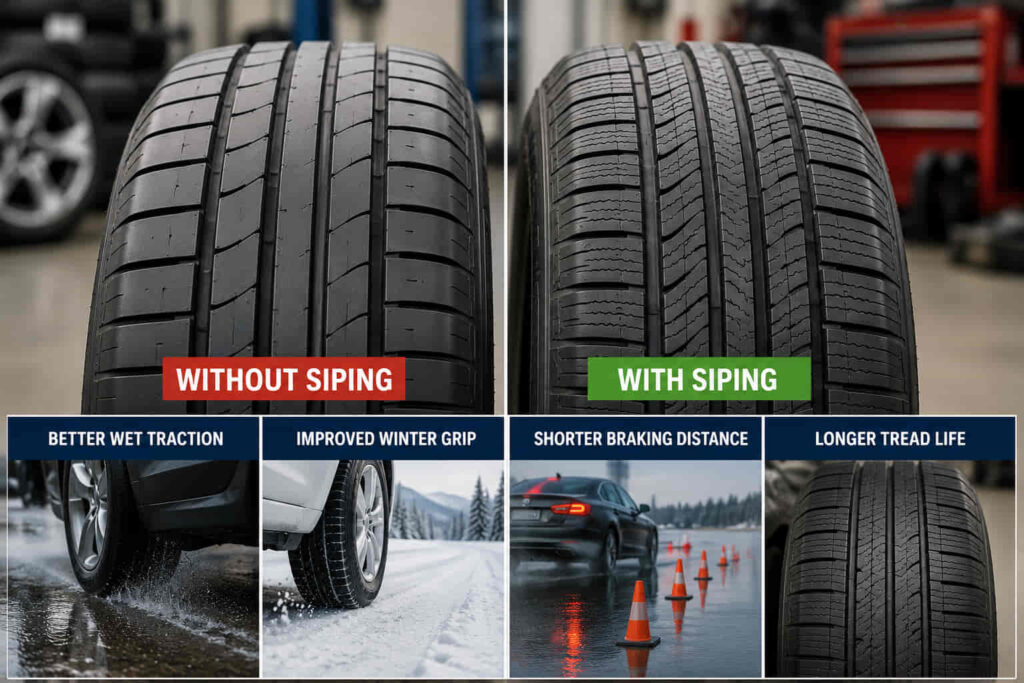
Tire siping can be worth it in specific driving conditions because it creates additional biting edges on the tire tread that may improve traction on wet, snowy, or slippery surfaces. However, whether tire siping is a valuable modification depends on the tire type, driving environment, and the performance improvement a driver expects.
Tire siping is a tread modification process that adds small cuts across the tread blocks of a tire. These small grooves allow sections of the tread to flex and create more contact points with the road surface. The purpose is to improve grip by increasing the number of edges that interact with water, snow, and uneven surfaces.
However, modern tires are already engineered with specific tread patterns, rubber compounds, and internal structures designed for their intended use. Changing the tread design through siping can improve certain characteristics, but it may also affect tread stiffness, handling response, and long-term wear when performed incorrectly.
The value of tire siping depends largely on the original tire design and driving conditions. A tire used for work vehicles, off-road applications, or changing weather conditions may benefit differently from siping compared with a high-performance tire designed for precise handling.
Understanding how tire siping works, its advantages, limitations, and alternatives helps drivers decide whether modifying their existing tires is a better choice than purchasing a different tire designed for their needs.
What Is Tire Siping and How Does It Work?
Tire siping is a tread modification process that creates small cuts called sipes across the tread blocks to increase the number of edges that interact with the road surface. These additional edges can improve traction by helping the tire maintain contact with surfaces where grip is more difficult, such as wet roads, light snow, or loose terrain.
The main purpose of sipes is to allow the tread blocks to flex slightly when the tire contacts the road. This movement helps the small cuts open and close during rotation, creating additional biting points that can remove water from the contact area and improve traction on slippery surfaces.
Modern tires already include engineered tread patterns with grooves and sipes designed for specific purposes. Tire manufacturers carefully balance tread block stiffness, rubber compound, and pattern design to achieve the desired combination of grip, handling, comfort, and durability. Adding aftermarket siping changes this original balance.
The effectiveness of tire siping depends on the type of tire being modified. A tire designed for all-terrain driving or changing weather conditions may gain more noticeable benefits because additional biting edges can improve traction in certain environments. In contrast, a performance tire designed for dry handling may lose some tread stiffness if additional cuts are added.
For example, a truck used on gravel roads, wet surfaces, or light snow may benefit from additional tread flexibility created by siping. However, a sports car tire designed for precise cornering may require stronger tread blocks to maintain responsive handling.
Tire siping works by changing how the tread interacts with the road, but the modification is only valuable when it matches the intended use of the tire.
Does Tire Siping Improve Traction?
Tire siping can improve traction in specific conditions by creating additional contact edges that help the tire grip surfaces with reduced friction. The improvement is most noticeable on wet roads, light snow, and surfaces where water or loose material can reduce direct contact between the tire and the road.
On wet pavement, sipes help create more pathways for water movement across the tread surface. This can support traction by reducing the amount of water trapped between the tire and the road. The effect works together with the tire’s main grooves, which are responsible for moving larger amounts of water away from the contact patch.
In snowy conditions, the additional edges created by siping can help the tire interact with compacted snow. Each small cut creates another surface that can engage with the road, improving the tire’s ability to generate traction compared with a tire that has fewer biting edges.
However, tire siping does not transform a regular tire into a dedicated winter tire. Winter tires use specialized rubber compounds that remain flexible at low temperatures and are specifically engineered for snow and ice performance. Siping only modifies the tread pattern and cannot replace the characteristics of a purpose-built winter tire.
For example, a driver who frequently encounters wet roads and occasional light snow may notice improved traction after siping a suitable tire. A driver who regularly faces heavy snow or icy conditions will usually receive greater safety benefits from using dedicated winter tires.
Tire siping can improve traction, but its effectiveness depends on matching the modification with realistic driving conditions and the original tire design.
What Are the Benefits of Tire Siping?
The main benefit of tire siping is improved traction in specific driving conditions by increasing the number of edges available for the tire to interact with the road surface. This modification can help certain tires perform better when additional grip is needed, especially on wet roads, light snow, and loose surfaces.
One important advantage of siping is improved wet-weather performance. When a tire travels over water-covered pavement, maintaining contact with the road becomes more difficult. Additional sipes can help create more channels and flexible edges that support water displacement and improve traction.
Tire siping can also improve performance on snow-covered roads by creating more biting edges within the tread pattern. These small cuts allow tread blocks to adapt more effectively to uneven surfaces, which can help the tire generate additional grip during acceleration and braking.
Another benefit is that siping can extend the usefulness of certain tires in specific environments. For example, commercial vehicles, work trucks, and all-terrain vehicles that operate across changing road conditions may benefit from additional traction without immediately replacing their existing tires.
However, the benefits depend heavily on the tire design. A tire that already contains advanced siping from the manufacturer may not gain meaningful improvement from additional modification because the original tread pattern has already been optimized.
For example, an all-terrain tire used on a truck that frequently drives through rain, gravel, and occasional snow may gain practical benefits from siping. A premium performance tire used mainly on dry roads may not receive the same advantage.
Tire siping provides the most value when it solves a specific traction problem rather than being treated as a universal upgrade for every tire.
What Are the Risks of Tire Siping?
The main risk of tire siping is that modifying the tread pattern can change the balance between traction, tread stiffness, and handling performance. While additional cuts can improve grip in some conditions, they may also reduce certain performance characteristics when applied incorrectly.
Tread blocks are designed to maintain a specific level of rigidity. This stiffness helps the tire respond accurately during steering, cornering, and braking. Adding too many sipes can make tread blocks more flexible, which may reduce steering precision and create a less stable driving feel.
Another potential issue is accelerated tread wear. When additional cuts weaken the tread structure, the tire may experience more movement during contact with the road. This increased flexibility can create additional heat and friction, which may contribute to faster wear depending on the tire design and driving habits.
Incorrect siping is another major concern. Tire manufacturers design tread patterns with specific engineering goals, and random modifications may interfere with the original design. A tire that was not intended for siping may experience reduced performance instead of improvement.
For example, a high-performance tire relies on firm tread blocks to provide sharp cornering response. Adding excessive siping could reduce that stiffness and make the tire feel less responsive during aggressive driving.
Tire siping is not automatically harmful, but it requires careful consideration. The modification should match the tire type, driving conditions, and intended use to avoid reducing the performance characteristics that the tire was originally designed to provide.
Read more: Are Costco Tires a Good Deal
Does Tire Siping Reduce Tire Life?
Tire siping can affect tire life because changing the tread structure may influence how the tread blocks move, wear, and maintain their original shape during driving. However, the impact depends on the amount of siping, the tire design, the quality of the modification, and the conditions in which the tire is used.
A tire’s lifespan depends on several factors, including rubber compound, tread depth, inflation pressure, alignment, driving habits, and road conditions. Siping does not automatically shorten tire life, but excessive or poorly performed siping can increase tread movement and reduce the stability of the tread blocks.
When tread blocks become too flexible, they may experience more movement during acceleration, braking, and cornering. This additional movement can create more friction between the rubber and the road surface, potentially increasing wear over time. The effect is usually more noticeable on tires that were not originally designed for additional siping.
The condition of the tire before siping is also important. A tire with sufficient tread depth and a suitable tread design may continue performing effectively after modification. However, siping an already worn tire will not restore lost tread depth or reverse normal aging.
For example, a truck tire with a strong tread design that still has significant usable life may benefit from additional traction without major durability concerns. A nearly worn passenger tire may gain limited value because the remaining tread cannot provide long-term performance.
Tire siping should be viewed as a performance modification rather than a method to extend tire lifespan. Its value comes from improving traction in certain conditions, not from making a tire last significantly longer.
Is Tire Siping Better Than Buying Winter Tires?
Tire siping is not generally a replacement for dedicated winter tires because winter tires are engineered as a complete system for cold-weather performance, while siping only modifies the tread pattern of an existing tire. The better option depends on climate, driving conditions, and the level of traction required.
Winter tires are designed with specialized rubber compounds that remain flexible in low temperatures. This flexibility allows the tire to maintain better contact with the road when temperatures drop, especially on snow and ice. Siping can add traction edges, but it does not change the rubber compound of the tire.
Tire siping may be useful for drivers who experience moderate weather challenges but do not face severe winter conditions. For example, someone driving in areas with occasional rain, light snow, or changing road surfaces may find siping provides a practical improvement without purchasing a separate set of winter tires.
However, drivers who regularly encounter heavy snowfall, icy roads, or freezing temperatures usually receive greater safety benefits from dedicated winter tires. Winter tires combine flexible compounds, optimized tread patterns, and engineered siping systems to handle extreme conditions.
The cost difference is also an important consideration. Siping an existing tire may cost less than purchasing a new set of winter tires, but the performance improvement will not be equivalent. A lower upfront cost does not always provide the same level of safety.
For example, a driver in a region with occasional winter weather may find siping a suitable tire a reasonable solution. A driver who regularly drives on icy mountain roads will usually benefit more from purpose-built winter tires.
Tire siping and winter tires serve different purposes. Siping can enhance certain existing tires, while winter tires provide a complete cold-weather traction solution.
Is Tire Siping Worth the Cost?
Tire siping can be worth the cost when it addresses a specific traction need and is performed on a tire that can benefit from additional tread flexibility. The value of siping depends on the type of tire, driving environment, weather conditions, and the performance improvement a driver expects.
For drivers who regularly experience wet roads, light snow, gravel surfaces, or changing traction conditions, siping may provide additional grip by creating more biting edges across the tread. This can improve the tire’s ability to interact with challenging surfaces without immediately requiring a new set of tires.
However, tire siping is not a universal upgrade that improves every tire. Modern tires are already designed with specific tread patterns, rubber compounds, and performance goals. Modifying the tread can affect tread stiffness, handling response, and durability if the tire is not suitable for the process.
The decision between siping and purchasing different tires should depend on the actual driving environment. A suitable all-terrain or work tire may benefit from siping, while a vehicle operating in severe winter conditions may require dedicated winter tires for better overall performance and safety.
Overall, tire siping is most valuable when it is used as a targeted traction improvement rather than a replacement for proper tire selection. Drivers should evaluate their tire type, road conditions, and long-term needs before deciding whether siping is a worthwhile investment.