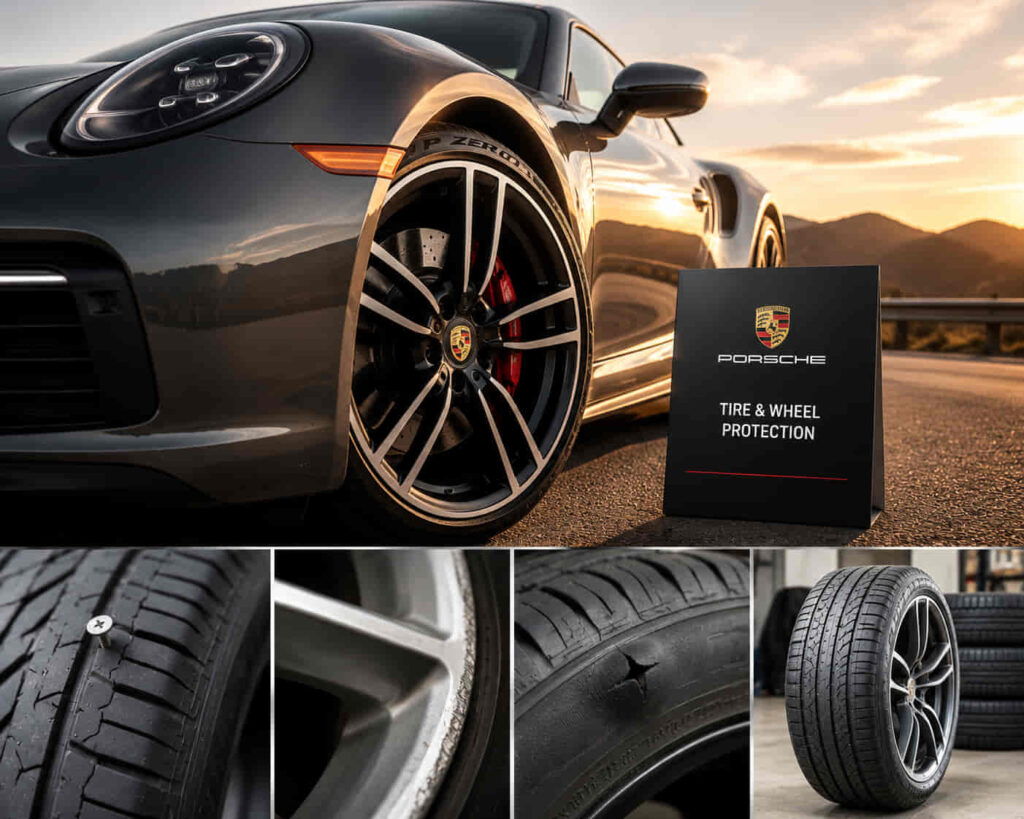
Porsche Tire and Wheel Protection can be worth buying for owners who want protection from expensive tire and wheel repairs, especially because Porsche vehicles often use high-performance tires, low-profile designs, and larger alloy wheels that can be costly to replace. The value of this protection plan depends on driving conditions, vehicle usage, repair costs, and how much financial risk the owner wants to avoid.
Unlike standard vehicles with lower replacement costs, Porsche models are commonly equipped with performance-oriented tire setups designed to maximize handling and driving experience. These tires often have thinner sidewalls and larger wheel sizes, which can make them more vulnerable to damage from potholes, road debris, and unexpected impacts.
A damaged tire or wheel can create significant repair expenses. A single tire replacement, wheel repair, or wheel replacement may cost hundreds or even thousands of dollars depending on the Porsche model and the type of component involved. A protection plan helps reduce the uncertainty of these unexpected ownership costs.
However, Porsche Tire and Wheel Protection is not automatically valuable for every owner. Drivers who rarely encounter poor road conditions, drive limited miles, or are comfortable paying repair costs themselves may not receive the same benefit.
The decision should be based on risk exposure rather than the purchase price alone. This guide explains what Porsche Tire and Wheel Protection covers, why Porsche tires and wheels are expensive to repair, the financial value of the plan, and whether it is a smart investment for different types of Porsche owners.
What Does Porsche Tire and Wheel Protection Cover?
Porsche Tire and Wheel Protection is designed to help cover unexpected damage to tires and wheels caused by certain road hazards, reducing the financial impact of repairs or replacements for Porsche owners. The purpose of the protection plan is not to replace regular maintenance but to provide financial support when expensive tire and wheel components are damaged by situations outside normal wear.
The main value of this type of protection comes from addressing sudden incidents such as impacts from potholes, road debris, or other hazards that can damage performance tires and alloy wheels. These situations are difficult to predict because even careful drivers can encounter unexpected road conditions.
Tire coverage is especially important for Porsche vehicles because many models use performance tires that are designed for handling and speed rather than maximum sidewall protection. Damage to areas such as the tire sidewall may require complete replacement because certain types of damage cannot be safely repaired.
Wheel protection is another important factor because Porsche vehicles often feature large alloy wheels with performance-oriented designs. A bent, cracked, or severely damaged wheel can affect vehicle handling, tire performance, and driving safety.
The exact coverage details depend on the specific Porsche protection agreement, dealership terms, and applicable conditions. Owners should review exclusions, claim procedures, and covered damage types before purchasing because protection plans are only valuable when the coverage matches the risks they are most likely to experience.
For example, a Porsche owner who frequently drives on roads with potholes may benefit more from tire and wheel protection than an owner who mainly drives short distances on well-maintained roads.
Why Are Porsche Tires and Wheels Expensive to Repair?
Porsche tires and wheels are expensive to repair because they are engineered as high-performance components that prioritize handling, stability, and driving dynamics rather than low replacement costs. The same characteristics that improve Porsche driving performance can also increase repair expenses when damage occurs.
Many Porsche models use low-profile performance tires with shorter sidewalls. These tires provide sharper steering response and better cornering capability, but the reduced sidewall height provides less cushioning against impacts from potholes, curbs, and road imperfections.
Wheel size is another factor affecting repair costs. Modern Porsche vehicles often use larger alloy wheels that require advanced manufacturing processes and specific designs to maintain strength while reducing weight. Replacing a damaged wheel can therefore cost significantly more than replacing a standard vehicle wheel.
Performance tire replacement also tends to be more expensive because Porsche vehicles often require tires that meet specific performance standards. These tires are developed to handle higher speeds, precise steering inputs, and demanding driving conditions.
The cost increases further when installation services are included. Replacing a Porsche tire or wheel may require professional mounting, balancing, alignment checks, and proper calibration to maintain the vehicle’s intended performance.
For example, a pothole impact that causes minor damage to a regular commuter vehicle may result in a much larger repair bill for a Porsche because the vehicle uses specialized tires and wheels designed for performance driving.
Read more: Are Snow Tires Worth It
How Much Does Porsche Tire and Wheel Repair Cost Without Protection?
Repairing Porsche tires and wheels without protection can become expensive because performance components are designed with specialized materials, sizes, and engineering requirements. The actual cost depends on the Porsche model, tire specification, wheel design, and the type of damage that occurs.
A tire replacement can be significantly more expensive than a standard vehicle because Porsche models often require performance tires developed specifically for handling, stability, and speed capability. A single damaged tire may require replacement even when the remaining tread is still usable, especially if the damage affects the sidewall or internal structure.
Wheel repairs can also create unexpected expenses. Alloy wheels may become bent from pothole impacts or damaged from road hazards. While some minor wheel damage can sometimes be repaired, severe cracks or structural damage may require complete wheel replacement.
Additional costs can include tire mounting, balancing, alignment inspection, and other services needed to restore the vehicle to proper operating condition. For performance vehicles, maintaining correct tire and wheel specifications is important because improper replacement components can affect handling and driving characteristics.
The financial impact becomes more significant for Porsche owners with larger wheel packages or high-performance models. A Porsche 911, Taycan, or Cayenne equipped with premium performance tires may face higher replacement costs compared with a standard passenger vehicle.
For example, a single road hazard event causing both tire and wheel damage could create a repair bill large enough that a previously purchased protection plan may provide meaningful financial value.
Who Benefits Most From Porsche Tire and Wheel Protection?
Porsche Tire and Wheel Protection provides the most value for owners who frequently drive, encounter challenging road conditions, or want predictable ownership costs for expensive performance components. The benefit depends on the relationship between the driver’s risk exposure and the potential cost of repairs.
Daily-driven Porsche vehicles are more likely to encounter road hazards than vehicles used only occasionally. Regular commuting, highway driving, and urban travel increase exposure to potholes, construction debris, and unexpected road damage.
Owners living in areas with poor road conditions may also receive greater value from tire and wheel protection. Roads with potholes, uneven surfaces, or frequent debris create more opportunities for tire and wheel damage, especially on vehicles with low-profile performance tires.
The type of Porsche also affects the value of the protection plan. Performance models with larger wheels and specialized tires generally carry higher repair costs, making financial protection more attractive compared with models using less expensive tire configurations.
However, not every Porsche owner needs this type of coverage. Someone who drives very few miles, stores the vehicle most of the time, or regularly travels on well-maintained roads may have a lower chance of experiencing covered damage.
For example, a Porsche Macan used as a daily family vehicle in an area with rough roads may benefit more from tire and wheel protection than a Porsche 911 driven only on weekends in ideal conditions.
What Are the Advantages of Porsche Tire and Wheel Protection?
The main advantages of Porsche Tire and Wheel Protection are reduced unexpected repair costs, better financial predictability, and protection against expensive tire and wheel damage. The plan allows owners to manage ownership expenses more consistently instead of facing large, unexpected repair bills.
One major advantage is cost protection. Tire and wheel damage often happens suddenly and without warning. A protection plan can reduce the financial impact of these events by covering eligible repairs or replacements according to the agreement terms.
Another advantage is convenience. Porsche owners invest in vehicles that require specialized service, and having a dedicated protection plan can simplify the repair process when covered damage occurs. This reduces uncertainty about where to seek assistance and how much the repair may cost.
The plan can also provide peace of mind for owners who want predictable ownership expenses. Luxury and performance vehicles often involve higher maintenance costs, so reducing one category of unexpected expenses can make long-term ownership easier to manage.
For example, an owner who experiences a pothole impact that damages an expensive performance tire may find significant value in having protection coverage compared with paying the entire replacement cost independently.
What Are the Limitations of Porsche Tire and Wheel Protection?
The main limitations of Porsche Tire and Wheel Protection are the additional upfront cost, coverage restrictions, and the possibility that some owners may never use the benefits during the ownership period. Although the protection plan can reduce financial risk, it does not automatically provide value for every Porsche driver.
The first limitation is the additional purchase cost. Owners must pay extra for the protection plan, which increases the total cost of purchasing or financing a Porsche. For drivers who rarely encounter road hazards, this additional expense may not provide a clear financial return.
Another limitation is that protection plans include specific terms and exclusions. Not every type of tire or wheel issue is necessarily covered. Normal wear, improper maintenance, cosmetic damage, or certain conditions outside the agreement may not qualify for protection.
The value of the plan also depends on driving environment. A Porsche owner who mainly drives on smooth roads with careful driving habits has a lower probability of experiencing the type of damage the plan is designed to cover. In this situation, paying for protection may provide more peace of mind than direct financial savings.
Owners should also compare the protection plan cost with their personal risk tolerance. Some drivers prefer predictable expenses and want protection against unexpected repair bills, while others prefer to save money upfront and handle repairs if they occur.
For example, a Porsche owner who drives only a few thousand miles per year in an area with excellent roads may receive less value from the plan compared with someone who uses the vehicle daily in a city with frequent potholes.
Porsche Tire and Wheel Protection vs Paying Repairs Yourself
Choosing between Porsche Tire and Wheel Protection and paying repair costs independently depends on how much financial risk the owner wants to accept and how likely tire or wheel damage is in their driving environment. Both approaches have advantages depending on the owner’s priorities.
Paying repairs yourself allows owners to avoid the upfront cost of a protection plan. Drivers who have strong financial flexibility and low exposure to road hazards may prefer this approach because they keep the money that would otherwise be spent on coverage.
However, self-paying repairs creates uncertainty. A single unexpected event involving a damaged tire and wheel can create a significant expense, especially on high-performance Porsche models with specialized components.
A protection plan works differently by converting unpredictable repair costs into a more predictable ownership expense. Instead of facing a large repair bill after damage occurs, owners pay for coverage in advance and receive protection according to the agreement terms.
The better choice depends on individual circumstances. A Porsche owner who treats the vehicle as a daily driver, regularly travels through urban roads, or has expensive wheel configurations may benefit more from protection. Someone who drives occasionally and accepts repair risks may prefer paying only when problems occur.
For example, a Porsche Taycan owner with large performance wheels may view tire and wheel protection as financial risk management, while a weekend Porsche Boxster owner driving on well-maintained roads may decide the additional coverage is unnecessary.
Is Porsche Tire and Wheel Protection Worth Buying?
Porsche Tire and Wheel Protection is worth buying for owners who want to reduce the risk of expensive tire and wheel repairs, especially when their driving conditions create a higher chance of road-related damage. The plan provides the greatest value when the potential repair costs are significant compared with the cost of protection.
The strongest candidates for this type of coverage are Porsche owners who drive frequently, use their vehicles daily, live in areas with poor road conditions, or have expensive wheel and tire configurations. For these drivers, the protection plan can provide financial predictability and reduce stress from unexpected repairs.
However, the plan may provide less value for owners who drive rarely, store their Porsche most of the time, or are comfortable paying repair costs independently. In these situations, the probability of using the coverage may be lower.
The decision should be based on ownership habits rather than the assumption that every Porsche owner needs additional protection. Understanding the vehicle’s tire specifications, typical driving environment, and personal financial preferences helps determine whether the plan matches the owner’s needs.
Overall, Porsche Tire and Wheel Protection is not simply a maintenance expense; it is a risk management product. It can be a valuable investment for owners who want protection from unpredictable repair costs, while other drivers may prefer to manage those risks themselves.
Is Porsche Tire and Wheel Protection Worth It?
Porsche Tire and Wheel Protection can be a worthwhile investment for owners who want to protect themselves from unexpected and potentially expensive tire and wheel repair costs. The value of this protection plan depends on how the vehicle is used, where it is driven, and how much financial risk the owner wants to manage.
Porsche vehicles often use performance-focused tires and large alloy wheels that provide excellent handling but can also create higher replacement costs when damaged. A single road hazard event involving a pothole, debris, or impact damage can result in significant expenses, making protection coverage more valuable for drivers who frequently encounter these risks.
However, the plan is not necessary for every Porsche owner. Drivers who use their vehicles occasionally, travel mostly on well-maintained roads, or are comfortable handling unexpected repair expenses may find that paying for coverage does not provide enough practical value.
The best decision comes from evaluating personal driving habits, vehicle configuration, and ownership expectations. A daily-driven Porsche with expensive performance wheels in an area with poor road conditions presents a different risk level compared with a weekend vehicle used only occasionally.
Overall, Porsche Tire and Wheel Protection is best viewed as a financial risk management tool rather than a guaranteed money-saving product. For the right owner, it provides valuable peace of mind and protection from costly repairs. For others, managing repair costs independently may be the more practical choice.