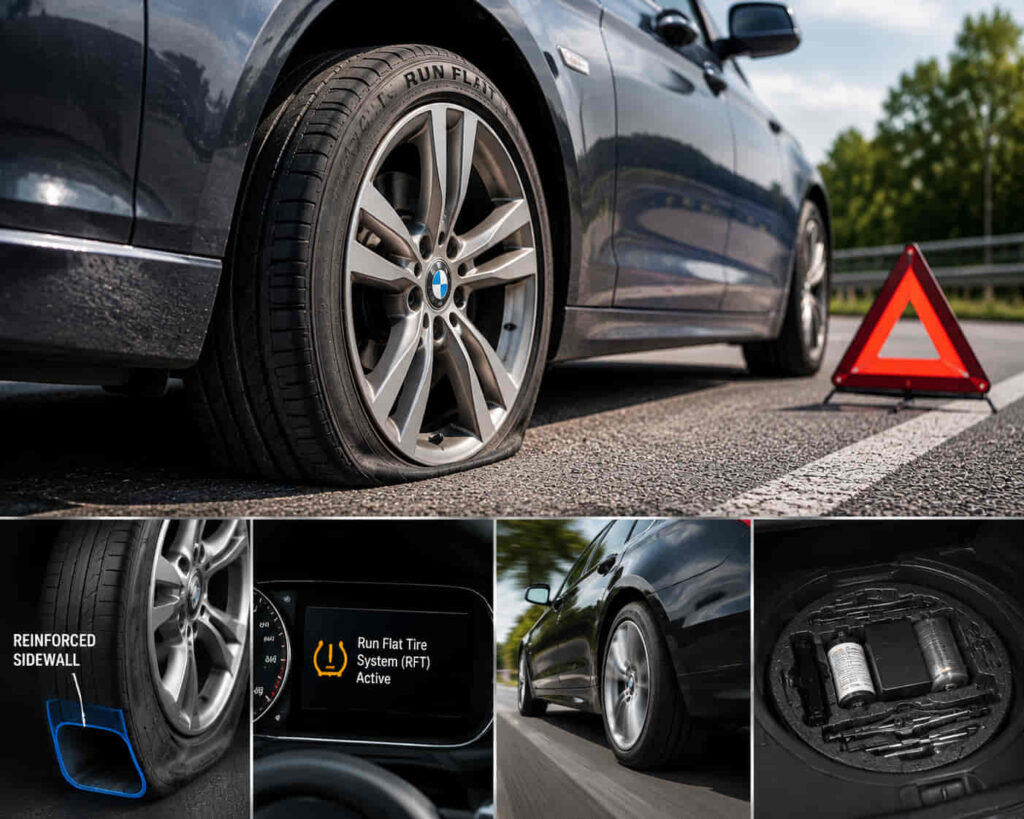
Run flat tires can be worth buying for drivers who prioritize safety, convenience, and the ability to continue driving after a tire loses air pressure. These tires are designed to provide temporary mobility after a puncture or pressure loss, allowing drivers to reach a safe location or repair facility without immediately stopping on the roadside.
The main advantage of run flat tires is their ability to reduce the risks associated with sudden tire failures. Traditional tires usually require an immediate stop or a spare tire installation after losing air, while run flat technology allows limited driving distance under controlled conditions.
Run flat tires are especially common on luxury and performance vehicles because manufacturers value the combination of safety, trunk space efficiency, and convenience. Brands such as BMW, MINI, and other premium vehicle manufacturers have used run flat technology to eliminate the need for a traditional spare tire.
However, run flat tires are not automatically the best choice for every driver. Their reinforced construction can affect ride comfort, road noise, repair options, and replacement costs compared with standard tires. Drivers who prioritize a softer ride or lower ownership expenses may prefer conventional tires.
The value of run flat tires depends on individual driving habits, vehicle type, and priorities. This guide explains how run flat tires work, their safety benefits, limitations, costs, and whether they are the right choice compared with regular tires.
How Do Run Flat Tires Work?
Run flat tires work by using reinforced internal structures, especially stronger sidewalls, to support the weight of the vehicle after the tire loses air pressure. Unlike conventional tires that collapse when air pressure disappears, run flat tires are designed to maintain their shape for a limited period, allowing the driver to continue traveling to a safe location.
The key technology behind run flat tires is the reinforced sidewall construction. The sidewalls are built with stronger materials that can support the vehicle load even when the tire no longer has normal air pressure. This structure prevents the tire from becoming completely unusable immediately after a puncture.
Run flat technology works together with the Tire Pressure Monitoring System (TPMS). Because drivers may not immediately notice pressure loss while driving, TPMS alerts the driver when a tire loses air. This warning allows the driver to reduce speed and use the remaining mobility provided by the run flat tire.
However, run flat tires are not designed for unlimited driving after a puncture. Their purpose is temporary mobility, not permanent operation without air pressure. Driving distance and speed limits depend on the tire manufacturer, vehicle specifications, and damage condition.
For example, if a BMW equipped with run flat tires experiences a puncture on a highway, the driver may be able to continue driving a limited distance instead of stopping immediately on the roadside to install a spare tire.
Are Run Flat Tires Safer Than Regular Tires?
Run flat tires can provide safety advantages over regular tires because they reduce the risk of being stranded after sudden tire pressure loss. Their biggest benefit is not preventing tire damage but helping drivers maintain control and reach a safer location after a tire failure.
A traditional tire failure can create difficult situations, especially on highways, during bad weather, or in areas with limited roadside assistance. A driver with a flat conventional tire may need to stop immediately, change the tire, or wait for help. Run flat tires provide additional mobility during this emergency situation.
The reinforced structure also helps maintain vehicle stability after pressure loss. Because the tire remains supported, the vehicle can continue responding to steering inputs more predictably than a completely deflated standard tire.
However, run flat tires do not eliminate all safety concerns. Drivers must still respond appropriately after receiving a TPMS warning. Continuing to drive at high speeds or beyond the recommended distance can damage the tire structure and create additional risks.
The safety benefit is especially valuable for certain drivers. People who frequently travel long distances, drive at night, carry passengers, or use vehicles without spare tire compartments may appreciate the added security of run flat technology.
For example, a family driving a luxury sedan on a long highway trip may benefit from run flat tires because a puncture does not immediately leave them waiting beside the road.
Read more: Is Porsche Tire and Wheel Protection Worth It
How Far Can You Drive on Run Flat Tires After Losing Air?
Run flat tires allow drivers to continue traveling for a limited distance after losing air pressure, but they are designed only as a temporary mobility solution rather than a permanent replacement for normal tire operation. The exact driving distance depends on the tire manufacturer, vehicle specifications, road conditions, and the severity of the tire damage.
The main purpose of this technology is to give drivers enough time to reach a safe location, tire shop, or repair facility instead of stopping immediately after a puncture. This is especially valuable in situations where changing a tire would be dangerous, such as on busy highways, during nighttime driving, or in poor weather conditions.
Run flat tires rely on their reinforced sidewalls to support the vehicle after pressure loss. However, continued driving creates additional stress and heat because the tire is operating outside its normal condition. Excessive speed or driving beyond the recommended distance can permanently damage the tire structure.
The Tire Pressure Monitoring System (TPMS) plays an important role in this process because drivers need to know when pressure loss occurs. Ignoring a warning and continuing normal driving behavior can reduce the safety advantage of run flat technology.
For example, a driver who experiences a puncture while traveling through a highway area may use the remaining run flat capability to safely exit the road and reach a service location instead of immediately stopping in a dangerous position.
Run Flat Tires vs Regular Tires: Which Option Is Better?
Run flat tires are better for drivers who prioritize emergency convenience and safety after tire damage, while regular tires are better for drivers who prioritize lower cost, ride comfort, and easier replacement options. The better choice depends on driving needs, vehicle design, and personal preferences.
The biggest difference between these tire types is how they respond after losing air pressure. Regular tires require immediate attention after a puncture because the tire can no longer safely support normal driving. Run flat tires provide additional mobility, reducing the need for immediate roadside tire changes.
Comfort is one area where regular tires often have an advantage. The reinforced construction of run flat tires can create a firmer ride because the stronger sidewalls transfer more road impacts to the vehicle. Some drivers notice increased road harshness, especially on vehicles with sport-tuned suspension systems.
Cost is another major difference. Run flat tires are typically more expensive because of their specialized construction. Replacement options may also be more limited compared with standard tires, depending on vehicle requirements and tire availability.
Regular tires generally provide more flexibility because they are available in more sizes, price ranges, and performance categories. They are also easier to repair in certain situations, while many run flat tires require replacement after significant damage.
For example, a luxury vehicle owner who values convenience and does not want to carry a spare tire may prefer run flat tires, while a driver focused on minimizing maintenance costs may choose conventional tires.
What Are the Advantages of Run Flat Tires?
The main advantages of run flat tires are improved roadside safety, greater convenience after tire damage, and reduced dependence on spare tires or immediate roadside assistance. These benefits make run flat technology attractive for drivers who value reliability during unexpected tire failures.
The biggest advantage is the ability to continue driving after losing air pressure. A puncture or sudden tire failure can create a stressful situation, especially when it happens in unsafe locations such as highways, remote roads, or areas with heavy traffic. Run flat tires provide additional mobility, allowing drivers to move to a safer location instead of stopping immediately.
Another advantage is the reduction in the need for a spare tire. Many vehicles equipped with run flat tires do not require a traditional spare tire, which can create additional trunk space for storage and improve vehicle packaging efficiency. This is particularly useful in performance and luxury vehicles where manufacturers prioritize weight distribution and interior design.
Run flat tires also provide convenience for drivers who prefer predictable solutions during emergencies. Instead of changing a tire immediately or waiting for roadside assistance, drivers have more flexibility to handle the situation safely.
The technology is especially valuable for certain vehicle categories. Luxury vehicles, performance cars, and vehicles frequently used for long-distance travel often benefit from run flat tires because owners typically prioritize convenience and uninterrupted mobility.
For example, a driver commuting daily in a BMW equipped with run flat tires may avoid a dangerous roadside tire change after a puncture and continue to a service center under controlled conditions.
What Are the Disadvantages of Run Flat Tires?
The main disadvantages of run flat tires are higher replacement costs, firmer ride quality, increased road noise, and fewer repair options compared with conventional tires. These limitations come from the reinforced construction required to maintain vehicle support after air pressure loss.
The strongest criticism of run flat tires is often related to ride comfort. The reinforced sidewalls that allow the tire to support the vehicle without air also make the tire structure stiffer. This stiffness can transmit more road impacts into the cabin, creating a firmer driving experience.
Road noise can also be higher depending on the tire model and vehicle setup. Because run flat tires prioritize structural support and emergency capability, they may not provide the same level of comfort refinement as premium conventional tires designed specifically for smoothness.
Cost is another important limitation. Run flat tires usually cost more than comparable standard tires because of their specialized design and manufacturing requirements. Replacement costs can become significant, especially for vehicles using larger performance tire sizes.
Repairability is another consideration. Some run flat tires can be repaired under specific conditions, but many manufacturers recommend replacement after certain types of damage, particularly when the tire has been driven for an extended distance without pressure.
For example, a driver replacing a complete set of performance run flat tires on a luxury vehicle may spend significantly more compared with choosing equivalent conventional tires.
How Much Do Run Flat Tires Cost?
Run flat tires generally cost more than standard tires because their reinforced construction requires additional engineering, materials, and manufacturing processes. The total ownership cost depends on the tire brand, vehicle type, tire size, replacement frequency, and maintenance requirements.
The initial purchase price is usually the most noticeable difference. Run flat tires are designed with stronger internal structures that allow temporary operation after pressure loss, and this technology increases production costs compared with traditional tire designs.
Replacement expenses can also be higher because many luxury and performance vehicles require specific run flat tire specifications. A vehicle manufacturer may recommend certain tire models that meet handling, safety, and performance requirements.
However, cost should be evaluated together with the value provided. A driver who avoids one dangerous roadside situation or prevents the need for immediate emergency assistance may consider the additional expense worthwhile.
The long-term financial value depends on driving habits. Someone who rarely drives and mainly travels on well-maintained roads may not benefit as much from the additional cost. In contrast, a daily driver who frequently travels long distances may place greater value on the convenience and security provided by run flat technology.
For example, a Porsche or BMW owner who uses their vehicle regularly for commuting may view the higher tire cost as part of the overall ownership experience rather than simply an added expense.
Are Run Flat Tires Worth It?
Run flat tires can be worth buying for drivers who value safety, convenience, and the ability to continue driving after a tire loses pressure. Their biggest advantage is the additional mobility they provide during unexpected tire failures, helping drivers avoid immediate roadside stops and reach a safer location.
The value of run flat tires depends on how the vehicle is used and what the driver prioritizes. For luxury vehicle owners, daily commuters, and drivers who frequently travel long distances, the ability to maintain mobility after a puncture can provide meaningful peace of mind.
However, run flat tires also involve trade-offs. Their reinforced construction can create a firmer ride, higher replacement costs, and fewer repair options compared with traditional tires. Drivers who prioritize comfort, lower ownership expenses, or a wider selection of tire choices may prefer conventional tires.
The best decision depends on balancing convenience and cost. Run flat tires are not designed to be superior in every category; they are specialized products created to solve a specific problem: maintaining temporary mobility after tire pressure loss.
Overall, run flat tires are worth considering for drivers who value emergency convenience and safety more than the lowest possible tire cost. For the right vehicle and driving conditions, the additional investment can provide valuable protection and a more confident ownership experience.