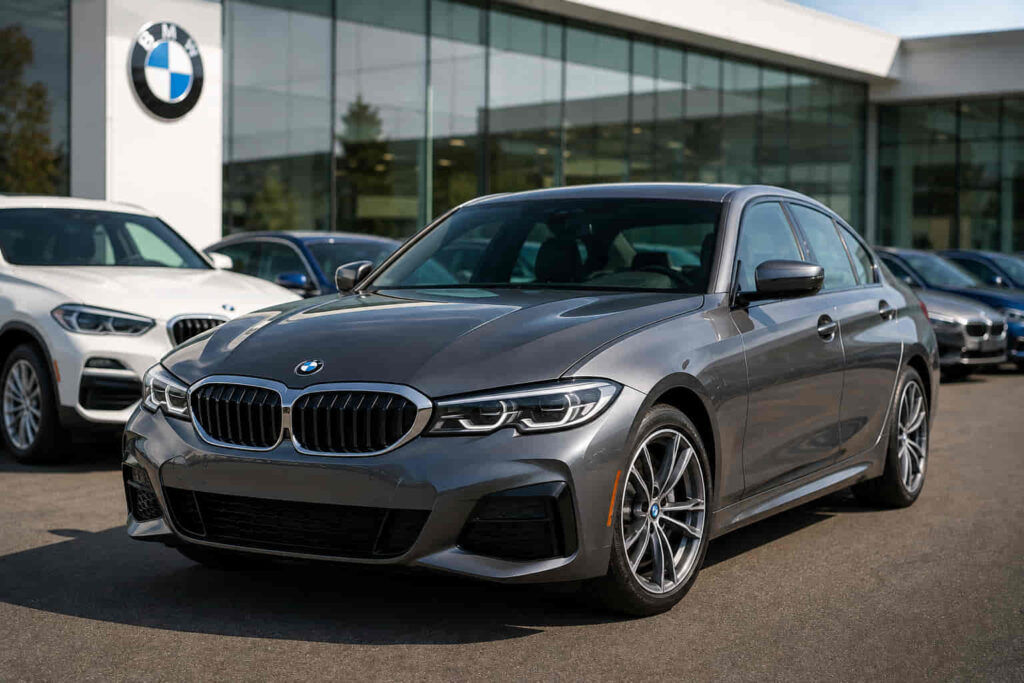
A BMW CPO can be worth it for buyers who value manufacturer-backed warranty coverage, a certification process, and lower uncertainty when purchasing a used BMW. However, Certified Pre-Owned status does not automatically make a vehicle a better value. The real decision depends on how much more the CPO vehicle costs, what protection remains, the condition and history of the individual BMW, and how much repair risk the buyer is willing to accept.
BMW Certified Pre-Owned vehicles differ from regular used BMWs because they must qualify for the CPO program and are sold with program-specific benefits and coverage. These advantages can make ownership costs more predictable when an eligible repair is covered, but CPO protection should not be interpreted as a guarantee against every future repair, maintenance expense, or wear-related cost. A well-maintained non-CPO BMW can still represent better value when its price, condition, history, and independent inspection justify accepting more ownership risk.
There are 7 reasons a BMW CPO may be worth the additional price, including warranty protection, certification requirements, vehicle inspection, reduced repair uncertainty, vehicle-condition confidence, potential value on higher-risk purchases, and greater predictability for risk-averse buyers. Evaluating these benefits against the CPO price premium provides a more useful answer to “Is BMW CPO worth it?” than treating certification alone as proof of value.
What Are the 7 Reasons a BMW CPO May Be Worth It?
The 7 reasons a BMW CPO may be worth it are manufacturer-backed warranty protection, certification requirements, a defined vehicle inspection process, lower repair-cost uncertainty, greater confidence in the vehicle’s condition and history, potentially higher value when repair exposure matters, and more predictable ownership for risk-averse buyers. These benefits can justify paying more for a Certified Pre-Owned BMW, but their actual value depends on the individual vehicle, remaining coverage, CPO price premium, and buyer’s willingness to accept used-car repair risk.
Manufacturer-backed warranty protection is the first reason a BMW CPO may justify a higher purchase price. Warranty coverage can transfer part of the financial risk of eligible repairs from the owner to the applicable CPO coverage during its valid period. This matters on a used BMW because an unexpected covered repair can otherwise become an unplanned ownership expense. The value of the warranty increases when meaningful coverage remains after purchase and the buyer prefers predictable costs. However, CPO warranty protection should not be interpreted as coverage for every mechanical problem, maintenance service, or wear item. Its value must be judged by the actual coverage terms rather than the existence of the CPO label alone.
BMW certification requirements are the second reason CPO status can add value. A regular used BMW can be offered for sale across a much wider range of ages, mileage, histories, and conditions, while a vehicle entering a manufacturer CPO program must satisfy the applicable eligibility and certification requirements. This creates an additional screening layer between the buyer and the broader used-car inventory. Certification reduces uncertainty about which vehicles enter the program, but it does not establish that every CPO BMW is mechanically perfect or that two certified vehicles are equal in condition. The history and present condition of the individual car remain relevant after certification.
A defined inspection process is the third reason buyers may prefer a BMW CPO. Inspection provides structured information about the vehicle before certification and can identify conditions that need to be addressed within the applicable certification process. This gives the buyer a different starting point from purchasing an ordinary used vehicle solely on appearance or a short test drive. The value comes from reducing information uncertainty, not from guaranteeing that no component will fail after purchase. A vehicle can pass an inspection and still require maintenance or develop age- and mileage-related repairs later in ownership.
Reduced repair-cost uncertainty is the fourth reason a BMW CPO can be worth the premium. A used luxury vehicle can expose its owner to repair expenses that are difficult to predict from the purchase price alone. Applicable CPO coverage can make part of that exposure more predictable by defining which eligible repairs receive warranty protection during the coverage period. This does not mean a CPO BMW necessarily costs less to own than a comparable non-CPO vehicle. Fuel, scheduled maintenance, tires, brakes, wear-related components, uncovered repairs, insurance, and depreciation can remain part of the owner’s total cost. The more precise benefit is reduced uncertainty for expenses that fall within the applicable coverage.
Greater confidence in vehicle condition and history is the fifth reason CPO can create additional buyer value. Certification, inspection, eligibility requirements, and available vehicle documentation provide more context for evaluating a used BMW than the CPO badge by itself. A buyer can use this information to understand how the vehicle reached its current condition and whether its history supports the asking price. CPO status should still complement rather than replace examination of service records, vehicle history, current condition, and evidence of previous damage or repairs. Certification is one layer of purchase information rather than a substitute for evaluating the actual car.
BMW CPO may provide greater value when the buyer faces higher potential repair exposure. The economic value of warranty protection is not identical for every vehicle because age, mileage, mechanical complexity, current condition, remaining coverage, and repair risk can change the potential benefit. When the cost difference between CPO and a comparable non-CPO BMW is reasonable, stronger applicable protection can make the certified vehicle more attractive to a buyer who wants to transfer part of that uncertainty. The relationship can reverse when the CPO price premium is large, little valuable coverage remains, or a well-maintained non-CPO alternative is available at a substantially better price.
More predictable ownership for a risk-averse buyer is the seventh reason a BMW CPO may be worth it. Two buyers can evaluate the same certified vehicle and reach different rational decisions because they place different values on warranty protection and uncertainty. A buyer who does not want to absorb a large unexpected covered repair may place substantial value on CPO protection. Another buyer with strong BMW technical knowledge, access to a qualified independent inspection, a repair budget, and willingness to accept mechanical risk may prefer to save money by purchasing a carefully selected non-CPO vehicle.
This difference in buyer priorities explains why CPO status does not have a fixed monetary value independent of the purchase. A BMW CPO becomes worth the premium when the value of its applicable warranty protection, certification, inspection, and reduced ownership uncertainty is greater to the buyer than the additional amount required to purchase it. When a comparable non-CPO BMW has strong service history, excellent condition, a substantially lower price, and acceptable repair exposure, certification may provide less incremental value.
The correct comparison is therefore not simply CPO versus non-CPO. It is one specific CPO BMW and its remaining benefits versus a comparable used BMW and the additional risk the buyer would accept by choosing it. Vehicle condition, coverage, price difference, maintenance history, and buyer risk tolerance determine whether the CPO premium represents useful protection or unnecessary additional cost.
Read more: Do BMW Require Premium Gas
What Does BMW CPO Actually Include?
BMW CPO includes a manufacturer-defined certification process and applicable warranty protection that distinguish an eligible Certified Pre-Owned BMW from a regular used vehicle. The value of these benefits comes from adding a structured qualification and protection layer to the purchase, but the exact program terms should be verified for the vehicle being considered because coverage and eligibility can depend on the applicable BMW CPO program and purchase context.
Certification begins before the vehicle receives the CPO designation. A used BMW does not become Certified Pre-Owned simply because it is sold through a BMW dealer or appears to be in good condition. It must qualify for the applicable program and complete BMW’s certification process. For a buyer, this creates an additional screening mechanism that is absent from the CPO status of an ordinary used vehicle. The certification label therefore has value when it represents requirements the buyer would otherwise need to evaluate independently.
Inspection is another important part of the CPO value proposition because the vehicle is evaluated before certification rather than being accepted solely on its current retail appearance. The practical benefit is reduced information uncertainty. A buyer receives a vehicle that has passed through a defined certification process instead of relying entirely on a test drive and visual inspection. This does not eliminate the value of reviewing service history or examining the individual vehicle because inspection describes its condition during certification rather than guaranteeing its future mechanical condition.
Warranty protection adds the financial component of BMW CPO. Applicable coverage can protect the buyer from certain eligible repair costs during the valid coverage period, making some ownership risks more predictable than they would be with an equivalent used BMW sold without warranty protection. The economic value of that coverage depends on what remains at the time of purchase, which repairs are covered, and how the buyer values protection against unexpected expenses.
The combination of certification, inspection, and warranty protection is therefore more important than any one CPO feature in isolation. Certification determines whether the vehicle qualifies, inspection reduces uncertainty about condition, and warranty coverage transfers part of the applicable repair risk during the coverage period. BMW CPO value comes from this combined protection structure rather than from the Certified Pre-Owned label alone.
What Does BMW CPO Not Cover?
BMW CPO should not be interpreted as coverage for every maintenance item, wear-related expense, mechanical problem, or ownership cost that can occur after purchasing the vehicle. The applicable warranty has defined terms and exclusions, so understanding what remains the owner’s responsibility is necessary before deciding how much extra CPO status is worth.
Routine maintenance remains different from warranty repair. Oil services, scheduled maintenance, and other normal ownership requirements do not become unnecessary because a BMW has CPO status. A buyer should therefore avoid calculating the CPO premium as though certification eliminates the normal maintenance budget associated with owning a used BMW. The vehicle still requires service according to its applicable maintenance needs.
Wear-related components create another important distinction. Tires, brakes, and other components that deteriorate through normal use can represent meaningful ownership expenses even when the vehicle carries CPO warranty protection. The exact coverage position should be checked against the applicable terms, but the broader purchasing principle remains the same: warranty protection and normal wear are not equivalent categories.
CPO coverage also should not be treated as protection against every future mechanical failure. A repair only creates warranty value when it falls within the applicable coverage and occurs while that coverage remains valid. A potentially expensive repair outside the terms remains an ownership risk. This is why buyers should evaluate the substance and remaining duration of the protection rather than assigning a fixed value to the words “Certified Pre-Owned.”
Certification also does not guarantee that a vehicle will never require repairs after purchase. An inspection evaluates condition within the certification process, but mechanical components continue to age and accumulate mileage after that inspection. A CPO BMW can therefore develop a legitimate future repair need without the certification process having been meaningless or defective. Inspection reduces purchase uncertainty; it does not remove mechanical aging.
Finally, BMW CPO does not eliminate the importance of the individual vehicle’s history and current condition. A buyer should still understand the car’s service history, mileage, prior use, condition, and available vehicle-history information. Two CPO BMWs of the same model and model year can still represent different purchases because certification does not make their previous ownership, maintenance history, or present condition identical.
The practical value of BMW CPO is the protection it actually provides, not the expenses a buyer assumes it provides. Separating covered repair risk from routine maintenance, wear, uncovered repairs, and future mechanical aging creates a more accurate ownership-cost picture and prevents the CPO price premium from being justified by benefits that are not actually part of the protection.
Is BMW CPO Better Than Buying a Regular Used BMW?
A BMW CPO can be better than a regular used BMW when its certification, applicable warranty protection, and reduced repair uncertainty justify the higher purchase price, but a well-maintained non-CPO BMW can provide better value when it costs substantially less and its condition is independently verified. The comparison should therefore focus on the two specific vehicles being considered rather than assuming that CPO status automatically makes one BMW the better purchase.
Purchase price creates the first major difference. A Certified Pre-Owned BMW can command a premium because the buyer is receiving more than the vehicle itself; certification and applicable warranty protection are also part of the transaction. A regular used BMW may have a lower initial price because those benefits are absent or different. The lower price is valuable only when the additional repair and condition uncertainty remains acceptable to the buyer. Saving money at purchase while accepting significantly greater repair exposure is a trade-off rather than an automatic financial advantage.
Certification changes the information available in that comparison. A BMW CPO has passed through the applicable manufacturer certification process, while a regular used BMW does not automatically receive the same screening simply because it is the same model and model year. This gives the CPO vehicle an advantage in reducing purchase uncertainty. Certification still does not make service history, mileage, previous use, and current condition irrelevant, so the individual car must remain the primary object being evaluated.
Warranty protection creates another meaningful difference because an eligible CPO repair can be handled within the applicable coverage rather than becoming an entirely unexpected owner expense. A non-CPO BMW without comparable protection transfers more of that repair risk directly to the buyer. The financial significance of this difference increases when valuable coverage remains and decreases as the useful protection becomes shorter or more limited relative to the price premium.
A regular used BMW can become the stronger purchase when its condition and history compensate for the absence of CPO status. A vehicle with documented maintenance, appropriate mileage, strong current condition, and a satisfactory independent pre-purchase inspection can provide a buyer with substantial information about its ownership risk. If it also costs considerably less than a comparable CPO vehicle, the savings can create a financial buffer for future maintenance and repairs.
Buyer capability changes the result as well. Someone who understands used BMWs, has access to a qualified independent BMW specialist, and maintains a dedicated repair budget may be comfortable accepting the additional uncertainty of a non-CPO vehicle. A buyer who prioritizes warranty protection and does not want to evaluate or absorb as much unexpected repair exposure can rationally assign greater value to CPO status.
BMW CPO is therefore better when its additional protection has greater practical value than the additional price, while a regular used BMW can be better when strong vehicle condition, history, inspection results, and purchase savings compensate for the missing CPO benefits. Neither label should override the condition and economics of the actual vehicle being purchased.
How Much More Should You Pay for a BMW CPO?
There is no universal dollar amount or percentage that every buyer should pay for BMW CPO status because the value of the premium depends on the specific vehicle, remaining coverage, condition, comparable used-car prices, and repair risk being transferred. A CPO premium should be evaluated as the price of additional protection and reduced uncertainty rather than as a fixed surcharge that is automatically justified.
The comparison should begin with genuinely comparable vehicles. A CPO BMW and a non-CPO BMW should be close enough in model, model year, powertrain, mileage, equipment, condition, and market context for the price difference to reveal meaningful information. Comparing a low-mileage certified vehicle with a substantially older or higher-mileage used example can make the apparent CPO premium misleading because part of the price difference comes from the vehicles themselves rather than certification.
Remaining warranty protection is one of the strongest factors affecting how much that premium is worth. A vehicle purchased while meaningful applicable coverage remains gives the buyer more opportunity to receive value from the protection than a vehicle approaching the end of its CPO coverage. Two otherwise similar CPO BMWs can therefore have different economic value when their remaining protection is different.
Vehicle condition can either strengthen or weaken the case for paying more. A well-kept CPO BMW with strong history and meaningful coverage can combine several risk-reduction factors in one purchase. However, an excellent non-CPO BMW with complete maintenance records and a satisfactory independent inspection may narrow the practical difference. The more confidence the buyer can establish independently, the less additional uncertainty CPO certification needs to remove.
The potential repair exposure of the vehicle also belongs in the calculation, but it should not be converted into an assumption that a particular repair will occur. Warranty value comes from transferring eligible risk, not from guaranteeing that the buyer will recover the full CPO premium through future claims. Paying an additional amount solely because the buyer expects the vehicle to break can lead to a distorted comparison if the assumed repair never occurs or is not covered.
A useful CPO premium therefore has to remain proportional to the protection received. If two comparable BMWs are close in price and the certified vehicle provides meaningful additional coverage and stronger purchase confidence, paying more for CPO can be relatively easy to justify. If the price difference is large while the non-CPO vehicle has excellent history, condition, and inspection results, accepting more ownership risk in exchange for substantial upfront savings can provide better value.
The right amount to pay for a BMW CPO is the additional price at which the remaining certification and warranty benefits are still more valuable to you than keeping that money available for maintenance and future repairs. This makes CPO pricing a vehicle-specific value decision rather than a fixed percentage that can be applied to every used BMW.
What Should You Check Before Buying a CPO BMW?
Before buying a CPO BMW, verify the vehicle’s actual CPO status and applicable warranty terms, then evaluate its service history, current condition, mileage, previous use, and price against comparable vehicles. Certification provides an additional layer of purchase protection, but it should strengthen vehicle-level due diligence rather than replace it. The objective is to determine whether the specific BMW justifies both its selling price and the premium associated with CPO status.
The first issue is the protection attached to the individual vehicle. A buyer should understand what applicable coverage remains at the time of purchase and how that protection affects the value of the transaction. The CPO badge alone does not reveal how much useful coverage a buyer will receive after taking ownership. A vehicle with more meaningful remaining protection can present a different value proposition from another CPO BMW whose applicable coverage is closer to expiration.
Service history provides another layer of evidence because certification does not make the vehicle’s previous maintenance irrelevant. Records can help establish how the BMW was maintained before entering the CPO program and whether its history is consistent with its mileage and current condition. A certified vehicle with clear maintenance documentation gives the buyer more information than certification alone, while missing or incomplete history creates uncertainty that should remain part of the purchase decision.
Current vehicle condition should also be evaluated independently from the CPO label. Tires, brakes, cosmetic condition, interior wear, vehicle operation, and other observable characteristics can affect the amount of money required after purchase even when they do not represent a covered warranty repair. A vehicle can qualify for CPO status and still differ materially from another certified BMW in wear, presentation, and near-term ownership expenses.
Vehicle-history information adds context about previous use and events that can affect value. Certification is important, but buyers should still understand the available history of the specific car rather than assuming that CPO status makes every previous event irrelevant. History, maintenance records, mileage, present condition, and certification should support one another when the vehicle represents a strong purchase.
Price comparison completes the evaluation. The CPO BMW should be compared with similar certified and non-certified vehicles with reasonably comparable model years, powertrains, mileage, equipment, and condition. If the CPO price premium is modest while meaningful protection remains, the additional cost can be easier to justify. If the premium is substantial, the certification and coverage must provide enough additional value to compensate for the money that could otherwise remain available for future maintenance and repairs.
Buying a CPO BMW should therefore remain a vehicle-level decision rather than a certification-level decision. The strongest purchase combines appropriate CPO protection with good history, acceptable current condition, a competitive price, and a level of ownership risk that matches the buyer’s expectations.
Is a BMW CPO Worth It Compared With an Extended Warranty?
BMW CPO can be more attractive than buying a regular used BMW and adding separate warranty protection when the manufacturer-backed certification and applicable CPO coverage provide the combination of vehicle screening and repair-risk protection the buyer wants. However, CPO and an extended warranty or service contract should not be compared by name alone because their eligibility, coverage, exclusions, duration, price, and provider can differ.
The fundamental difference begins with the vehicle purchase itself. BMW CPO combines certification of an eligible used vehicle with applicable program benefits, whereas separate extended protection can potentially be considered after selecting a non-CPO vehicle, depending on the vehicle and product. This means the second strategy can provide greater freedom in used-car selection, but the buyer must independently establish confidence in the vehicle’s condition and history.
Coverage is the next comparison point. Two protection products can have different definitions of covered repairs, exclusions, claim procedures, duration, deductibles or other terms. A lower-priced protection option is not automatically better if its useful coverage is substantially narrower, just as a more expensive plan is not automatically better simply because it costs more. The economic comparison requires understanding what financial risk is actually being transferred.
Provider context also matters because CPO protection and a separately purchased service contract do not necessarily create the same ownership experience. The identity of the provider, applicable repair process, participating repair facilities, claim requirements, and contract terms can affect practical value. These differences should be evaluated before assuming that an extended warranty reproduces every benefit of purchasing a BMW through the CPO program.
Price must then be considered across the complete transaction. A non-CPO BMW purchased at a meaningful discount plus suitable additional protection can sometimes create a compelling alternative to a higher-priced CPO vehicle. Conversely, when the combined cost approaches the price of a comparable CPO BMW, the certification process and manufacturer-backed program context can make the CPO vehicle more attractive.
BMW CPO versus an extended warranty is therefore a coverage-and-cost comparison, not simply a choice between two warranty labels. The stronger option is the one that combines the better individual vehicle with useful protection at a total price that appropriately reflects the repair risk the buyer wants to transfer.
Who Should Buy a BMW CPO?
A BMW CPO is best suited to buyers who want a used BMW but place a high value on manufacturer-backed certification, applicable warranty protection, and lower uncertainty during the early ownership period. These buyers are willing to pay a reasonable premium because predictable risk has financial value to them, even if they never receive warranty repairs equal to the amount of that premium.
A first-time used-BMW buyer can fit this profile when limited experience makes vehicle-condition and repair-risk evaluation more difficult. Certification does not remove the need to understand the car being purchased, but it provides an additional screening and protection structure. This can make the transition into used BMW ownership more manageable for someone who does not want to rely entirely on personal mechanical knowledge.
Risk-averse buyers can also receive greater value from CPO because their objective is not necessarily to achieve the lowest possible purchase price. They may prefer to pay more upfront in exchange for applicable protection against certain unexpected repair costs. For these buyers, avoiding a large amount of uncertainty can itself be valuable even when a cheaper non-CPO alternative exists.
BMW CPO becomes less compelling for a buyer who can confidently evaluate a used BMW, has access to a qualified independent specialist, and maintains sufficient funds for future repairs. A carefully selected non-CPO vehicle with strong service history, good current condition, and a satisfactory inspection can allow that buyer to retain the CPO price difference while accepting more repair exposure. The strategy has more financial uncertainty, but that uncertainty may be acceptable when the buyer has the resources and knowledge to manage it.
The individual vehicle can ultimately override the general buyer profile. A poor-value CPO BMW does not become a strong purchase merely because the buyer prefers warranty protection, while an unusually strong certified vehicle with useful remaining coverage and a reasonable premium can appeal even to someone who normally buys non-CPO cars. CPO status should influence the decision without replacing evaluation of price, history, condition, and coverage.
A BMW CPO is worth it when the additional protection and reduced ownership uncertainty are more valuable to you than the additional purchase price. Buyers who prioritize warranty protection and predictability have the strongest reason to choose CPO, while buyers who prioritize a lower purchase price and can independently manage used-BMW repair risk may receive better value from a carefully selected non-CPO vehicle.