A Dodge P0300 code indicates that the vehicle’s Powertrain Control Module (PCM) has detected random or multiple cylinder misfires during engine operation. This diagnostic trouble code does not identify a single failed component. Instead, it shows that the combustion process is not working correctly across one or more cylinders, which can affect engine performance, fuel efficiency, and emissions.
The Dodge P0300 code can appear on different models, including the Dodge Charger, Challenger, Ram 1500, and Durango. The underlying problem may come from several systems involved in combustion, such as the ignition system, fuel delivery system, air intake system, engine sensors, or internal mechanical components.
Finding the correct cause requires a systematic diagnosis instead of replacing parts based only on the error code. A worn spark plug, weak ignition coil, clogged fuel injector, vacuum leak, or low engine compression can all create similar misfire symptoms.
This guide explains what the Dodge P0300 code means, the common symptoms drivers experience, the main causes behind random misfires, the correct diagnostic process, and the repair solutions that restore normal engine operation.
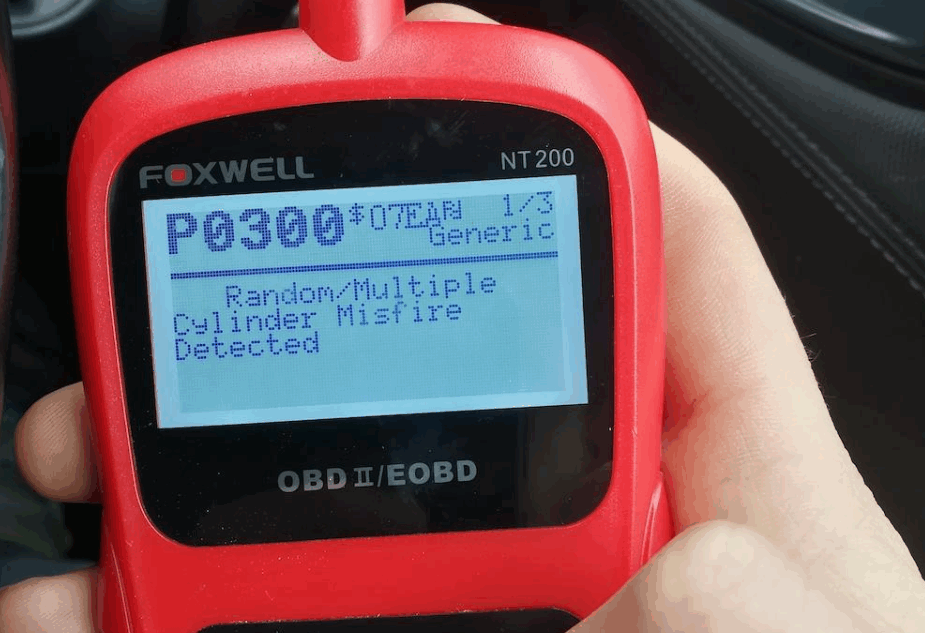
What Does the Dodge P0300 Code Mean?
A Dodge P0300 code means the vehicle’s PCM has detected random or multiple cylinder misfires that prevent the engine from producing consistent combustion. The code belongs to the OBD II Diagnostic Trouble Code system, where “P” represents a powertrain related problem, “03” identifies a misfire related issue, and “00” indicates that the misfire is not limited to one specific cylinder.
The engine requires a precise balance of air, fuel, compression, and ignition timing to complete the combustion process. When one or more cylinders fail to burn the air fuel mixture correctly, the crankshaft speed changes because that cylinder produces less power than expected. The PCM monitors these changes through sensors and stores the P0300 code when the misfire pattern does not match normal engine operation.
A P0300 code is different from cylinder specific misfire codes such as P0301, P0302, or P0308. A cylinder specific code identifies the exact cylinder experiencing the problem, while P0300 indicates that the misfire is random or occurring across multiple cylinders. This difference makes the diagnosis more complex because the technician must inspect several possible systems instead of focusing on one cylinder.
On Dodge vehicles, the P0300 code can appear in models using engines such as the 3.6L Pentastar V6 or 5.7L HEMI V8. Although the engine designs differ, the diagnostic principle remains the same: the PCM detects abnormal combustion and records the code to alert the driver that the engine requires further inspection.
Understanding the meaning of the Dodge P0300 code is the first step in finding the real cause of the misfire. The code itself is not a failed part. It is a warning signal that helps identify a problem within the engine’s combustion system.
What Are the Symptoms of a Dodge P0300 Code?
The most common symptoms of a Dodge P0300 code include a flashing or illuminated Check Engine Light, rough engine idle, engine vibration, reduced acceleration, poor fuel economy, and unstable engine performance. These symptoms happen because random misfires interrupt the normal combustion cycle and reduce the amount of power produced by one or more cylinders.
A Check Engine Light is usually the first warning sign that appears when the PCM detects a misfire pattern. When the misfire is severe, the light may flash instead of remaining constantly illuminated. A flashing Check Engine Light indicates that unburned fuel may enter the exhaust system and damage the catalytic converter because the fuel can ignite inside the exhaust components.
A rough idle is another common symptom of a Dodge P0300 code. During idle operation, the engine depends on stable combustion from every cylinder to maintain a consistent crankshaft speed. When combustion becomes uneven, drivers may feel shaking, hesitation, or unusual engine movement while the vehicle is stopped.
Reduced acceleration occurs because a misfiring cylinder cannot generate normal combustion force. The engine may feel slower when pressing the accelerator, especially during highway driving, towing, or climbing steep roads. In some cases, the vehicle may enter a reduced power mode to protect the engine and emission control system.
Poor fuel economy can also develop because the engine continues receiving fuel even when combustion is incomplete. The unburned fuel increases consumption while reducing overall efficiency. Drivers may notice more frequent refueling, stronger exhaust odors, or changes in engine response.
Some Dodge owners experience additional symptoms such as difficult starting, hesitation during acceleration, or engine stalling. The severity of these symptoms depends on the number of affected cylinders, the condition of the ignition and fuel systems, and how long the misfire has been occurring.
What Causes a Dodge P0300 Random Misfire Code?
A Dodge P0300 random misfire code is caused by problems that affect the engine combustion process. The most common sources are the ignition system, fuel system, air intake system, engine sensors, and internal engine components. The code shows that combustion is unstable, but it does not identify the failed part.
The ignition system is one of the most common causes of Dodge P0300 problems. Spark plugs and ignition coils create the spark needed for combustion. Worn spark plugs can produce a weak spark. Damaged ignition coils can also prevent proper combustion. Carbon buildup and incorrect spark plug gaps may create similar problems.
The fuel system can also trigger a P0300 code. The engine needs the correct amount of fuel to maintain stable combustion. Dirty fuel injectors can reduce fuel delivery. Low fuel pressure can create a lean fuel mixture. Both conditions can cause multiple cylinders to misfire.
Air intake problems are another possible cause. A vacuum leak allows extra air to enter the engine. This changes the air fuel ratio controlled by the PCM. Cracked vacuum hoses, intake leaks, or a faulty Mass Air Flow sensor can affect combustion quality.
Mechanical problems inside the engine may also cause random misfires. Each cylinder needs proper compression to produce power. Worn piston rings, damaged valves, or head gasket problems can reduce cylinder pressure. These failures usually require advanced testing because replacing external parts will not solve the issue.
Faulty engine sensors can create incorrect information for the PCM. The crankshaft position sensor and camshaft position sensor control ignition and fuel timing. When these sensors fail, the engine may lose proper synchronization and develop misfire symptoms.
A Dodge P0300 code should be diagnosed before replacing parts. Different problems can create the same misfire pattern. Testing the ignition, fuel, air, sensors, and mechanical condition helps identify the correct repair.
How Do You Diagnose a Dodge P0300 Code?
A Dodge P0300 code is diagnosed by checking the ignition system, fuel system, air intake system, sensors, and engine condition in a logical order. The code only shows that a misfire exists. It does not identify the exact cause. A complete diagnosis prevents unnecessary part replacement and reduces repair costs.
The first step is to scan the vehicle with an OBD II scanner. The scanner retrieves the stored trouble codes and freeze frame data from the PCM. Freeze frame data shows important conditions when the misfire occurred, including engine speed, fuel trim values, coolant temperature, and load conditions.
The next step is to inspect the ignition system. A technician checks the spark plugs and ignition coils for wear, damage, or contamination. Faulty components can often be identified through visual inspection or by swapping ignition components between cylinders. If the misfire moves after the swap, the replaced component is likely the source of the problem.
The fuel system should be tested if the ignition system works correctly. Fuel injector performance, fuel pressure, and fuel delivery should be checked. A clogged injector or weak fuel pump can create an incorrect air fuel mixture and cause multiple cylinders to misfire.
The air intake system also requires inspection. A smoke test can help find vacuum leaks that are difficult to see. Technicians may also check the Mass Air Flow sensor and other airflow components because incorrect airflow measurements affect combustion.
If basic systems appear normal, engine mechanical testing is required. A compression test or leak down test can identify problems inside the engine. Low compression may indicate damaged valves, worn piston rings, or other internal failures.
Finding the cause of a Dodge P0300 code requires a complete diagnostic process. Clearing the code or replacing random parts may temporarily hide the problem, but it will not repair the underlying issue. Proper testing identifies the failed system and leads to an effective repair.
How Do You Fix a Dodge P0300 Code?
A Dodge P0300 code is fixed by repairing the specific system that causes the engine misfire. The correct repair depends on the diagnostic results. Replacing parts without identifying the cause can increase repair costs and may not solve the problem.
Spark plug replacement is one of the most common repairs for a Dodge P0300 code. Worn spark plugs cannot create a strong enough spark for complete combustion. Installing new spark plugs with the correct specifications can restore normal ignition performance. This repair is especially common on vehicles with high mileage or extended maintenance intervals.
Faulty ignition coils may also need replacement. A weak ignition coil can reduce spark strength and cause one or more cylinders to misfire. Some Dodge engines use individual ignition coils for each cylinder, which allows technicians to test and replace failed units more accurately.
Fuel system repairs are required when the misfire comes from incorrect fuel delivery. Cleaning clogged fuel injectors may restore proper fuel flow in mild cases. A damaged injector may require replacement. Low fuel pressure caused by a failing fuel pump or restricted fuel filter also needs to be corrected.
Vacuum leaks and air intake problems must be repaired to restore the correct air fuel mixture. Replacing damaged vacuum hoses, repairing intake leaks, or replacing faulty airflow sensors can improve combustion stability. The PCM depends on accurate airflow information to control fuel delivery.
Mechanical engine problems require more advanced repairs. Low compression caused by damaged valves, worn piston rings, or internal engine damage may require engine repair. These issues cannot be solved by replacing ignition or fuel components because the combustion problem exists inside the engine.
After completing repairs, the Dodge P0300 code should be cleared and the vehicle should be tested under different driving conditions. A successful repair means the misfire does not return and the engine operates smoothly. Proper diagnosis followed by targeted repair is the most effective way to fix a Dodge P0300 code.
Is It Safe to Drive a Dodge With a P0300 Code?
Driving a Dodge with a P0300 code may be unsafe because an active engine misfire can damage important engine and exhaust components. The level of risk depends on the severity of the misfire, how often it occurs, and whether the Check Engine Light is flashing or staying on.
A mild misfire may allow the vehicle to continue operating for a short period. The engine may still run, but performance and fuel efficiency will usually decrease. However, ignoring the problem for a long time can allow a small combustion issue to become a larger repair.
A severe misfire requires immediate attention. When the Check Engine Light flashes, unburned fuel may enter the exhaust system. This fuel can overheat and damage the catalytic converter. Catalytic converter replacement is expensive because it is a critical part of the emission control system.
A Dodge with a P0300 code may also experience reduced engine power. The vehicle can hesitate during acceleration, shake while driving, or struggle under heavy loads. These conditions create safety concerns, especially during highway driving or when passing other vehicles.
The safest approach is to diagnose the cause as soon as possible. Drivers should avoid heavy acceleration and long trips until the misfire problem is identified. If the engine runs roughly, loses power suddenly, or the Check Engine Light flashes, professional inspection is recommended.
A P0300 code does not always mean severe engine damage. Many cases are caused by repairable issues such as worn spark plugs, faulty ignition coils, or vacuum leaks. Early diagnosis helps prevent additional damage and reduces overall repair costs.
Which Dodge Models Commonly Experience P0300 Codes?
Dodge P0300 codes can appear on different Dodge models because all gasoline engines rely on the same combustion process. The specific cause may vary depending on the engine design, mileage, maintenance history, and driving conditions. Common models affected by P0300 include the Dodge Charger, Dodge Challenger, Dodge Ram 1500, and Dodge Durango.
The Dodge Charger can develop P0300 problems in models equipped with engines such as the 3.6L Pentastar V6 and 5.7L HEMI V8. Ignition components, fuel delivery issues, and sensor failures are common areas to inspect during diagnosis. High mileage Chargers may experience worn spark plugs or ignition coil problems that affect combustion stability.
The Dodge Challenger may also trigger a P0300 code, especially in vehicles using HEMI engines. These engines require strong ignition performance because each cylinder depends on accurate spark timing and fuel delivery. Problems with spark plugs, ignition coils, or fuel injectors can create random misfire conditions.
The Dodge Ram 1500 is another model where P0300 diagnosis is common. Truck engines often operate under higher loads because of towing, hauling, and extended driving conditions. These conditions can reveal ignition weaknesses, fuel system problems, or mechanical issues that may not appear during light driving.
The Dodge Durango can experience P0300 codes across different engine options, including V6 and V8 configurations. The diagnostic process remains similar because technicians must inspect combustion-related systems rather than focusing only on the vehicle model.
Although Dodge models use different engines, the cause of a P0300 code follows the same principle. The engine is not producing consistent combustion across its cylinders. Identifying the engine type, maintenance history, and operating conditions helps create a more accurate diagnosis.
How Can You Prevent Dodge P0300 Misfire Problems?
Dodge P0300 misfire problems can be prevented through regular maintenance of the ignition system, fuel system, air intake system, and engine components. Preventive maintenance reduces the chance of combustion problems and helps detect early signs of engine failure before they become expensive repairs.
Regular spark plug replacement is one of the most effective ways to prevent random misfires. Spark plugs gradually lose performance because the electrode wears down and the spark becomes weaker. Replacing spark plugs according to the manufacturer’s service schedule helps maintain consistent ignition across all cylinders.
The ignition system should also be inspected during routine maintenance. Ignition coils, electrical connections, and wiring should be checked for damage or corrosion. A weak ignition component may not cause immediate failure, but it can create unstable combustion and eventually trigger a P0300 code.
Maintaining the fuel system helps keep the engine running efficiently. Using quality fuel, replacing fuel filters when required, and addressing injector problems early can prevent fuel delivery issues. Dirty injectors can create uneven fuel distribution and increase the chance of cylinder misfires.
The air intake system requires regular inspection as well. Vacuum hoses can become cracked or damaged over time. Small leaks allow unmeasured air into the engine and affect the air fuel mixture. Checking hoses, intake components, and airflow sensors helps maintain proper combustion.
Drivers should also respond quickly when warning signs appear. A rough idle, reduced acceleration, unusual engine vibration, or an illuminated Check Engine Light should not be ignored. Early diagnosis prevents minor issues from developing into major engine problems.
Preventing a Dodge P0300 code is not based on one single repair. It requires consistent maintenance and attention to the systems that control combustion. A properly maintained engine has a lower risk of random misfires and provides more reliable performance.
Conclusion
A Dodge P0300 code indicates that the engine has a random or multiple cylinder misfire, but the code does not identify a specific failed component. The problem can come from several systems, including ignition components, fuel delivery, air intake, engine sensors, or internal mechanical conditions.
The most effective repair approach is a complete diagnostic process. Checking spark plugs, ignition coils, fuel injectors, airflow components, and engine compression helps identify the actual source of the misfire. Replacing parts without testing may waste money and leave the original problem unresolved.
A Dodge P0300 code should not be ignored because continued misfires can reduce engine performance and damage the catalytic converter. Early diagnosis allows drivers to correct smaller issues before they develop into more expensive repairs.
Regular maintenance remains the best prevention method. Replacing spark plugs on schedule, maintaining the fuel system, inspecting vacuum hoses, and responding quickly to warning signs can help keep Dodge engines running efficiently.
Understanding how the P0300 code works gives Dodge owners better control over repair decisions. With proper diagnosis and targeted repairs, most random misfire problems can be resolved and normal engine performance can be restored.