When choosing a Honda vehicle, many buyers notice the VTEC or i-VTEC badge on the engine cover but do not fully understand what these technologies mean. The question of i-VTEC vs VTEC has become one of the most common discussions among Honda enthusiasts, used car buyers, and drivers who want to understand engine performance.
At first glance, i-VTEC may appear to be simply a newer version of VTEC. However, the difference goes beyond the name. Both technologies were developed by Honda to improve engine efficiency, power delivery, and driving performance, but they achieve these goals through different approaches to valve control and timing management.
Traditional VTEC is famous for its high RPM performance and the exciting change in engine character that many enthusiasts experience during acceleration. Meanwhile, i-VTEC introduces more advanced control strategies that help engines deliver smoother power, improved fuel efficiency, and better emissions performance across a wider range of driving conditions.
Understanding the difference between i-VTEC and VTEC is important because the newer technology is not always automatically better. The actual performance, reliability, and ownership experience depend on the specific engine design, vehicle application, and maintenance history.
In this complete comparison, we will explore how i-VTEC and VTEC work, their differences in performance, fuel economy, reliability, maintenance costs, and which technology is the better choice for different types of drivers.
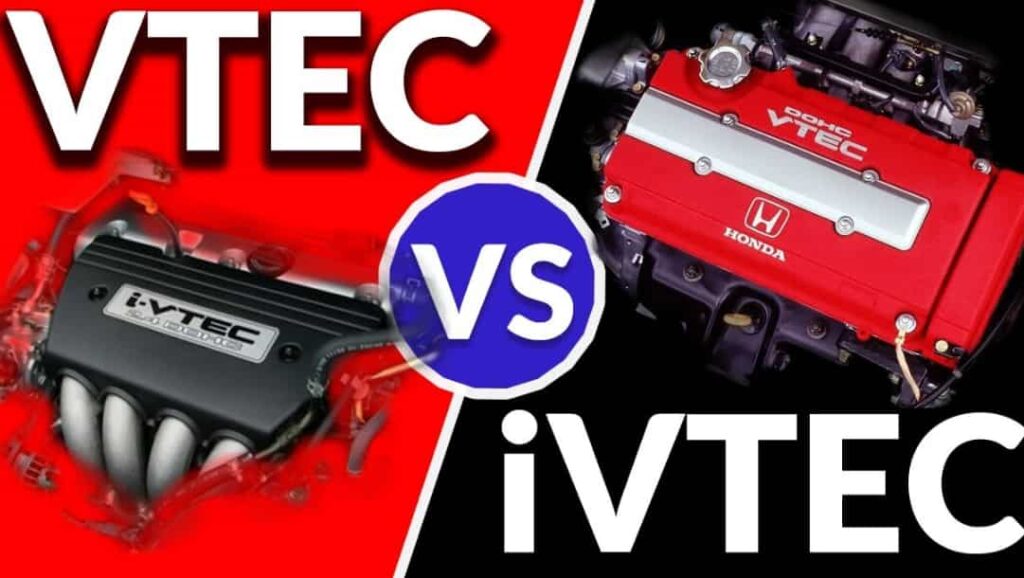
What Is VTEC?
VTEC stands for Variable Valve Timing and Lift Electronic Control, a technology developed by Honda to improve both engine performance and efficiency. The main purpose of VTEC is to solve a common challenge in engine design: balancing smooth low RPM driving with strong high RPM power.
A traditional engine usually relies on a fixed camshaft profile, which means it must be designed either for everyday efficiency or maximum performance. Honda created VTEC to overcome this limitation by allowing the engine to switch between different camshaft profiles based on driving conditions.
At lower engine speeds, VTEC uses a milder cam profile to provide smoother operation, better fuel economy, and improved drivability. When the engine reaches higher RPM and requires more airflow, the system activates a more aggressive cam profile. This allows the valves to open further and stay open longer, improving air intake and combustion efficiency.
The VTEC system works through a combination of hydraulic oil pressure, rocker arms, cam lobes, and electronic engine control. The ECU monitors factors such as engine speed, load, throttle position, and oil pressure to determine the ideal moment for activation.
VTEC became famous because of its ability to deliver strong high RPM performance while maintaining everyday usability. Engines such as Honda’s B series, H series, F series, and K series helped build the reputation of VTEC among automotive enthusiasts.
Although many people associate VTEC only with performance, Honda also used the technology in efficiency focused engines. By improving valve control, VTEC can enhance fuel economy, reduce emissions, and create a smoother driving experience.
Understanding traditional VTEC is essential before comparing it with i-VTEC, which adds more advanced valve timing control and optimization.
What Is i-VTEC?
i-VTEC stands for Intelligent Variable Valve Timing and Lift Electronic Control. It is an advanced version of Honda’s original VTEC technology. Honda developed i-VTEC to improve engine performance, efficiency, and daily drivability.
The main difference between i-VTEC and VTEC is how they manage valve operation. Traditional VTEC mainly focuses on switching between different valve lift and duration profiles. i-VTEC adds more advanced timing control to improve engine response across a wider RPM range.
Many i-VTEC engines use Variable Timing Control (VTC). This system adjusts camshaft timing according to driving conditions. It helps the engine control airflow more effectively. As a result, the engine can produce better torque, improved fuel efficiency, and smoother power delivery.
At low speeds, i-VTEC can prioritize efficiency and reduce fuel consumption. The system adjusts valve timing to support cleaner and more efficient combustion. When the driver needs more power, the engine can change its valve settings to improve airflow and performance.
However, i-VTEC does not work the same way in every Honda engine. Some versions focus on performance, while others are designed for maximum fuel economy. A performance focused i-VTEC engine may use aggressive cam profiles for higher output. An economy focused version may use different valve strategies to reduce fuel consumption.
Honda introduced i-VTEC to meet modern driving demands. Drivers wanted better efficiency without losing performance. The technology helped Honda create engines that were smoother, cleaner, and more adaptable.
When comparing i-VTEC vs VTEC, it is important to understand that i-VTEC is not just a new name for VTEC. It represents a more advanced approach to valve control. It gives engineers greater flexibility in balancing power, efficiency, and reliability.
i-VTEC vs VTEC: Quick Comparison
The difference between i-VTEC vs VTEC comes down to how Honda controls valve movement and engine performance. Both technologies improve efficiency and power, but they use different approaches.
VTEC is designed around switching between different camshaft profiles. It helps the engine balance everyday driving with high RPM performance. i-VTEC builds on this concept by adding more advanced timing control. This allows the engine to adjust valve operation more precisely.
| Comparison Factor | VTEC | i-VTEC |
|---|---|---|
| Full Name | Variable Valve Timing and Lift Electronic Control | Intelligent Variable Valve Timing and Lift Electronic Control |
| Main Function | Changes valve lift and duration using different cam profiles | Combines VTEC with advanced valve timing control |
| Valve Control | Uses cam profile switching | Uses cam profile switching and variable timing in many applications |
| Performance | Strong high RPM power delivery | Smoother power across a wider RPM range |
| Fuel Economy | Good efficiency for its generation | Usually improved efficiency in newer applications |
| Driving Feel | More noticeable performance change in some engines | More consistent and refined response |
| Engine Complexity | Simpler design in many applications | More advanced systems and additional components |
| Reliability | Known for excellent durability | Also highly reliable with proper maintenance |
| Best Advantage | High RPM performance and enthusiast appeal | Balance between performance, efficiency, and comfort |
VTEC is often associated with Honda’s high revving performance engines. Many enthusiasts enjoy the noticeable change in engine character when the system activates. This feeling became one of the reasons why VTEC gained worldwide popularity.
i-VTEC focuses on creating a more balanced driving experience. The system can improve low speed response while maintaining strong performance at higher engine speeds. It is especially suitable for modern vehicles that need better fuel economy and lower emissions.
However, the technology name alone does not determine engine capability. A high performance VTEC engine can outperform a basic i-VTEC engine. A performance oriented i-VTEC engine can also deliver excellent power and efficiency.
The engine design, displacement, compression ratio, tuning, and vehicle application are more important than the badge itself. Understanding these differences helps buyers choose the right Honda engine based on their driving needs.
What Is the Main Difference Between i-VTEC and VTEC?
The main difference between i-VTEC and VTEC is how they control valve timing and engine airflow. Both technologies were created by Honda to improve performance and efficiency. However, i-VTEC uses a more advanced valve management system.
Traditional VTEC mainly works by switching between different camshaft profiles. At low RPM, the engine uses a mild profile for smooth operation and better efficiency. At higher RPM, VTEC activates a more aggressive profile. This allows the valves to open further and stay open longer, improving airflow and power output.
i-VTEC builds on the original VTEC system by adding more advanced timing control. Many i-VTEC engines use Variable Timing Control (VTC) to adjust camshaft timing according to driving conditions. This helps the engine deliver smoother power, better torque, and improved fuel economy across a wider RPM range.
Another difference is flexibility. VTEC is known for its strong high RPM performance and engaging driving character. i-VTEC focuses more on balance by combining performance with efficiency and lower emissions.
Both systems depend on engine sensors, ECU control, and proper oil pressure. However, i-VTEC often uses additional components to provide more precise valve control.
When comparing i-VTEC vs VTEC, there is no universal winner. A performance VTEC engine can offer an exciting driving experience. A modern i-VTEC engine can provide smoother operation and better daily efficiency.
The better choice depends on the specific engine design, vehicle purpose, and driver preference.
i-VTEC vs VTEC Performance
When comparing i-VTEC vs VTEC performance, many people assume that i-VTEC is always more powerful because it is a newer technology. However, engine performance depends on more than the valve control system. Factors such as engine displacement, compression ratio, cylinder head design, tuning, and vehicle weight also play important roles.
Traditional VTEC became famous for high RPM performance. Honda used the technology in many naturally aspirated engines that could produce impressive power from small displacements. The system allowed engines to breathe better at higher speeds. This helped create strong horsepower output and the exciting acceleration feel that many enthusiasts associate with VTEC.
One of the biggest advantages of classic VTEC is its high RPM character. When the system activates, some engines deliver a noticeable change in power and sound. This experience helped make models with B series, H series, and K series engines popular among performance drivers.
i-VTEC takes a different approach. Instead of focusing only on high RPM power, it aims to provide better performance across a wider engine range. By using technologies such as Variable Timing Control, i-VTEC can improve low and mid range torque while maintaining strong top end performance.
For daily driving, i-VTEC often feels smoother and more responsive. The engine can deliver power more consistently without requiring high RPM operation. This makes it suitable for modern vehicles that need both performance and efficiency.
However, a performance focused VTEC engine can still outperform an economy focused i-VTEC engine. The technology badge alone does not determine horsepower or acceleration. The complete engine design is the most important factor.
The best choice depends on driving preference. Drivers who enjoy high RPM performance may prefer traditional VTEC. Drivers who want smooth power delivery, efficiency, and everyday comfort may find i-VTEC more suitable.
i-VTEC vs VTEC Fuel Economy
Fuel economy is one of the most important factors when comparing i-VTEC vs VTEC. Both technologies were developed to improve engine efficiency. However, i-VTEC usually has an advantage because it uses more advanced valve timing control.
Traditional VTEC can improve fuel efficiency by allowing the engine to use different valve profiles. At low engine speeds, the system focuses on smooth operation and efficient combustion. When more power is needed, it switches to a high performance profile.
However, many classic VTEC engines were designed with performance as a priority. High RPM capability and strong power output were often more important than maximum fuel savings. This is why some older performance focused VTEC engines may consume more fuel compared with newer efficiency focused engines.
i-VTEC improves fuel economy by adding more precise valve timing control. Technologies such as Variable Timing Control help adjust camshaft position based on engine speed and load. This allows the engine to operate more efficiently during normal driving conditions.
During city driving, i-VTEC can reduce unnecessary fuel consumption by optimizing airflow and combustion. On highways, the system helps maintain efficient engine operation while providing enough power for acceleration.
However, fuel economy is not determined only by VTEC or i-VTEC technology. Other factors also affect fuel consumption. These include engine size, transmission type, vehicle weight, driving style, and maintenance condition.
A well maintained VTEC engine can still deliver excellent fuel economy. A poorly maintained i-VTEC engine may consume more fuel due to mechanical issues or incorrect servicing.
Overall, i-VTEC generally provides better fuel efficiency because it offers more flexible engine control. However, the actual difference depends on the specific Honda engine and vehicle application.
i-VTEC vs VTEC Reliability
When comparing i-VTEC vs VTEC reliability, both technologies have earned a strong reputation among Honda owners. Honda engines are widely known for durability, and both systems can provide long service life when properly maintained.
Traditional VTEC has a simpler mechanical design in many applications. The system mainly relies on hydraulic pressure, rocker arms, and camshaft profiles to change valve operation. Because of this simpler structure, many older VTEC engines are appreciated for their durability and ease of maintenance.
Regular oil changes are extremely important for VTEC engines. The system depends on clean oil and correct oil pressure to operate properly. Neglected maintenance can cause problems with the VTEC solenoid, oil passages, or valve control system.
i-VTEC engines are also highly reliable. However, they often include more advanced components. These may include Variable Timing Control systems, camshaft actuators, and additional electronic controls. More technology can improve performance and efficiency, but it also means more components that require proper maintenance.
Common i-VTEC issues can include worn timing components, faulty sensors, oil leaks, or problems with the VTC system. These problems are usually related to age, poor maintenance, or incorrect servicing rather than the technology itself.
One common mistake is assuming that newer i-VTEC engines are always more reliable than older VTEC engines. Reliability depends on the specific engine design, maintenance history, and how the vehicle was driven.
For used car buyers, service records are often more important than the VTEC or i-VTEC badge. A well maintained VTEC engine can easily outperform a neglected i-VTEC engine in terms of reliability.
Overall, both technologies are highly dependable. VTEC may have an advantage in mechanical simplicity, while i-VTEC offers more advanced control and efficiency. With proper maintenance, both systems can deliver excellent long term reliability.
Conclusion: Choosing Between i-VTEC and VTEC
The comparison between i-VTEC vs VTEC shows that both technologies represent Honda’s commitment to improving engine performance and efficiency. While traditional VTEC became famous for its high RPM power and engaging driving experience, i-VTEC introduced more advanced valve control to create a smoother and more balanced engine.
VTEC remains a favorite among enthusiasts because of its strong performance character and proven reliability. Many classic Honda engines continue to attract drivers because of their responsive power delivery and mechanical simplicity.
i-VTEC is designed for modern driving demands. It combines performance with better fuel efficiency, improved emissions control, and smoother everyday operation. This makes it a practical choice for drivers who want a comfortable and efficient vehicle.
However, there is no universal winner between i-VTEC and VTEC. The better option depends on the engine design, vehicle application, maintenance history, and personal driving preference. A well maintained VTEC engine can be an excellent choice for enthusiasts. A properly serviced i-VTEC engine can provide outstanding reliability and efficiency for daily use.
When choosing a Honda vehicle, focus on the complete engine package rather than the badge alone. Factors such as engine code, service records, driving needs, and ownership costs are more important than the technology name.
Which Honda engine do you prefer? Do you enjoy the classic high RPM character of VTEC, or do you prefer the smoother efficiency of i-VTEC? Share your experience and let us know your favorite Honda engine.