The 68RFE transmission powers many Ram 2500 and Ram 3500 trucks with the 6.7L Cummins diesel engine. Chrysler designed this six speed automatic transmission for heavy towing, commercial work, and high torque output. Many owners appreciate its capability. However, long term use can expose several recurring mechanical problems.
Most 68RFE transmission problems start with subtle warning signs. Drivers often notice delayed shifting, gear slipping, harsh gear changes, or higher transmission temperatures. Some trucks also enter limp mode to protect internal components. Ignoring these symptoms allows small issues to develop into expensive repairs.
Several components contribute to these failures. The valve body, torque converter, clutch packs, and solenoid pack experience the highest levels of stress. Low transmission fluid, contaminated ATF+4, excessive heat, and heavy towing also accelerate wear. As a result, transmission performance gradually declines if owners delay maintenance.
This guide explains the most common 68RFE transmission problems and the reasons behind them. It also covers the warning signs, diagnostic process, repair options, maintenance costs, and practical prevention tips. By understanding how the 68RFE transmission works, you can identify problems earlier, reduce repair expenses, and improve long term reliability.
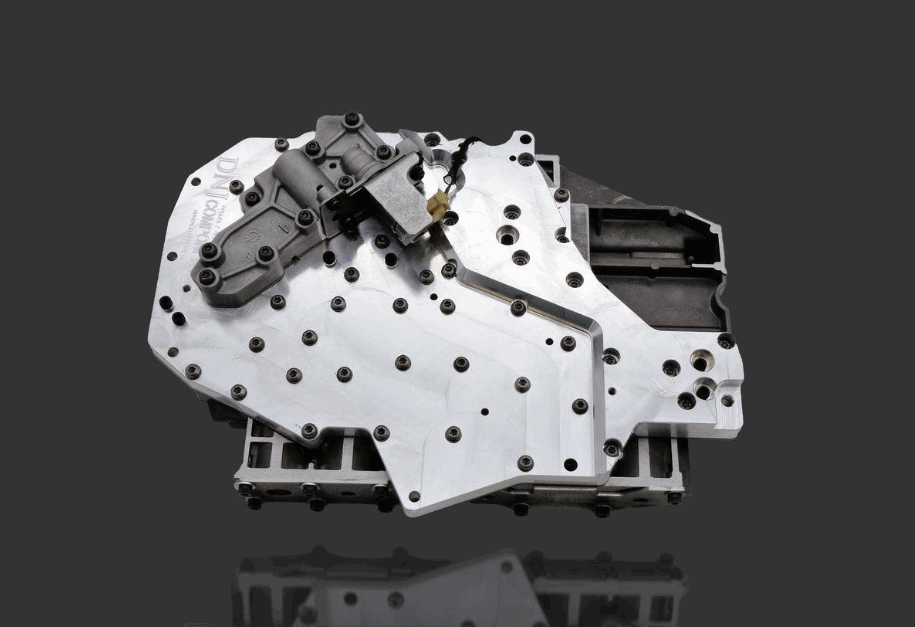
What Are the Most Common 68RFE Transmission Problems?
The most common 68RFE transmission problems include delayed shifting, hard shifting, gear slipping, transmission overheating, torque converter failure, low line pressure, and limp mode activation. These issues usually develop over time instead of appearing suddenly. Most drivers notice changes in shift quality long before the transmission stops working. Early diagnosis often prevents severe internal damage and reduces repair costs.
Delayed shifting is one of the first warning signs. The transmission may hesitate before engaging Drive or Reverse, or it may hold a gear longer than expected during acceleration. This behavior often results from worn clutch packs, a sticking valve body, or declining hydraulic pressure. If the hesitation becomes more frequent, the transmission generates additional heat and increases wear on internal components.
Gear slipping and hard shifting also occur frequently in high mileage trucks. A slipping transmission struggles to maintain the selected gear, causing sudden increases in engine speed without a matching gain in vehicle speed. Hard shifting creates abrupt gear changes that reduce driving comfort and place extra stress on the clutch assemblies, planetary gears, and driveline components. Both symptoms commonly indicate excessive internal wear or insufficient line pressure.
Overheating remains one of the leading causes of major 68RFE transmission failure. Heavy towing, steep terrain, oversized tires, and performance tuning all increase transmission temperature. Excessive heat breaks down ATF+4 fluid and reduces its ability to lubricate and cool internal parts. As fluid quality declines, friction increases and critical components wear much faster than normal.
Many trucks eventually enter limp mode after the transmission control module detects abnormal operating conditions. Limp mode limits gear selection to protect the transmission from further damage. Common triggers include faulty solenoids, pressure loss, overheating, or electronic faults. Drivers should never ignore this warning because continued operation can transform a relatively simple repair into a complete transmission rebuild.
What Symptoms Indicate a Failing 68RFE Transmission?
Several warning signs indicate that a 68RFE transmission is beginning to fail. Delayed gear engagement, slipping gears, harsh shifting, transmission shudder, overheating, unusual noises, and warning lights are the most common symptoms. These problems often appear gradually, giving drivers an opportunity to diagnose the transmission before a major failure occurs. Recognizing these symptoms early can prevent expensive repairs and improve long term reliability.
Delayed engagement is usually one of the first noticeable symptoms. The transmission may pause for several seconds before shifting into Drive or Reverse after the gear selector moves. Some trucks also hesitate during acceleration because hydraulic pressure cannot build quickly enough. Worn clutch packs, valve body wear, and low line pressure commonly cause this condition. Drivers should inspect the transmission as soon as this symptom becomes consistent because continued driving accelerates internal wear.
Gear slipping and transmission shudder often develop as internal components lose their ability to maintain proper gear engagement. Engine speed increases while vehicle speed remains unchanged, creating poor acceleration and inconsistent power delivery. Some drivers also feel vibration during acceleration or while the torque converter locks. These symptoms frequently point to worn clutch materials, a failing torque converter, or contaminated transmission fluid that no longer provides adequate lubrication.
Overheating and electronic warning signs usually indicate that the problem has progressed further. High transmission temperatures reduce fluid performance and increase friction inside the transmission. As the temperature rises, the transmission control module may activate limp mode or illuminate the check engine light to protect critical components. Ignoring these warnings can result in severe damage to the valve body, clutch assemblies, and planetary gear set. A professional diagnosis at this stage often determines whether a targeted repair is sufficient or a complete rebuild becomes necessary.
What Causes 68RFE Transmission Problems?
Several mechanical, hydraulic, and maintenance related factors cause 68RFE transmission problems. Valve body wear, clutch pack deterioration, torque converter failure, contaminated transmission fluid, excessive heat, and heavy towing place the greatest stress on this transmission. In many cases, multiple issues develop at the same time. One failing component increases the workload on another, allowing minor problems to become major transmission failures.
Valve body wear is one of the most common root causes. The valve body controls hydraulic fluid flow and determines when each gear change occurs. Internal passages and valves wear over time, reducing pressure and affecting shift quality. Drivers often notice delayed shifting, harsh gear changes, or inconsistent gear engagement before the problem becomes severe. Replacing or upgrading the valve body at an early stage can restore proper hydraulic pressure and prevent additional damage.
Clutch packs and the torque converter also experience significant wear, especially in trucks that tow heavy loads or produce higher than factory horsepower. Every gear change generates friction, and the clutch material gradually wears away after thousands of operating cycles. At the same time, a failing torque converter creates excess heat and vibration that accelerate internal wear. These conditions often lead to slipping gears, transmission shudder, and poor acceleration. If left unresolved, metal debris circulates through the transmission and damages other internal components.
Transmission fluid plays an equally important role in long term reliability. ATF+4 fluid lubricates moving parts, transfers hydraulic pressure, and removes heat from the transmission. Old or contaminated fluid loses these properties and allows friction to increase. High operating temperatures make the situation even worse because excessive heat breaks down the fluid more quickly. Heavy towing, frequent stop and go traffic, oversized tires, and aggressive performance tuning all increase thermal stress. Regular fluid service, proper cooling, and responsible towing practices remain the most effective ways to reduce wear and extend the service life of a 68RFE transmission.
How Do You Diagnose 68RFE Transmission Problems?
Diagnosing 68RFE transmission problems requires more than identifying a single symptom. Delayed shifting, slipping gears, overheating, and harsh engagement often result from different mechanical or hydraulic failures. A systematic diagnosis helps determine the root cause before unnecessary parts are replaced. It also reduces repair costs by focusing on the component responsible for the transmission’s poor performance.
The diagnostic process usually begins with a road test and a scan for diagnostic trouble codes. During the road test, a technician evaluates shift timing, gear engagement, transmission temperature, torque converter lockup, and overall driving behavior. An OBD-II scanner then checks for transmission related fault codes stored in the control module. These codes provide valuable clues about pressure control issues, solenoid performance, sensor faults, or communication errors. Although fault codes rarely identify the exact failed part, they narrow the list of possible causes.
The next step involves inspecting the transmission fluid because its condition reflects the health of many internal components. Clean ATF+4 fluid should appear bright red and have a mild odor. Dark fluid, burnt smells, or visible metal particles indicate excessive heat or internal wear. A technician also measures transmission line pressure to verify that the hydraulic system operates within specification. Low pressure often points to valve body wear, leaking seals, or pump problems that directly affect shift quality and clutch engagement.
If the initial inspection confirms internal damage, further testing focuses on the valve body, torque converter, clutch packs, and solenoid pack. These components account for many recurring 68RFE transmission problems. In some cases, replacing a faulty solenoid or repairing the valve body restores normal operation. However, widespread clutch wear or heavy metal contamination usually indicates that a complete transmission rebuild is the most reliable long term solution. An accurate diagnosis ensures that every repair addresses the actual cause instead of temporarily masking the symptoms.
How Can You Fix Common 68RFE Transmission Problems?
The best way to fix 68RFE transmission problems depends on the underlying cause and the extent of internal damage. Some issues only require routine maintenance or the replacement of a single component. Others demand a complete rebuild to restore long term reliability. Identifying the correct repair at an early stage reduces costs and prevents additional wear throughout the transmission.
Minor problems often respond well to a transmission fluid and filter service. Old or contaminated ATF+4 fluid loses its ability to lubricate moving parts and maintain stable hydraulic pressure. Replacing the fluid restores smoother shifting and improves cooling performance in many cases. However, a fluid service cannot repair worn clutch packs or damaged internal components. If the transmission continues to slip or shift harshly after maintenance, further inspection becomes necessary.
Mechanical failures usually require targeted component replacement. A worn valve body can cause delayed shifts, pressure loss, and inconsistent gear engagement, while a faulty solenoid pack may trigger shift errors or limp mode. Replacing these parts often restores normal operation when the remaining transmission components remain in good condition. A damaged torque converter should also be replaced promptly because excessive vibration and metal debris can quickly damage the pump, clutch packs, and valve body.
A complete rebuild becomes the most practical solution when multiple internal components have failed. During the rebuild process, technicians replace worn clutch packs, seals, bearings, bushings, and other damaged parts before inspecting the planetary gear set and oil pump. Many owners also install upgraded components such as a billet torque converter, a reinforced valve body, or stronger clutch materials to improve durability under heavy towing and higher horsepower. Investing in quality replacement parts and professional installation often delivers better long term value than repeatedly repairing individual failures.
How Much Does It Cost to Repair a 68RFE Transmission?
The cost to repair a 68RFE transmission varies according to the failed component, the amount of internal damage, labor rates, and the quality of replacement parts. Minor repairs are usually affordable, while extensive internal damage often requires a complete rebuild or replacement. Understanding the typical price range helps truck owners choose the most cost effective solution before the problem becomes more severe.
Basic maintenance remains the least expensive option. A transmission fluid and filter service typically costs between $200 and $400, depending on the repair shop and the amount of ATF+4 fluid required. Replacing a faulty solenoid pack or repairing the valve body generally costs $500 to $1,200. These repairs work best when technicians identify the problem early and internal components remain in good condition. Delaying service often increases repair costs because continued operation places additional stress on the clutch packs, pump, and torque converter.
More serious failures require larger investments. Replacing a damaged torque converter usually costs $900 to $1,800, especially when the transmission must be removed from the vehicle. If technicians discover excessive clutch wear, metal contamination, or damage to multiple internal components, a complete rebuild becomes the recommended solution. Most professional rebuilds cost between $3,500 and $6,000, depending on the parts selected and the level of performance upgrades included. Many owners choose upgraded clutch packs, billet torque converters, and reinforced valve bodies during the rebuild to improve durability under heavy towing conditions.
A complete transmission replacement represents the highest repair cost. A remanufactured 68RFE transmission with professional installation can cost $5,500 to more than $8,000. Although this option requires a larger initial investment, it may provide better long term value when the original transmission has experienced catastrophic failure. Before approving any repair, owners should request a detailed inspection report and compare the cost of repairing individual components with the price of a complete rebuild. Making this comparison helps avoid repeated repairs and delivers a more reliable long term solution.
How Can You Prevent Future 68RFE Transmission Problems?
Preventive maintenance is the most effective way to reduce 68RFE transmission problems and extend transmission life. Most major failures develop after months or even years of gradual wear. Regular inspections, proper fluid maintenance, and responsible driving habits help prevent excessive heat, hydraulic pressure loss, and premature component failure. Owners who follow a consistent maintenance schedule often experience fewer repairs and lower operating costs over the life of the vehicle.
Changing the transmission fluid at the recommended service interval plays a critical role in protecting internal components. Fresh ATF+4 fluid provides stable hydraulic pressure, reduces friction, and removes heat from the clutch packs, valve body, and torque converter. Many transmission specialists recommend shorter service intervals for trucks that tow heavy trailers or operate in extreme temperatures. Clean fluid also makes it easier to detect early signs of wear because technicians can identify discoloration, burnt odors, or metal particles before serious damage occurs.
Managing transmission temperature is equally important. Excessive heat remains one of the leading causes of clutch failure and fluid degradation. Drivers who tow frequently should monitor transmission temperature whenever possible and avoid placing the transmission under continuous heavy load for long periods. Installing an external transmission cooler or a deeper transmission pan can improve heat dissipation and help maintain a stable operating temperature. These upgrades become even more valuable for trucks equipped with performance modifications or larger tires.
Driving habits also influence long term reliability. Smooth acceleration, gradual throttle application, and proper towing techniques reduce stress on the transmission during every shift. Drivers should avoid aggressive launches, unnecessary high load acceleration, and excessive towing beyond the manufacturer’s recommended capacity. Regular inspections of the transmission system, combined with prompt attention to unusual noises, delayed shifting, or warning lights, allow small issues to be corrected before they develop into expensive rebuilds. Consistent maintenance and early intervention remain the most reliable strategy for maximizing the service life of a 68RFE transmission.
Conclusion
68RFE transmission problems rarely develop without warning. Most failures begin with symptoms such as delayed shifting, slipping gears, harsh engagement, overheating, or limp mode. Identifying these warning signs early makes it easier to diagnose the root cause before extensive internal damage occurs. Early repairs also reduce downtime and help avoid the high cost of a complete transmission replacement.
Long term reliability depends on proper maintenance and informed repair decisions. Routine ATF+4 fluid changes, regular inspections, and effective temperature control protect critical components such as the valve body, clutch packs, and torque converter. When problems appear, an accurate diagnosis helps determine whether a fluid service, component replacement, or complete rebuild offers the best solution. Addressing the actual cause instead of the symptom improves transmission performance and extends service life.
Owners who regularly tow heavy loads or operate modified Ram trucks should consider preventive upgrades to improve durability. A billet torque converter, upgraded valve body, and improved transmission cooling system can significantly reduce stress under demanding conditions. These improvements also help maintain stable hydraulic pressure and more consistent shift quality over time.
If you want to learn more about maintaining your drivetrain, explore our guides on 68RFE Transmission Rebuild, Torque Converter Failure Symptoms, and How Often to Change Transmission Fluid. Building a complete maintenance strategy helps protect your investment and keeps your Ram truck performing reliably for years to come.