Hyundai Palisade brake problems can reduce braking performance and affect driving safety. Common issues include brake noise, brake vibration, soft brake pedals, reduced stopping power, and uneven brake wear. These problems often involve key components such as brake pads, brake rotors, brake fluid, and the hydraulic braking system.
The Hyundai Palisade is a three row SUV built for family travel, daily driving, and long distance trips. Its size and weight make the braking system an important safety component. A well maintained brake system helps drivers control the vehicle during traffic, towing, and emergency braking situations.
Understanding Hyundai Palisade brake problems helps owners recognize early warning signs and prevent costly repairs. This guide explains common brake issues, their causes, symptoms, repair options, and maintenance practices. It also helps Hyundai Palisade owners understand when a brake inspection is necessary and how to maintain reliable braking performance.
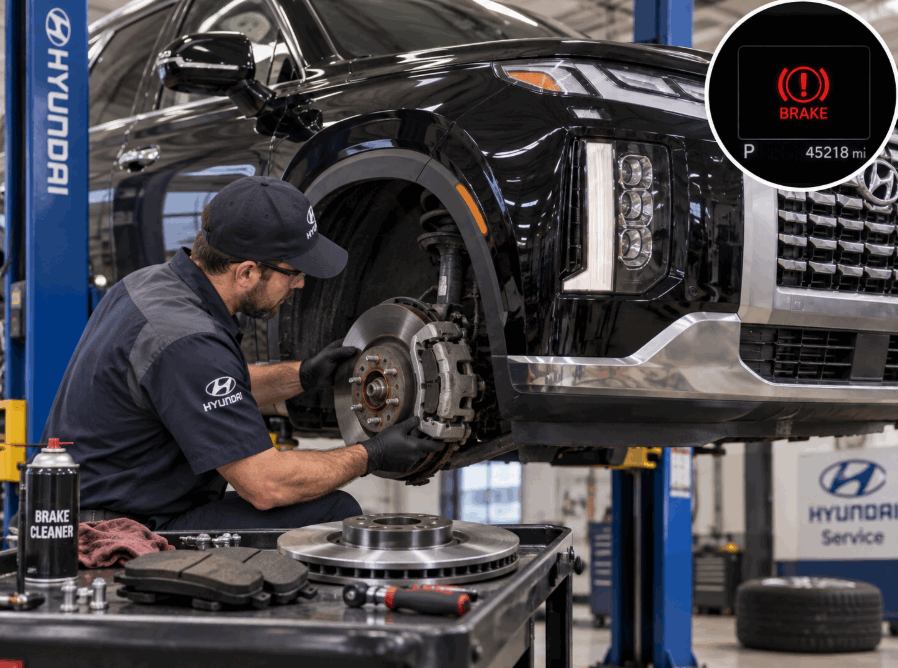
What Are the Most Common Hyundai Palisade Brake Problems?
Hyundai Palisade brake problems usually involve brake noise, vibration, reduced braking performance, soft brake pedals, and uneven component wear. These issues can develop from normal brake system wear, driving conditions, or problems with specific components such as brake pads, brake rotors, brake fluid, and brake calipers. Identifying the type of brake problem helps owners choose the correct inspection and repair method.
Brake noise is one of the most common complaints from Hyundai Palisade owners. A high pitched squealing sound often appears when brake pads become worn or when friction material reaches the wear indicator. A grinding noise usually indicates more severe brake pad deterioration, where the metal backing plate contacts the brake rotor. Ignoring these sounds can increase repair costs because damaged rotors may require replacement.
Brake vibration is another common issue that affects driving comfort and braking control. Hyundai Palisade drivers may notice shaking through the steering wheel or brake pedal when slowing down from higher speeds. This problem often occurs when brake rotors develop uneven surfaces due to excessive heat, repeated hard braking, or uneven contact with brake pads.
A soft brake pedal can indicate a problem with the hydraulic braking system. The brake pedal should provide consistent resistance when the driver applies pressure. If the pedal feels spongy or moves closer to the floor, possible causes include air in the brake lines, low brake fluid levels, or hydraulic system issues that require inspection.
Reduced braking performance creates a more serious safety concern because it increases stopping distance. This problem can result from worn brake pads, damaged rotors, contaminated brake fluid, or brake component failure. For a large SUV like the Hyundai Palisade, maintaining strong braking performance is essential because the vehicle carries more weight than smaller passenger vehicles.
What Causes Hyundai Palisade Brake Problems?
Hyundai Palisade brake problems usually develop because brake components wear over time, lose performance, or receive insufficient maintenance. The braking system depends on multiple parts working together, including brake pads, brake rotors, brake fluid, calipers, and hydraulic components. A problem in one component can reduce overall braking efficiency and affect vehicle safety.
Brake pad wear is one of the main causes of Hyundai Palisade brake issues. Brake pads create friction against the rotors to slow the vehicle, which gradually reduces their thickness during normal use. Frequent city driving, heavy traffic, and repeated braking can accelerate wear because the brake system works more often. For example, a vehicle used mainly in stop and go traffic usually experiences faster brake pad wear than a vehicle driven mostly on highways.
Brake rotor problems can also reduce braking performance. Rotors may develop uneven surfaces when they experience excessive heat, repeated hard braking, or uneven contact with brake pads. These surface changes can create vibration, pulsation, and inconsistent braking pressure. A heavy SUV like the Hyundai Palisade places more demand on brake components because the system must manage greater vehicle weight during acceleration and stopping.
Brake fluid and hydraulic system problems can affect how pressure transfers from the brake pedal to the wheels. Brake fluid absorbs moisture over time, which can reduce its performance and lower the boiling point of the fluid. When the hydraulic system cannot maintain proper pressure, drivers may notice a soft brake pedal or delayed braking response.
Driving habits and road conditions also influence Hyundai Palisade brake reliability. Frequent towing, mountain driving, carrying heavy loads, and aggressive braking increase heat and stress on brake components. Regular inspections and scheduled maintenance help identify worn parts before they create larger safety issues.
What Are the Warning Signs of Hyundai Palisade Brake Problems?
Hyundai Palisade brake problems often show clear warning signs before they become major safety concerns. Drivers can identify many brake issues through changes in sound, pedal response, vehicle movement, and dashboard alerts. Early detection allows owners to inspect the brake system before worn components affect stopping performance.
A longer stopping distance is one of the most important warning signs of brake system problems. If the Hyundai Palisade requires more distance to stop than usual, the brake pads, rotors, brake fluid, or hydraulic system may not work correctly. This issue becomes more dangerous during emergency braking because the vehicle needs more time and distance to slow down.
Unusual brake sounds can also indicate developing problems. A squealing sound may point to worn brake pads or friction material changes. A grinding noise usually suggests severe brake pad wear because the metal backing plate may contact the rotor. Drivers should inspect the brake system when these sounds continue during normal braking.
Changes in brake pedal feedback indicate possible hydraulic or component issues. A soft or spongy pedal can result from air inside the brake lines or low brake fluid. A brake pedal that feels harder than normal may indicate problems with brake assistance components. Both conditions require attention because they change how the driver controls braking pressure.
Vehicle movement during braking provides additional clues about brake condition. A Hyundai Palisade that pulls to one side while braking may have uneven brake pad wear, a sticking caliper, or inconsistent braking force between wheels. Steering wheel vibration during braking can also suggest brake rotor problems, especially when it appears at higher speeds.
The brake warning light is another important indicator that owners should not ignore. The warning system monitors specific brake-related conditions and alerts drivers when the vehicle detects a potential issue. When a warning light appears, checking the brake system quickly helps prevent further damage and improves driving safety.
How Serious Are Hyundai Palisade Brake Problems?
Hyundai Palisade brake problems range from normal component wear to serious safety issues that require immediate inspection. The severity depends on the affected component, the level of performance loss, and how quickly the owner responds to warning signs. Understanding the difference between minor and major brake issues helps drivers make better maintenance decisions.
Normal brake wear is usually less serious when drivers identify it early. Brake pads gradually lose material because they create friction during every braking event. Replacing worn brake pads at the recommended time helps protect other components, such as brake rotors, and prevents more expensive repairs.
Brake performance problems require more attention because they directly affect vehicle control. Issues such as a soft brake pedal, increased stopping distance, or inconsistent braking force may indicate problems with the hydraulic system, brake fluid, or brake components. These conditions reduce driver confidence and can increase stopping time during emergency situations.
Some brake problems can become safety critical if owners continue driving without inspection. Severe rotor damage, brake fluid problems, or major component failures can reduce the ability of the Hyundai Palisade to stop effectively. Because the vehicle is a large SUV, any reduction in braking performance can create greater risks due to its higher weight and momentum.
Brake warning signs should not be ignored, especially when they appear together. For example, brake noise combined with vibration or reduced stopping power suggests a deeper system issue rather than normal brake operation. A professional brake inspection helps identify the exact cause and prevents unnecessary replacement of unaffected components.
Maintaining brake reliability requires regular checks, timely repairs, and attention to changes in driving behavior. A properly maintained Hyundai Palisade brake system supports safer driving conditions and helps owners avoid unexpected repair costs.
How Can You Fix Hyundai Palisade Brake Problems?
You can fix Hyundai Palisade brake problems by identifying the damaged components, replacing worn parts, and maintaining the braking system regularly. The correct repair method depends on the specific issue, such as worn brake pads, damaged rotors, contaminated brake fluid, or hydraulic system problems. A proper diagnosis prevents unnecessary repairs and restores safe braking performance.
Replacing worn brake pads is one of the most common solutions for Hyundai Palisade brake issues. Brake pads lose thickness through normal friction and eventually cannot create enough stopping force. Installing new brake pads restores contact with the rotors and improves braking response. Drivers should replace brake pads before the friction material becomes completely worn because excessive wear can damage other brake components.
Inspecting and replacing damaged brake rotors may also solve braking problems. Rotors with deep grooves, uneven surfaces, or heat damage can create vibration and inconsistent braking. A technician may measure rotor thickness and surface condition to determine whether resurfacing or replacement is necessary. Replacing worn rotors with new brake pads helps maintain proper contact between braking surfaces.
Brake fluid service helps maintain hydraulic braking performance. Old or contaminated brake fluid can reduce pressure transfer inside the brake system and create a soft brake pedal. Regular brake fluid inspection and replacement help maintain consistent pedal response and support reliable braking operation.
Professional brake inspection is important when the cause of the problem is unclear. Some symptoms, such as vibration or reduced braking power, can come from different components. A qualified technician can inspect brake pads, rotors, calipers, fluid condition, and electronic brake systems to identify the exact cause.
Preventive maintenance also reduces the risk of future Hyundai Palisade brake problems. Regular inspections, timely component replacement, and attention to warning signs help extend brake system life. Proper maintenance allows owners to maintain reliable braking performance throughout the vehicle’s lifespan.
Are Hyundai Palisade Brake Problems Common Compared With Other SUVs?
Hyundai Palisade brake problems are influenced by vehicle design, driving conditions, maintenance habits, and brake system usage rather than only the vehicle model itself. Like other large SUVs, the Hyundai Palisade uses a braking system that must manage significant vehicle weight. This creates higher demands on brake components compared with smaller vehicles.
The weight and size of a three row SUV affect how much braking force the system needs during daily driving. A heavier vehicle generates more momentum, which requires brake pads and rotors to handle greater friction and heat during stops. As a result, brake wear depends heavily on driving patterns and operating conditions.
City driving can increase brake stress because frequent acceleration and stopping create repeated heat cycles. Drivers who regularly travel through heavy traffic may experience faster brake pad wear compared with drivers who mainly use highways. Similarly, towing, carrying heavy loads, or driving on steep roads can place additional pressure on the Hyundai Palisade brake system.
Maintenance practices also affect how often brake problems appear. A vehicle with regular brake inspections and timely replacement of worn components usually maintains better braking performance. In contrast, delaying brake service can allow minor issues to damage additional parts, increasing repair requirements.
Comparing Hyundai Palisade brake reliability with other SUVs requires considering similar factors. Different SUV models use different brake designs, component materials, vehicle weights, and electronic safety systems. Therefore, brake performance depends on both vehicle engineering and how owners maintain and operate their vehicles.
For Hyundai Palisade owners, focusing on preventive maintenance provides the most effective way to reduce brake problems. Regular inspections, proper driving habits, and early attention to warning signs help maintain consistent braking performance regardless of SUV category.
Does Hyundai Palisade Have Any Brake Recalls?
Hyundai Palisade brake recalls are safety actions that address specific manufacturing or system defects identified by the vehicle manufacturer or safety authorities. A recall does not mean every Hyundai Palisade has a brake failure. It means certain vehicles may require inspection, repair, or component updates to reduce a potential safety risk.
Brake related recalls can involve different parts of the braking system, depending on the identified issue. These parts may include electronic brake control systems, brake components, software systems, or other safety related equipment. The exact repair process depends on the affected vehicle model year and the specific recall information.
Hyundai Palisade owners can check recall information through the vehicle identification number (VIN). The VIN allows owners to confirm whether their specific vehicle has any open safety campaigns or required repairs. Checking recall status is especially important for used vehicle buyers because previous owners may not have completed all recommended recall services.
A recall inspection should be completed as soon as possible when a vehicle has an active brake related campaign. Manufacturers typically provide recall repairs at authorized service centers without additional cost to eligible owners. Completing these repairs helps ensure that safety systems operate according to manufacturer specifications.
Brake recalls represent one part of vehicle safety management, but regular maintenance remains equally important. A Hyundai Palisade without an active recall can still experience brake problems caused by normal wear, driving conditions, or delayed maintenance. Owners should combine recall checks with routine brake inspections to maintain reliable braking performance.
How Much Does It Cost to Repair Hyundai Palisade Brake Problems?
The cost to repair Hyundai Palisade brake problems depends on the damaged components, labor requirements, and the level of repair needed. Simple maintenance tasks usually cost less than major brake system repairs because they involve fewer parts and less labor. Understanding the factors that affect repair costs helps owners plan maintenance decisions more effectively.
Brake pad replacement is one of the most common brake services for Hyundai Palisade owners. The cost depends on the quality of the brake pads, the number of wheels serviced, and labor rates at the repair facility. Replacing brake pads before they wear down completely can reduce the chance of additional damage to brake rotors.
Brake rotor replacement usually costs more because the service involves larger components and additional labor. Rotors may require replacement when they develop deep grooves, severe corrosion, cracks, or excessive thickness reduction. Installing new rotors with worn brake pads may not restore proper braking performance, so technicians often inspect both components together.
Brake fluid service is another maintenance expense that affects long term brake reliability. The cost is generally lower than component replacement because it focuses on removing old fluid and restoring proper hydraulic performance. Regular brake fluid service helps prevent problems such as reduced pedal response and inconsistent braking pressure.
Major brake repairs can cost more when they involve calipers, hydraulic components, or electronic brake systems. These repairs require detailed diagnosis because similar symptoms can come from different parts of the braking system. A professional inspection helps identify the exact cause and prevents owners from replacing unnecessary components.
Hyundai Palisade owners can reduce brake repair costs through preventive maintenance. Regular inspections, early diagnosis, and timely replacement of worn parts help avoid larger repairs. Maintaining the brake system also supports safer driving and extends the service life of important components.
How Long Do Hyundai Palisade Brakes Usually Last?
Hyundai Palisade brakes usually last between 30,000 and 70,000 miles, but the actual lifespan depends on driving habits, road conditions, vehicle load, and maintenance quality. Brake components do not wear at the same rate because different driving environments create different levels of friction and heat. Regular inspections provide a more accurate assessment than mileage alone.
Brake pads usually wear faster than other brake components because they create the friction needed to slow the vehicle. Frequent city driving, heavy traffic, and repeated braking can shorten brake pad life. Drivers who use smoother braking techniques and maintain consistent speeds often reduce unnecessary wear.
Brake rotors generally last longer than brake pads, but their condition depends on heat exposure and maintenance practices. Excessive heat from repeated hard braking can change the rotor surface and create vibration or uneven braking. Regular inspections help identify rotor damage before it affects overall brake performance.
Driving conditions have a major impact on Hyundai Palisade brake lifespan. Vehicles used for towing, carrying heavy loads, or driving in mountainous areas place additional stress on the braking system. These conditions increase heat generation and require the brake components to work harder during deceleration.
Proper maintenance helps extend the service life of the Hyundai Palisade brake system. Owners should inspect brake components regularly, replace worn parts at the right time, and address warning signs quickly. Preventive maintenance improves braking reliability and reduces the risk of expensive repairs.
How Can You Prevent Hyundai Palisade Brake Problems?
You can prevent Hyundai Palisade brake problems by maintaining brake components regularly, responding to warning signs early, and adapting driving habits to reduce unnecessary stress on the system. Brake reliability depends on the condition of multiple components, including brake pads, brake rotors, brake fluid, and hydraulic systems. A consistent maintenance approach helps owners protect braking performance over time.
Regular brake inspections allow technicians to identify wear before it affects safety. Checking brake pad thickness, rotor condition, fluid quality, and brake system operation helps detect problems at an early stage. Early repairs usually require fewer parts and reduce the possibility of more expensive damage.
Driving habits also influence brake system durability. Smooth braking, maintaining safe following distances, and avoiding unnecessary hard stops reduce heat and friction on brake components. Drivers who frequently tow, carry heavy loads, or travel on steep roads should pay closer attention to brake inspections because these conditions increase system demand.
Hyundai Palisade owners should treat brake changes as important safety signals rather than minor inconveniences. Unusual sounds, vibration, longer stopping distances, or warning lights indicate that the brake system needs attention. Combining preventive maintenance with timely inspections helps maintain reliable braking performance and supports safer vehicle ownership.