The Hyundai Palisade tire pressure light indicates that the vehicle’s Tire Pressure Monitoring System (TPMS) has detected an issue with tire pressure or the monitoring system. In most cases, the warning appears because one or more tires have lower air pressure than the recommended level. However, the light can also turn on because of temperature changes, tire damage, or a faulty tire pressure sensor.
Driving with the warning light requires attention because incorrect tire pressure affects vehicle handling, tire wear, fuel efficiency, and overall safety. A Hyundai Palisade with properly maintained tires provides better driving stability and helps prevent avoidable tire problems.
This guide explains the main causes of the Hyundai Palisade tire pressure light, how the TPMS system works, how to reset the warning, and the steps required to fix the problem. Understanding the difference between a low tire pressure warning and a TPMS malfunction allows drivers to take the correct action before a small tire issue becomes a larger maintenance problem.
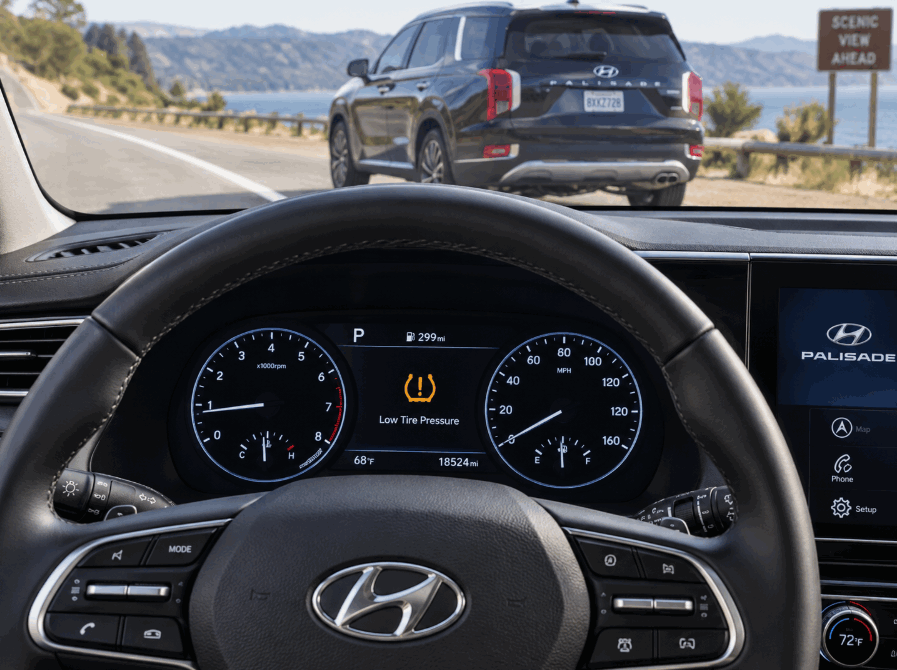
What Does the Hyundai Palisade Tire Pressure Light Mean?
The Hyundai Palisade tire pressure light is a dashboard warning indicator connected to the Tire Pressure Monitoring System (TPMS). The light appears when the TPMS detects that one or more tires have pressure below the recommended level or when the system cannot accurately monitor tire pressure. This warning helps drivers identify tire pressure problems before they affect vehicle safety, handling performance, and tire durability.
The Hyundai Palisade TPMS uses tire pressure sensors installed inside each wheel to measure inflation pressure. These sensors send pressure data to the vehicle’s control system, which evaluates the information and activates the warning light when tire pressure becomes too low or when a system problem occurs. For example, a slow air leak caused by a puncture can reduce tire pressure over time and trigger the warning even when the tire does not appear visibly damaged.
The tire pressure light on a Hyundai Palisade can represent two different conditions. A steady warning light usually indicates that one or more tires have low air pressure and need inspection. A flashing warning light usually points to a TPMS malfunction, such as a damaged sensor, communication failure, or sensor battery issue. Identifying the type of warning helps drivers choose the correct solution.
Correct tire pressure is important because it directly affects how the Hyundai Palisade performs on the road. Properly inflated tires provide better traction, reduce uneven tire wear, improve fuel efficiency, and support safer driving conditions. Drivers should always check the recommended tire pressure shown on the driver-side door label or in the Hyundai Palisade owner manual instead of estimating pressure based on how the tire looks.
Why Is My Hyundai Palisade Tire Pressure Light On?
The Hyundai Palisade tire pressure light turns on when the TPMS detects a tire pressure problem or a system issue. There are five main causes of this warning light: low tire pressure, air leaks, faulty TPMS sensors, relearning issues, and incorrect tire installation. Finding the correct cause helps prevent unnecessary repairs and keeps the vehicle safe.
Low tire pressure is the most common reason for the warning light. Tire pressure changes when the outside temperature changes. Cold temperatures reduce air pressure inside the tire. For example, tire pressure can drop by about 1 PSI for every 10°F decrease in temperature. A sudden weather change can activate the TPMS warning without any tire damage.
A tire puncture or slow air leak can also trigger the Hyundai Palisade tire pressure light. Common causes include nails, screws, damaged valve stems, and sidewall damage. Slow leaks are harder to detect because the tire may look normal. However, the tire can lose air over several days or weeks. Checking tire pressure with a gauge helps identify this problem early.
A faulty TPMS sensor is another possible cause. Each Hyundai Palisade tire has a sensor that measures air pressure. The sensor sends data to the vehicle computer. A weak battery, damaged sensor, or communication problem can cause a false warning.
The TPMS system may need relearning after tire replacement, sensor replacement, or wheel changes. The vehicle must recognize the updated sensor information. The warning light may stay on until the system completes this process.
Incorrect tire installation can also affect TPMS performance. Tires with incorrect specifications or incompatible sensors may prevent accurate pressure readings. Hyundai Palisade owners should confirm that replacement tires and TPMS components match the vehicle requirements.
How Do You Reset the Hyundai Palisade Tire Pressure Light?
The Hyundai Palisade tire pressure light resets after the TPMS detects that all tires have the correct pressure and the system receives updated information. The main reset process involves checking tire pressure, adjusting inflation levels, and allowing the vehicle to update the TPMS data. In most cases, drivers do not need to manually reset the warning after correcting the tire pressure.
Start by checking the air pressure of all four tires with a reliable tire pressure gauge. The tires should match the recommended PSI listed on the driver-side door label. If one or more tires have low pressure, add air until they reach the correct level. Driving with uneven tire pressure can cause the warning light to remain active.
After adjusting the tire pressure, drive the Hyundai Palisade for several minutes. The TPMS sensors send new pressure information to the vehicle computer while the vehicle is moving. The warning light may turn off automatically once the system confirms that tire pressure is within the correct range.
A Hyundai Palisade tire pressure light may not reset if there is an existing problem. A damaged TPMS sensor, active tire leak, or sensor communication issue can keep the warning displayed. In these cases, correcting tire pressure alone will not solve the problem.
Some Hyundai Palisade models may require a TPMS relearning procedure after replacing tires, changing wheels, or installing new sensors. This process allows the vehicle to recognize updated sensor information. If the warning remains after proper inflation, a professional TPMS inspection may be necessary.
How Do You Fix a Hyundai Palisade Tire Pressure Light That Stays On?
The Hyundai Palisade tire pressure light stays on when the TPMS detects an unresolved tire pressure problem or system fault. The correct fix depends on the cause, which can include incorrect tire pressure, tire damage, sensor failure, or TPMS communication problems. A proper inspection helps identify the issue instead of replacing parts unnecessarily.
The first step is to check and adjust tire pressure. Use a reliable tire pressure gauge to measure all four tires when they are cold. Compare the readings with the recommended PSI shown on the driver-side door label. Correct tire inflation helps the TPMS receive accurate information and improves tire performance.
Inspecting the tires for damage is another important step. Look for signs of punctures, cracks, damaged valve stems, or visible air loss. A small nail or screw can create a slow leak that keeps reducing tire pressure. Repairing the damaged tire or replacing it when necessary can remove the cause of the warning.
A faulty TPMS sensor may require replacement if tire pressure is correct but the warning remains active. Each sensor contains electronic components and a battery that can wear out over time. A failed sensor cannot send accurate pressure information to the vehicle’s computer system.
The TPMS system may also need recalibration after certain maintenance procedures. Tire replacement, wheel changes, or sensor replacement can require the system to recognize new sensor data. Completing the relearning process allows the Hyundai Palisade to display accurate tire pressure information again.
If the warning light remains after checking pressure, inspecting tires, and confirming sensor operation, a professional diagnosis may be needed. A technician can use TPMS diagnostic equipment to identify sensor communication errors and system faults.
Can You Drive With the Hyundai Palisade Tire Pressure Light On?
You can drive a Hyundai Palisade with the tire pressure light on for a short distance, but the warning should not be ignored. The safety risk depends on whether the light indicates low tire pressure or a TPMS malfunction. A tire with incorrect pressure can affect vehicle control and increase the chance of tire damage.
Driving with low tire pressure reduces the tire’s ability to maintain proper contact with the road. Underinflated tires create more heat because the sidewalls flex more during driving. This extra heat can accelerate tire wear and increase the risk of tire failure, especially during high-speed driving or long trips.
A Hyundai Palisade with a TPMS warning should be inspected as soon as possible. Drivers should check tire pressure before continuing a long journey. If a tire appears damaged, loses air quickly, or feels unstable while driving, the vehicle should be stopped and inspected immediately.
A TPMS malfunction is different from a low-pressure warning. When the system cannot read tire pressure correctly, the vehicle may not provide accurate information about tire conditions. A failed sensor does not always mean the tire is unsafe, but it removes an important safety monitoring function.
Regular tire maintenance reduces the chance of unexpected TPMS warnings. Checking tire pressure monthly, inspecting tires for damage, and maintaining the correct PSI help the Hyundai Palisade achieve better handling, longer tire life, and safer driving performance.
How Often Should You Check Hyundai Palisade Tire Pressure?
Hyundai Palisade tire pressure should be checked at least once a month and before long trips. Regular tire pressure checks help maintain correct inflation, improve driving stability, and prevent unnecessary tire damage. The TPMS system provides an early warning, but it should not replace manual tire inspections.
Tire pressure changes naturally over time because air slowly escapes through the tire material and valve components. Temperature changes also affect inflation levels. For example, colder weather can reduce tire pressure and activate the Hyundai Palisade tire pressure light even when there is no puncture or visible damage.
Drivers should check tire pressure when the tires are cold because heat from driving increases pressure readings. A cold tire measurement provides a more accurate comparison with the recommended PSI value. The correct pressure information is usually located on the driver-side door label or inside the vehicle owner manual.
Tire pressure checks should also be part of regular tire maintenance. Drivers should inspect tread condition, look for uneven wear, and check for visible damage during routine inspections. Tire rotation and professional inspections help identify problems before they affect safety or vehicle performance.
Maintaining proper tire pressure supports better fuel efficiency, longer tire life, and improved handling. For Hyundai Palisade owners, consistent tire care reduces the chance of unexpected TPMS warnings and helps the vehicle perform safely in different driving conditions.
What Is the Difference Between Hyundai Palisade TPMS Light and Other Dashboard Warning Lights?
The Hyundai Palisade TPMS light is different from other dashboard warning lights because it monitors tire pressure instead of engine, braking, or vehicle stability systems. The TPMS warning specifically indicates a tire pressure problem or a malfunction within the tire monitoring system. Understanding the difference between dashboard indicators helps drivers respond to the correct issue.
The check engine light monitors problems related to the engine, emissions system, or vehicle performance components. It can appear because of issues such as sensor failures, fuel system problems, or engine control errors. The TPMS light does not provide information about engine operation and only focuses on tire pressure monitoring.
The ABS warning light indicates a problem with the anti-lock braking system. When this warning appears, the vehicle may not have full ABS functionality during emergency braking situations. The TPMS light does not affect braking operation directly, but incorrect tire pressure can still influence braking distance and vehicle control.
The traction control warning light monitors systems that help maintain wheel grip during acceleration. It can activate when there is a stability control issue or when driving conditions reduce traction. The Hyundai Palisade tire pressure light has a different purpose because it focuses on maintaining proper tire inflation.
Recognizing dashboard warning lights correctly allows drivers to take appropriate action. When the Hyundai Palisade tire pressure light appears, drivers should check tire pressure, inspect the tires, and verify the TPMS system instead of treating it like an engine or brake problem.
How Can You Prevent Hyundai Palisade Tire Pressure Light Problems?
Preventing Hyundai Palisade tire pressure light problems starts with consistent tire maintenance and early inspection. Maintaining the correct tire pressure, checking tires regularly, and monitoring TPMS performance help reduce unexpected warning signals and improve driving safety. The tire pressure light is not only a dashboard notification but also an important safety feature that helps protect the vehicle and its occupants.
Drivers should check tire pressure monthly, inspect tires for visible damage, and adjust inflation based on the recommended PSI. Regular tire rotation and professional inspections also help identify issues before they become serious problems. These maintenance habits support better handling, longer tire lifespan, and more reliable vehicle performance.
When the Hyundai Palisade tire pressure light appears, drivers should identify the cause before resetting the system. Low tire pressure, air leaks, faulty sensors, and TPMS communication issues require different solutions. Understanding how the system works allows owners to make better maintenance decisions and avoid unnecessary repairs.